The Truth About Fertilizing Your Louisiana Lawn In March
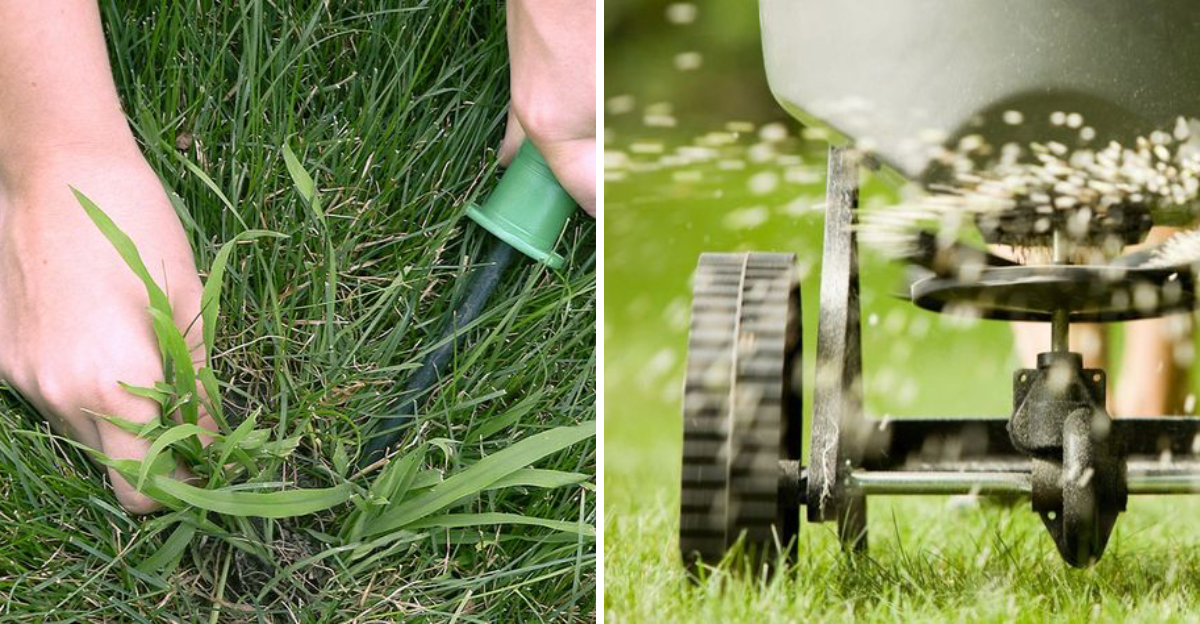
March is a big deal for lawns across Louisiana. The weather starts warming up, the grass wakes from its winter rest, and suddenly your yard is ready to come back to life.
But here is the thing most homeowners get wrong: they rush to fertilize too early, or they grab the wrong product, and the whole season goes sideways from there.
Understanding when, why, and how to fertilize your lawn in March can be the difference between a thick, lush yard and one that struggles all summer long.
Louisiana has a humid subtropical climate that plays by its own rules, and your fertilizing strategy needs to match those rules.
The soil here behaves differently than it does up north, and the warm-season grasses that thrive in this region have very specific nutritional needs.
Read on to find out what really works when it comes to feeding your lawn the right way.
1. March Is A Tricky Month For Louisiana Lawns, And Here’s Why
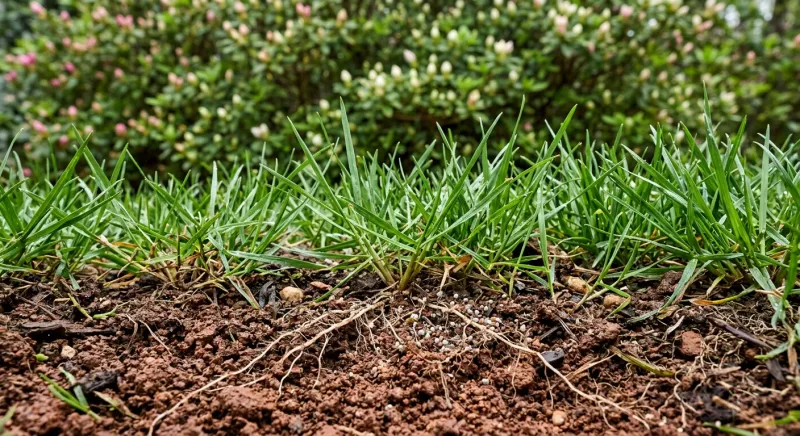
Most people assume March means go time for fertilizing, but that assumption can seriously backfire on a Louisiana lawn. The truth is, March is a transition month, and your grass is not fully awake yet.
Soil temperatures need to consistently reach at least 65 degrees Fahrenheit before warm-season grasses are truly ready to absorb nutrients efficiently.
If you fertilize too early, those nutrients do not get used by the grass. Instead, they sit in the soil or wash away with rain, which Louisiana gets plenty of in spring.
That wasted fertilizer can also feed weeds before your turf even has a chance to compete.
The smart move is to check your soil temperature using an inexpensive soil thermometer, available at most garden centers. Stick it about two inches into the ground and take readings over several consecutive days.
Once you see consistent readings above 65 degrees, your lawn is signaling that it is ready.
Rushing the process feels productive, but patience pays off in a big way here. A well-timed application in late March will outperform an early March application every single time.
Knowing your lawn’s true readiness is the first and most important step to a successful fertilizing season.
2. Know Your Grass Type Before You Buy Anything
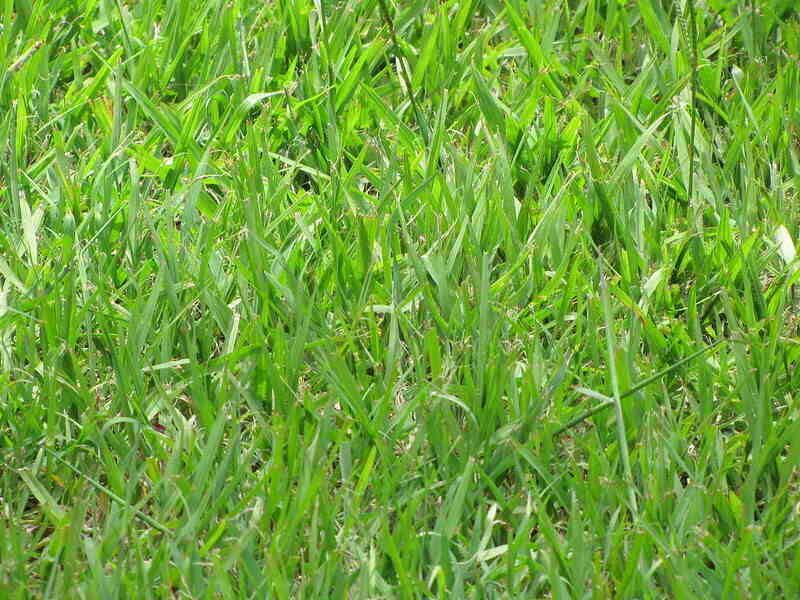
Walk into any garden store and you will find a wall of fertilizer bags, each one promising a perfect lawn. But grabbing the wrong one for your grass type is like putting diesel in a gas-powered engine.
It just does not work the way you want it to.
St. Augustine grass is the most common lawn grass in Louisiana, and it has a hearty appetite for nitrogen. Bermuda grass also loves nitrogen but needs it in smaller, more frequent doses.
Centipede grass is the opposite. It is a low-maintenance variety that actually gets stressed by too much fertilizer, especially high-nitrogen blends.
Zoysia grass sits somewhere in the middle. It is tougher and slower growing, so it does not need heavy feeding in early spring.
Applying too much too soon can push Zoysia into rapid growth that it cannot sustain.
Your Louisiana Garden Changes Every Week. Your Plan Should Too.
Gardening in Louisiana changes quickly throughout the season. Every Friday you’ll receive a simple weekly plan showing exactly what to plant, prune, fertilize, harvest, and protect so you never miss the right timing.
Before buying anything, figure out exactly what type of grass covers your yard. If you are unsure, take a small sample to your local LSU AgCenter extension office.
They can identify it quickly and point you toward the right product. Matching your fertilizer to your specific grass type is one of the simplest ways to get better results all season long.
3. Soil Testing Is The Secret Weapon Most Homeowners Skip
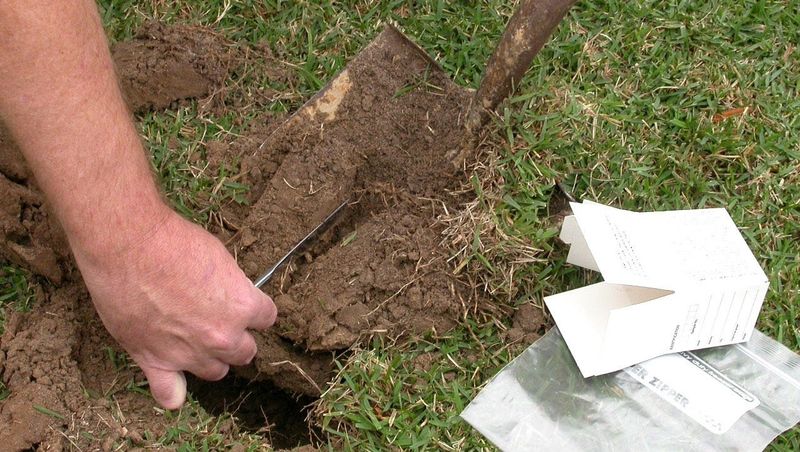
Skipping a soil test is like going to the doctor and skipping the diagnosis. You might guess right, but chances are you will treat the wrong problem entirely.
A soil test tells you exactly what your lawn is missing and what it already has too much of.
Louisiana soils vary wildly depending on where you live. Coastal areas often have sandy, low-nutrient soil, while northern parishes tend to have heavier clay-based ground that holds nutrients differently.
Without knowing your soil’s baseline, you are essentially fertilizing blind.
Soil tests are inexpensive and easy to access. The LSU AgCenter offers testing services for a small fee, and results usually come back within a week or two.
The report will show you pH levels, nutrient deficiencies, and specific fertilizer recommendations tailored to your lawn.
One thing many homeowners discover is that their soil is too acidic, which blocks grass from absorbing nutrients properly. Adding lime to raise the pH can make your fertilizer work significantly better without spending more money on product.
Getting a soil test done in late February or early March gives you time to amend the soil before your first fertilizer application. It is a small step that delivers a huge return.
4. Choosing The Right Fertilizer Formula For Spring
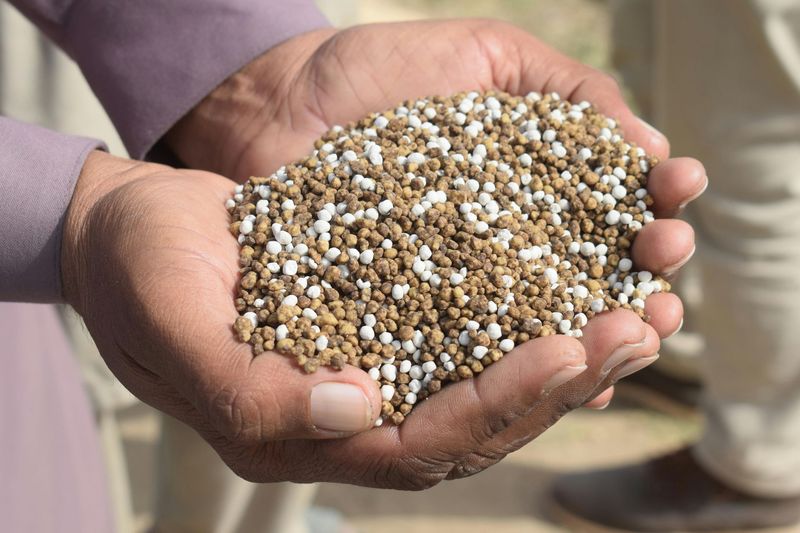
Numbers on a fertilizer bag can look confusing, but once you understand what they mean, shopping becomes a lot easier. Every bag shows three numbers separated by dashes, like 15-0-15 or 16-4-8.
Those numbers represent nitrogen, phosphorus, and potassium, in that exact order.
For most Louisiana lawns in early spring, a balanced slow-release fertilizer works best. Slow-release formulas feed your grass gradually over several weeks, which reduces the risk of burning and minimizes nutrient runoff into waterways.
Louisiana has strict water quality concerns, especially near bayous, lakes, and the Gulf Coast, so slow-release products are the environmentally responsible choice too.
Nitrogen is the nutrient that drives green, leafy growth, so spring formulas tend to be higher in nitrogen. Phosphorus supports root development, while potassium strengthens the grass against stress, heat, and disease.
If your soil test shows adequate phosphorus, skip products with high middle numbers and save your money.
Look for fertilizers labeled specifically for warm-season grasses or for your grass type by name. Brands like Scotts, Pennington, and Lesco all offer products designed for the Southern climate.
Reading the label carefully and matching the formula to your soil test results will give your lawn the strongest possible start this spring season.
5. How To Apply Fertilizer Without Burning Your Lawn
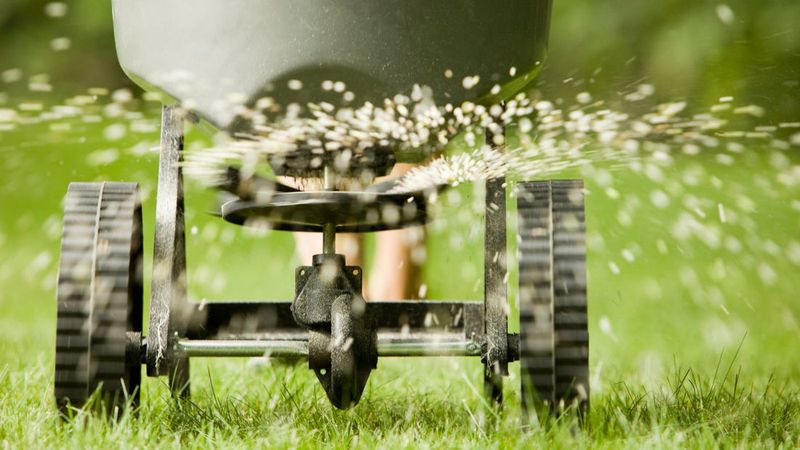
Even the perfect fertilizer can wreck a lawn if it is applied the wrong way. Fertilizer burn is real, and it happens when too much nitrogen hits the grass blades at once, pulling moisture out and leaving behind yellow or brown patches that look terrible all season.
The golden rule is to never apply more than one pound of nitrogen per 1,000 square feet in a single application. Always follow the label directions exactly.
More is not better when it comes to lawn fertilizer, and that mistake is incredibly common among homeowners who are eager to see fast results.
Use a quality broadcast spreader for granular fertilizers. Walking at a steady pace and overlapping your passes slightly ensures even coverage.
Uneven application creates streaky lawns with dark green stripes next to pale yellow sections, which is one of the most obvious signs of poor technique.
Watering the lawn lightly right after applying granular fertilizer helps move the nutrients into the soil and reduces the chance of burn.
Avoid fertilizing right before heavy rain is forecasted, because a downpour can wash fertilizer off the lawn and into storm drains before it ever reaches the roots.
Timing your application on a calm, mild March day will give you the cleanest results.
6. Pre-Emergent Weed Control And Fertilizer: Timing Matters
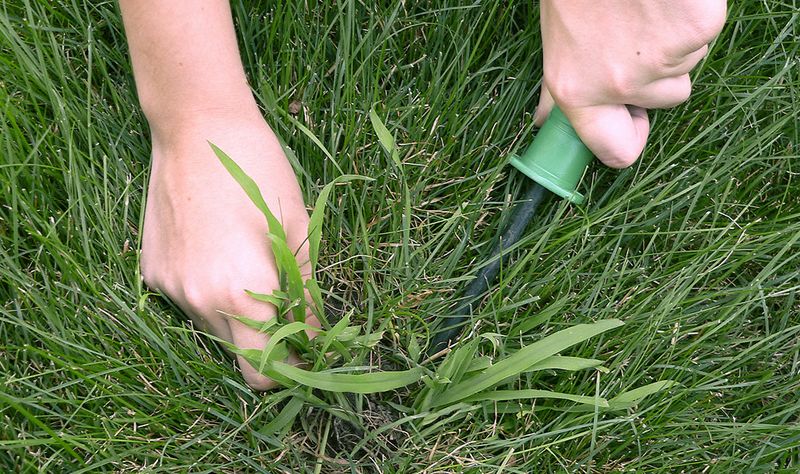
March in Louisiana is also prime time for crabgrass and other warm-season weeds to start germinating, which means weed control and fertilizing need to be planned together, not separately.
Getting these two tasks out of sync can cost you the whole season before it even gets started.
Pre-emergent herbicides create a barrier in the soil that stops weed seeds from sprouting. They need to be applied before soil temperatures hit 55 degrees and weed germination begins.
In Louisiana, that window can open as early as late February or very early March depending on the year.
Here is where timing gets tricky. Some pre-emergent products can interfere with grass root development if applied at the same time as fertilizer.
Read both product labels carefully and check whether they can be safely combined or if they need to be applied on separate days.
Combination products called weed-and-feed formulas exist, but they are not always the best choice. They force you to apply both products on the same schedule, which may not match your lawn’s actual needs.
Treating weed control and fertilizing as separate tasks gives you more flexibility and better results. A little extra planning in early March goes a long way toward keeping a Louisiana lawn clean and healthy all summer.
7. Common Fertilizing Mistakes Louisiana Homeowners Make Every Year
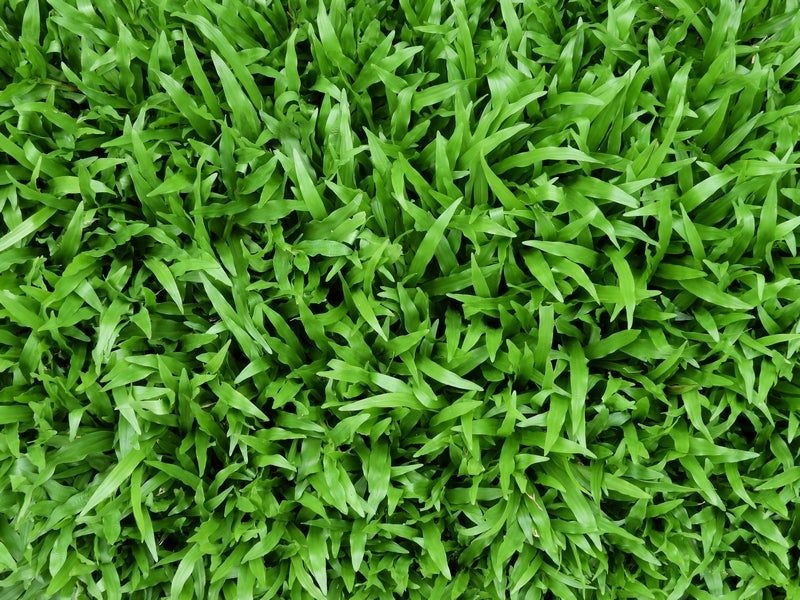
Every spring, the same fertilizing mistakes repeat themselves across Louisiana neighborhoods, and most of them are completely avoidable.
Knowing what not to do is just as valuable as knowing the right steps, especially when your lawn is just waking up and is most vulnerable to stress.
One of the biggest blunders is fertilizing during a drought or when the lawn is already stressed from lack of water. Fertilizer needs moisture to work properly, and applying it to a dry lawn concentrates the salts in the soil, which can damage grass roots significantly.
Another classic error is fertilizing too frequently. Some homeowners think that more applications mean faster results, but over-fertilizing pushes excessive top growth that actually weakens the plant.
Fast-growing grass uses up more water, becomes more prone to fungal diseases, and requires constant mowing just to keep up.
Ignoring the spreader calibration is also a surprisingly common problem. A spreader set to the wrong setting can dump twice the recommended amount of fertilizer in one pass without you even realizing it.
Always calibrate your spreader before each use and double-check the settings against the product label. Avoiding these mistakes will save Louisiana homeowners time, money, and the headache of trying to fix a lawn that went wrong early in the season.