8 Underrated Shrubs That Bring Spring Color To Georgia Gardens
There is a moment every spring in Georgia when everything starts to come together, and color finally returns to the yard. But even then, a lot of landscapes end up looking familiar, filled with the same choices that show up year after year.
It works, but it does not always stand out.
Some shrubs never get the attention they deserve, even though they handle Georgia conditions well and bring just as much, sometimes more, seasonal color.
They tend to stay under the radar, which is exactly why they can make such a difference once they are in place.
A few simple changes can shift the entire look of a garden without making it feel overdone. It is not about replacing everything, just choosing plants that show up in a better way when spring fully settles in.
1. Azalea Fills Shrubs With Bright Spring Color
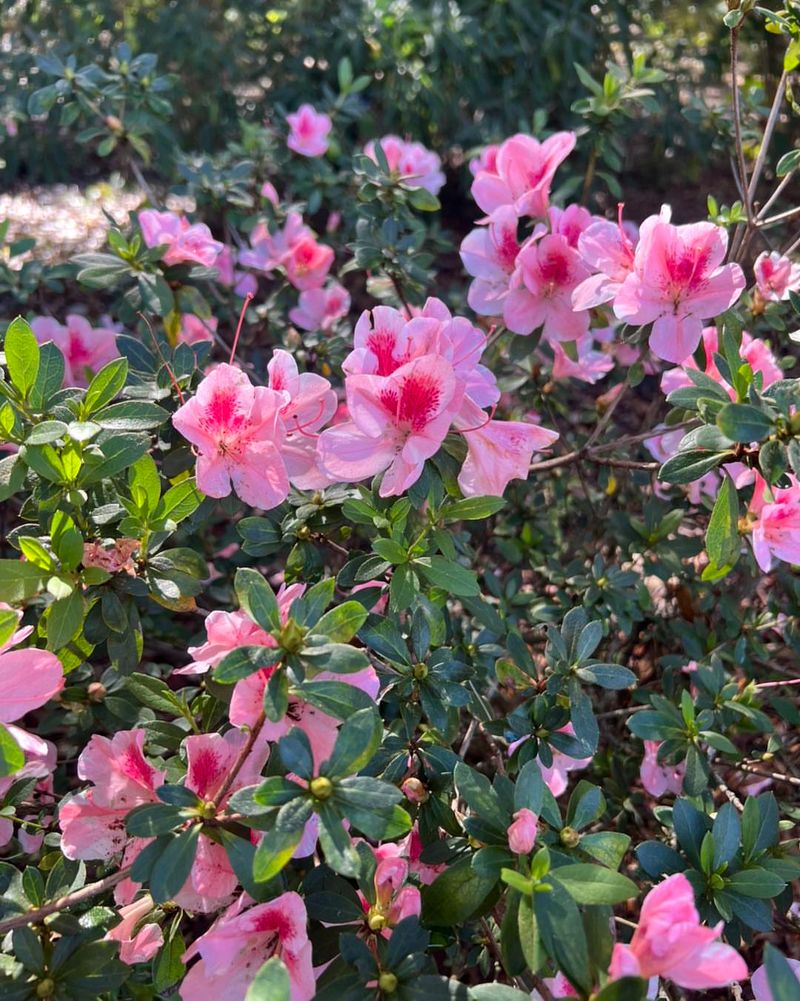
No other shrub hits as hard in a Georgia spring as azalea. Walk through almost any neighborhood in Atlanta or Savannah in March and April, and you will see why people have been planting these for generations.
Clouds of color in hot pink, coral, white, and deep red just erupt all at once, and for a few weeks, the whole yard looks like it caught fire in the best possible way.
Azaleas prefer slightly acidic soil, which Georgia naturally provides in many areas. Adding a layer of pine straw mulch around the base keeps moisture in and helps the roots stay comfortable through temperature swings.
Avoid planting them in spots that bake in full afternoon sun, because the blooms fade fast and the leaves will look stressed by summer.
Compact varieties like Encore azaleas are worth seeking out because they push out a second round of blooms in fall, giving you color twice a year. Spacing matters too.
Crowding them causes poor air circulation, which leads to fungal problems. Give each plant room to breathe and fill out naturally.
Pruning right after blooming, not before, keeps next year’s flower buds safe. Azaleas are the kind of plant that rewards a little attention with a lot of color.
Morning sun with afternoon shade usually gives azaleas the best balance of strong blooming and less stress once Georgia heat starts building.
2. Flowering Quince Blooms Early With Bold Red And Orange Tones
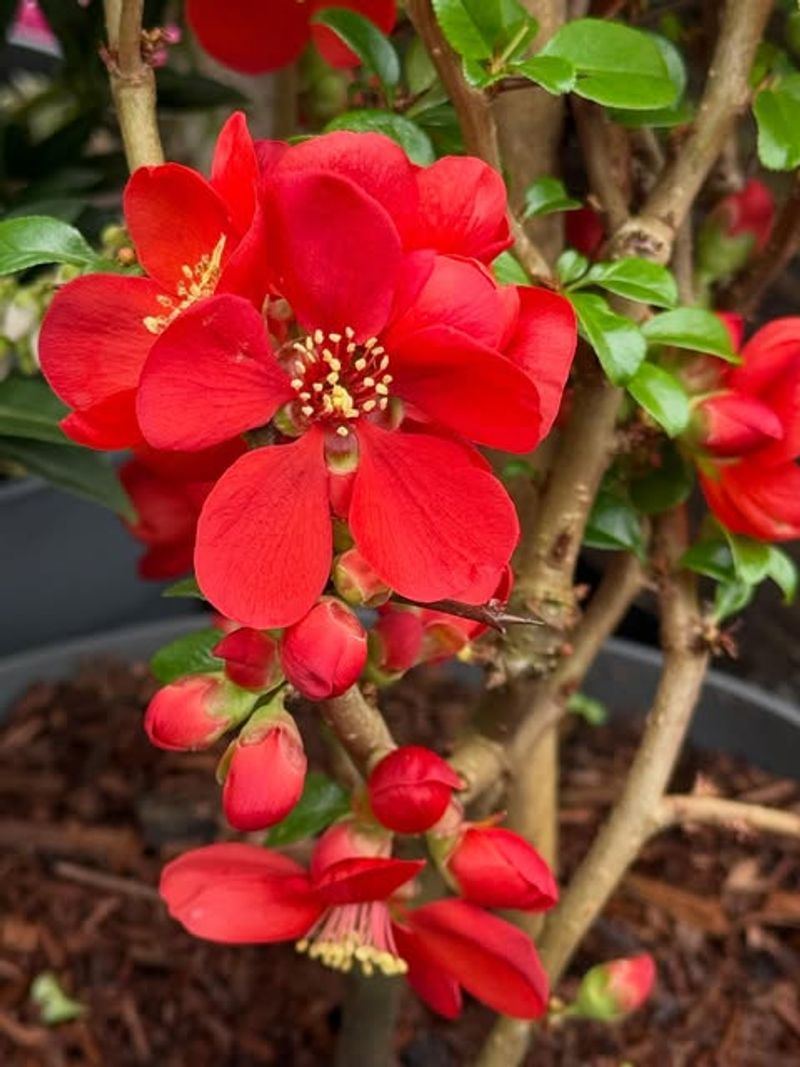
Flowering quince does not wait for spring to officially arrive. It starts pushing out blooms while everything else is still dormant, sometimes as early as late January in middle Georgia.
Branches covered in fiery red and orange flowers against bare wood create a stark, almost dramatic look that is unlike anything else in the yard at that time of year.
Chaenomeles speciosa is the botanical name, but most people just call it flowering quince and leave it at that. It handles cold snaps without complaint and bounces back quickly if a hard frost catches the early buds.
Plant it where you want a focal point, because it earns that spot. A south-facing wall or fence line works especially well, as the reflected warmth encourages even earlier blooms.
Your Georgia Garden Changes Every Week. Your Plan Should Too.
Gardening in Georgia changes quickly throughout the season. Every Friday you’ll receive a simple weekly plan showing exactly what to plant, prune, fertilize, harvest, and protect so you never miss the right timing.
Pruning flowering quince takes a bit of patience. Sharp thorns make the work scratchy, so thick gloves are a must.
Cut out crossing branches and old woody stems right after blooming to keep the plant open and productive. It tolerates clay soil better than most shrubs, which is a genuine advantage in many Georgia neighborhoods where heavy soil is just part of the deal.
Small yellow-green fruits follow the flowers and can actually be used for jams and jellies if you are feeling adventurous in the kitchen.
3. Serviceberry Covers Branches With Soft White Spring Flowers
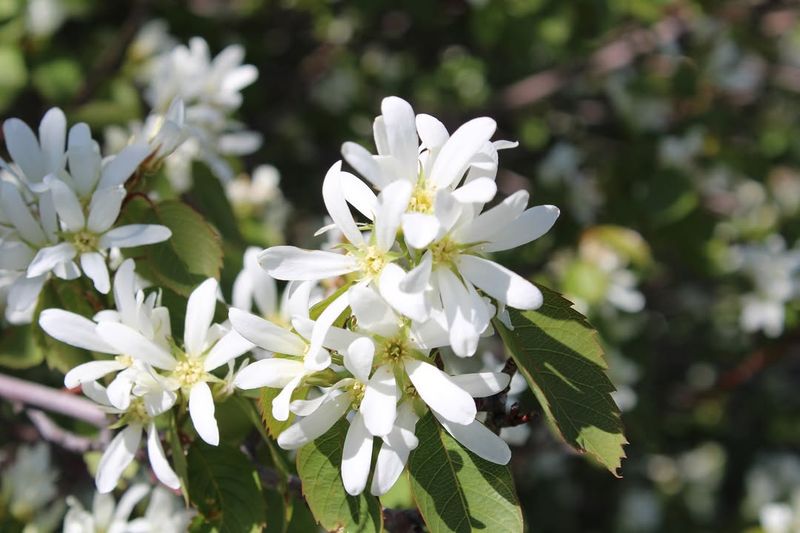
Serviceberry sneaks up on you. One week the branches look like sticks, and the next they are completely covered in small white flowers that flutter in the breeze like confetti.
Amelanchier arborea blooms before the leaves fully open, which gives the flowers a clean, airy look that heavier-blooming shrubs just cannot match. In Georgia, that show usually kicks off in late February or early March depending on the year.
Beyond the spring flowers, serviceberry keeps giving throughout the season. Small reddish-purple berries develop by late spring and early summer, and birds absolutely go after them.
If you want fruit for yourself, you have to act fast because the robins and mockingbirds are not waiting around. The berries taste mildly sweet and work well in pies and preserves.
Fall color is another reason to plant serviceberry in Georgia yards. Leaves shift to orange, red, and yellow in autumn, which means you get three distinct seasons of visual interest from one plant.
It handles partial shade reasonably well, making it useful in spots under taller trees where other flowering shrubs struggle. Keep the soil consistently moist during the first couple of growing seasons to help roots establish a strong foothold.
After that, it handles dry stretches without much fuss and keeps performing year after year with minimal intervention from you.
4. Spirea Produces Light Pink Or White Clusters In Spring
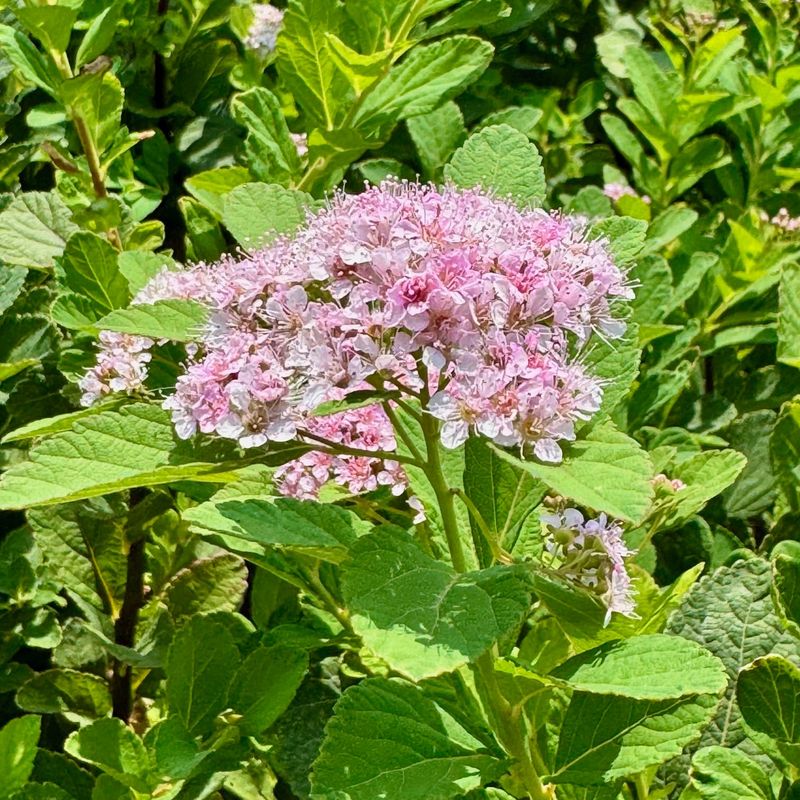
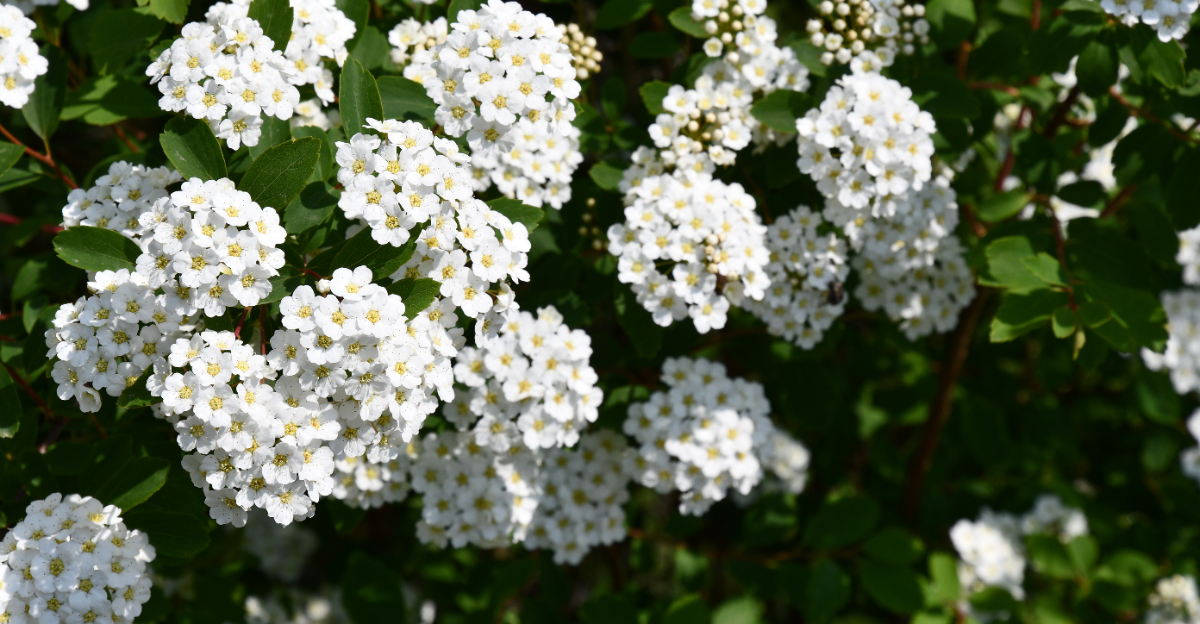
Spirea is one of those shrubs that looks like it requires a professional gardener but actually asks for very little. Bridal wreath spirea, in particular, puts on a show in Georgia that is hard to ignore.
Long arching branches bend under the weight of thousands of tiny white flowers in spring, creating a waterfall effect that looks intentional and impressive without much planning on your part.
Spiraea prunifolia and Spiraea thunbergii are the two types most commonly found in Georgia nurseries, and both perform well across the state.
Pink varieties like Anthony Waterer bloom a bit later and on a more compact frame, making them better choices for smaller yards or tighter planting spots near walkways.
Full sun is where spirea really shines, though it tolerates some afternoon shade without losing much flower production.
After blooming, a hard cutback keeps the plant from getting leggy and promotes fresh growth. Skip the pruning and spirea turns into a tangled mess within a few seasons.
Fertilizing lightly in early spring with a balanced granular fertilizer gives the plant a push before bloom time. Spirea rarely has serious pest problems in Georgia, which is a welcome break from babysitting more finicky plants.
It fits neatly into cottage-style gardens, foundation plantings, or along property lines where you want consistent color without constant work.
5. Viburnum Brings Full Rounded Blooms In Early Spring
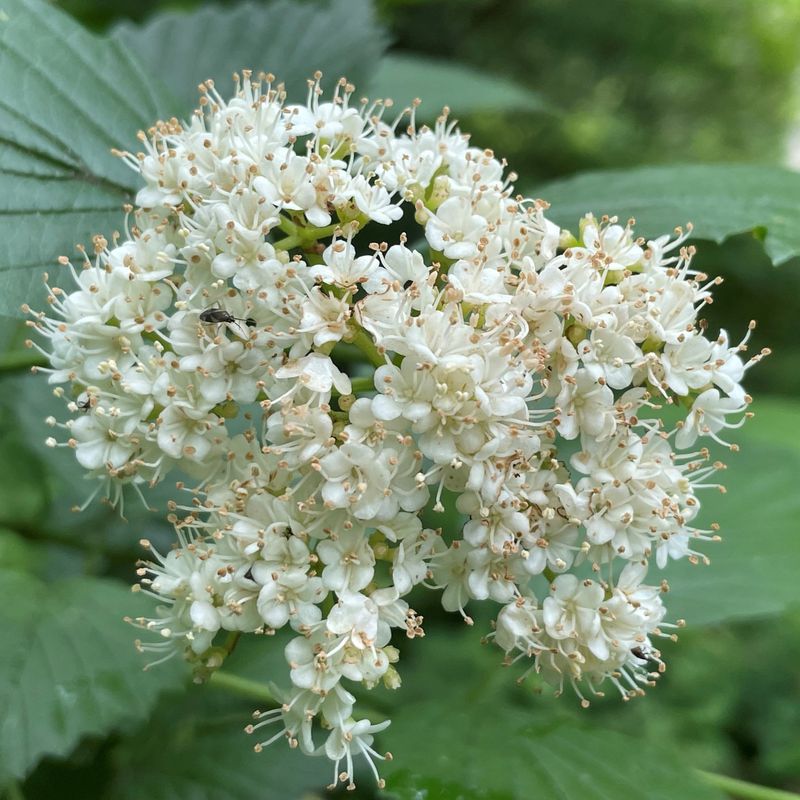
Korean spice viburnum stops people mid-stride. The fragrance hits before you even see the flowers, a sweet, clove-like scent that carries across a yard on a warm Georgia morning.
Rounded clusters of pinkish-white flowers cover the plant in early spring, and the combination of smell and visual impact makes this shrub genuinely hard to walk past without stopping.
Viburnum carlesii is one of the best species for Georgia conditions, tolerating both clay-heavy soil and the occasional drought stretch that hits in late spring.
Doublefile viburnum, Viburnum plicatum f. tomentosum, offers a different look with horizontal branching and flat-topped flower clusters that line up along each branch like decorations.
Both types bring pollinators into the yard, which benefits everything else growing nearby.
Planting viburnum near a patio, porch, or window makes the most of that fragrance.
Put it somewhere you actually spend time outdoors, and the scent becomes part of the whole spring experience rather than something you only notice when walking by.
Viburnums grow at a moderate pace, reaching anywhere from five to ten feet depending on the variety. Pruning right after flowering keeps size in check without cutting off next year’s buds.
Berry production in fall and winter adds another layer of interest, with clusters of red, blue, or black fruit that birds rely on during colder months across Georgia.
6. Forsythia Lights Up Shrubs With Bright Yellow Flowers
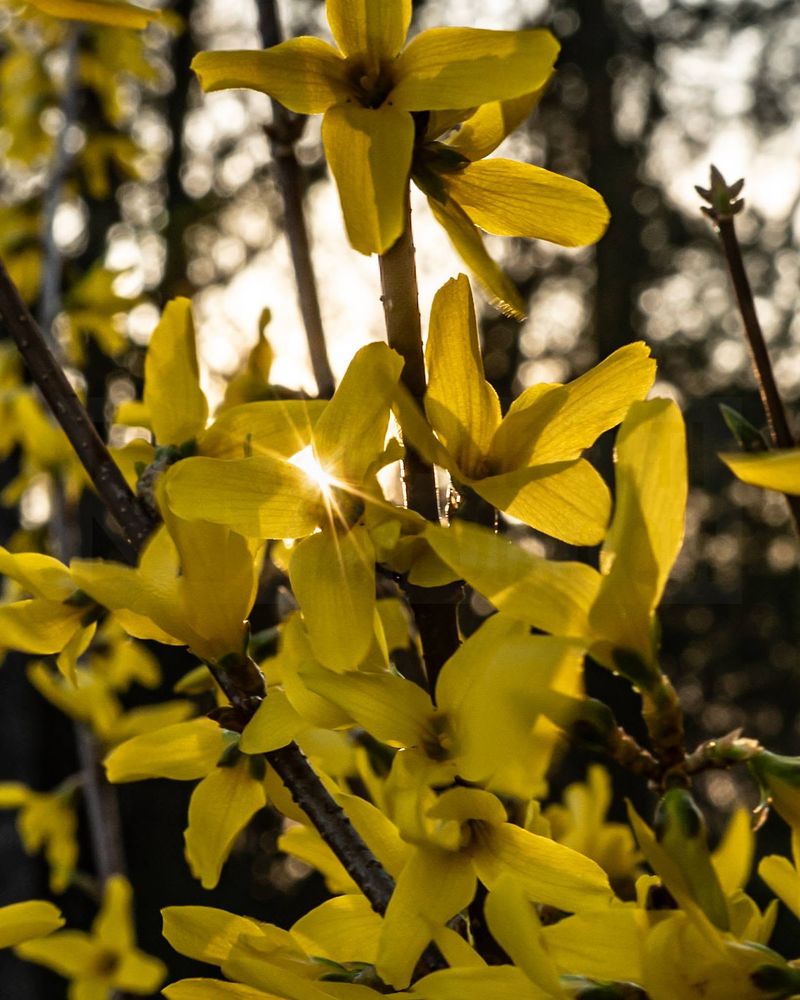
Forsythia is basically spring’s announcement. Before any other plant has figured out what month it is, forsythia is already blasting bright yellow flowers from every branch.
In Georgia, that can happen as early as late January, which makes it one of the earliest reliable signs that the cold is actually loosening its grip. Planting one near a window means you get that pop of color from inside the house on gray winter mornings.
Forsythia x intermedia is the most common type in Georgia nurseries, and it grows fast. Within a few seasons, a small plant can reach eight to ten feet tall and just as wide, so placement matters.
Giving it space from the start saves a lot of frustration later. Full sun produces the heaviest bloom load, though partial shade still yields decent color.
Just do not expect the same density of flowers in shadier spots.
Pruning forsythia is where most people go wrong. Cutting it into a tight ball shape removes most of the flowering wood and turns a naturally graceful arching shrub into something that looks awkward.
Let it grow in its natural form and just thin out old canes at the base every few years to keep things fresh. Right after blooming is the window for pruning.
Wait too long and you are cutting off next year’s buds. Forsythia roots easily from cuttings, so sharing starts with neighbors is simple and satisfying.
7. Beauty Bush Adds Soft Pink Bell Shaped Blooms In Spring
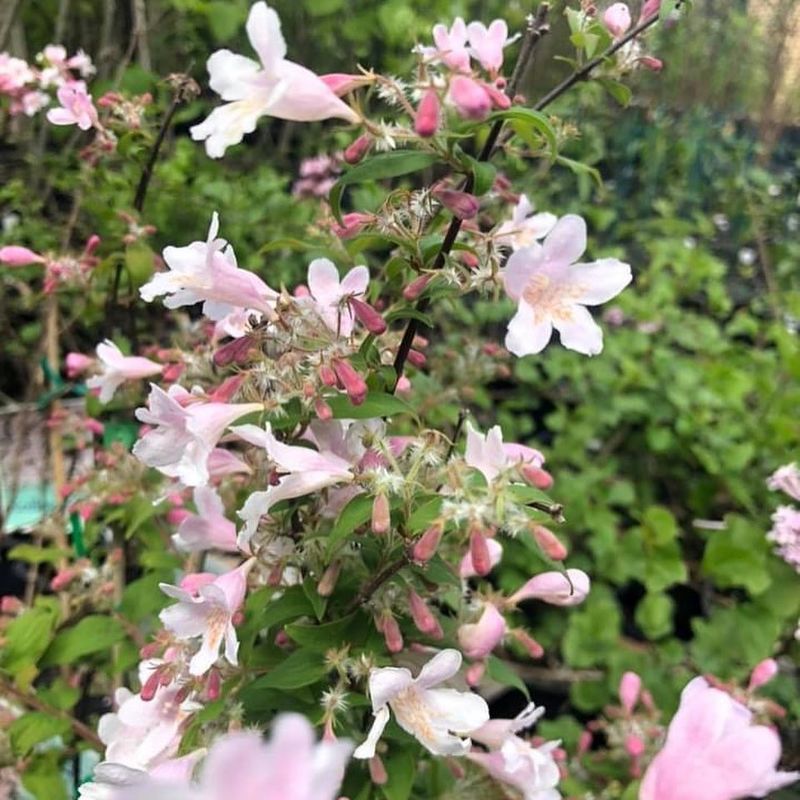
Beauty bush is the kind of plant that gets completely overlooked at the nursery, then completely admired when it finally blooms.
Kolkwitzia amabilis pushes out thousands of tiny soft pink bell-shaped flowers in late spring, usually right after most spring bloomers have already peaked in Georgia.
That timing makes it useful for extending the color season when other shrubs are winding down.
It grows into a large, arching shrub that can reach ten feet or more if left alone. That size works well as a backdrop in a mixed border or along a fence line where height is actually welcome.
Smaller yards might need a spot where the spread can be managed with occasional pruning. Full sun is where beauty bush performs best, and Georgia’s long sunny springs give it exactly what it needs to put on a full show.
After blooming, the spent flowers give way to fuzzy tan seed clusters that stay on the plant into fall and add a subtle textural detail that is easy to appreciate up close. Birds occasionally pick at the seeds, which is a bonus if you enjoy watching wildlife in the yard.
Soil quality is not a major concern for beauty bush. It adapts to average garden soil without needing amendments or special attention.
Water regularly during the first growing season, then pull back and let it find its footing on its own terms across Georgia’s variable conditions.
8. Oakleaf Hydrangea Produces Large Blooms With Strong Garden Impact
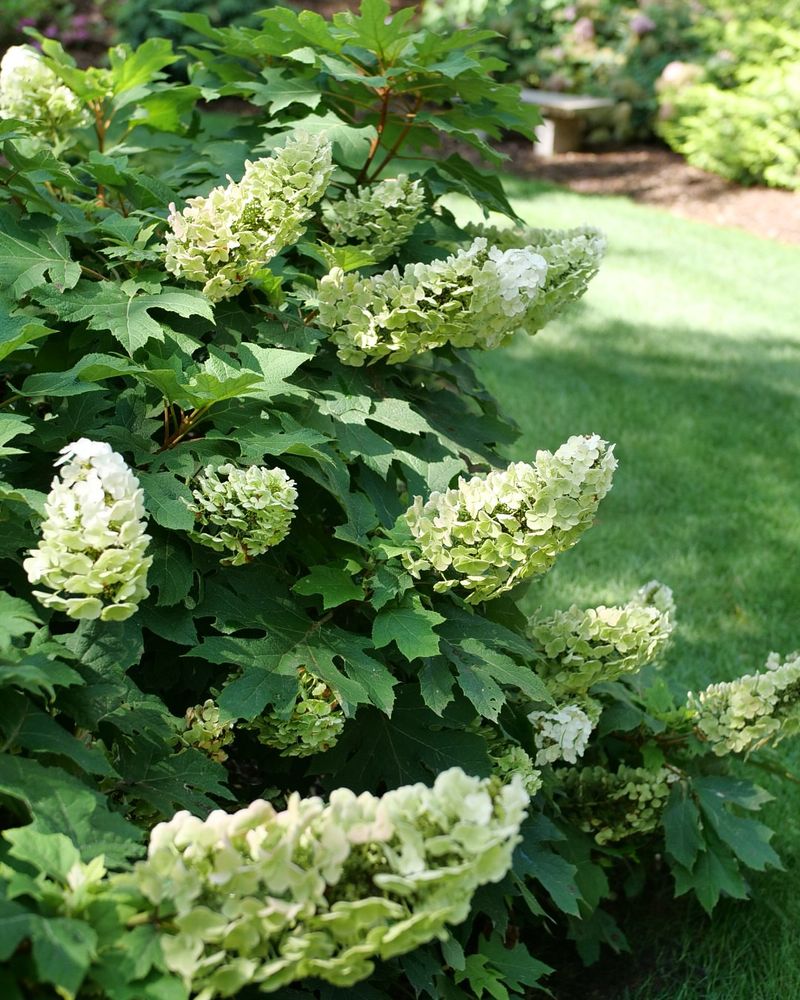
Oakleaf hydrangea earns its space in a Georgia garden across multiple seasons, but spring is when it really makes a statement.
Large cone-shaped flower clusters emerge white and crisp in late spring, standing upright above deeply lobed leaves that genuinely resemble red oak foliage.
Few shrubs pull off that combination of bold flower and interesting leaf shape at the same time.
Hydrangea quercifolia is native to the southeastern United States, which means it already knows how to handle Georgia summers, clay soil, and stretches of dry weather.
It thrives in partial shade, making it one of the better options for spots under tall trees where getting anything to bloom can feel like a challenge.
Morning sun with afternoon shade hits the sweet spot for flower production and leaf health.
As the season moves into summer, the white blooms gradually shift to soft pink and then to parchment tan, and the dried flower heads stay attractive well into fall.
Exfoliating cinnamon-brown bark becomes a feature in winter when the leaves have dropped, giving the plant year-round presence in the landscape.
Fall foliage turns deep burgundy and bronze, which is genuinely stunning in Georgia’s October light. Pruning is rarely needed beyond removing damaged wood.
Let it grow at its own pace, and oakleaf hydrangea rewards you with a shrub that looks intentional and impressive through every single season of the year.