Why Some California Neighborhoods See More Wildflowers Than Others
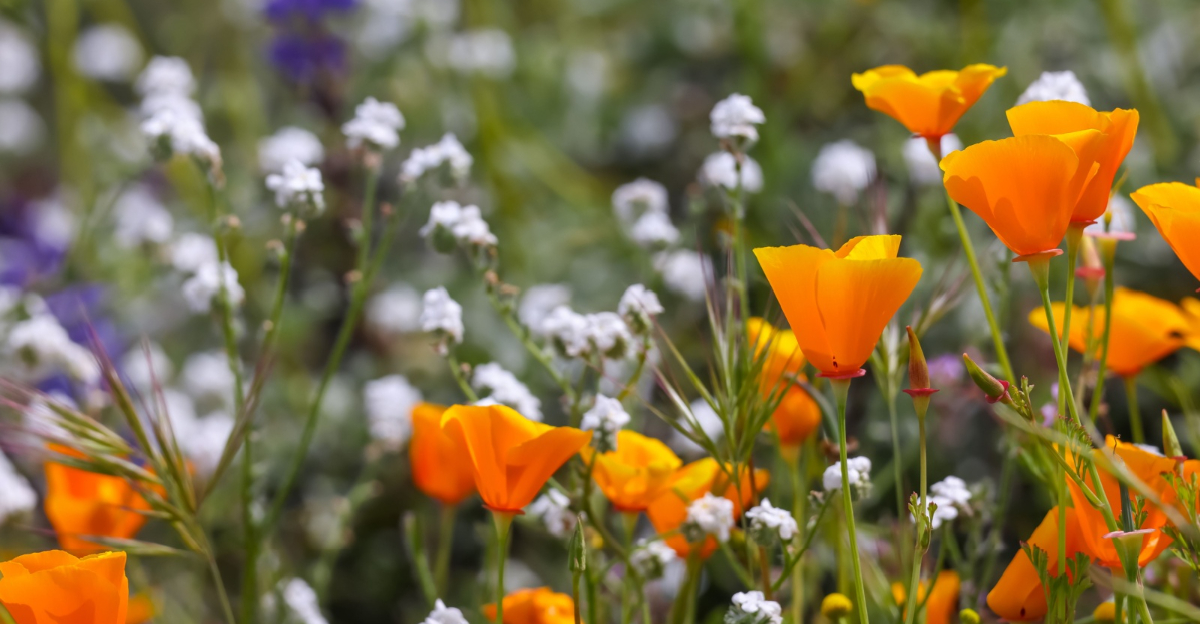
Spring in California can feel unpredictable in the best way. One neighborhood lights up with bright poppies and lupines, while just a short drive away, the landscape stays quiet and green.
That contrast often leaves gardeners wondering why the show skips certain streets and hillsides.
California’s wildflower displays depend on a mix of timing, climate, and local conditions that shift from place to place.
Rainfall patterns, soil makeup, coastal influence, and even past land use all play a role. Once you start noticing these patterns, it becomes easier to understand why some areas burst into color while others barely change at all.
1. Rainfall Patterns And Seasonal Timing Across California
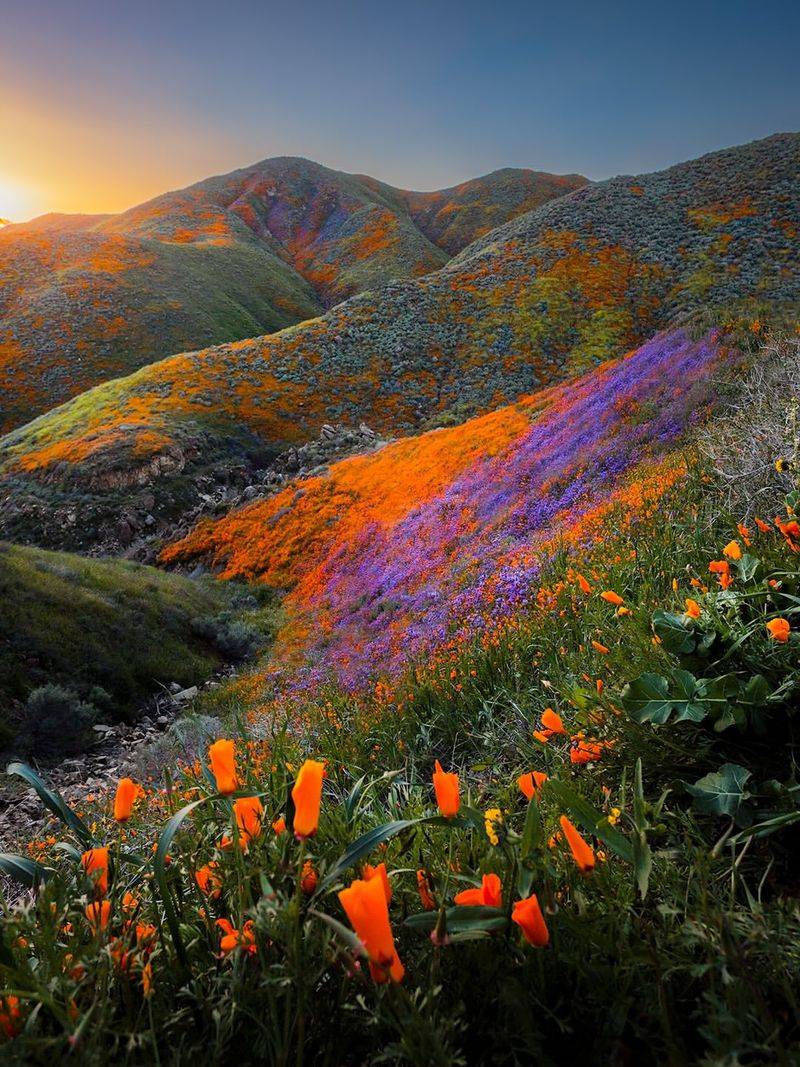
Walk through a California neighborhood in late March after a wet winter, and the roadsides practically glow with color.
The timing and amount of rainfall during the cooler months plays a huge role in whether wildflowers germinate and bloom at all.
California’s Mediterranean climate brings most of its rain between November and April, which sets the stage for spring wildflower growth – but the details matter more than people often realize.
Seeds need moisture to break dormancy, and they need that moisture to arrive at the right time. If rain falls too early in autumn before temperatures cool enough, seeds may sprout prematurely and fail before spring.
If rain arrives too late or in too small an amount, germination rates drop sharply and blooms remain sparse.
Neighborhoods that receive slightly more consistent rainfall due to local geography tend to see noticeably fuller displays than drier spots nearby.
Rainfall totals vary significantly across California even within the same county.
Coastal communities in the Bay Area or San Luis Obispo County may receive several more inches of rain per season than inland neighborhoods just 20 miles away.
That difference directly impacts how many seeds successfully sprout.
Years with well-spaced winter rains followed by a gradual dry-out in spring tend to produce the most vibrant blooms, giving seeds time to establish before summer heat sets in.
The 2026 superbloom in Death Valley showed just how dramatically even the driest places can transform when the right rainfall arrives at the right moment.
2. Soil Types And Nutrient Differences Between Neighborhoods
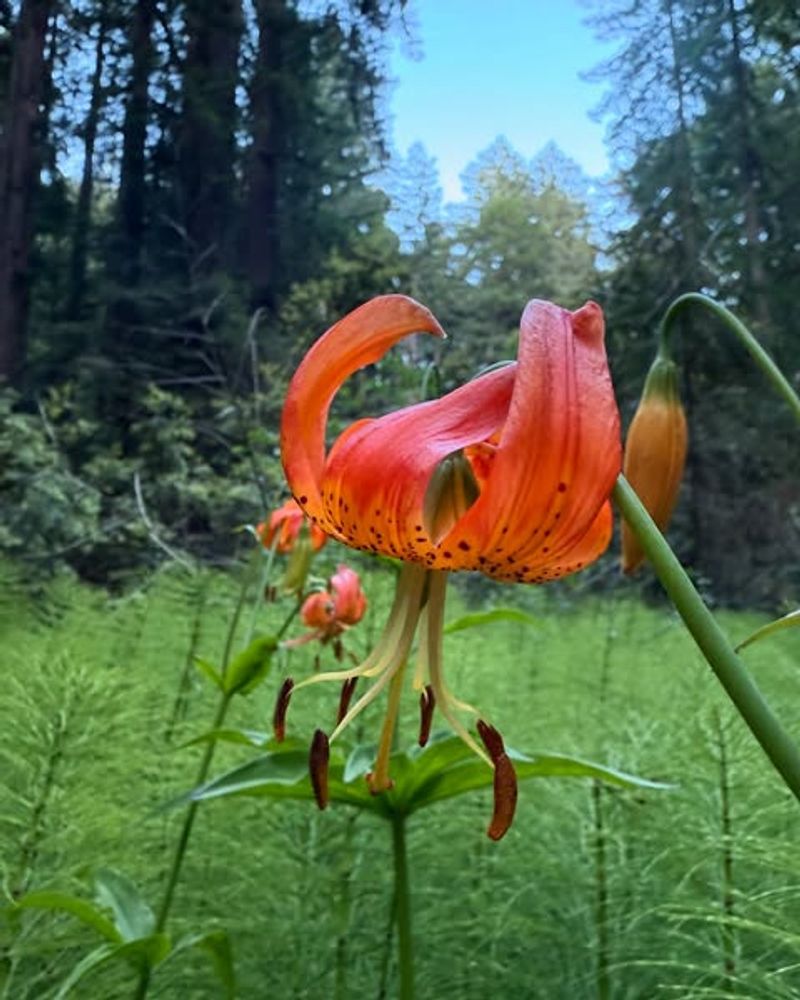
Not all dirt is created equal, and in California, the soil beneath your feet can make or break a wildflower season.
The state sits on a patchwork of geological formations that produce wildly different soil types – from heavy clay in the Central Valley to sandy loam along the coast and serpentine rock outcroppings in the Coast Ranges.
Each of these soil types supports a different community of plants.
Interestingly, nutrient-poor soils often support more diverse wildflower displays than rich, fertile ground.
When soil is low in nitrogen and phosphorus, fast-growing grasses and weeds have a harder time outcompeting slower-growing native wildflowers.
Mount Tamalpais State Park near San Francisco is a well-known example where thin, nutrient-poor soils create conditions that native wildflowers actually prefer.
In contrast, heavily fertilized residential neighborhoods often end up dominated by non-native grasses that crowd out native bloomers.
Your California Garden Changes Every Week. Your Plan Should Too.
Gardening in California changes quickly throughout the season. Every Friday you’ll receive a simple weekly plan showing exactly what to plant, prune, fertilize, harvest, and protect so you never miss the right timing.
Soil drainage also matters quite a bit. Seeds sitting in waterlogged soil are prone to rot before they can germinate, while overly sandy soils may dry out too quickly after rain.
The sweet spot for most California native wildflowers tends to be well-draining soil with moderate organic content.
Homeowners who amend their soil heavily with compost or fertilizer in hopes of encouraging wildflowers may actually be working against themselves.
Understanding your neighborhood’s natural soil profile is one of the most useful steps toward figuring out why some areas bloom more reliably than others.
3. Microclimates Created By Coastlines, Hills, And Urban Areas
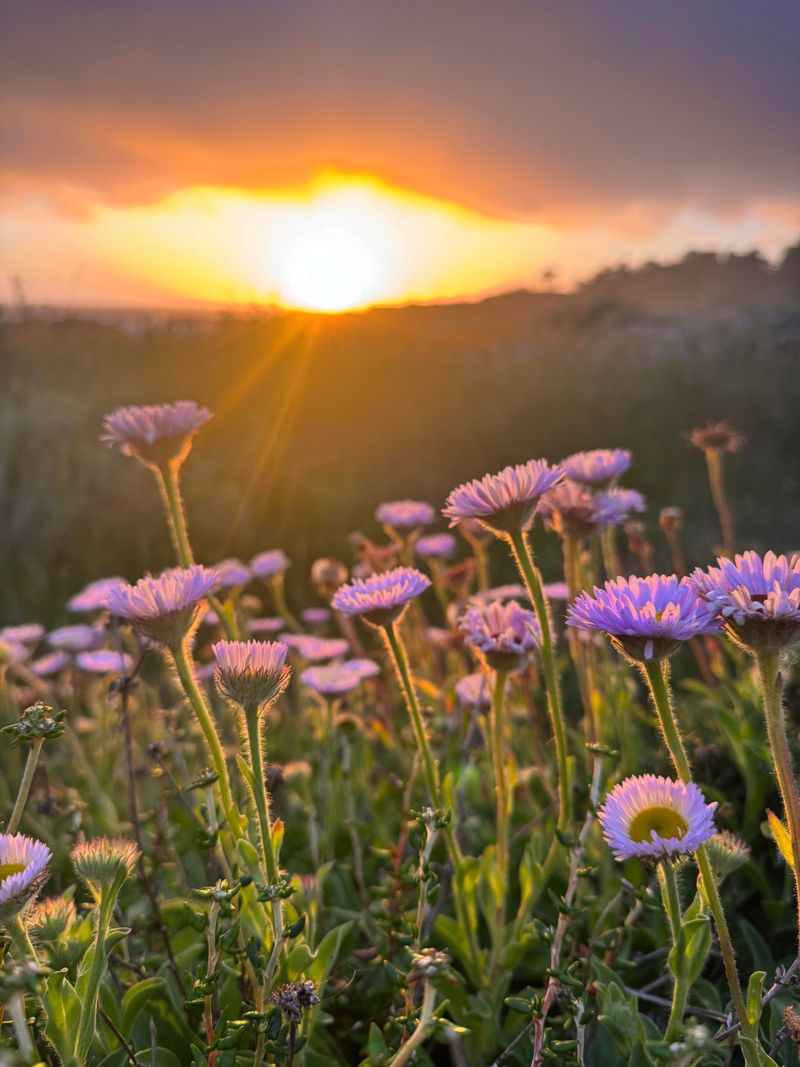
California is famous for its microclimates, and anyone who has driven from San Francisco to Sacramento on a summer afternoon already knows how dramatically conditions can shift within just an hour. That same principle applies to wildflowers.
Two neighborhoods separated by a single ridge or a stretch of urban development can experience noticeably different temperatures, humidity levels, and even rainfall totals during the same storm.
Coastal neighborhoods benefit from marine layer moisture, which can supplement rainfall and keep soils from drying out too fast in spring. This extra humidity gives seeds a slightly longer window to germinate and establish before summer heat arrives.
Hillside communities, depending on their aspect, may receive more or less direct sunlight, which affects soil temperature and evaporation rates.
North-facing slopes in California tend to stay cooler and retain moisture longer, often supporting different wildflower communities than the sun-baked south-facing slopes right beside them.
Urban heat islands are another microclimate factor worth understanding. Paved surfaces, rooftops, and buildings absorb heat during the day and release it at night, raising nighttime temperatures in densely developed neighborhoods.
This can push spring temperatures higher earlier in the season, potentially causing wildflower seeds to dry out before they establish strong root systems.
Suburban neighborhoods with more green space, tree cover, and permeable surfaces tend to stay cooler and retain moisture better, creating conditions that are friendlier to spontaneous wildflower growth.
Geography shapes everything in California, right down to the flowers at the end of your street.
4. Sunlight Exposure And Temperature Variations At A Local Level
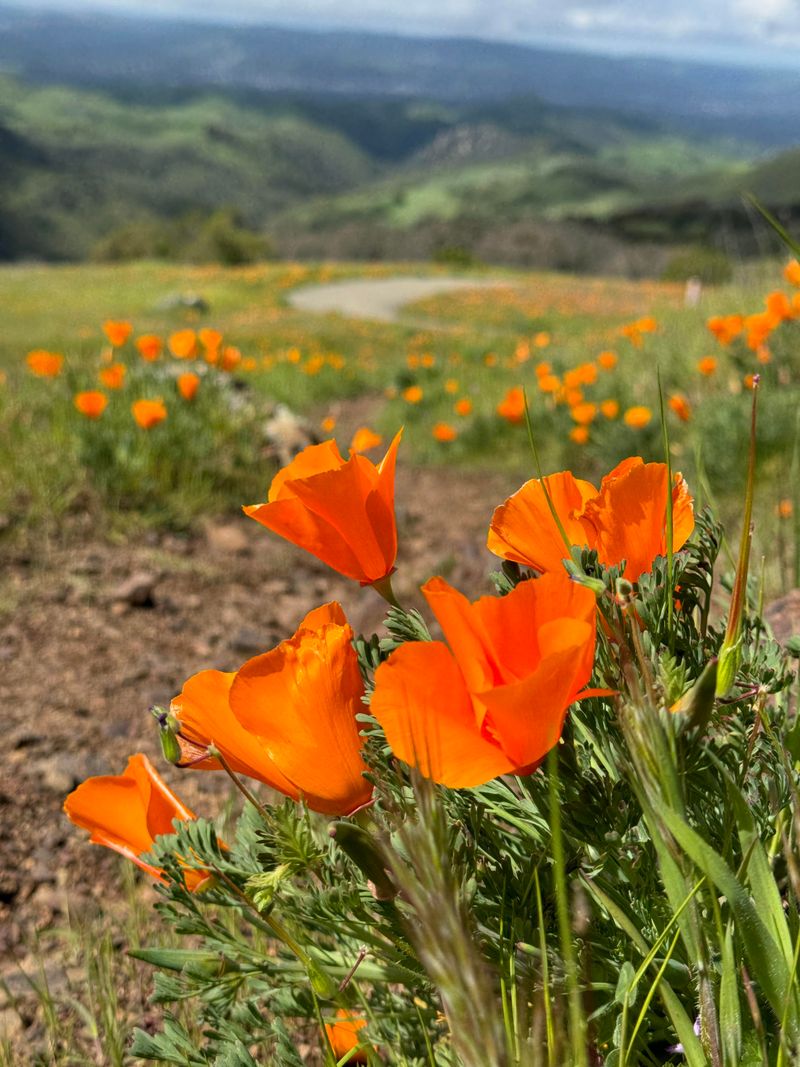
Sunlight might seem like a simple factor – either a spot gets it or it doesn’t – but at the neighborhood level, the angle, duration, and intensity of sun exposure shapes wildflower growth in some surprisingly specific ways.
California’s varied terrain means that even within a single neighborhood, some patches of land get full sun from dawn to dusk while others are shaded by homes, trees, or hills for much of the day.
Most California native wildflowers, including the iconic California poppy, are sun-lovers that need several hours of direct light daily to bloom well.
Shaded areas under dense tree canopies or in the shadow of tall buildings tend to support fewer wildflower species and produce less dramatic displays.
On the other hand, some native species like blue-eyed grass and shooting stars prefer partial shade, which means shaded spots aren’t necessarily barren – they just support a different mix of plants.
Temperature swings at the local level also influence bloom timing. Neighborhoods in low-lying areas or inland valleys can experience late spring frost events that damage young seedlings just as they begin to emerge.
Coastal communities often avoid these cold snaps due to the moderating effect of the ocean, which keeps nighttime temperatures more stable.
Higher elevation neighborhoods may see blooms arrive several weeks later than nearby lowland areas simply because the soil takes longer to warm.
Paying attention to how sunlight moves across your specific yard or block gives real clues about which wildflowers are most likely to thrive there naturally.
5. Native Seed Banks And Past Land Use History
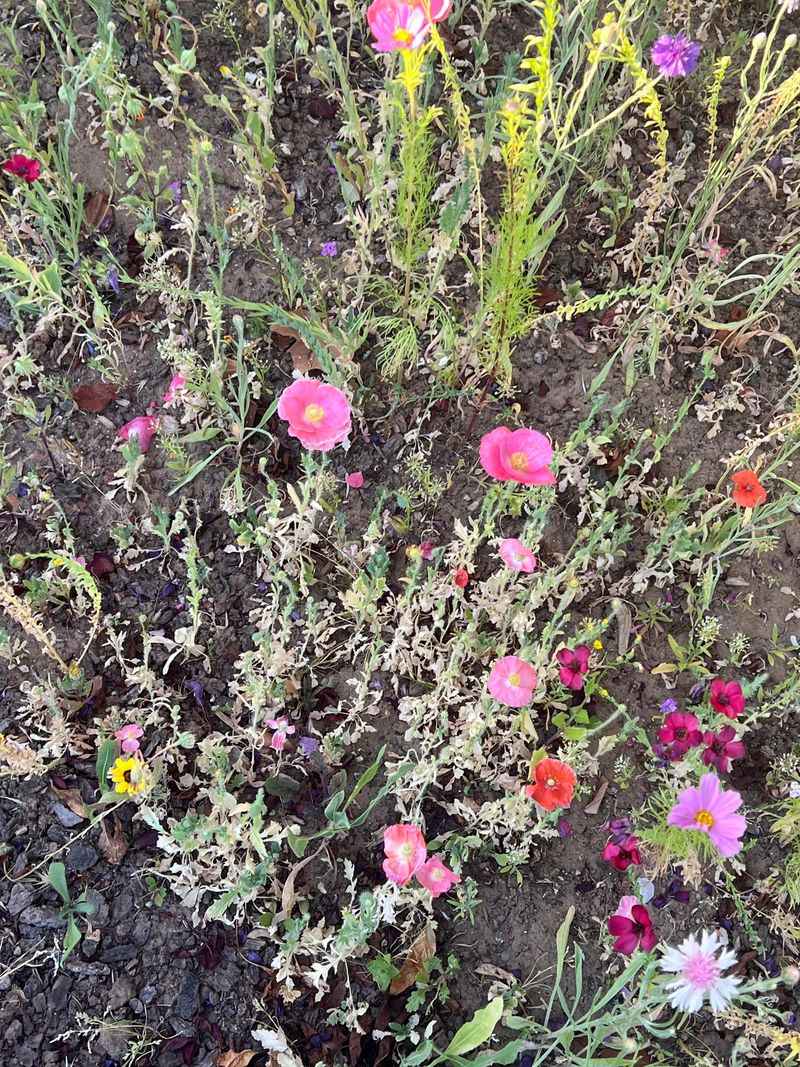
Beneath the surface of California’s soil lies something that most people never think about: a living library of seeds waiting for the right conditions to wake up.
This underground collection, known as the seed bank, can hold viable seeds for years or even decades.
Neighborhoods built on land that was never heavily disturbed tend to have richer native seed banks, which is a big reason why some areas seem to bloom effortlessly year after year.
Land use history shapes seed bank composition more than most people realize. A neighborhood built on former agricultural land may have a seed bank dominated by non-native crop plants and weeds rather than native wildflowers.
Areas that were once oak woodland, coastal scrub, or native grassland often retain remnant seed populations that resurface when conditions align.
This is why older, less-developed neighborhoods in California sometimes see more spontaneous wildflower growth than newer subdivisions built on heavily graded land.
Grading and soil disturbance during construction can bury or destroy native seed banks entirely, replacing them with subsoil that has little biological activity and few viable seeds.
Some restoration projects in California work specifically to reintroduce native seed mixes to areas where the original seed bank has been lost.
Even in urban settings, small patches of undisturbed soil along fence lines, creek banks, or road shoulders can harbor surprising seed bank diversity.
If your neighborhood has older trees or remnant patches of native vegetation nearby, there is a reasonable chance that a dormant seed bank is already waiting for a good rain year to show itself.
6. Impact Of Development, Landscaping, And Irrigation Practices
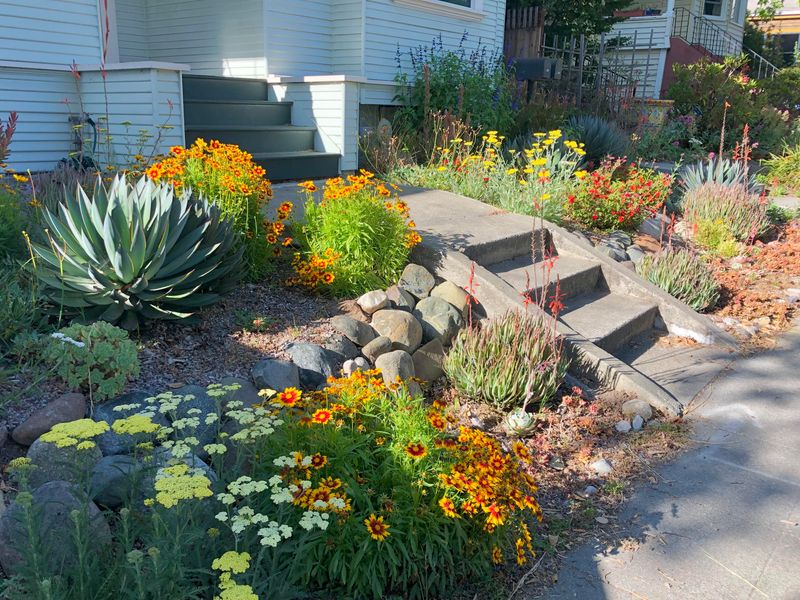
Few things shape a neighborhood’s wildflower potential more than what people choose to do with their land.
Across California, the shift toward drought-tolerant landscaping has opened up new conversations about how residential choices affect local ecology, and wildflowers are right at the center of that conversation.
Lawns, in particular, create conditions that are almost completely hostile to native wildflowers.
Turfgrass lawns rely on regular irrigation, fertilization, and mowing – a combination that strongly favors non-native grasses over native bloomers.
The dense root systems of turf species outcompete wildflower seedlings, and the frequent watering schedule doesn’t match the dry-summer rhythm that California native plants evolved alongside.
Neighborhoods with high percentages of irrigated lawns tend to see fewer spontaneous wildflower displays, even in years when rainfall is generous in nearby undeveloped areas.
On the encouraging side, the growing movement toward California-friendly landscaping is changing some of this.
Homeowners who remove turf and replace it with decomposed granite, native groundcovers, or simply bare amended soil are sometimes surprised to find wildflowers appearing on their own within a season or two.
Seed mixes designed for California conditions are also widely available and relatively easy to establish in the right season.
Neighborhoods where several residents have made the switch to low-water landscaping often develop a patchwork effect where wildflower coverage gradually spreads as seed sources multiply.
Human choices at the household level genuinely add up across a whole neighborhood over time.
7. Wildfires, Disturbance, And Natural Regeneration Cycles
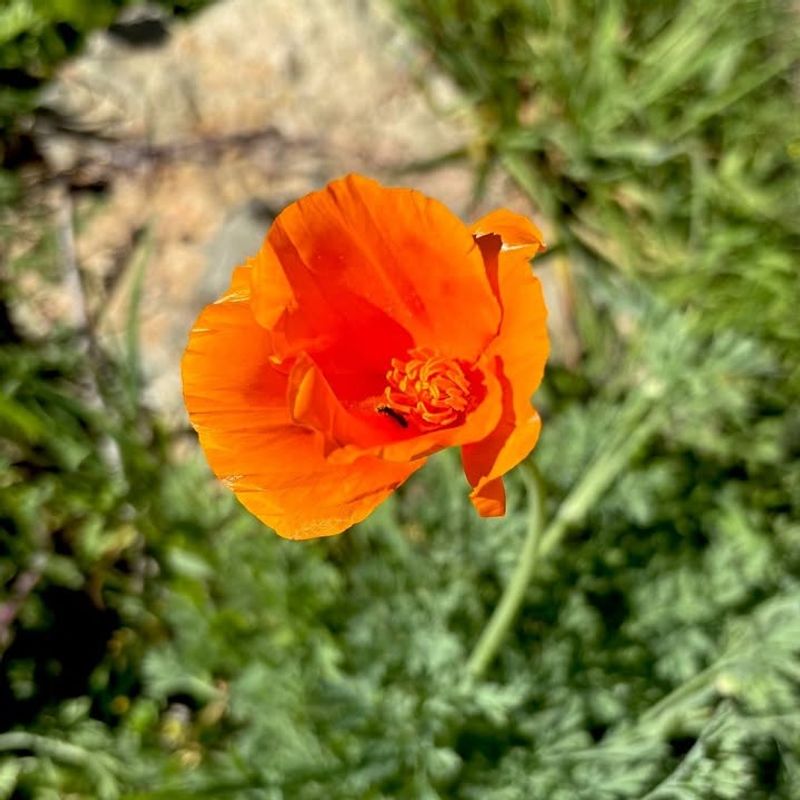
One of the most striking wildflower displays California produces happens in the year or two following a wildfire.
Burned hillsides that looked completely devastated in autumn can transform into seas of color by the following spring, a phenomenon that surprises people who aren’t familiar with how California’s native plant communities actually work.
Fire has shaped this state’s ecology for thousands of years, and many native wildflowers have adapted to thrive in its aftermath.
When fire clears away dense shrubs, invasive grasses, and accumulated plant debris, it creates open soil conditions with reduced competition and increased light.
Ash adds a temporary pulse of minerals to the soil, and the heat itself can trigger germination in certain fire-adapted seeds that remain dormant under normal conditions.
Species like fire poppy and whispering bells are rarely seen except in the years immediately following a burn, making post-fire blooms genuinely unique ecological events.
Disturbance doesn’t have to come from fire to have a similar effect. Road grading, erosion events, and even gopher activity can expose bare soil and give dormant seeds a chance to germinate.
Neighborhoods near wildland areas in California tend to benefit from these natural disturbance cycles in ways that fully urbanized areas simply cannot replicate.
However, frequent or severe disturbance without recovery time can deplete seed banks rather than refresh them.
The relationship between disturbance and wildflower abundance is a balance – enough disruption to open up growing space, but not so much that the soil ecosystem loses its ability to recover and regenerate on its own.