Michigan Native Plants That Bring More Beneficial Insects To Your Garden
A healthy garden in Michigan is not just about the plants you see. It is also about the insects working quietly behind the scenes.
While some bugs get a bad reputation, many of them actually help your garden grow stronger by pollinating flowers and keeping harmful pests under control.
The key is knowing how to attract the right ones. Native plants play a big role in making that happen. Because they have grown in Michigan for so long, they naturally support local insects that rely on them for food and shelter.
These plants create a balanced environment where helpful insects can thrive without much extra effort from you. Over time, this can lead to fewer pest problems and a more active, lively garden.
Once you discover which native plants bring in beneficial insects, you can turn your yard into a space that works with nature instead of against it.
1. Golden Alexander
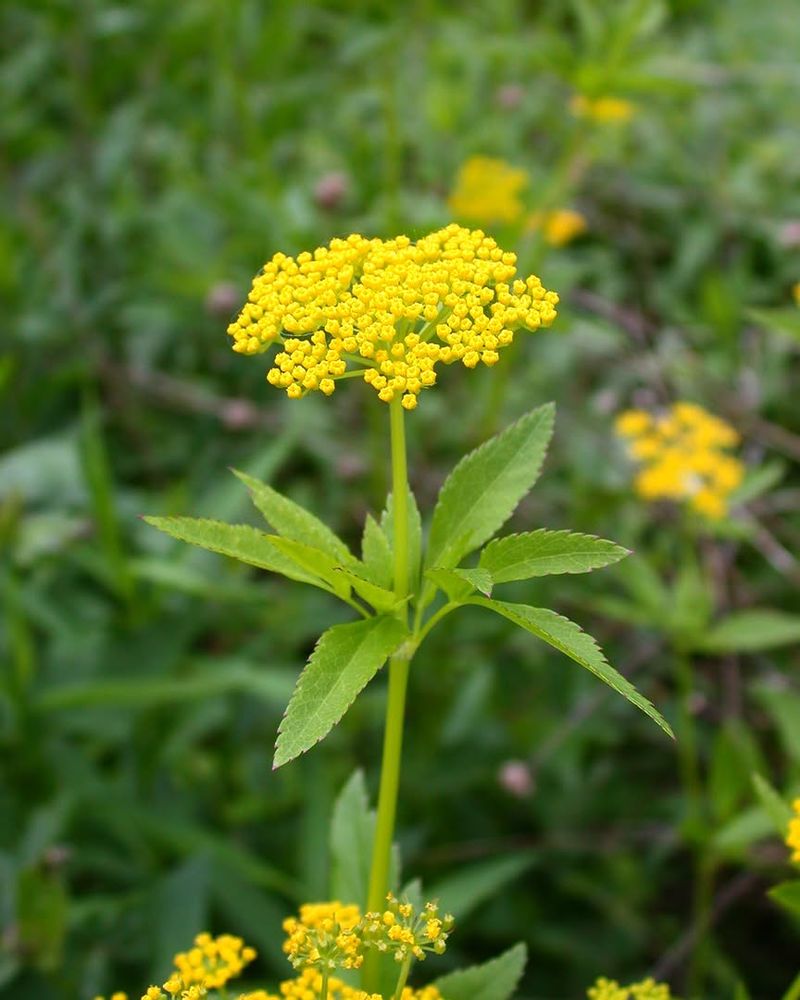
Few early-season bloomers match the reliability of Golden Alexander, a cheerful native wildflower that lights up Michigan gardens with clusters of tiny yellow flowers.
It typically blooms in spring, making it one of the first plants to offer nectar and pollen when beneficial insects are just waking up for the season. That early timing makes it genuinely valuable in any Michigan pollinator garden.
Golden Alexander grows well in full sun to partial shade and thrives in average to moist soil conditions, which are common across much of Michigan.
It reaches about two to three feet tall and fits naturally into garden borders, rain gardens, or wildflower meadows.
Once established, it comes back reliably each year without much fuss. What really sets this plant apart is its ability to attract predatory insects like lady beetles and parasitic wasps.
Lady beetles feed on aphids and soft-bodied pests, while parasitic wasps target caterpillars and other garden nuisances.
Both insects are drawn to the flat, open flower clusters that Golden Alexander produces, making foraging easy and accessible.
Gardeners across Michigan have found that adding this plant to mixed native beds creates a noticeable shift in insect activity early in the growing season. It is a smart, low-maintenance choice that pays off quickly.
2. Wild Bergamot
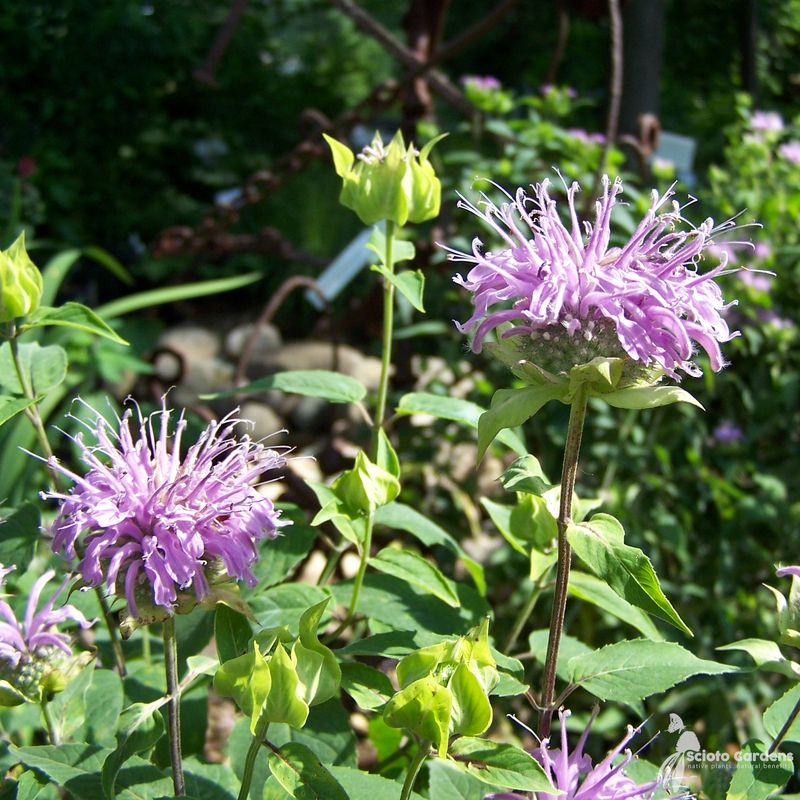
Walk past a patch of Wild Bergamot on a warm Michigan summer afternoon and you will immediately notice the hum of activity around it.
This tough native perennial produces soft lavender to pale pink tubular flowers that bloom from mid to late summer, right when many gardens are starting to wind down.
That timing makes it a standout performer in Michigan landscapes. Wild Bergamot handles dry soils and full sun with ease, which is a huge advantage during Michigan’s warmer, drier summers.
It grows between two and four feet tall and spreads gradually, filling in garden spaces with fragrant, attractive foliage.
The plant is also known as bee balm and belongs to the mint family, giving its leaves a pleasant herbal scent when brushed.
Beyond bees and butterflies, Wild Bergamot is especially good at drawing in hoverflies, which are underrated garden allies.
Your Michigan Garden Changes Every Week. Your Plan Should Too.
Gardening in Michigan changes quickly throughout the season. Every Friday you’ll receive a simple weekly plan showing exactly what to plant, prune, fertilize, harvest, and protect so you never miss the right timing.
Adult hoverflies feed on nectar and pollen, but their larvae actively feed on aphids hiding on plant stems and leaves.
Having a steady population of hoverflies means natural aphid control without spraying anything.
Wild Bergamot also attracts parasitic wasps and predatory beetles, rounding out a strong lineup of beneficial insects.
For Michigan gardeners looking to build a self-managing garden, this plant belongs near the top of the list.
3. New England Aster
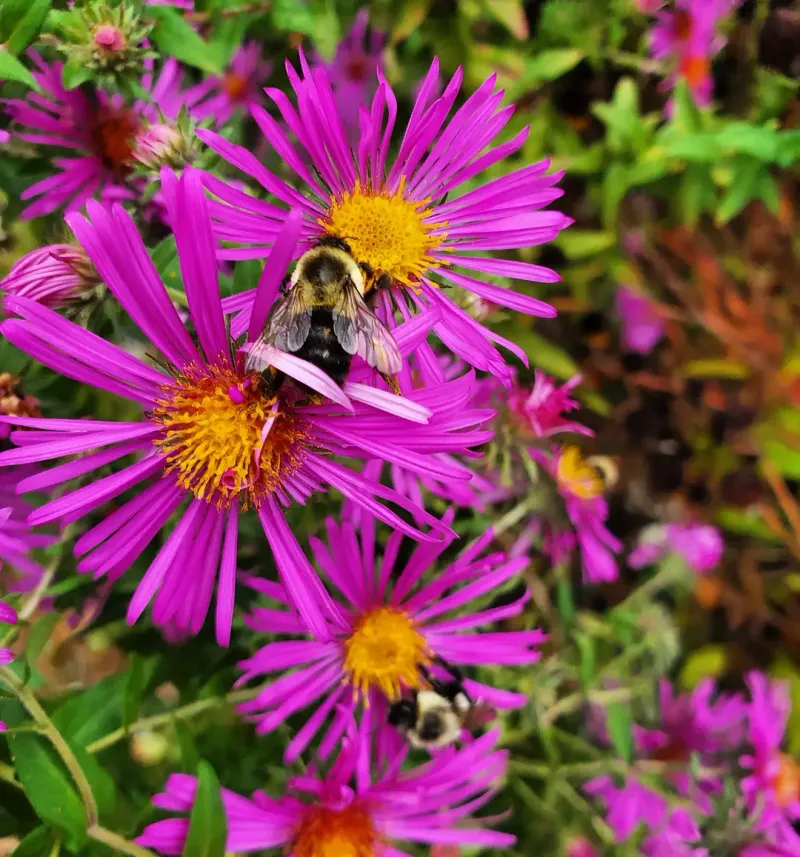
When most of the garden has finished blooming for the year, New England Aster steps in and delivers a stunning show of deep purple flowers with bright golden centers.
This Michigan native blooms from late summer well into fall, filling a critical gap in the season when beneficial insects still need food but have very few options available to them.
It is genuinely one of the most important fall-blooming natives you can grow. New England Aster grows best in full sun and adapts well to average garden soils throughout Michigan.
It can reach impressive heights of three to six feet, creating tall, dramatic clumps that add structure and color to the back of a border.
Cutting the plant back by half in early summer encourages bushier growth and more flowers without reducing its overall impact.
Parasitic wasps are among the most valuable insects this plant attracts in the fall season. These small wasps lay their eggs inside or on garden pests like caterpillars and aphids, naturally keeping pest populations in check.
New England Aster also supports native bees that are still active in autumn, including bumblebees building up their colonies before winter.
Monarch butterflies migrating south through Michigan also stop to fuel up on this plant’s nectar.
Planting it alongside goldenrod creates a powerful late-season combination for beneficial insect support.
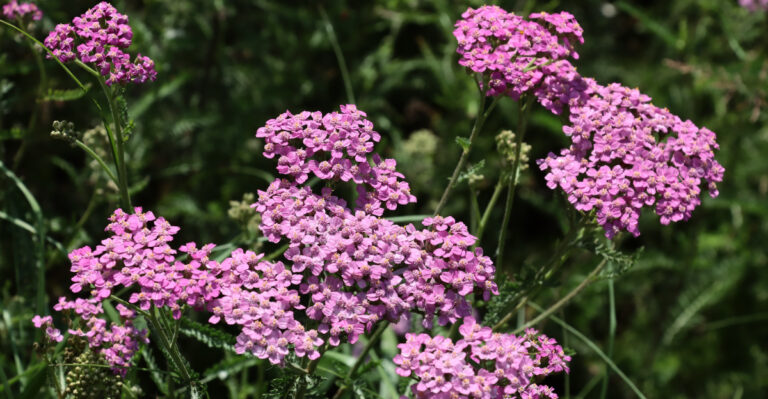
4. Yarrow
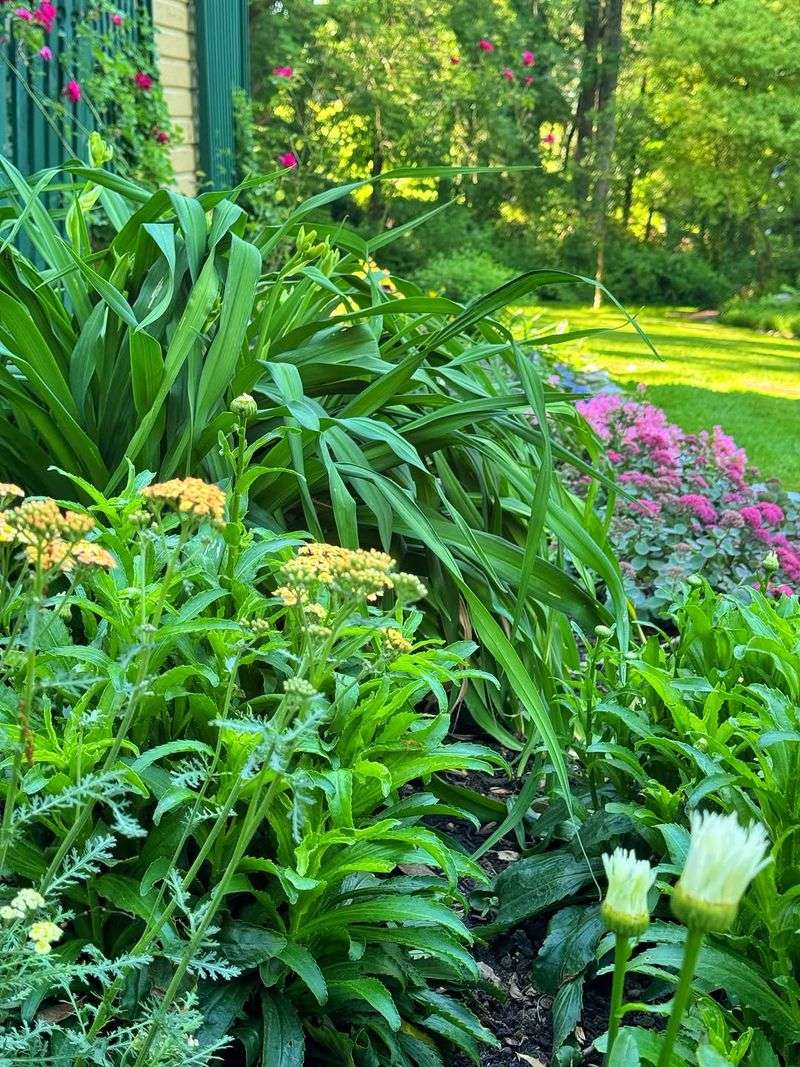
Yarrow has been growing in Michigan meadows and roadsides for centuries, and there is a very good reason it has always thrived here.
Its flat-topped flower clusters, usually white or soft yellow in native varieties, act like tiny landing platforms for a wide range of beneficial insects.
The structure of the flower head makes it easy for even small insects to access nectar and pollen without any struggle.
This plant is incredibly drought-tolerant once established and loves full sun, making it a practical choice for Michigan gardeners dealing with dry summers.
Yarrow grows one to three feet tall, spreads steadily through rhizomes, and comes back stronger every year.
It works beautifully in pollinator gardens, cottage-style borders, or naturalized areas where it can spread freely.
Lacewings are one of the standout beneficial insects that Yarrow consistently attracts. Adult lacewings feed on nectar and pollen, but their larvae are voracious predators of aphids, mites, and small caterpillars.
Lady beetles are also regular visitors, drawn to the open flower clusters where they can easily hunt for soft-bodied pests.
Planting Yarrow near vegetable beds or rose gardens is a smart strategy for Michigan gardeners who want natural pest management without chemicals.
It is one of those plants that works quietly in the background, keeping the entire garden in better balance all season long.
5. Black-Eyed Susan
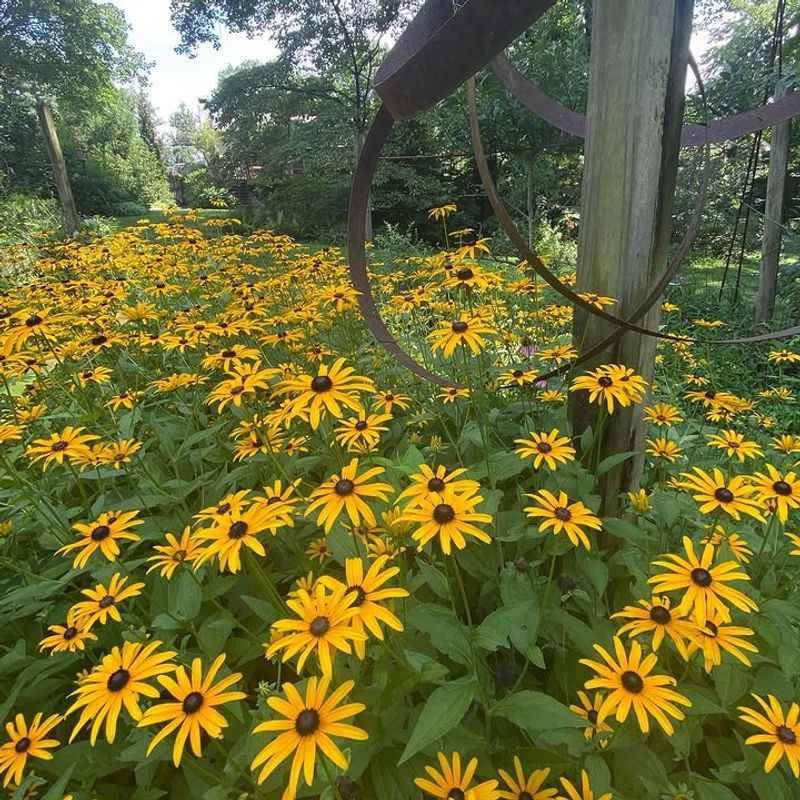
Bright, bold, and nearly impossible to ignore, Black-Eyed Susan is one of the most recognizable wildflowers across Michigan.
Its golden yellow petals surrounding a dark chocolate-brown center make it a garden showstopper from midsummer all the way into fall.
That long bloom window is one of the biggest reasons it works so well for supporting beneficial insects throughout the growing season.
Black-Eyed Susan is wonderfully adaptable, growing in clay, sandy, or loamy soils as long as it gets plenty of sun.
It reaches one to three feet tall and self-seeds generously, meaning a small planting can fill a larger area over a few seasons.
Michigan gardeners appreciate how little maintenance it needs once it gets going in a garden bed or meadow planting.
Soldier beetles are a fascinating beneficial insect that Black-Eyed Susan attracts reliably. These orange and black beetles feed on aphids and small caterpillars as adults while also pollinating flowers as they move between blooms.
Native bees, butterflies, and small predatory wasps are also frequent visitors throughout the season.
The open, daisy-like flower structure makes it easy for many different insects to land and feed.
Pairing Black-Eyed Susan with other Michigan natives like Wild Bergamot and Purple Coneflower creates a staggered bloom sequence that keeps beneficial insects active and well-fed from early summer through the first frost.
6. Purple Coneflower
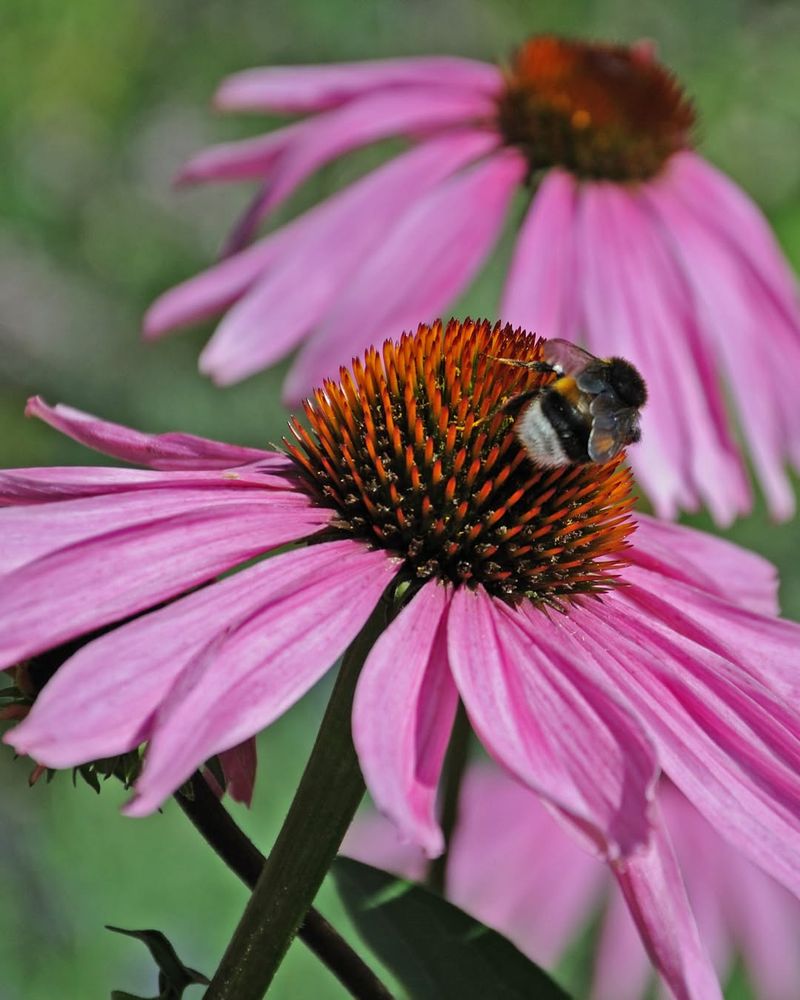
There is something almost magnetic about Purple Coneflower. On any sunny summer day in a Michigan garden, its spiky orange-brown centers are covered with a revolving cast of bees, butterflies, and predatory insects.
This native perennial, also known as Echinacea purpurea, is one of the hardest-working plants you can add to a Michigan landscape.
Purple Coneflower thrives in full sun and handles heat and drought with impressive toughness once its roots are established.
It grows two to four feet tall and produces flowers from midsummer into early fall, giving beneficial insects a reliable food source during the hottest part of the Michigan growing season.
The bold purple petals and raised center cones make it easy to spot from across the yard. Predatory wasps are among the most important beneficial insects that Purple Coneflower supports.
These wasps hunt caterpillars, beetles, and other garden pests to feed their larvae, helping maintain a natural balance in the garden.
Ground beetles and predatory beetles are also drawn to the plant, especially when it is planted in groups rather than as single specimens.
Leaving the seed heads standing through winter provides food for birds while also giving overwintering beneficial insects shelter near the base of the plant.
For Michigan gardeners, Purple Coneflower is not just a pretty face but a genuinely functional part of a healthy, thriving garden ecosystem.
7. Blue Vervain
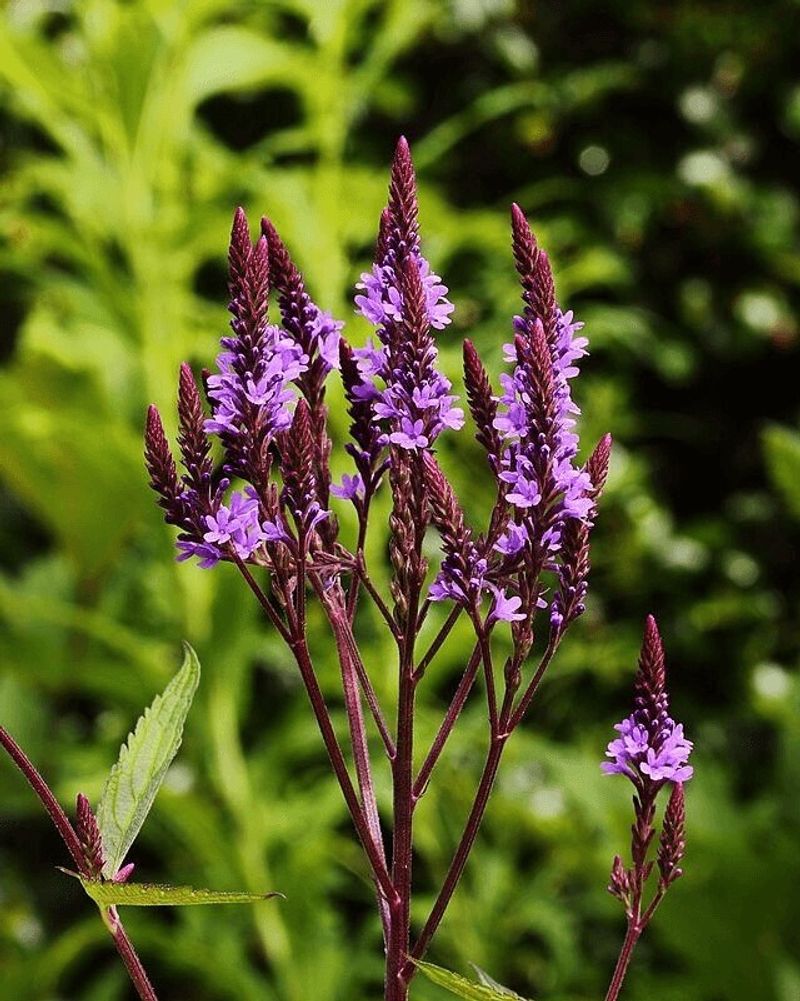
Not every Michigan native plant gets the attention it deserves, and Blue Vervain is a perfect example.
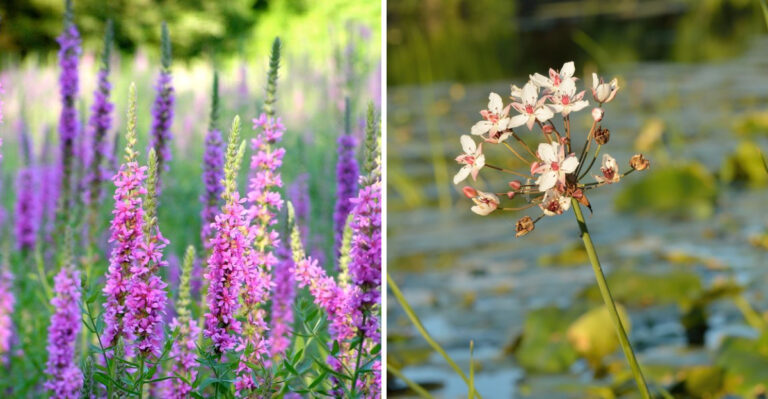
This striking wildflower sends up tall, branching spikes covered in tiny violet-blue flowers that bloom progressively from the bottom upward, creating a long and extended bloom period.
It is a plant that rewards patience and consistently delivers for beneficial insects throughout the summer months.
Blue Vervain prefers moist soil and full sun, making it an excellent choice for rain gardens, pond edges, or low-lying areas of a Michigan yard that stay consistently damp.
It grows three to five feet tall and has a bold, upright presence that works well in naturalistic garden designs.
Once established, it returns reliably each year and gradually forms larger clumps over time. Predatory flies and small parasitic wasps are the standout beneficial insects that Blue Vervain attracts.
Predatory flies feed on nectar as adults but lay their eggs near aphid colonies, where their larvae consume pests rapidly.
Small parasitic wasps use Blue Vervain’s flowers as a nectar source while hunting for caterpillars and other soft-bodied pests to parasitize.
Native bees, including specialist bees that only visit certain plant families, are also frequent visitors.
Michigan gardeners with wet or low-lying spots in their yards will find Blue Vervain one of the most useful and visually interesting native plants available for supporting a healthy insect community.
8. Swamp Milkweed
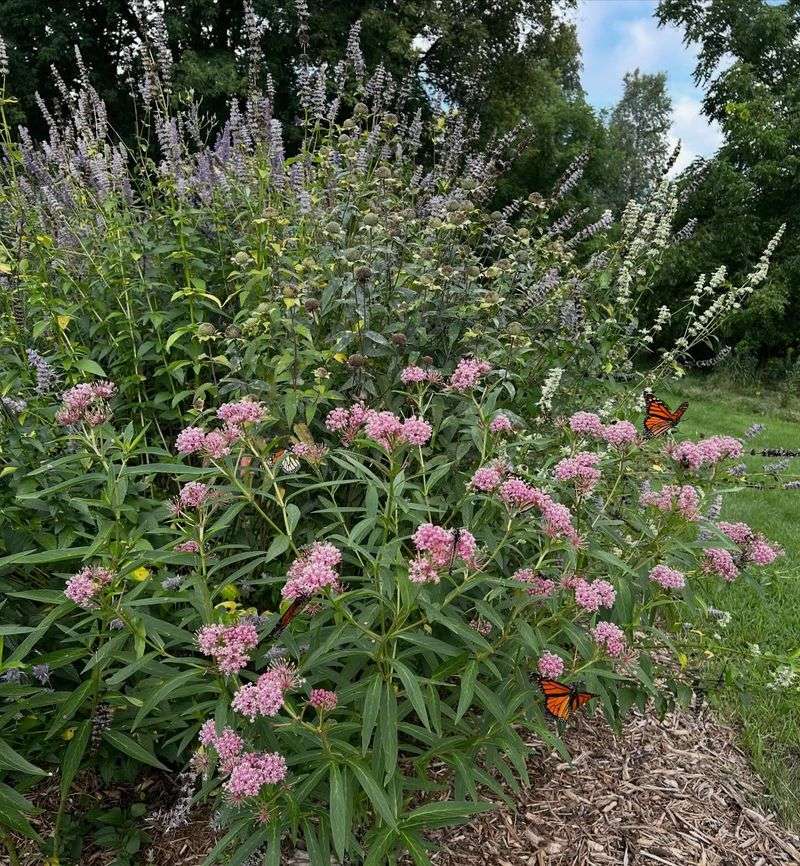
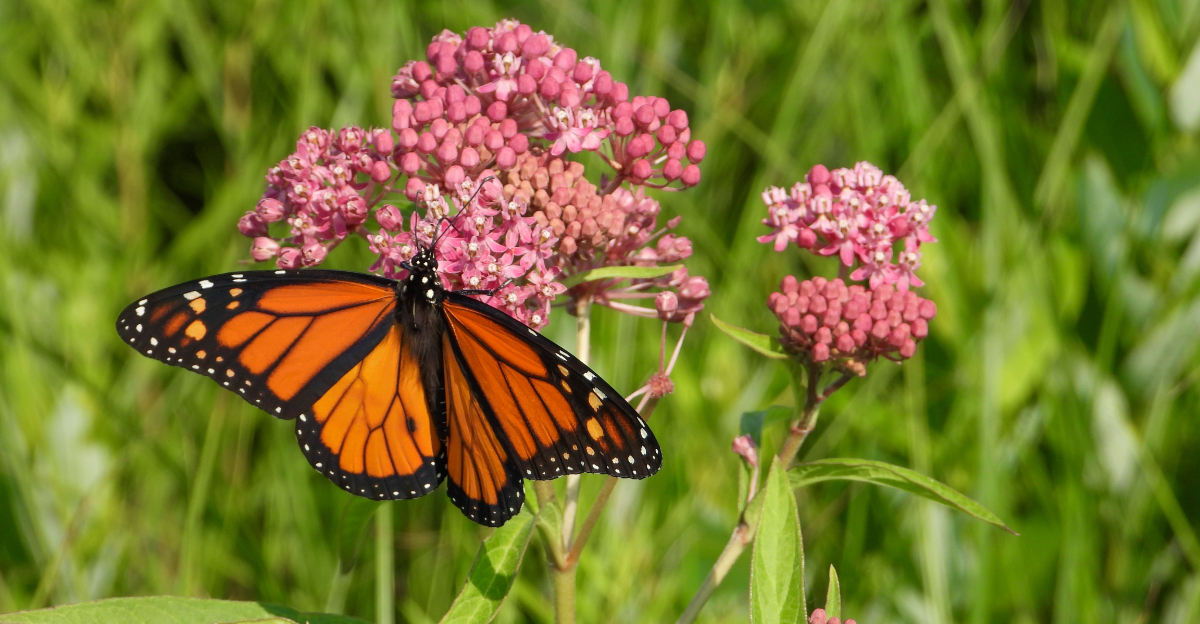
Swamp Milkweed earns its place in any Michigan garden with a dual role that very few plants can match.
On one hand, it is a critical host plant for monarch butterflies, whose caterpillars feed exclusively on milkweed foliage.
On the other hand, its fragrant pink flower clusters attract an impressive variety of beneficial insects that help keep the entire garden in healthy balance.
Unlike common milkweed, Swamp Milkweed stays more compact and well-behaved in garden settings, reaching three to four feet tall without spreading aggressively.
It thrives in moist to wet soil and full sun to partial shade, making it ideal for Michigan rain gardens, streamside plantings, or any spot that holds moisture after heavy rain.
The blooms appear in midsummer and carry a sweet, honey-like fragrance that draws insects from surprising distances.
Parasitic wasps are among the most valuable beneficial insects that Swamp Milkweed reliably attracts.
These wasps hunt garden pests like caterpillars and whiteflies to provision their nests, providing natural pest control throughout the growing season.
Predatory beetles and native bumblebees are also frequent visitors to the densely clustered pink blooms.
Watching monarch butterflies lay eggs on the leaves while parasitic wasps forage on the flowers above is one of the most rewarding sights a Michigan gardener can experience.
Swamp Milkweed truly bridges the worlds of conservation and practical pest management in one beautiful, native package.