Why Queen Palms Can Be Difficult In Arizona And What To Plant Instead
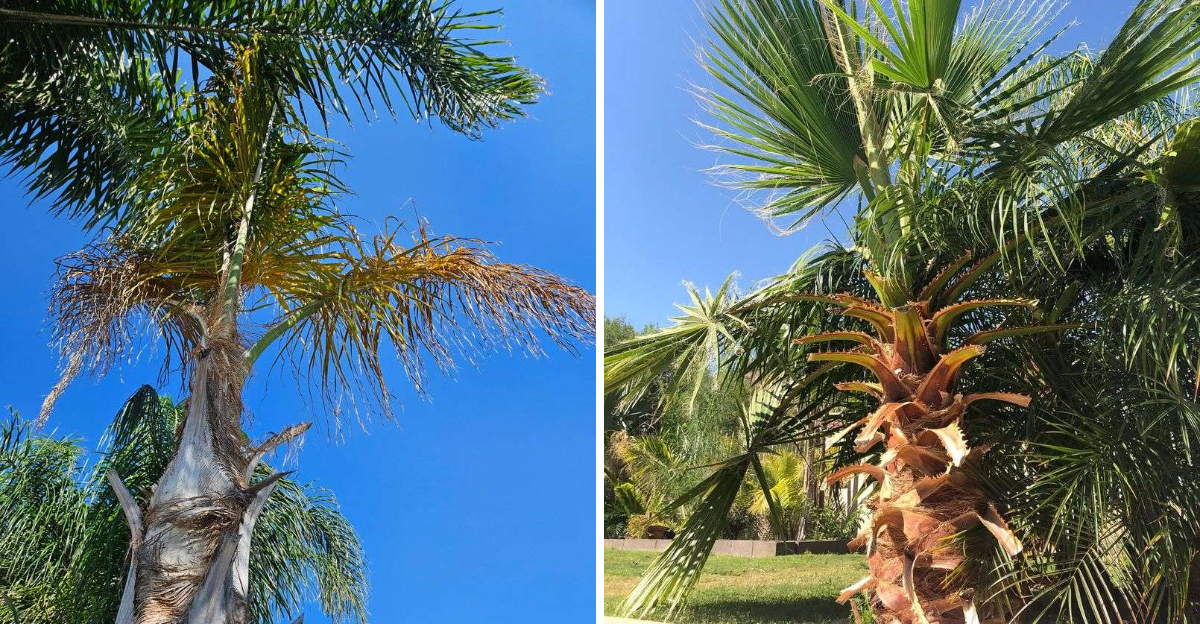
Queen palms often look like the perfect fit at first, especially when aiming for a lush, tropical feel in an Arizona yard.
Smooth trunks and soft fronds create that instant visual appeal, but the reality shifts once they face long stretches of heat, dry soil, and intense sun.
Problems usually show up gradually. Leaves lose color, growth becomes uneven, and keeping the plant looking healthy starts to take more effort than expected.
Extra water, frequent care, and ongoing attention become part of the routine, which can feel frustrating over time.
A yard should feel manageable, not like a constant project. Some trees handle Arizona conditions far more naturally, staying strong with less input while still creating shade and structure.
Looking at better-suited options can completely change how a landscape performs, especially once temperatures begin climbing.
1. Extreme Heat Often Leaves Fronds Scorched And Thinned Out
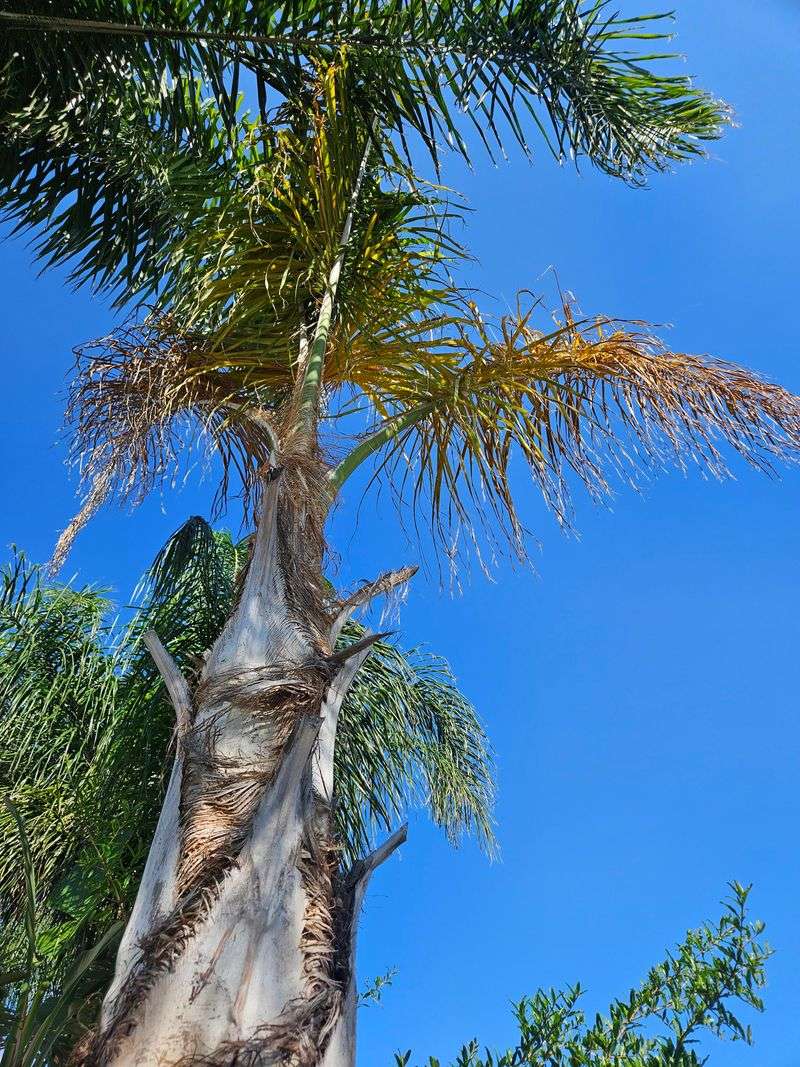
Walking outside in July in Phoenix and seeing your queen palm looking like a wilted lettuce leaf is not a fun experience. Arizona summers are brutal in a way that tropical palms simply are not wired to handle.
Temperatures regularly push past 110 degrees Fahrenheit in the low desert, and that kind of sustained heat does real damage fast.
Queen palms respond to extreme heat by dropping their fronds inward, showing burned tips, and developing brown streaks along the edges. It is not just cosmetic.
When fronds scorch repeatedly, the palm struggles to photosynthesize and slowly runs out of energy to push out healthy new growth.
Shade cloth helps a little, but it is not a long-term fix for a tree that was designed for humid coastal climates. In places like Tucson and Mesa, the combination of direct sun and reflected heat from concrete makes things even worse.
South-facing walls and patios turn into ovens, and anything planted near them takes extra punishment.
Watering more frequently during heat waves can reduce stress, but queen palms need that moisture absorbed efficiently, which Arizona’s rocky, alkaline soil often prevents. Fronds that have already scorched will not recover.
You can trim them away, but new ones coming in often look just as rough if conditions stay the same.
Watching a queen palm slowly thin out after a brutal Arizona summer is discouraging, especially after investing time and money into planting one.
2. Poor Nutrient Uptake Leads To Yellowing And Weak Growth
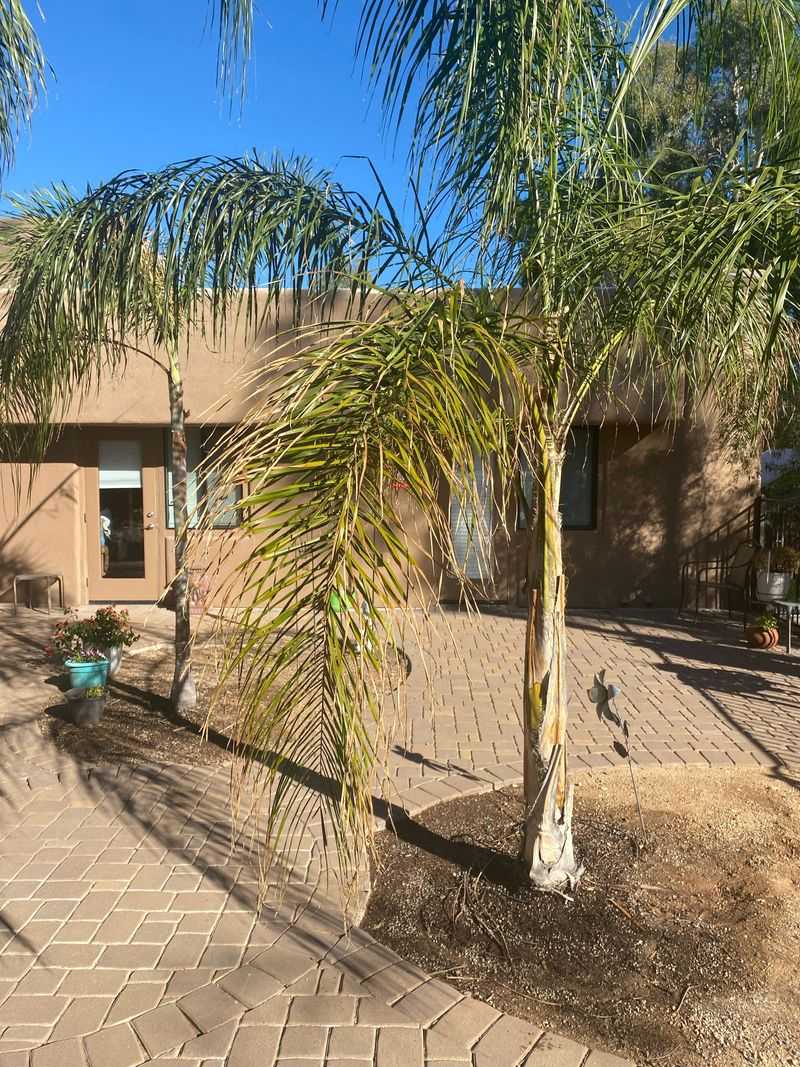
Yellow fronds on a queen palm are one of the most common complaints from Arizona homeowners, and the cause usually comes down to soil chemistry. Arizona’s soil is naturally alkaline, often sitting between 7.5 and 8.5 on the pH scale.
Queen palms prefer slightly acidic conditions, and in high-pH soil, nutrients like iron, manganese, and magnesium get locked up and become unavailable to the roots.
Even when you fertilize regularly, those nutrients may not actually make it into the plant. Chlorosis, the yellowing caused by iron deficiency, is extremely common in Arizona landscapes.
Leaves turn bright yellow while the veins stay green, giving the fronds a washed-out, sickly appearance that no amount of standard fertilizer will fix on its own.
Your Arizona Garden Changes Every Week. Your Plan Should Too.
Gardening in Arizona changes quickly throughout the season. Every Friday you’ll receive a simple weekly plan showing exactly what to plant, prune, fertilize, harvest, and protect so you never miss the right timing.
Specialized palm fertilizers with chelated micronutrients help somewhat, but they require consistent application and can get expensive quickly.
Soil acidifiers like sulfur can bring the pH down over time, but results are slow and sometimes inconsistent depending on the existing soil composition.
In areas like Gilbert and Scottsdale where soil alkalinity tends to be high, queen palms often look pale and underfed no matter what the homeowner does.
Weak growth follows nutrient stress, meaning new fronds come in smaller, lighter in color, and less full than they should be.
Healthy palms are supposed to push out lush, arching fronds. In Arizona, queen palms often produce limp, yellowish growth that never quite fills in the way you hope it will.
3. Salt Buildup In Soil Can Gradually Damage Roots
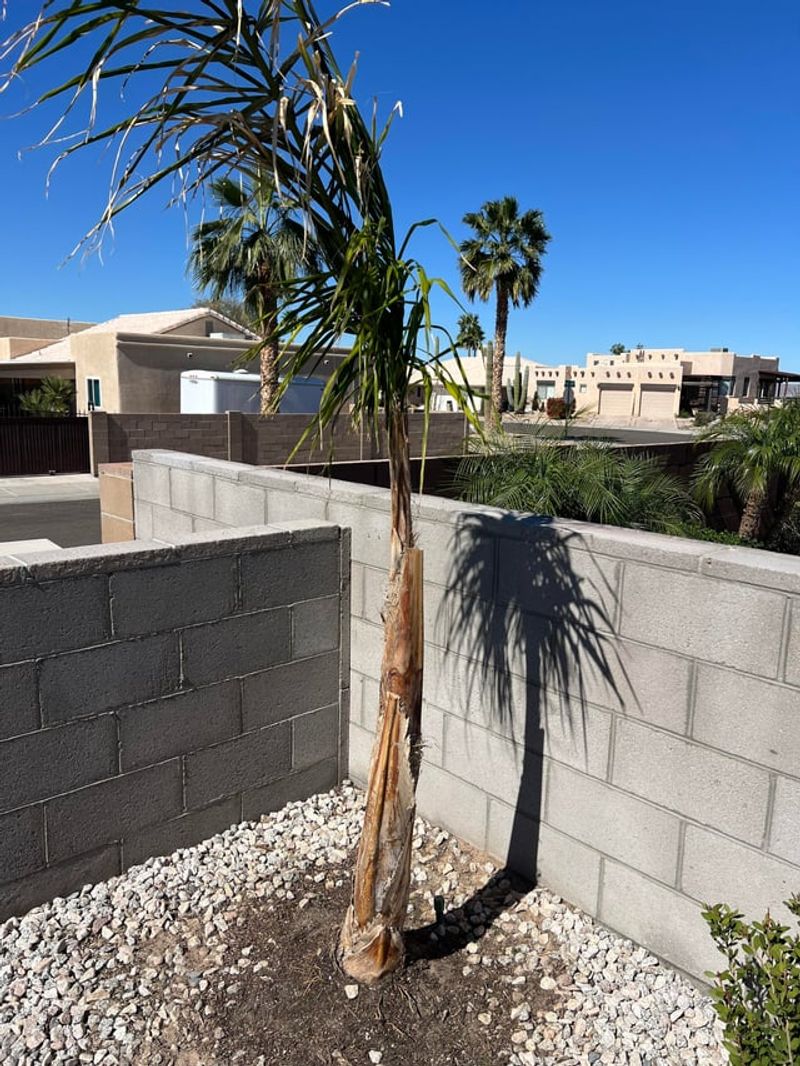
Arizona’s water supply is loaded with dissolved minerals, and that fact alone causes serious problems for queen palms over time. Hard water leaves behind calcium, sodium, and other salts every single time you irrigate.
In a climate where rainfall rarely comes to flush the soil out naturally, those salts just keep stacking up around the root zone.
Salt accumulation interferes with how roots absorb water. Instead of drawing moisture in, roots end up pulling it out through osmosis when salt concentrations get high enough.
The result looks a lot like drought stress, which leads many homeowners to water even more, which ironically makes the salt problem worse.
Root burn from salt damage usually shows up as browning at frond tips, wilting despite adequate irrigation, and an overall look of decline that is hard to pin down at first. By the time it becomes obvious, significant root damage has already occurred beneath the surface.
Deep watering helps leach salts down and away from the root zone, but in Arizona’s clay-heavy or caliche-filled soils, that water often pools rather than draining properly.
Raised beds with amended soil and good drainage can reduce the problem, though they require significant upfront effort and ongoing management.
Cities like Chandler and Tempe have notoriously hard water, and queen palms planted there tend to show salt stress symptoms faster than in other areas. It is a slow, steady problem that compounds year after year without the right intervention.
4. Constant Wind Exposure Dries Out Fronds Quickly
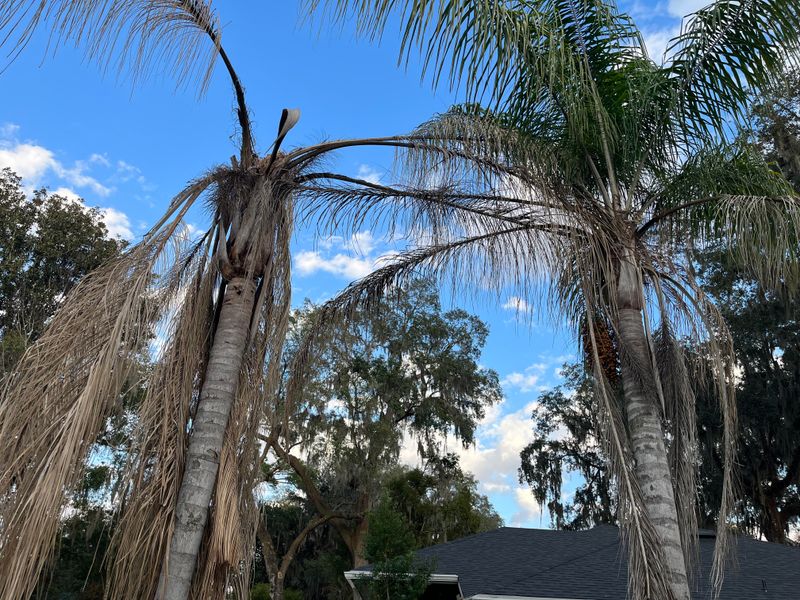
Arizona wind does not get enough attention as a plant stressor, but ask anyone who has gardened here through a haboob season and they will tell you it is relentless.
Queen palms have long, feathery fronds that catch wind like sails, and the constant movement creates a problem that goes beyond just physical damage.
Wind pulls moisture out of plant tissue fast. Fronds that are already under heat stress lose even more water when a dry desert wind is blowing through, and queen palms struggle to replace that lost moisture quickly enough through their root systems.
The edges of fronds dry out, turn brown, and eventually the whole frond looks ragged and spent.
In open yards with no windbreaks, queen palms in Arizona often look permanently tattered, especially during spring and early summer when afternoon winds pick up.
Fronds get ripped, bent, and shredded by strong gusts, which creates entry points for fungal issues and pests like spider mites that love stressed plants.
Planting near walls or fences offers some protection, but it also limits airflow in ways that can trap heat and create their own problems.
There is no perfect placement for a palm that was designed for calm, humid coastal environments being asked to survive in one of the windiest, driest states in the country.
Wind damage compounds every other stress queen palms face in Arizona, making recovery between seasons much harder and overall appearance increasingly disappointing over time.
5. New Growth Can Become Distorted From Micronutrient Issues
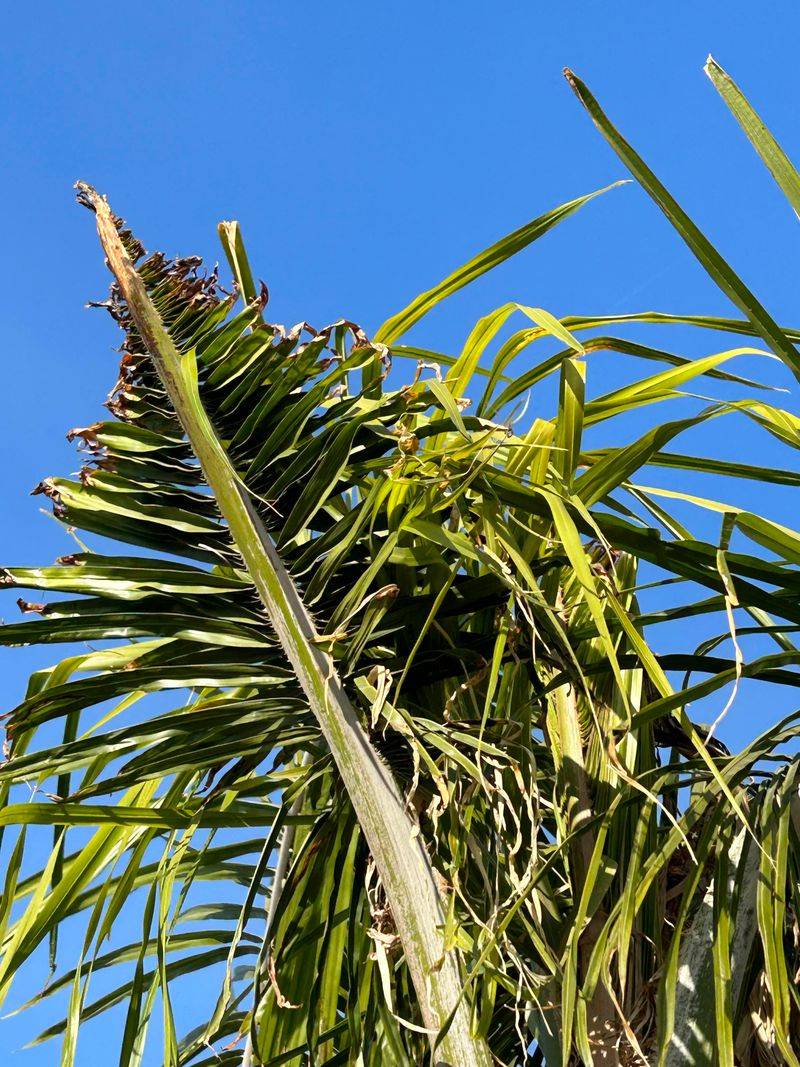
Frizzle top is not just an odd name. It is one of the most frustrating conditions a queen palm owner in Arizona can deal with, and once you see it, it is unmistakable.
New fronds emerge looking stunted, twisted, and discolored, almost like they got stuck halfway through unfolding and never recovered properly.
Manganese deficiency is the main culprit, and it is directly tied to Arizona’s alkaline soil conditions. When soil pH climbs too high, manganese becomes chemically unavailable even when it technically exists in the ground.
The palm cannot access what it needs, and the newest growth, which requires the most nutrients, suffers first and most visibly.
Foliar sprays with manganese sulfate can help in mild cases, and soil drenches are sometimes recommended for more severe deficiency. But in Arizona’s persistently alkaline conditions, treatment is more of an ongoing management task than a one-time fix.
Fronds that have already developed frizzle top will not straighten out or improve, and they need to be removed.
What makes this especially frustrating is that the problem tends to get worse during the hottest months when the palm is already under maximum stress.
New growth emerging in late spring or early summer in places like Peoria or Surprise often shows distortion symptoms almost immediately.
Healthy palm growth should be a highlight of your yard. Watching new fronds curl and brown before they even fully open is a sign that the growing conditions in Arizona are working against you, not with you.
6. High Water And Feeding Needs Make Them Hard To Maintain
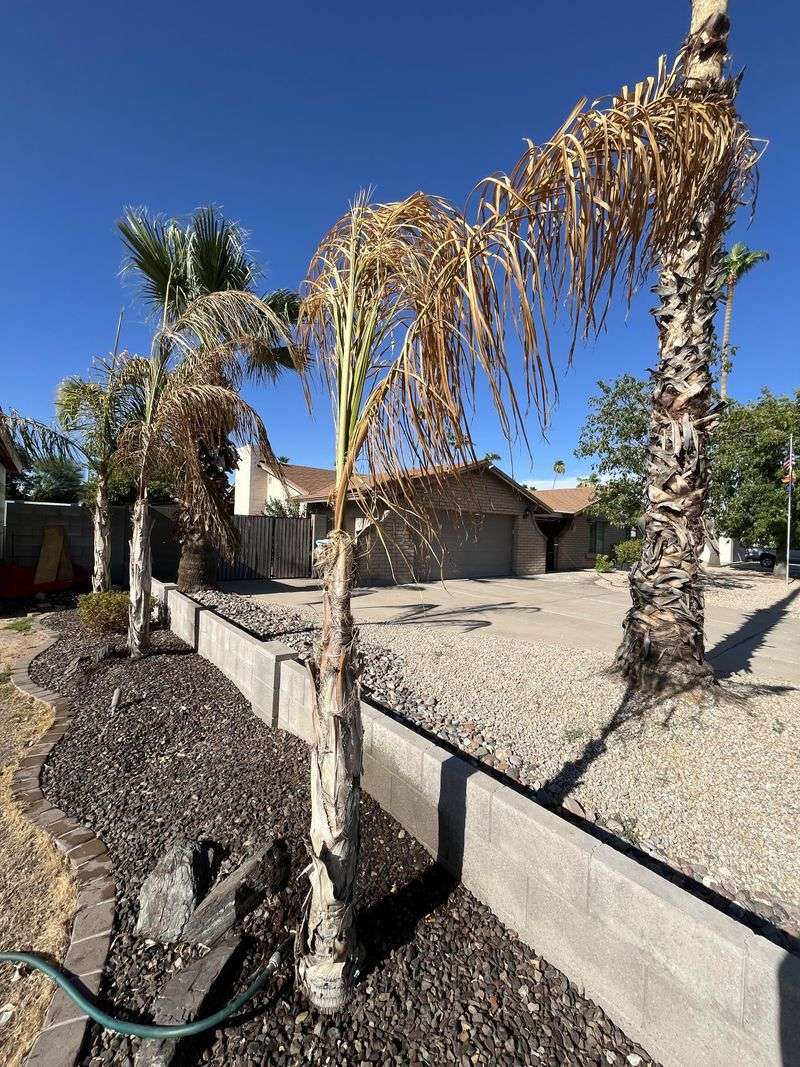
Queen palms are thirsty trees, and in a state where water conservation matters more every year, that is a serious issue. During Arizona’s hot season, a mature queen palm may need deep irrigation two to three times per week just to stay looking decent.
Compare that to a native desert tree that might need watering once every few weeks once it settles in, and the difference is significant.
Feeding requirements add another layer of work. Queen palms need a specialized palm fertilizer with the right balance of nitrogen, potassium, magnesium, and chelated micronutrients.
Generic fertilizers from the hardware store usually do not cut it, and applying the wrong formula can actually make deficiency symptoms worse rather than better.
Timing matters too. Fertilizing at the wrong time of year, or skipping applications, leads to visible decline quickly.
Most palm experts recommend feeding three to four times a year in Arizona, which means this is not a plant you can set and forget. Every season requires attention and adjustment based on how the tree is performing.
Water bills in Phoenix and surrounding areas already run high during summer. Adding a water-hungry queen palm to the mix means committing to higher irrigation costs every single year, with no guarantee the tree will thrive despite all that input.
For homeowners who want a low-effort yard, queen palms are genuinely one of the harder choices available in Arizona, and the ongoing maintenance rarely leads to the lush, full results most people picture when they plant one.
7. Desert-Friendly Trees And Tougher Palms Hold Up Far Better
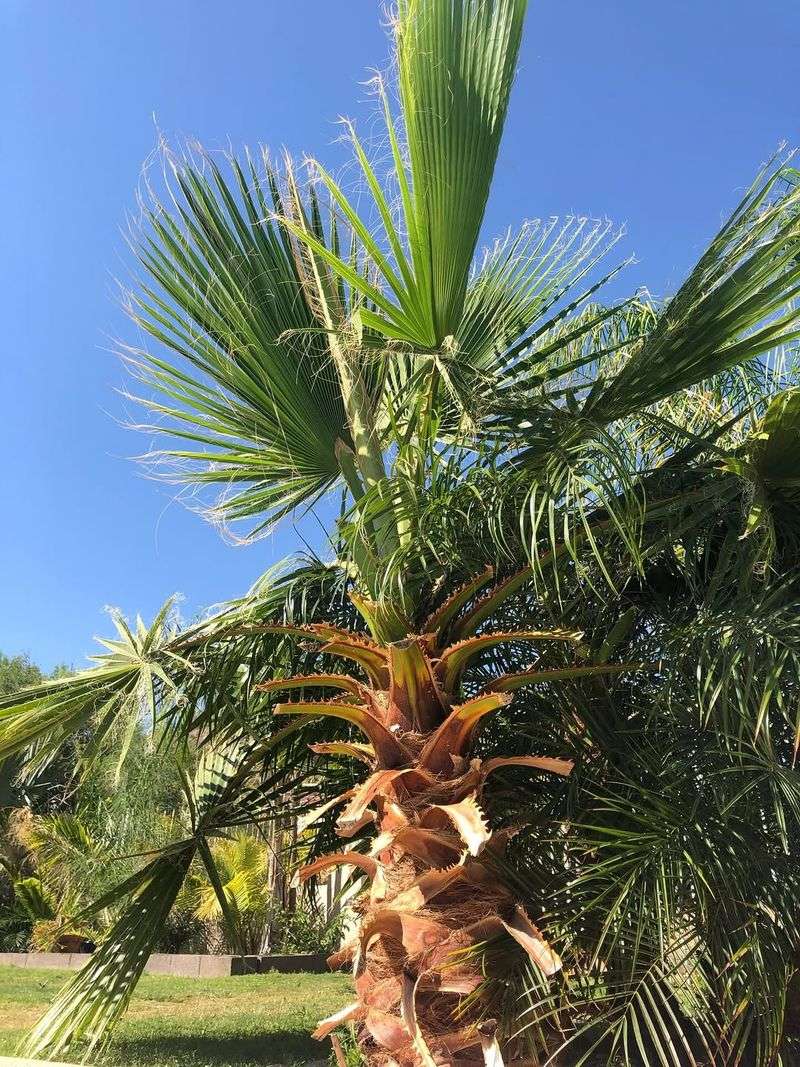
Switching away from queen palms does not mean giving up on a beautiful yard. Arizona actually has some excellent palm options that look great and handle the desert climate without constant babysitting.
Mexican Blue Palm is one of the best, with striking silvery-blue fronds that stand out in any landscape and a toughness that laughs at Arizona heat.
California Fan Palm grows naturally in desert oases and is one of the most heat and drought-tolerant palms available. It develops a thick, shaggy trunk over time and gives yards that classic palm silhouette without the ongoing struggle.
Planted in the right spot in Tucson or Phoenix, it genuinely thrives with minimal intervention.
Mediterranean Fan Palm stays smaller, making it a smart pick for courtyards, narrow spaces, or poolside planting. It handles alkaline soil far better than queen palms and rarely shows the nutrient deficiency symptoms that are so common with queens across Arizona.
Sonoran Palmetto is native to the Sonoran Desert region and is about as adapted to Arizona conditions as a palm can get. It grows slowly but steadily, holds its form well in wind, and does not demand the regular feeding schedule that queen palms require.
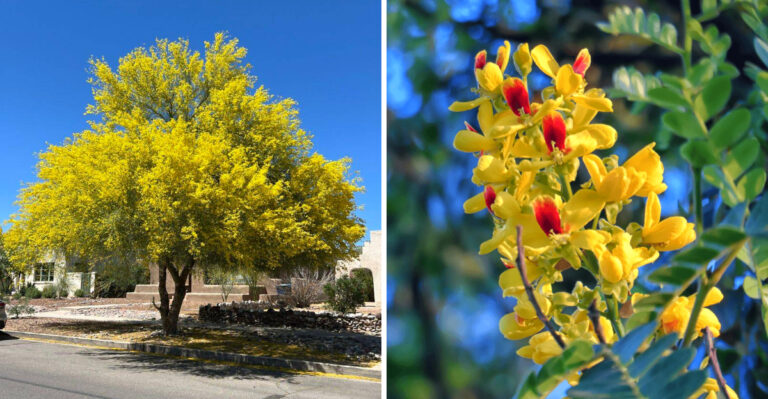
Beyond palms, desert trees like Palo Verde, Desert Willow, and Ironwood offer shade, seasonal color, and wildlife habitat with a fraction of the water and care.
Arizona landscapes can be lush, layered, and beautiful without relying on plants that were never meant to grow here in the first place.