9 Simple Plant Swaps That Bring More Pollinators Into Your Georgia Garden
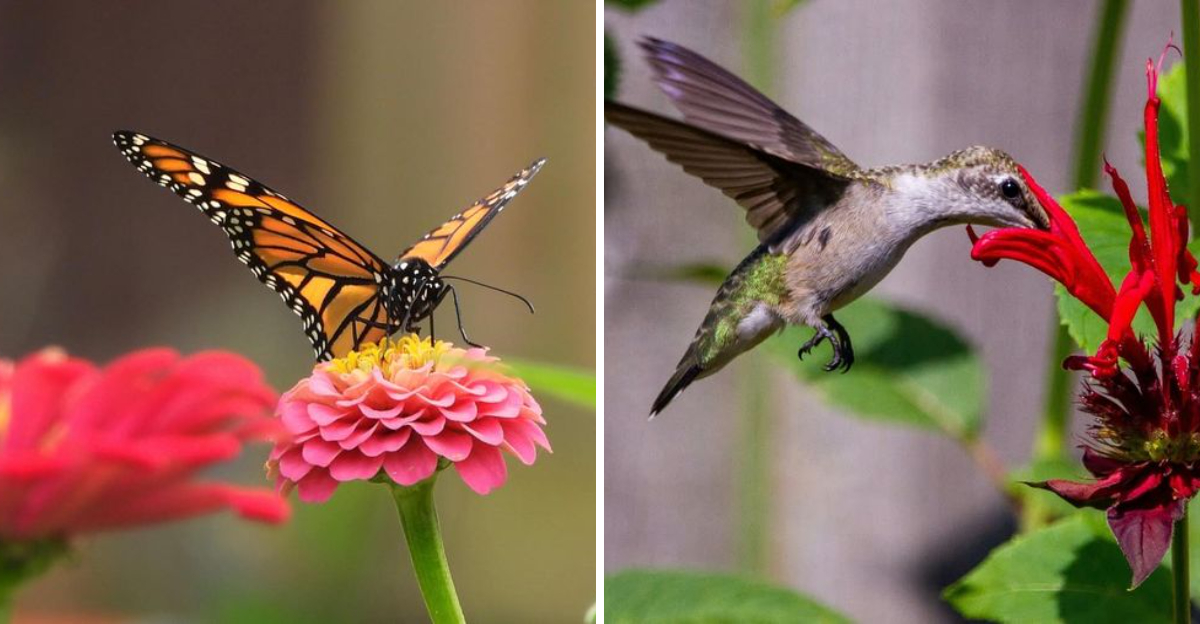
Color can fill every corner of a Georgia garden, yet something still feels missing when there is no movement from bees or butterflies.
Blooms may look perfect, but without the right plants, pollinators often pass by without stopping.
Plant choice quietly shapes how active a garden becomes. Some varieties offer little value, while others turn the same space into one that stays busy from morning to evening.
Even a few changes can make a noticeable shift. Swapping out underperforming plants for better options can bring steady activity without changing the entire layout.
More movement, more life, and a stronger connection to the natural rhythm of the season all come down to what grows in that space. The right adjustments can turn a still garden into one that feels alive every day.
1. Purple Coneflower Brings More Bees Than Basic Groundcover
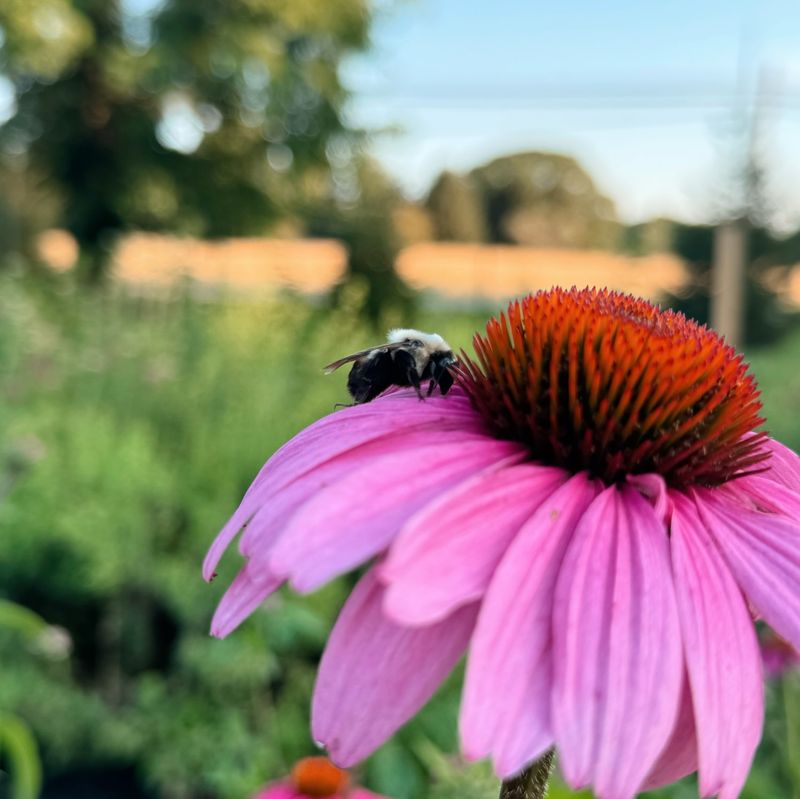
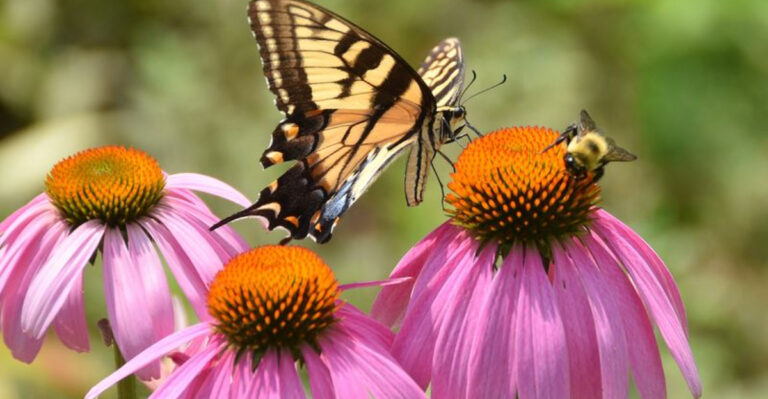
Pull out that patchy groundcover doing nothing for wildlife and replace it with purple coneflower. Echinacea purpurea is a workhorse in Georgia gardens, blooming from June through September when pollinators need steady food sources the most.
Bees absolutely flock to it, and not just honeybees.
Bumblebees, sweat bees, and native solitary bees all visit coneflower regularly. The open, flat bloom face makes it easy for all kinds of pollinators to land and access nectar and pollen.
Groundcovers might look tidy, but many common ones offer little support for pollinators.
Purple coneflower thrives in Georgia’s heat and handles clay soil reasonably well. Plant it in full sun for the best bloom production, though it tolerates some afternoon shade.
Deadheading spent flowers encourages more blooms, but leaving seed heads standing through fall and winter feeds goldfinches and other birds. It is a plant that keeps giving long after the flowers fade.
A few clumps scattered through a garden bed can double the number of bee visits you see on a warm afternoon. That is a swap worth making.
It keeps blooming right through the toughest stretch of summer when many plants start to slow down. You will notice more consistent pollinator activity instead of short bursts followed by quiet gaps.
2. Butterfly Bush Out, Milkweed In For Real Butterfly Support
Butterfly bush sounds like the perfect choice, but it is actually not as useful for supporting the full butterfly life cycle. It produces nectar that adult butterflies sip, but it does not support most native butterfly caterpillars.
Butterflies need host plants to complete their life cycle, and butterfly bush skips that part entirely.
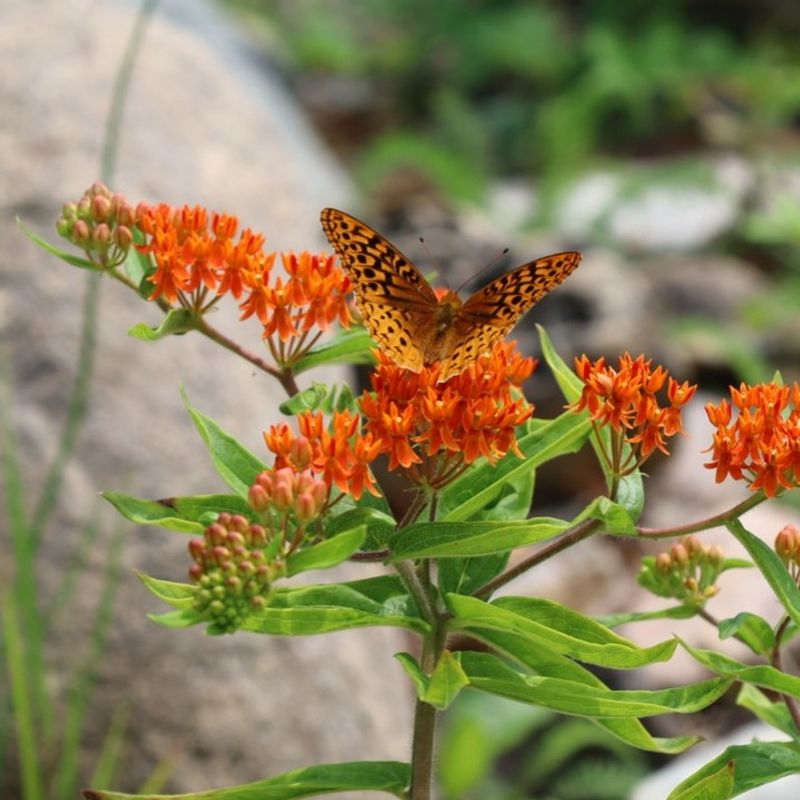
Native milkweed, especially butterfly weed (Asclepias tuberosa), fills that gap. Monarch caterpillars depend on milkweed as their only food source.
Without it, monarchs cannot reproduce. Planting native milkweed means you are supporting the full cycle, not just luring adults in with a sugar hit.
Butterfly weed grows well across Georgia in full sun and handles dry spells without much fuss. Its clusters of vivid orange flowers bloom from late spring through summer and pull in a surprising number of pollinators beyond monarchs.
Swapping even one butterfly bush for a patch of native milkweed makes a measurable difference. If you want more butterflies, you have to feed their young, and milkweed is the plant that does exactly that.
Your Georgia Garden Changes Every Week. Your Plan Should Too.
Gardening in Georgia changes quickly throughout the season. Every Friday you’ll receive a simple weekly plan showing exactly what to plant, prune, fertilize, harvest, and protect so you never miss the right timing.
It also stays more balanced in the landscape without spreading aggressively or taking over nearby planting areas. Over time, a small patch can expand naturally and support more pollinators each season without extra effort.
3. Clover Or Wildflowers Feed Pollinators Better Than Plain Lawn
A perfectly manicured grass lawn is essentially a food desert for pollinators. Nothing blooms, nothing feeds bees, and nothing supports any part of the pollinator life cycle.
Letting a section of your lawn go to clover or seeding a wildflower patch changes that fast.
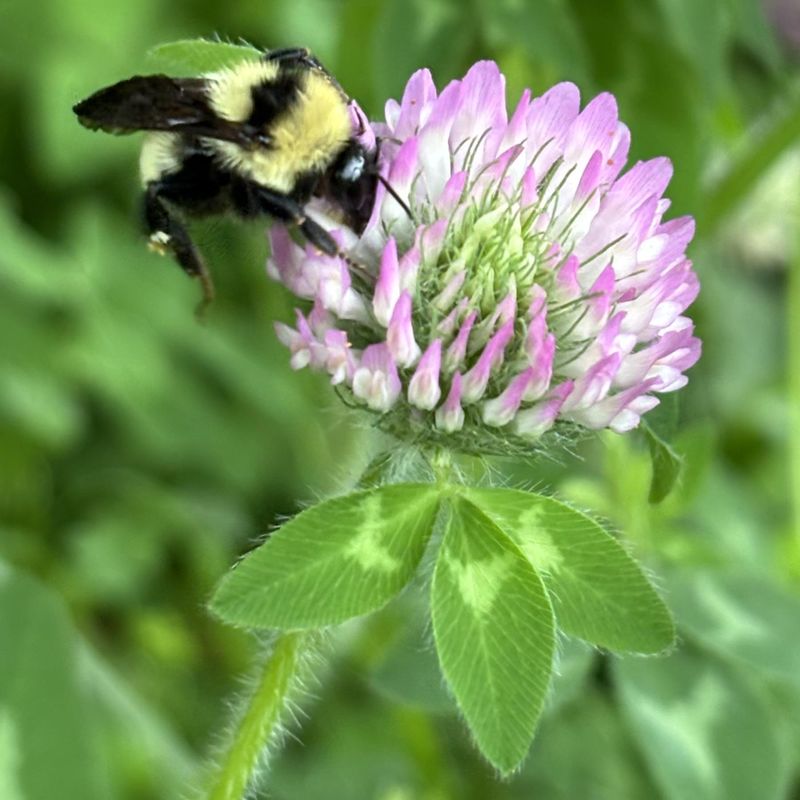
White clover is one of the most underrated bee plants available. It blooms prolifically, costs almost nothing to seed, and bees go absolutely wild for it.
Mix it into an existing lawn or dedicate a corner of your yard to a clover and wildflower blend suited to Georgia’s climate. Native wildflower mixes with species like black-eyed Susan, lanceleaf coreopsis, and wild bergamot give pollinators options from spring through fall.
Mowing less often in certain lawn areas can also reveal hidden blooms from plants already growing there. Dandelions, henbit, and wild violet all support early pollinators before most garden plants even wake up.
Across Georgia, more homeowners are embracing low-mow zones, and the results are visible. Yards that once had zero bee activity start buzzing within a single season.
Swapping even a small strip of plain turf for clover or wildflowers is one of the highest-impact changes you can make.
Even a small patch can quickly become one of the most active spots in the yard.
4. Single Zinnias Work Better Than Double Blooms For Nectar Access
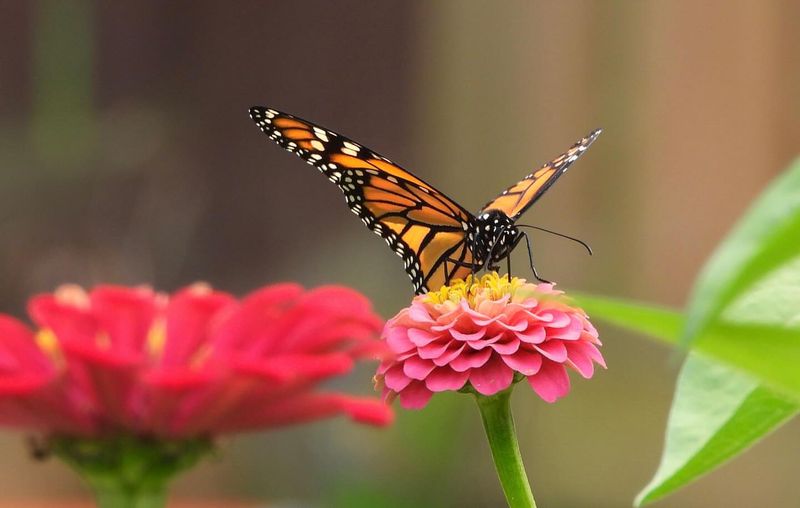
Not all zinnias are created equal when it comes to feeding pollinators. Double-bloomed zinnias look impressive in a flower bed, but those extra petals can make nectar and pollen harder for pollinators to reach.
Bees and butterflies land, poke around, and often leave empty-handed.
Single-petal zinnias have an open, simple bloom structure that lets pollinators get straight to the good stuff. Varieties like Zinnia elegans in single forms, or the smaller Zinnia angustifolia, are far more useful to the insects you want to attract.
In Georgia’s long, hot summers, zinnias bloom from early summer right up to the first frost, giving pollinators months of reliable food.
Swapping your double-bloom zinnias for single varieties does not mean sacrificing color. Single zinnias come in just as many shades and bloom just as freely.
Butterflies especially love them, and on a warm Georgia afternoon you can count dozens of visitors on a healthy zinnia patch. Direct sow seeds in a sunny bed after the last frost, and they practically take care of themselves through summer heat.
It is a small change in plant selection that makes a real difference in who shows up to your garden.
5. Mountain Mint Pulls In Pollinators Better Than Most Ornamentals
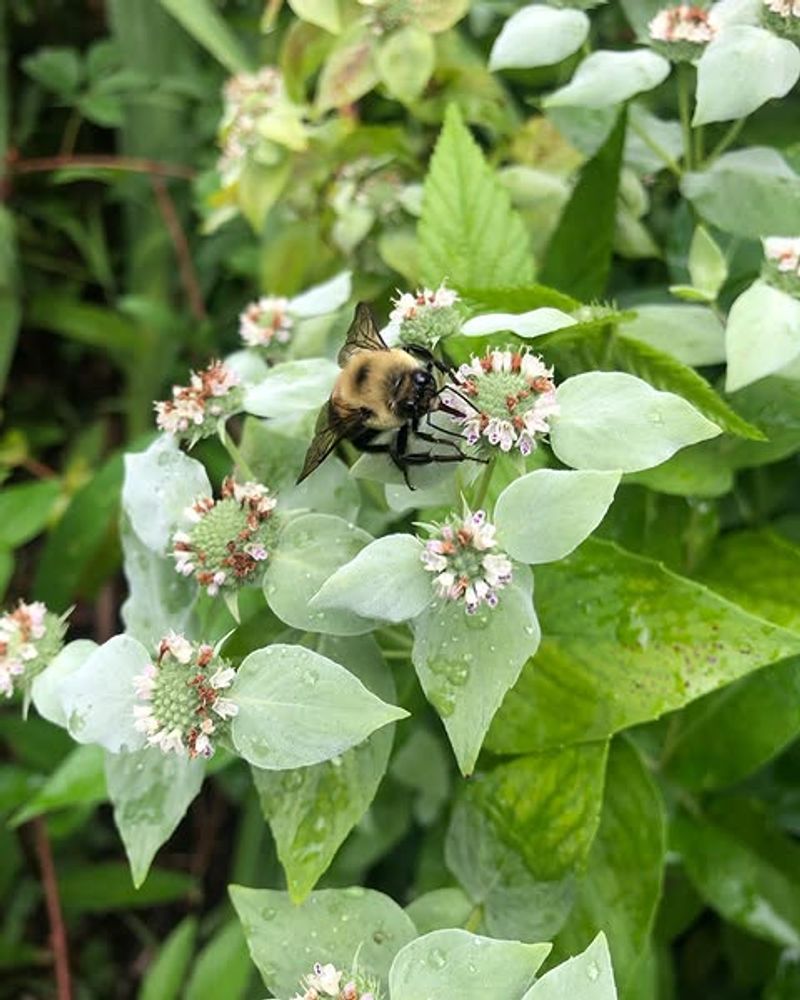
If you have ever stood next to a blooming patch of mountain mint on a summer morning in Georgia, you already know what this plant can do. The hum of insects around it is almost constant.
Pycnanthemum muticum is one of those plants that experienced local gardeners quietly recommend to each other because it genuinely delivers results.
Ornamental plants like dusty miller, coleus, or non-native salvia might look polished, but they offer pollinators very little.
Mountain mint, on the other hand, attracts an extraordinary range of visitors including bumblebees, sweat bees, wasps, beetles, and butterflies.
Plant it in full to partial sun and give it some room because it spreads over time. In Georgia’s heat and humidity, mountain mint holds up well without extra watering once it gets going.
The silvery foliage also adds visual interest even when the plant is not in bloom. Swap out a few non-native ornamentals for mountain mint and watch what happens within the first summer.
It is one of those plants that makes you wonder why it took so long to add it to the garden.
6. Bee Balm Adds Nectar Where Foliage Plants Do Nothing
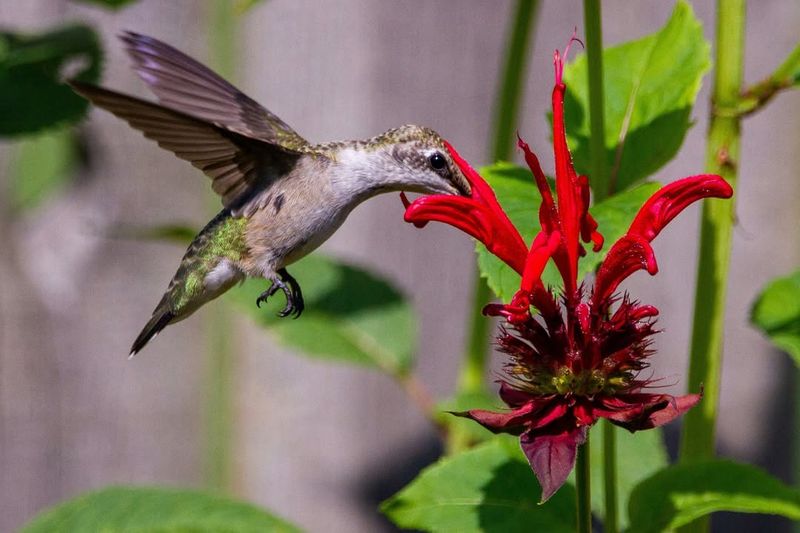
Foliage plants earn their place in a garden for texture and color, but they offer little nectar or pollen for pollinators.
Swap a few of them out for bee balm and you will notice the difference by midsummer. Monarda, especially the native species Monarda fistulosa and Monarda didyma, produces tubular flowers that hummingbirds, bumblebees, and native bees cannot resist.
Bee balm blooms in June through August across Georgia, which lines up perfectly with peak pollinator activity. The flowers come in red, pink, and lavender shades depending on the variety, and the plant grows tall enough to add real presence to a garden bed.
It spreads gradually over time, filling space that might otherwise go to less useful plants.
Powdery mildew can show up on the leaves in humid Georgia summers, but that does not affect bloom production much. Planting bee balm in a spot with good air circulation helps.
Cut it back after flowering to keep it tidy and encourage a second flush of growth. Replacing even two or three foliage plants with bee balm clusters creates a landing zone for pollinators that was not there before.
Hummingbirds in particular will return to it repeatedly throughout the season.
7. Asters Keep Pollinators Fed After Early Blooms Fade
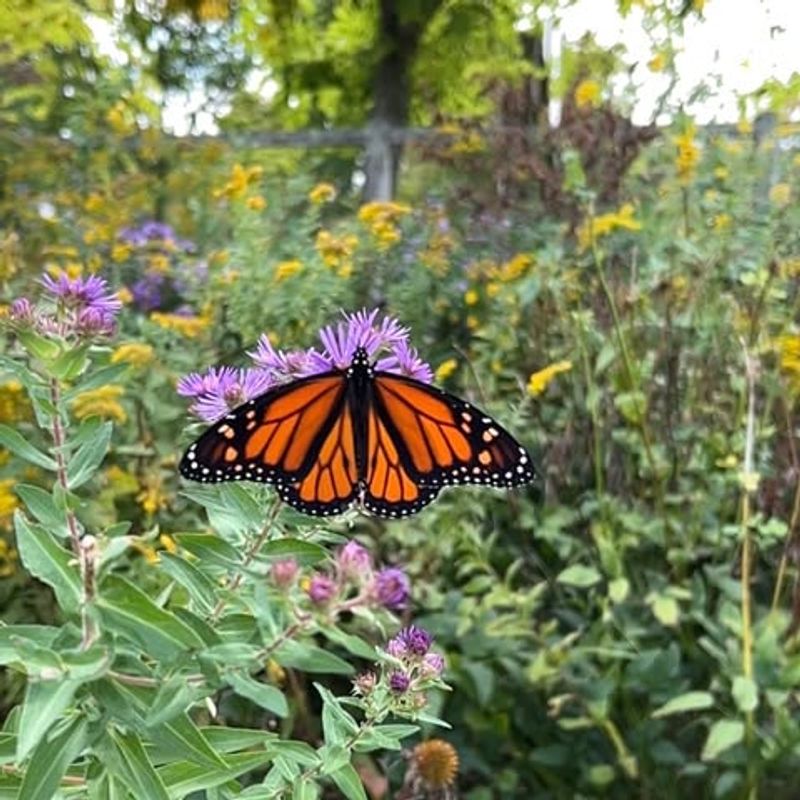
By September, most Georgia gardens have run out of steam. Zinnias are winding down, coneflowers have gone to seed, and pollinators are scrambling for food before the cold settles in.
Native asters step in right when that gap opens up, and they are one of the most valuable fall plants you can grow.
Aromatic aster (Symphyotrichum oblongifolium) and New England aster both perform well in Georgia. Their small purple and pink flowers might look modest, but they are absolutely loaded with nectar.
Migrating monarchs fuel up on asters during their fall journey south, and native bees stock up before winter. Swapping out fall mums or non-native chrysanthemums for native asters is a simple change that pays off big for local wildlife.
Asters prefer full sun and are not fussy about soil. Pinch them back in early summer to encourage bushier plants with more flowers come fall.
In Georgia, they typically bloom from late September through November, giving pollinators weeks of food when almost nothing else is available. A garden that supports pollinators into late fall helps the whole local ecosystem stay stronger heading into winter.
Asters make that possible without much effort on your part.
8. Goldenrod Fuels Pollinators Late In The Season When Little Else Blooms
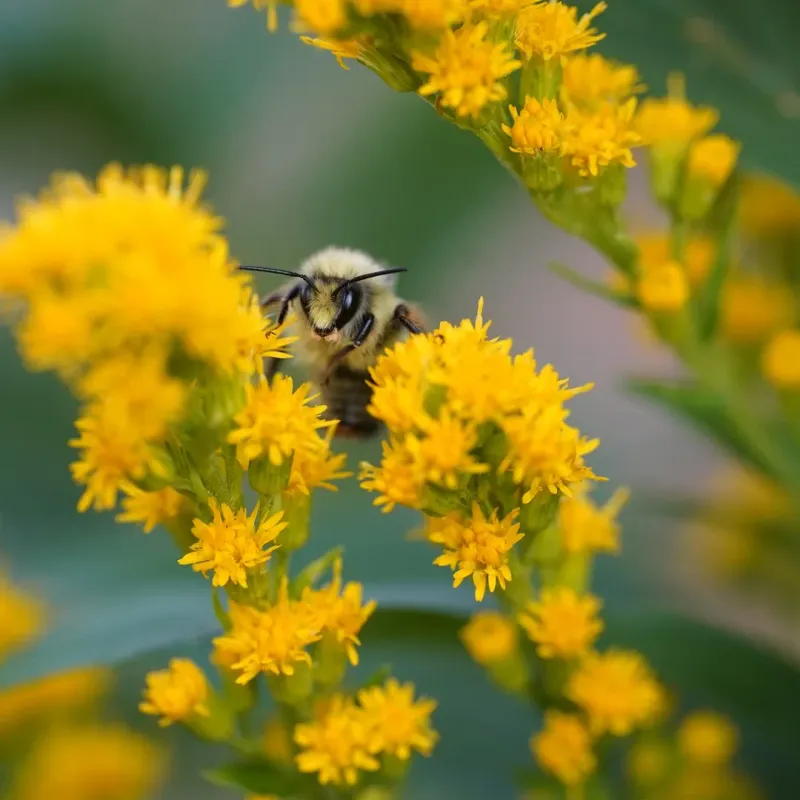
Goldenrod gets a bad reputation because people blame it for fall allergies, but that blame belongs to ragweed, which blooms at the same time. Goldenrod pollen is heavy and sticky, carried by insects rather than wind.
It is not causing your sneezing, but it is absolutely feeding bees and butterflies that need it most.
Late-season food is scarce in most Georgia gardens, and goldenrod fills that void like almost nothing else can.
Solidago rugosa and other native goldenrod species bloom from August through October, offering dense clusters of tiny yellow flowers that bees swarm over.
Bumblebees especially depend on late-season pollen to build up reserves before the cold arrives.
Swap out ornamental grasses or fading summer perennials for a goldenrod clump in a sunny corner of your yard. It spreads by rhizome, so plant it somewhere you do not mind it expanding.
In a Georgia garden, goldenrod pairs beautifully with native asters to create a fall pollinator buffet that supports dozens of species simultaneously.
Seeing a patch of goldenrod covered in bees on a warm October afternoon in Georgia is one of those garden moments that makes you glad you made the swap.
It earns every inch of space it takes.
9. Coreopsis And Black-Eyed Susan Outperform Typical Bedding Plants
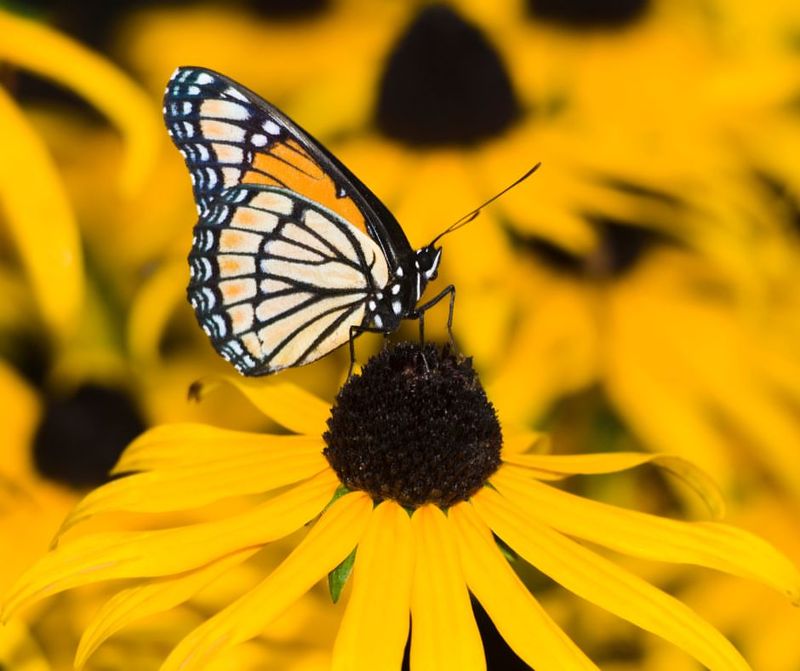
Annual bedding plants like petunias and impatiens fill garden centers every spring, but most of them do almost nothing for pollinators.
Coreopsis and black-eyed Susan are the swap that changes everything about a sunny Georgia garden bed without adding extra work.
Lanceleaf coreopsis (Coreopsis lanceolata) blooms from spring through early summer with cheerful yellow flowers that small native bees absolutely love.
Black-eyed Susan (Rudbeckia hirta) takes over through summer and into fall, keeping the yellow color going and feeding a rotating cast of pollinators.
Together, these two plants create continuous bloom coverage that no standard bedding plant can match.
Both handle Georgia heat, drought, and clay soil far better than most imported annuals. Black-eyed Susan reseeds readily, meaning you plant it once and it shows up again next year.
Coreopsis spreads into tidy clumps over time. Replacing a row of petunias or marigolds with these two plants gives your garden bed more staying power and far more ecological value.
Gardeners across Georgia who make this swap often say they are surprised by how many bee species they start noticing. Swapping showy but hollow plants for these two is one of the simplest, smartest moves you can make for your garden.