When To Fertilize Citrus Trees In Arizona For Better Growth
Citrus trees can seem steady and healthy, then start to look a little off before the season fully shifts. Leaves may not look as rich, fresh growth may not come in as strongly, and the whole tree can lose some of the vigor it should have in an Arizona yard.
Those changes do not always start with obvious damage. Sometimes the issue begins with one small decision made at the wrong point.
Arizona conditions make citrus care feel simple on the surface, but the climate has a way of exposing mistakes faster than expected.
Heat builds quickly, soil can work against healthy growth, and even a good care routine can fall short when the timing is not right.
That is why this part of seasonal citrus care deserves a closer look. One move at the right moment can support stronger growth, better color, and a tree that handles the season with far less stress.
1. Late Winter To Early Spring Is The Right Time To Fertilize Citrus Trees
February and March might feel early to start thinking about fertilizing, but in Arizona, that window is exactly when your citrus trees need a nutritional push.
Right before the spring flush of new growth kicks in, the roots are ready to absorb nutrients efficiently, and feeding at this point supports new foliage, flowering, and early fruit development.
Skipping this first application means your tree enters its most active growth period without the fuel it needs. Arizona’s alkaline soils don’t naturally hold nutrients the way richer soils do in other states, so that late winter feeding carries more weight here than it might elsewhere.
A good rule of thumb is to apply roughly one-quarter pound of actual nitrogen per year of the tree’s age. Spread that amount across the three seasonal feedings rather than dumping it all at once.
Starting with this late winter application sets a solid foundation for the rest of the growing season.
Watch for signs that the tree is waking up, like swelling buds or new leaf tips beginning to emerge. That’s your cue that the timing is right.
Getting ahead of that growth surge by even a week or two makes the feeding more effective and gives roots time to pull nutrients in before the warm-season growth takes off across Arizona yards.
2. Using A Citrus-Specific Fertilizer Supports Balanced Growth
Not every fertilizer bag on the shelf is going to do your citrus trees justice, especially in Arizona.
Standard garden fertilizers often lack the micronutrients that citrus actually depends on, and in Arizona’s alkaline soils, deficiencies in iron, zinc, and manganese show up faster than most people expect.
A citrus-specific fertilizer is formulated with those micronutrients already included, which takes a lot of guesswork out of the process.
Look for a product with a higher nitrogen ratio, something in the range of 10-10-10 or 13-7-13 N-P-K, since nitrogen drives the leafy growth and fruit development that citrus is known for.
Iron deficiency is particularly common in Arizona because high soil pH locks iron out of the root zone even when it’s present in the soil. Yellowing leaves with green veins are a telltale sign.
Your Arizona Garden Changes Every Week. Your Plan Should Too.
Gardening in Arizona changes quickly throughout the season. Every Friday you’ll receive a simple weekly plan showing exactly what to plant, prune, fertilize, harvest, and protect so you never miss the right timing.
A citrus blend that includes chelated iron addresses this directly rather than leaving you to troubleshoot later in the season.
Reading the label carefully before buying pays off. Some products are granular and slow-release, while others are water-soluble and fast-acting.
Granular formulas tend to work well for the main seasonal applications in Arizona’s climate, offering a steadier release of nutrients over several weeks rather than one short spike that the roots might not fully use.
3. Applying Fertilizer Evenly Around The Root Zone Improves Uptake
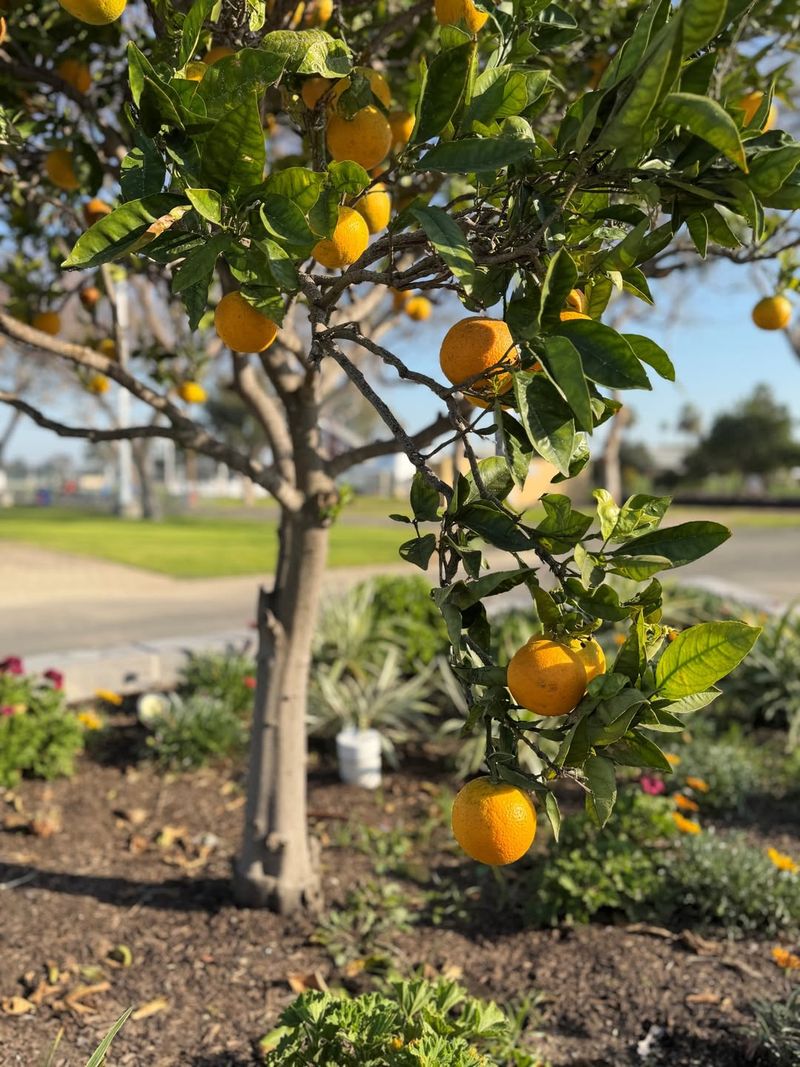
Where you put the fertilizer matters just as much as what you put down. Piling product right up against the trunk is a common mistake, and it doesn’t help the tree at all because the feeder roots aren’t located there.
Spreading evenly around the drip line is where the real uptake happens.
Start about a foot out from the trunk and work your way to the outermost edge of the canopy. That outer ring is where the most active feeder roots are concentrated, and those are the roots doing the heavy lifting when it comes to pulling nutrients from the soil.
Covering that full zone gives the tree more opportunities to absorb what you’ve applied.
Uneven application leads to uneven results. Some sections of the root system get a heavy dose while others get nothing, which can create patchy growth patterns or stress certain parts of the root zone unnecessarily.
Broadcasting the granules in a slow, sweeping motion helps distribute them more consistently across the soil surface.
In Arizona’s hard-packed or gravelly soils, it’s worth raking lightly after spreading to work the granules slightly into the surface layer. That small step helps prevent fertilizer from washing or blowing away before the next watering.
Consistency in application technique builds up over time and contributes to steadier, more predictable tree performance season after season.
4. Watering After Feeding Helps Nutrients Reach The Roots
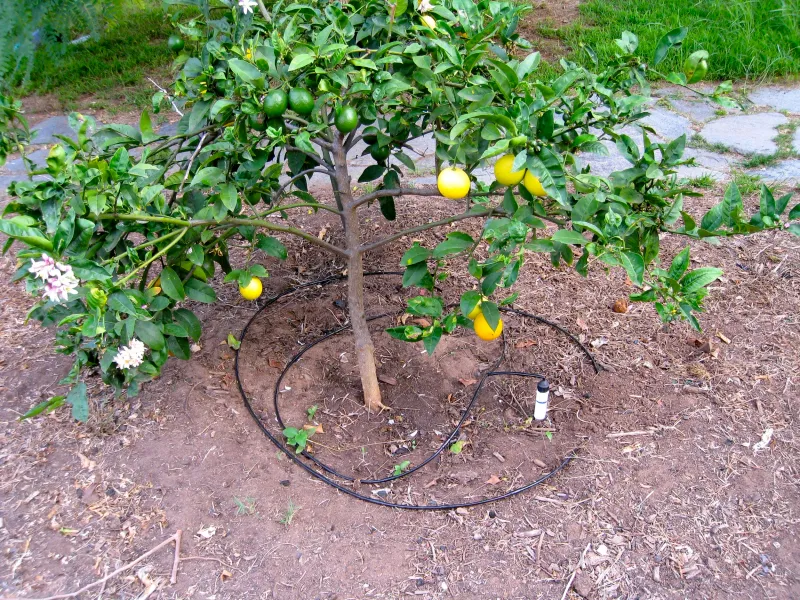
Granular fertilizer sitting on dry soil isn’t doing anything useful. Water is what activates it, breaks down the granules, and carries dissolved nutrients down through the soil profile to where the roots can actually reach them.
In Arizona’s dry climate, this step is non-negotiable.
Right after applying fertilizer, give the area a deep, thorough watering. Arizona’s low humidity means the soil surface dries out fast, and without adequate moisture, nutrients can sit near the surface for too long or even evaporate before getting absorbed.
Deep watering pushes nutrients further into the root zone rather than keeping them concentrated at the top inch of soil.
Beyond activating the fertilizer, consistent deep watering also helps flush excess salts from the root zone. Salt buildup is a real issue in Arizona because of the dry conditions and the mineral-heavy water that many areas receive.
Regular flushing through deep irrigation keeps the soil environment healthier between feedings.
Drip irrigation works well for citrus in Arizona because it delivers water slowly and consistently right where it’s needed. If you’re hand-watering, take your time and let the water penetrate deeply rather than running off the surface.
A slow soak after each fertilizer application gives the nutrients the best chance of reaching the feeder roots and actually supporting the growth you’re working toward.
5. Keeping Fertilizer Away From The Trunk Prevents Damage
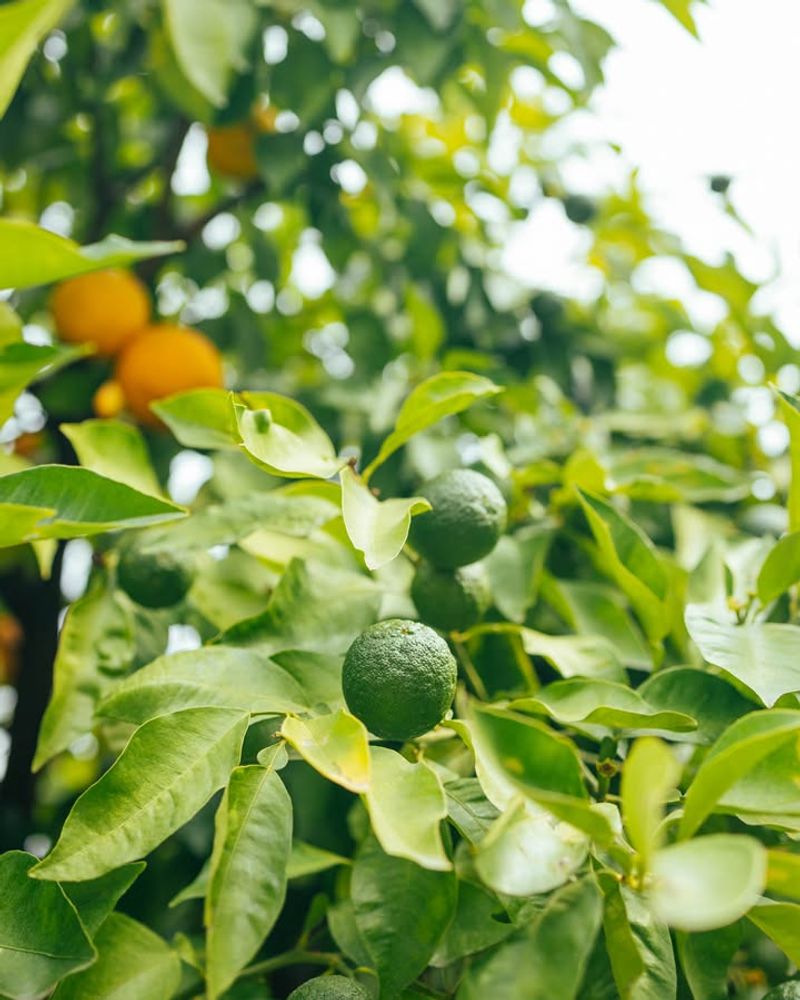
Fertilizer burns are a real problem when product gets piled up directly against the trunk of a citrus tree.
The bark near the base is sensitive, and concentrated fertilizer salts can cause serious tissue damage that weakens the tree’s ability to move water and nutrients upward through its system.
Keeping a clear gap of at least twelve inches between the trunk and where you start spreading fertilizer is a straightforward habit that prevents this entirely. It might seem like you’re wasting coverage area, but the trunk itself has no feeder roots and gains nothing from being surrounded by product.
All the nutrient absorption happens further out in the soil.
Arizona’s intense sun also plays a role here. When fertilizer granules sit against the trunk in full desert heat, the combination of heat and chemical concentration can accelerate surface damage even faster than it might in cooler climates.
Keeping that buffer zone is especially important during late winter and spring applications when temperatures are already starting to climb.
If you’ve accidentally applied too close to the trunk in the past, water the area heavily to dilute and flush the concentration away from the base. Going forward, use a small marker or just eyeball the distance before you start spreading.
Forming this habit early in the season protects the structural health of the tree and supports better long-term performance in Arizona’s demanding growing conditions.
6. Splitting Applications Supports Steady Growth Through The Season
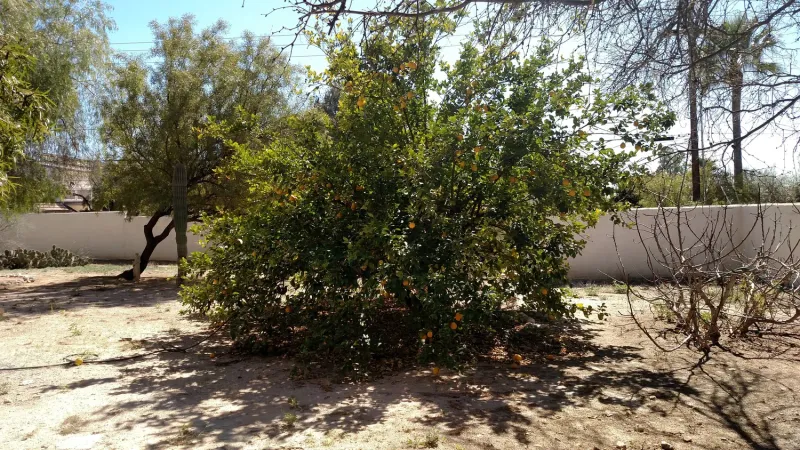
Dumping an entire year’s worth of fertilizer on a citrus tree in one shot sounds efficient, but it’s actually counterproductive.
Roots can only absorb so much at a time, and excess nutrients that aren’t taken up quickly can leach away or build up as salts in Arizona’s low-rainfall soil environment.
Three applications spread across the year gives the tree a steadier, more manageable supply of nutrients that aligns with its natural growth cycles.
Late winter feeds the spring flush, a late spring or early summer application supports fruit development through the warmer months, and an early fall feeding in September or October helps the tree strengthen before cooler weather settles in.
Skipping the summer application window in July and August is intentional. Arizona heat during those months is extreme, and adding fertilizer when trees are already stressed by high temperatures can push them further into stress rather than supporting recovery.
Timing the second application for May or June catches the tree before the worst of the summer heat peaks.
Dividing the total annual nitrogen amount across those three feedings also makes dosing more accurate.
Rather than guessing whether you’ve applied enough or too much, splitting the recommended annual amount into thirds keeps each application manageable and reduces the risk of overfeeding.
Steady and consistent feeding across the season tends to produce more reliable results than irregular heavy doses.
7. Avoid Overfertilizing To Prevent Excess Leaf Growth
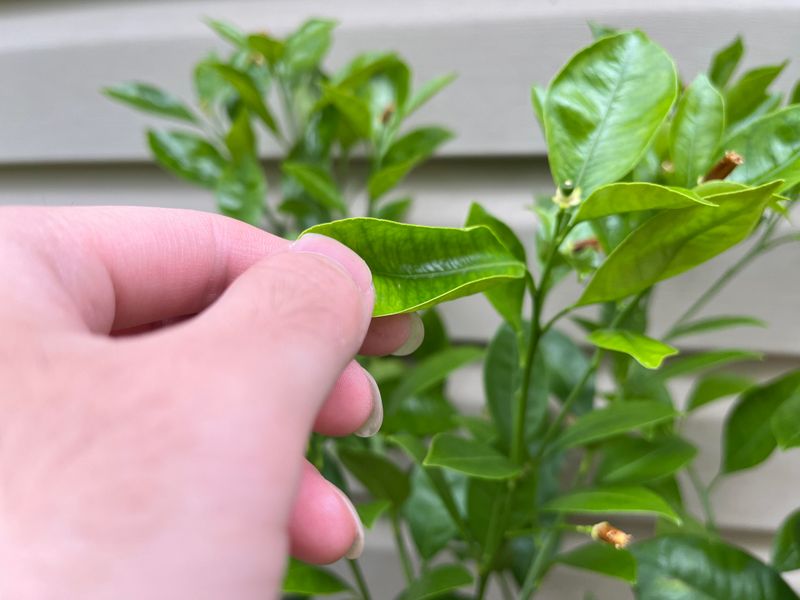
More fertilizer doesn’t mean more fruit. Overfeeding citrus trees, especially with nitrogen-heavy products, tends to push energy into producing lots of leafy growth at the expense of flowering and fruit development.
You end up with a big, bushy tree that produces far less than expected.
Arizona gardeners sometimes overcompensate because the alkaline soils and intense climate make it feel like the trees constantly need more input.
But following a measured schedule based on the tree’s age and size is more reliable than eyeballing it or adding extra product when growth looks slow.
Patience and consistency outperform heavy-handed applications.
Signs of overfertilizing include rapid, soft new growth that wilts easily, leaves that are unusually dark green, and a noticeable drop in fruit production even though the tree looks healthy on the surface.
Salt buildup from excess fertilizer can also show up as white crust on the soil surface or browning at the tips of leaves.
Scaling back to the recommended amounts and sticking to the three-application schedule through the Arizona growing season is usually enough to correct the course over time. If salt buildup is visible, deep watering can help flush the excess from the root zone.
Treating fertilizer as a supporting tool rather than a quick fix leads to steadier, more balanced tree health and better fruit yields over multiple seasons.