The Right Way To Stake Young Trees In Georgia During Heavy Rain
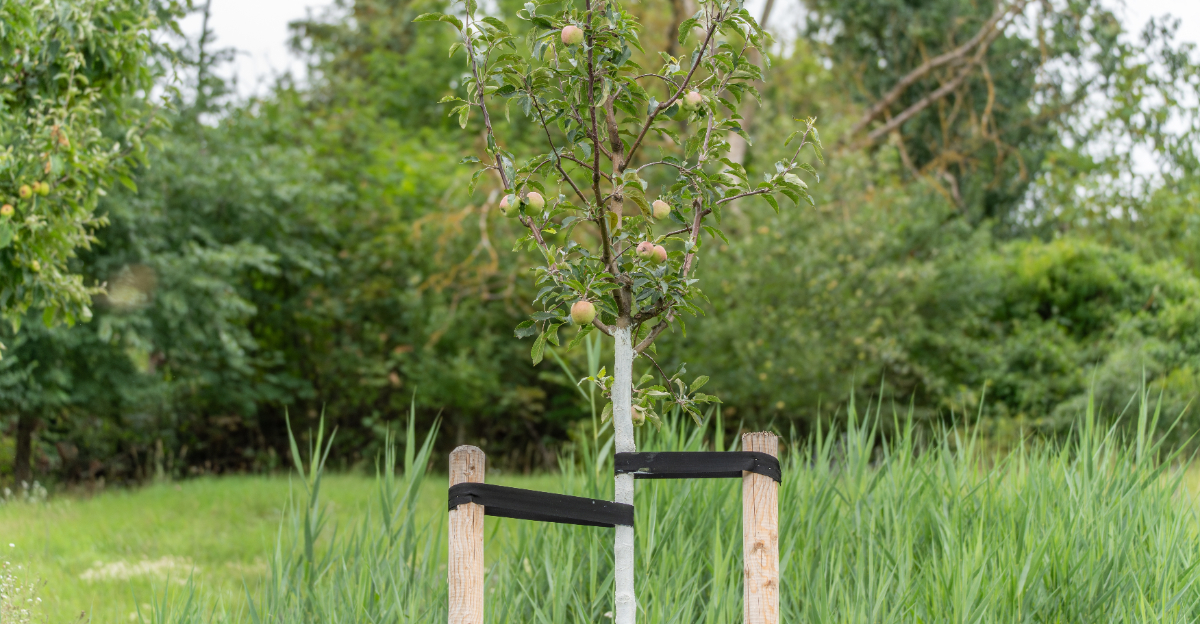
Heavy rain in Georgia can change everything overnight, especially for young trees that have not had time to anchor themselves. One strong storm can tilt them, loosen the soil, or leave roots exposed before you even notice what happened.
What looks like a small shift now can turn into long term growth problems later if it is not handled the right way.
Many gardeners try to fix it quickly, but the wrong approach often causes more harm than the storm itself. Support matters, but how it is done makes all the difference in how that tree settles in and continues to grow.
There is a simple way to handle this that keeps trees steady without limiting their strength, and once it is done right, it takes a lot of stress out of unpredictable weather.
1. Correct Support Keeps Young Trees Stable In Saturated Soil
Saturated soil is one of the sneakiest problems for young trees in Georgia. When the ground gets waterlogged after a heavy rain, the soil loses its grip around the root ball, and even a light breeze can tip a tree that seemed perfectly upright just days before.
Georgia’s clay-heavy soil holds water longer than sandy or loamy ground, which means roots stay in unstable conditions for extended periods after a storm.
A young tree planted in spring or early fall hasn’t had enough time to anchor itself deeply, so external support becomes genuinely useful during those first several months.
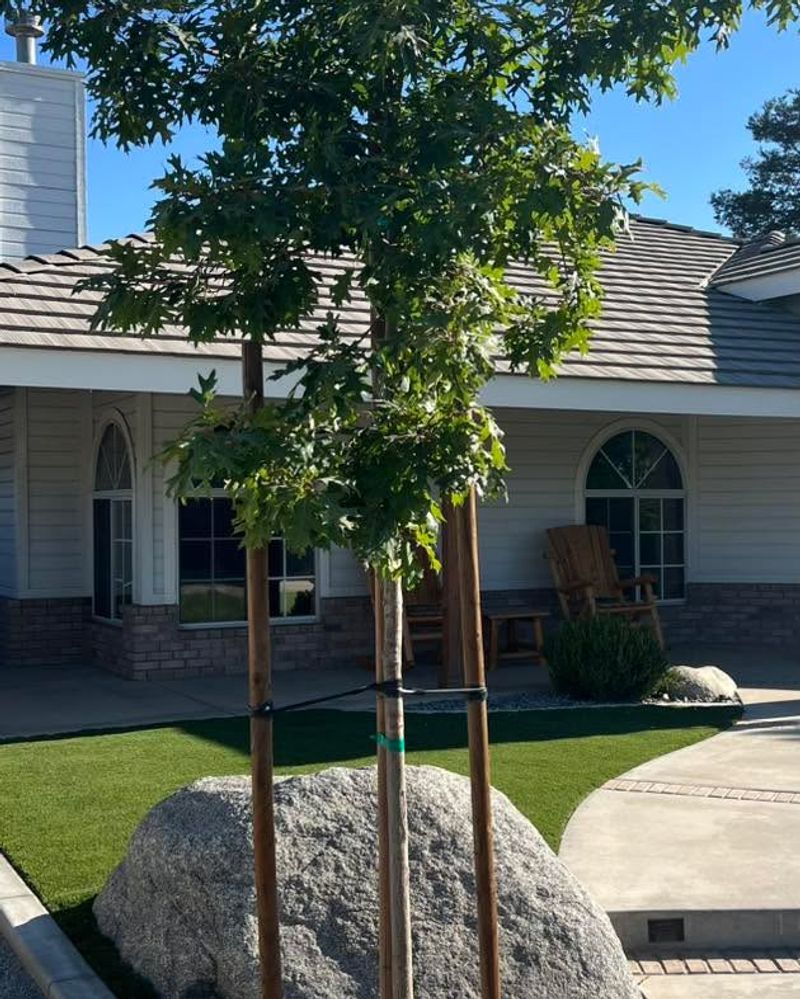
Staking works best when it’s treated as a temporary fix rather than a permanent solution. Two sturdy stakes driven about 12 to 18 inches from the trunk on opposite sides give the tree a reliable anchor point without crowding the root zone.
Drive them deep enough that they don’t shift during the storm itself.
Before installing stakes, check whether the root ball is actually loose. Push gently on the trunk near the base and watch whether the soil around it moves.
If it does, staking is the right call. If the root ball feels firm and the tree stands straight, staking may not be necessary at all.
Matching your support to the actual conditions on the ground in Georgia, rather than staking every tree out of habit, leads to healthier outcomes overall. Not every young tree needs it, but the ones that do will benefit noticeably from a well-placed setup.
2. Two-Point Anchoring Improves Balance In Wet Conditions
A single stake shoved next to a young tree trunk is one of the most common mistakes homeowners in Georgia make, and it usually causes more harm than good. One stake creates an uneven pull that can actually train the tree to lean rather than grow straight.
Two-point anchoring spreads the load evenly across both sides of the trunk, giving the tree balanced resistance against wind and water movement. Place one stake on the windward side and one directly opposite, roughly 12 to 18 inches out from the trunk.
That spacing matters because stakes driven too close can interfere with root expansion in the weeks that follow.
Your Georgia Garden Changes Every Week. Your Plan Should Too.
Gardening in Georgia changes quickly throughout the season. Every Friday you’ll receive a simple weekly plan showing exactly what to plant, prune, fertilize, harvest, and protect so you never miss the right timing.
During heavy Georgia rain events, wind direction can shift quickly, especially in thunderstorm conditions. A two-stake setup handles those direction changes better than a single anchor because the tree has support from multiple angles simultaneously.
Drive each stake at least 18 inches into the ground so the base doesn’t rock when the soil softens. Loose stakes defeat the entire purpose and can actually scrape the trunk if they shift during a storm.
Check them after the first major rain to confirm they’ve held their position.
For larger young trees with heavier canopies, three stakes spaced evenly around the tree provide even better coverage.
Most standard saplings planted in Georgia yards do fine with two, but if the tree has an unusually wide spread at the top, the third stake is worth the extra effort.
Balance is the whole point of this approach.
3. Flexible Ties Hold The Trunk Without Causing Damage
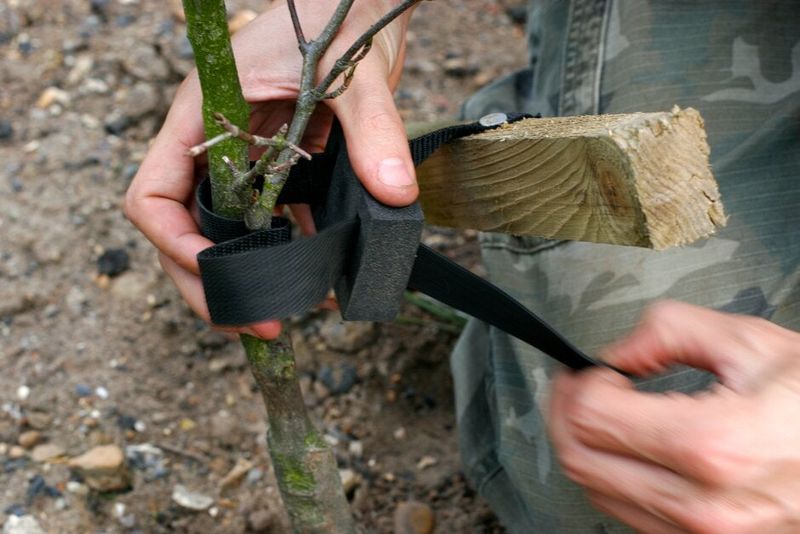
Wire and rough twine have no place on a young tree trunk. Both materials cut into bark as the tree grows and swells, and in Georgia’s warm, humid climate where trees push growth quickly, that damage can show up faster than most people expect.
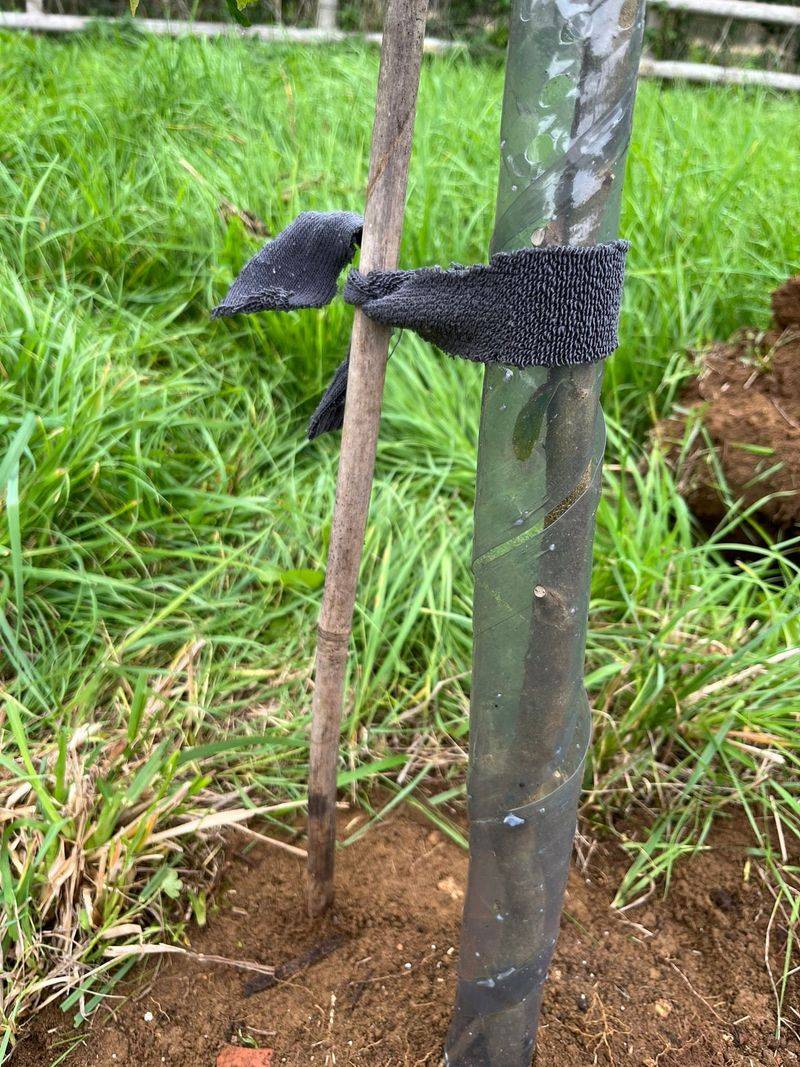
Rubber tree ties, soft cloth strips, or commercial adjustable straps are the right materials for this job. They stretch slightly with the tree’s movement, which protects the bark while still keeping the trunk connected to the stake.
Look for options sold specifically for tree staking at garden centers across Georgia.
Attach ties at roughly one-third to one-half of the tree’s height from the ground. That placement gives the trunk enough freedom to flex at the top while the lower section stays supported.
Tying too high puts stress on the wrong part of the trunk during wind gusts.
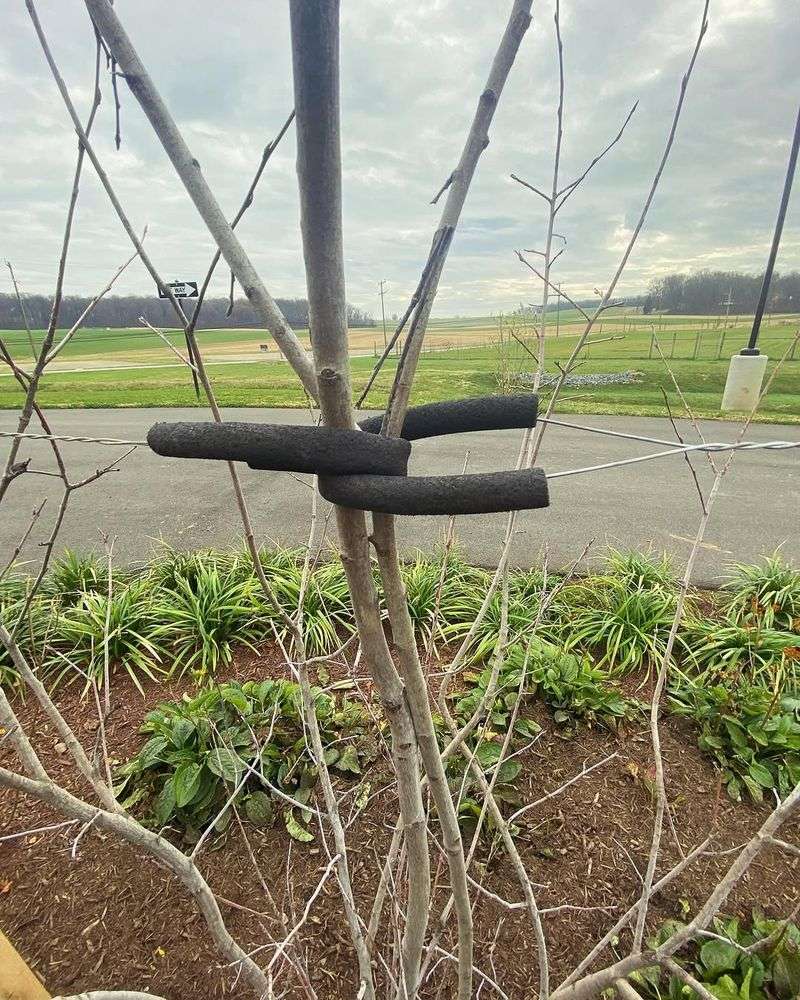
Padding between the tie and the bark adds another layer of protection. Foam tubing or a short section of old garden hose slit lengthwise works well.
Slide the tie through the padding before wrapping it around the trunk, and the bark stays protected even if the tree moves around during a storm.
Check the ties every few weeks throughout the growing season. Young trees in Georgia can put on noticeable girth between spring and late summer, and a tie that felt loose in April can become uncomfortably snug by July.
Loosening or replacing ties on schedule keeps the trunk healthy and prevents constriction that would otherwise slow the tree’s development significantly.
4. Placement Beyond The Root Zone Prevents Disturbance
Driving stakes directly into the root ball is a mistake that happens more often than it should. Roots near the base of a young tree are actively growing and fragile, and puncturing them with a stake causes real setbacks that slow establishment significantly.
Keep stakes at least 12 inches away from the trunk, and 18 inches is even better for larger saplings.
That spacing puts the stakes outside the immediate root zone, so you’re anchoring into stable native soil rather than the disturbed planting area where tender new roots are doing their work.
In Georgia’s clay soils, roots tend to spread horizontally rather than driving straight down, especially in the first year.
Horizontal root spread is how young trees find stability in dense soil, and stakes placed too close can block that outward growth without the gardener ever realizing it.
Mark the placement before you swing the mallet. A quick measurement with a tape or even an eyeball estimate works fine as long as you’re consistently staying outside that 12-inch boundary.
Once stakes are in the ground, moving them tears up soil structure and can nick roots anyway, so getting placement right the first time saves trouble.
After a heavy rain in Georgia, walk the staked tree and look at the soil surface around the base. If the ground around the stakes is heaving or cracking, the stakes may need to be repositioned slightly.
Stable, undisturbed soil around the root zone is a good sign the placement is working as intended and roots are expanding normally.
5. Slight Movement Helps Build Stronger Structure
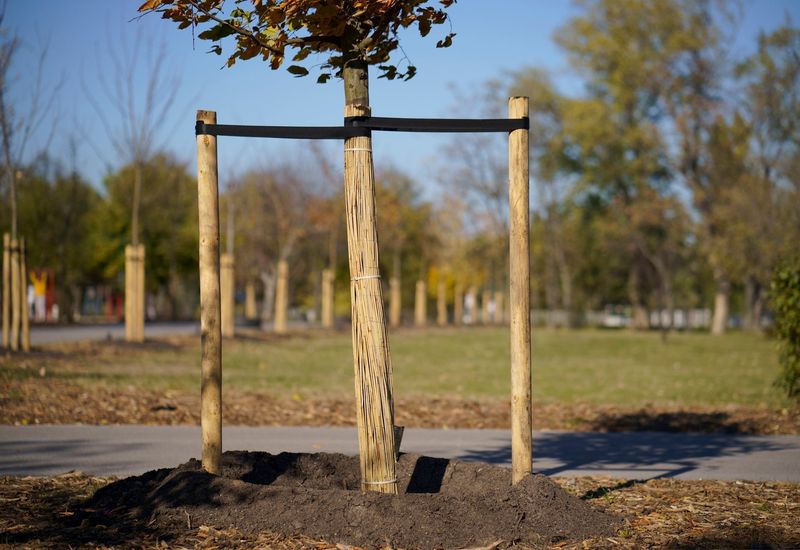
Staking a tree so tight it can’t move at all actually weakens it over time. Trunk strength in young trees develops through a process called thigmomorphogenesis, which is just a scientific way of saying that physical movement stimulates the tree to build denser, more resilient wood tissue.
Georgia gets plenty of wind, especially during afternoon thunderstorms in summer. That wind, when the tree is allowed to respond to it naturally, triggers the trunk to thicken and taper correctly from base to tip.
A tree held completely rigid by its stakes skips that process and ends up with a weaker structure than a tree that was allowed to flex.
The ties connecting the trunk to the stakes should allow about an inch of movement in any direction. That’s enough sway to stimulate growth response without letting the tree rock so far that the root ball shifts in the soil.
Finding that balance is the practical goal of any good staking setup.
Some gardeners in Georgia notice that staked trees look a little wobbly and immediately tighten everything down. Resist that impulse.
A slight lean or gentle sway under normal wind conditions is completely acceptable and even beneficial for long-term trunk development.
Watch the root zone instead of the trunk when assessing stability. If the soil at the base of the tree is heaving or the root ball is visibly shifting during wind, the ties may need adjustment.
But if only the trunk and upper canopy are moving while the base stays firm, the setup is likely doing exactly what it should be doing.
6. Excess Support Can Lead To Weak Growth
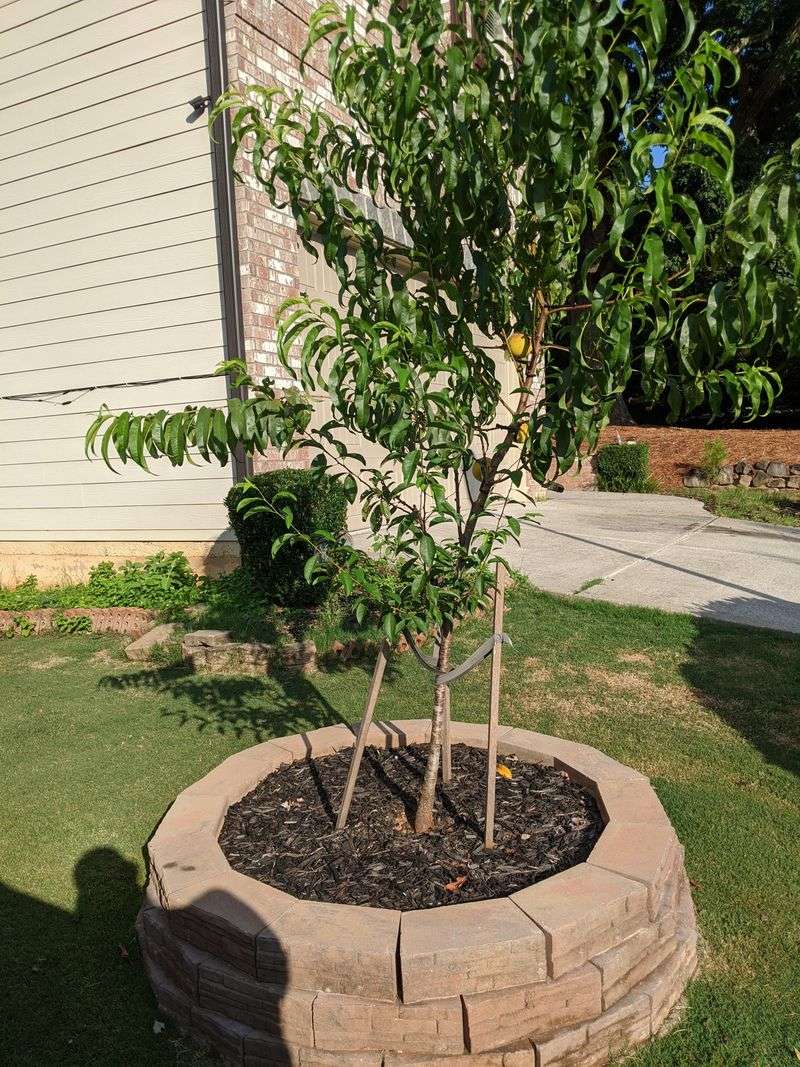
More stakes and tighter ties feel like a safer choice, but oversupporting a young tree is a real problem that shows up in Georgia gardens more often than people realize.
Trees that rely entirely on external support never fully develop the internal strength needed to stand on their own.
When a trunk is held completely rigid, the root system also responds differently.
Roots anchor themselves most aggressively in response to movement and stress, so a tree that never sways tends to develop a shallower, less extensive root system than one that had to work for its stability from early on.
Overdone staking also increases the risk of tie damage. More contact points between the tree and the staking materials means more opportunities for bark abrasion, especially during Georgia’s hot summers when the tree is actively growing and the trunk is expanding.
Each tie point is a potential problem if it’s not monitored carefully.
A good rule of thumb is to use the minimum number of stakes that actually solves the stability problem. For most standard saplings planted in Georgia yards, two stakes with soft ties that allow slight movement is the right amount of support.
Adding a third stake should be a deliberate choice based on tree size or wind exposure, not just a precaution.
Reassess the setup every few weeks during the first growing season. If the tree is standing straight and the root ball feels firm when you push gently on the trunk, scaling back the support is a reasonable next step.
Gradual reduction builds confidence in the tree’s own structure before full removal.
7. Timely Removal Prevents Long-Term Issues
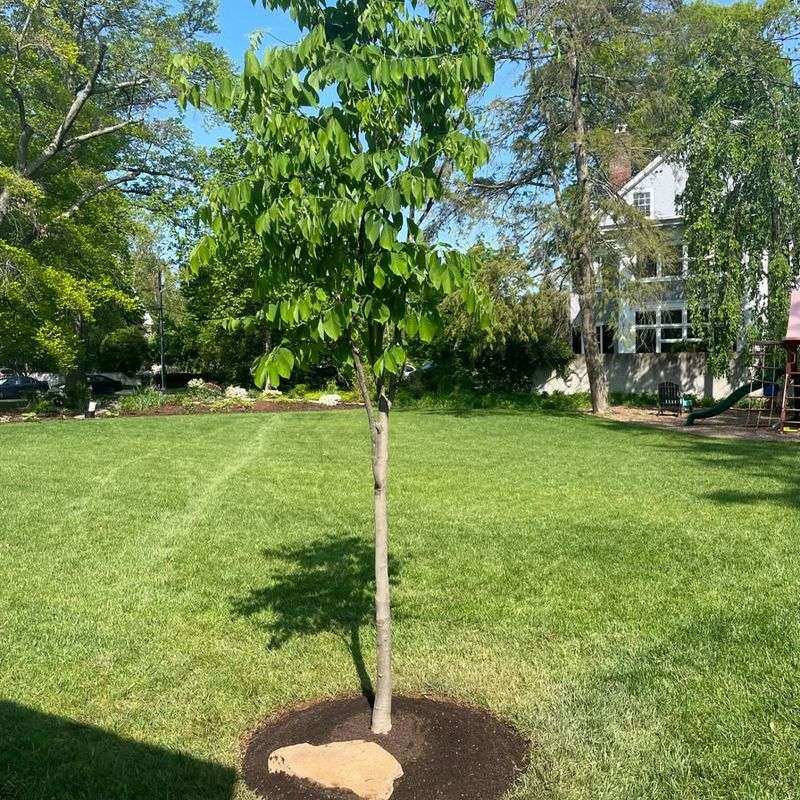
Leaving stakes in the ground long after a tree no longer needs them is one of those small oversights that creates real problems down the road. Ties that aren’t removed can girdle the trunk as the tree grows, cutting off the flow of water and nutrients through the bark layer.
Most young trees planted in Georgia need staking support for no more than one full growing season.
By the time fall arrives after a spring planting, the roots have typically spread enough into the surrounding soil to hold the tree upright on their own, even through moderate wind and rain.
Test readiness for removal by temporarily loosening the ties and observing the tree over a few days. If it stands straight and the base stays firm during normal weather, the stakes can come out.
If the tree leans noticeably without support, give it another few weeks and test again before making a final call.
In Georgia’s climate, where warm temperatures extend the growing season well into fall, trees planted in late summer may need to stay staked through winter and into the following spring.
Cooler soil slows root establishment, so the timeline shifts depending on when the tree went into the ground.
Once the stakes are out, check the trunk where the ties were attached. Look for any indentations or rough patches in the bark and monitor those spots over the next few months.
Minor surface marks usually resolve on their own, but deeper impressions are worth keeping an eye on as the tree continues to develop through subsequent seasons in Georgia.