7 Fertilizing Mistakes Arizona Gardeners Make With Citrus In April
Citrus trees in Arizona can look strong one week and start showing stress the next, especially in April when growth begins to pick up. Leaves lose their deep color, new growth slows, and fruit development does not always follow through the way it should.
Many gardeners assume more fertilizer will fix the issue, but that approach often makes things worse instead of better.
Timing, placement, and the type of nutrients used all play a bigger role than most expect, and small missteps can quietly affect how the tree performs through the season.
April sets the tone for what citrus trees carry into the hotter months, which makes early decisions more important than they seem at first. What looks like a simple routine can shift results in ways that only show up later.
Those early choices matter more than most realize, and they tend to leave a lasting impact.
1. Applying Fertilizer Too Close To The Trunk
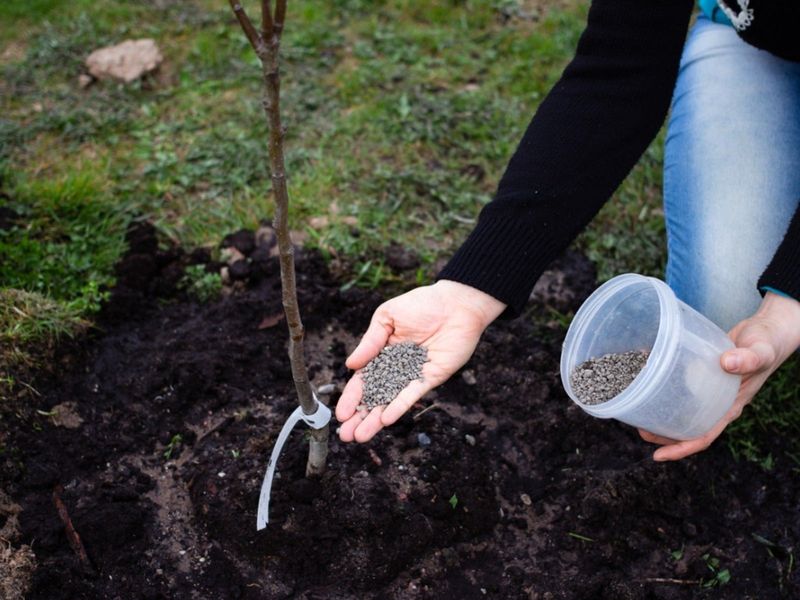
Piling fertilizer right up against the trunk of your citrus tree is one of those habits that feels harmless but can cause real problems over time. Feeder roots, the ones that actually absorb nutrients, are not sitting right under the trunk.
They spread out toward the drip line, which is the outer edge of the tree’s canopy. Fertilizing only near the trunk means most of what you apply never reaches the roots that need it.
In Arizona’s heat, concentrated fertilizer sitting against bark can also irritate the lower trunk and disrupt the tree’s outer tissue. Citrus bark is not as tough as it looks, especially on younger trees.
Granular fertilizers left pressed against the base can hold moisture in a way that invites problems during warm, humid stretches in spring.
Spread your fertilizer in a wide ring starting about a foot away from the trunk and extending out to just past the drip line. Raking it lightly into the top inch of soil before watering helps move nutrients toward the root zone faster.
If you have been applying fertilizer in a tight circle around the trunk for years, it might be worth adjusting your technique this April and watching how your tree responds over the next few weeks.
Small changes in application habits can make a noticeable difference in how well your Arizona citrus absorbs nutrients during the spring growth push.
2. Over-Fertilizing With Too Much Nitrogen
More fertilizer does not mean a healthier tree, and nitrogen is where a lot of Arizona gardeners get into trouble. When you push too much nitrogen onto a citrus tree in April, the tree responds the way you might expect: it grows a lot of leaves.
Fast, lush, dark green growth looks impressive, but that energy is being pulled away from flowering and early fruit development.
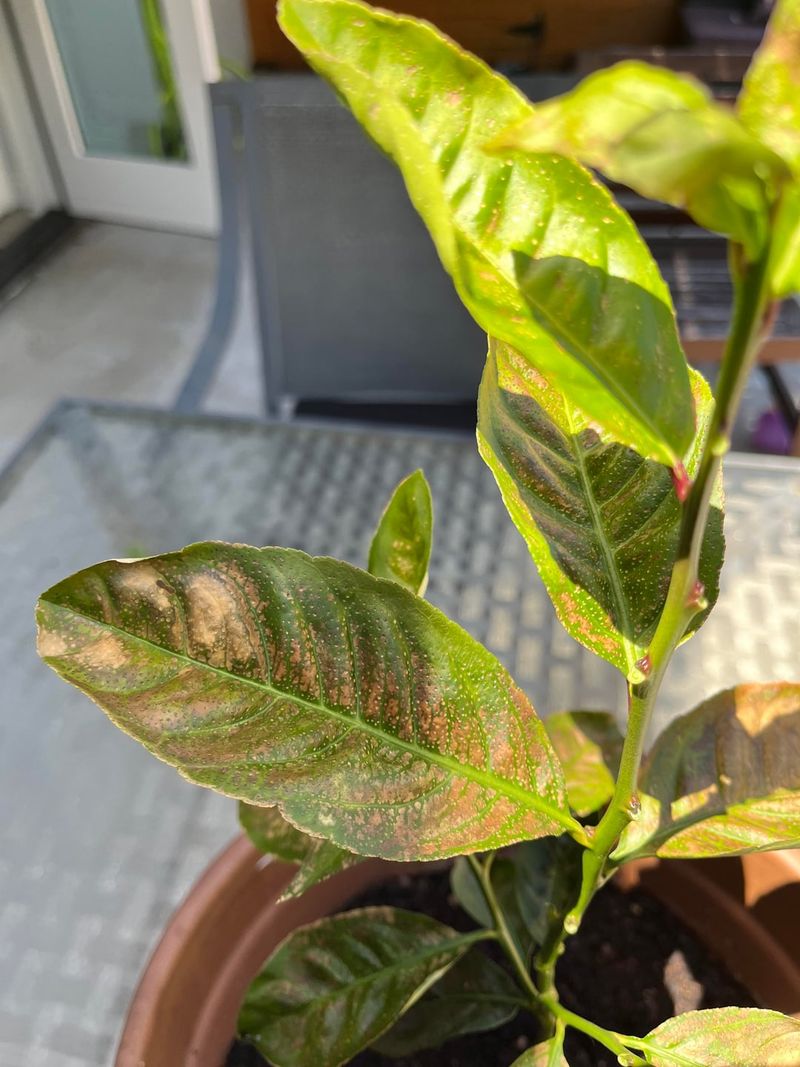
Root burn is another real concern. Excess nitrogen salts in Arizona’s already mineral-heavy soil can stress the root system, which shows up as yellowing leaf edges or tips.
You might assume the tree needs more fertilizer when it actually has too much. It is a frustrating cycle that is easy to fall into if you are not paying close attention to application rates.
Your Arizona Garden Changes Every Week. Your Plan Should Too.
Gardening in Arizona changes quickly throughout the season. Every Friday you’ll receive a simple weekly plan showing exactly what to plant, prune, fertilize, harvest, and protect so you never miss the right timing.
Citrus trees in Arizona generally do well with a slow-release citrus fertilizer applied at the rate listed on the label for your tree’s size and age. Doubling up on applications or adding extra nitrogen on top of a complete fertilizer rarely produces better results.
Stick to the recommended schedule, which for most Arizona citrus is three applications per year: February or March, May or June, and August or September. April is a reasonable time to apply if you missed the earlier window, but keep the rate appropriate for your tree.
Patience matters more than heavy feeding when it comes to fruit production.
3. Skipping Spring Feeding Can Slow Citrus Growth
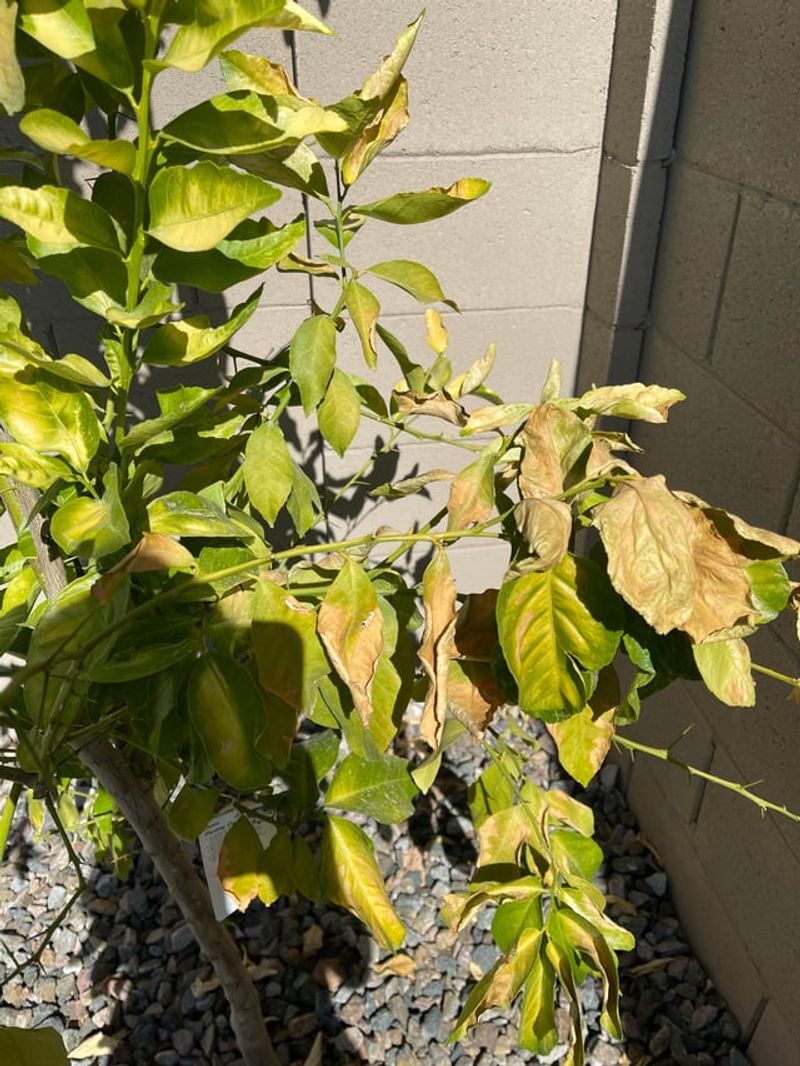
Skipping the spring feed is a mistake that quietly costs you. April in Arizona brings warming soil temperatures and active root growth, which means your citrus trees are primed to take up nutrients efficiently.
Miss that window and the tree has to push out new growth and support early fruit development with whatever reserves it has left from winter.
Pale leaves, slower shoot extension, and smaller-than-usual fruit later in the season can all trace back to a missed spring application. It does not always look dramatic right away.
The effects tend to show up gradually through May and June as the tree runs low on available nutrients during one of its most demanding growth periods.
Arizona’s sandy or gravelly soils do not hold nutrients well, so citrus trees here depend more heavily on regular fertilizing than trees growing in richer soils elsewhere.
Organic matter breaks down quickly in the desert heat, which means nutrients leach out or become unavailable faster than most gardeners expect.
Even a modest, correctly timed spring application can support stronger shoot growth, better canopy density, and improved fruit set compared to skipping the season entirely. If April has already arrived and you have not fertilized yet, it is not too late to apply a citrus-specific fertilizer now.
Water it in well and give the tree a few weeks to respond before drawing any conclusions about how the season is going.
4. Using A General-Purpose Fertilizer Instead Of A Citrus Formula
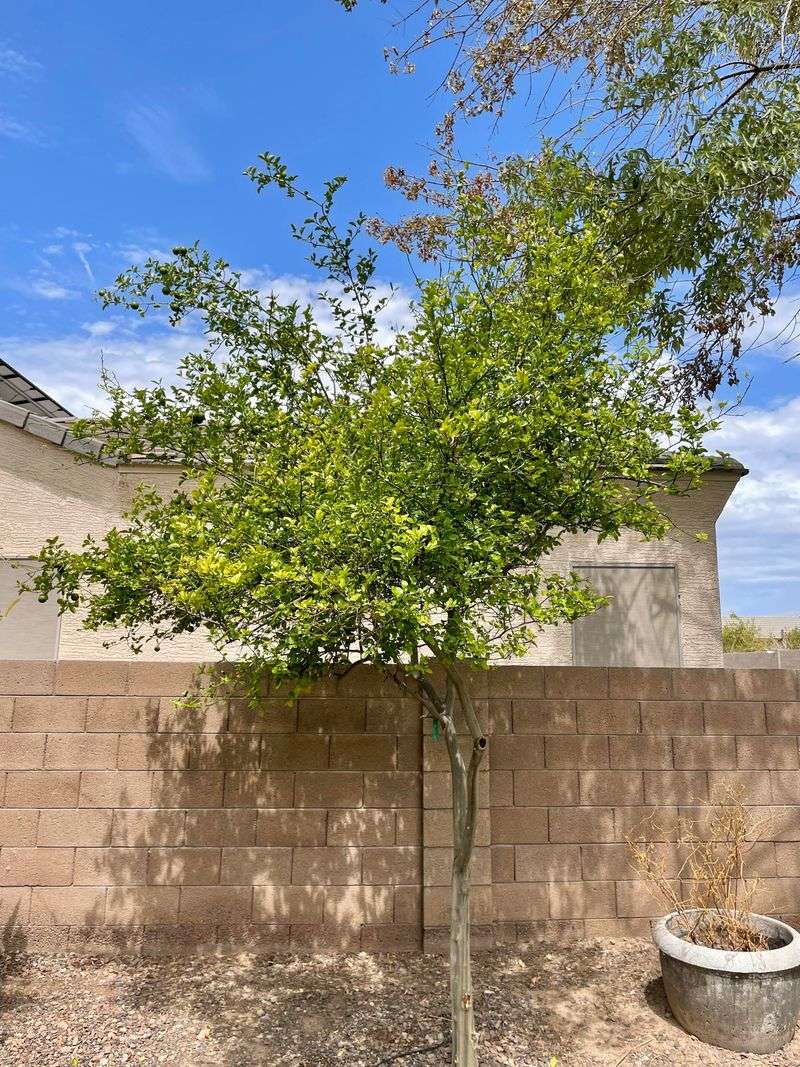
Grabbing whatever fertilizer is on sale might seem like a practical move, but general-purpose blends are not built for what citrus trees actually need. Citrus has specific nutritional requirements that go beyond basic nitrogen, phosphorus, and potassium.
Micronutrients like iron, manganese, and zinc play a real role in how citrus trees grow, and most general fertilizers either skip these entirely or include them at levels too low to matter.
Arizona’s alkaline soil makes this even more critical. High soil pH locks up iron and other trace elements, so even if your soil technically contains these nutrients, the tree may not be able to access them.
A citrus-specific fertilizer is formulated with this in mind, often including chelated iron and other micronutrients in forms that stay available even in alkaline conditions.
General-purpose fertilizers also tend to have nitrogen ratios that do not match what citrus trees need during spring growth. Some are too high in phosphorus, which citrus trees in established Arizona yards rarely need added.
Others have nitrogen forms that release too quickly for desert conditions, where heat accelerates breakdown and increases the risk of salt buildup.
Spending a few extra dollars on a fertilizer labeled specifically for citrus is a straightforward way to avoid nutrient imbalances that can be tricky to diagnose and correct.
Check the label for included micronutrients and look for formulas designed for use in alkaline or Western soils if possible.
5. Fertilizing Without Watering Deeply First
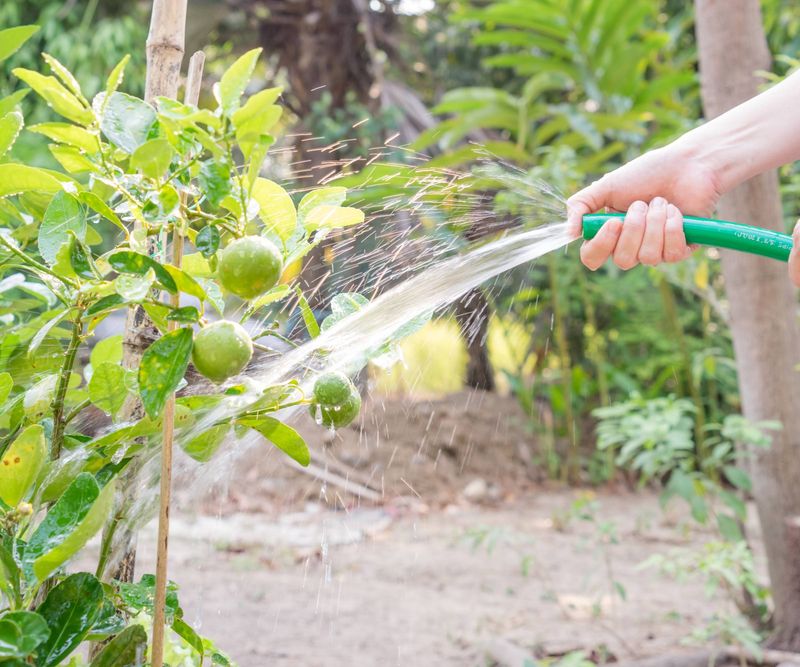
Applying fertilizer to dry soil is a common shortcut that usually backfires.
Citrus roots absorb nutrients dissolved in water, so if the soil around your tree is dry when you fertilize, the granules or liquid concentrate sits near the surface without moving toward the root zone.
Arizona’s low humidity and fast-draining soils make this problem worse than it would be in other climates.
Dry conditions also increase the chance that fertilizer salts irritate surface roots before they have a chance to dissolve properly. In April, when Arizona temperatures can already push into the 90s during warm stretches, the soil dries out faster than most gardeners realize.
A tree that looks adequately watered from the surface may have dry soil several inches down where the feeder roots are actively working.
Water your citrus tree deeply a day or two before you plan to fertilize. Deep watering means running your irrigation long enough to wet the soil at least 18 to 24 inches down, not just the top few inches.
After applying the fertilizer, water again to begin moving nutrients into the soil. Drip irrigation systems common in Arizona yards can help maintain consistent moisture, but they do not always water deeply enough on their own without longer run times.
Adjusting your drip schedule before and after fertilizing in April can improve how effectively your trees take up nutrients during the spring growth window.
6. Ignoring Iron Deficiency In Arizona’s Alkaline Soil
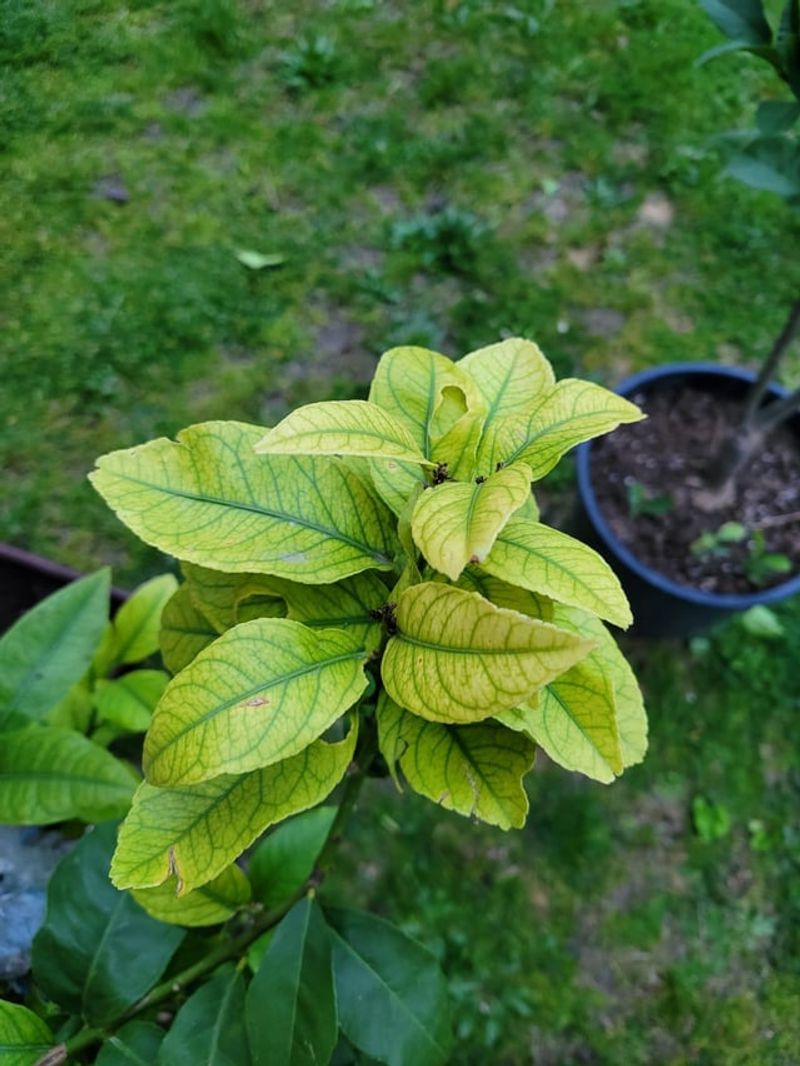
Yellow leaves with green veins are a telltale sign that something is off, and in Arizona, iron deficiency is usually the reason. It is not that Arizona soil lacks iron.
Most desert soils here actually contain plenty of it. The issue is soil pH.
Arizona’s naturally alkaline soil, often sitting at 7.5 to 8.5 or higher, locks iron into forms that citrus roots cannot absorb, no matter how much is present in the ground.
Gardeners sometimes respond by dumping more general fertilizer on the tree, which does not address the actual problem.
Iron chlorosis shows up most noticeably on new growth first, with young leaves turning pale yellow while the veins stay green.
Left unaddressed, affected leaves drop early and the tree produces less vigorous growth through the season.
Chelated iron products are the practical solution for Arizona citrus. Chelated iron stays available to roots even in high-pH conditions, unlike standard iron sulfate, which can become unavailable quickly in alkaline soil.
Foliar sprays of chelated iron can produce visible improvement in leaf color within a couple of weeks. Soil applications of chelated iron work more slowly but provide longer-term support.
Acidifying the soil slightly with sulfur over time can also help improve iron uptake, though results take months rather than weeks. April is a good time to address iron deficiency because the tree is actively growing and can respond to treatment during the spring flush.
7. Applying The Same Amount To Young Trees As Mature Trees
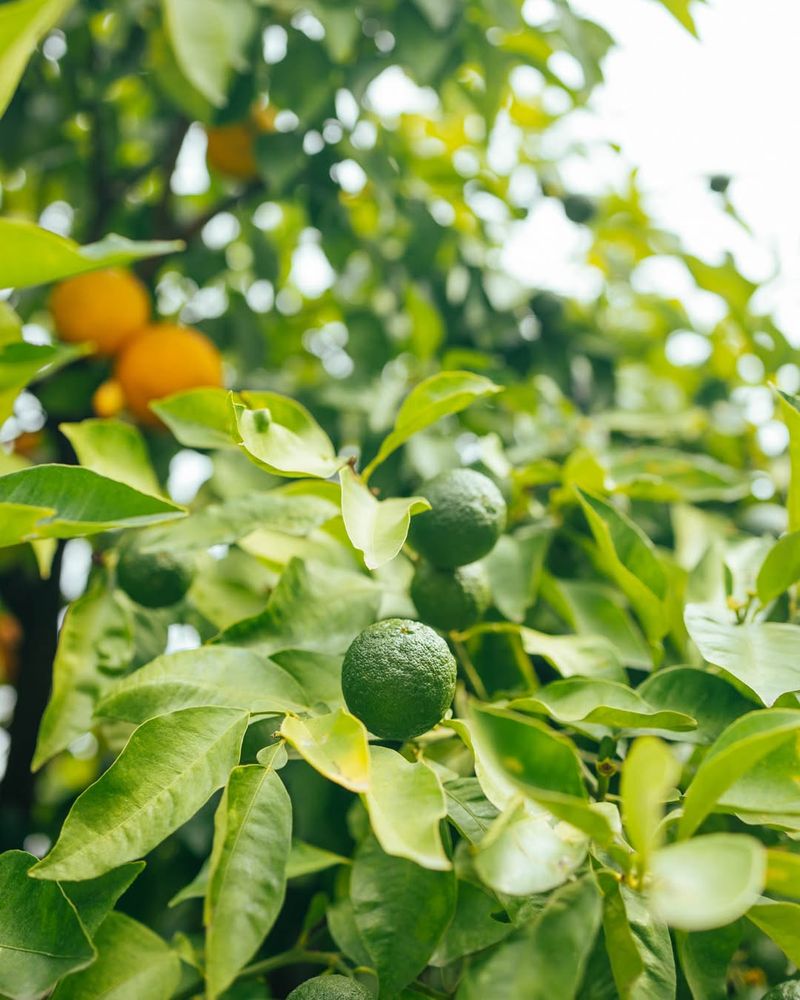
Young citrus trees and mature ones have completely different nutritional needs, and treating them the same way almost always leads to problems. A newly planted citrus tree in an Arizona yard needs a light, careful approach to fertilizing.
Roots are still establishing, and pushing too much fertilizer too soon can stress the root system before it has a chance to spread and anchor properly.
Mature trees have extensive root systems that can handle and benefit from larger fertilizer applications spread across a wide area.
A three-year-old tree getting the same dose as a ten-year-old tree is receiving far more fertilizer per unit of root area than it can reasonably use.
That excess does not just go to waste. In Arizona’s soil, it can contribute to salt buildup, which creates its own set of problems in the root zone.
Most citrus fertilizer labels provide application rates based on tree age or trunk diameter, and following those guidelines closely makes a real difference.
For young trees in their first two years, many Arizona horticulturalists recommend holding off on heavy fertilizing and focusing more on consistent watering and soil health.
Starting with half the recommended amount for a young tree and observing how it responds over several weeks is a reasonable approach.
As the tree matures and the canopy expands, you can gradually increase the application rate to match its growing nutritional needs through each season.