Best Flowering Trees To Grow In Virginia Yards
A blooming tree changes everything.
One good spring show can make a yard feel older, softer, and far more alive. In Virginia, that kind of beauty fits right in.
The right tree does more than bloom. It frames the house, brightens the view from the porch, and gives the whole yard a sense of character through the changing seasons.
Some trees ask for very little and still put on a beautiful show. Others need a bit more thought but reward it with unforgettable spring color.
The right choice can turn an ordinary yard into a place that feels deeply rooted, welcoming, and full of charm.
1. Eastern Redbud
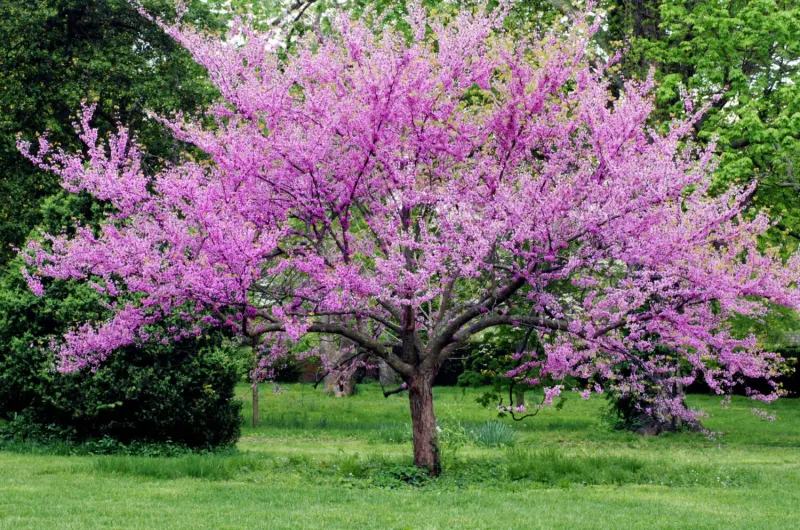
Before a single leaf appears, the Eastern Redbud puts on one of the most breathtaking shows in the entire plant world.
Tiny magenta-pink flowers burst directly from the branches and even the trunk, creating a cloud of color that stops people in their tracks every spring. It is one of the most beloved native trees in Virginia, and for good reason.
Eastern Redbuds grow to about 20 to 30 feet tall, making them a perfect fit for most residential yards. They thrive in full sun to partial shade and are surprisingly tolerant of different soil types, including clay-heavy ground that frustrates many gardeners.
Once established, they need very little extra watering or fuss.
Planting one near a patio or window means you get a front-row seat to the spring flower show. After the blooms fade, heart-shaped leaves fill in and offer lovely summer shade.
In fall, the foliage turns golden yellow, so this tree earns its keep across multiple seasons. It is truly a year-round performer that any Virginia homeowner would be proud to have in their yard.
2. Common Dogwood
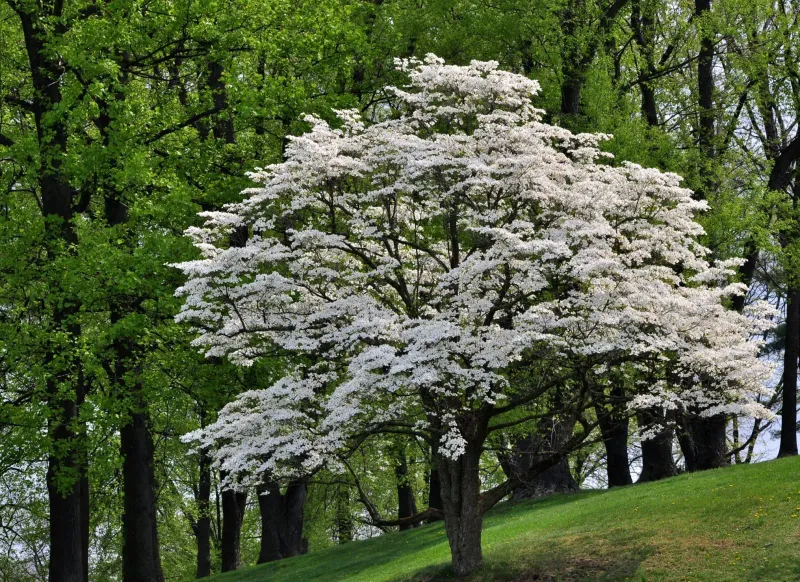
Ask any Virginian what their favorite flowering tree is, and there is a good chance they will say Common Dogwood without missing a beat.
The flowering is practically synonymous with spring in this part of the country, and its four-petaled white or pink blooms are an iconic sight from the mountains to the coast. It even serves as Virginia’s official state tree.
Dogwoods prefer a spot with morning sun and afternoon shade, which mimics the dappled light of their natural forest-edge habitat. They do best in well-drained, slightly acidic soil that stays consistently moist.
Mulching around the base helps hold moisture and keeps the roots cool during hot summer months.
One thing that makes Common Dogwoods extra special is their four-season appeal. Spring brings the famous flowers, summer offers glossy green leaves, fall delivers brilliant red foliage, and winter reveals interesting horizontal branch structure.
Bright red berries also appear in fall, attracting birds to your yard. Planting a Dogwood is like giving your landscape a gift that keeps delivering something new every few months throughout the year.
3. Southern Magnolia
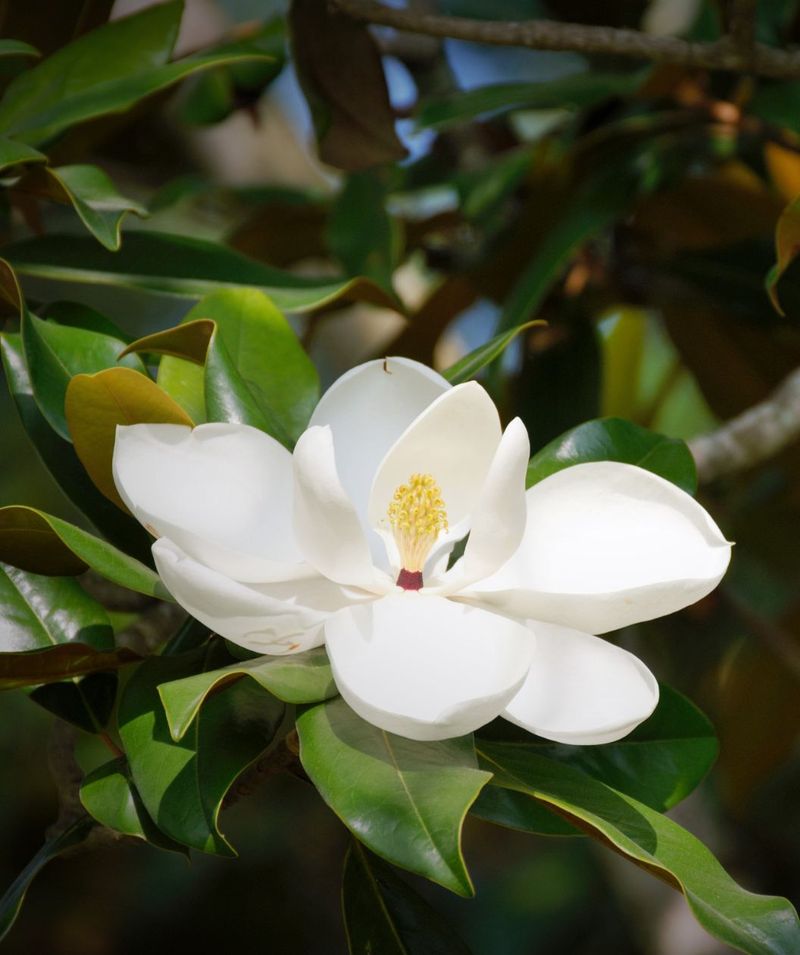
There is something undeniably grand about a Southern Magnolia standing tall in a yard, its enormous creamy white blossoms filling the warm air with a fragrance you will never forget.
Your Virginia Garden Changes Every Week. Your Plan Should Too.
Gardening in Virginia changes quickly throughout the season. Every Friday you’ll receive a simple weekly plan showing exactly what to plant, prune, fertilize, harvest, and protect so you never miss the right timing.
These trees have a rich, almost old-fashioned elegance that suits Virginia’s historic landscapes perfectly. Some trees in the region have been growing for over a hundred years.
Southern Magnolias are evergreen, meaning they keep their large, glossy dark green leaves all year long. They can grow quite large, sometimes reaching 60 to 80 feet, so they work best in spacious yards where they have room to spread.
Smaller cultivars like ‘Little Gem’ are available for more compact spaces and still deliver those showstopping flowers.
Blooming season typically runs from late spring through summer, which is longer than most flowering trees. The flowers can measure up to 12 inches across, making each one feel like a small miracle.
After blooming, cone-like seed pods develop and release bright red seeds that birds absolutely love. Plant this tree where you can enjoy its fragrance through an open window on a warm summer evening for the full experience.
4. Japanese Cherry
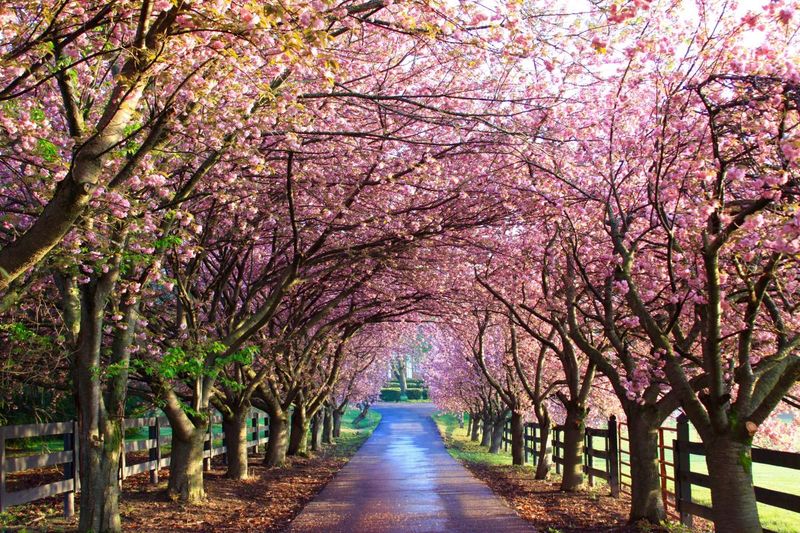
Few flowering trees create as much excitement as the Japanese Cherry when it erupts into bloom each spring. Clouds of soft pink or white blossoms appear almost overnight, turning an ordinary yard into something that looks like a painting.
The blooming period is brief, usually lasting just one to two weeks, but the memory of those flowers lingers all year long.
Japanese Cherry trees come in many varieties, and most do very well in Virginia’s climate. They prefer full sun and well-drained soil, and they grow to a manageable 15 to 25 feet depending on the variety.
The Yoshino Cherry is one of the most popular choices because of its reliable bloom and graceful weeping form.
Planting a Japanese Cherry near a seating area or along a driveway creates a truly magical effect when the flowers are open. The fallen petals create a soft pink carpet on the ground, which is a sight worth seeing all on its own.
Even after blooming ends, the tree’s smooth reddish-brown bark and attractive branching structure keep it looking interesting through all four seasons. It is a tree that earns admiration from neighbors and passersby alike.
5. Sweetbay Magnolia
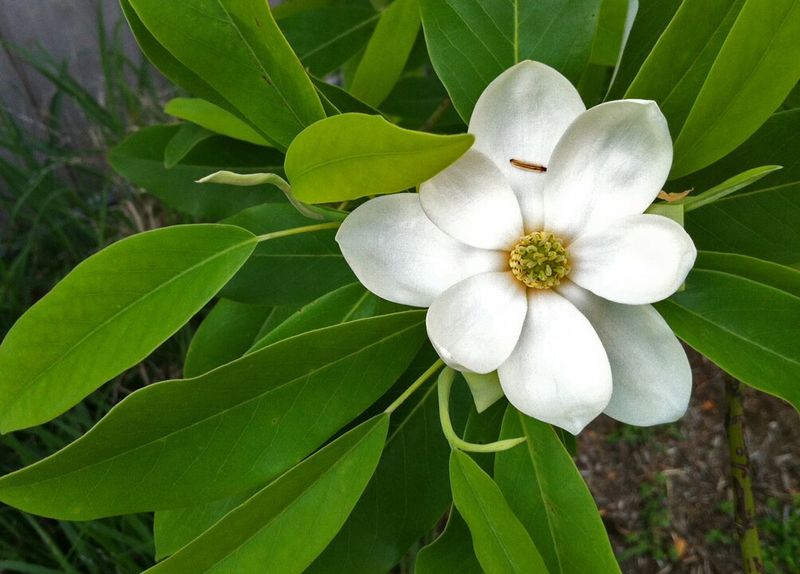
Not everyone knows about the Sweetbay Magnolia, but those who do tend to become instant fans.
Unlike its larger Southern cousin, the Sweetbay Magnolia is a more modest, multi-stemmed tree that fits comfortably into smaller yards while still delivering gorgeous creamy white flowers with a lovely lemony scent.
It is a hidden gem worth getting to know.
One of the biggest advantages of Sweetbay Magnolia is its tolerance for wet conditions. While most flowering trees struggle in soggy soil, this one actually thrives near streams, ponds, or low-lying areas that collect water after rainstorms.
That makes it a fantastic solution for Virginia yards with drainage challenges that other trees simply cannot handle.
The flowers bloom from late spring through summer, often producing a second flush of blooms that other magnolias cannot match. The leaves are two-toned, dark green on top and silvery white underneath, so even a light breeze creates a shimmering, eye-catching effect.
In warmer parts of Virginia, the tree may even hold onto some of its leaves through winter. For a low-maintenance tree with big personality, Sweetbay Magnolia is hard to beat in any residential landscape setting.
6. Saucer Magnolia
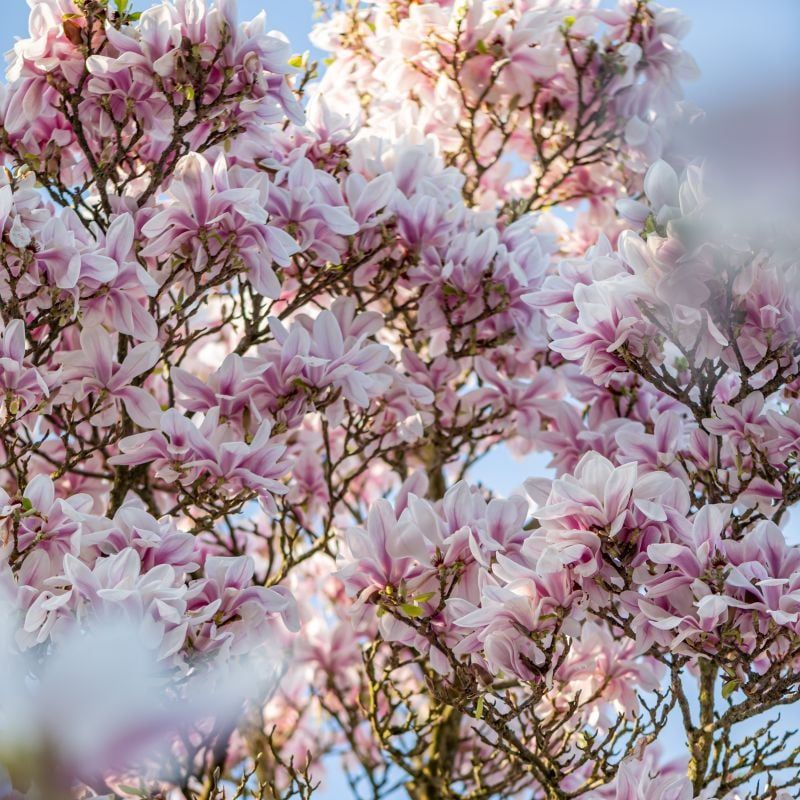
If you want a tree that makes the whole neighborhood stop and stare, the Saucer Magnolia is your answer.
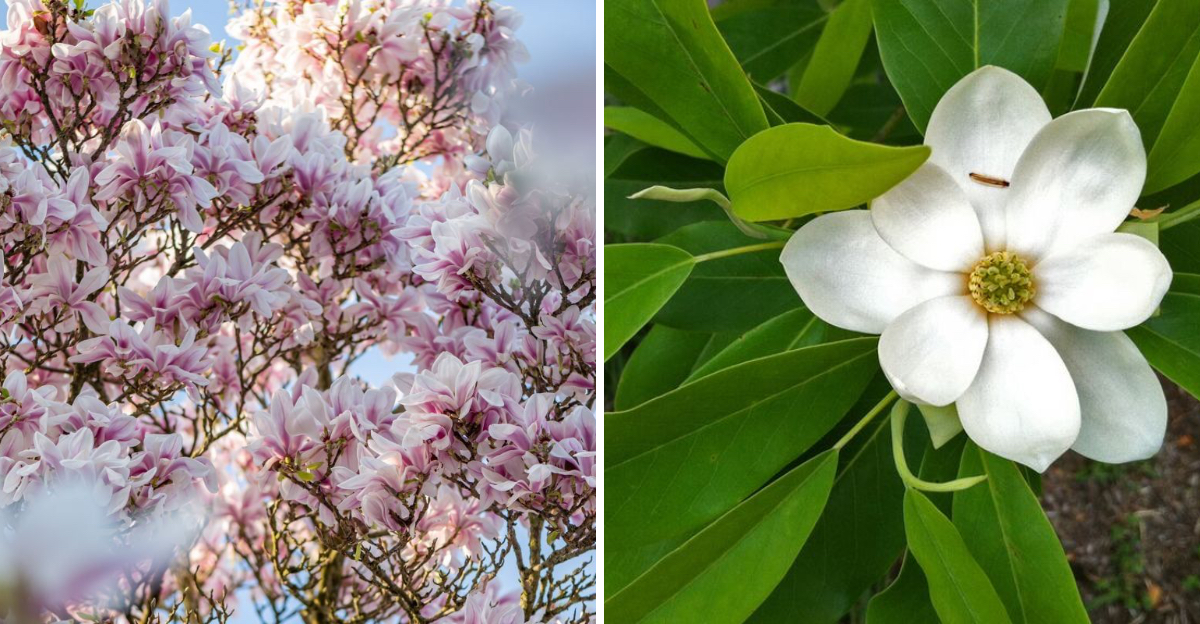
Its enormous pink and white blooms appear in early spring before the leaves even open, creating a jaw-dropping floral display on bare branches that seems almost too beautiful to be real.
Plant one in your front yard and prepare for compliments.
Saucer Magnolias typically grow 20 to 30 feet tall with a wide, rounded shape that looks stunning as a focal point or specimen tree. They prefer full sun and well-drained soil, and they are reasonably cold-hardy, which makes them well-suited for most parts of Virginia.
One thing to watch for is late frost, which can nip early blooms in colder inland areas.
The flowers themselves can reach up to 10 inches across, and a mature tree covered in blooms is one of the most dramatic sights in any spring garden. After the flowers fade, large glossy leaves provide dense summer shade.
This tree grows at a moderate pace, so you will not wait forever to enjoy its full beauty. Starting with a nursery-grown tree a few feet tall means blooms could arrive within just a couple of seasons.
7. Crape Myrtle
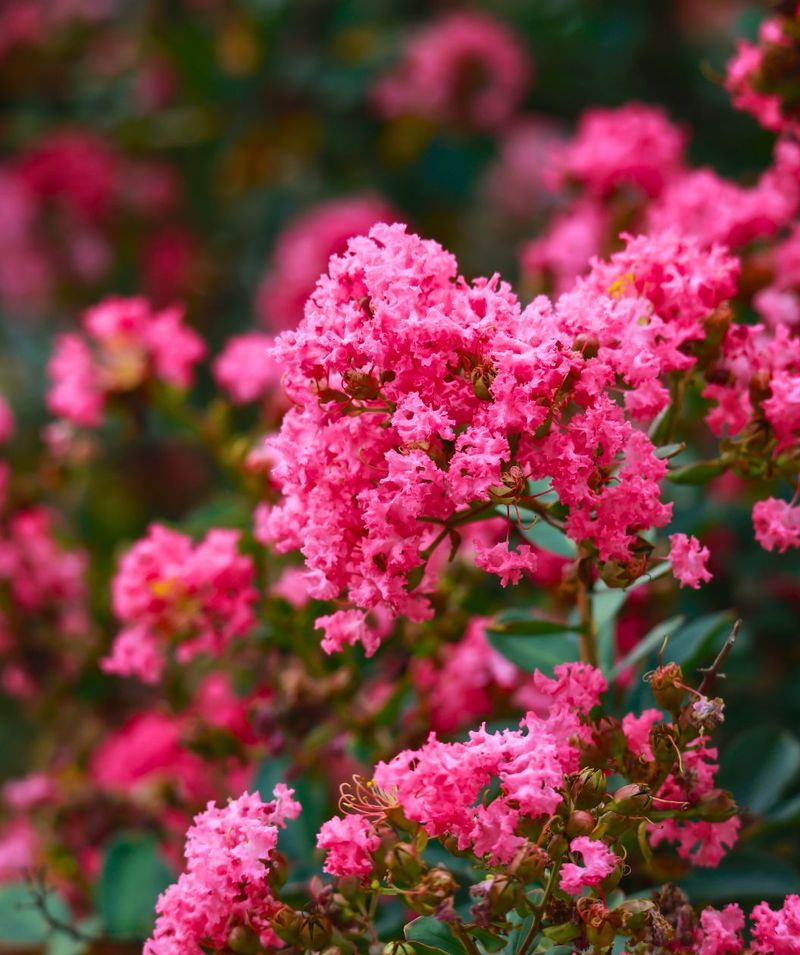
Summer in Virginia would feel incomplete without the bright, cheerful blooms of the Crape Myrtle lining streets and filling yards across the state.
These trees are warm-season superstars, producing showy clusters of ruffled flowers in shades of pink, red, white, lavender, and purple right when most other flowering trees have already called it quits for the year.
Crape Myrtles love full sun and heat, which makes Virginia summers their perfect playground. They are drought-tolerant once established, making them a smart choice for gardeners who want beauty without constant watering.
They come in sizes ranging from compact shrubs to trees reaching 30 feet tall, so there is a variety to fit almost any yard size or layout.
Beyond the flowers, Crape Myrtles offer stunning peeling bark in shades of cinnamon, gray, and cream that makes them genuinely attractive even in winter. Fall foliage can turn brilliant shades of orange and red before the leaves drop.
One tip: resist the urge to heavily prune them each year, a practice sometimes called topping. Letting them grow naturally results in a far more graceful, beautiful tree that performs better season after season.
8. American Fringe Tree
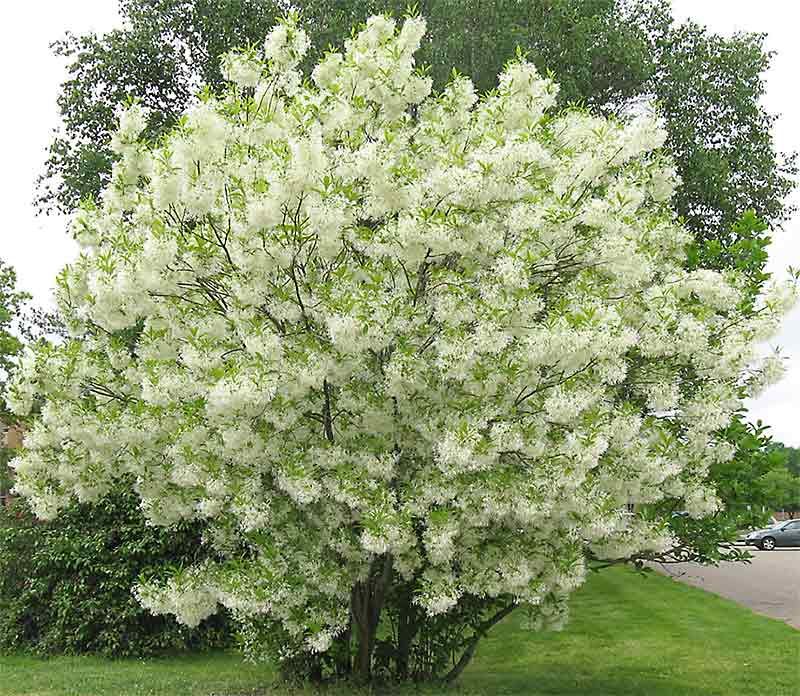
Fluffy, cloud-like clusters of white flowers that look like they belong in a fairy tale make the American Fringe Tree one of the most underrated flowering trees you can grow.
Also called Grancy Graybeard, this native tree blooms in late spring with drooping, fragrant white flowers that create a soft, dreamy effect unlike anything else in the garden. It is a true conversation starter.
American Fringe Trees grow slowly, eventually reaching 12 to 20 feet tall, and they are incredibly long-lived once established.
They adapt well to a variety of soil conditions and can handle both full sun and partial shade, which gives them flexibility in different yard situations.
Being a Virginia native means they are naturally suited to the local climate with minimal extra care needed.
Female trees produce dark blue berries in late summer that songbirds find irresistible, adding another layer of wildlife value to your yard. Male trees tend to produce more abundant flower clusters, so many gardeners plant one of each for the best of both worlds.
The fall foliage turns a clean bright yellow before dropping. For anyone who wants a flowering tree that feels a little wild and wonderfully unique, this is a spectacular choice worth seeking out at a nursery.
9. Serviceberry
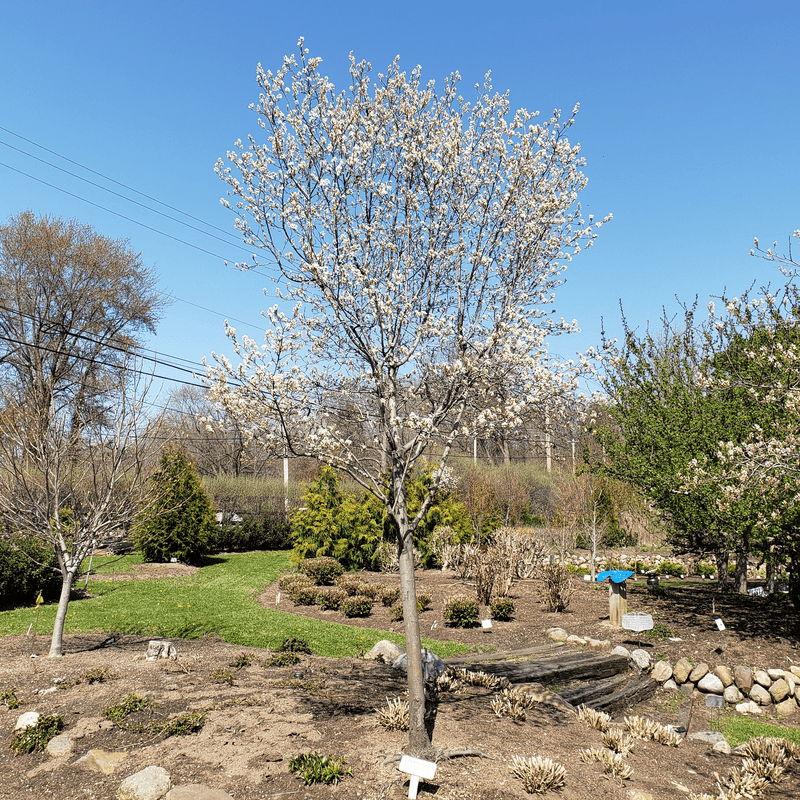
Serviceberry might just be the most hardworking flowering tree you can plant in a Virginia yard.
It blooms earlier than almost anything else in spring, sometimes while snow is still possible, filling bare branches with delicate white star-shaped flowers that signal warmer days are finally on the way.
Early-season pollinators absolutely depend on those blooms for food.
Growing 15 to 25 feet tall, Serviceberry fits comfortably into most residential landscapes without overwhelming the space. It handles both full sun and partial shade and tolerates a range of soil types, from sandy loam to heavier clay.
Once established, it asks for very little attention while delivering beauty across multiple seasons throughout the year.
After the flowers fade, small red to purple berries ripen in early summer and are genuinely delicious, sweet and mild with a hint of almond flavor. Birds will compete with you for them, so pick some early if you want to enjoy them fresh or baked into a pie.
Fall foliage turns fiery shades of orange, red, and gold that rival any maple. The smooth gray bark looks attractive in winter too.
Few trees pack this much seasonal interest into such a manageable, easy-to-grow package for home gardeners.
10. Golden Chain Tree
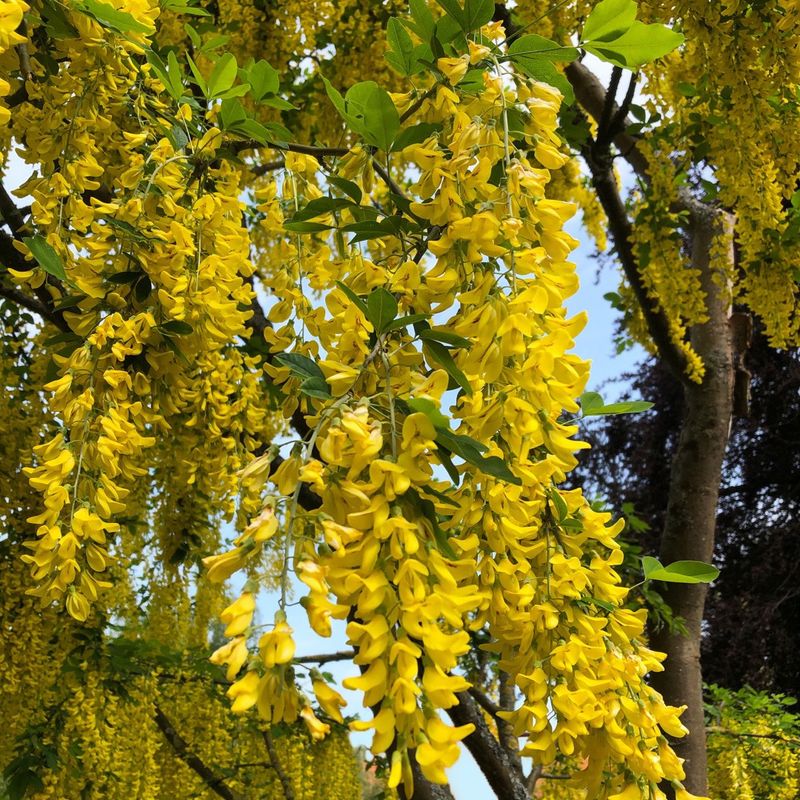
Imagine long, golden chains of flowers hanging from every branch like a living chandelier, and you have a pretty good picture of what the Golden Chain Tree looks like in full bloom.
This striking tree produces cascading clusters of bright yellow flowers up to 20 inches long in late spring, creating one of the most dramatic floral displays you will ever see in a residential yard.
Golden Chain Trees prefer cooler spots with well-drained soil and do best in the higher-elevation areas of Virginia where summer temperatures are a bit less intense.
They grow to about 15 to 25 feet tall and work beautifully as a specimen tree or planted in a row to create a tunnel of hanging golden blooms that gardeners dream about. Morning sun with some afternoon shade is the sweet spot for keeping them happy.
Pruning after flowering helps maintain a clean shape and encourages healthy new growth for the following season. The tree’s trifoliate leaves, similar in look to clover, stay a fresh green through summer before dropping in fall.
One important note for families: all parts of this tree are toxic if eaten, so plant it away from areas where small children play unsupervised. Otherwise, it is a genuinely spectacular addition to any landscape.