The One Flower Oregon Gardens Can’t Seem To Grow Without
Walk through almost any Oregon neighborhood in late spring and you’ll start to notice a pattern. Certain yards look fuller, more settled, like everything just fits together.
Look a little closer, and the same flower tends to show up again and again. It’s not flashy in a way that demands attention, but it holds its own season after season without much trouble.
Gardeners pass it along, recommend it to neighbors, and keep coming back to it after trying other options that fall short.
There’s something about how it handles Oregon’s mix of rain, cool mornings, and mild summers that makes it hard to replace. It settles in, fills gaps, and keeps showing up strong year after year in all kinds of garden styles.
1. Camas Is A Native Flower Deeply Rooted In Oregon Landscapes
Long before Oregon had garden centers or landscaping trends, camas was already thriving across the state’s open meadows and grassy prairies. This native wildflower, known scientifically as Camassia quamash, has been part of the Pacific Northwest’s story for thousands of years.
Indigenous peoples across the region, including the Nez Perce and Kalapuya, depended on camas bulbs as a major food source, harvesting them each spring in large communal gatherings.
Oregon’s landscape is practically built around this flower. The Willamette Valley, with its wide open lowlands and wet spring soils, was once carpeted in camas as far as the eye could see.
Early explorers described the blooming fields as looking like a bright blue lake from a distance. That kind of natural abundance tells you just how perfectly suited camas is to this part of the country.
Planting camas in an Oregon garden is not just a smart horticultural choice; it is a way of honoring the land’s deep history. Because it evolved right here in the Pacific Northwest, it already knows what Oregon’s soil, rainfall, and temperatures feel like.
It does not need to be coaxed or babied. Camas belongs here, and once you plant it, your garden will feel more connected to the wild, beautiful landscape that surrounds Oregon from every direction.
2. Why Camas Thrives In Oregon’s Moist Spring Conditions
Oregon’s spring weather can feel like a lot to handle if you are a plant that prefers dry, sunny conditions. But for camas, those cool, rainy months from March through May are basically a dream come true.
The plant is perfectly adapted to the wet, mild conditions that define springtime across much of Oregon, especially in the Willamette Valley and along the coast.
Camas grows from bulbs that sit underground through the winter, quietly waiting for the soil to warm up just enough to send up new growth. When Oregon’s famous spring rains arrive, the bulbs soak up that moisture and respond by pushing up tall, sturdy flower spikes.
The combination of cool temperatures and consistent rainfall gives camas exactly what it needs to put on a spectacular show.
Many gardeners in Oregon struggle to find plants that genuinely enjoy wet spring conditions without rotting or getting waterlogged. Camas solves that problem naturally.
Your Oregon Garden Changes Every Week. Your Plan Should Too.
Gardening in Oregon changes quickly throughout the season. Every Friday you’ll receive a simple weekly plan showing exactly what to plant, prune, fertilize, harvest, and protect so you never miss the right timing.
Because it evolved in this exact climate, it has built-in tolerance for the kind of soggy ground that would stress out plants from drier regions. Once the spring bloom is finished and Oregon’s summer dry season begins, the plant simply goes dormant underground, resting until the rains return.
That cycle matches Oregon’s seasonal rhythm so perfectly that growing camas almost feels effortless for local gardeners.
3. Its Tall Blue Blooms Steal The Show Early In The Season
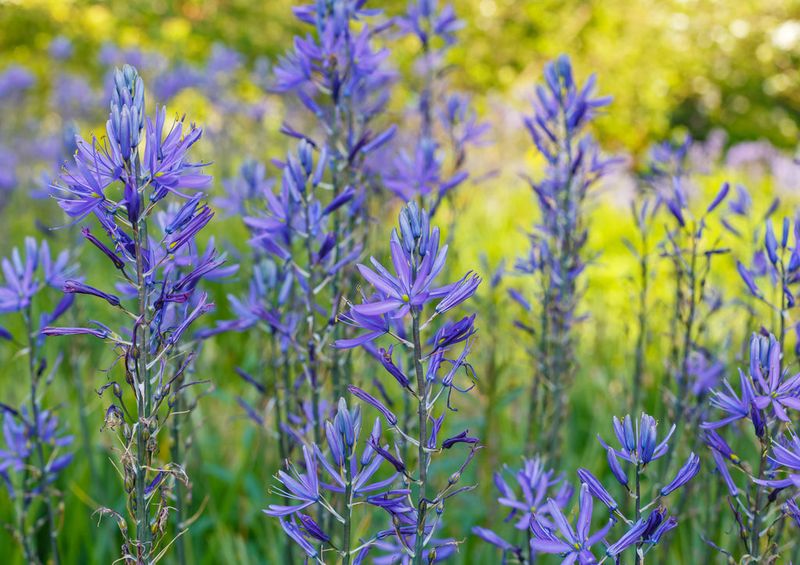
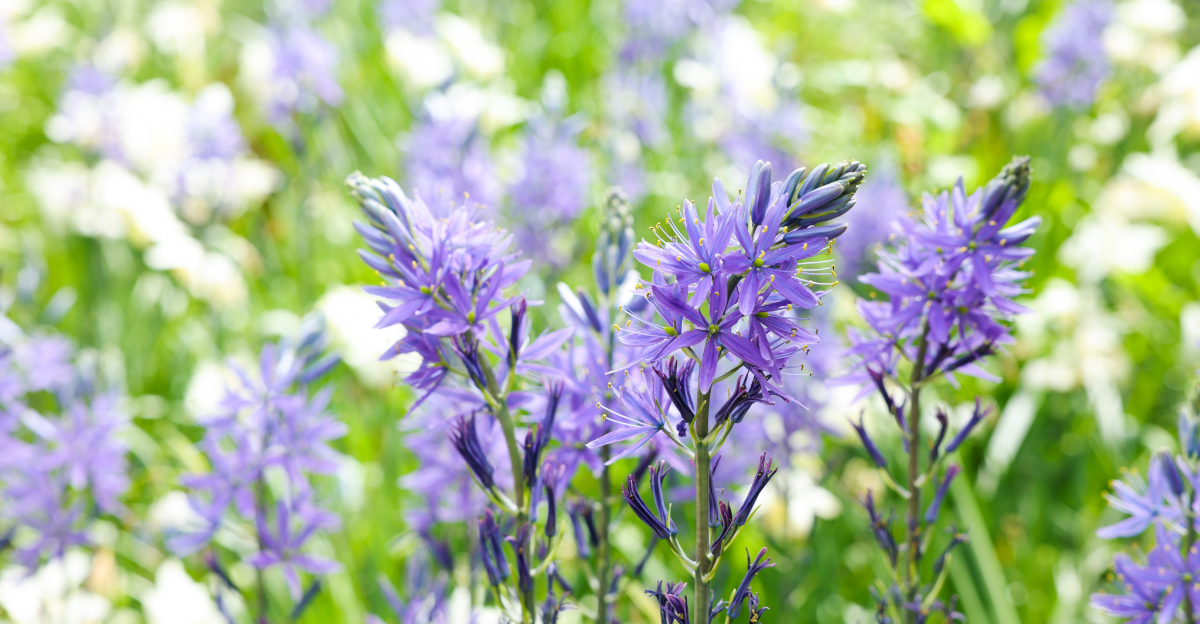
There is something genuinely exciting about watching camas come into bloom. Right when Oregon gardens are still shaking off the gray of winter, those tall spikes of blue-violet flowers shoot up and completely transform the landscape.
The blooms appear in April and May, making camas one of the earliest and most dramatic showstoppers in any Pacific Northwest garden.
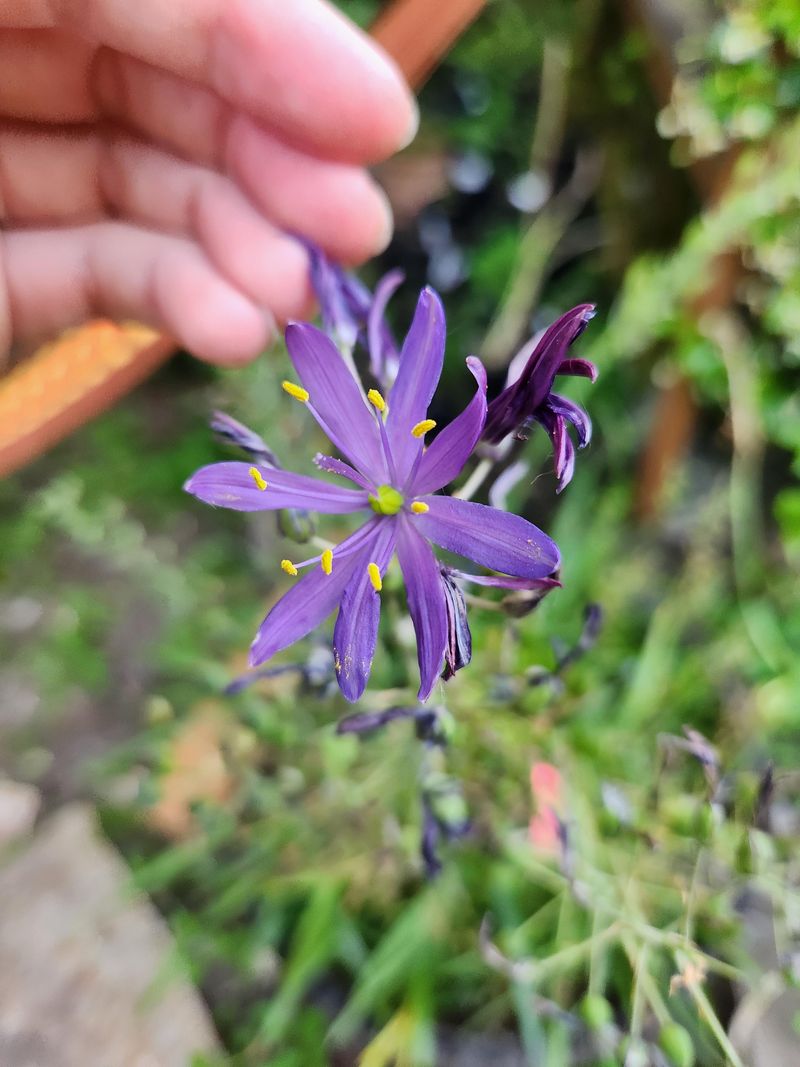
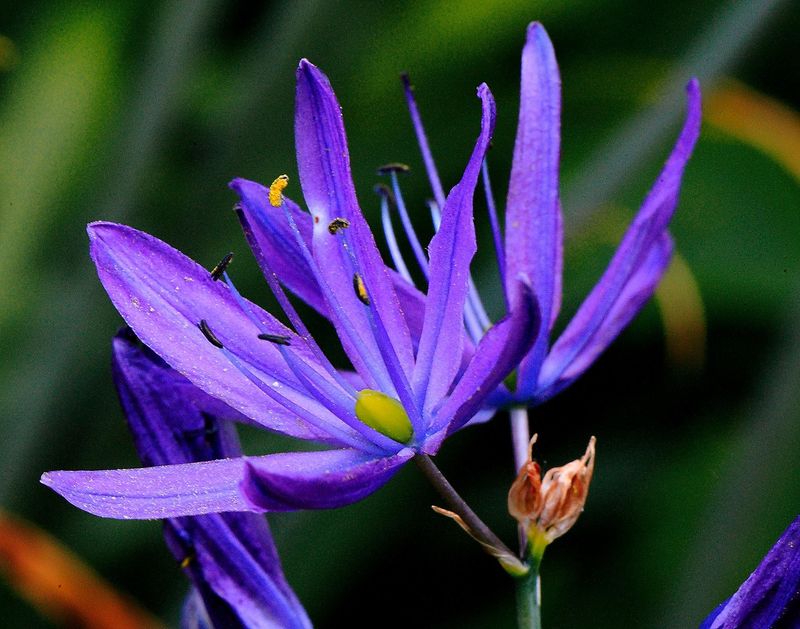
Each flower spike can grow anywhere from one to three feet tall, and the individual star-shaped blossoms line the stem in a way that looks almost architectural. The color is truly special.
That rich blue-violet shade is not something you see in many spring flowers, which makes camas stand out even when planted alongside other early bloomers like tulips or daffodils. In a sea of yellows and pinks, camas brings something completely different to the mix.
Oregon gardeners who have planted camas near a pond, along a fence line, or in a naturalized meadow area often say it becomes the first thing visitors notice and ask about. The visual impact is hard to overstate, especially when multiple bulbs are planted together in clusters.
A mass planting of camas in full bloom looks like someone spilled a bucket of the most beautiful blue paint across your garden. For early-season color that truly wows, very few flowers grown in Oregon can compete with what camas delivers each spring.
4. Camas Naturalizes Easily And Comes Back Strong Every Year
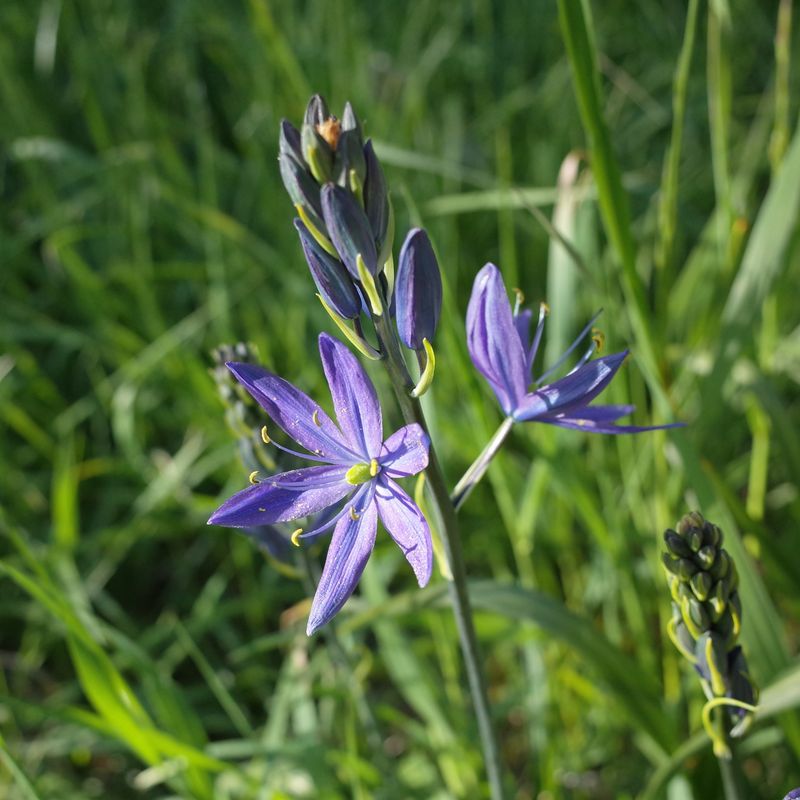
One of the best things about growing camas in Oregon is that you plant it once and it keeps rewarding you for years to come. Unlike annual flowers that need to be replanted every season, camas is a true perennial that naturalizes beautifully in the right conditions.
Over time, the bulbs multiply underground, and each year the display gets bigger and more impressive.
Naturalizing means the plant spreads on its own in a way that looks completely natural, almost as if it has always been there. In Oregon’s climate, camas does this with very little help from the gardener.
The bulbs produce offsets, which are small baby bulbs that form alongside the parent bulb. After a few years, a single bulb can turn into a whole cluster, filling in a garden bed or meadow area with that gorgeous blue color all on its own.
For busy Oregon gardeners who do not have hours to spend replanting and fussing over their flower beds, camas is a genuine gift. You do the work once in the fall when you plant the bulbs, and then you step back and let Oregon’s natural conditions do the rest.
There is something deeply satisfying about watching a planting grow and expand year after year without much intervention. Camas builds a garden that truly takes on a life of its own, getting richer and more beautiful with every passing spring season.
5. It Handles Wet Soils Where Many Garden Plants Struggle
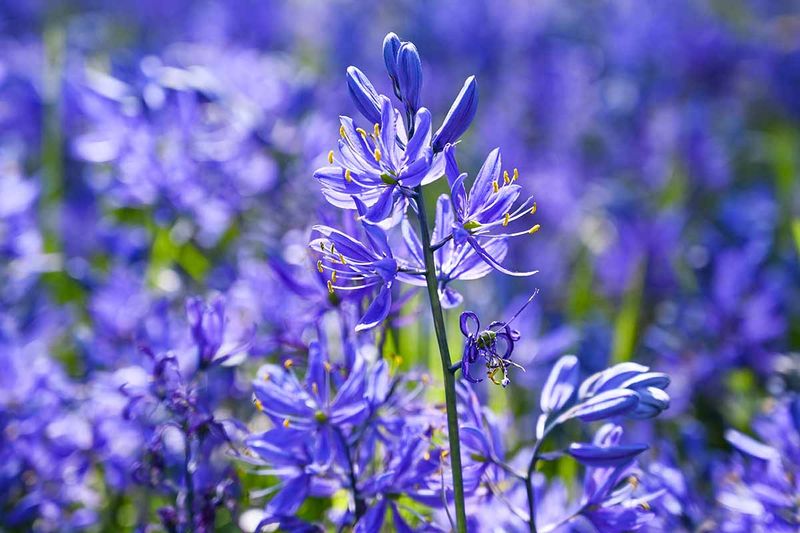
Ask any Oregon gardener about their biggest gardening challenge, and there is a good chance wet soil will come up pretty quickly. Many parts of Oregon, especially the Willamette Valley and western portions of the state, deal with heavy clay soils and poor drainage that stay soggy for weeks at a time in spring.
Most flowering plants simply cannot handle those conditions, and they sulk, rot, or just refuse to bloom properly.
Camas is built differently. Because it naturally grows in low-lying meadows and areas that flood seasonally, it is completely comfortable in wet, heavy soil.
Its bulbs have adapted to survive extended periods of soil saturation that would be a serious problem for plants like lavender, salvia, or most ornamental grasses. If you have a low spot in your Oregon yard where water collects after rain, camas is one of the best plants you can put there.
Rain gardens are becoming more popular across Oregon as homeowners look for smart ways to manage stormwater runoff. Camas fits right into that kind of planting design because it thrives during the wet season and then goes dormant once conditions dry out in summer.
Rather than fighting your yard’s natural drainage patterns, planting camas means working with them instead. It turns a soggy problem area into a spring showpiece that your neighbors will genuinely admire every time they walk past your Oregon home.
6. Why Pollinators Flock To Camas In Spring
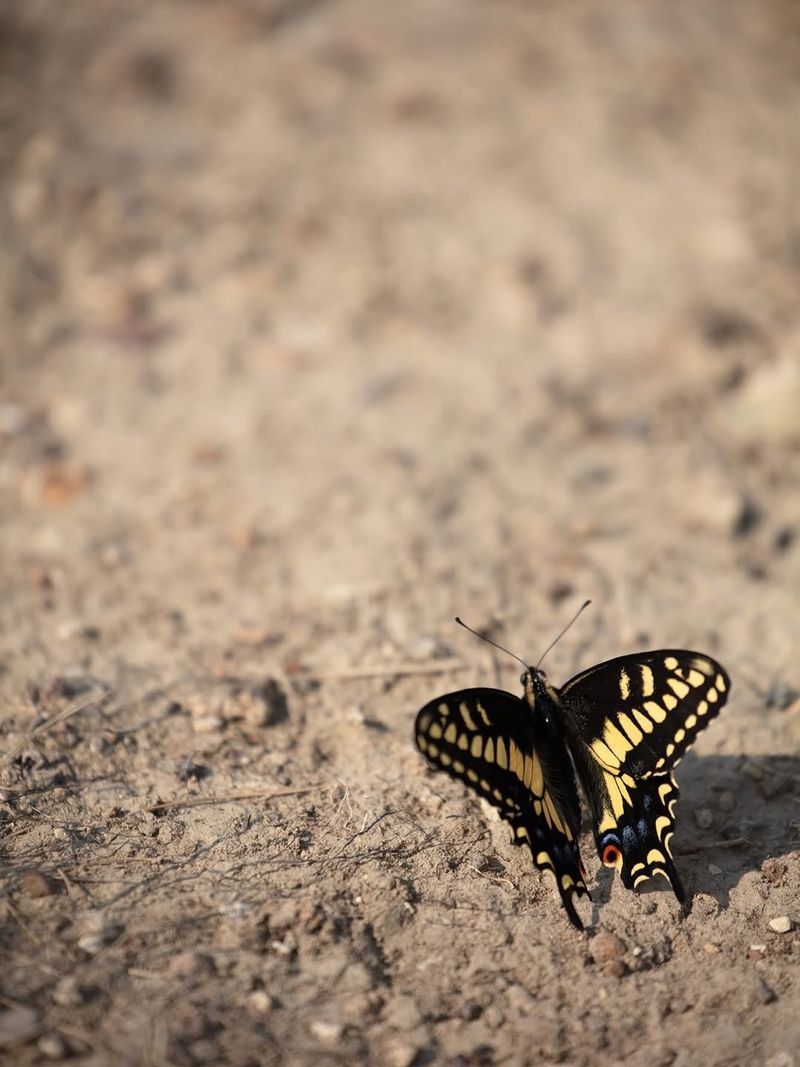
Springtime in Oregon is not just beautiful for people. For native bees, butterflies, and other pollinators, it is a critical time to find food after a long winter.
Camas blooms right when many pollinators are just waking up and searching for early nectar sources, making it one of the most valuable plants you can add to an Oregon garden from an ecological standpoint.
Did you know that camas is especially important for native bumblebees? Oregon is home to several native bumblebee species, some of which are in serious decline due to habitat loss.
Camas provides those early-season pollinators with a rich source of pollen and nectar right when they need it most. Planting camas in your yard is a simple, meaningful way to support Oregon’s native bee populations without doing anything complicated.
Beyond bumblebees, camas also attracts mason bees, syrphid flies, and various butterfly species that are active in the Pacific Northwest during spring. The tall flower spikes make landing and foraging easy for a wide range of insects.
Gardeners in Oregon who have added camas to their yards often notice a big increase in pollinator activity during April and May. That buzzing, fluttering energy that fills a camas-rich garden is one of the most rewarding signs that your planting is doing real good for the local ecosystem in Oregon and beyond.
7. How To Grow Camas Successfully In Oregon Gardens
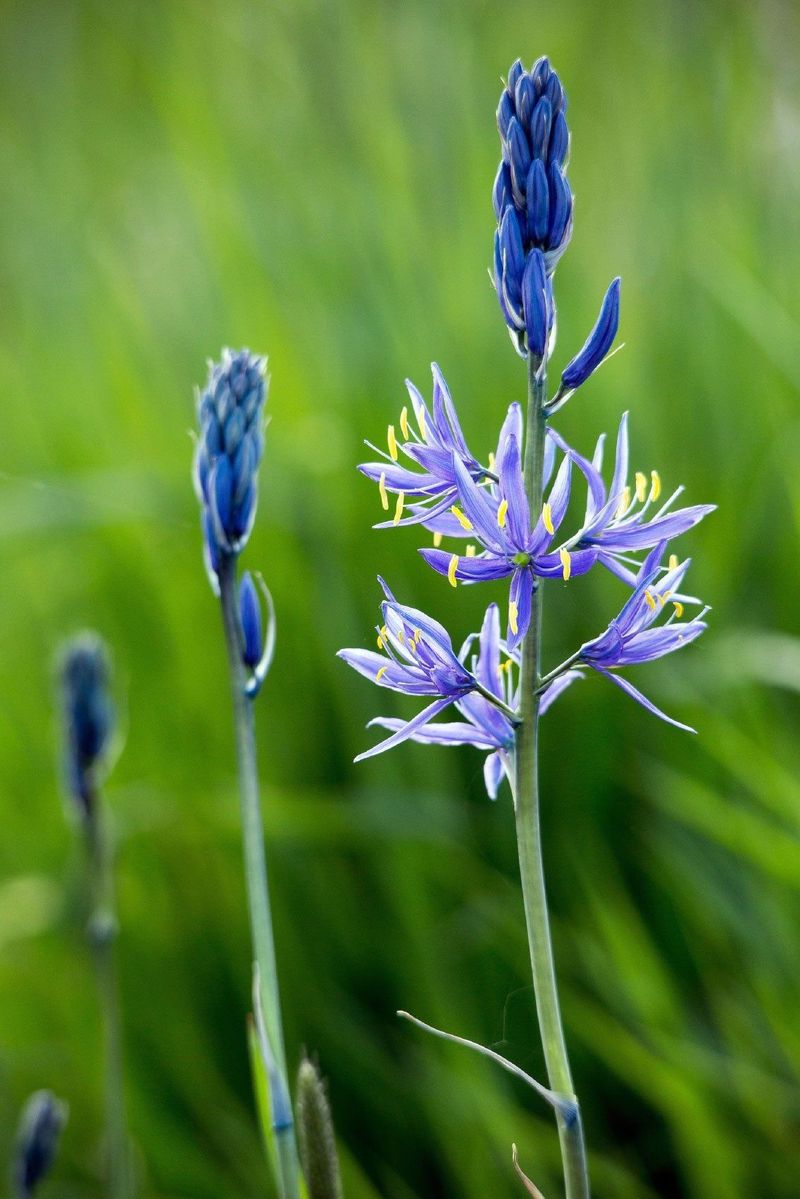
Growing camas in Oregon is refreshingly straightforward, which makes it a great choice for gardeners at any skill level. The process starts in fall, typically between September and November, when you plant the bulbs about three to four inches deep and space them roughly four to six inches apart.
Choose a spot that gets full sun to partial shade and has soil that retains some moisture, especially in spring.
Because camas is a native Oregon plant, it does not need a lot of extra fertilizer or soil amendments to perform well. If your soil is heavy clay, loosening it a bit before planting will help the bulbs settle in comfortably.
After planting, let Oregon’s natural fall and winter rainfall do most of the watering work for you. You will start to see green shoots emerge in late winter or very early spring, followed by those spectacular blooms in April and May.
Once the flowers fade, resist the urge to cut back the foliage right away. The leaves need time to gather energy from the sun and send it back down to the bulb for next year’s growth.
Let the foliage yellow and die back naturally, which usually happens by early summer. After that, the plant goes dormant and needs very little attention until the whole beautiful cycle begins again the following fall.
Camas truly is one of Oregon’s most rewarding and low-effort garden plants.