7 Georgia Native Trees You’ll Almost Never Find At A Nursery
Georgia has no shortage of trees, yet the ones that truly belong here often stay out of sight when it comes time to plant.
Walk into most nurseries and the same familiar options show up row after row, even though they are not always the best match for local conditions.
That gap leaves many yards filled with trees that struggle to settle in or need constant attention just to look decent. Meanwhile, a different group exists that fits Georgia far better, but rarely makes it into those displays.
These are the kinds of trees that handle the climate without extra effort and bring a stronger, more natural look over time. The surprising part is how few people ever get the chance to choose them in the first place.
Once you see which ones stay overlooked, it becomes clear why they deserve far more attention.
1. Sourwood Offers Strong Fall Color Yet Is Hard To Find
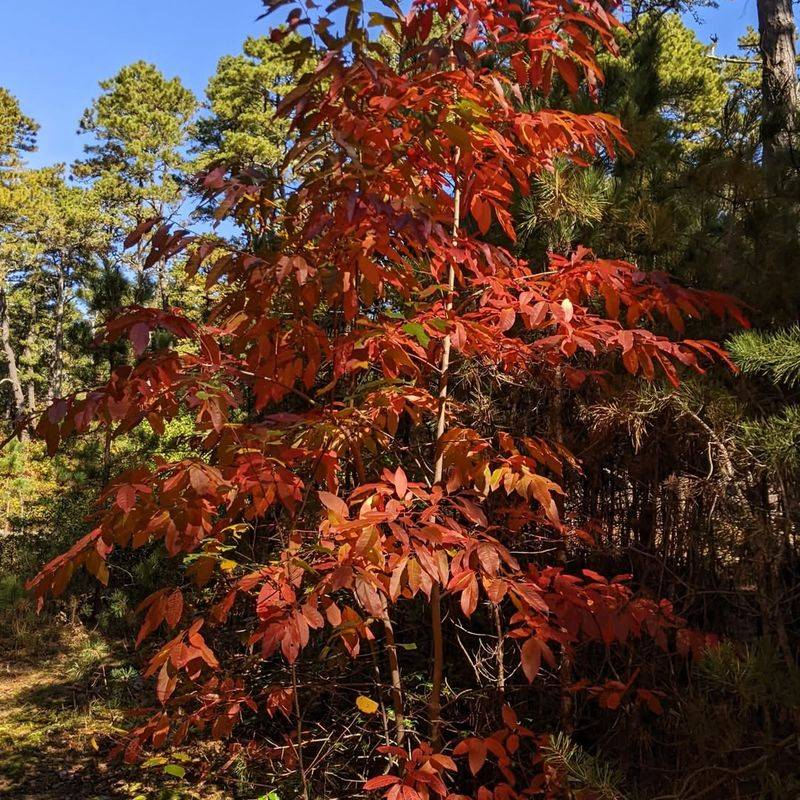
Ask any experienced Georgia gardener about fall color, and sourwood usually comes up within the first few minutes. Oxydendrum arboreum turns a strong red in autumn, yet it is still uncommon in many standard nurseries.
Sourwood grows naturally across the Piedmont and mountain regions of Georgia, often tucked into the understory along ridgelines and forest edges. In summer, it produces long drooping clusters of small white flowers that look a bit like lily of the valley.
Honeybees work those flowers heavily, and sourwood honey is considered a regional specialty worth seeking out on its own.
Height at maturity ranges from 20 to 30 feet in most landscape settings, sometimes taller in ideal forest conditions. It is not a fast grower by any measure, but the payoff in fall color is difficult to match with any other native species in the state.
Soil requirements lean toward acidic and well-drained. Sourwood struggles in compacted clay without amendment, and waterlogged roots will cause decline over time.
In the right spot with decent drainage and some afternoon shade in hotter parts of Georgia, it performs reliably over many years.
Sourwood sometimes turns up at native plant society sales in Georgia, particularly in the northern part of the state. Mail-order native nurseries are another solid option.
Buying a small container-grown specimen and planting it in early fall gives it the best chance to settle in before summer heat arrives.
Once established, sourwood needs very little maintenance and tends to hold its natural shape without heavy pruning.
2. American Hornbeam Grows In Shade But Is Not Widely Stocked
Fluted gray bark that looks almost like flexed muscle gives American hornbeam one of the most distinctive trunks of any native tree in Georgia. Up close, the wood feels genuinely iron-hard, which is exactly why old-timers called it ironwood or musclewood.
Carpinus caroliniana grows naturally along stream banks and in low-lying wooded areas across most of Georgia. It is a true understory tree, comfortable in deep shade where a lot of other species simply struggle.
Your Georgia Garden Changes Every Week. Your Plan Should Too.
Gardening in Georgia changes quickly throughout the season. Every Friday you’ll receive a simple weekly plan showing exactly what to plant, prune, fertilize, harvest, and protect so you never miss the right timing.
Mature height usually lands between 20 and 30 feet, with a naturally graceful, spreading canopy.
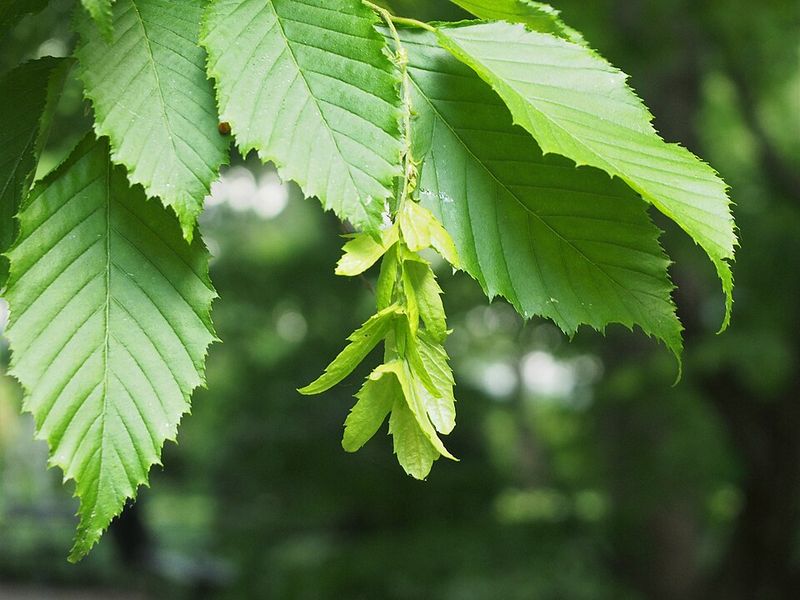
Fall color varies but often produces a mix of orange, red, and yellow that adds real warmth to shaded garden spots. The hanging clusters of hop-like seed bracts that appear in late summer are unusual and give the tree an interesting textural quality even after leaves drop.
Despite being widely distributed across Georgia’s native landscape, hornbeam barely registers in commercial nurseries. It roots slowly, does not transplant as easily as faster-growing species, and takes longer to reach a saleable size.
Those factors make it commercially unattractive even though it performs well in the right garden setting.
Planting along a seasonal creek or in a low, moist area of the yard is where hornbeam tends to do best in Georgia. It tolerates occasional flooding without much trouble.
Native plant nurseries and conservation district plant sales sometimes carry small specimens. Buying young and planting in fall gives it the longest establishment window before summer arrives.
Over time, it settles into a stable, low-maintenance tree that fits naturally into shaded Georgia landscapes without much intervention.
3. Franklinia Produces Showy Blooms But Remains Rare In Nurseries
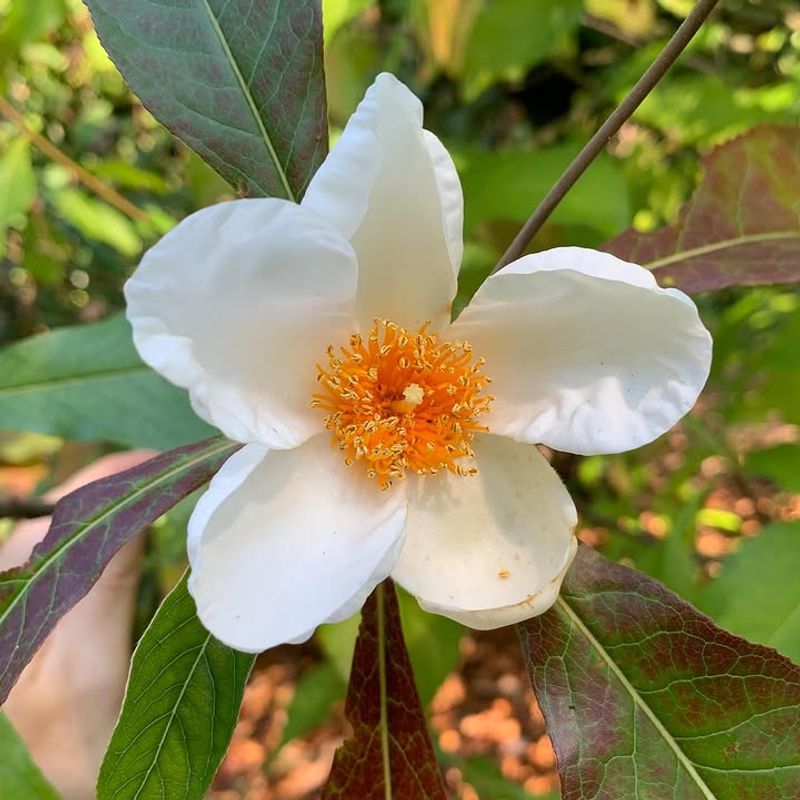
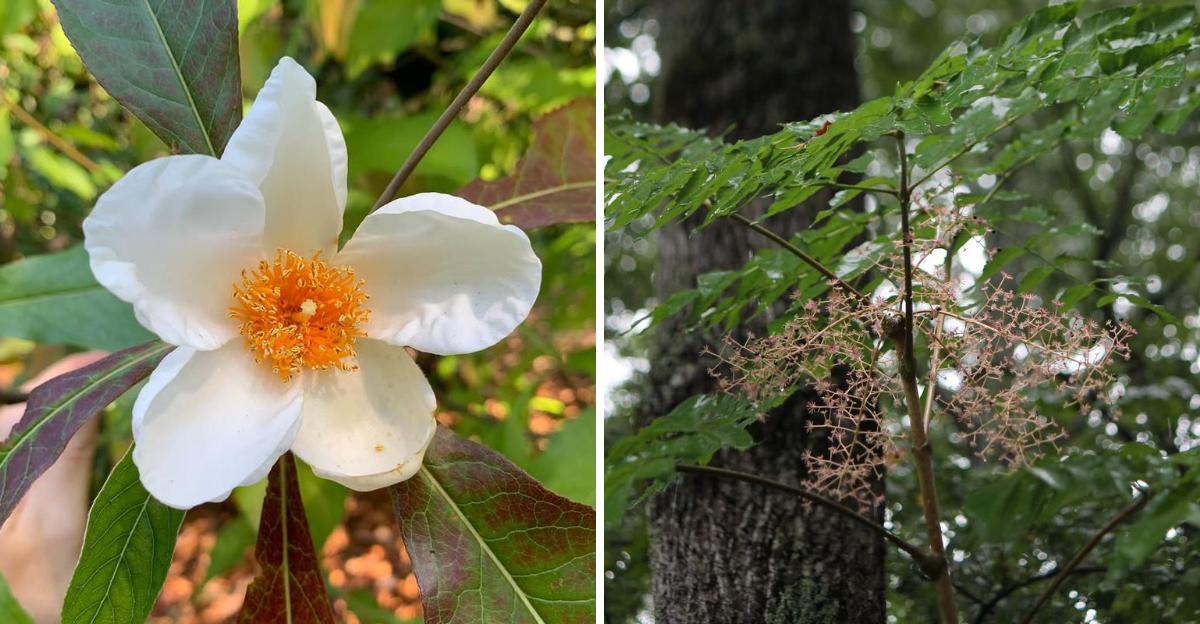
Franklinia altamaha is a small tree, usually topping out around 15 to 20 feet, and it blooms in late summer when almost nothing else in the Georgia landscape is putting on a show. The flowers are white, cup-shaped, and lightly fragrant, resembling a camellia blossom.
Fall foliage turns a deep crimson that genuinely competes with maples.
Finding one at a standard nursery is nearly impossible. Specialty native plant nurseries and botanical garden plant sales are your best options.
Georgia has a handful of dedicated native plant vendors who occasionally carry Franklinia, but stock moves fast when it appears.
Planting conditions matter a lot with this tree. It prefers acidic, well-drained soil with consistent moisture and partial shade during the hottest afternoon hours.
Heavy clay or standing water will cause serious root problems. Amended sandy loam tends to work well across much of north and central Georgia.
Patience is required. Young trees can be slow to establish and may not bloom for the first couple of years.
Once they settle in and start producing flowers, though, the combination of summer blooms and fall color makes Franklinia one of the most rewarding trees a Georgia gardener can grow.
It also tends to perform best when left undisturbed, as Franklinia is sensitive to root disruption and transplant stress once established.
It benefits from a sheltered location where it is protected from strong wind and sudden temperature swings.
Keeping the root zone evenly moist without overwatering helps maintain steady growth and reduces stress during hot Georgia summers.
4. American Smoketree Stands Out In Landscapes But Is Rarely Sold
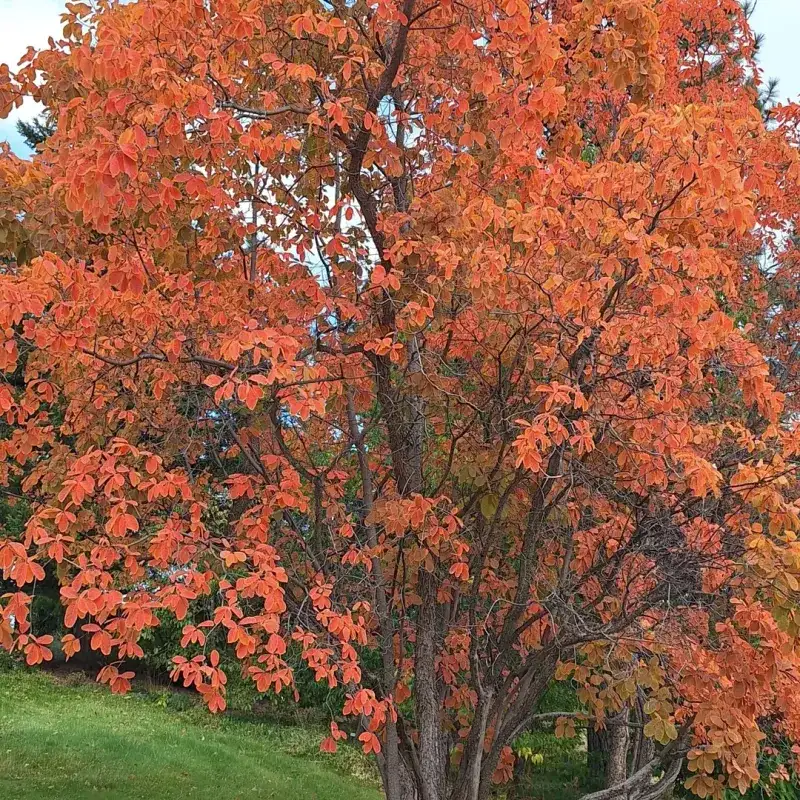
Few native trees pull off the visual trick that American smoketree manages every summer.
The seed plumes that develop after flowering are feathery and pinkish-gray, drifting loosely in the breeze and giving the whole canopy a hazy, smoke-like appearance from a distance.
Cotinus obovatus is native to a narrow band of habitat that includes parts of north Georgia, typically rocky limestone outcrops and dry upland slopes.
It is one of the least common native trees in the state by natural distribution, which partly explains why commercial growers rarely bother with it.
Size at maturity is modest, usually 15 to 25 feet tall, making it practical for most residential yards. The fall color show is genuinely impressive, with leaves shifting through orange, red, and purple before dropping.
Some years the color is muted depending on temperature swings, but in a good fall it rivals almost anything in the Georgia landscape.
Well-drained soil is non-negotiable for smoketree. It grows on rocky, thin soils in the wild, and sitting in wet clay for extended periods causes root rot.
Sandy or loamy soils with good drainage work well. Full sun brings out the best color and the most dramatic smoke effect.
Tracking down a specimen takes effort. Some specialty native plant nurseries in north Georgia carry it occasionally, and botanical garden plant sales sometimes have stock.
The European purple-leaf smoketree is widely sold at nurseries, but the native American species is a different plant entirely and worth seeking out specifically for Georgia gardens.
Once established in the right spot, it requires very little maintenance and tends to hold its natural form without regular pruning.
5. American Snowbell Blooms In Spring But Has Limited Availability
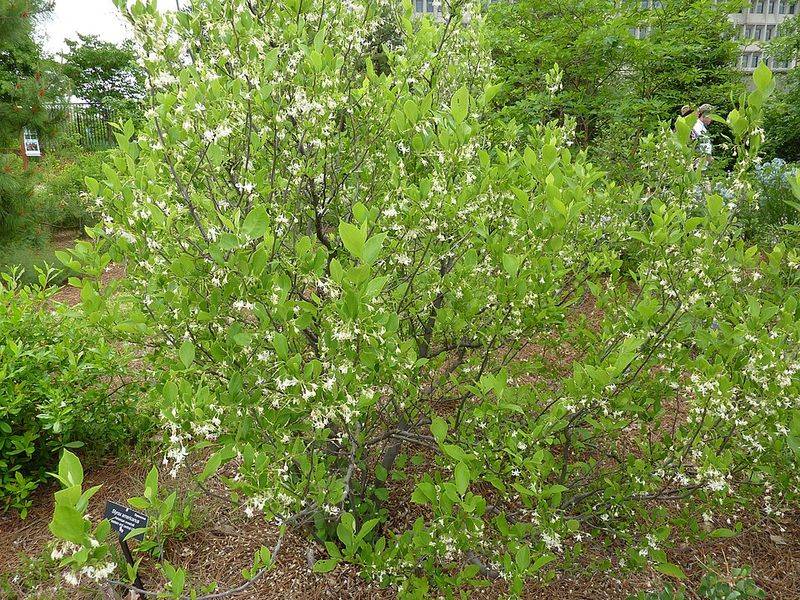
Hundreds of tiny white bells hanging beneath the branches in late spring is a sight that most Georgia gardeners never get to enjoy simply because American snowbell almost never shows up at retail nurseries.
That is a genuine shame, because it is one of the most elegant small trees native to the region.
Styrax americanus grows naturally in moist, low-lying woodlands and along stream edges across much of Georgia.
It typically reaches 6 to 10 feet in height, sometimes stretching a bit taller in ideal conditions, making it well-suited to smaller yards or as an understory accent beneath larger trees.
Flowers appear in May and early June, dangling in clusters that face downward so the white petals and yellow stamens are fully visible from below. The fragrance is light and pleasant without being overwhelming.
Pollinators, particularly native bees, visit the flowers heavily during the bloom window.
Moist, acidic soil suits this tree best. Dry sites cause stress, and full afternoon sun in the hotter parts of Georgia can scorch the foliage.
Planting near a rain garden, low spot, or along a shaded north-facing slope tends to produce the healthiest results.
Availability is genuinely limited. Specialty native plant nurseries and annual native plant sales hosted by Georgia botanical gardens are the most reliable places to find American snowbell.
Mail-order native nurseries occasionally list it, but stock sells out quickly. Bigleaf snowbell, Styrax grandifolius, is a closely related species sometimes sold alongside it and worth considering as an alternative if American snowbell is unavailable.
6. Ogeechee Lime Grows Near Water But Is Seldom Offered
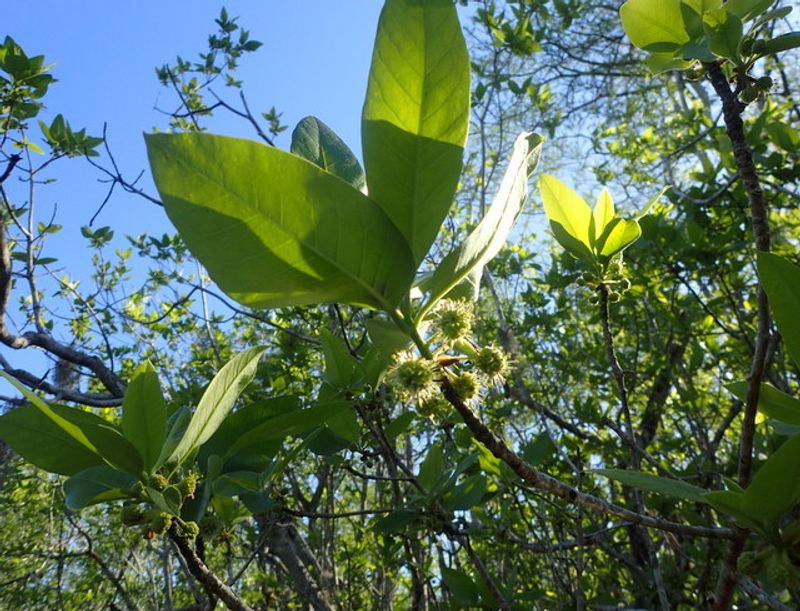
Named directly after the Ogeechee River in southeast Georgia, this tree has a geographic identity that almost no other native species can claim.
Nyssa ogeche grows wild along blackwater rivers and swampy lowlands in coastal Georgia, and outside of that specific habitat, most people have never heard of it.
The fruit it produces looks surprisingly like a small lime, reddish when ripe and tart enough that it has historically been used to make preserves and a local version of limeade.
Ogeechee lime honey is also produced in parts of coastal Georgia, with a flavor profile that dedicated beekeepers consider genuinely distinctive.
As a landscape tree, it reaches 15 to 40 feet depending on conditions, with a broad canopy and attractive dark green foliage. Fall color runs toward yellow and orange, not as dramatic as some native trees, but pleasant in a low-key way.
The real appeal is the combination of interesting fruit, ecological value, and sheer rarity.
Wet soil is where this tree thrives. Rain gardens, pond edges, and low areas that hold moisture suit it well.
Trying to grow it in dry upland conditions across north Georgia will likely result in a struggling, unhappy tree. It is genuinely a coastal plain and lower Piedmont species.
Finding one for sale requires real persistence. Specialty nurseries focused on southeastern native plants are the best bet, and even then, stock is inconsistent.
Some native plant enthusiast groups in Georgia occasionally organize seed collection and propagation efforts that make plants available to members willing to put in the time.
7. Devils Walkingstick Has Bold Foliage But Rarely Appears In Nurseries
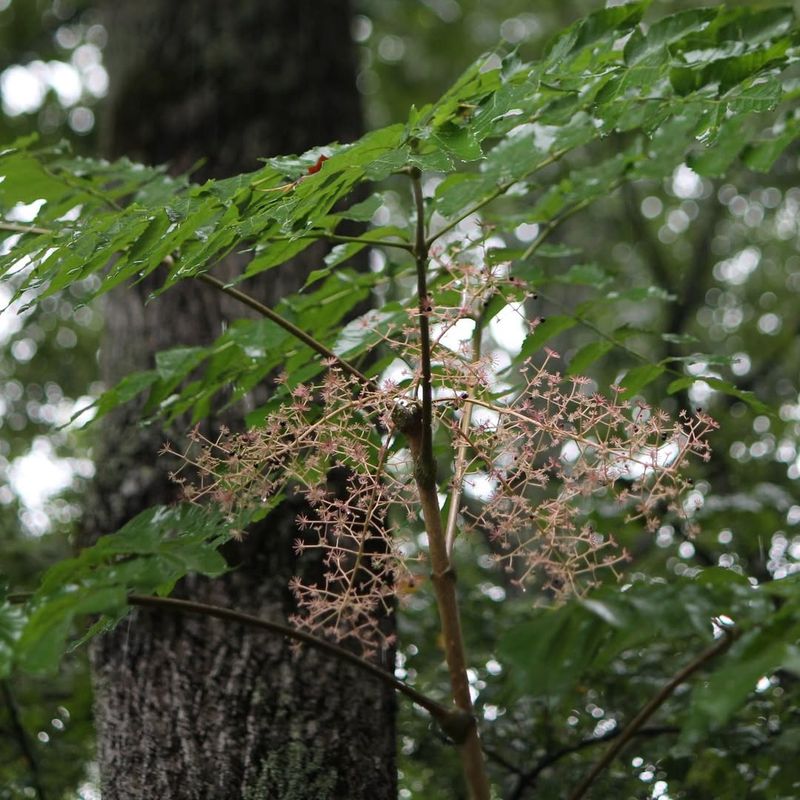
Nothing in a Georgia garden creates a tropical impression quite like a plant with leaves that can stretch four feet long.
Devils walkingstick, Aralia spinosa, is aggressively architectural in a way that most native plants simply are not, and it earns every bit of its dramatic reputation.
Spiny stems covered in sharp thorns give the plant its common name, and those thorns are serious enough to deserve genuine respect when pruning or planting nearby.
Mature stems can reach 15 to 20 feet tall, topped with enormous compound leaves that give the whole plant a bold, almost prehistoric silhouette.
Late summer brings flat-topped clusters of small white flowers that attract an enormous variety of pollinators, followed by dark purple berries that birds consume heavily throughout fall.
In terms of wildlife value, few native plants in Georgia pack as much into a single season.
Spreading by root suckers is part of how this plant behaves naturally. In a wild garden or naturalized area, that spreading habit is welcome.
In a tightly controlled formal bed, it requires more management. Knowing that going in helps set realistic expectations about what the plant will do over time.
Commercial nurseries skip it almost entirely because the thorns make handling and shipping difficult, and most gardeners are not asking for it by name. Specialty native plant sales and some botanical garden events in Georgia do carry it occasionally.
Growing from seed collected in fall is another option for patient gardeners willing to wait a season or two for a plantable specimen.