Should You Prune Crape Myrtle In April In Georgia Or Wait

April in Georgia puts crape myrtles in a stage that is easy to misread. Buds begin to show along the branches, while the full structure from winter still stands clear and unchanged.
Many reach for pruners out of routine, especially when extra branches and uneven spacing stand out. What seems like a quick cleanup can affect how the tree fills out once warm weather settles in.
Each tree moves at its own pace, even within the same yard, which makes timing less obvious than it first appears. A cut made at the wrong moment can limit flowering or change the overall shape more than expected.
Everything depends on what the tree shows right now and whether it has already moved beyond the point where pruning improves growth.
1. Major Pruning Season Ends Before New Growth Begins
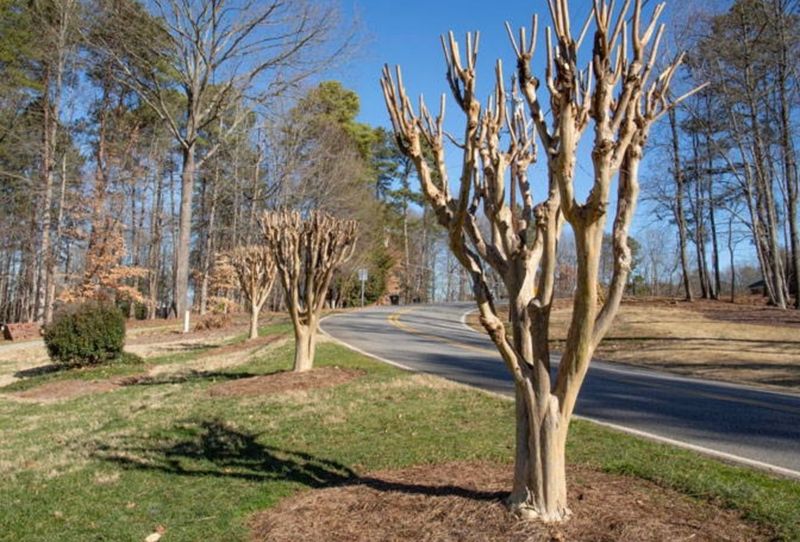
Most of the real pruning work on crape myrtles in Georgia should be wrapped up well before April even rolls around. The ideal window runs from January through early March, when the tree is still dormant and hasn’t pushed out any new buds yet.
Cutting during that stretch gives the tree time to respond before the growing season kicks into gear.
When you prune during dormancy, wounds close more efficiently and the tree channels its energy into producing strong new shoots. Waiting past that window, even by just a few weeks, puts you in a different situation entirely.
By April in Georgia, many crape myrtles are already leafing out or showing visible bud swell.
Pruning once growth has started forces the tree to redirect resources it was already spending on new leaves. That doesn’t mean one cut will ruin everything, but heavy pruning in April regularly leads to weaker regrowth compared to late-winter cuts.
The tree essentially has to start over partway through a process it already began.
Experienced Georgia gardeners tend to treat late winter as the non-negotiable pruning season. If life gets busy and March passes without any cuts, the smarter move is usually to hold off and let the tree do its thing.
Skipping a year of major pruning rarely causes lasting problems, but cutting at the wrong time can affect bloom quality noticeably.
2. April Pruning Can Reduce Flowering Later In The Season
Crape myrtles bloom on new wood, meaning the flowers you see in summer grow from the fresh shoots that developed that same year. Cut those new shoots back in April and you’re essentially removing the very growth that was going to carry your blooms.
By early to mid-April in Georgia, crape myrtles have often pushed several inches of new growth. Pruning at that stage doesn’t just remove older wood or old seed heads.
It removes live, actively growing tissue that the tree spent real energy producing.
Some gardeners notice their trees still bloom after an April trim, but the flowers tend to arrive later and in smaller clusters than they would have otherwise. The tree recovers, but the recovery takes time, and that delay can cut into the best part of the blooming window.
Your Georgia Garden Changes Every Week. Your Plan Should Too.
Gardening in Georgia changes quickly throughout the season. Every Friday you’ll receive a simple weekly plan showing exactly what to plant, prune, fertilize, harvest, and protect so you never miss the right timing.
In Georgia’s climate, that window typically runs from June through August.
There’s also the issue of late cold snaps. Georgia can still see cool nights in early April, and fresh cuts combined with a sudden temperature drop create conditions where new growth is more vulnerable.
It’s not a guaranteed problem, but it’s an added risk that doesn’t exist when you prune in February.
Skipping major cuts in April and letting the tree bloom naturally is usually the better call. A full, uninterrupted season of growth almost always produces more consistent flowering than a tree that was trimmed mid-cycle.
3. Light Cleanup Is Still Safe After New Growth Appears
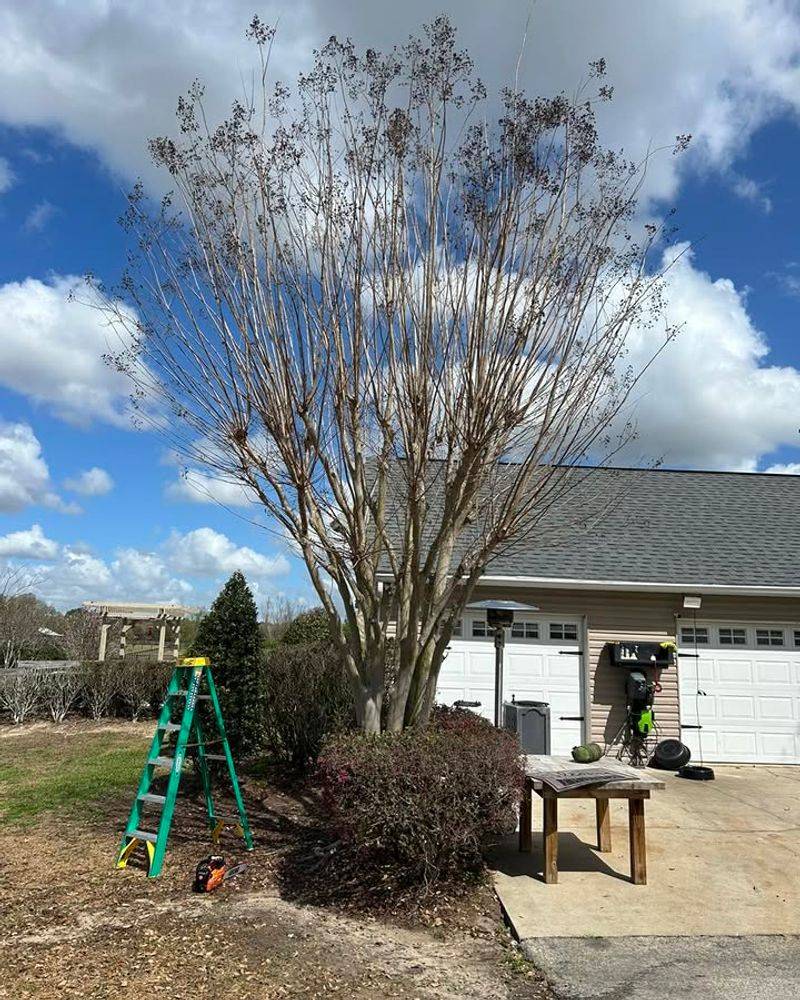
Not all pruning in April is harmful. There’s a real difference between heavy structural cuts and light cleanup work, and the latter is generally fine even after new growth has started showing up.
Removing old seed pods from last season is one task that can still happen in April without any real downside. Those dried clusters don’t contribute anything to the tree’s health, and snipping them off doesn’t interfere with current growth patterns.
It’s more of a cosmetic task than a structural one.
Trimming back a few small, weak shoots at the base of the tree or along the lower trunk is also low-risk in April. Suckers that sprout from the roots or the base of the main trunk can be removed any time they appear.
Letting them stay just draws energy away from the main canopy without adding any useful structure.
The key is keeping the cuts small and targeted. Removing a few thin branches that are rubbing together or growing in an awkward direction won’t throw the tree off its growth cycle.
What causes problems is removing large portions of the canopy or cutting back main structural limbs once growth is already underway.
Think of April cleanup as maintenance rather than shaping. You’re tidying up loose ends, not redesigning the tree.
Staying within that boundary keeps the tree on track and still gives you something productive to do in the garden during spring.
4. Removing Damaged Or Crossing Branches Improves Structure
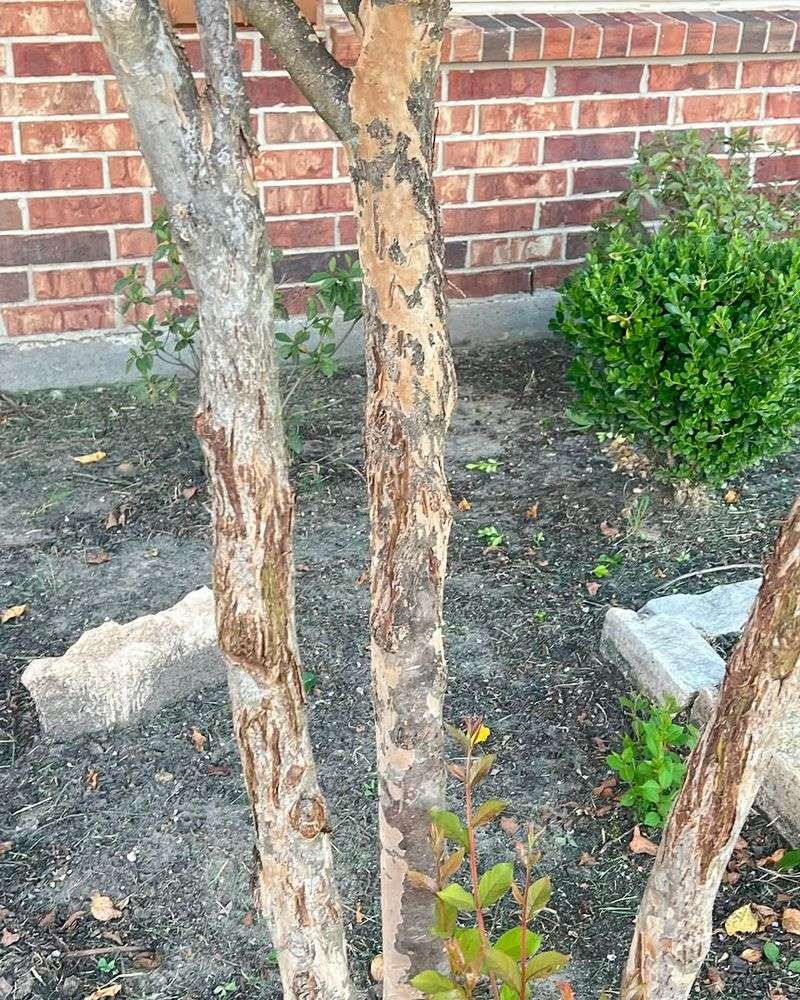
Branches that rub against each other create friction wounds over time, and those wounds can become entry points for pests and fungal issues.
Spotting and removing crossing branches is one of the more useful things you can do for a crape myrtle’s long-term structure, even if you catch the problem in spring.
Storm damage is another situation where waiting isn’t always practical. Georgia sees its share of spring thunderstorms, and a cracked or partially broken branch shouldn’t be left hanging just because it’s April.
Clean cuts made close to the branch collar heal better than jagged breaks left unattended.
When removing a damaged branch, cut back to a healthy lateral branch or to the main trunk. Leaving stubs encourages decay and creates awkward branching patterns down the road.
A clean, properly placed cut gives the tree a better chance of sealing over the wound before summer heat sets in.
Crossing branches are worth addressing even if neither one is damaged yet. Left alone, they’ll eventually wear each other down and create wounds that wouldn’t have existed otherwise.
Removing the weaker or more awkwardly positioned branch early keeps the canopy cleaner and reduces future problems.
Structural corrections like these are different from seasonal pruning. You’re not shaping the tree or encouraging new growth patterns.
You’re just fixing a specific problem that exists right now. That kind of targeted work is appropriate any time of year, including April in Georgia, as long as you keep the cuts minimal and precise.
5. Heavy Cutting In Spring Leads To Weak And Uneven Growth
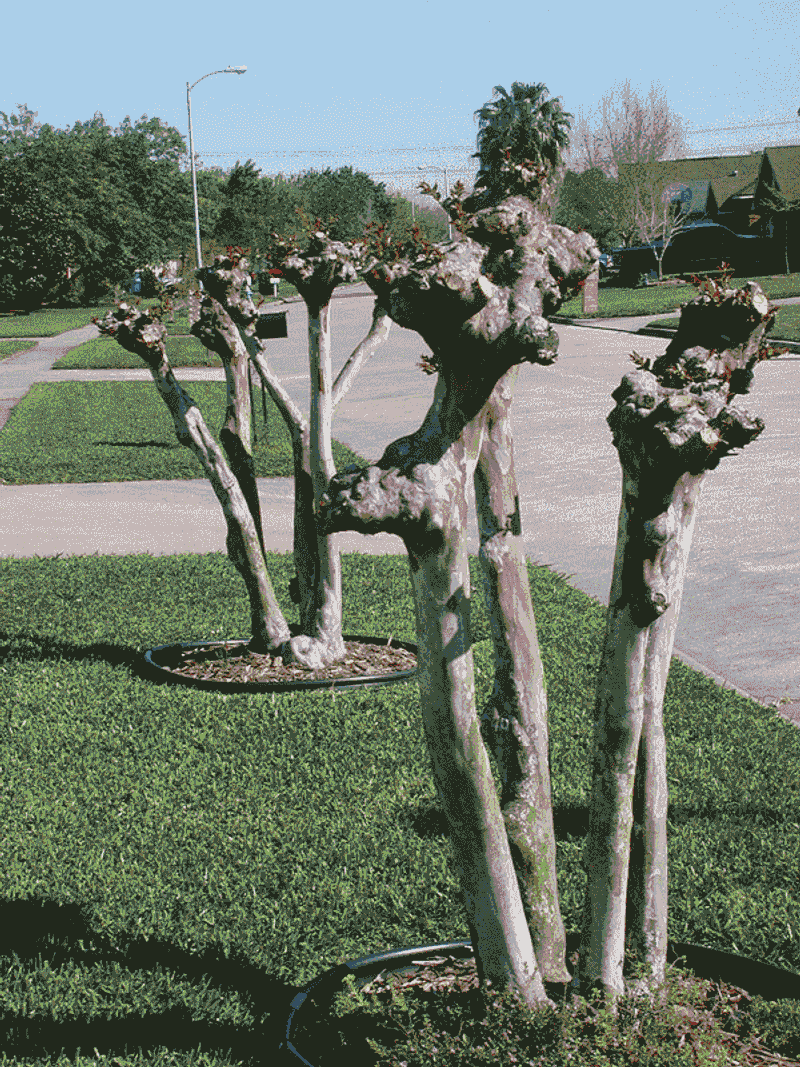
Cutting back large limbs or removing significant portions of the canopy in spring almost always triggers a burst of thin, fast-growing shoots.
Those shoots look vigorous at first, but they tend to be structurally weak and prone to flopping under the weight of flowers or after a heavy rain.
Heavy spring cuts also tend to produce uneven regrowth. Rather than pushing balanced new shoots across the canopy, the tree often sends up a cluster of sprouts from the cut points while leaving other areas relatively bare.
The result is a lopsided, cluttered look that takes years to correct.
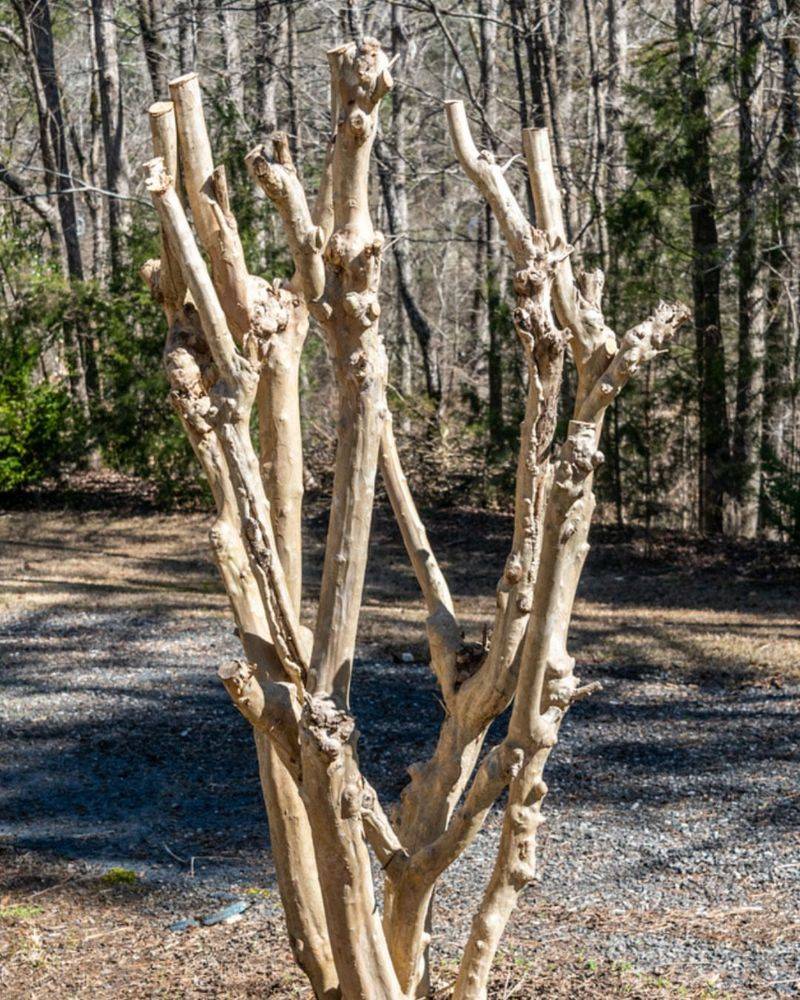
Georgia gardeners who cut their crape myrtles back hard every spring often end up with trees that look more like shrubs with knobby, scarred tops than clean-branching trees.
That pattern of repeated heavy cuts is sometimes called crape murder, and it genuinely does change the tree’s natural form over time.
Strong, well-branched crape myrtles develop their structure gradually when left to grow with minimal interference. Cutting back to stubs every year resets that process and forces the tree to rebuild from scratch each season.
The blooms that follow are often smaller and less consistent than those on trees that were allowed to develop normally.
Resisting the urge to cut hard in spring is one of the better habits a Georgia gardener can build. Lighter hands and better timing produce healthier trees with more reliable flowering over the long run.
6. Established Trees Need Very Little Pruning To Stay Balanced
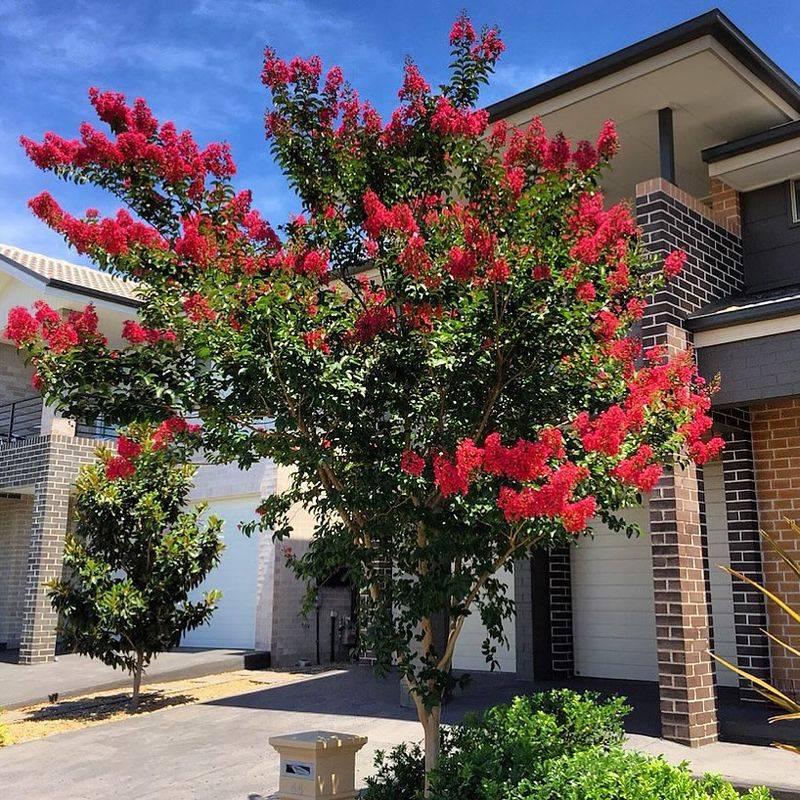
A crape myrtle that has been allowed to grow with minimal interference for several years develops a naturally balanced structure that doesn’t need much intervention.
The branching becomes self-regulating to a degree, with stronger limbs shading out weaker ones over time.
Mature trees in Georgia yards often look their best when the only annual task is removing the previous year’s seed clusters and cutting out any crossing or rubbing branches. Beyond that, the tree handles itself fairly well.
Constant pruning can actually work against the natural form these trees develop on their own.
Size is sometimes the reason people feel compelled to cut. If a crape myrtle has outgrown its space, repeated heavy pruning isn’t the long-term answer.
The tree will keep trying to reach its natural size, and you’ll spend every year fighting that tendency. Replacing it with a smaller variety suited to the space is a more practical solution.
For established trees that are appropriately sized for their location, stepping back and trusting the tree’s natural growth habit often produces better results than annual shaping sessions.
Georgia’s long growing season gives crape myrtles plenty of time to fill out and bloom without much help from the gardener.
Minimal pruning also means fewer wounds, which means fewer entry points for problems. Healthy, structurally sound trees with intact bark and clean branching tend to stay that way longer than trees that are cut heavily on a regular schedule.
7. Waiting Until Dormant Season Supports Stronger Summer Blooms
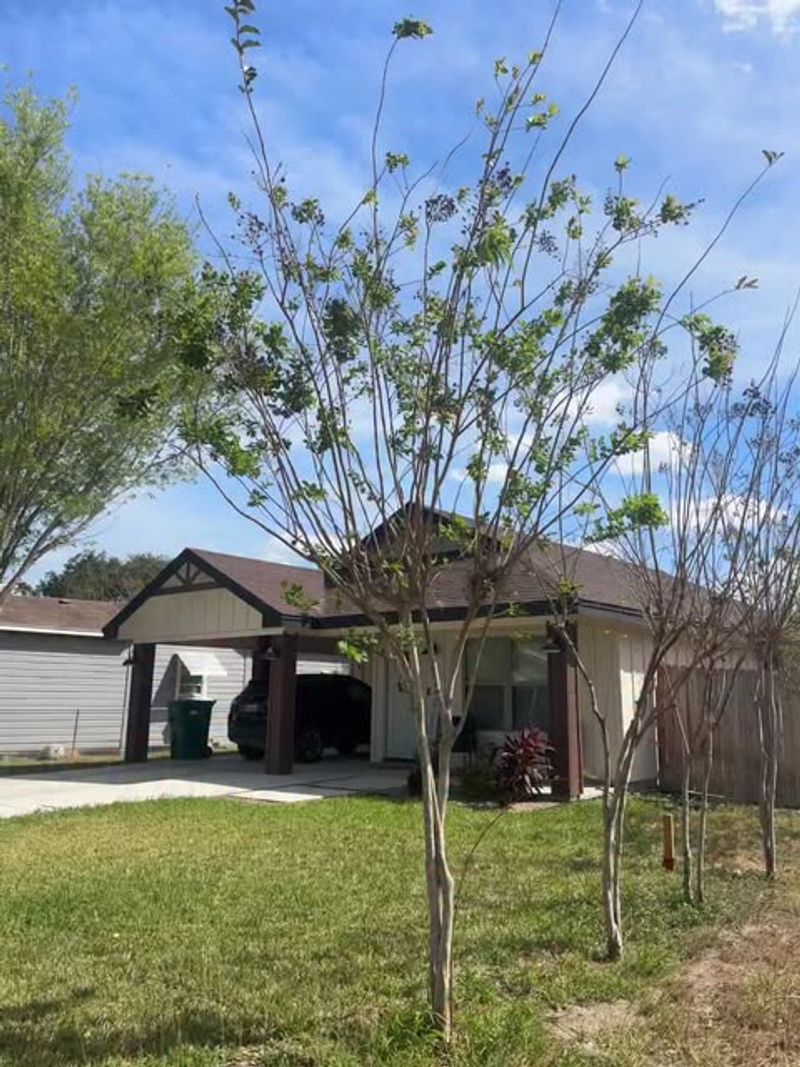
Patience with crape myrtles tends to pay off in a pretty direct way. Trees that are pruned correctly in late winter and then left alone through spring typically produce fuller, more consistent bloom clusters than trees that were trimmed in April or later.
Dormant-season pruning lets the tree spend its entire spring energy budget on building new wood and setting flower buds. Nothing gets interrupted, nothing gets redirected.
By the time June arrives in Georgia, those trees have had months of uninterrupted growth behind them, and it usually shows in the quality of the bloom display.
Waiting also gives you better visibility into what actually needs to be removed. During dormancy, the branch structure is fully exposed with no leaves in the way.
You can see exactly where branches cross, where old stubs were left from previous cuts, and which limbs are growing at awkward angles. That clarity makes for more accurate, intentional cuts.
Rushing to prune in spring, by contrast, often leads to cutting more than necessary simply because it’s hard to see what you’re doing with new leaves filling in. Dormant pruning is easier, more precise, and better timed for the tree’s natural cycle.
If you missed the late-winter window this year in Georgia, the most practical move is to skip major pruning entirely and plan for next January or February. One season without a heavy trim rarely sets a healthy crape myrtle back in any meaningful way.