9 Low-Water Plants Perfect For Arizona Rock Gardens
Rock gardens in Arizona can look sharp at first, then fade fast once heat and dry conditions take over. Plants shrink back, color drops off, and gaps start to show in places that once looked full.
What seemed like a simple setup can turn into constant replacements just to keep it presentable.
The difference usually comes down to plant choice, not effort. Some plants hold their form, keep their color, and settle into dry soil without needing regular attention.
Others struggle the moment conditions stay harsh for too long.
When the right ones go in, the entire space starts to feel more stable. Texture stays clear, shapes remain defined, and the garden keeps its structure through long stretches of heat.
That kind of consistency is what makes certain low water plants stand out in Arizona rock gardens year after year.
1. Desert Spoon Brings Strong Form To Rocky Soil
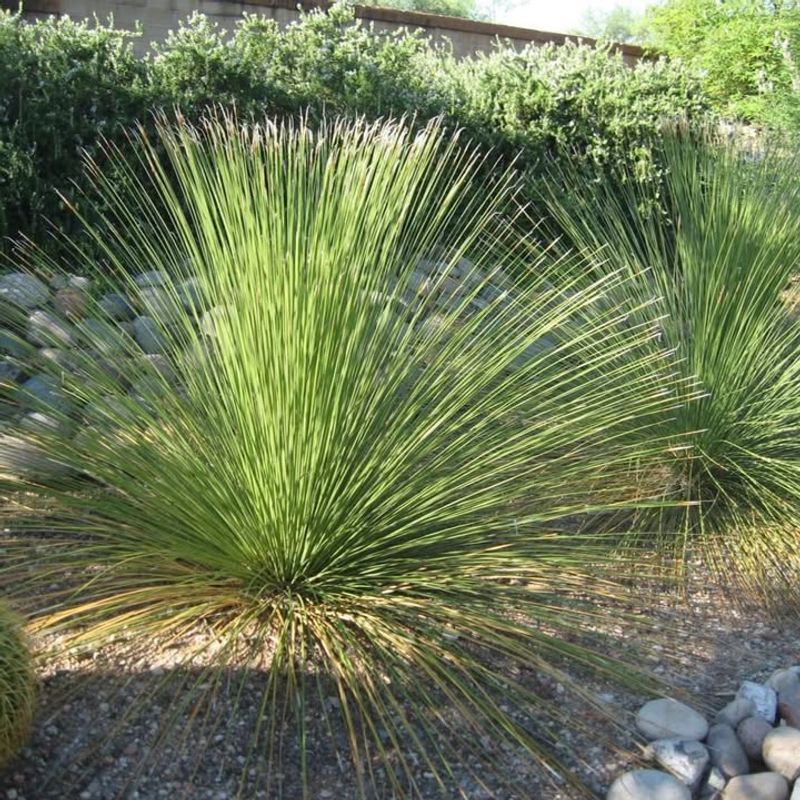
Few plants command attention in a rock garden the way Desert Spoon does. Those long, narrow leaves fan out from a central base in every direction, creating a shape that looks almost architectural against bare gravel and stone.
In Arizona landscapes, it reads as a natural anchor — something that has clearly been there a long time and plans to stay.
Dasylirion wheeleri handles poor, rocky soil without complaint. It does not need amended ground or regular feeding.
Established plants in Phoenix and Tucson front yards routinely go weeks without supplemental water during the cooler months, pulling through on rainfall alone when conditions allow.
Spacing matters more than most people expect. Give it room to spread, because those leaf tips are sharp and the plant can reach four to five feet across at full size.
Planting it too close to a walkway is a decision most Arizona gardeners regret fairly quickly.
One underrated quality is how well it handles reflected heat from walls and pavement, a real test in Arizona summers. The silvery-green coloring actually helps deflect intense afternoon sun, keeping the plant looking composed even when temperatures push past 110 degrees.
2. Parry Agave Forms A Compact Rosette In Dry Conditions
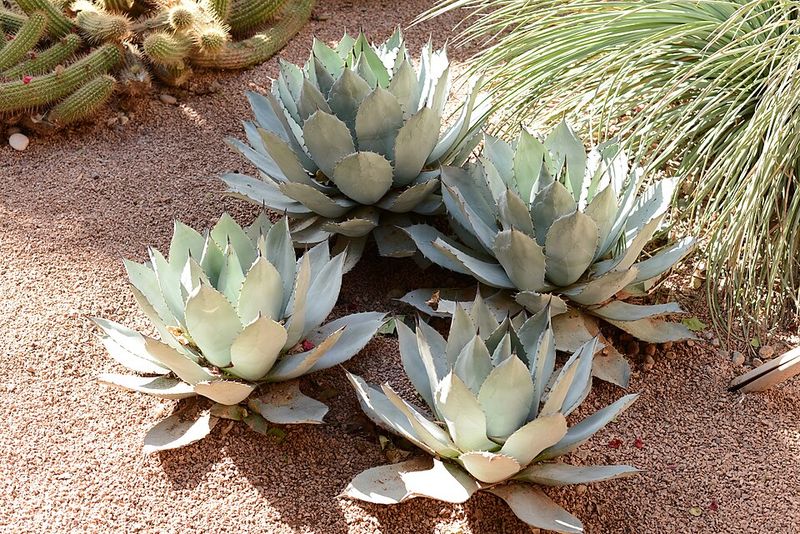
Parry Agave has a geometry to it that most plants simply cannot match. Every leaf arranges itself in a near-perfect rosette, blue-gray and thick, with a dark terminal spine at each tip.
Placed among angular boulders in an Arizona rock garden, it looks like it was always meant to be exactly there.
Unlike some agaves that sprawl and overtake nearby plants, Agave parryi stays relatively compact — usually two to three feet tall and wide.
That restraint makes it easier to place in smaller spaces without the whole design getting swallowed up by one plant after a few growing seasons.
Rocky, fast-draining soil suits it well. Heavy clay or poorly drained spots can cause problems, so if your yard holds water after rain, amending the planting area with decomposed granite before putting this one in the ground is worth the effort.
In Arizona, Parry Agave is cold-hardy enough to handle freezes that catch lower-elevation desert plants off guard. Gardeners in higher-elevation areas like Prescott and Flagstaff have used it successfully for years.
Your Arizona Garden Changes Every Week. Your Plan Should Too.
Gardening in Arizona changes quickly throughout the season. Every Friday you’ll receive a simple weekly plan showing exactly what to plant, prune, fertilize, harvest, and protect so you never miss the right timing.
Just plan ahead — it will eventually bloom and decline, but offsets around the base usually take over before that happens.
3. Octopus Agave Introduces Movement With Arching Leaves
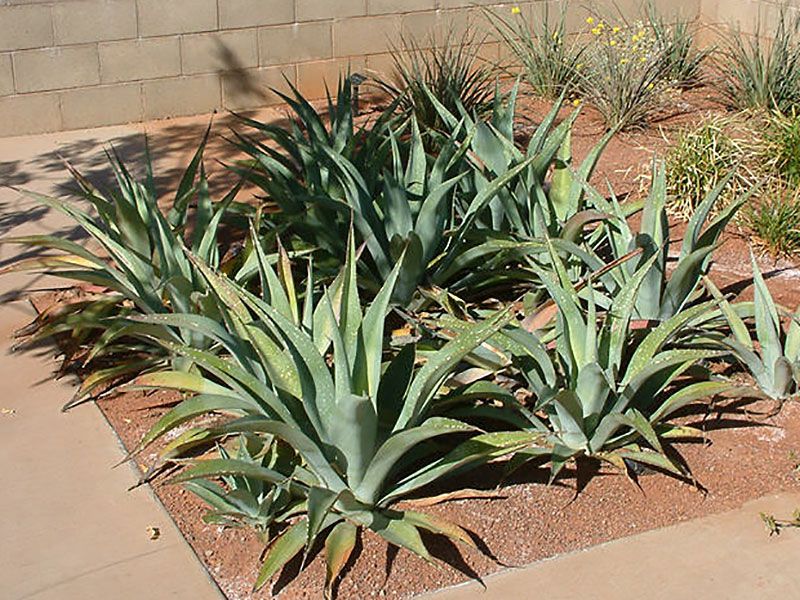
Agave vilmoriniana earned its common name honestly. Those long, twisting leaves arch outward and curl at the tips in a way that genuinely resembles tentacles reaching in every direction.
In a rock garden setting, that movement breaks up the rigid lines of boulders and gravel in a way that feels natural rather than forced.
What separates Octopus Agave from many other agaves is the softness of its leaves. There are no marginal teeth along the edges, which makes it a more practical choice near patios, pathways, or spots where people walk close by.
The terminal spine is still there, so some care is still needed, but overall it is less aggressive than most of its relatives.
Arizona’s low desert suits it well. Heat, reflected light, and dry soil are not problems for this plant.
Watering deeply but infrequently during the first growing season helps roots establish in rocky ground, after which supplemental irrigation can be reduced significantly.
One thing worth knowing: Octopus Agave is monocarpic, meaning it blooms once and then the main plant declines. The bloom stalk can reach fifteen feet or more, which is a dramatic sight in any Arizona yard.
Pups around the base carry the plant forward.
4. Beargrass Builds Upright Clumps In Rocky Ground
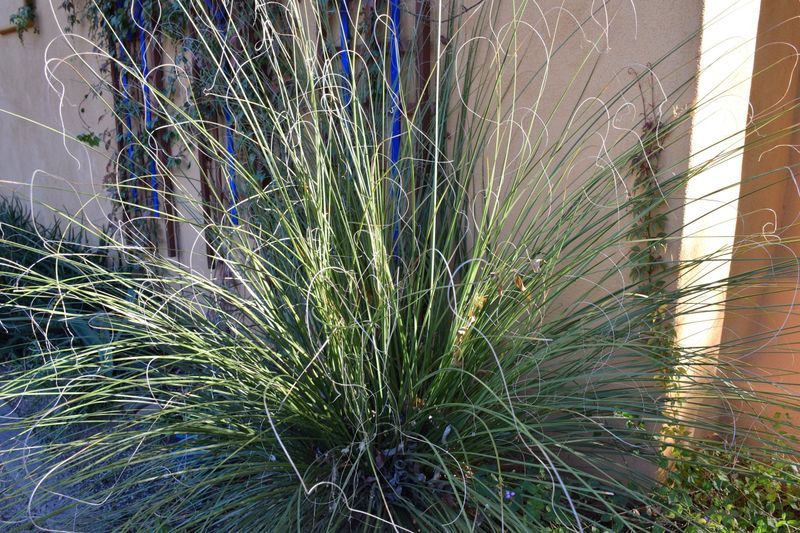
Beargrass looks like something that grew straight out of the mountain slopes of central Arizona, probably because it did. Nolina microcarpa is native to the region and shows up naturally on rocky hillsides where soil is thin and rainfall is unreliable.
Bringing it into a designed rock garden feels less like planting and more like relocating something that already belongs there.
Clumps grow upright and dense, with long, narrow leaves that catch the breeze and add subtle movement without taking over the space.
Over time, a single plant can reach three to four feet tall with a similar spread, making it useful as a mid-layer plant between groundcovers and taller focal specimens.
Rocky, well-drained soil is where it performs best. Unlike some ornamental grasses that struggle in Arizona’s alkaline ground, Beargrass handles those conditions without much fuss.
Drainage matters more than soil richness here, so avoid spots that collect runoff.
Summer heat does not slow it down. In fact, Beargrass tends to look most at ease during the hottest months when other plants are clearly under stress.
Pairing it with Desert Spoon or agaves in an Arizona rock garden creates a layered look that holds visual interest across all four seasons without demanding much attention.
5. Red Yucca Holds Shape With Very Low Water Needs
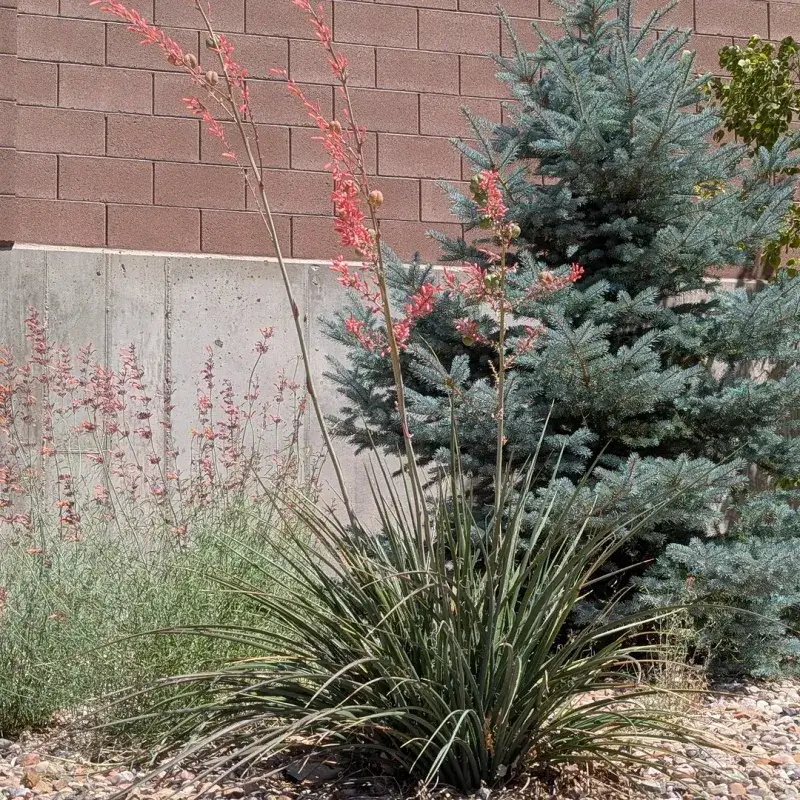
Coral-red flower spikes rising four to five feet above grassy foliage — that is the image most Arizona gardeners associate with Red Yucca during late spring and early summer.
Hesperaloe parviflora puts on a reliable bloom season year after year, attracting hummingbirds in numbers that make the plant worth growing for that reason alone.
Despite the name, Red Yucca is not a true yucca. It is softer and more grass-like, without the rigid, spine-tipped leaves that make some desert plants difficult to work around.
That flexibility in texture makes it easier to mix into rock garden designs alongside harder-edged plants like agaves and cacti.
Water requirements are genuinely low. In established Arizona landscapes, many gardeners water Red Yucca only during extended dry spells in summer, letting seasonal monsoon rains handle the rest.
Overwatering in heavy soil is a more common problem than drought stress in this plant.
Full sun is where it thrives. Partial shade produces looser, less structured plants with fewer flower spikes.
Placing it where it gets at least six hours of direct sun daily — which is rarely a challenge in Arizona — brings out its best qualities. Gravel mulch around the base also helps keep soil temperatures consistent.
6. Banana Yucca Develops Bold Form In Harsh Soil
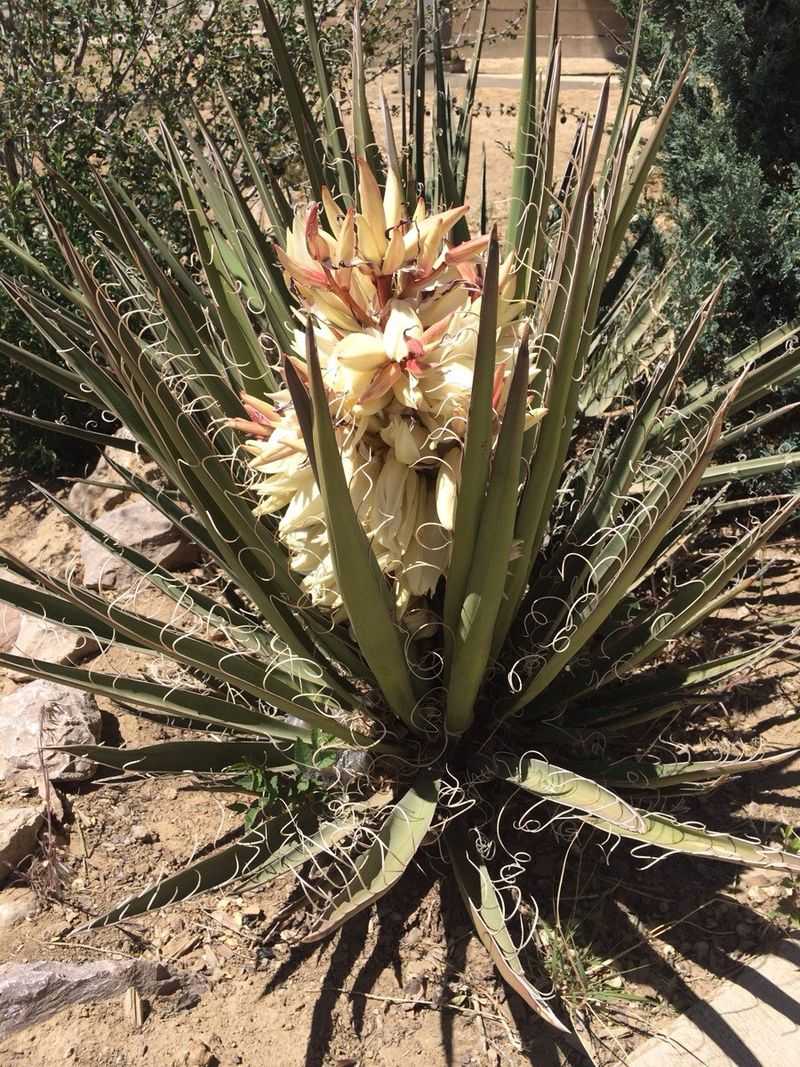
Banana Yucca is not subtle. Stiff, blue-green leaves radiate outward with sharp tips that mean business, and when it blooms, the flower clusters are large and creamy white — impossible to overlook in any Arizona rock garden.
Yucca baccata earns its place through sheer presence rather than delicacy.
Rocky, gravelly soil suits it perfectly. Native to the Sonoran and Chihuahuan deserts, it has a natural tolerance for the kind of thin, alkaline ground that most ornamental plants struggle in.
Planting in amended, rich soil is not necessary and can actually cause problems by encouraging overly soft growth.
Fruit production is one of the more interesting aspects of this plant. The large, fleshy pods that follow the flowers were a food source for Indigenous communities across the Southwest for centuries.
That history adds a layer of meaning to growing it beyond just aesthetics.
In Arizona landscapes, Banana Yucca handles both intense summer heat and hard winter freezes, giving it a wider range of usefulness than some desert plants that struggle above the low desert zone.
Tucson and Phoenix gardeners use it successfully, and so do gardeners in cooler areas around Prescott.
Water sparingly and let the soil dry out fully between deep waterings during the first season.
7. Hedgehog Cactus Brings Rounded Texture To Gravel
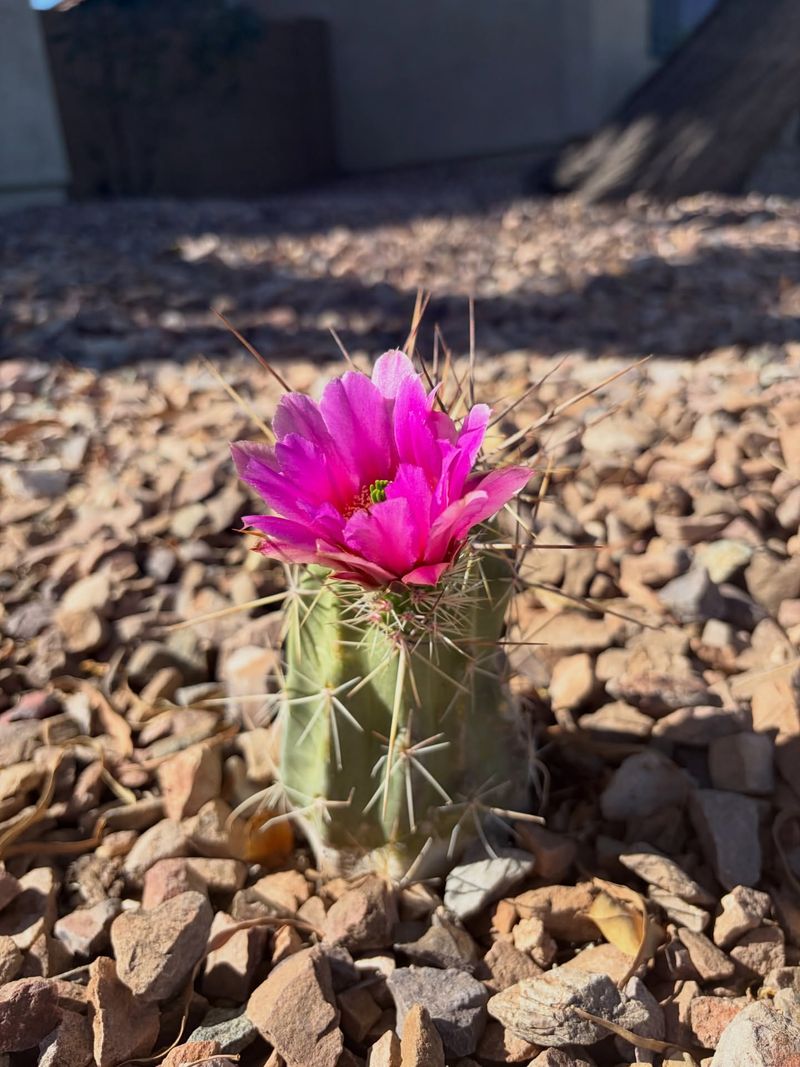
Bright magenta flowers sitting on top of dense, spiny clusters — that is what Hedgehog Cactus looks like in bloom, and it stops people in their tracks.
Echinocereus triglochidiatus is not a subtle plant during flowering season, which in Arizona typically runs from spring into early summer depending on elevation and conditions that year.
Outside of bloom time, the plant earns its keep through texture. Clusters of cylindrical stems covered in dense spines create a low, rounded mound that reads well against flat gravel or between larger boulders.
It fills space without competing aggressively with neighboring plants.
Drainage is non-negotiable. Hedgehog Cactus sitting in poorly drained soil, especially through Arizona’s monsoon season, is a real risk.
Planting on a slight slope or in a raised section of the rock garden helps water move away from the root zone quickly after heavy rains.
Watering during the first summer after planting helps roots settle into rocky ground, but the schedule should be minimal — once every two to three weeks during hot months is generally enough. In winter, most Arizona gardeners stop supplemental irrigation entirely.
Full sun placement is important; shaded spots produce stretched, weak growth that rarely blooms well.
8. Barrel Cactus Stands Out As A Bold Focal Point
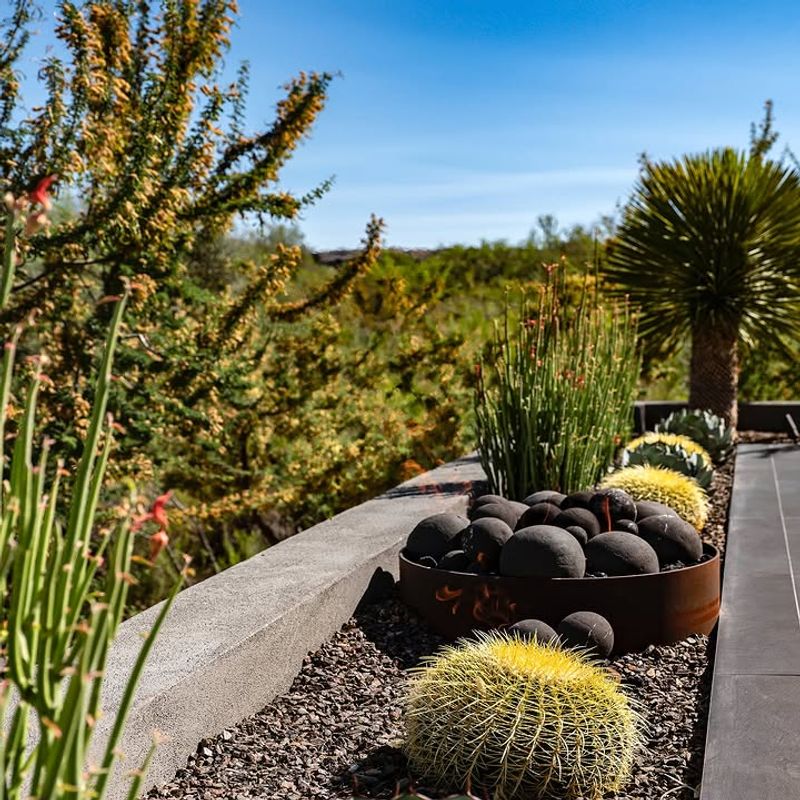
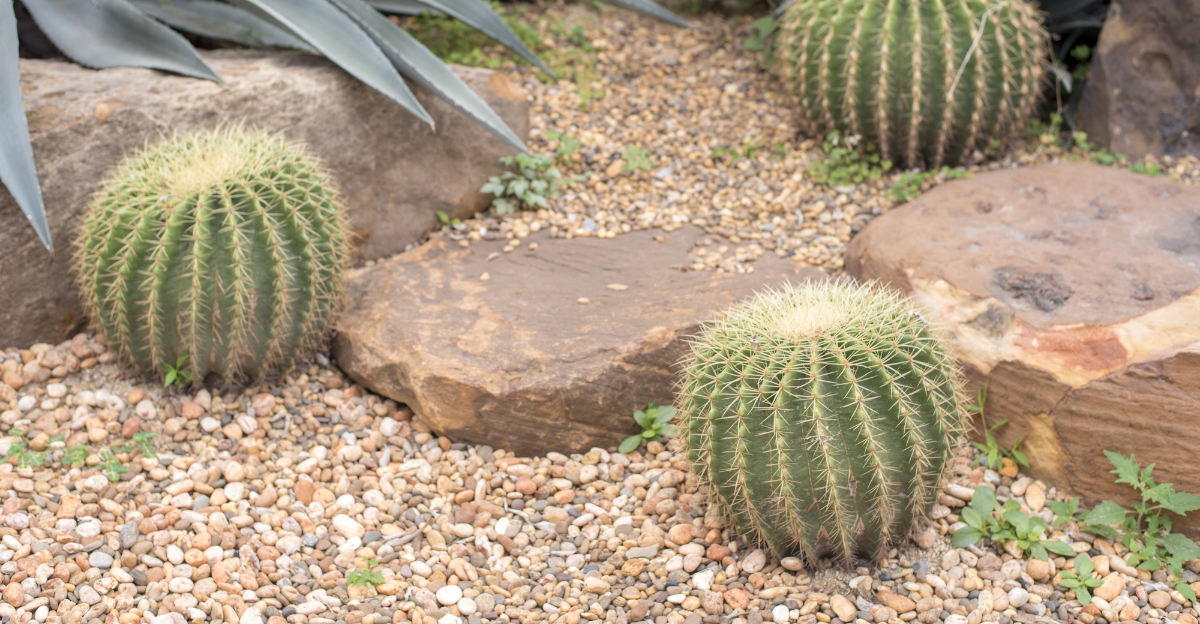
A mature Barrel Cactus in an Arizona yard has a presence that is hard to explain until you see one up close. Ferocactus wislizenii can reach four feet tall over many years, with heavy, curved red spines covering deep ribs that run the full length of the plant.
It reads as a sculpture as much as a living thing.
Placement in a rock garden matters. Barrel Cactus tends to lean toward the south and southwest over time — a well-documented behavior that Arizona gardeners sometimes call the “compass cactus” effect.
Knowing this ahead of time helps with positioning, especially near walkways or walls where lean direction could become an issue.
Bright yellow to orange flowers appear at the crown in late summer, followed by small yellow fruits that persist through winter and attract birds. That late-season color is a real asset in Arizona landscapes when many other plants have gone quiet.
Watering young plants during the first growing season helps them establish in rocky ground, but mature specimens need very little supplemental irrigation in most parts of Arizona. Overwatering is a more common problem than drought in this species.
Full sun and excellent drainage are the two conditions that matter most for long-term health.
9. Totem Pole Cactus Grows Upright With Minimal Water
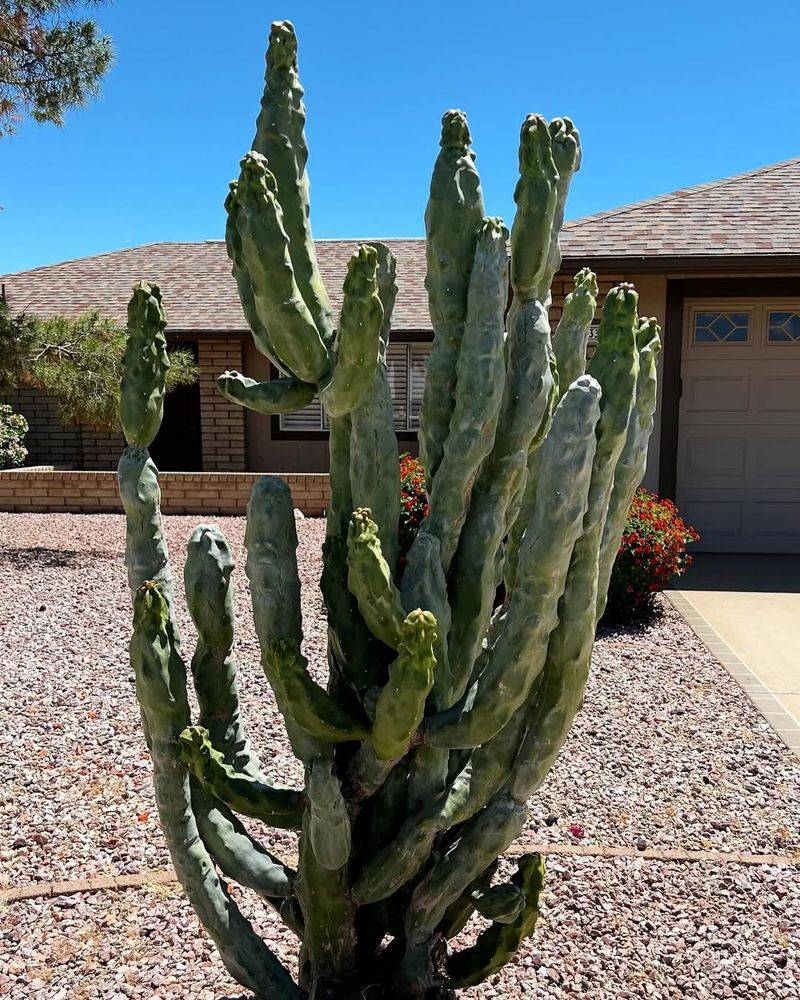
Smooth, spineless, and covered in irregular bumps and folds — Totem Pole Cactus looks unlike anything else you can put in an Arizona rock garden.
Pachycereus schottii monstrosus grows in tall, columnar form that adds strong vertical structure without the aggressive spines that make some columnar cacti difficult to work around.
Growth is genuinely slow. Expecting fast results with this plant will lead to frustration.
What it offers instead is longevity and a presence that gets more interesting as columns age and the surface texture develops further. Patience is part of growing it well.
In Arizona’s low desert, Totem Pole Cactus handles summer heat with no visible stress.
It is less cold-hardy than some desert plants, so gardeners in higher-elevation areas of Arizona should consider protection during hard freezes or choose a sheltered, south-facing planting spot.
Water requirements are minimal after the first year in the ground. Deep, infrequent watering during summer months is the general approach most Arizona growers follow.
Rocky, fast-draining soil is important — standing water around the base, particularly during monsoon season, can cause problems that are difficult to reverse. Full sun placement brings out the best coloring in the stems and supports the most upright growth habit.