8 Small Trees That Handle Early Growth Well In Arizona Front Yards This April
Early April in Arizona sets the tone for how young trees establish, and the first few weeks can shape whether growth stays steady or turns uneven.
Fresh plantings often look fine at first, yet small issues below the surface can slow progress before it becomes obvious above ground.
Sun exposure increases quickly, soil dries faster than expected, and root systems need to adjust without stress during this short window. Some trees handle that transition with ease, while others struggle to keep up once conditions shift.
Choosing the right ones makes a visible difference early on. New growth stays balanced, structure forms more evenly, and the tree settles in without constant correction.
That early success carries forward, which is why certain small trees stand out in Arizona front yards planted this time of year.
1. Desert Willow Establishes Quickly As Spring Temperatures Rise
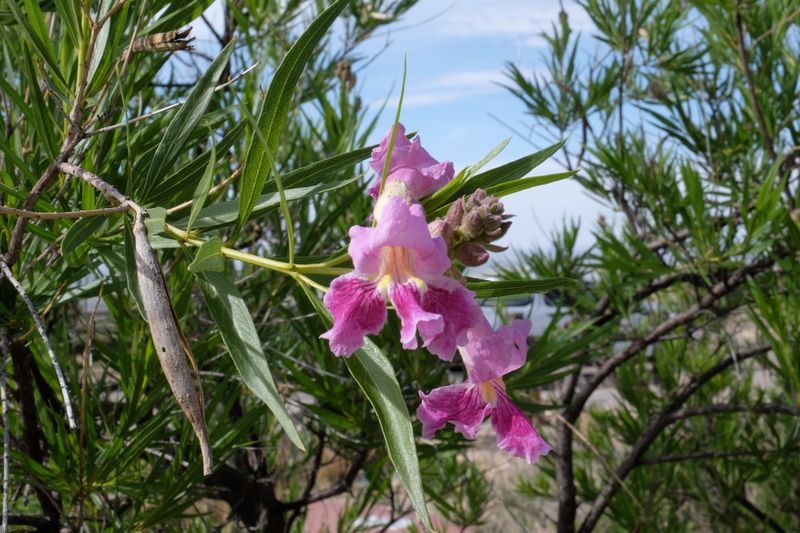
Few Arizona natives hit the ground running in spring quite like Desert Willow. Planting it in April lines up perfectly with its natural growth cycle, and you can usually see new leaf growth within a couple of weeks of getting it in the ground.
Chilopsis linearis is native to desert washes and dry creek beds across the Southwest, so Arizona’s low humidity and rocky soil feel completely familiar to it.
Roots push outward and downward quickly once soil temperatures climb above 65 degrees, which happens reliably across most of Arizona by mid-April.
Expect trumpet-shaped flowers in shades of pink, lavender, or white to appear by late spring or early summer in the first year.
Growth rate depends heavily on how much water you give it during establishment — deep, infrequent watering encourages deeper roots and a sturdier structure over time.
Mature height typically lands between 15 and 25 feet, though it responds well to light pruning if you want to keep it on the smaller side for a front yard. Hummingbirds visit the flowers regularly, which is a nice bonus for any Arizona yard.
Avoid overwatering in the first season — soggy soil slows root development and can lead to weak growth rather than strong early establishment.
2. Texas Mountain Laurel Handles Early Growth In Warm Conditions
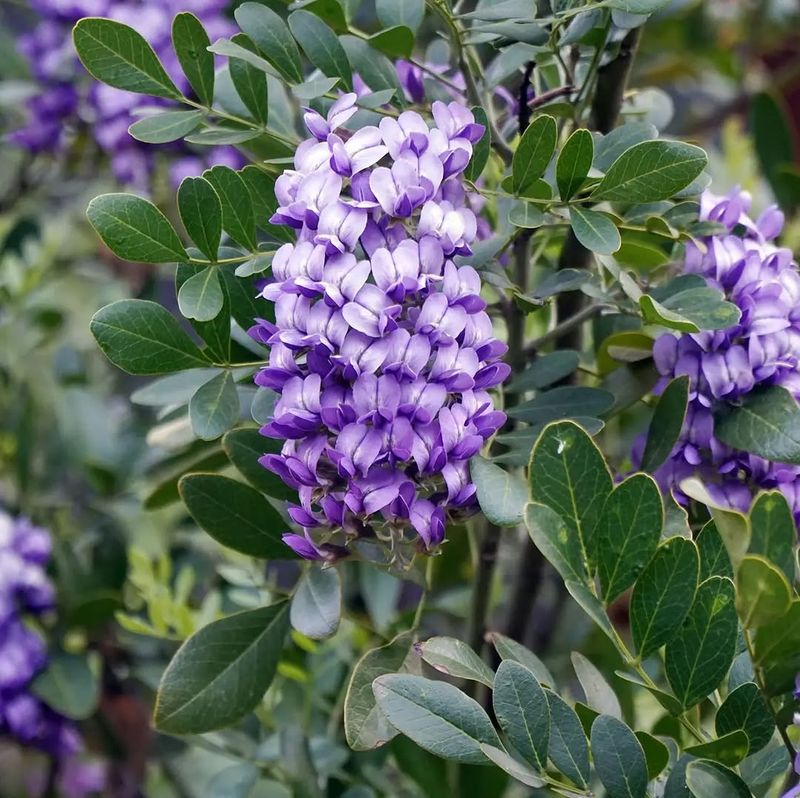
Walk past a Texas Mountain Laurel in bloom and you will smell it before you see it.
Clusters of deep purple flowers carry a scent that most people describe as grape soda, and in April across Arizona, those blooms are either just finishing or still going strong depending on your elevation.
Dermatophyllum secundiflorum grows slowly compared to some other options on this list, but it still handles spring planting well.
April soil temperatures in Arizona give roots a stable environment to start spreading without the shock of sudden summer heat arriving too soon.
Glossy, dark green leaves stay on the tree year-round, which is a real advantage for front yards where you want consistent visual structure.
Heights typically range from 8 to 15 feet at maturity, making it a practical choice for smaller front yard spaces where a towering canopy would feel out of place.
Drainage matters a lot with this tree. Arizona’s caliche soil layers can trap water near the roots if you are not careful, so breaking through that layer before planting makes a noticeable difference in how well the tree settles in.
Your Arizona Garden Changes Every Week. Your Plan Should Too.
Gardening in Arizona changes quickly throughout the season. Every Friday you’ll receive a simple weekly plan showing exactly what to plant, prune, fertilize, harvest, and protect so you never miss the right timing.
Full sun placement is ideal — shaded spots tend to produce fewer flowers and slower growth. Supplemental watering through the first summer keeps stress levels manageable without encouraging excessive soft growth.
3. Palo Verde Adapts Well To Spring Planting In Dry Soil
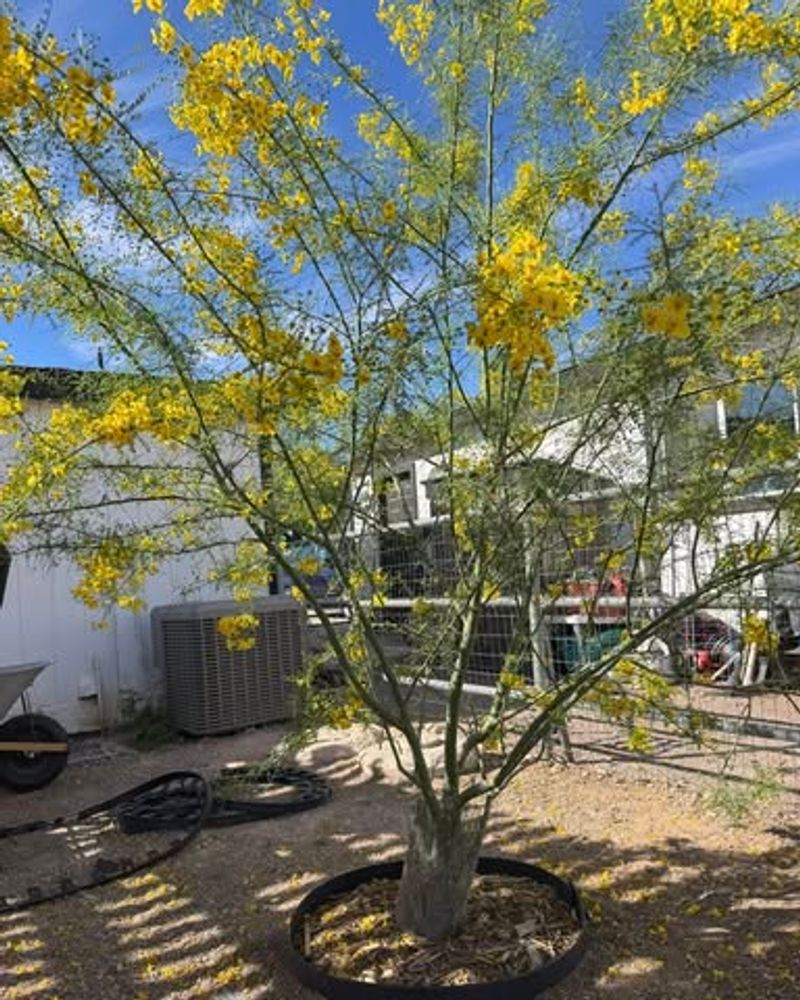
Arizona’s state tree earns that title for a reason.
Palo Verde has been thriving in this desert long before anyone was planting front yards, and its ability to photosynthesize through its green bark means it can keep functioning even when water is scarce and leaves drop during dry spells.
April planting works well because the tree is already waking up naturally. Yellow flowers often appear in full force during this month, and seeing blooms on a newly planted tree is a good sign that it is adjusting rather than stressing.
Root establishment happens steadily through spring and into early summer.
Several varieties are worth considering for Arizona front yards.
Desert Museum Palo Verde is a hybrid that grows thornless and tends to have a cleaner, more manageable canopy structure — a practical advantage in a front yard where foot traffic or kids might be nearby.
Blue Palo Verde and Foothills Palo Verde are also solid options with slightly different growth habits.
Dry, rocky, or sandy soil suits this tree better than amended, heavily organic soil. Adding too much compost or fertilizer at planting can actually encourage fast, weak growth that struggles once summer arrives.
Water deeply but infrequently during the first season, allowing the soil to dry out between waterings. Mature trees across Arizona handle extended dry periods without much intervention once roots are established.
4. Chitalpa Grows Strongly During Early Warm Season Growth
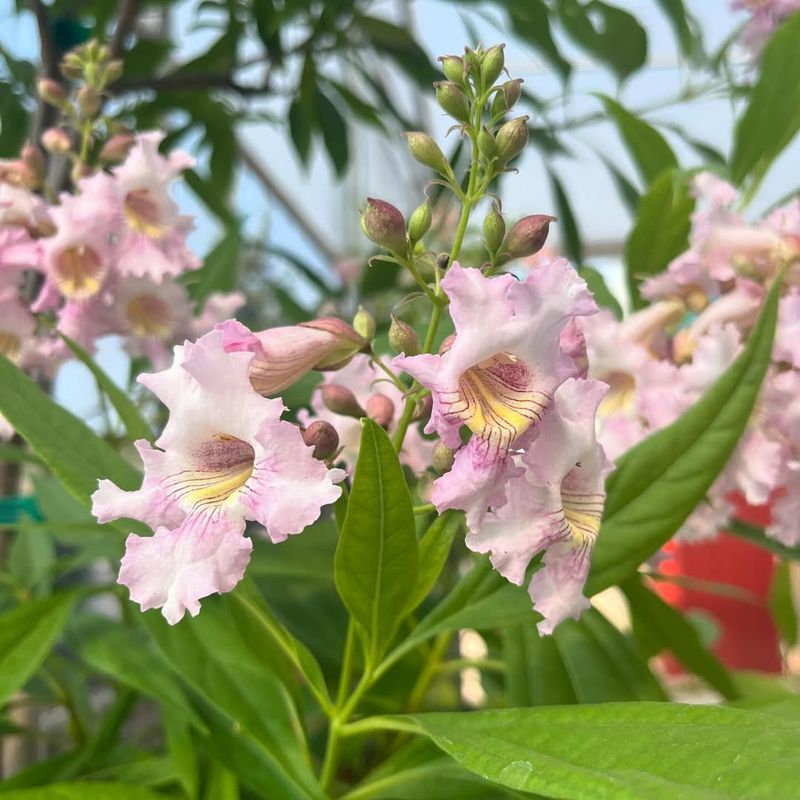
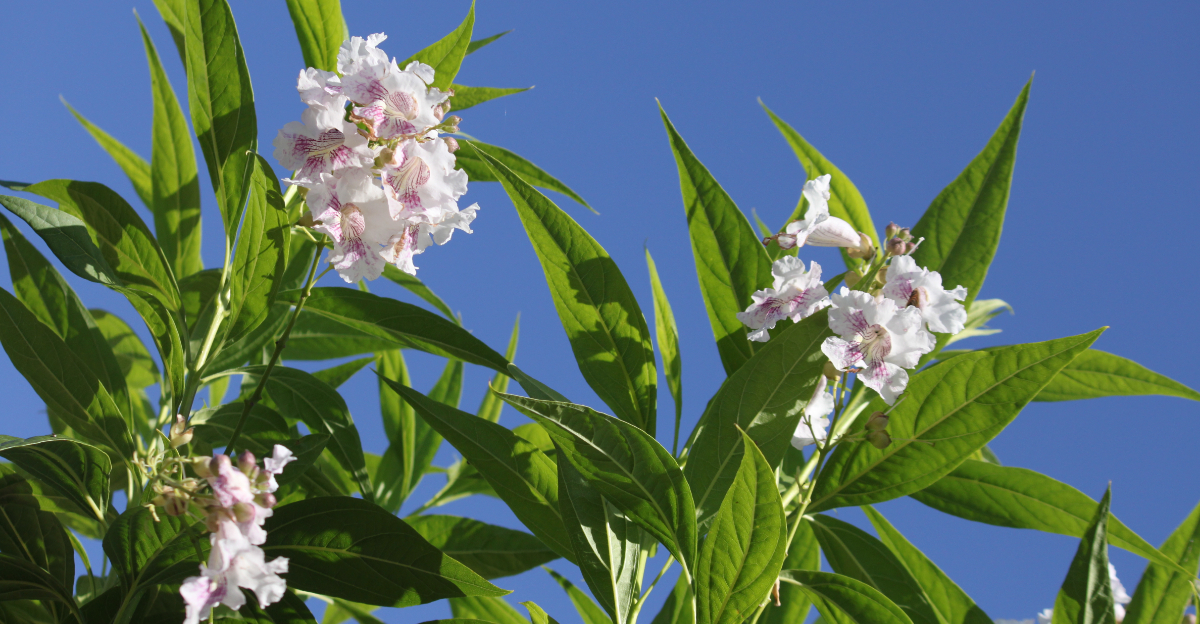
Chitalpa is a hybrid that crosses Desert Willow with Southern Catalpa, and it picked up the best traits from both parents for hot, dry climates like Arizona.
April planting catches this tree right as it starts pushing new growth, and it tends to establish faster than either of its parent species when conditions are warm and sunny.
Pink or white trumpet-shaped flowers appear in clusters from late spring through much of summer, giving your front yard color during months when a lot of other plants are struggling with heat.
Leaves are longer and broader than Desert Willow, which creates a slightly different look and a bit more shade coverage as the canopy fills in.
Mature size generally falls between 20 and 30 feet tall, but regular pruning during dormancy keeps it manageable for smaller front yard spaces.
Chitalpa responds well to shaping, and many Arizona homeowners maintain it as a multi-trunk specimen rather than a single-trunk tree, which suits the informal, desert-landscape style common in the region.
Soil drainage is important — standing water around the roots is about the worst thing for this tree, especially during its first season. Full sun exposure produces the strongest growth and the most abundant flowering.
Water deeply every week or two through spring and early summer, then gradually reduce frequency as the tree shows signs of solid establishment through consistent new leaf growth.
5. Willow Acacia Establishes Fast In Warm Dry Conditions
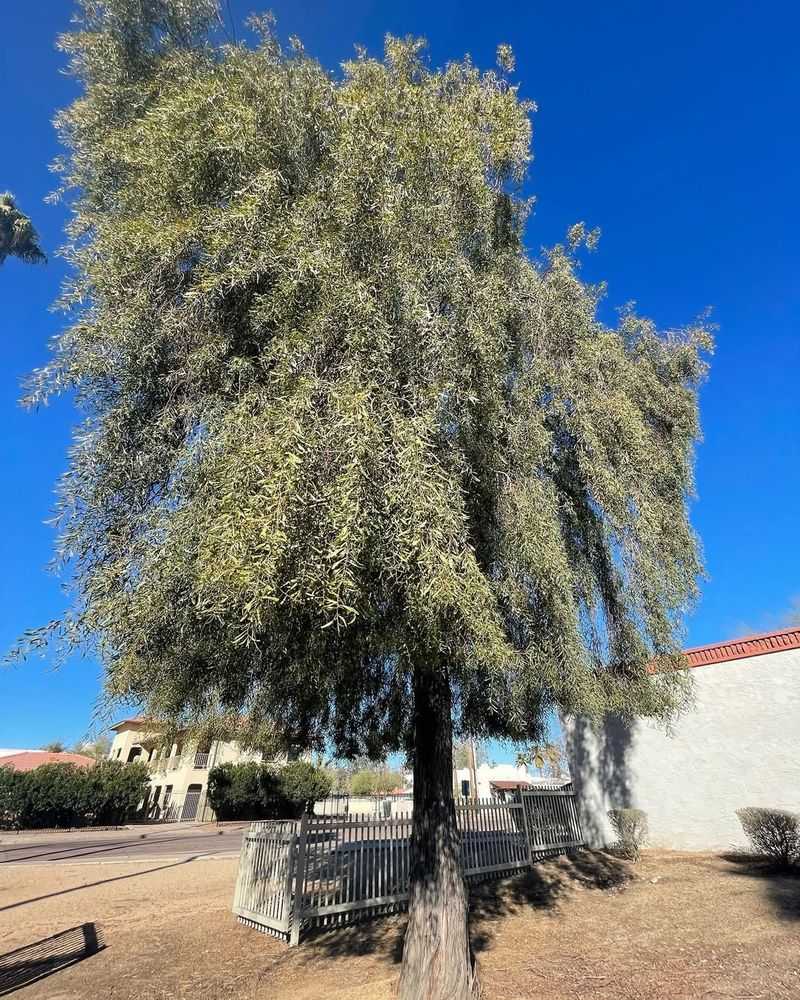
Willow Acacia has one of the fastest establishment rates of any small tree you can plant in an Arizona front yard this April. Roots push out aggressively in warm soil, and new leaf growth often appears within days of planting in mid-spring conditions.
Acacia salicina grows with long, slender, blue-green leaves that droop slightly, giving it a soft, weeping appearance that looks surprisingly elegant against desert gravel or decomposed granite landscaping.
Creamy white, puffball-like flowers appear in late winter and early spring, so a tree planted this April may reward you with blooms as early as next February or March.
Height at maturity typically reaches 20 to 40 feet, but pruning during the first few years shapes the canopy and controls height effectively.
For Arizona front yards where vertical clearance near sidewalks or driveways matters, early pruning decisions make a real difference in long-term manageability.
One thing worth knowing — Willow Acacia can become brittle in older age, and branches may drop during strong monsoon winds if the canopy is not thinned periodically.
Consistent light pruning through the first several years builds better branch structure and reduces that risk significantly.
Full sun and well-drained soil are the two most important factors for strong early growth. Watering every five to seven days through the first spring and summer supports healthy root development without creating overly wet conditions.
6. Anacacho Orchid Tree Handles Spring Growth In Full Sun
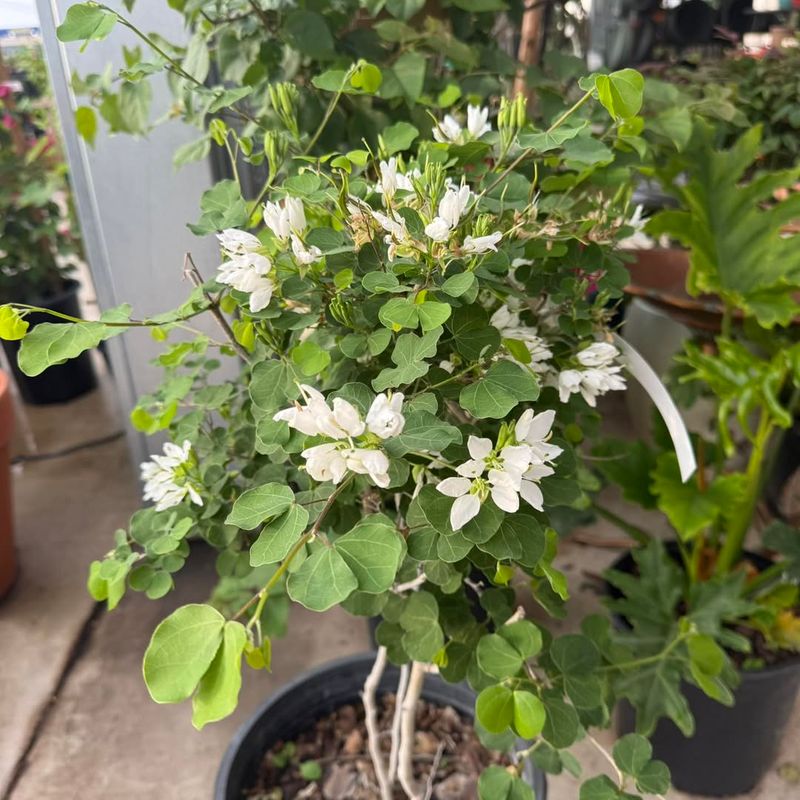
Not many small trees can stop foot traffic with their flowers, but Anacacho Orchid Tree comes close.
Bauhinia lunarioides produces clusters of white to soft pink flowers that genuinely resemble orchid blooms, and April is right in the middle of its natural flowering window across Arizona.
Native to rocky limestone canyons in southwest Texas and northern Mexico, this tree is well-adapted to the kind of dry, alkaline, rocky soil that shows up constantly in Arizona front yards.
It does not need amended soil or special fertilizer to get started — basic planting in a sunny spot with decent drainage is usually enough.
Mature size stays compact, typically reaching 8 to 12 feet tall and wide. That scale suits front yards well, especially in neighborhoods where HOA guidelines or utility lines limit how tall a tree can grow.
The canopy stays relatively tidy without heavy pruning, though light shaping after flowering helps maintain a clean appearance.
Spring planting in April gives roots several months to establish before winter dormancy arrives. Water consistently through the first summer — about once a week during peak heat is a reasonable starting point, adjusting based on rainfall and soil conditions.
Avoid planting in spots where runoff collects after monsoon rains, since prolonged wet soil slows root development and can weaken the tree during its first critical growing season in Arizona.
7. Ironwood Establishes Slowly But Handles Warm Spring Conditions
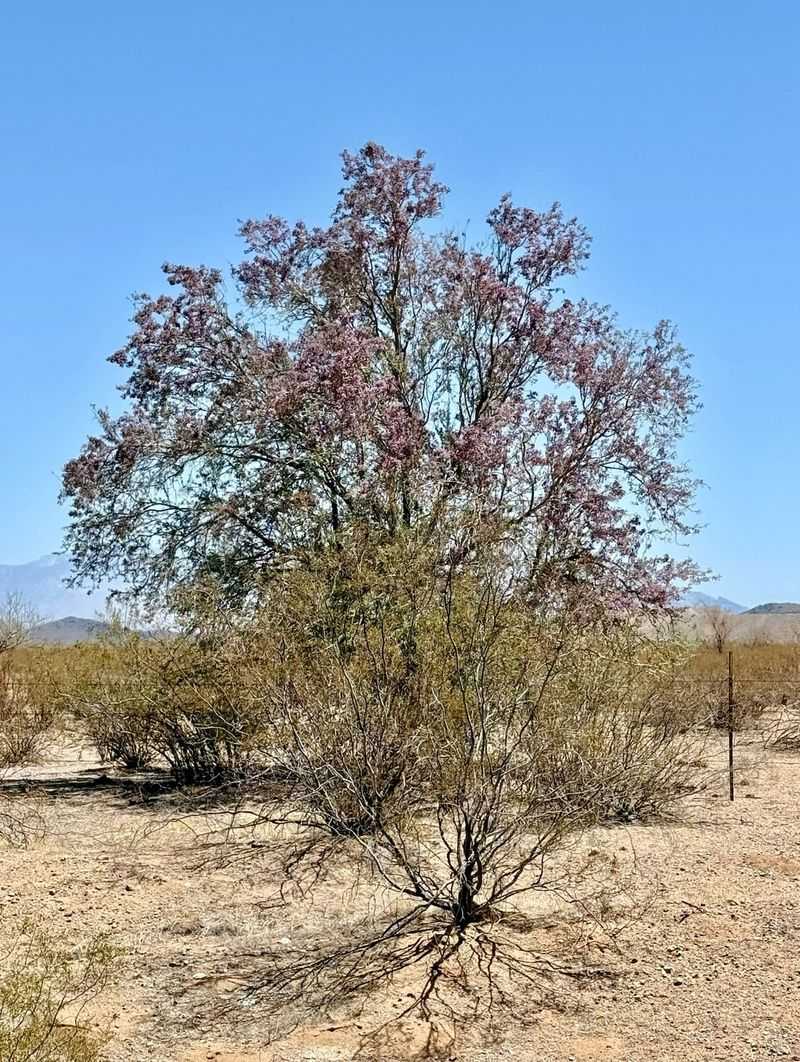
Ironwood is not a fast grower — and that is actually part of what makes it worth planting. Olneya tesota is one of the longest-lived native trees in the Sonoran Desert, with some specimens estimated to be several hundred years old.
Planting one in your Arizona front yard this April is a long-term investment, not a quick landscape fix.
Spring planting suits Ironwood well because warm soil encourages gradual root spread without stressing the tree.
Growth in the first year is typically modest — maybe a foot or two of new shoot growth — but the root system is quietly expanding underground during that same period, which sets the tree up for more consistent growth in years two and three.
Pale purple flowers appear in spring, usually around April or May, and they attract native bees reliably. Gray-green foliage stays on the tree through most of the year, dropping briefly before spring flowering in some years depending on winter temperatures.
Mature height reaches 15 to 25 feet over many decades.
Thorns are present on young trees, so placement away from walkways and entry paths makes sense for front yard use. Full sun and well-drained, rocky or sandy soil replicate its natural habitat closely.
Supplemental watering during the first two summers supports establishment, but once roots are spread, Ironwood handles Arizona’s dry conditions without regular irrigation. Patience with this tree pays off over time.
8. Vitex Handles Early Growth And Adapts Well To Heat
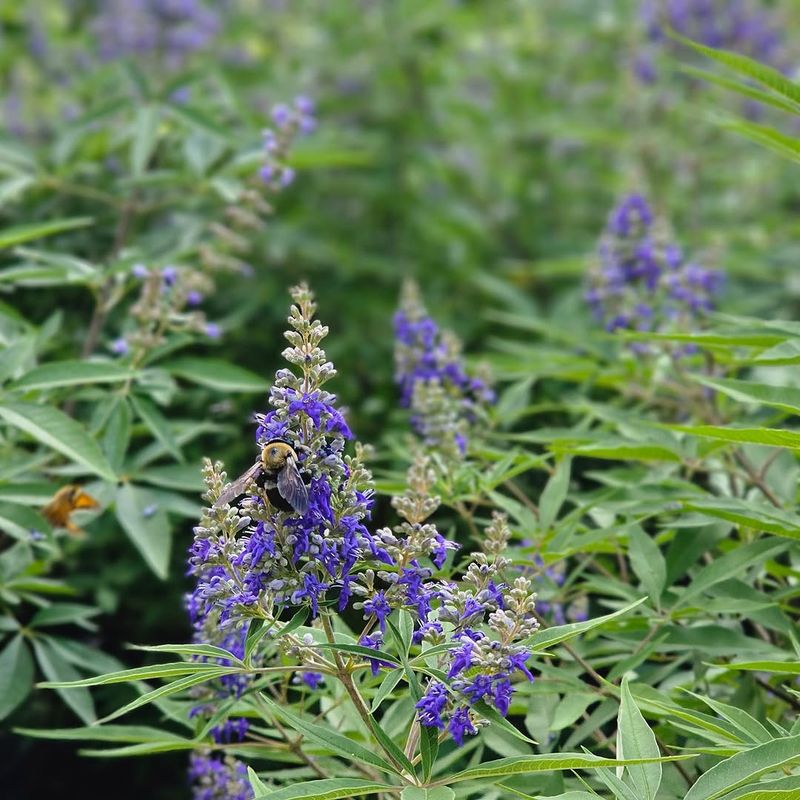
Vitex agnus-castus has a reputation for toughness in hot climates, and Arizona front yards give it a chance to prove that reputation every single spring.
April planting puts it in the ground right before its most active growth period, and new shoot tips usually show up within a few weeks of getting established in warm soil.
Lavender to purple flower spikes emerge in late spring and continue appearing through much of summer, which is impressive performance during a season when heat pushes most flowering plants into dormancy.
Aromatic leaves release a pleasant herbal scent when brushed, which is a small but enjoyable detail in a front yard planting.
Mature size typically lands between 10 and 20 feet tall, though hard pruning in late winter keeps it on the smaller end of that range.
Many Arizona gardeners prune Vitex back significantly each year to encourage fresh, vigorous growth and a more compact shape that suits front yard proportions without overwhelming the space.
Full sun is non-negotiable for strong flowering — shaded placements produce noticeably fewer blooms and looser, weaker branch structure. Soil drainage matters too, especially during Arizona’s monsoon season when heavy rain can saturate the ground quickly.
Avoid planting in low spots where water pools after storms. Deep watering every week or so through the first spring and summer supports healthy root development without encouraging excessive, soft new growth that struggles in heat.