Native Michigan Shrubs That Outperform Arborvitae As Privacy Screens In Tough Spots
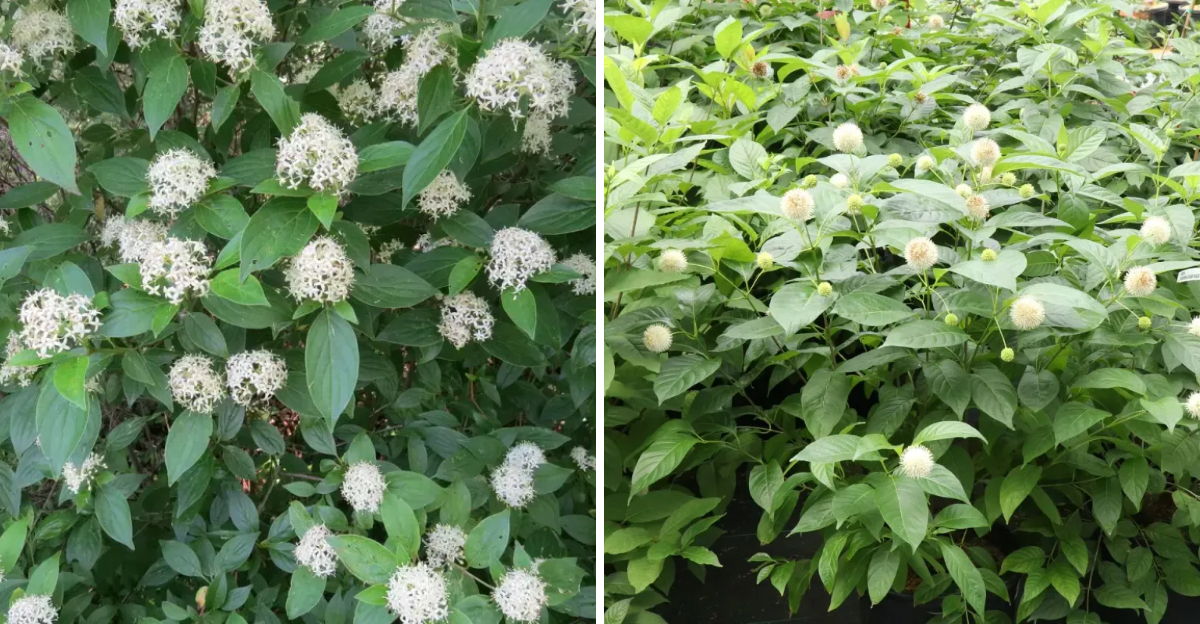
Arborvitae is often the go to choice for privacy screens in Michigan, but it does not always perform well in tough spots.
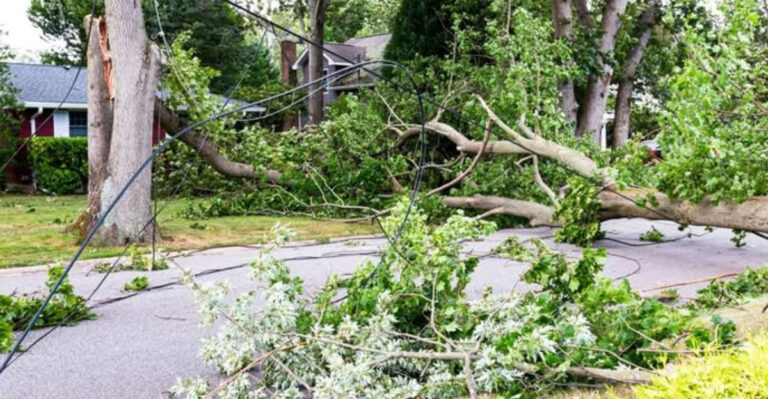
Harsh winters, strong winds, heavy snow, and poor soil can leave these shrubs struggling or looking thin over time.
That is where native shrubs can offer a better solution. Many are naturally adapted to Michigan’s conditions, making them more reliable in places where arborvitae tends to fall short.
They can handle cold, adjust to different soil types, and often need less maintenance once established. Some grow thick and dense for privacy, while others add seasonal interest with flowers, berries, or rich fall color.
If you are dealing with a challenging space and want a screen that actually thrives, native shrubs are worth a closer look.
These options prove you can have privacy, beauty, and resilience all in one planting.
1. American Hazelnut (Corylus americana)
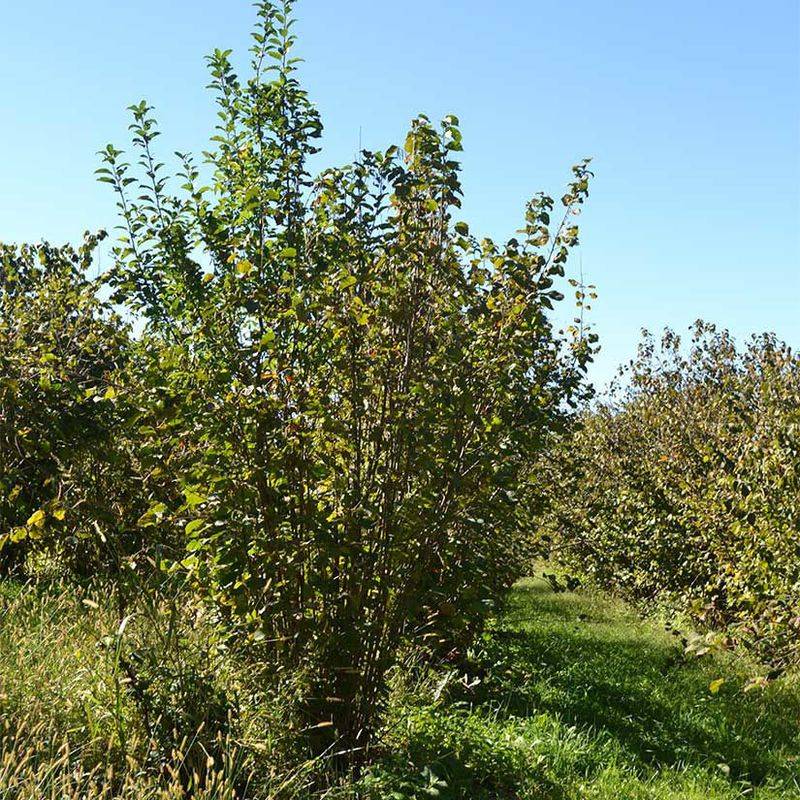
Picture a shrub so determined to fill a space that it sends up new stems each season, slowly building a wall of foliage that no neighbor can see through.
That is exactly what American hazelnut does, and Michigan gardeners have been appreciating it for generations.
This native plant forms dense, colony-style thickets that grow naturally into tall, layered privacy screens reaching six to ten feet in height depending on conditions.
What makes it stand out from arborvitae is its ability to handle the extremes that Michigan throws at plants every single year. Cold snaps, wind exposure, poor or sandy soil, and dry spells do not slow this shrub down.
It roots deeply and spreads steadily, creating a screen that gets thicker and more effective with every passing season.
American hazelnut thrives in full sun but tolerates partial shade, making it useful along woodland edges or fences where light varies. The leaves are large and bright green through summer, turning yellow, purple, and red in fall for a beautiful seasonal display.
An added bonus is the edible hazelnuts that ripen in late summer, attracting squirrels, deer, and birds to your yard. Planting several together in a loose row creates a natural-looking privacy buffer that feels organic rather than planted.
For tough Michigan spots where other shrubs give up, this one just keeps growing stronger.
2. Arrowwood Viburnum (Viburnum dentatum)
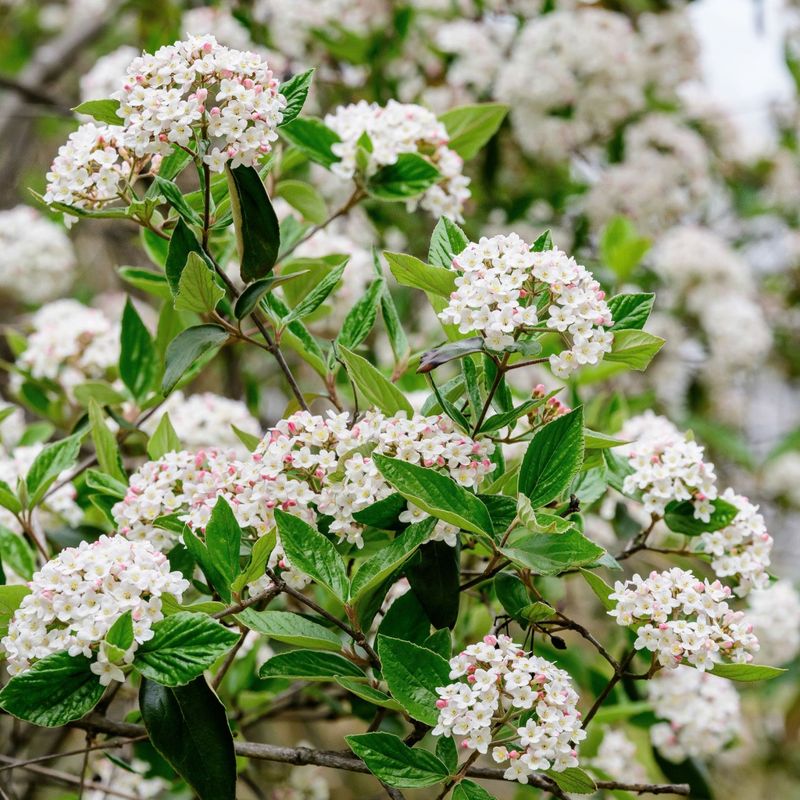
Few shrubs earn their place in a Michigan landscape as quickly and reliably as arrowwood viburnum.
Growing naturally into a rounded, multi-stemmed form that easily reaches eight to ten feet tall, this plant practically builds its own privacy wall without much help from you.
The dense branching structure fills in beautifully, blocking sightlines from neighbors and roads with thick, dark green foliage throughout the growing season.
One of its biggest advantages over arborvitae is its flexibility with soil conditions. Arrowwood viburnum handles clay soil, variable moisture levels, and even occasional standing water without complaint.
Michigan gardeners dealing with heavy or poorly draining soil will find this shrub far more forgiving than most evergreen alternatives.
Planting it in a staggered row creates a natural-looking hedge that feels like it belongs in the landscape rather than being forced into it. Spacing plants about five to six feet apart encourages them to grow together into a solid screen over a few seasons.
Your Michigan Garden Changes Every Week. Your Plan Should Too.
Gardening in Michigan changes quickly throughout the season. Every Friday you’ll receive a simple weekly plan showing exactly what to plant, prune, fertilize, harvest, and protect so you never miss the right timing.
Pruning is easy and optional since the plant naturally maintains a full, bushy shape. Come fall, the foliage turns shades of red and purple, adding unexpected color to your yard.
In summer, clusters of small white flowers attract pollinators, and the dark blue berries that follow bring in birds. For Michigan homeowners wanting a tough, beautiful, low-maintenance privacy screen, arrowwood viburnum is a hard choice to beat.
3. Ninebark (Physocarpus opulifolius)
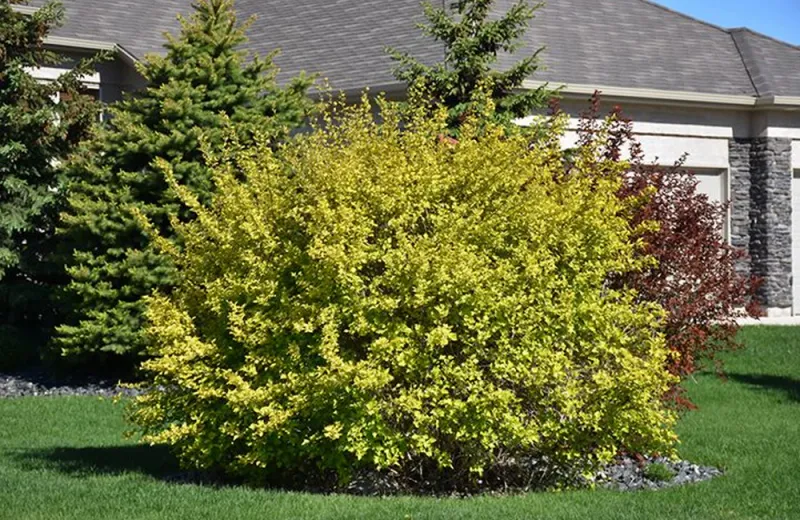
Ninebark has a reputation among Michigan native plant enthusiasts as one of the toughest shrubs you can put in the ground. Its arching branches, textured peeling bark, and bold foliage make it just as attractive as it is durable.
When planted in a group, it forms a thick, layered screen that blocks views effectively while looking completely natural in any Michigan yard or garden setting.
Where arborvitae often struggles in compacted clay or exposed windy spots, ninebark simply shrugs and keeps growing.
It tolerates drought once established, handles poor soil without fertilizer, and holds up through Michigan winters without browning or thinning out.
Full sun to partial shade both work well, giving you flexibility in spots where light is inconsistent or limited.
One of the most exciting things about ninebark is the variety of foliage colors available. Cultivars like Diablo offer deep burgundy leaves, while others stay bright chartreuse all season long.
Even in a basic native species form, the leaves are attractive and full from spring through fall. Spring brings clusters of small white or pinkish flowers that pollinators absolutely love, followed by reddish seed clusters that add visual interest into winter.
The peeling, layered bark provides texture and character even after the leaves have dropped.
For Michigan gardeners who want a privacy screen that performs in the toughest spots and still looks great, ninebark consistently delivers.
4. Red Osier Dogwood (Cornus sericea)
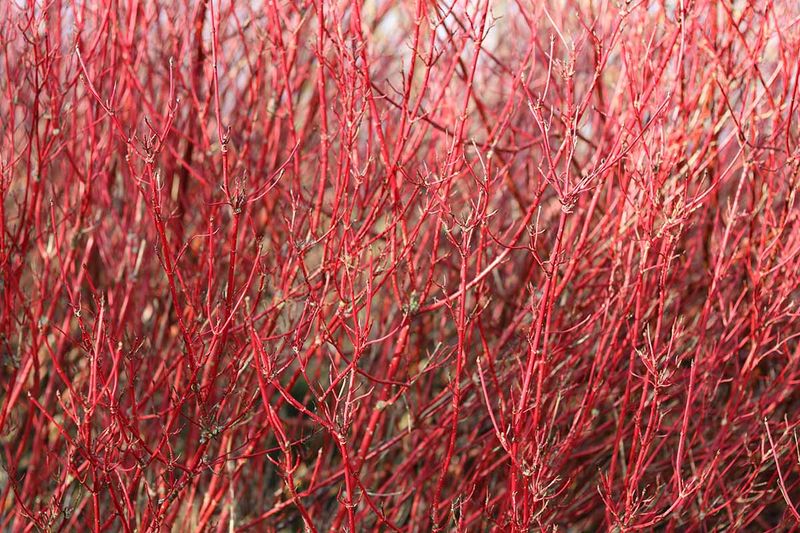
If your yard has a wet corner that seems to swallow every plant you try, red osier dogwood is about to become your favorite discovery.
This Michigan native absolutely thrives in saturated soils, boggy low spots, and areas near ponds or streams where most shrubs simply cannot survive.
Arborvitae planted in those same spots often declines within a few seasons, but red osier dogwood spreads and fills in stronger every year.
The colony-forming growth habit means that over time, a few starter plants become a full, dense thicket reaching six to nine feet tall.
That natural spread creates a privacy screen that looks like it grew there on its own, which is exactly the kind of effortless landscaping most homeowners dream about.
Staggering your initial planting helps fill horizontal space faster and creates a more solid visual barrier earlier in the process.
Beyond its toughness in wet Michigan soils, this shrub offers remarkable year-round appeal. Clusters of small white flowers bloom in late spring, attracting native bees and butterflies.
White berries follow in late summer, providing food for migrating birds along Michigan waterways.
But the most stunning feature appears in winter, when the stems turn a brilliant, vivid red that practically glows against snow.
Even on the coldest, grayest Michigan days, a hedge of red osier dogwood brings color and life to an otherwise bare landscape. It earns its spot in every season.
5. Gray Dogwood (Cornus racemosa)
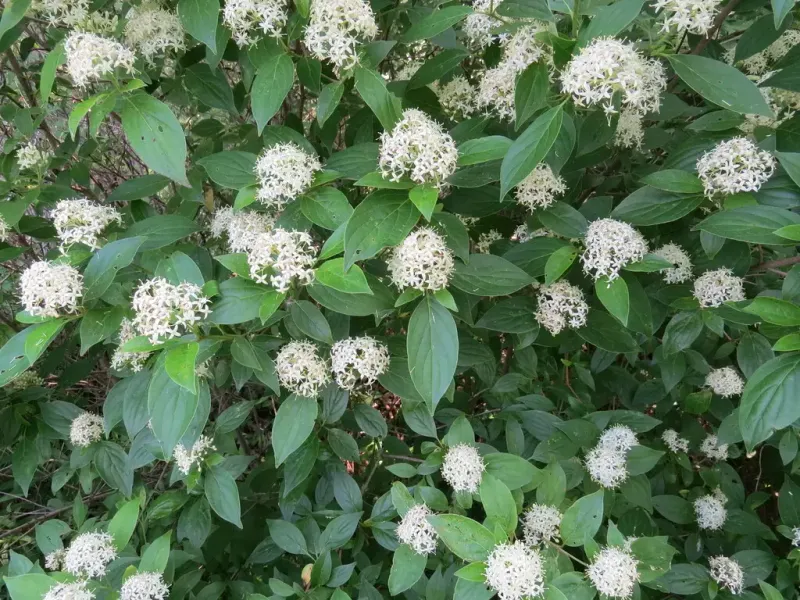
Not every yard in Michigan has perfect soil, and gray dogwood was practically designed for the ones that do not.
This tough native shrub spreads steadily into dense thickets along roadsides, open fields, and woodland edges all across the state, proving just how adaptable it really is.
Where arborvitae needs consistent moisture and decent drainage to stay healthy, gray dogwood handles drought, rocky ground, and exposed conditions without skipping a beat.
The thicket-forming growth habit is exactly what makes it so valuable as a privacy screen. Over several seasons, gray dogwood spreads through root suckering to fill horizontal space naturally, creating a layered screen that is both thick and visually soft.
Heights typically reach five to ten feet, which is more than enough to block sightlines from neighboring yards or passing roads. Planting a row and allowing it to naturalize gives you a low-maintenance screen that practically manages itself.
Spring flowers are small but plentiful, covering the shrub in clusters of creamy white blooms that attract a wide range of native pollinators.
The white berries that follow in late summer are a favorite among Michigan songbirds, especially during fall migration.
Foliage turns reddish-purple in autumn before dropping, and the gray-brown stems provide quiet winter structure.
For Michigan homeowners dealing with dry slopes, poor soils, or exposed corners where other plants fail, gray dogwood steps up and delivers a reliable, beautiful privacy solution year after year.
6. Nannyberry Viburnum (Viburnum lentago)
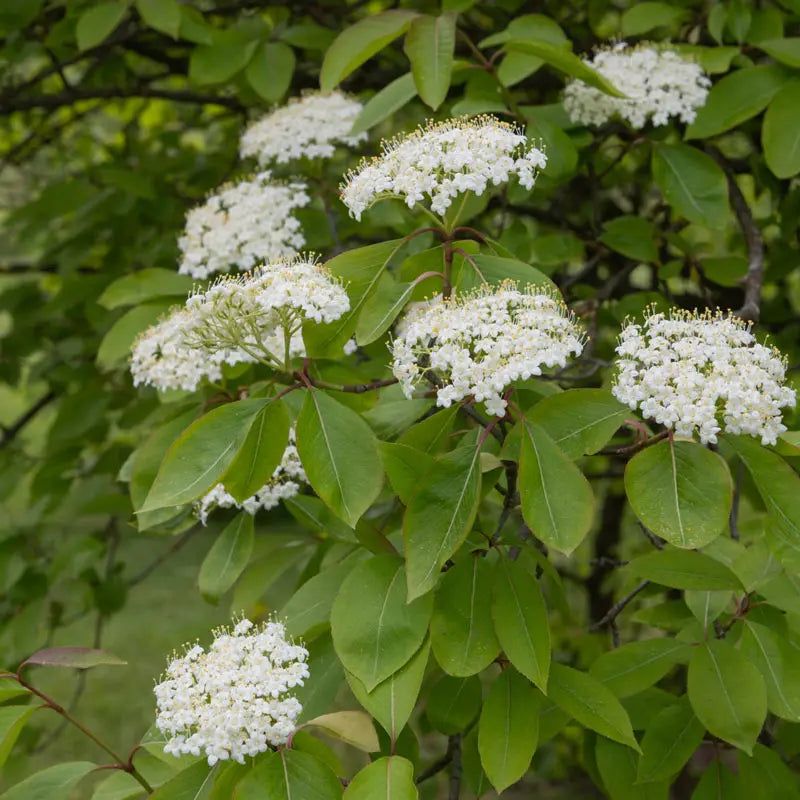
When you need real height in a privacy screen, nannyberry viburnum steps up in a way that few native Michigan shrubs can match.
Growing naturally to ten, twelve, or even fifteen feet tall under good conditions, this plant creates a substantial visual barrier that makes arborvitae look like a modest competitor.
The upright, densely branched form fills in beautifully when planted in a row, giving you a tall, lush screen that feels both natural and intentional.
What truly sets nannyberry apart is its impressive tolerance for challenging conditions across Michigan. It handles both wet and dry soils, thrives in full sun or partial shade, and shrugs off harsh Michigan winters without any special protection.
That kind of adaptability is rare in a shrub that also grows this tall and this full, making it an excellent choice for exposed corners, windy property lines, or low-lying spots that flood seasonally.
Flat-topped clusters of creamy white flowers bloom in spring, creating a stunning display that attracts pollinators from across the yard.
By late summer, those flowers become clusters of dark blue-black berries that birds absolutely flock to, making your privacy screen a habitat feature as well as a functional barrier.
Fall foliage shifts to shades of red and purple before dropping, adding seasonal interest right through the end of the growing season.
For Michigan homeowners who want tall, tough, and genuinely beautiful, nannyberry viburnum is an outstanding native option worth planting today.
7. Buttonbush (Cephalanthus occidentalis)
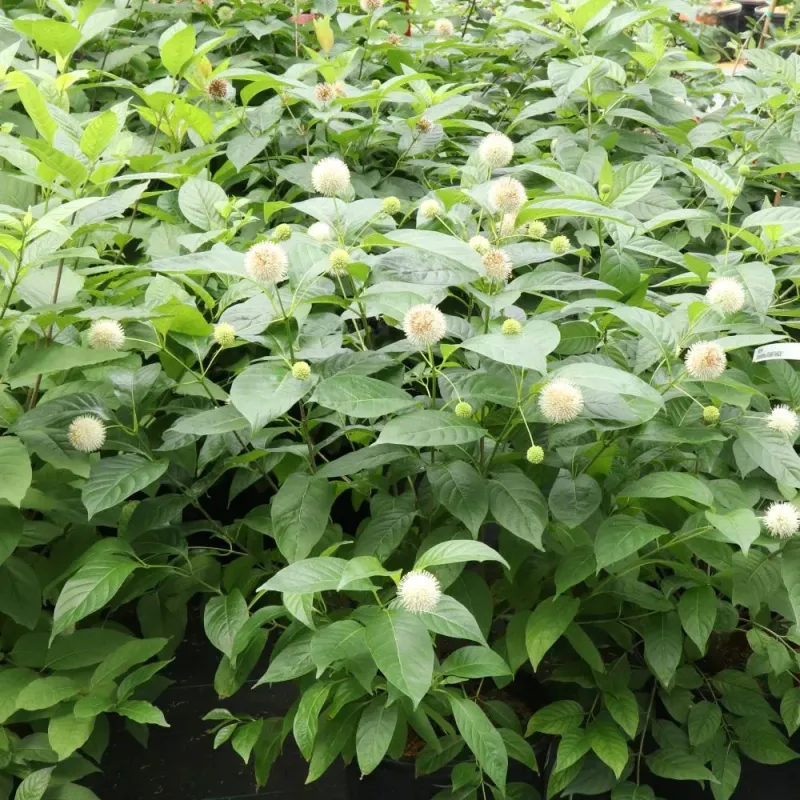
Standing water is the enemy of most privacy shrubs, but buttonbush treats it like a welcome mat.
This Michigan native is one of the few shrubs that genuinely thrives in flooded or waterlogged soils, making it the go-to solution for wet corners, rain garden edges, or low-lying areas near ponds and drainage channels.
Arborvitae planted in those same spots will decline fast, but buttonbush settles in and grows stronger with every wet season.
Reaching six to twelve feet tall with a naturally rounded, multi-stemmed form, buttonbush creates a dense, leafy screen that effectively blocks views from neighboring properties or roads.
The glossy, deep green foliage is full and lush from late spring through fall, providing solid privacy during the outdoor season when you need it most.
Planting several in a row along a wet property line fills the space with a natural-looking hedge that requires very little maintenance once established.
The flowers are genuinely one of a kind. Round, globe-shaped white clusters appear in midsummer and look like something out of a botanical garden display, attracting butterflies, native bees, and hummingbirds in impressive numbers.
Those blooms turn into reddish-brown seed balls that persist into winter, adding textural interest to the bare stems. Waterfowl and shorebirds also love the seeds, making this shrub a wildlife magnet for Michigan yards near water.
For wet spots where nothing else survives, buttonbush is a reliable, beautiful, and uniquely suited native solution.
8. Fragrant Sumac (Rhus aromatica)
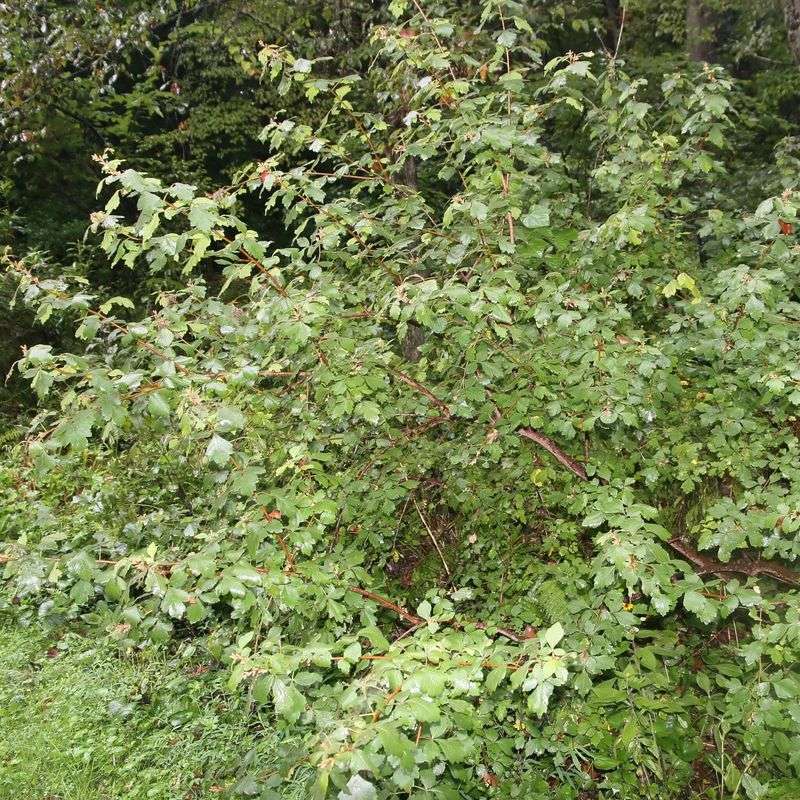
Dry, sandy, or rocky slopes are some of the hardest spots to screen in any Michigan yard, and fragrant sumac was practically born for exactly those conditions.
This native shrub spreads into a wide, dense mound that stays low, typically between three and six feet tall, but compensates for its modest height with impressive horizontal spread.
A row of fragrant sumac planted along a dry slope or property edge fills in quickly and creates a thick, layered screen that blocks low sightlines effectively.
Where arborvitae demands decent moisture and reasonable soil to stay full and green, fragrant sumac thrives on neglect. Drought tolerance is exceptional once the plant establishes, and it handles poor, thin soils with ease.
Full sun is ideal, though partial shade also works well, giving you flexibility in spots where trees or structures create uneven light throughout the day.
The name gives away one of its most charming qualities: the leaves release a pleasant, spicy fragrance when brushed or crushed, making it a sensory treat near walkways or patios.
Small yellow flowers appear very early in spring before the leaves even open, providing one of the first nectar sources for pollinators emerging in Michigan after winter.
Fall color is absolutely spectacular, with the foliage shifting into brilliant shades of red, orange, and yellow that rival any ornamental shrub on the market.
For tough, dry Michigan spots, fragrant sumac is a standout performer that earns every inch of space it occupies.