13 Weeds Ohio Gardeners Should Know And How To Identify Them
Every Ohio gardener has had that moment of spotting something new in the yard and wondering whether to pull it or let it grow. At first glance, many weeds look harmless, blending in with everything else until they start spreading faster than expected.
Some even resemble young flowers or vegetables, which makes it even easier to overlook them early on.
By the time they’re easy to recognize, they’ve often already settled in and taken up space you had planned for something else. That’s why early identification matters so much, especially in spring when growth picks up quickly.
Acting sooner rather than later can save hours of extra work down the line.
Many common Ohio weeds have distinct features if you know what to look for, from leaf shape to how they grow along the ground. Catching those details early can make yard work a lot more manageable as the season moves forward.
1. Dandelion With Its Bright Blooms And Deep Taproot
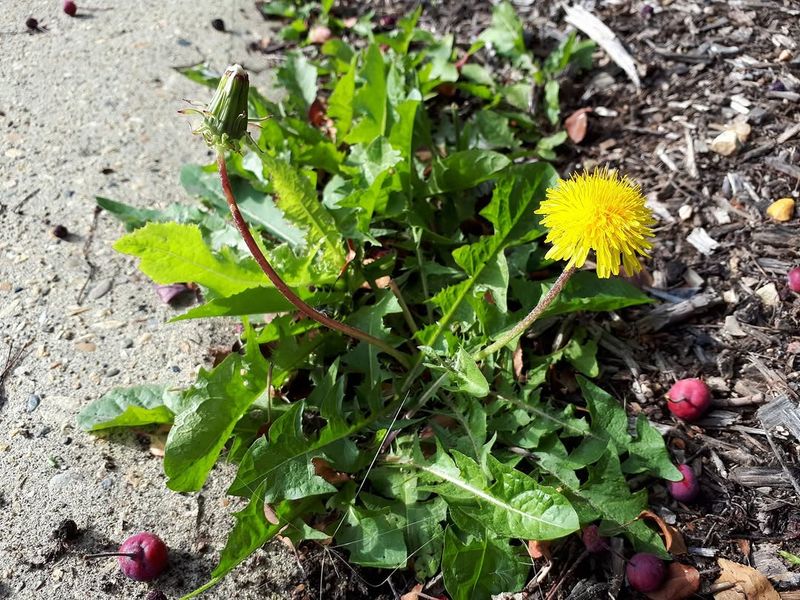
Few plants are as instantly recognizable as the dandelion, with its cheerful yellow blooms popping up across Ohio lawns every spring. Those bright flowers turn into fluffy white seed heads that the wind carries across your entire yard, making new plants pop up almost everywhere.
Each dandelion grows from a thick, deep taproot that can extend well beyond several inches into the ground.
Spotting a dandelion is easy once you know what to look for. The leaves are long and jagged, forming a rosette shape flat against the ground.
The hollow flower stem snaps easily and releases a milky white sap when broken.
Pulling dandelions by hand works best when the soil is moist, making it easier to get the full root out. Leaving even a small piece of the taproot behind means the plant will grow right back.
In Ohio gardens, staying consistent with removal is the best approach.
2. Ground Ivy Spreading Fast Through Shady Lawns
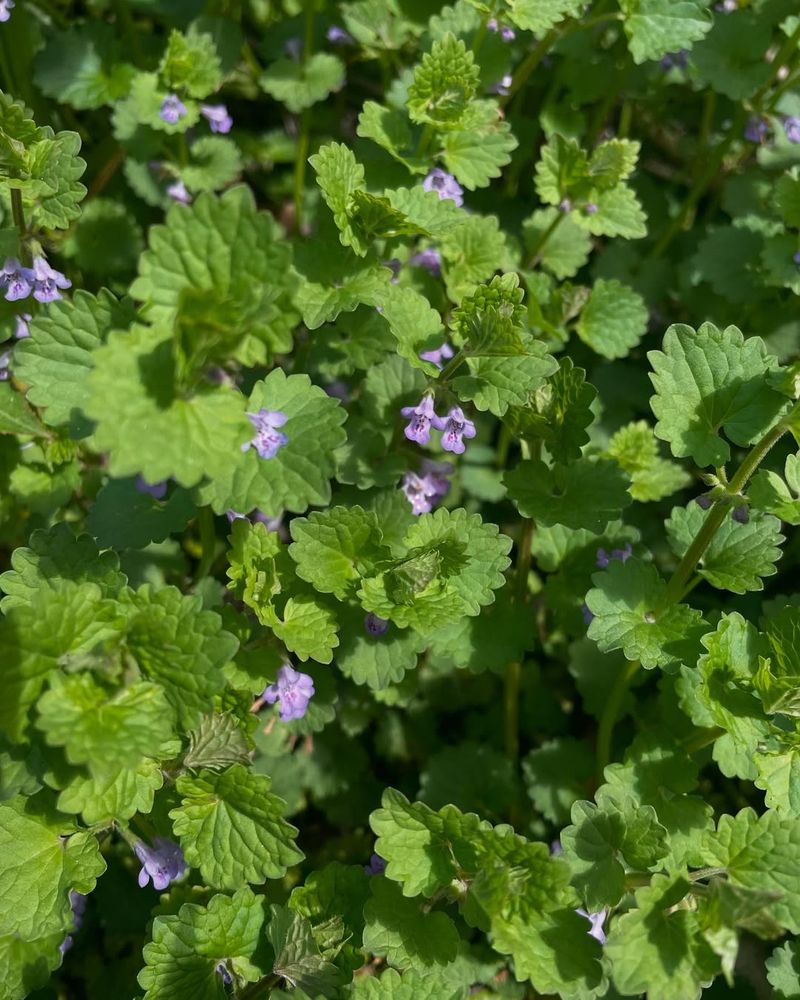
Walk across a shaded Ohio yard and you might notice a low-growing plant with a minty, herbal smell underfoot. That is ground ivy, commonly called creeping Charlie, and it spreads surprisingly fast once it gets established.
It sends out long, creeping stems that root at every node they touch, blanketing the ground quickly.
The leaves are kidney-shaped with scalloped, rounded edges, and in spring, small purplish-blue flowers appear along the stems. The square stem is one of the easiest identification clues, since most common lawn grasses and weeds have round stems.
Crushing a leaf releases that distinctive minty scent, which is another reliable way to confirm what you are dealing with.
Ground ivy thrives in moist, shady spots, making it especially common near trees and along fence lines in Ohio yards. Hand-pulling works for small patches, but getting every piece of stem is important since any fragment left behind can sprout into a new plant.
3. Common Chickweed Forming Low, Dense Green Mats
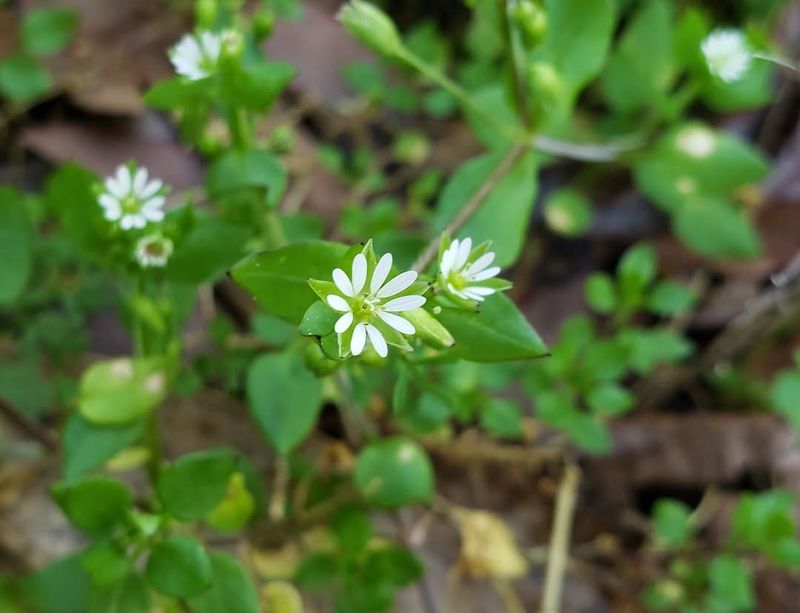
Common chickweed loves the cool, damp weather that Ohio gets in early spring and fall, which is exactly when most gardeners are not paying close attention to their beds. It forms low, mat-like patches that can cover bare soil surprisingly quickly.
Your Ohio Garden Changes Every Week. Your Plan Should Too.
Gardening in Ohio changes quickly throughout the season. Every Friday you’ll receive a simple weekly plan showing exactly what to plant, prune, fertilize, harvest, and protect so you never miss the right timing.
The stems are slender and slightly sticky to the touch.
Each leaf is small, bright green, and oval-shaped, coming to a soft point at the tip. The flowers are tiny and white, with five petals that are so deeply notched they look like ten petals at first glance.
One handy identification trick is the single line of fine hairs that runs along one side of the stem.
Chickweed is easy to pull out by hand since its roots are shallow and the whole plant comes up cleanly. In Ohio gardens, removing it before it flowers and sets seed is the smartest move.
Pre-emergent herbicides applied in late fall can also help prevent it from returning the following year.
4. Broadleaf Plantain With Tough Leaves That Hug The Soil
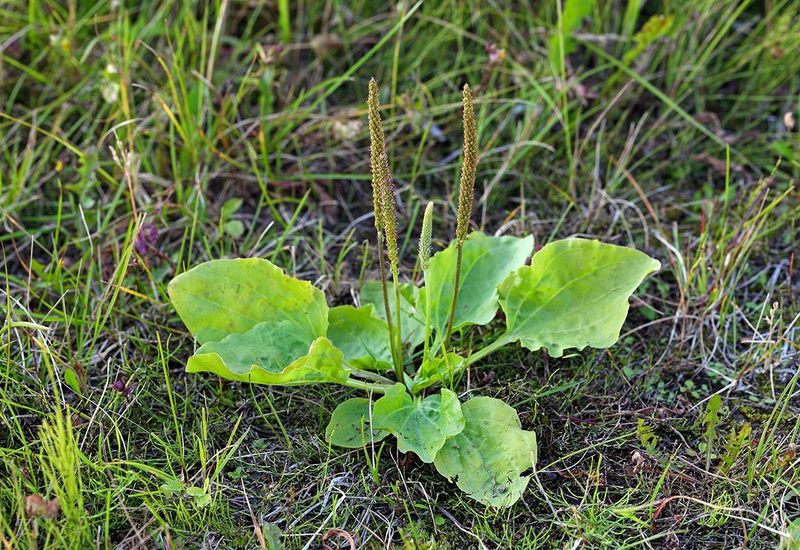
One of those weeds that seems to appear out of nowhere in Ohio lawns, especially in areas where foot traffic has compacted the soil, broadleaf plantain is hard to miss. It actually thrives in compacted, hard-packed ground where other plants struggle to grow.
That makes driveways, walkway edges, and worn lawn patches its favorite hangouts.
The leaves are wide, oval, and deeply ribbed with three to five prominent parallel veins running from base to tip. They form a flat rosette close to the ground, and from the center rises a tall, slender seed spike covered in tiny brownish flowers.
Rubbing the leaf releases a faint earthy smell.
Pulling broadleaf plantain by hand is effective when done carefully, making sure to get the short, fibrous root system. Since it loves compacted soil, aerating your Ohio lawn regularly helps reduce the conditions this weed prefers.
Improving soil health over time is one of the best long-term strategies for keeping it from coming back.
5. Buckhorn Plantain Standing Upright With Narrow Leaves
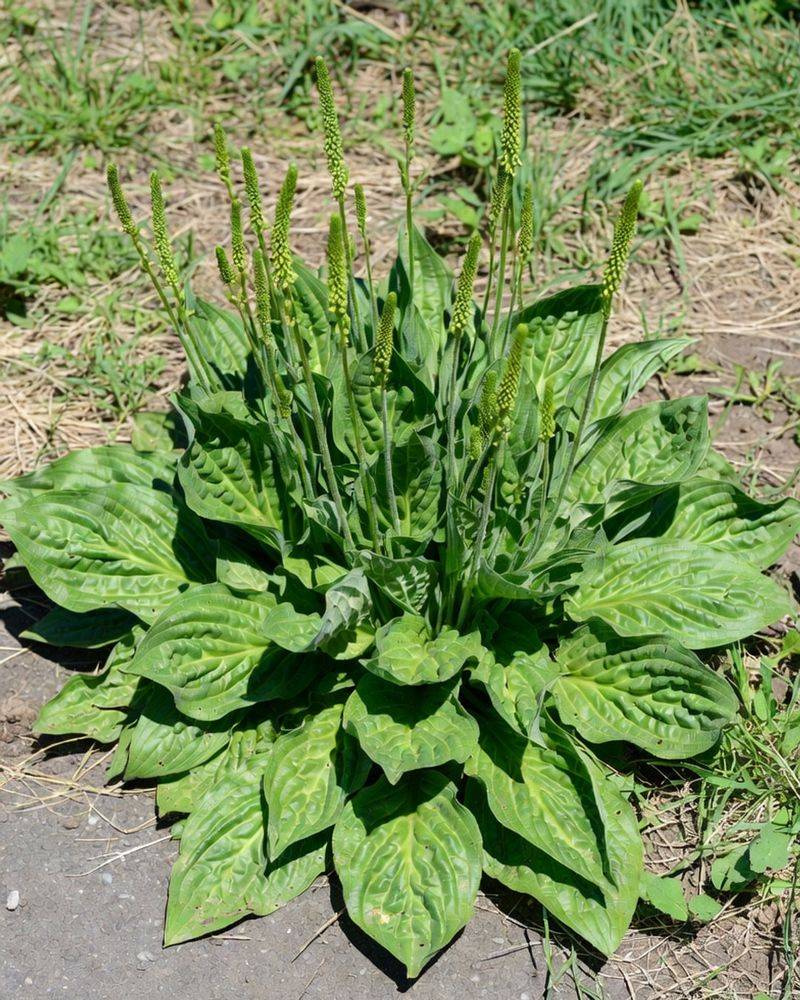
The slimmer, more upright cousin of broadleaf plantain, buckhorn plantain shows up frequently in Ohio lawns and along meadow edges. Unlike its wide-leafed relative, this one has long, narrow, lance-shaped leaves that stand more upright from a central rosette.
The leaves have three to five parallel veins, just like broadleaf plantain, but the shape is distinctly different.
The seed head is one of the most recognizable features. It sits on a long, wiry stalk and forms a short, cylindrical spike with a ring of tiny white flowers that bloom from the bottom upward.
From a distance, it looks almost like a tiny lollipop on a thin stick.
Buckhorn plantain spreads entirely by seed, so removing those flower stalks before the seeds mature is a smart move for Ohio gardeners. Hand-pulling works well when the soil is loose and moist.
It also tends to signal that your lawn soil may be compacted or low in nutrients, so improving soil conditions helps reduce future infestations.
6. Large Crabgrass Taking Over Bare Spots In Summer
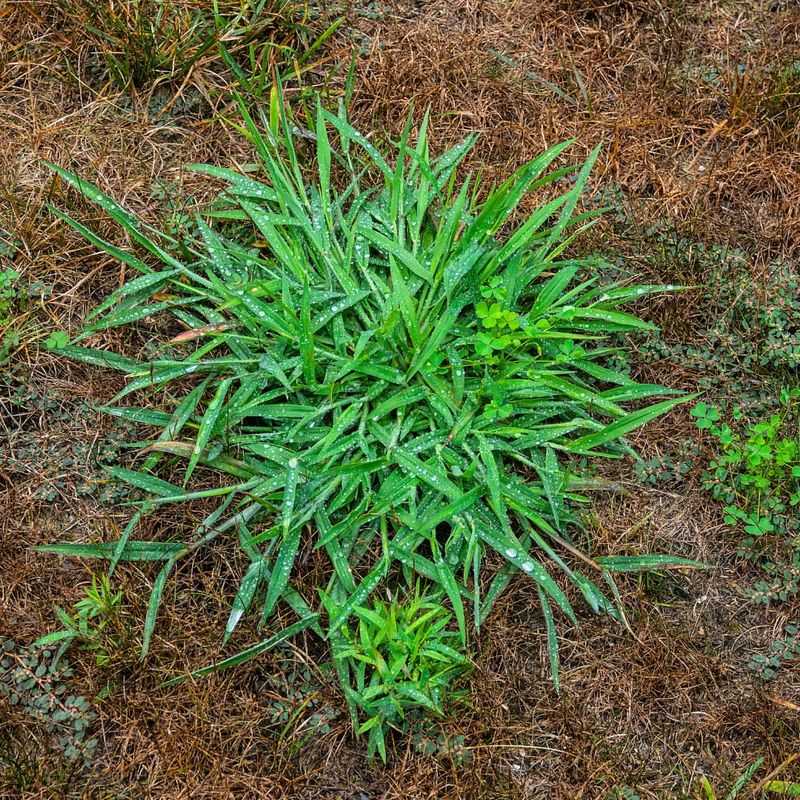
One of the most frustrating summer weeds in Ohio, crabgrass spreads quickly and takes over bare spots. It germinates in late spring when soil temperatures warm up, and by midsummer it has spread into wide, sprawling clumps that crowd out healthy turf grass.
The name comes from its growth habit, with stems radiating outward like crab legs from a central point.
Large crabgrass has coarse, yellow-green blades that are noticeably wider than most lawn grasses. The stems lie flat along the ground before turning upward, and the seed heads look like several finger-like spikes spreading from a single point.
It roots at the nodes where stems touch the soil, helping it anchor itself firmly.
Pre-emergent herbicides applied in early spring before soil temperatures hit 55 degrees Fahrenheit are the most effective tool Ohio gardeners have against crabgrass. A thick, healthy lawn is also a natural barrier since crabgrass struggles to take hold in dense turf.
Watering deeply but less frequently also discourages it from getting established.
7. Yellow Nutsedge That Grows Faster Than Your Lawn
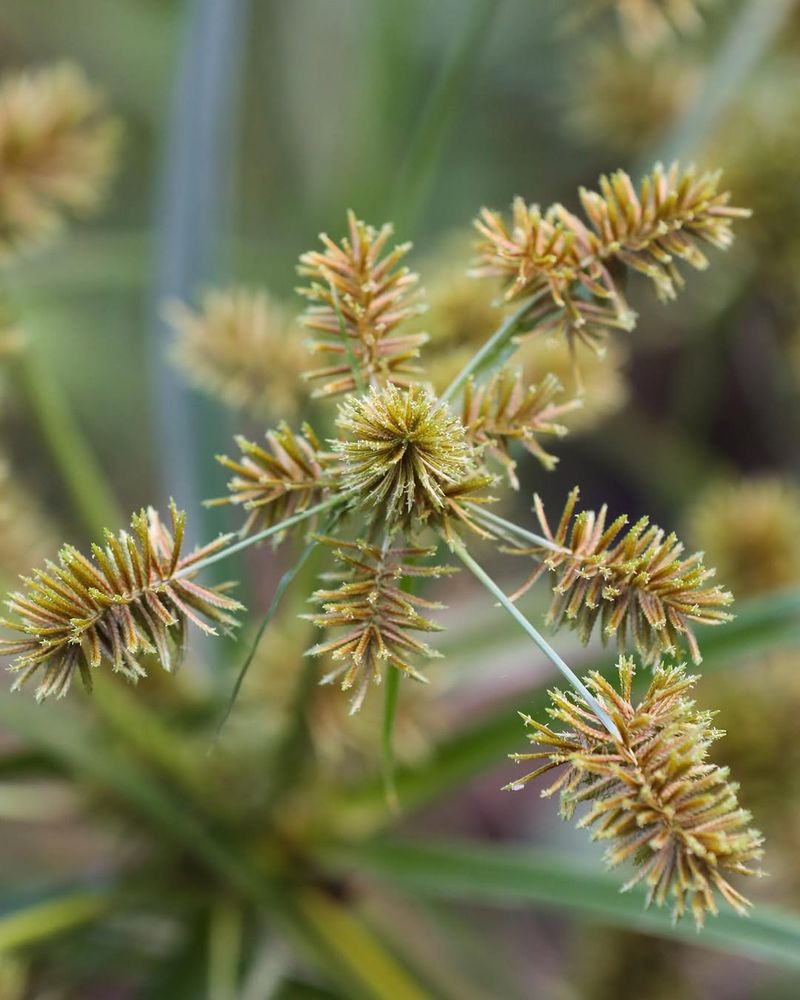
Often mistaken for a grass, yellow nutsedge is actually a sedge, and that distinction matters when it comes to managing it. The easiest way to tell the difference is by feeling the stem.
Nutsedge stems are triangular, which gives rise to the old saying among Ohio gardeners: sedges have edges.
The leaves are yellowish-green, shiny, and arranged in groups of three from the base. It grows faster than most lawn grasses, so patches of nutsedge tend to stand noticeably taller than the surrounding turf even shortly after mowing.
Tiny yellowish-brown seed clusters appear at the top of the plant as the season progresses.
Yellow nutsedge thrives in wet, poorly drained areas, making it a common problem in Ohio gardens after heavy rainfall. Improving drainage is the most effective long-term solution.
Underground tubers called nutlets allow it to regrow even after the top growth is removed, so persistence is key when managing this stubborn weed.
8. White Clover Blending In With Grass But Spreading Quickly
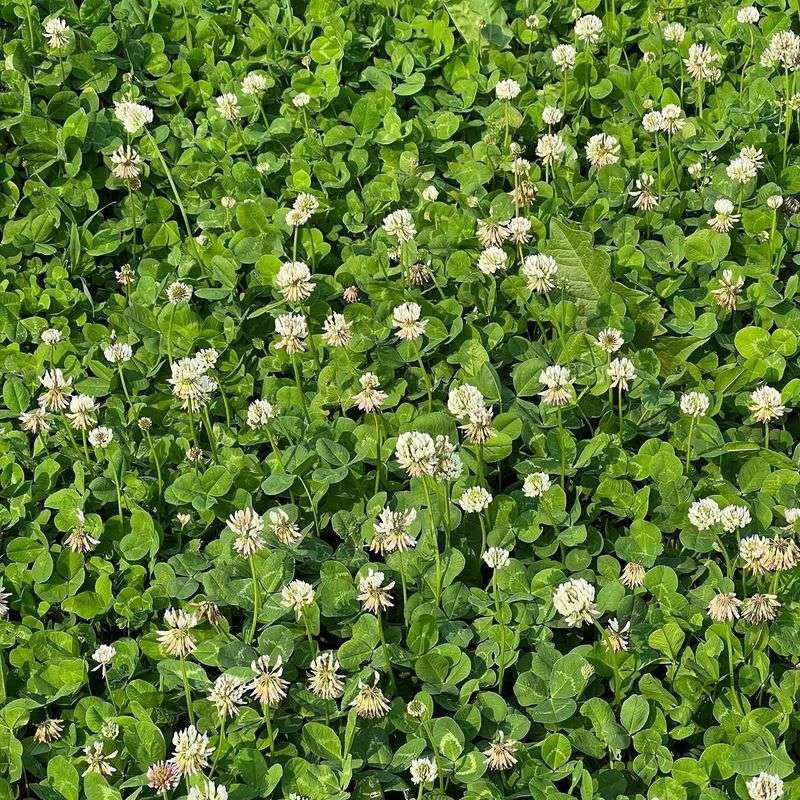
One of those weeds some Ohio homeowners actually welcome, white clover attracts pollinators and helps add nitrogen to the soil. But in a traditional lawn setting, it can spread aggressively and take over large areas if left unchecked.
It thrives in low-fertility soils, which is often a sign that your lawn could use some fertilizing attention.
Each leaf is made up of three rounded leaflets, often with a pale, V-shaped or chevron-like marking in the center. The small, round white flower heads sit on slender upright stems and have a sweet, faint fragrance.
Bees are especially fond of these flowers, so white clover patches often buzz with activity during warmer months.
White clover spreads by both seed and creeping stems that root as they go, making it persistent in Ohio lawns. Hand-pulling small patches is straightforward, especially when the soil is moist.
Maintaining a thick, well-fertilized lawn is one of the best preventive measures, since healthy turf naturally crowds out clover over time.
9. Henbit Showing Up Early With Small Purple Flowers
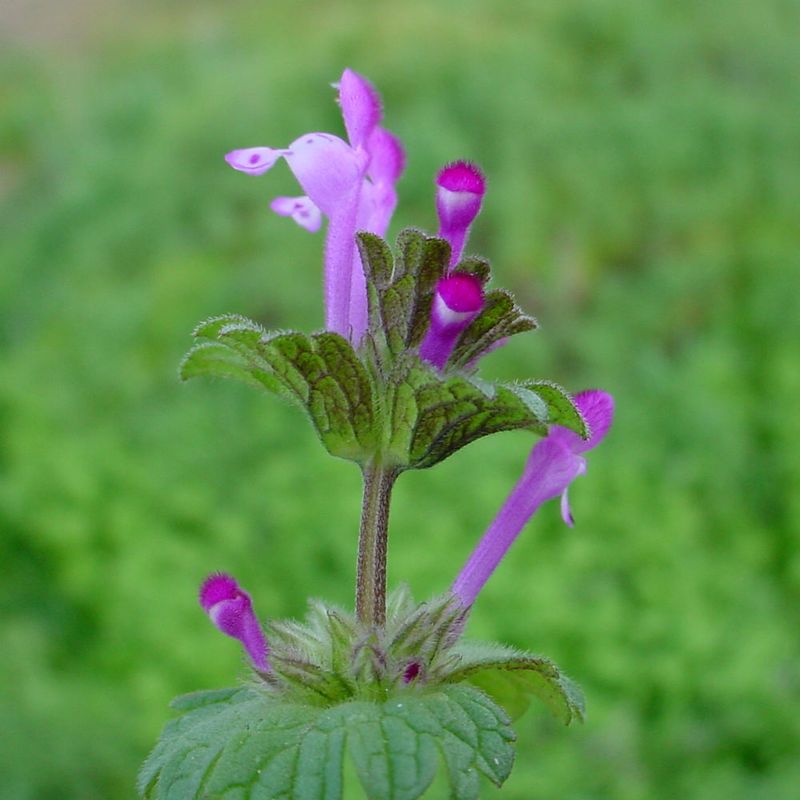
A cool-season weed that seems to appear almost overnight in Ohio gardens during late winter and early spring, henbit spreads quickly when conditions are right.It belongs to the mint family, which explains its square stems and the slightly aromatic scent the leaves give off when crushed. Chickens apparently love to peck at it, which is reportedly how it got its quirky name.
The lower leaves are round with scalloped edges and grow on long stalks, while the upper leaves clasp directly around the square stem without a stalk. Small, tubular, reddish-purple flowers cluster near the top of the plant and are a welcome early food source for bees emerging in spring.
The stems often have a purplish tinge, especially in cooler temperatures.
Henbit completes its life cycle quickly in Ohio, setting seed before many gardeners realize it is there. Pulling it before it flowers prevents seed production and reduces future problems.
Since it thrives in bare, disturbed soil, keeping your garden beds mulched through winter is one of the most effective prevention strategies available.
10. Purple Deadnettle Adding Color But Spreading Fast
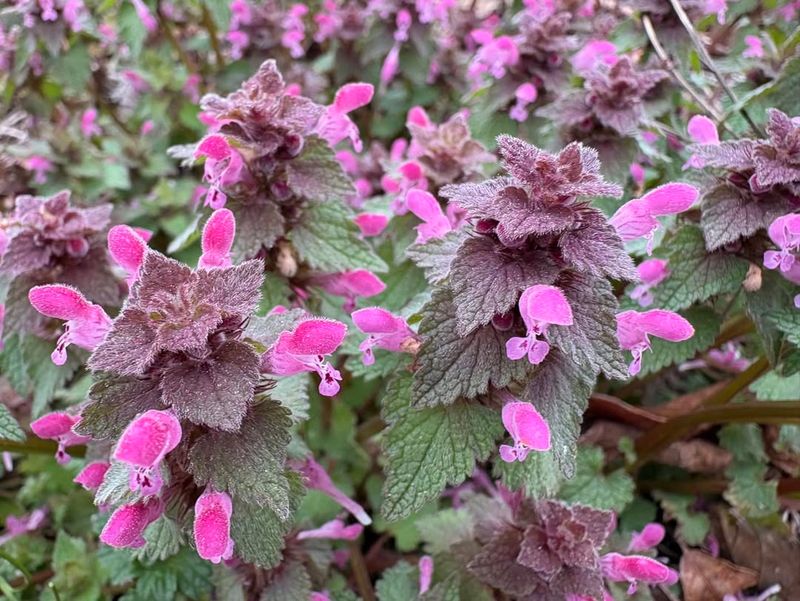
Purple deadnettle looks so similar to henbit that many Ohio gardeners confuse the two, and they often grow side by side in the same garden beds. The key difference is in the leaves.
Purple deadnettle has triangular, slightly heart-shaped leaves that are reddish-purple near the top of the plant and greener near the base. The upper leaves overlap each other in a way that gives the plant a layered, almost scaly appearance.
Like henbit, it has a square stem and belongs to the mint family. Small, pink-purple tubular flowers appear in clusters near the top of the plant in early spring.
The entire upper portion of the plant often takes on a distinctly purple hue, especially in cooler weather, making it easier to spot from a distance.
Purple deadnettle is a winter annual in Ohio, germinating in fall and surviving through winter to flower in early spring. Removing it before it sets seed is the most practical control method.
Mulching garden beds in fall reduces germination rates significantly and keeps these early-spring bloomers from getting a foothold.
11. Common Purslane Thriving In Heat With Fleshy Leaves
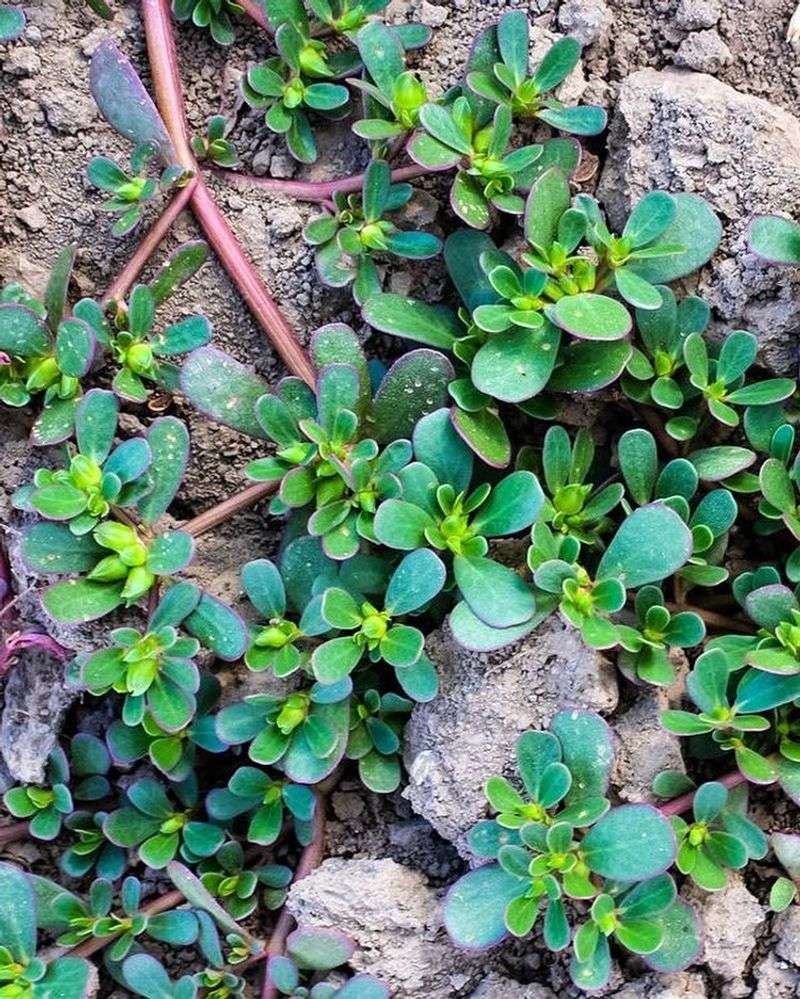
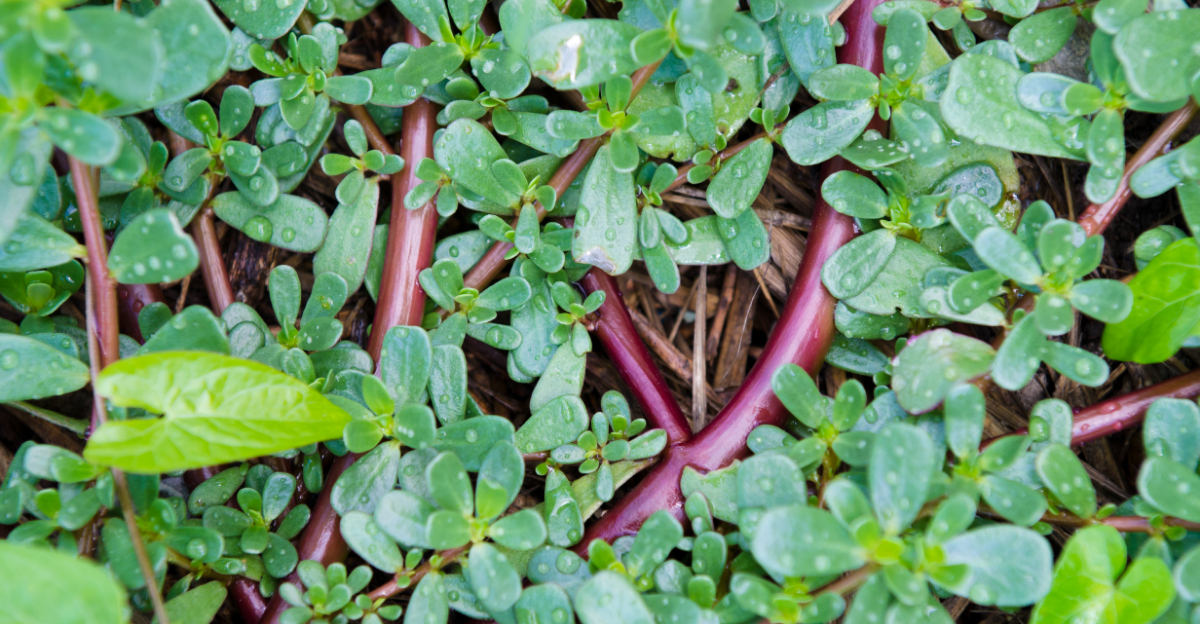
One of the most heat-tolerant weeds in Ohio gardens, common purslane thrives in hot, dry conditions when other plants wilt. It has thick, succulent stems and fleshy, paddle-shaped leaves that store water, allowing it to survive and keep growing even after you pull it and leave it on the soil surface.
That survival trick catches a lot of gardeners off guard.
The stems are smooth, reddish, and sprawl outward along the ground in a mat-like pattern. Tiny yellow flowers with five petals open only on sunny mornings and close by midday.
The whole plant has a slightly glossy, waxy appearance that makes it easy to recognize once you have seen it a few times.
Purslane produces an enormous number of seeds, so removing it before flowering is critical in Ohio gardens. Because uprooted plants can re-root in moist soil, bagging and removing them rather than leaving them in the garden is the safest approach.
Interestingly, purslane is edible and actually quite nutritious, though most gardeners simply want it out.
12. Giant Ragweed Growing Tall And Hard To Miss
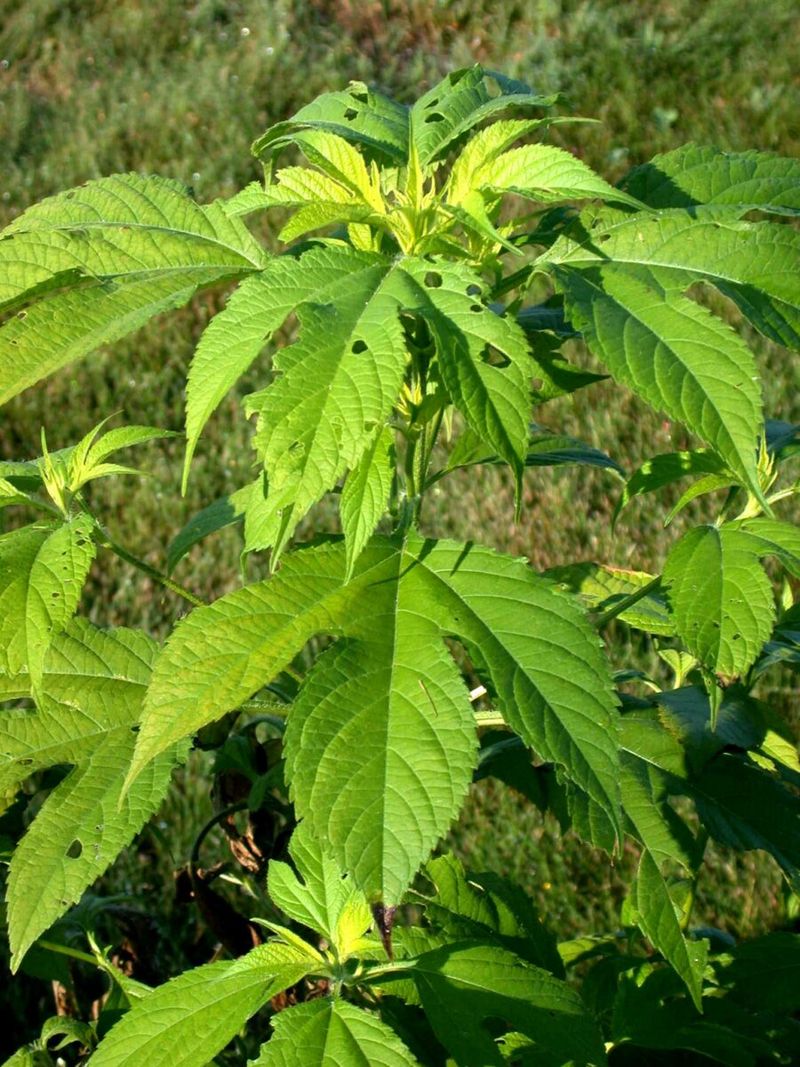
Living up to its name in a big way, giant ragweed grows fast and towers over nearby plants. In Ohio, it regularly reaches heights of six to fifteen feet under good growing conditions, making it one of the tallest common weeds you are likely to encounter.
Like its smaller cousin, it is a major source of allergy-triggering pollen in late summer and early fall.
The leaves are large and distinctive, with three to five deeply cut lobes that give them a maple-like shape. They grow opposite each other on the stem, and both the leaves and stems are covered in rough, scratchy hairs.
The flower spikes appear at the very top of the plant and along the upper branches, producing greenish pollen in enormous quantities.
Giant ragweed prefers disturbed, fertile Ohio soil and often shows up along field edges, creek banks, and garden borders. Removing young plants early in the season before they reach full height is far easier than tackling a mature plant.
Regular mowing along property borders helps prevent it from getting tall enough to produce seeds and spread further.
13. Canada Thistle Spreading Aggressively With Spiny Leaves
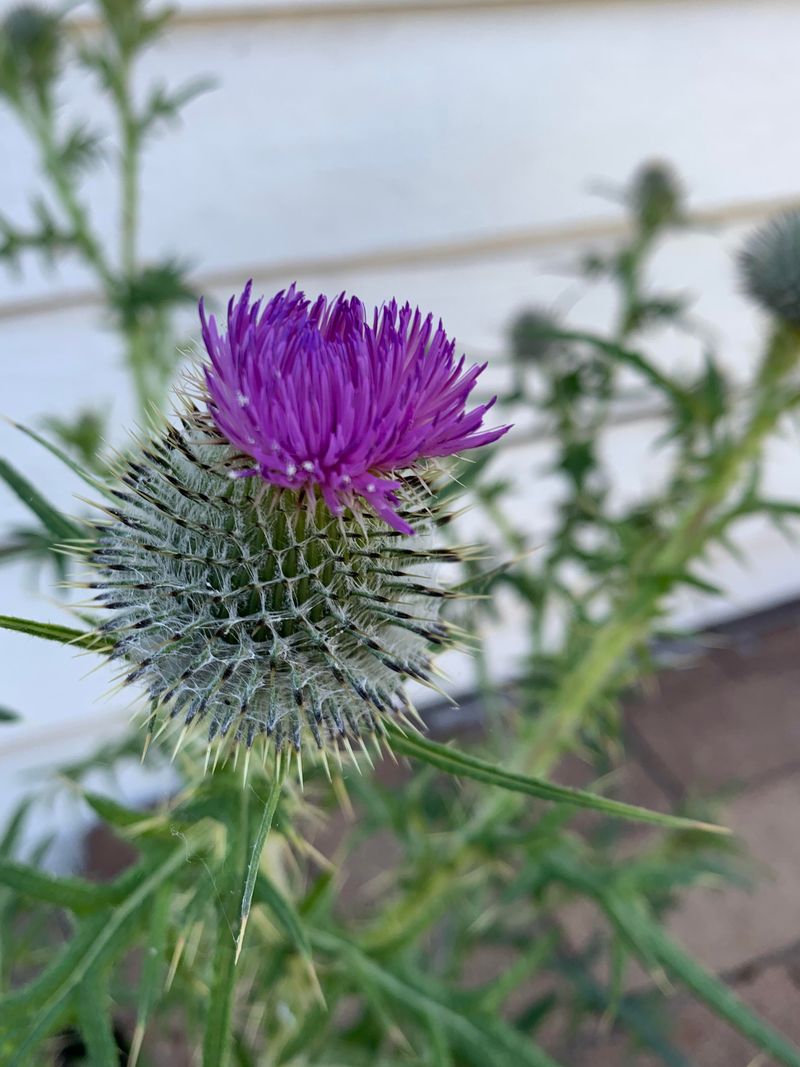
Canada thistle might sound foreign, but it has been well established across Ohio for a very long time and is considered one of the most problematic perennial weeds in the state. What makes it especially challenging is its underground root system, which spreads horizontally and can extend several feet in every direction from the main plant.
New shoots sprout from these roots constantly throughout the growing season.
The leaves are lance-shaped with spiny, lobed edges that make handling the plant uncomfortable without gloves. The underside of each leaf is covered in fine white, woolly hairs, which is a reliable identification feature.
Small, purple, fluffy flower heads cluster at the top of the branching stems and are actually quite attractive, which makes it easy to underestimate this weed.
Controlling Canada thistle in Ohio requires persistence over multiple seasons. Repeatedly cutting or mowing the plant before it flowers gradually weakens the root system.
Spot treatments with appropriate herbicides can also be effective, but complete removal takes time and consistent effort across an extended period.