This Tree Is The Best Alternative To Crape Myrtle In Georgia
Drive through almost any Georgia neighborhood in summer and you will spot the same tree again and again. Crape myrtles have become a go-to choice, but that familiarity is starting to wear thin for many gardeners.
Between constant pruning, occasional pest issues, and a landscape that can feel a bit repetitive, more homeowners are looking for something different.
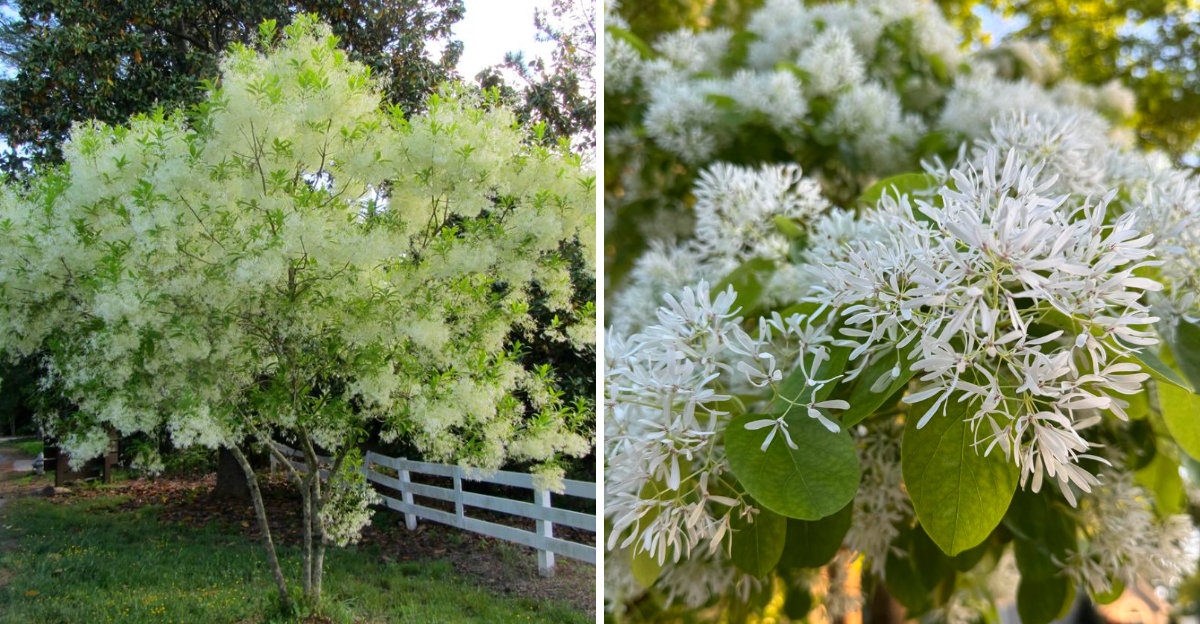
That is where fringe tree (Chionanthus virginicus) comes in.
This native option brings soft, cloud-like white blooms in spring, a manageable size, and a natural fit for Georgia’s soils and humidity.
It offers a fresh look with seasonal beauty that feels right at home in Georgia landscapes.
1. Fringe Tree Brings Soft Spring Blooms To Georgia Yards
Sometime in mid to late spring, before most Georgia yards have fully woken up from winter, fringe tree bursts into one of the most striking floral displays of the season.
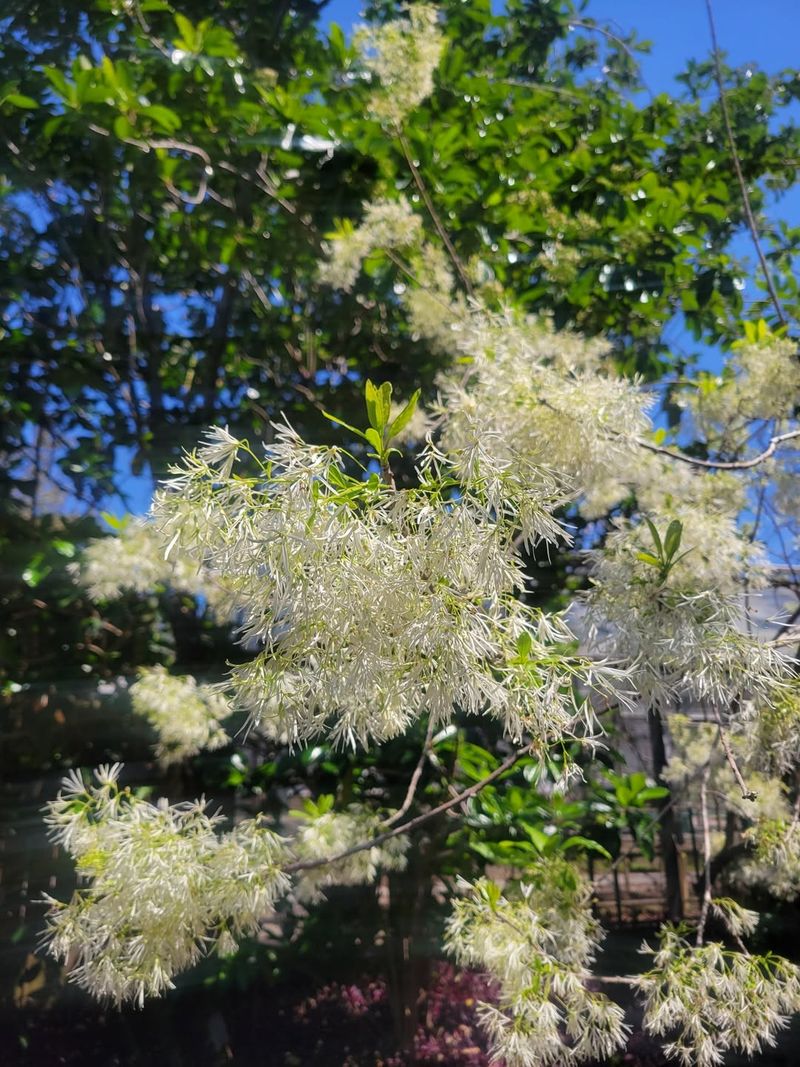
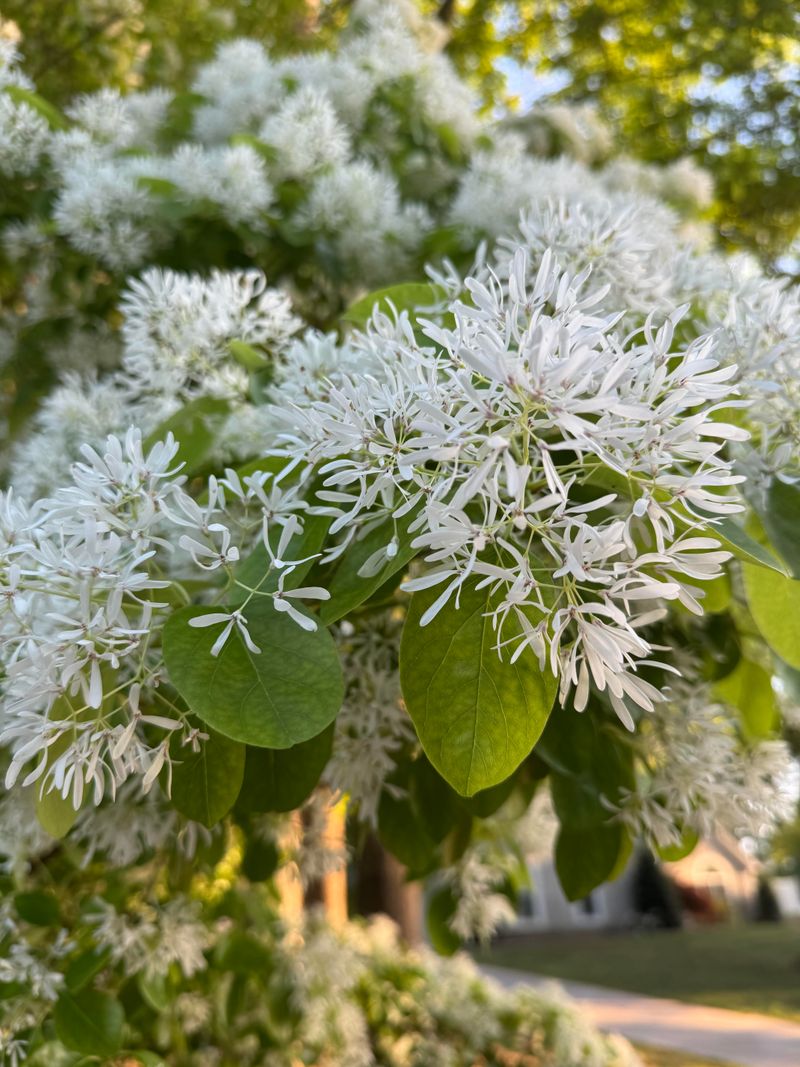
The blooms hang in loose, airy clusters that look almost like white fringe draped across every branch, which is exactly how the tree earned its common name.
The effect is soft and dreamy rather than loud, giving landscapes a natural, woodland-inspired charm.
Chionanthus virginicus typically blooms in April through May across most of Georgia, depending on elevation and local temperatures. The flowers carry a light, sweet fragrance that can be noticed on calm mornings when the air is still.
Unlike crape myrtle, which blooms in the heat of summer, fringe tree offers its show during the cooler, more comfortable weeks of spring.
The bloom period lasts roughly two to three weeks, which feels brief but leaves a lasting impression. After the flowers fade, the tree transitions into a full canopy of glossy, dark green leaves that hold well through summer.
Female trees also produce small, blue-black fruits in late summer that add another layer of seasonal interest.
For Georgia homeowners wanting something that stands out in spring without overwhelming a yard, fringe tree delivers a display that feels both elegant and effortlessly natural.
2. A Native Tree That Fits Georgia Landscapes Well
Gardeners across Georgia have been rediscovering native plants in recent years, and fringe tree is one that checks nearly every box on the list.
Chionanthus virginicus is native to the eastern United States, including Georgia, where it grows naturally along stream banks, woodland edges, and rocky slopes.
That native status matters because it means the tree evolved alongside Georgia soils, rainfall patterns, and local wildlife over thousands of years.
Because it is native, fringe tree tends to need less intervention once established. It is already adapted to the region’s clay-heavy soils, periodic summer droughts, and high humidity levels that challenge many ornamental imports.
Native trees are often highlighted as lower-maintenance options for residential landscapes, and fringe tree fits that description well.
Using native trees also supports the broader ecosystem. Fringe tree provides food and habitat for native insects, birds, and other wildlife that depend on plants they co-evolved with.
Non-native ornamentals, including some crape myrtle cultivars, offer comparatively little ecological value.
Your Georgia Garden Changes Every Week. Your Plan Should Too.
Gardening in Georgia changes quickly throughout the season. Every Friday you’ll receive a simple weekly plan showing exactly what to plant, prune, fertilize, harvest, and protect so you never miss the right timing.
For Georgia homeowners who want a yard that looks beautiful and functions as part of the natural environment, choosing a native tree like fringe tree is a meaningful and practical step.
It connects the garden to the wider Georgia landscape in a way that imported ornamentals rarely can.
3. A Manageable Tree Choice For Smaller Georgia Spaces
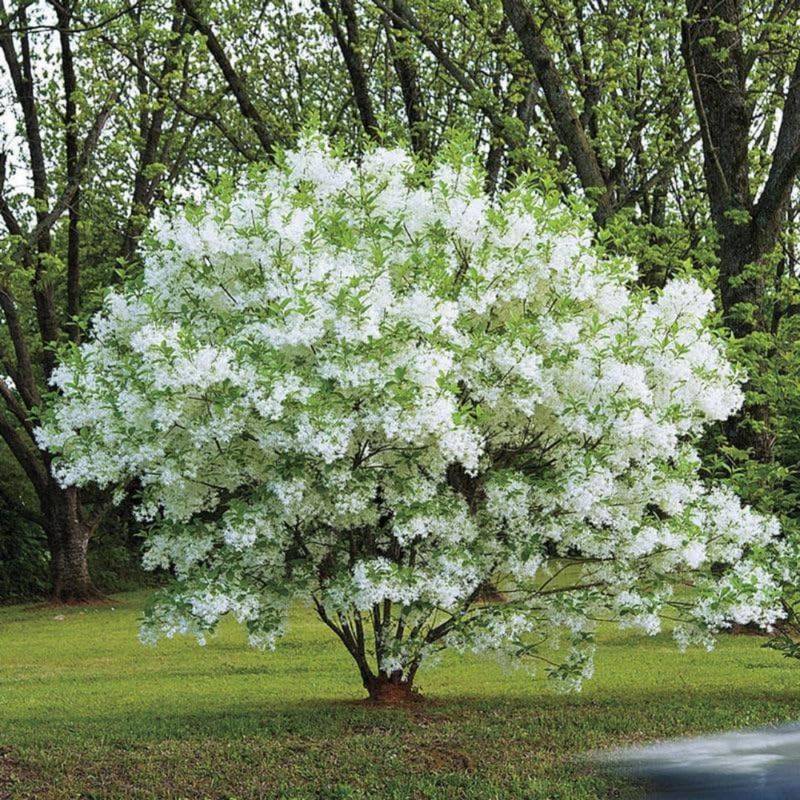
One of the quiet frustrations with crape myrtle is how quickly some varieties outgrow their space, leading to the widespread practice of heavy topping that plant experts routinely discourage. Fringe tree sidesteps that problem naturally.
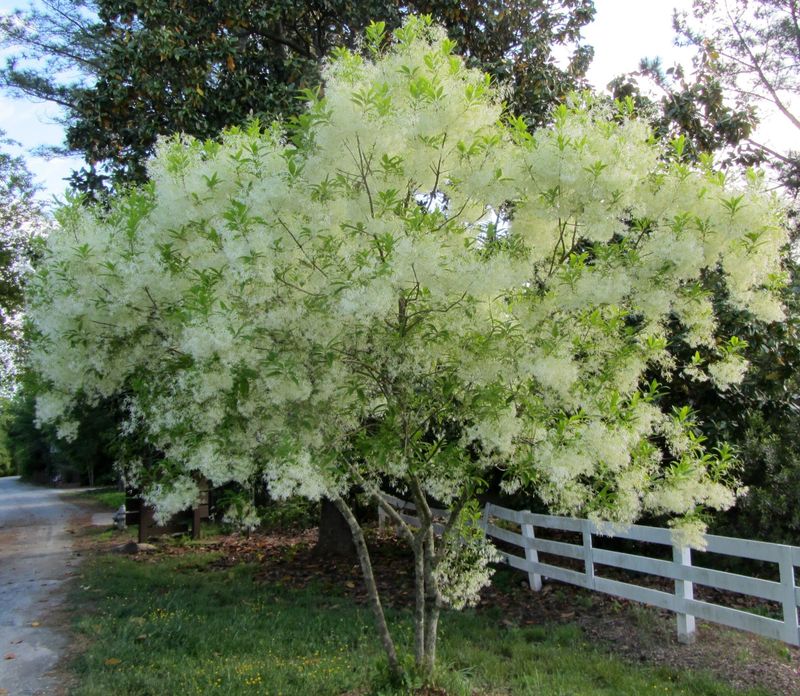
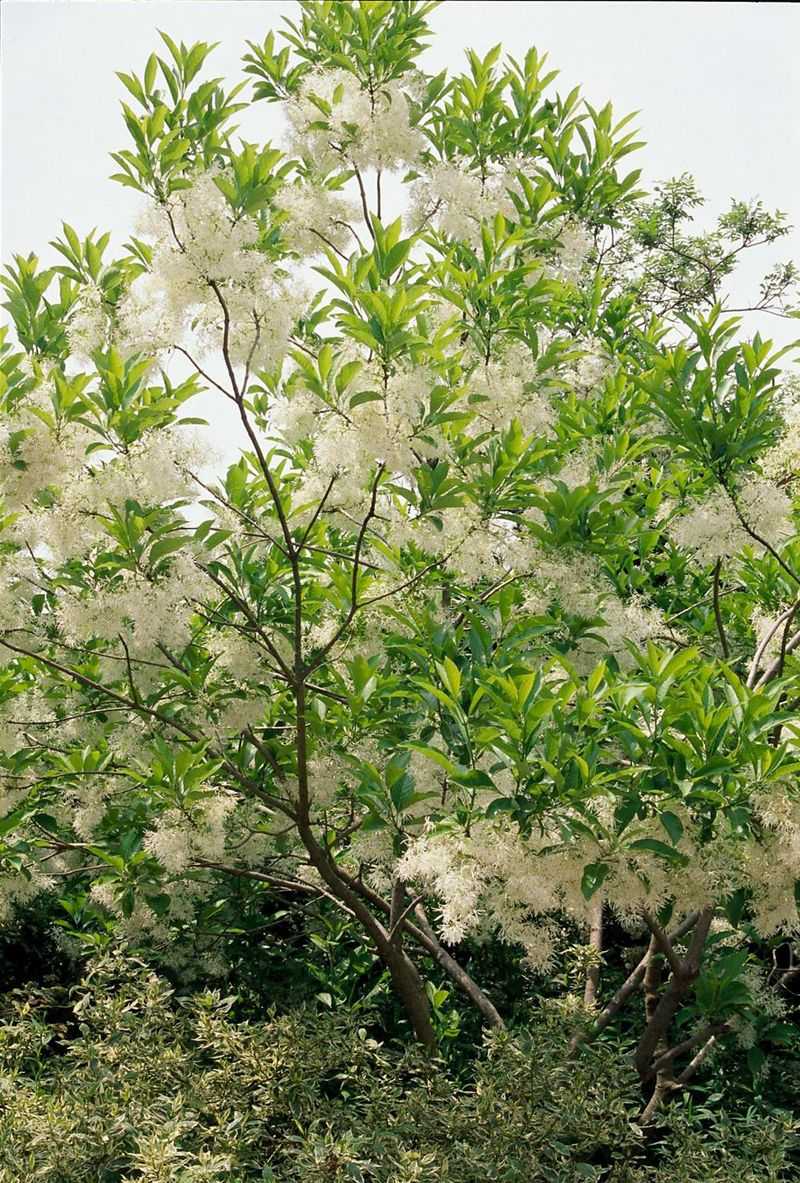
Most specimens mature at somewhere between 12 and 20 feet tall with a similar spread, making it a genuinely manageable choice for the smaller lots that define many Georgia suburbs and urban neighborhoods.
That moderate size opens up planting options that larger trees simply do not allow. Fringe tree can work well near patios, along driveways, beside fences, or as a focal point in a mixed border garden.
Because it grows slowly, homeowners have more time to shape the surrounding landscape before the tree dominates the space.
Slow growth also tends to mean denser, stronger wood that holds up better in Georgia’s occasional ice storms and summer thunderstorms.
Fringe tree can be grown as a large shrub or trained into a small multi-stem tree, giving Georgia gardeners flexibility depending on their landscape goals.
For front yards with limited depth or side yards with tight clearances, that adaptability is genuinely useful.
It fills a size niche that many flowering trees miss, sitting comfortably between a large shrub and a full-canopy shade tree. Georgia homeowners with modest-sized properties will find it a natural fit.
4. Less Pruning Needed Compared To Many Popular Trees
Walk through almost any Georgia neighborhood in late winter and you will likely spot crape myrtles that have been cut back to thick, knobby stubs.
Horticulturists call this practice crape murder, and it remains frustratingly common despite years of public education campaigns against it.
The habit often starts because trees outgrow their space or homeowners feel pressure to tidy things up during the dormant season. Fringe tree rarely creates that temptation.
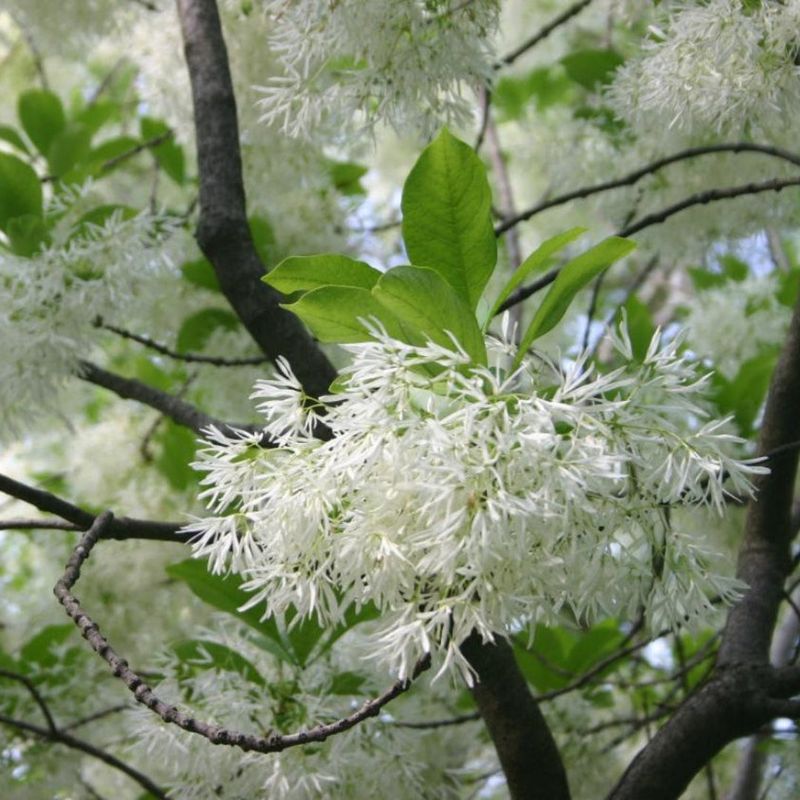
Because fringe tree grows slowly and maintains a naturally rounded, open form, it typically needs very little corrective pruning. Light shaping to remove crossing branches or improve airflow is usually all that is required, and even that can be done infrequently.
Georgia gardeners who are tired of spending weekends with a saw can genuinely appreciate a tree that mostly takes care of its own structure over time.
Minimal pruning also means the tree retains its natural branching pattern, which contributes to its graceful, slightly informal appearance.
That natural silhouette is part of what makes fringe tree look so at home in Georgia landscapes, especially in settings that lean toward a woodland or cottage garden aesthetic.
For homeowners who want seasonal beauty without a high-maintenance pruning schedule, fringe tree offers a low-intervention approach that feels refreshing compared to the more demanding routines that come with many popular ornamental trees in the Southeast.
5. Well Suited To Georgia Heat And Humidity
Georgia summers are not gentle. Temperatures regularly climb into the mid-90s, humidity stays high for months, and rainfall can be unpredictable, swinging between soggy stretches and dry spells that stress plants that are not well-adapted.
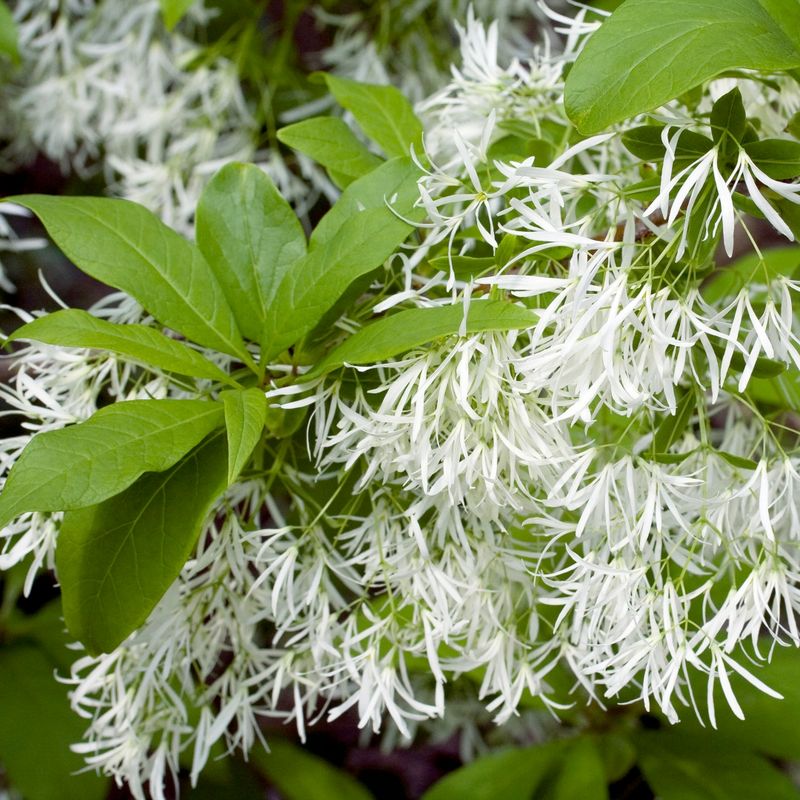
Many ornamental trees struggle in these conditions, showing leaf scorch, root stress, or increased vulnerability to pests. Fringe tree handles Georgia summers with considerably more composure.
As a native of the southeastern United States, Chionanthus virginicus is accustomed to the region’s climate patterns.
It tolerates both moist and moderately dry soils once established, which is a practical advantage in a state where summer rainfall is not always reliable.
The tree’s deep root system helps it access moisture during dry stretches, reducing the need for supplemental irrigation in established plantings.
Fringe tree also shows good resistance to many of the common foliar diseases that thrive in Georgia’s humid conditions.
Powdery mildew, which can be a recurring issue on crape myrtles and other ornamentals, is not a significant concern with fringe tree under normal growing conditions.
For Georgia gardeners who have watched other ornamental trees struggle through August looking ragged and stressed, fringe tree’s ability to maintain its appearance through the hottest months is a meaningful advantage.
It keeps the landscape looking respectable even when the weather is at its most demanding.
6. A Strong Choice For Pollinators And Wildlife
Spring in Georgia brings out pollinators in waves, and flowering trees that bloom early in the season play an outsized role in supporting them.
Fringe tree blooms at a time when native bees, honeybees, and early butterflies are actively foraging but food sources are still relatively limited.
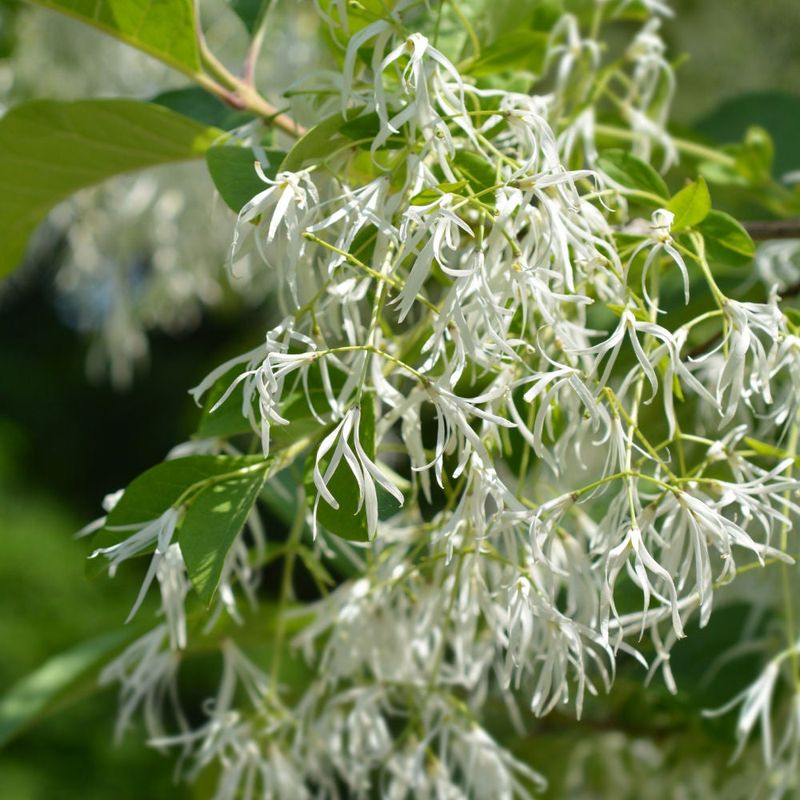
The tree’s fragrant white flowers attract a noticeable variety of pollinators during its bloom window, making it a genuinely useful addition to any Georgia yard with wildlife in mind.
Beyond pollinators, female fringe trees produce clusters of small, olive-like blue-black fruits in late summer that birds find appealing.
Species such as mockingbirds, catbirds, and various thrushes have been observed feeding on fringe tree fruits in the Southeast.
That fruit production adds ecological value that extends well past the spring bloom season and gives the tree a role in the landscape that goes beyond ornamental appearance.
Native insects also rely on fringe tree as a host plant to varying degrees.
Research from entomologist Doug Tallamy and others working in native plant ecology has highlighted how native trees support far more insect biodiversity than non-native ornamentals.
For Georgia homeowners who want a yard that contributes to local food webs rather than just looking attractive, fringe tree is a meaningful choice. It connects beauty with ecological purpose in a way that few ornamental trees manage as naturally.
7. Where Fringe Tree Grows Best In Georgia
Knowing where to plant a tree makes a significant difference in how well it performs over time. Fringe tree is adaptable, but it has clear preferences that Georgia gardeners should keep in mind when choosing a planting site.
Across most of Georgia, it performs well in full sun to partial shade. In the warmer, southern parts of the state, afternoon shade can help the tree stay comfortable during the most intense summer heat.
Soil moisture is an important consideration. Fringe tree naturally grows near streams and in moist woodland settings, so it appreciates soil that retains some moisture without becoming waterlogged.
Georgia’s clay soils, which hold water reasonably well, can actually work in the tree’s favor as long as drainage is adequate. Amending heavy clay with organic matter at planting time helps establish good root conditions from the start.
In the Georgia Piedmont and mountain regions, fringe tree tends to thrive with relatively little intervention once established.
In the coastal plain and southern Georgia, selecting a site with some afternoon shade and consistent moisture will give the tree the best chance to settle in well.
It works effectively as an understory tree beneath taller hardwoods, as a standalone specimen in a lawn, or as part of a naturalized planting along a property edge.
Location flexibility is one of the tree’s practical strengths for Georgia landscapes.
8. What To Know Before Planting Fringe Tree
Getting a fringe tree off to a good start involves a few straightforward steps that make a real difference in how quickly it establishes.
Spring planting works well across Georgia, giving the tree a full growing season to develop its root system before facing its first winter.
Fall planting is also a reasonable option in most parts of the state, as cooler temperatures reduce transplant stress and roots can continue growing while the air cools down.
Watering during the first one to two years is the most important task after planting. Even though fringe tree becomes reasonably drought-tolerant once established, young trees need consistent moisture to develop a strong root system.
A slow, deep watering once or twice per week during dry stretches is more beneficial than frequent shallow watering.
Applying a two to three inch layer of mulch around the base, kept away from the trunk, helps retain soil moisture and moderate soil temperature.
One thing worth knowing before purchasing is that fringe tree is dioecious, meaning male and female flowers appear on separate trees. Female trees produce the decorative blue-black fruits in late summer, which many gardeners find appealing.
Male trees tend to have slightly showier flower clusters. If fruit production and wildlife value are priorities, selecting a female tree or planting both is worth considering.
Most reputable nurseries in Georgia can help identify what they have in stock.
9. Fringe Tree Compared To Crape Myrtle
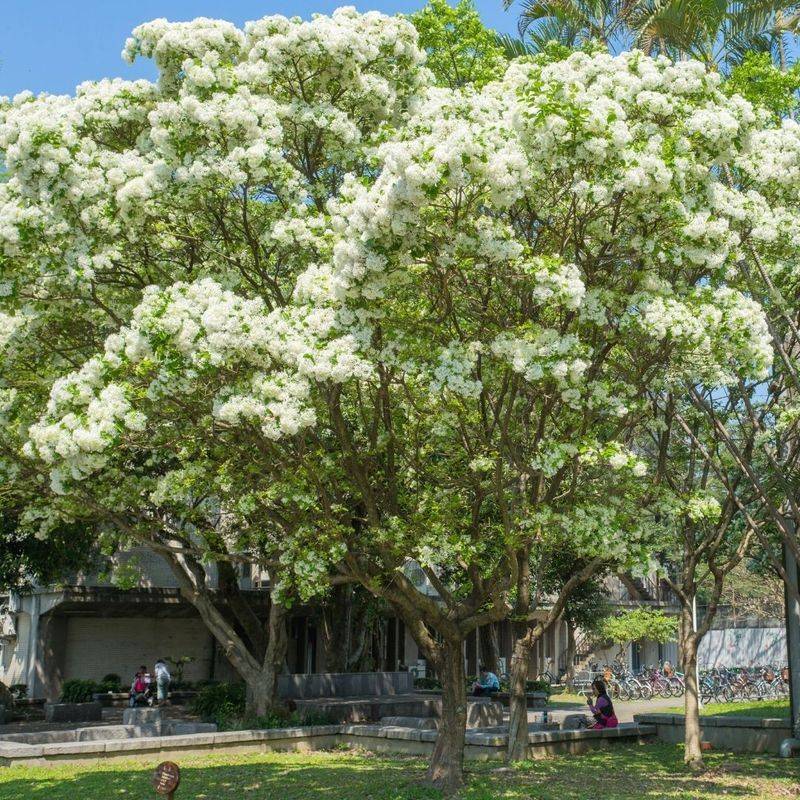
Comparing fringe tree and crape myrtle side by side reveals two trees with genuinely different strengths. Crape myrtle blooms in summer with bold, long-lasting color in shades of pink, red, white, and purple.
Fringe tree blooms in spring with softer, more understated white flowers that carry a light fragrance. Neither tree is objectively superior, but they serve different aesthetic roles in a Georgia landscape.
One practical difference worth considering is maintenance. Crape myrtle, especially when the wrong variety is planted in a confined space, often invites heavy pruning that compromises the tree’s natural form and long-term health.
Fringe tree’s slower growth and naturally tidy habit means it rarely demands that kind of intervention. For homeowners who prefer a lower-maintenance routine, that distinction matters.
Pest and disease pressure also differs between the two. Crape myrtle bark scale, an invasive insect pest that has spread across much of Georgia in recent years, has become a significant concern for many homeowners.
Fringe tree does not face the same pest pressure and has fewer documented disease issues under normal Georgia growing conditions.
If ecological value is part of the decision, fringe tree’s native status gives it a clear advantage in supporting local wildlife.
For Georgia gardeners ready to try something beyond the familiar, fringe tree is a compelling, well-grounded choice worth planting.