This Pruning Mistake Can Ruin Georgia Crape Myrtle
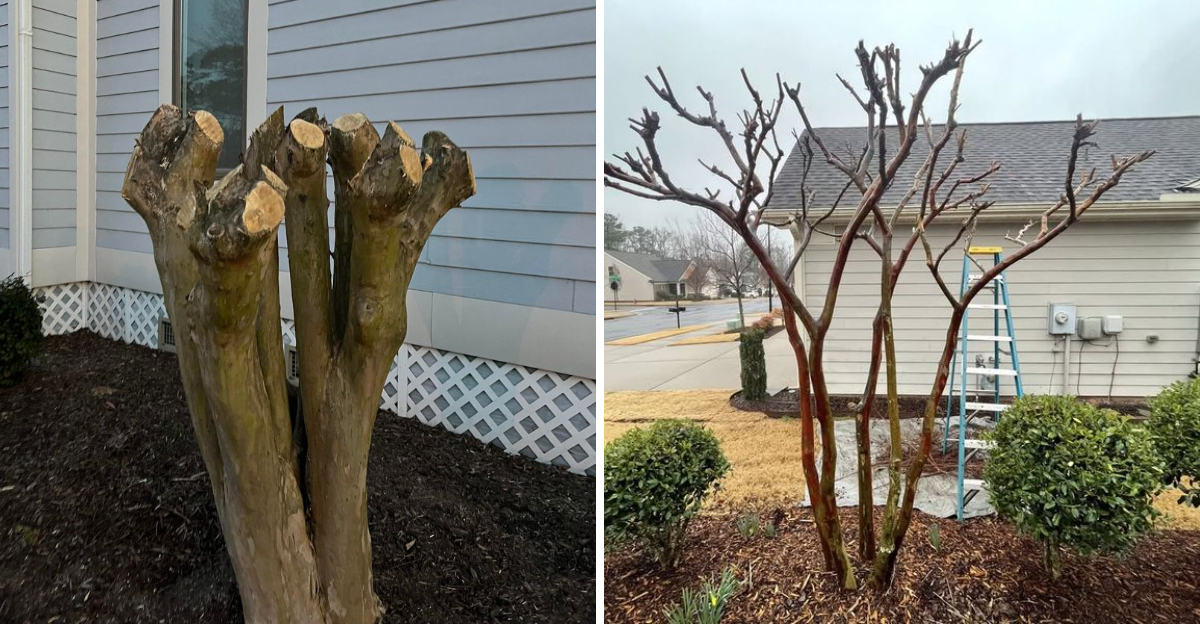
Crape myrtles in Georgia can look strong from a distance, yet one wrong cut can change how the entire tree grows for the rest of the season.
Branches that seem harmless can affect shape, flowering, and overall balance once new growth begins to push through.
Many follow the same pruning habits each year without a second thought, especially when the tree still carries that familiar winter structure. What feels like routine care can lead to results that look off later, with uneven growth or fewer blooms than expected.
Each cut shapes how the tree develops, and small decisions at the wrong point can create problems that stay visible long after spring passes. The tree does not always show the impact right away, which makes the mistake easy to repeat.
Knowing what to avoid makes a clear difference in how crape myrtles look and perform through the season.
1. Topping Is The Pruning Mistake That Ruins Crape Myrtle Shape
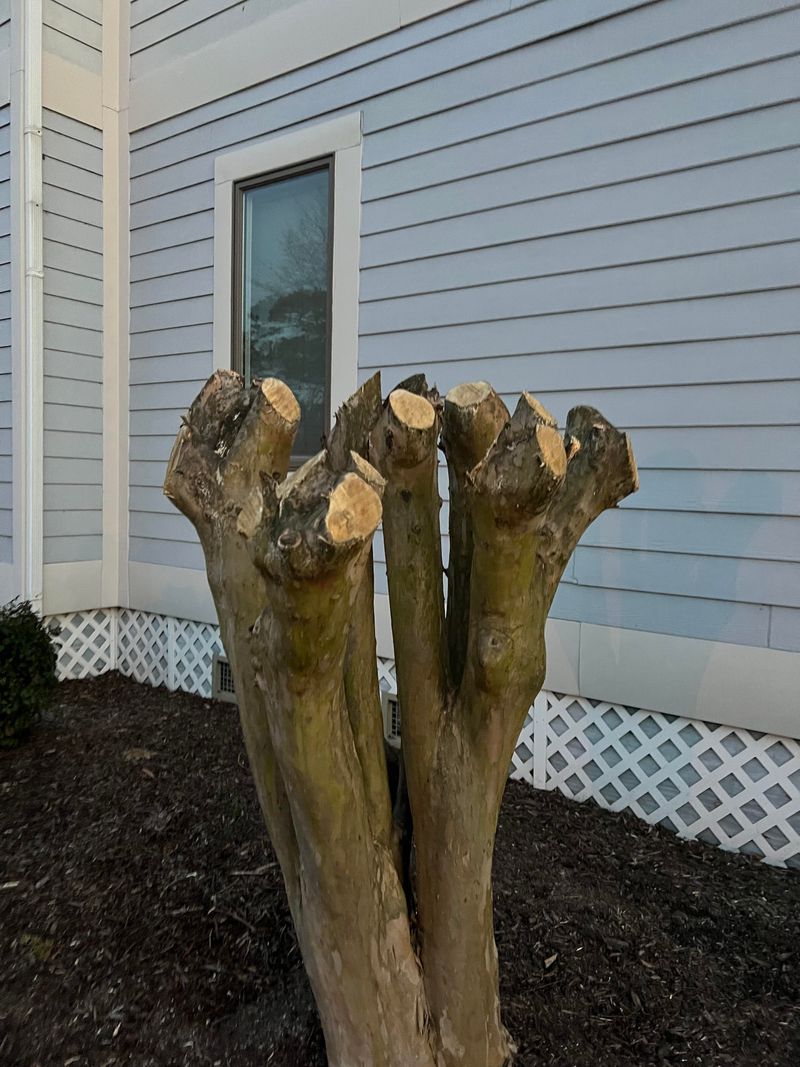
Topping a crape myrtle is probably the single most damaging thing you can do to one of these trees. Across Georgia, you can spot topped crape myrtles on nearly every block — thick trunks cut straight across at five or six feet, leaving nothing but blunt stubs pointing at the sky.
It looks dramatic, and a lot of people assume it must be helping the tree somehow. It is not.
When you top a crape myrtle, you remove the natural branching structure that took years to develop. What grows back is a cluster of weak, fast shoots that sprout from the cut ends.
Those shoots are not structurally sound. They are skinny, they grow at awkward angles, and they tend to flop over under the weight of summer blooms.
Over time, those cut ends turn into thick, rounded knobs that look nothing like a healthy tree. Professionals call them knuckles, and once they form, they are hard to undo without significant effort.
The tree’s silhouette gets permanently altered, and no amount of pruning later can fully restore the original graceful form.
Some Georgia homeowners top their crape myrtles because they think the tree is getting too tall or too wide. But there are better ways to manage size without destroying the shape.
2. Why Topping Causes Weak, Fast Growth
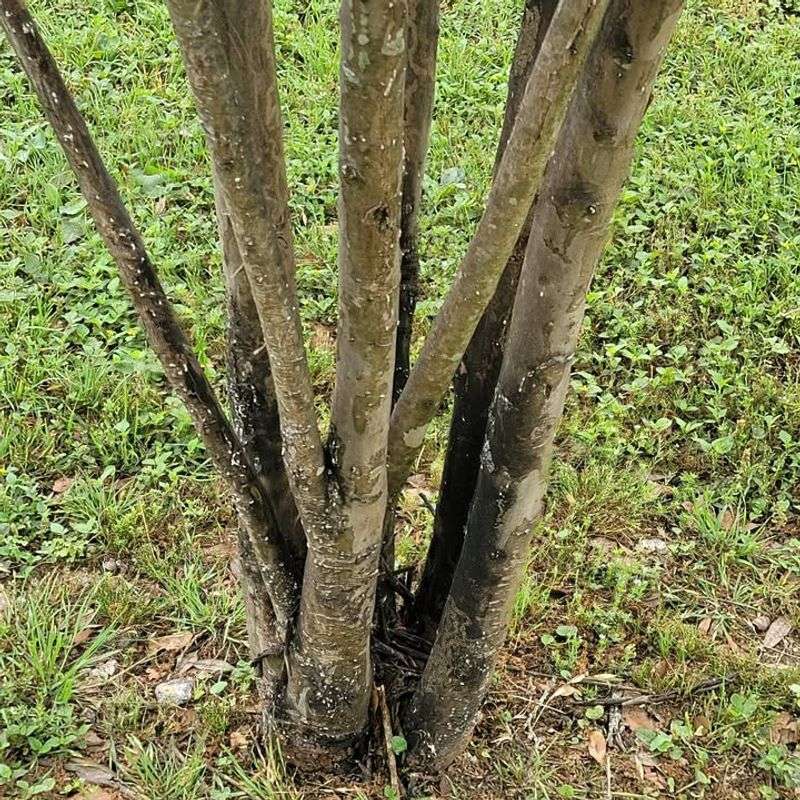
Right after a crape myrtle gets topped, something predictable happens — it pushes out a burst of new growth from every cut surface. Sounds positive at first, but the speed and volume of that regrowth is actually a red flag.
Shoots that grow that fast tend to have weak cell structure and poor attachment to the parent branch.
In Georgia summers, those fast-growing shoots get loaded down with flower clusters. Without a solid branch structure underneath them, they bend, split, and sometimes snap entirely during afternoon thunderstorms.
You end up with a tree that looks messy by midsummer and potentially hazardous in a strong wind.
Another problem is that all that rapid shoot production pulls energy away from root development and overall tree health. Instead of building a stronger root system or thickening established branches, the tree keeps redirecting resources into replacing what was cut.
Your Georgia Garden Changes Every Week. Your Plan Should Too.
Gardening in Georgia changes quickly throughout the season. Every Friday you’ll receive a simple weekly plan showing exactly what to plant, prune, fertilize, harvest, and protect so you never miss the right timing.
That cycle repeats every year if the topping continues.
Weak new shoots also tend to be more attractive to aphids and other soft-bodied insects. Tender, fast-growing tissue is easier for insects to feed on than mature wood.
Georgia gardeners who top their crape myrtles repeatedly often notice heavier pest pressure in summer, though that varies depending on the yard, the weather, and surrounding plants.
3. How To Fix Overgrown Knuckles
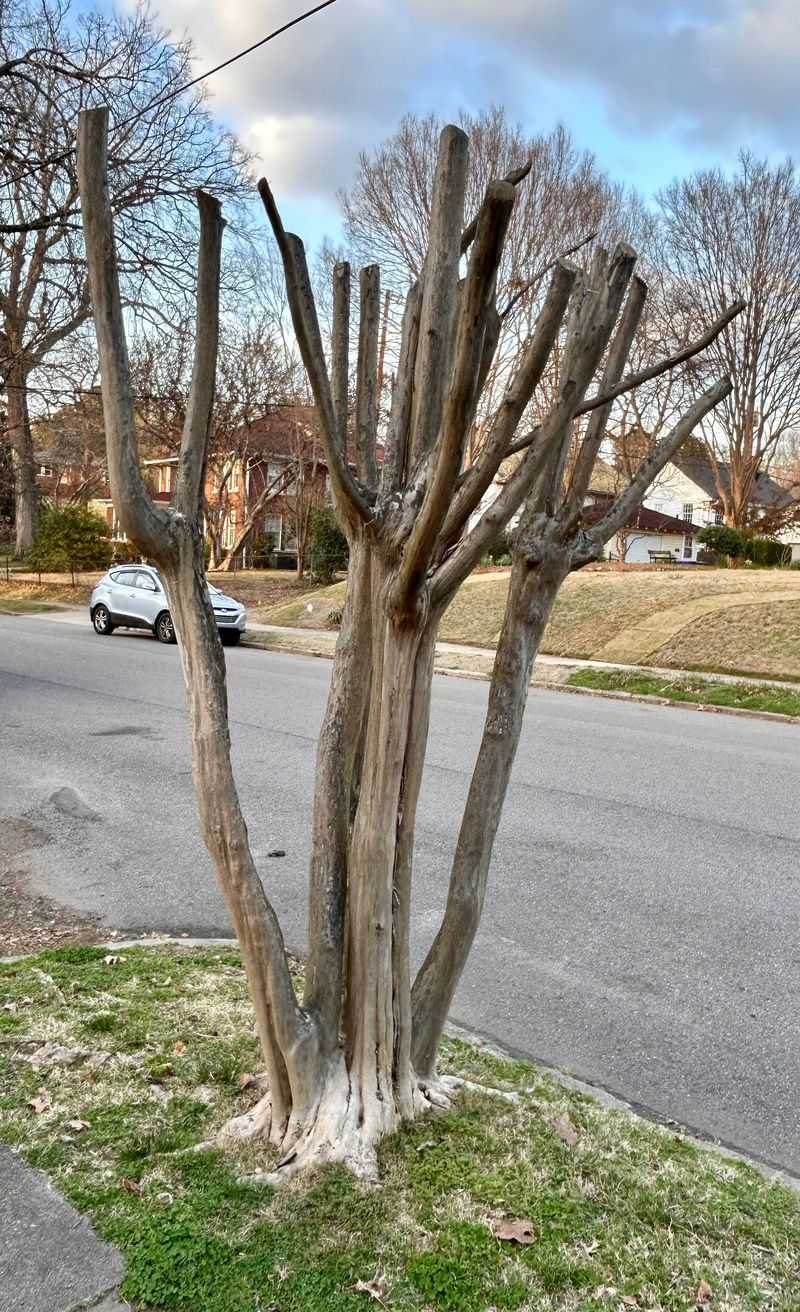
Knuckles are those swollen, rounded lumps that form at the top of a topped crape myrtle trunk. Every year the tree gets cut back to the same spot, the knob gets a little bigger and a little uglier.
Georgia yards are full of crape myrtles carrying years of these cuts, and fixing them takes patience more than anything else.
One approach is gradual reduction. Instead of cutting back to the knuckle again, you select one or two of the strongest shoots growing from it and let them develop into proper branches.
Over two or three seasons, those shoots can grow thick enough to look like natural wood. You eventually remove the knobbed portion by cutting just below it, leaving the new branch in place.
That process does not happen overnight. Expecting a knuckled crape myrtle to look polished after a single growing season sets you up for frustration.
Realistic progress looks like a slightly less crowded canopy each year and gradually smoother branch unions as the selected shoots mature.
If the knuckles are very large and the tree has been topped for many years, full restoration might not be achievable. In those cases, the focus shifts to keeping the tree as healthy as possible and avoiding any further topping.
4. Thin Instead Of Cutting Everything Back
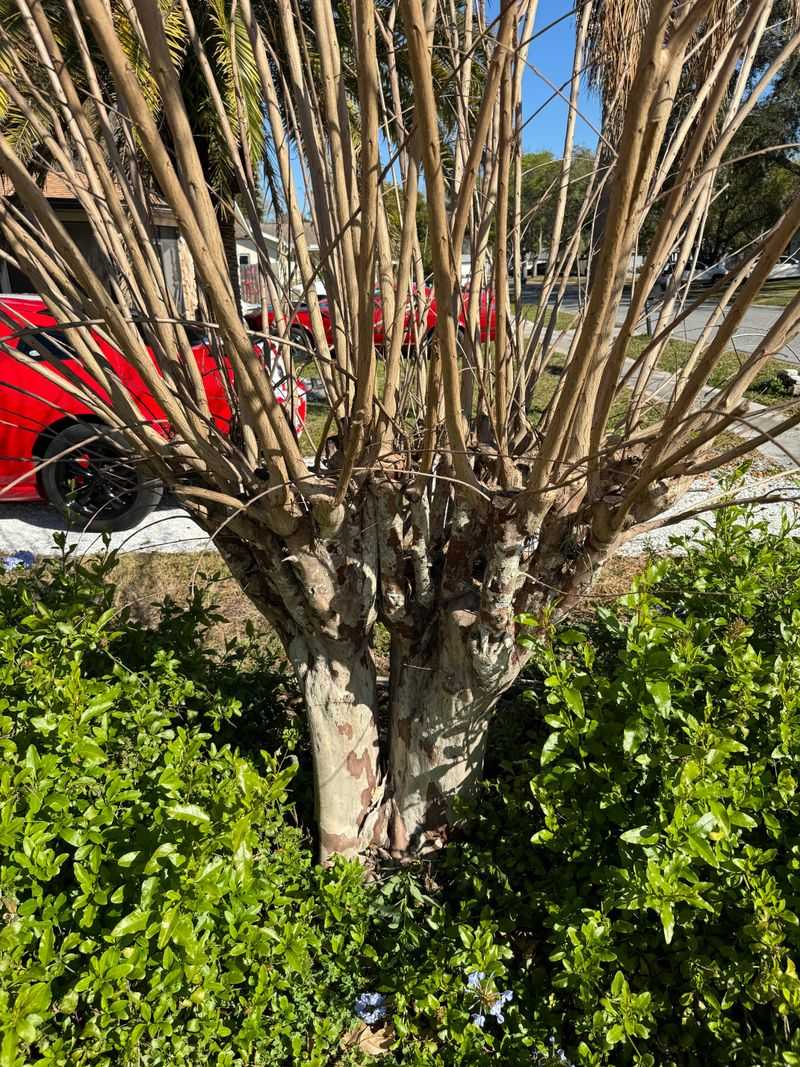
Thinning is the approach that actually improves a crape myrtle without wrecking its form.
Rather than chopping everything back to a uniform height, you go inside the canopy and remove specific branches — the ones crossing each other, rubbing against stronger wood, or heading back toward the center of the tree.
Starting from the bottom of the trunk is usually the right move. Basal shoots, which are the thin stems that sprout from the base of the tree, should come off clean.
Suckers that grow from the roots need to go too. Clearing those out gives the main trunks room to breathe and puts more energy into the upper canopy where the blooms will appear.
Moving up into the canopy, look for branches that are clearly weaker than the ones around them. If two branches are crossing and rubbing, remove the one with the worse angle or the one growing inward.
You are not trying to reduce overall size — you are just cleaning up the structure so air and light can move through more freely.
Georgia’s humid summers mean that dense, crowded canopies hold moisture longer after rain. That moisture can encourage powdery mildew and other fungal issues on the foliage.
Thinning does not eliminate that risk entirely, but it does reduce it by improving airflow.
5. Make Clean Cuts In The Right Spots
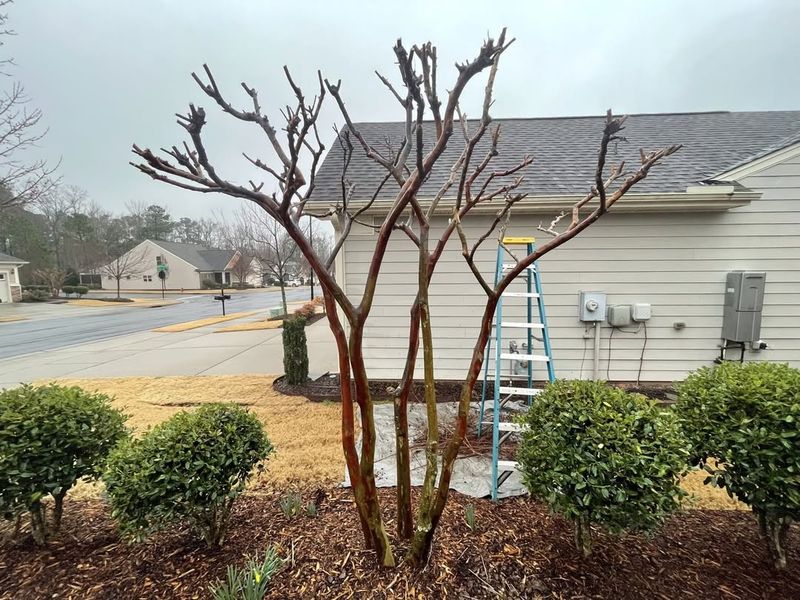
A clean cut sounds like a small detail, but it genuinely affects how well a crape myrtle heals. Ragged cuts from dull blades leave torn tissue that takes longer to close and can invite fungal problems during Georgia’s wet spring weather.
Sharp bypass pruners are worth the investment for this reason alone.
Where you place the cut matters just as much as how clean it is. Cutting just above an outward-facing bud encourages the new growth to angle away from the center of the tree.
That keeps the canopy open and prevents new shoots from immediately crossing each other and creating the same crowded mess you were trying to fix.
Avoid cutting flush against the branch collar, which is the slightly swollen area where one branch meets another. Leaving that collar intact helps the tree seal over the wound more efficiently.
Cutting into it removes tissue the tree uses in that healing process, which slows recovery.
Stub cuts are the other common error. Leaving a long stub past the bud or branch union does not give the tree a head start — it leaves excess wood that dries out, can crack, and may become an entry point for insects.
6. How Much To Remove Without Hurting Blooms
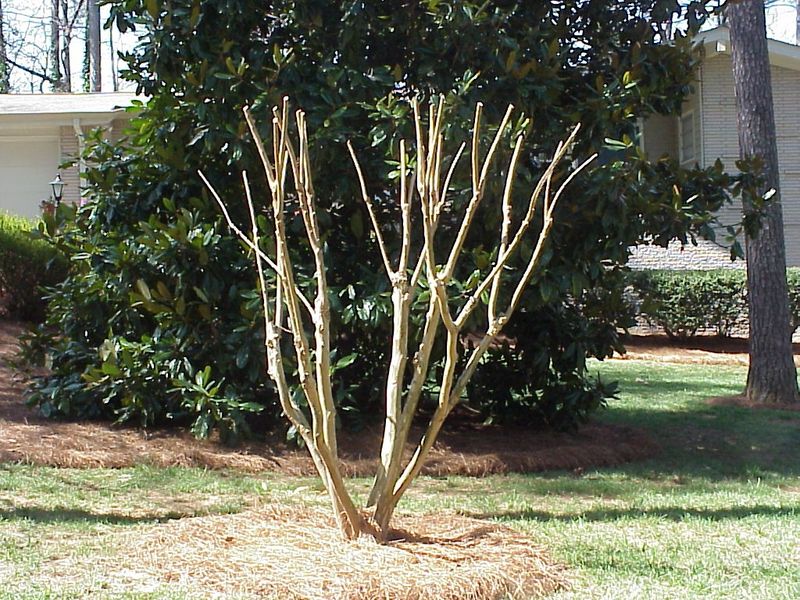
Removing too much at once is a real concern with crape myrtles. A widely cited guideline from horticulture professionals is to avoid taking off more than about 25 percent of the canopy in a single pruning session.
That number gives you a practical limit to work within, though individual trees and conditions vary.
Crape myrtles bloom on new growth produced during the current season. Heavy pruning does not automatically reduce flowering — in fact, some modest pruning can stimulate vigorous new shoots that carry large bloom clusters.
The problem comes when so much wood is removed that the tree spends its early energy on recovery rather than flowering.
Georgia’s growing season is long enough that a crape myrtle pruned correctly in late February or early March will still have plenty of time to push new growth and set flower buds before summer. Pruning too late, after growth has already started, is a bigger risk to bloom timing than light pruning done at the right moment.
If you find yourself removing large healthy branches just to reduce overall size, that is a sign the variety may be too large for the space it is planted in.
Matching the right crape myrtle variety to the available space from the beginning is the most effective way to avoid over-pruning.
7. What Proper Pruning Should Look Like By Spring
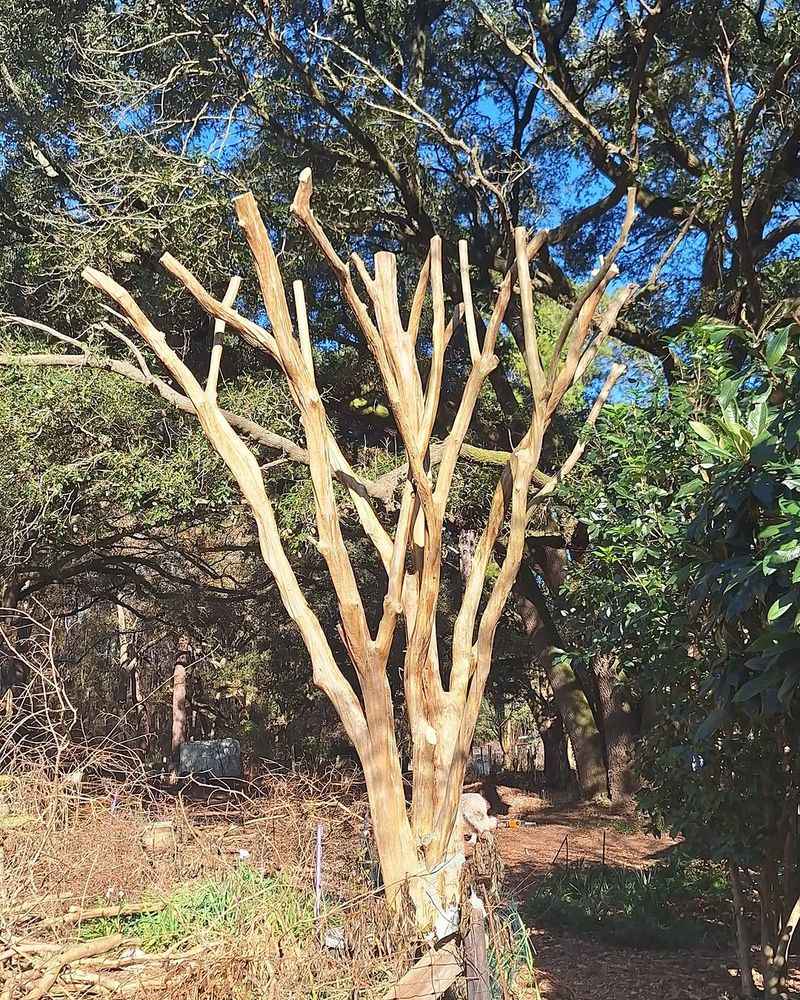
By the time spring arrives in Georgia, a properly pruned crape myrtle should not look drastically different from how it looked in fall. That is actually the goal.
Good pruning is subtle — you notice what was removed mostly by how clean and open the structure feels, not by how much shorter or smaller the tree looks.
Smooth branch unions and a clear trunk line from base to canopy are good signs. If you can trace each main trunk upward without hitting a knobby flat cut, the tree has been handled correctly.
New buds will begin to swell along those branches in late February or March depending on where you are in Georgia, and they will do so from points that make structural sense.
Basal suckers should be gone. Interior crossing branches should be reduced.
The canopy should have enough space between branches that light can filter through without major gaps. None of that requires dramatic intervention — it usually comes from two or three hours of careful selective cutting done once a year.
Crape myrtles that get this kind of consistent, light annual attention tend to build better form over time.
The trunks develop attractive smooth bark, the branch angles become more defined, and the bloom clusters in July and August appear on wood that can actually hold their weight without drooping.