8 Long-Blooming Annuals That Last Through Georgia’s Summer
Georgia summer can wear down a flower bed fast, especially once heat and humidity settle in and early blooms start to fade out. What looked full and colorful in late spring can turn uneven, with gaps and dull patches showing up sooner than expected.
Annuals that hold their blooms through those conditions make a noticeable difference. Color stays steady, plants keep their shape, and the garden does not lose its impact halfway through the season.
Not every annual can handle that kind of pressure, which is why some beds stay vibrant while others struggle to keep up.
Choosing the right ones helps maintain a consistent look, so the garden continues to feel full and lively even during the hottest stretch of summer.
1. Zinnias Keep Blooming Strong Through Heat
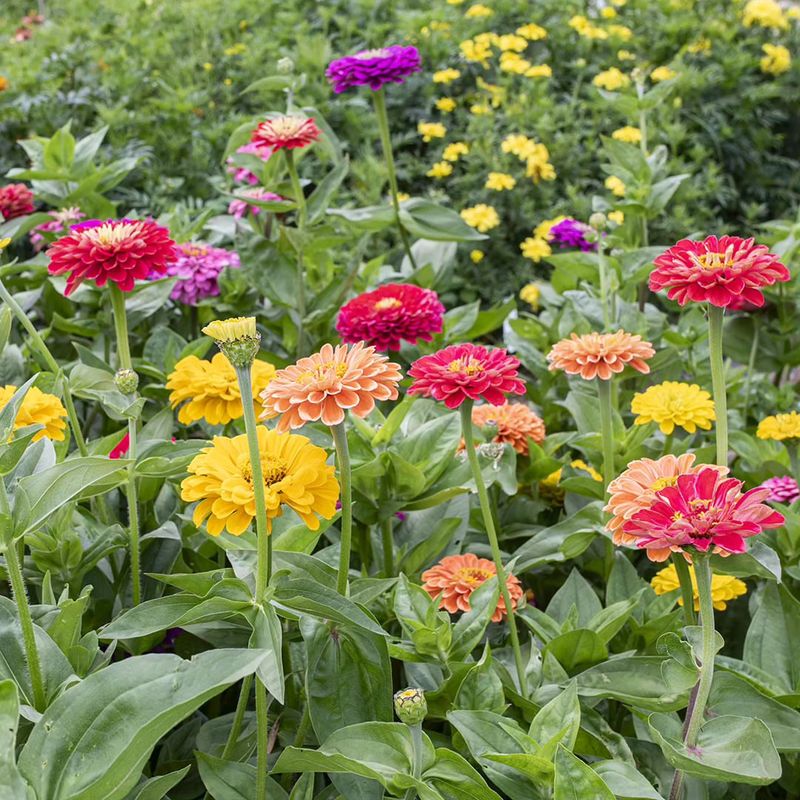
Zinnias are one of the toughest summer flowers you can grow in Georgia, and they prove it every single year. Plant them in full sun, give them decent drainage, and they will pump out blooms from June straight into October without much fuss.
Few annuals can match that kind of staying power under Georgia’s punishing heat.
Colors range from deep red and coral orange to soft lavender and creamy white, so mixing varieties gives you a garden that looks genuinely lively. Deadheading spent flowers encourages fresh ones to open faster, though zinnias will still bloom even if you skip a week or two.
Spacing them well helps with airflow, which can reduce the powdery mildew that sometimes shows up in humid Georgia conditions.
Direct sowing seeds into warm soil works well here since Georgia’s ground heats up quickly in spring. Transplants work too if you want a head start.
Either way, expect flowers within about eight weeks of planting. Varieties like Benary’s Giant and Profusion series tend to perform especially well in the heat.
Zinnias also attract butterflies, which is a bonus for anyone who enjoys watching pollinators move through the yard on a summer afternoon.
Zinnias handle Georgia heat with ease, blooming nonstop from early summer into fall with minimal care.
They grow quickly from seed, come in a wide range of colors, and attract butterflies while staying reliable even in tough conditions.
2. Cosmos Continue Flowering With Little Maintenance
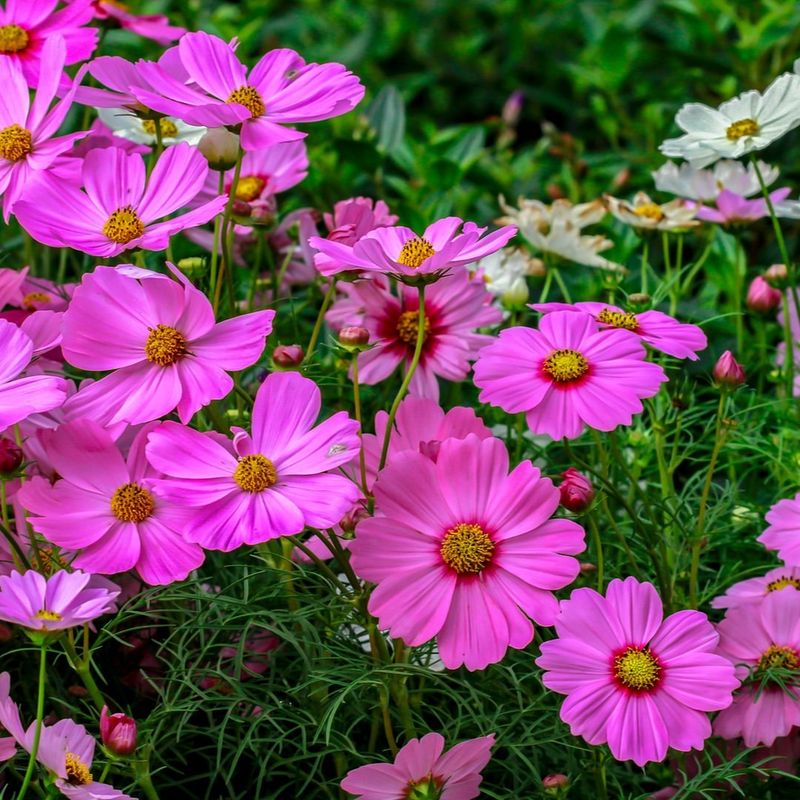
Cosmos have a kind of relaxed charm that most high-maintenance flowers lack entirely. Tall, feathery stems topped with daisy-like blooms in pink, white, magenta, and bicolor combinations keep appearing all summer long, even in Georgia’s intense heat.
Interestingly, cosmos actually prefer lean soil — add too much fertilizer and you get more leaves than flowers.
Direct sowing into a sunny bed after the last frost in Georgia is the easiest approach. Seeds sprout quickly in warm soil, and plants establish faster than most people expect.
Cosmos can handle dry spells reasonably well, though a deep watering once or twice a week during the driest stretches keeps them producing more reliably.
Deadheading old blooms pushes the plant to keep flowering, but cosmos also self-sow freely, meaning next year you might find seedlings popping up without any effort on your part.
Your Georgia Garden Changes Every Week. Your Plan Should Too.
Gardening in Georgia changes quickly throughout the season. Every Friday you’ll receive a simple weekly plan showing exactly what to plant, prune, fertilize, harvest, and protect so you never miss the right timing.
Heights vary by variety — Sensation types reach four feet or more, while Sonata series stays compact around two feet, which works better in smaller Georgia garden beds.
Butterflies and bees visit cosmos regularly, making them a practical choice for anyone trying to support pollinators. They also cut well for bouquets, holding up in a vase for several days without drooping.
Cosmos thrive in Georgia heat with minimal care, blooming nonstop in sunny spots even in poor soil. They reseed easily, attract pollinators, and keep producing flowers all summer with very little effort.
3. Lantana Produces Constant Color In Hot Conditions
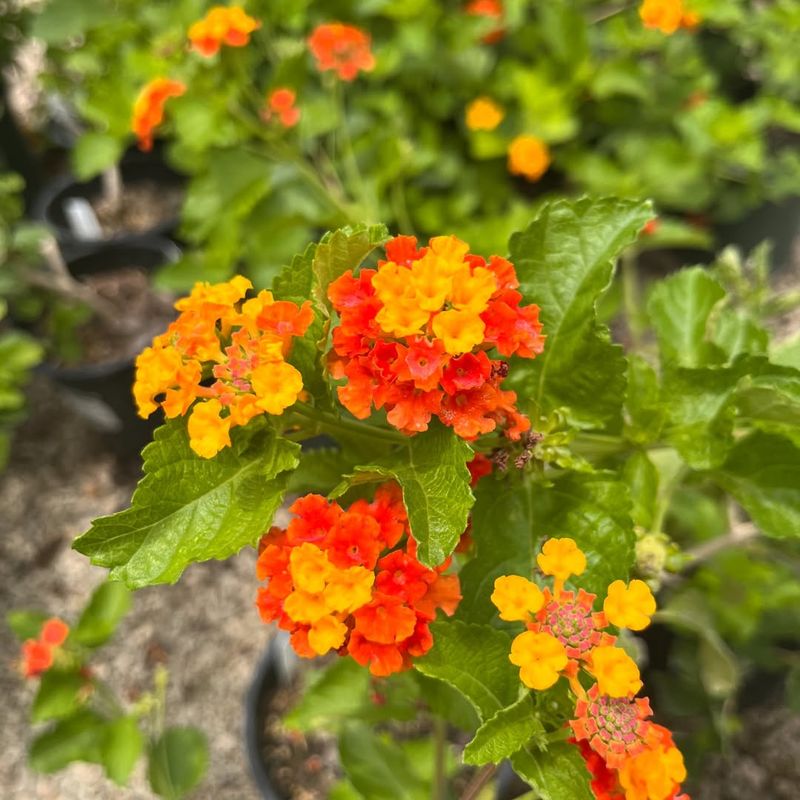
Few plants handle Georgia’s heat as comfortably as lantana. Once temperatures climb into the upper eighties and nineties, lantana seems to shift into high gear rather than slow down.
Clusters of tiny flowers in orange, yellow, red, pink, and purple combinations open continuously, creating dense patches of color that last from late spring well into fall.
Lantana needs full sun and well-drained soil to perform at its best. Wet feet are about the only thing that causes real problems — poor drainage can lead to root issues fairly quickly.
Sandy or loamy Georgia soils suit it well. Established plants handle dry spells better than many other annuals, which is useful during the hot, dry stretches that hit central and south Georgia in late summer.
Butterflies genuinely love lantana. On warm afternoons, you might count several species visiting a single plant within minutes.
Hummingbirds occasionally stop by as well. Pinching back leggy stems encourages denser growth and more flower clusters.
Lantana is treated as an annual in most of Georgia, though plants in the southern part of the state sometimes survive mild winters and return the following spring.
Varieties like Bandana and Luscious series offer compact, full shapes that fit neatly into beds, borders, or large containers without taking over the space.
Lantana thrives in Georgia heat, blooming nonstop through the hottest months while handling dry spells with ease.
It loves full sun, attracts butterflies, and keeps strong color in the garden with very little care.
4. Vinca Handles Heat And Keeps Blooming Without Pause
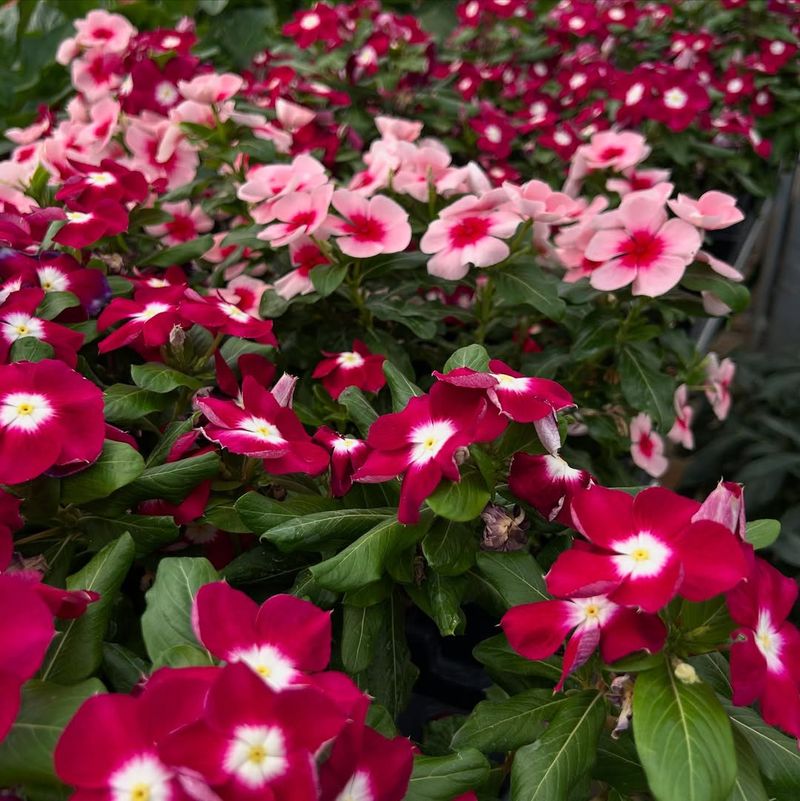
Catharanthus roseus — commonly called vinca or annual vinca — is one of Georgia’s most reliable summer bloomers, and it earns that reputation honestly.
Unlike many flowers that slow down when temperatures push past ninety degrees, vinca keeps opening fresh flowers without missing a beat.
The blooms come in red, pink, white, coral, and bicolor shades, and they cover the plant so thoroughly that the foliage beneath is barely visible.
Full sun and well-drained soil are the main requirements. Vinca dislikes soggy conditions, so raised beds or slopes in Georgia yards often suit it better than low spots where water collects after summer storms.
Watering at the base rather than overhead reduces the chance of fungal issues, which can occasionally appear during humid Georgia stretches.
One of vinca’s practical advantages is that it does not require deadheading. Spent blooms drop cleanly on their own, and new ones open continuously without any intervention.
Spacing plants about twelve inches apart gives them room to fill in without crowding, and they typically form a tidy mound about a foot tall by midsummer.
Cora and Titan series varieties have shown strong disease resistance in southeastern trials, making them solid choices for Georgia gardeners dealing with the combination of heat and humidity that defines summer here.
Vinca thrives in Georgia heat, blooming nonstop without deadheading while handling dry conditions better than most flowers.
5. Marigolds Flower Steadily Even In High Temperatures
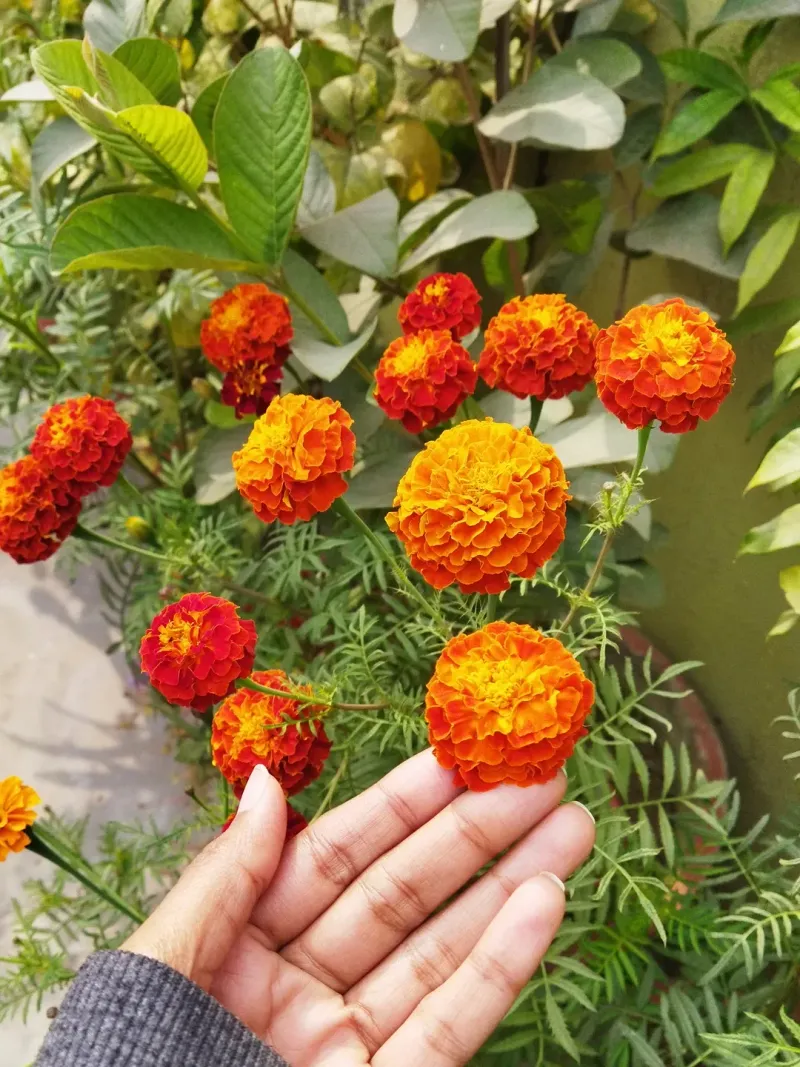
Walk through almost any Georgia garden in July, and you will probably spot marigolds holding their own while other flowers look stressed. African marigolds and French marigolds both perform well here, though they behave a bit differently.
African types grow taller with large, round blooms, while French marigolds stay compact and cover themselves with smaller flowers all season long.
Marigolds prefer full sun and average soil. Overly rich soil tends to push leafy growth at the expense of flowers, so there is no need to go heavy on fertilizer.
Deadheading spent blooms consistently keeps production going and prevents the plant from putting energy into seed development too early in the season.
One practical benefit that Georgia gardeners appreciate is marigolds’ reputation for deterring certain garden pests.
Whether planted near vegetables or in flower beds, they seem to discourage some insects from settling nearby, though results vary and they are not a guaranteed pest solution.
Heat does not bother marigolds much, but prolonged stretches without water can cause bloom production to slow. A deep watering two or three times a week during dry Georgia summers keeps them going strong.
Signet marigolds, with their feathery foliage and small flowers, also hold up well and add a slightly different texture to mixed summer plantings.
Marigolds stay strong through Georgia’s summer heat, blooming steadily even when other flowers start to fade.
They handle full sun well, offer some pest resistance, and keep producing with regular deadheading and watering.
6. Cleome Produces Airy Blooms All Season Long
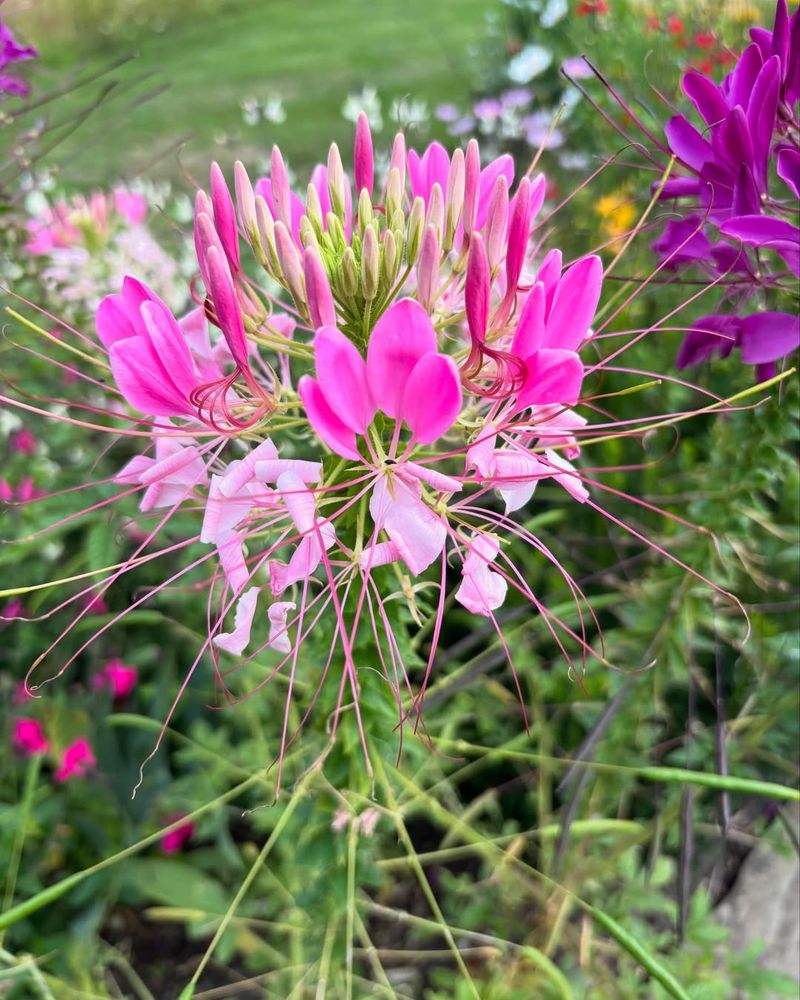
Cleome, sometimes called spider flower, has a look that is hard to mistake for anything else.
Tall stems — sometimes reaching four or five feet — carry clusters of spidery pink, purple, or white flowers that open progressively from the bottom of the cluster upward, keeping the plant in bloom for weeks at a stretch.
In Georgia, cleome typically starts flowering in early summer and continues well into fall.
It handles heat without much complaint, which makes it a practical choice for Georgia’s long, hot season. Direct sowing works best since cleome does not always transplant smoothly.
Scattering seeds in a sunny bed after the last frost date — usually mid-March to early April depending on where in Georgia you are — gives them time to establish before summer heat peaks.
Cleome self-sows aggressively, so expect seedlings to appear in the same spot next year without replanting. Some gardeners see this as a bonus; others prefer to deadhead before seeds fully mature to control where plants appear.
Stems have small thorns, so gloves are useful when working around them. Despite that minor inconvenience, cleome attracts hummingbirds and butterflies reliably, and its vertical height adds structure to beds that shorter plants cannot provide.
Queen series varieties offer good color range and perform consistently well in southeastern summer conditions.
7. Angelonia Maintains Upright Blooms In Summer Heat
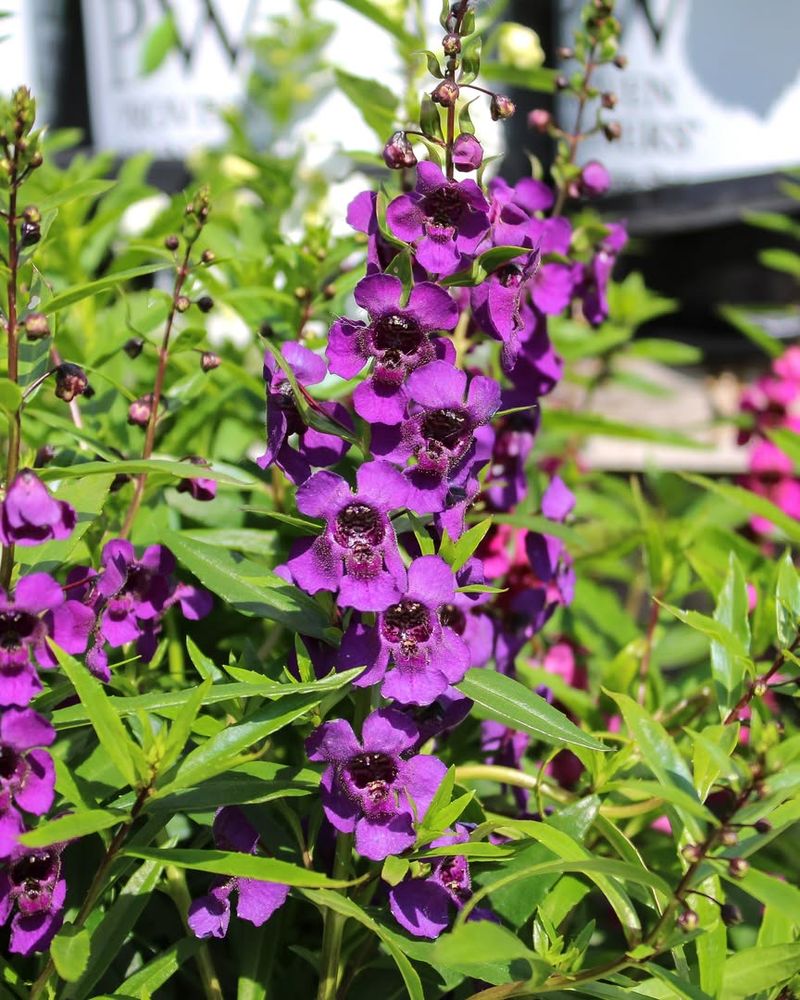
Angelonia gets called the summer snapdragon sometimes, and the comparison makes sense — slender spikes covered in small, orchid-like flowers in purple, pink, white, and bicolor shades give it a refined look that holds up through Georgia’s worst summer heat.
Unlike actual snapdragons, which tend to fade once temperatures climb, angelonia gets more comfortable as summer progresses.
Full sun and good drainage are non-negotiable for strong performance. Angelonia planted in partial shade tends to stretch and produce fewer flowers than plants in direct sun.
Soil does not need to be particularly rich — average garden soil with decent drainage is enough to keep plants healthy and blooming through the season.
Heights range from about ten inches for compact varieties to around two feet for standard types. Serena and Archangel series both perform reliably in Georgia’s heat, and they require minimal deadheading since spent blooms tend to fall away cleanly on their own.
Watering consistently during dry stretches matters more than fertilizing heavily. A light application of balanced fertilizer once or twice during the season is typically enough.
Angelonia also carries a faint, pleasant fragrance — some describe it as slightly grape-like — which is noticeable when you brush against the foliage or walk close by on a calm summer evening in a Georgia garden.
8. Portulaca Thrives In Dry Conditions With Continuous Flowers
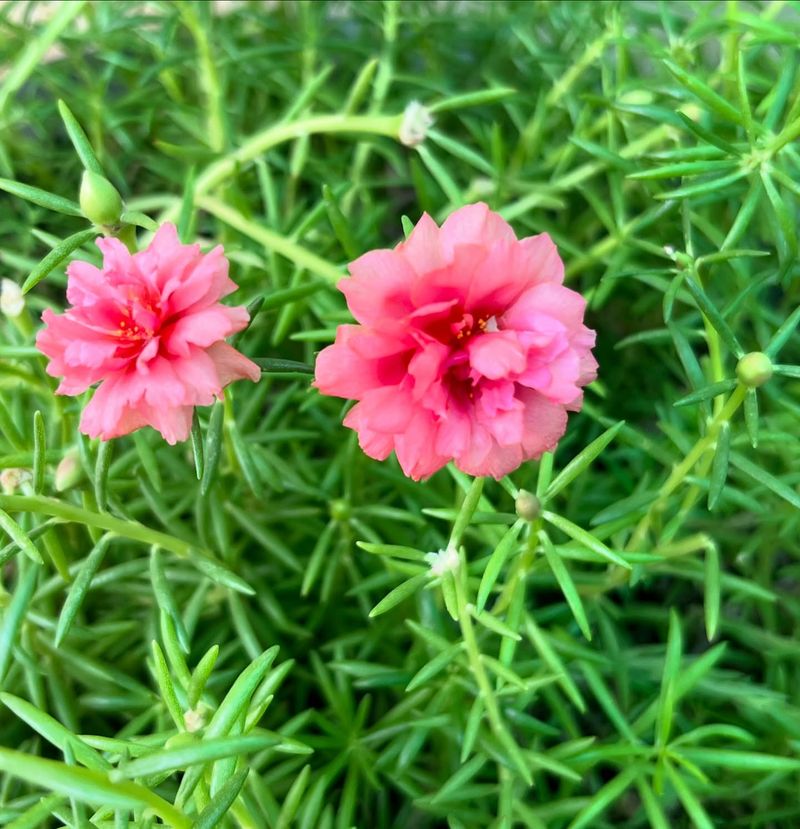
Hot, dry, and slightly neglected — those are conditions that portulaca was practically built for. Also called moss rose, this low-growing annual covers itself in bright, cup-shaped flowers in shades of red, orange, yellow, pink, and white.
In Georgia’s baking summer sun, portulaca does not just survive; it actually puts on a better show than most other plants would manage.
Sandy or rocky soil suits portulaca well, and it handles poor drainage situations far better than the average annual. Overwatering is a more common problem than underwatering with this plant.
If you have a slope, a rocky border, or a spot near pavement that heats up intensely in summer, portulaca fits those conditions naturally. Raised beds with gritty soil also work well.
Flowers tend to open fully in bright sun and close partially on overcast days or in the evening, which is just the plant’s natural rhythm.
Newer varieties like Mojave and Pazzaz series stay open longer than older types, even on cloudy days, which is a practical improvement for Georgia gardeners who want consistent color.
Portulaca spreads as it grows, forming a low mat that fills gaps between pavers or along bed edges. Deadheading is not necessary — the plant manages its own cycle without help, and fresh flowers continue appearing throughout the summer without prompting.