Best Native Shrubs For Western North Carolina Mountain Yards In Spring
There is a moment each spring in the Western North Carolina mountains when everything starts to wake up at once, and it feels like the landscape is inviting you to plant.
Cooler temperatures, acidic soils, and higher elevations create conditions that reward the right choices.
Native shrubs fit naturally into this setting, settling in with less effort and adapting to the rhythms of mountain weather. As the season unfolds, they bring color, fragrance, and activity back into the yard.
For gardeners in Western North Carolina, spring is a great time to work with plants that already belong to the landscape.
1. Flame Azalea Brings Bright Spring Color
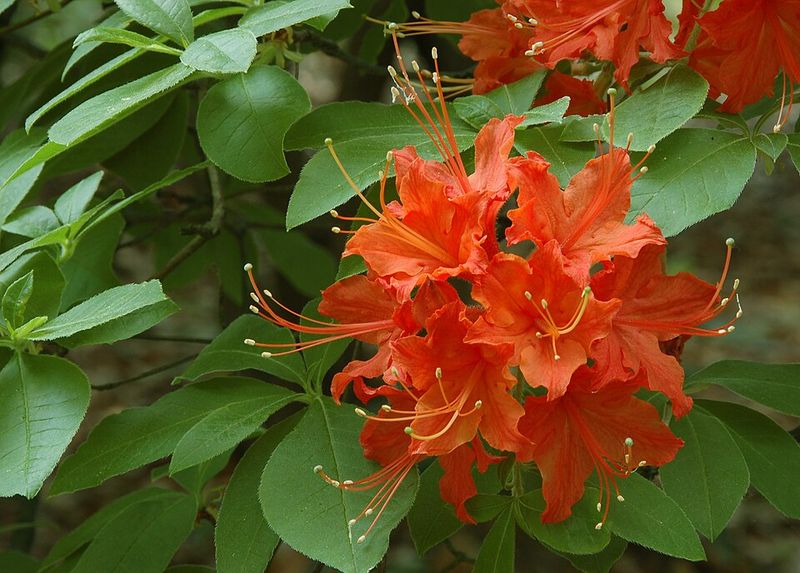
Few sights in the Appalachian mountains rival a hillside covered in Flame Azalea blooms during late spring.
The fiery orange, yellow, and red flowers appear just as the mountain forests are leafing out, creating a show that feels almost theatrical against the green backdrop of Western North Carolina woodlands.
Flame Azalea (Rhododendron calendulaceum) is a deciduous shrub that typically reaches six to eight feet tall at maturity. It thrives in partial shade and prefers well-drained, acidic soils – conditions that are naturally common throughout the mountain region.
Gardeners in Western North Carolina can often plant this shrub without heavy soil amendments, since the native soil chemistry already suits it well.
Bloom time usually falls between late April and early June depending on elevation, meaning higher-elevation yards may enjoy flowers a bit later in the season.
Spacing plants about five to six feet apart gives each shrub room to develop its natural, open form.
Pollinators, including native bees and hummingbirds, actively visit the blooms.
Planting Flame Azalea along a woodland edge or beneath a light tree canopy tends to produce the healthiest results. Consistent moisture during the first growing season helps roots establish, after which the shrub becomes reasonably drought-tolerant.
Its informal branching structure adds year-round character to the landscape even when not in bloom.
2. Catawba Rhododendron Adds Bold Evergreen Blooms
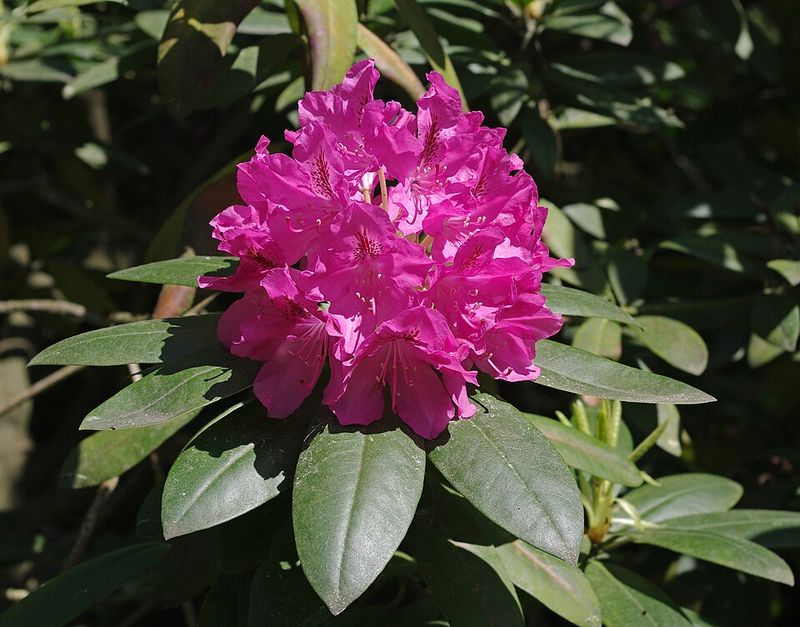
Walk along almost any high-elevation trail in Western North Carolina in late May or early June and you will likely encounter the bold, rosy-purple blooms of the Catawba Rhododendron.
This native evergreen shrub is practically synonymous with the Southern Appalachian mountains, and for good reason – it handles the cold winters, acidic soils, and variable spring weather of the region with remarkable ease.
Catawba Rhododendron (Rhododendron catawbiense) can grow quite large over time, often reaching eight to twelve feet in height, so gardeners should plan for its eventual size when placing it in the landscape.
It works beautifully as a screening shrub, a backdrop for smaller plants, or as a naturalized planting along a woodland border.
The large, leathery evergreen leaves provide year-round structure and visual weight.
Bloom clusters appear in shades ranging from lavender-pink to deep purple, and each rounded flower head can be six inches or more across.
The display typically lasts several weeks, making it one of the most visually impactful native shrubs available to Western North Carolina mountain gardeners.
Your North Carolina Garden Changes Every Week. Your Plan Should Too.
Gardening in North Carolina changes quickly throughout the season. Every Friday you’ll receive a simple weekly plan showing exactly what to plant, prune, fertilize, harvest, and protect so you never miss the right timing.
Partial shade suits this shrub well, though it tolerates more sun at higher elevations where temperatures stay cooler. Acidic, moist, and well-drained soil is important for healthy growth.
Mulching around the base helps retain moisture and regulate soil temperature during unpredictable spring weather swings.
3. Oakleaf Hydrangea Adds Texture And Seasonal Interest
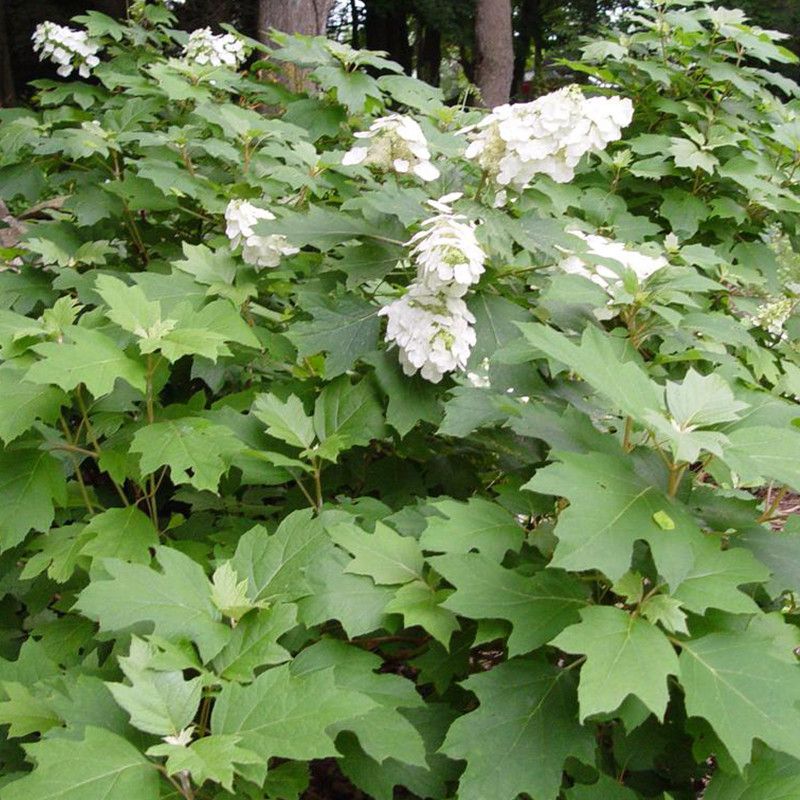
Cool, moist mornings in the Western North Carolina mountains create exactly the kind of conditions that Oakleaf Hydrangea loves.
This native shrub is one of the few that earns its place in the landscape across multiple seasons, offering something visually interesting from spring through winter without much effort from the gardener.
Oakleaf Hydrangea (Hydrangea quercifolia) gets its name from the large, deeply lobed leaves that resemble those of an oak tree.
In late spring and early summer, upright cone-shaped panicles of white flowers emerge, often reaching twelve inches or more in length.
As the season progresses, the flowers age from white to parchment to dusty rose, providing months of changing color.
In fall, the foliage turns rich shades of burgundy, orange, and bronze before dropping to reveal attractive peeling bark on mature stems. That exfoliating bark adds winter interest that few other native shrubs can match.
In Western North Carolina landscapes, this four-season appeal makes it especially valuable for yards that need structure year-round.
This shrub grows six to eight feet tall and wide under typical conditions, so spacing should account for its mature spread. It prefers partial shade and moist, well-drained, acidic soil.
Oakleaf Hydrangea tolerates more shade than many flowering shrubs, making it a reliable choice for spots beneath taller trees where other plants may struggle to produce blooms.
4. Mountain Laurel Offers Delicate Woodland Blooms
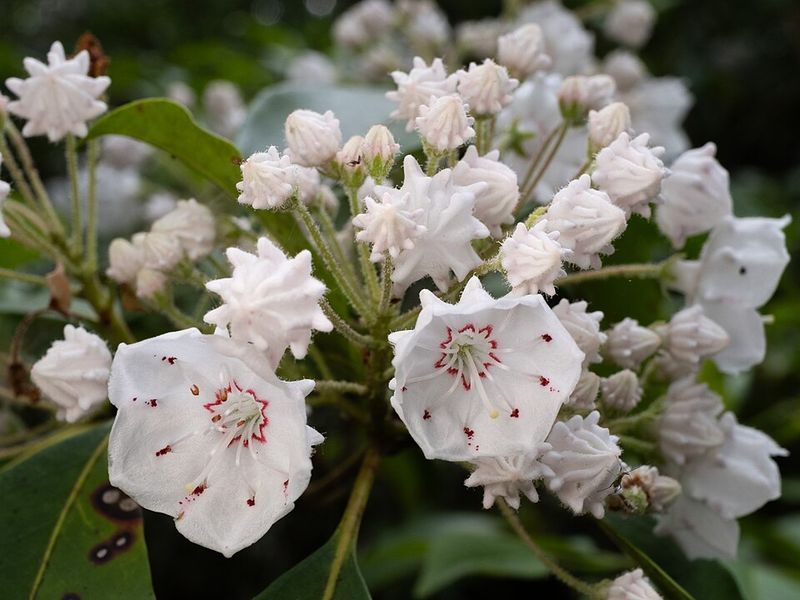
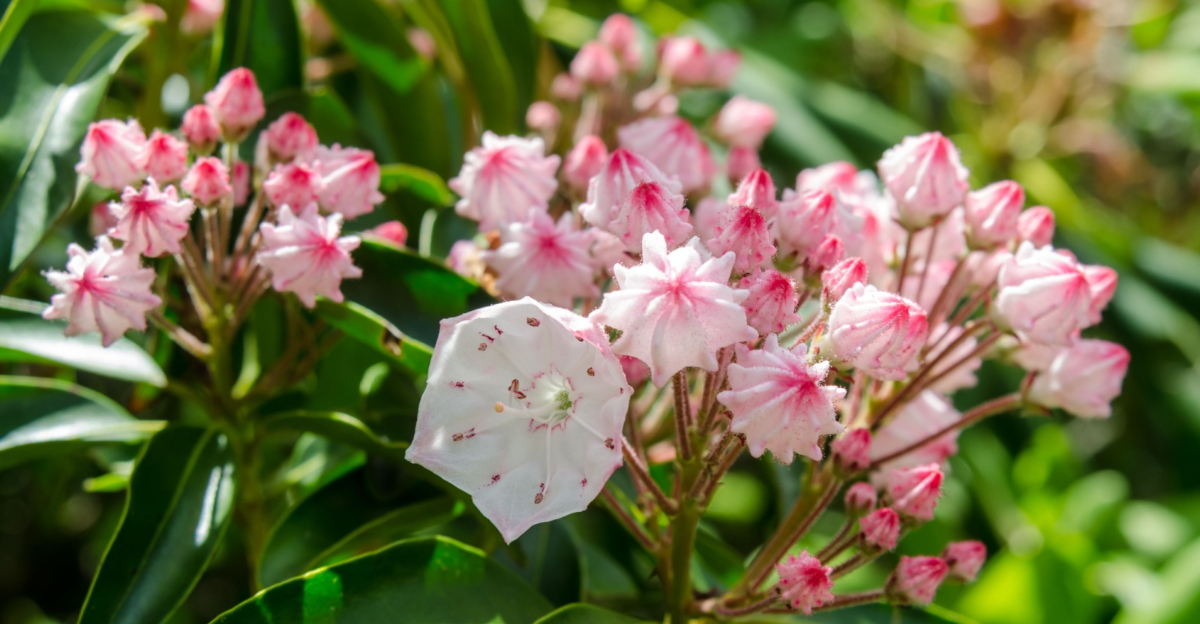
There is something almost architectural about Mountain Laurel in bloom. The clusters of pink and white flowers, each one intricately patterned like a tiny parasol, open across the shrub in a way that looks carefully arranged rather than wild.
Yet Mountain Laurel (Kalmia latifolia) is entirely at home in the rugged, rocky terrain of Western North Carolina, growing naturally on slopes and along creek banks throughout the region.
As an evergreen shrub, Mountain Laurel contributes structure and greenery to the landscape all year long. Mature plants can reach six to ten feet in height and spread, though growth tends to be slow and gradual.
The glossy, dark green leaves remain attractive through winter, making this shrub a reliable presence even when spring feels far away.
Bloom time in Western North Carolina generally falls between May and June, with higher elevations flowering a bit later. Partial shade is the preferred light condition, though some morning sun is well tolerated.
Acidic, well-drained soil is essential – heavy, wet clay tends to cause stress over time.
Mountain Laurel pairs naturally with Flame Azalea and native ferns for a layered woodland look. It is also a valuable nectar source for bumblebees and other native pollinators.
Gardeners should note that all parts of the plant are toxic if ingested, so placement away from areas frequented by children or pets is a thoughtful consideration.
5. Fothergilla Brings Spring Flowers And Fall Color
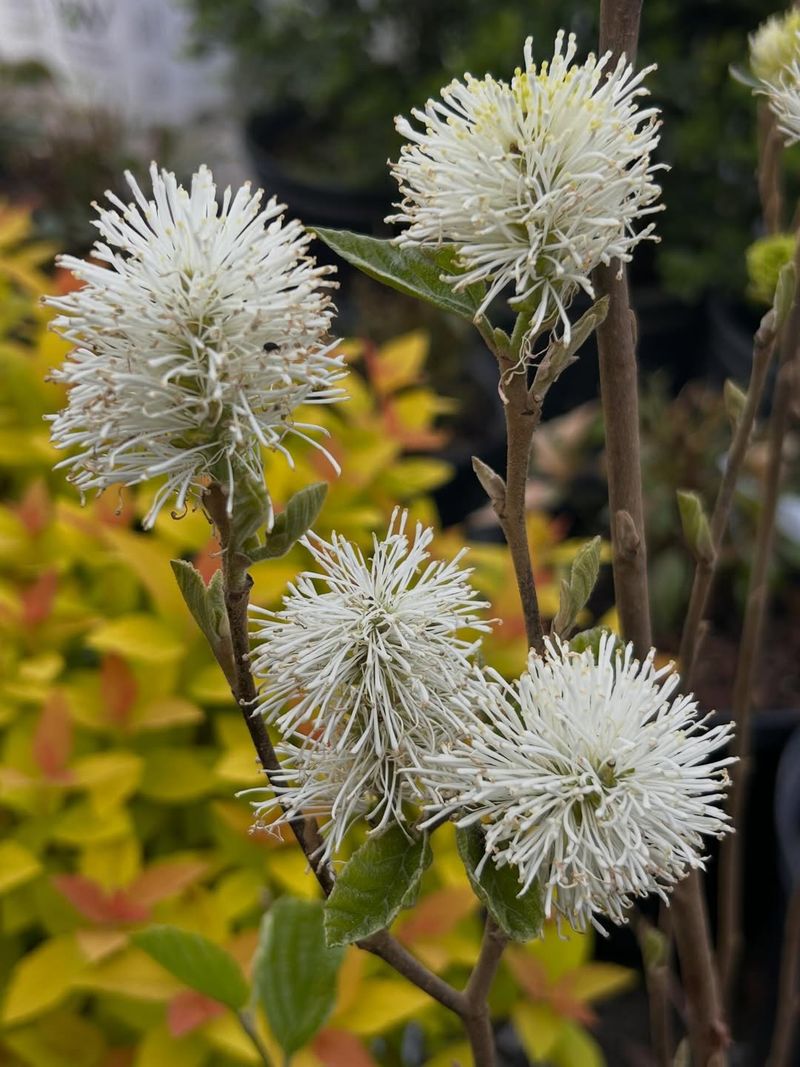
Early spring mornings in Western North Carolina can still carry a chill, and that is exactly when Fothergilla begins putting on its show.
Before most other shrubs have even leafed out, the bottlebrush-shaped white flowers of Fothergilla appear on bare stems, filling the cool air with a subtle honey-like fragrance that feels like a genuine reward for enduring a long mountain winter.
Large Fothergilla (Fothergilla major) is native to the Appalachian region and grows naturally at elevations similar to those found in Western North Carolina.
It typically reaches four to six feet tall and wide, forming a rounded, multi-stemmed clump that fits comfortably in a mixed border or woodland garden.
The white flower spikes appear in April and May, attracting bees that are just beginning to emerge for the season.
Once the flowers fade, the rounded, blue-green leaves take over as the main attraction through summer.
Then in fall, Fothergilla delivers one of the most stunning foliage displays of any native shrub, with leaves turning brilliant shades of yellow, orange, and scarlet – sometimes all on the same plant.
Full sun to partial shade both work well, though richer fall color tends to develop with more sunlight. Acidic, well-drained soil suits it best, aligning naturally with typical Western North Carolina mountain soil chemistry.
Fothergilla is also notably low-maintenance once established, rarely needing pruning or supplemental fertilization to perform well.
6. Virginia Sweetspire Adds Fragrance And Easy Growth
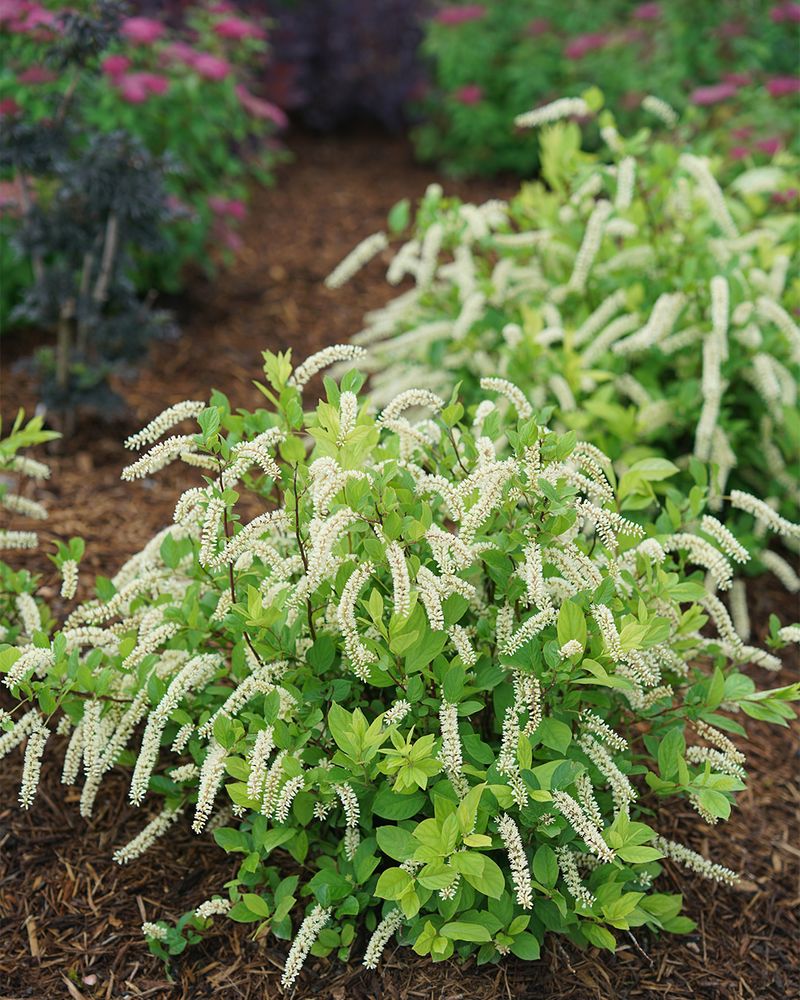
Not every native shrub demands perfect conditions, and Virginia Sweetspire proves that adaptability and beauty can go hand in hand.
Gardeners in Western North Carolina who deal with tricky spots – low areas that stay moist, shaded slopes, or transition zones between lawn and woodland – often find that this shrub settles in without complaint.
Virginia Sweetspire (Itea virginica) produces long, arching clusters of small white flowers in late spring and early summer. The blooms carry a light, sweet fragrance that is noticeable on warm afternoons and genuinely attractive to butterflies and native bees.
Few native shrubs offer this combination of casual elegance and pollinator value in such an easy-to-grow package.
The plant typically grows three to five feet tall and can spread by suckering, forming a loose colony over time. This spreading habit makes it useful for stabilizing slopes or filling in larger naturalized areas in Western North Carolina yards.
It can be managed with occasional pruning if a tidier form is preferred.
One of the most appealing traits of Virginia Sweetspire is its fall foliage. The leaves shift to deep red and burgundy shades that persist well into late autumn, giving the shrub an extended season of interest.
It tolerates wet soils, clay, and both sun and shade, making it one of the more forgiving native shrubs available for mountain landscapes with variable conditions.
7. Witch Hazel Blooms Before Spring Fully Arrives
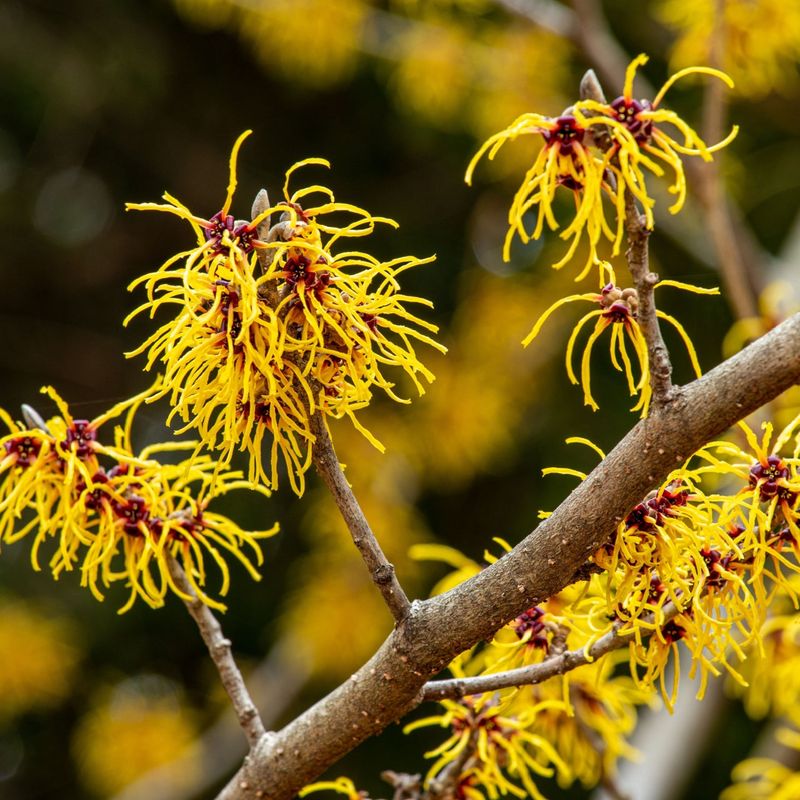
While most of Western North Carolina is still waiting for winter to loosen its grip, Witch Hazel is already blooming.
The spidery, ribbon-like petals of this native shrub unfurl on bare branches in late winter or very early spring, often pushing through light frosts without any visible setback.
For mountain gardeners who are eager for any sign of color after months of gray skies, Witch Hazel feels like a genuine gift.
Vernal Witch Hazel (Hamamelis vernalis) and American Witch Hazel (Hamamelis virginiana) are both native options with slightly different bloom windows.
Vernal Witch Hazel typically flowers between January and March, while American Witch Hazel blooms in fall and early winter.
Either species brings early-season interest to Western North Carolina landscapes when almost nothing else is flowering.
The yellow, sometimes orange or red-tinged flowers carry a mild, pleasant fragrance that becomes more noticeable on warmer late-winter days. Mature shrubs can reach ten to fifteen feet, though they are slow-growing and rarely feel overwhelming in the landscape.
Their multi-stemmed, vase-shaped form adds an open, airy quality to the garden.
Witch Hazel grows well in partial shade to full sun and adapts to a range of soil conditions, including the slightly acidic mountain soils common throughout Western North Carolina.
It is also a host plant for several native moth species, adding ecological value well beyond its striking early blooms.
8. American Elderberry Supports Wildlife With Berries
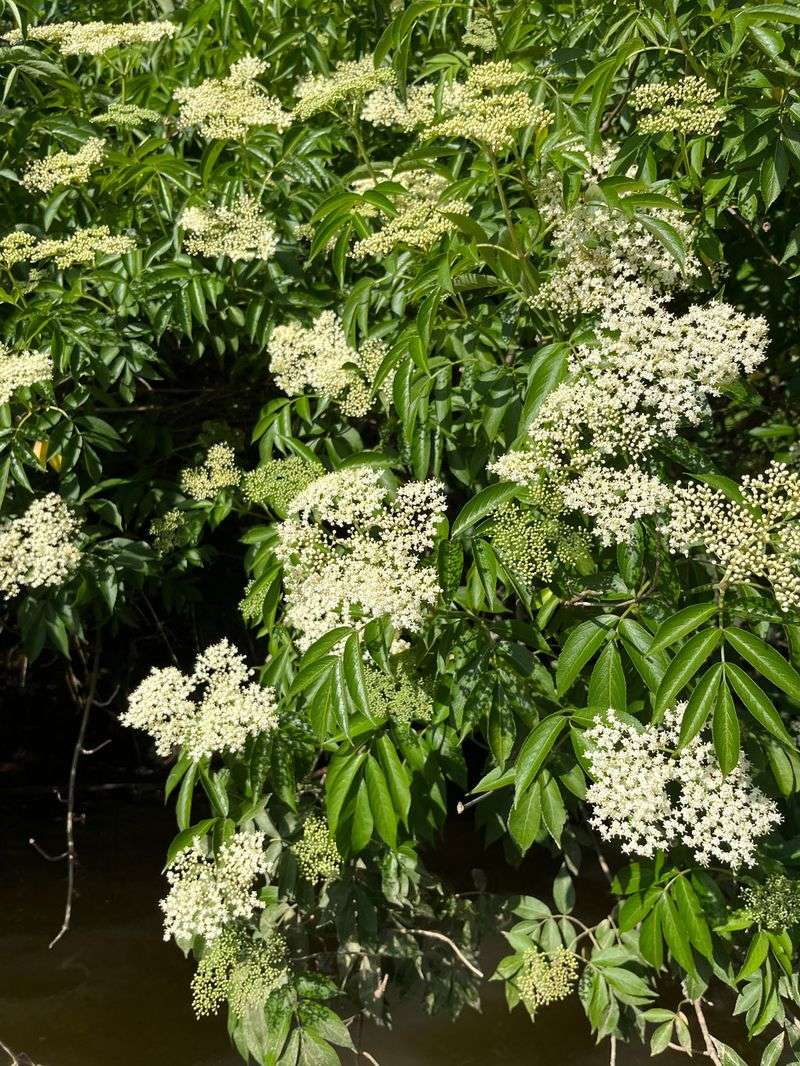
Gardeners who want their yard to feel alive with birds, butterflies, and buzzing pollinators should give serious thought to planting American Elderberry.
This fast-growing native shrub pulls its weight from spring through fall, offering something valuable at nearly every stage of the season in Western North Carolina mountain landscapes.
American Elderberry (Sambucus canadensis) blooms in late spring and early summer with large, flat-topped clusters of small white flowers.
The blooms attract dozens of native bee species and butterflies, creating a lively scene on warm mornings when pollinators are most active.
As summer progresses, the flowers give way to clusters of small, dark purple-black berries that ripen by late summer and are eagerly consumed by birds, including cedar waxwings and thrushes.
The shrub grows vigorously, often reaching eight to twelve feet in height within a few seasons. It spreads by suckering and can form a thicket if left unchecked, which works well for naturalized areas or wildlife-friendly borders.
Regular pruning keeps it more compact if a tighter form is needed for a smaller yard.
American Elderberry tolerates a wide range of soil conditions and is particularly well-suited to moist, low-lying areas that can be challenging to plant in Western North Carolina mountain yards.
Full sun to partial shade both support healthy growth and flowering.
The compound, pinnate leaves also add a lush, tropical-looking texture to the landscape through the growing season.