10 Beautiful Plants That Grow Well Under Trees In Georgia
It might seem like nothing wants to grow under a big tree in Georgia, no matter how much you try. Between heavy shade, dry soil, and roots pulling in moisture, these spots can feel frustrating fast.
But those challenging areas can turn into some of the most rewarding parts of the yard with the right approach.
Across Georgia, many plants are well suited to these conditions and can bring texture, color, and life to spaces that often get overlooked.
With a little planning and the right choices, that quiet patch under a tree can become a standout feature in the landscape.
1. Oakleaf Hydrangea Brings Bold Blooms And Fall Color
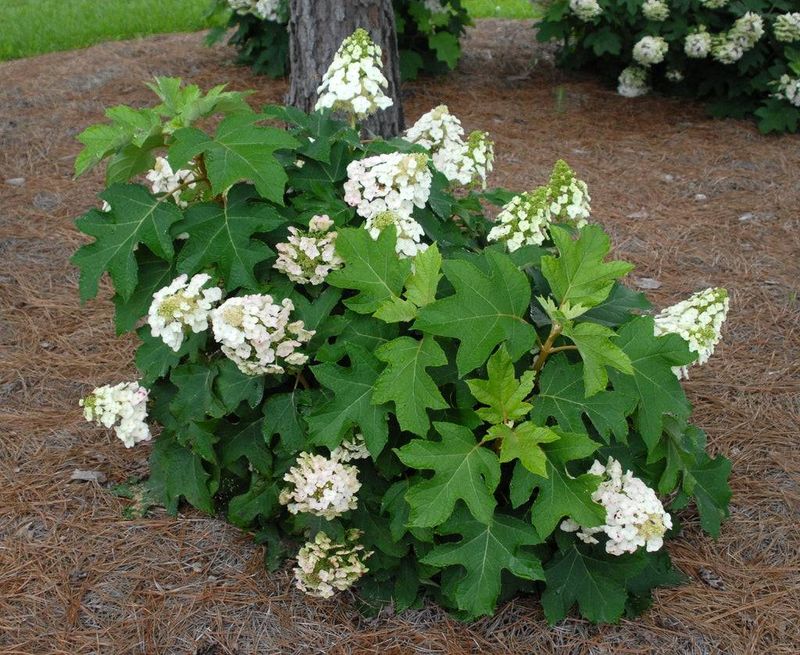
Few shrubs make as strong a statement beneath a Georgia tree canopy as oakleaf hydrangea.
Native to the southeastern United States, including Georgia, this tough shrub handles shade and root competition better than many ornamental plants.
It produces large, cone-shaped flower clusters in late spring and early summer that open creamy white and gradually fade to pinkish tan as the season progresses.
Beyond the blooms, oakleaf hydrangea earns its place in the landscape through its remarkable fall color.
The large, lobed leaves turn shades of burgundy, orange, and red as temperatures cool, which is a welcome display in a spot that might otherwise look dull after summer ends.
The peeling, cinnamon-colored bark adds visual interest through the winter months as well.
In Georgia landscapes, oakleaf hydrangea grows well in partial to full shade and tolerates dry conditions once established, which makes it well suited for planting under large trees where soil moisture can be limited.
Spacing plants about six to eight feet apart gives them room to spread.
Soil amendment with organic matter at planting time helps roots get established faster. Oakleaf hydrangea is widely listed as one of the best native shrubs for shaded Georgia gardens.
2. American Beautyberry Adds Bright Berries And Native Charm
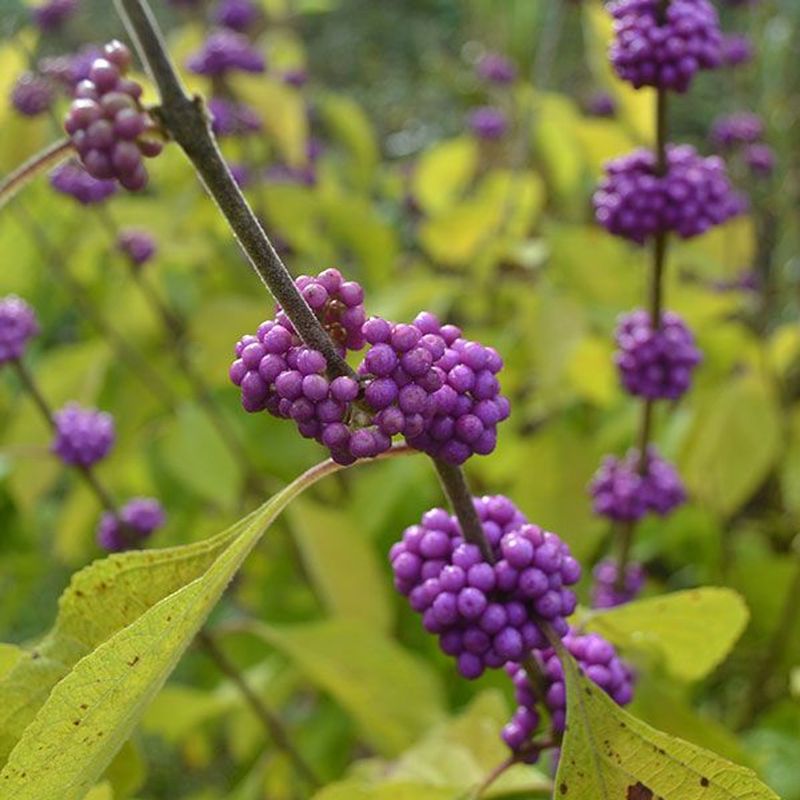
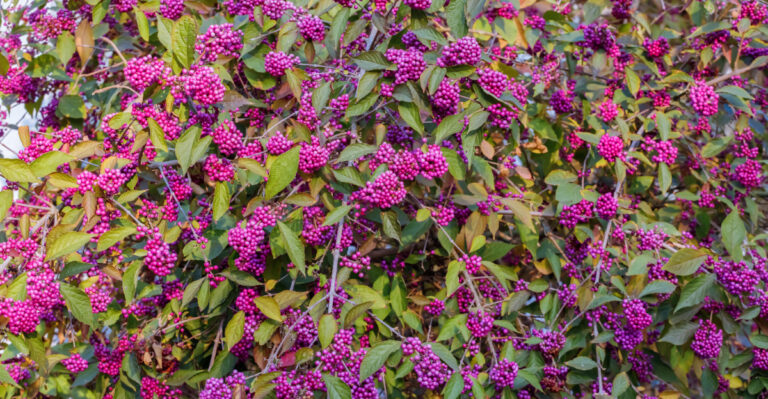
Walking through a Georgia woodland in late summer or fall, it is hard to miss the electric purple berry clusters that seem to glow against the green undergrowth.
American beautyberry is a native shrub that thrives in the understory of Georgia forests, making it a natural fit for planting beneath established trees in home landscapes.
The berries appear in late summer and persist well into fall, providing food for birds and other wildlife.
Callicarpa americana, as it is known botanically, grows with a loose, arching habit that adds a relaxed, natural look to shaded garden areas.
It handles a range of light conditions from partial shade to fairly deep shade, and it is remarkably tolerant of dry, root-filled soil once it gets established.
In Georgia, it tends to grow vigorously even in spots where other ornamentals struggle.
Pruning beautyberry back hard in late winter encourages fresh, vigorous growth and a better berry display each year. Plants typically reach six to eight feet tall and wide, so spacing them accordingly gives them room to show off their arching form.
The small pink flowers that appear in summer attract pollinators before the berries develop.
Your Georgia Garden Changes Every Week. Your Plan Should Too.
Gardening in Georgia changes quickly throughout the season. Every Friday you’ll receive a simple weekly plan showing exactly what to plant, prune, fertilize, harvest, and protect so you never miss the right timing.
For Georgia gardeners wanting native plants that require minimal maintenance, beautyberry is a reliable and rewarding choice under trees.
3. Coral Bells Brighten Shade With Colorful Foliage
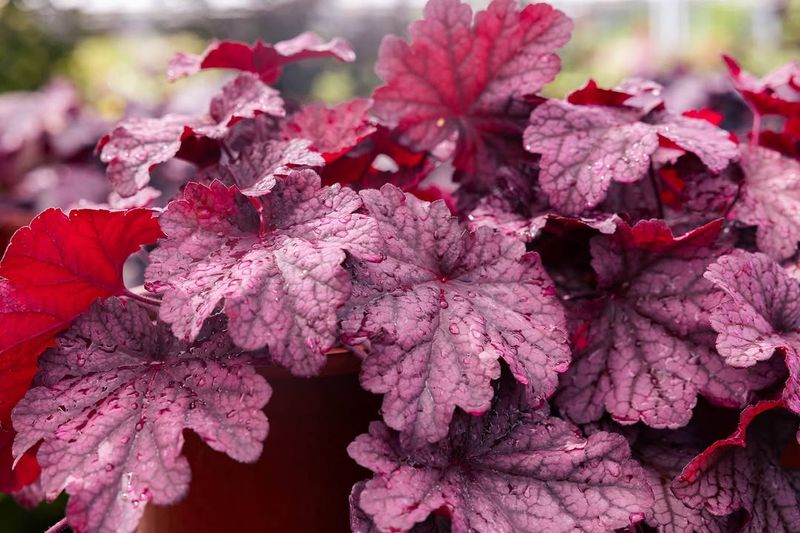
Shade gardens under trees can sometimes feel like they lack personality, but coral bells solve that problem in a vivid way.
Heuchera, the botanical name for coral bells, is prized mainly for its foliage rather than its flowers.
Leaf colors range from deep burgundy and chocolate brown to lime green, caramel, and silver, depending on the variety. That variety of color makes it easy to mix and match plants for a layered, textured look beneath tree canopies.
In Georgia, coral bells perform well in partial shade to fairly dense shade. They prefer well-drained soil, which can be a challenge under trees where roots create competition.
Mixing compost into the planting area helps improve drainage and gives coral bells a better start. Raised planting areas or berms near tree roots can also help with drainage and root competition.
Slender flower stalks rise above the foliage in late spring and early summer, carrying tiny bell-shaped blooms in shades of red, pink, or white that attract hummingbirds.
Most varieties stay relatively compact, reaching about twelve to eighteen inches tall, making them useful as border edging or groundcover fills.
Mulching around coral bells helps retain moisture during Georgia’s hot summers. Dividing clumps every few years keeps plants looking fresh and vigorous.
4. Hostas Fill Shade With Lush Leaves
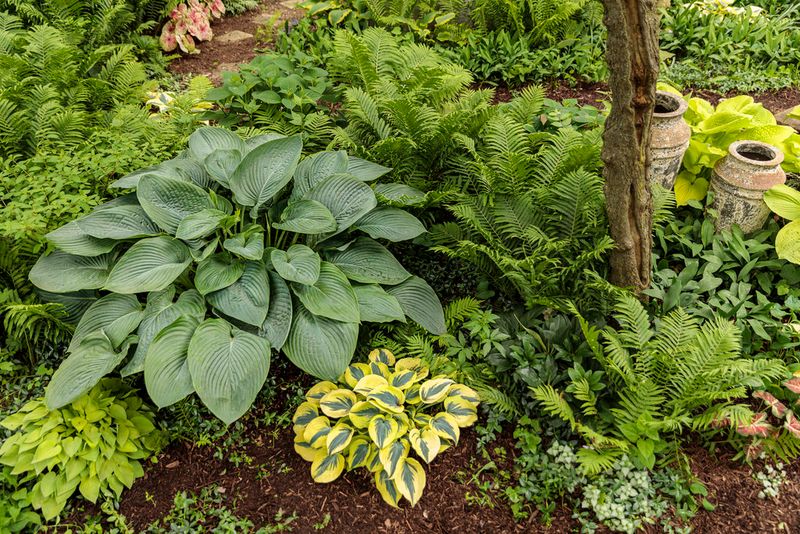
Few plants are as closely associated with shade gardening as hostas. Across Georgia, these tough perennials show up under trees in home gardens, public landscapes, and woodland-style plantings because they genuinely thrive in low-light conditions.
Their broad, textured leaves come in an impressive range of sizes and colors, from tiny miniatures with narrow green blades to giant varieties with leaves the size of dinner plates in blue-green or gold.
Hostas handle the dry, root-dense soil under trees better than many perennials, especially once they are established. Adding compost to the planting hole and watering consistently during the first growing season helps them get settled.
After that, most hosta varieties are fairly low-maintenance, needing little more than occasional watering during Georgia’s dry summer stretches and a layer of mulch to hold moisture.
Spacing depends on the variety. Larger types may need three feet or more between plants, while smaller varieties can be grouped more closely for a dense, ground-covering effect.
Hostas also work well when combined with ferns and other shade plants for a layered look.
Slugs can occasionally be an issue in Georgia’s humid conditions, so checking plants regularly and keeping mulch from piling directly against the crown helps reduce that problem.
Hostas reliably return each spring, making them a dependable investment for shaded spots.
5. Ferns Add Soft Texture To Shaded Spaces
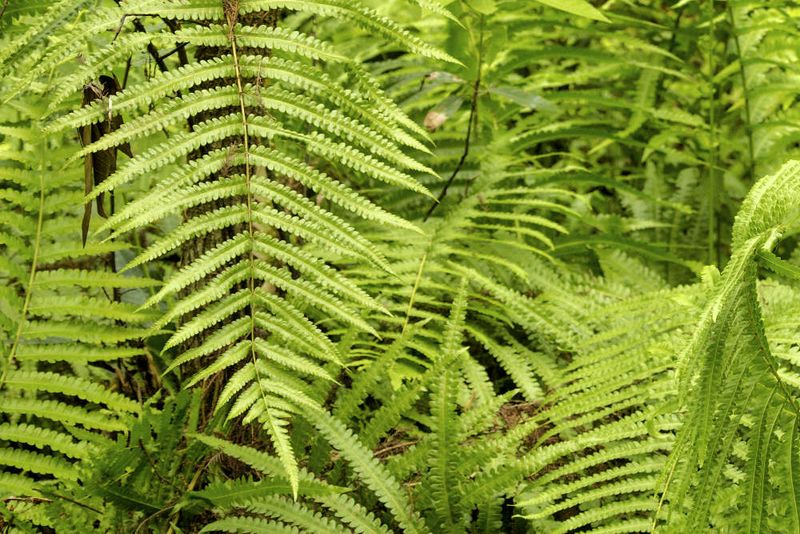
There is something timeless about ferns growing beneath a canopy of trees. In Georgia, native ferns like southern wood fern, cinnamon fern, and autumn fern are well suited to the moist, shaded conditions found under many established trees.
Their feathery, arching fronds bring a soft, layered texture that pairs beautifully with broader-leaved plants like hostas and wild ginger.
Most ferns suited to Georgia landscapes prefer consistently moist, well-drained soil with a good amount of organic matter.
Under trees, the soil tends to be drier, so working compost into the planting area and applying a generous layer of mulch makes a meaningful difference.
Watering during dry spells, especially in Georgia’s summer heat, helps ferns stay lush rather than brown at the edges.
Autumn fern, known botanically as Dryopteris erythrosora, is particularly popular in Georgia landscapes because its new fronds emerge with a coppery orange color before maturing to glossy green, adding seasonal interest beyond just texture.
Southern wood fern is another reliable choice that tolerates drier conditions better than some other species.
Ferns spread gradually over time, filling in bare areas under trees in a natural way. Most require little pruning beyond removing any tattered fronds in late winter to make way for fresh spring growth.
6. Foamflower Spreads With Delicate Spring Blooms
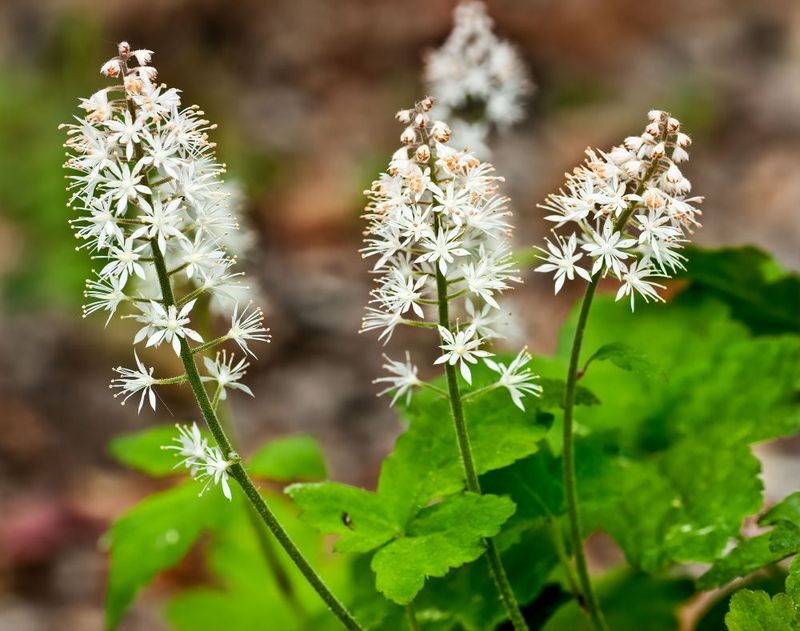
Some of the most charming plants in a Georgia shade garden are the ones that go unnoticed until they burst into bloom in spring.
Foamflower, known botanically as Tiarella cordifolia, fits that description well.
A low-growing native perennial, it spreads quietly through the season and then erupts in a frothy display of white to pale pink flower spikes in early spring, creating an effect that gives the plant its common name.
Foamflower is a natural fit for planting under trees in Georgia because it is native to the eastern United States and adapted to the kind of shaded, humus-rich conditions found on the forest floor.
It tolerates partial to full shade and prefers moist, well-drained soil.
Under trees where soil tends to dry out, adding organic matter to the planting area and keeping a consistent layer of mulch around the plants helps maintain enough moisture for foamflower to spread and thrive.
Plants spread by runners, gradually filling in bare patches under trees without becoming aggressive or difficult to manage.
The heart-shaped leaves often display attractive dark markings along the veins, providing visual interest even when the plant is not in bloom.
Spacing plants about one foot apart allows them to fill in within a season or two. Foamflower works especially well when combined with ferns and wild ginger for a layered native groundcover under Georgia trees.
7. Wild Ginger Creates A Lush Groundcover Under Trees
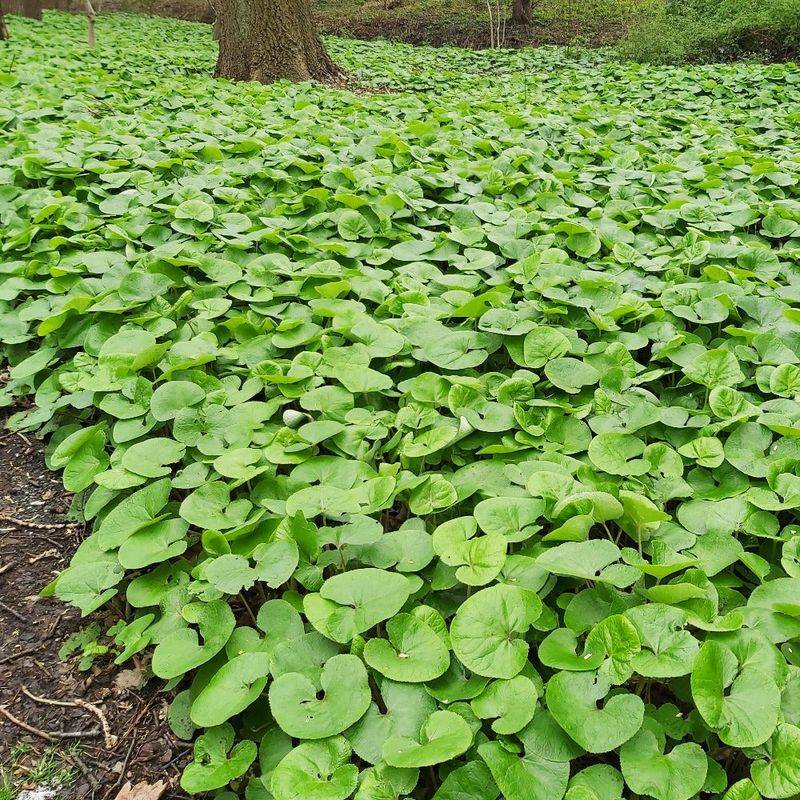
Bare ground under large trees is one of the most common frustrations Georgia gardeners face, and wild ginger offers a practical and attractive solution.
Asarum canadense, the native wild ginger found across the eastern United States, forms a dense carpet of large, heart-shaped leaves that covers bare soil beautifully.
It spreads at a moderate pace and stays low to the ground, making it one of the most useful native groundcovers for shaded areas in Georgia landscapes.
Despite its name, wild ginger is not the culinary ginger used in cooking, though the roots do carry a spicy, ginger-like scent when crushed.
The small, brownish-purple flowers it produces in spring are usually hidden beneath the foliage and are easy to miss, but they add a charming detail for those who look closely.
In Georgia, wild ginger grows best in partial to full shade with moist, well-drained, humus-rich soil.
Under established trees where root competition is heavy, working compost into the planting area before installing wild ginger gives it a stronger start. Mulching between plants helps retain soil moisture during Georgia’s warm, dry summer months.
Spacing transplants about twelve inches apart allows them to fill in within one to two growing seasons.
Wild ginger is also deer-resistant, which is a meaningful advantage in many Georgia neighborhoods and rural landscapes where deer browsing can be a persistent challenge.
8. Liriope Handles Tough Shady Spots With Ease
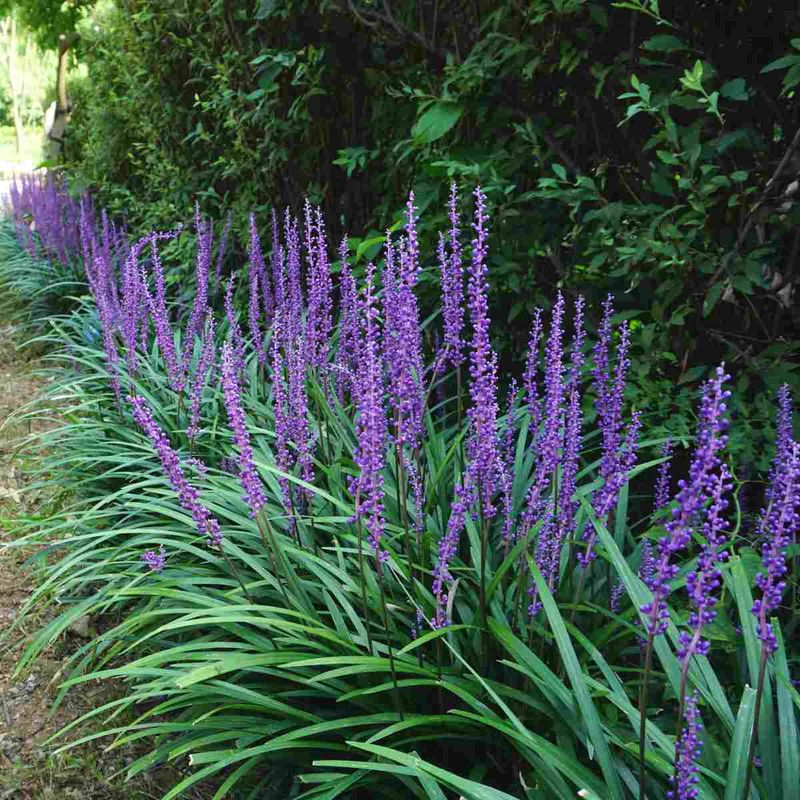
When conditions under a tree are especially challenging, with dense shade, dry soil, and thick surface roots, liriope is one of the most dependable options available to Georgia gardeners.
Sometimes called lilyturf or monkey grass, liriope forms tidy clumps of dark green, strap-like leaves that stay attractive through most of the year.
It handles both partial and deep shade, tolerates drought once established, and holds up well in the kind of compacted, root-filled soil that discourages many other plants.
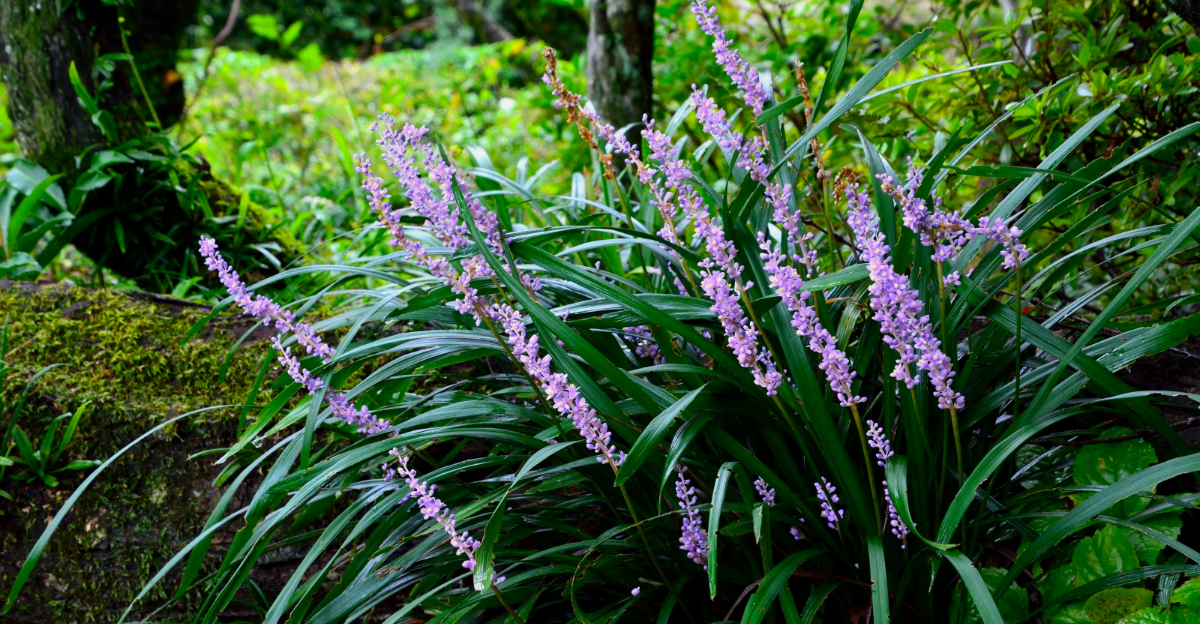
Liriope muscari is the most commonly planted species in Georgia landscapes, valued for its upright habit and the purple flower spikes it produces in late summer.
Those blooms add a welcome burst of color to shaded spots that can feel monotonous during the summer months.
Small dark berries follow the flowers and persist into fall, adding additional interest. Liriope spicata, a spreading variety, covers ground more aggressively and works well as a mass planting under trees where erosion control is also a concern.
Planting liriope about twelve to eighteen inches apart works well for establishing a groundcover under trees.
Cutting the foliage back to a few inches in late winter before new growth emerges keeps plants looking tidy and removes any winter-damaged leaves.
Liriope rarely needs supplemental fertilizer and requires minimal care once established, making it a low-effort, high-reward option for Georgia’s challenging shaded spots.
9. Ajuga Fills Gaps With Quick Color And Coverage
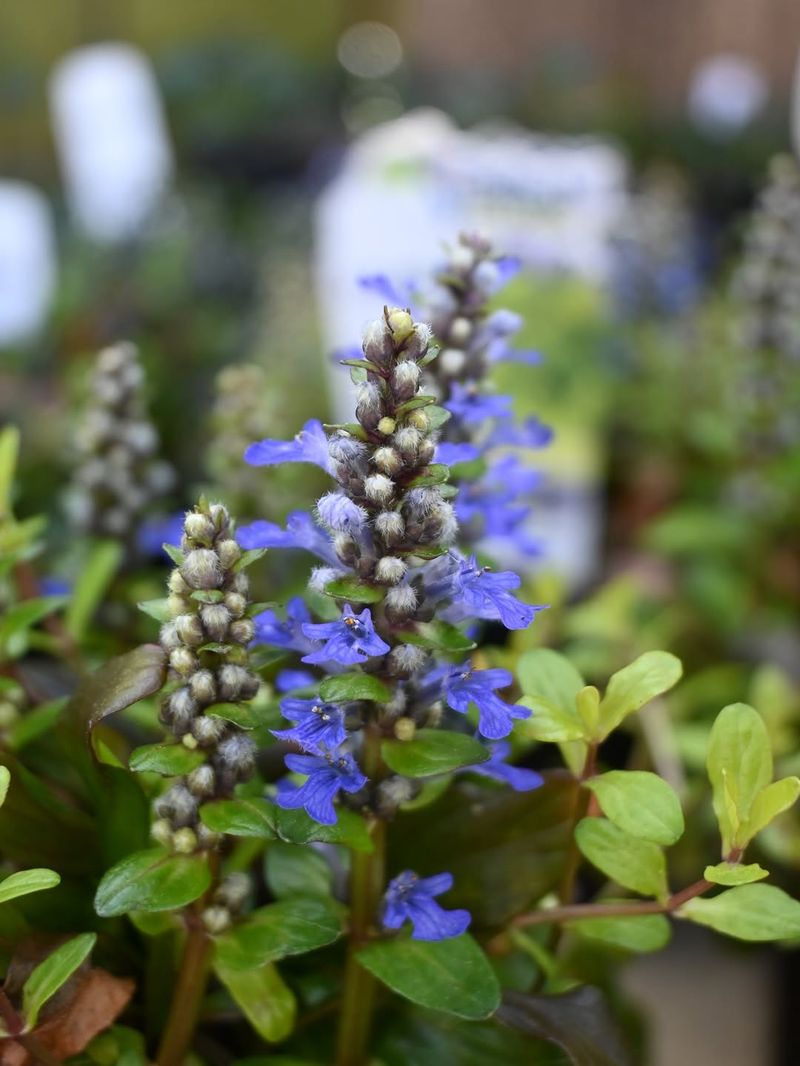
Speed matters when you are trying to cover bare ground under trees, and ajuga delivers coverage faster than most groundcovers available to Georgia gardeners.
Also called bugleweed, ajuga spreads quickly by sending out horizontal runners that root where they touch the soil, filling in gaps beneath trees within a single growing season.
The low-growing rosettes of foliage stay close to the ground, making ajuga useful for filling spaces between larger shrubs and perennials.
Beyond its spreading habit, ajuga earns its place in the shade garden with attractive foliage and a reliable spring bloom. Leaf colors vary by variety, ranging from deep bronze and chocolate to green with white margins or a mix of purple and green.
In early to mid-spring, upright spikes of blue to purple flowers rise just a few inches above the foliage, creating a colorful display at a time when the garden is just waking up from winter.
Bees and other pollinators visit the flowers regularly.
Ajuga grows well in partial to fairly dense shade and tolerates the dry, root-competitive conditions found under established trees in Georgia. Planting in well-amended soil and watering regularly during the first season helps it establish quickly.
Once settled, ajuga is quite drought-tolerant. Spacing transplants about twelve inches apart gives the runners room to spread while filling in reasonably fast.
Occasional thinning prevents overcrowding and keeps the planting looking neat.
10. Columbine Adds Light Blooms To Part Shade
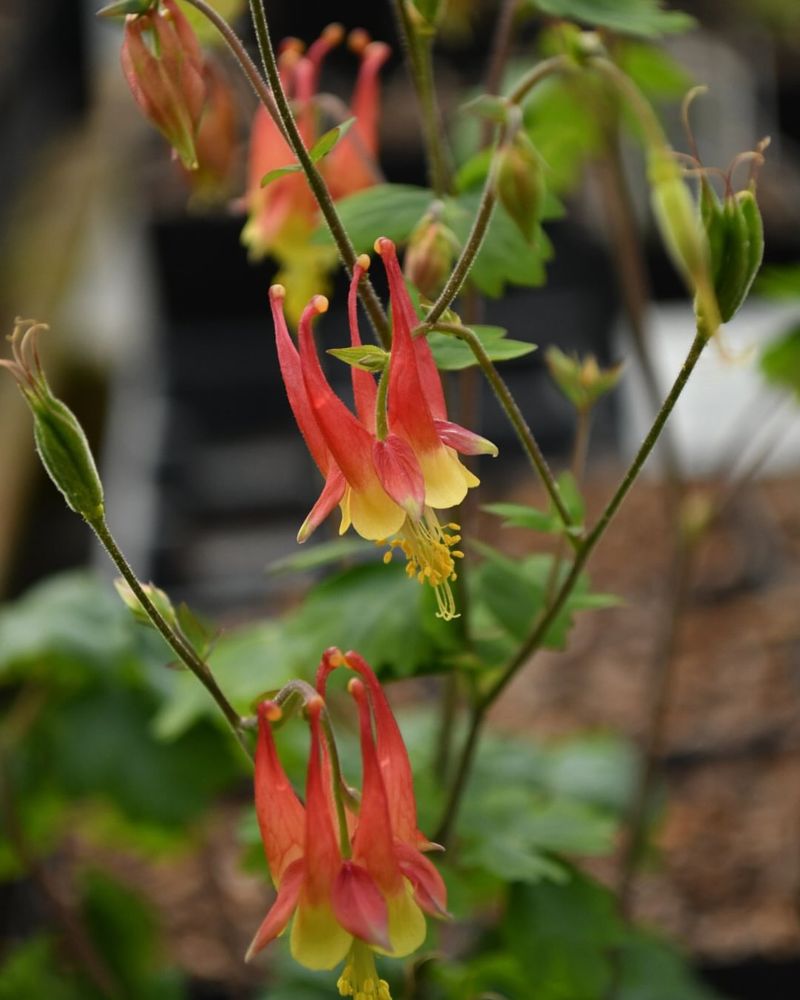
Shaded spots under Georgia trees do not have to feel heavy or dark, and columbine proves that with its airy, nodding blooms that seem to float above the foliage in spring.
Aquilegia canadensis, the native eastern columbine, produces distinctive red and yellow flowers with long backward-pointing spurs that hummingbirds find irresistible.
The blooms arrive in mid to late spring and bring a lightness to shaded areas that heavier-textured plants cannot quite replicate.
Native columbine grows naturally in woodland edges and rocky, partially shaded areas across the eastern United States, including Georgia, which makes it well adapted to the conditions found under tree canopies.
It handles partial shade comfortably and prefers well-drained soil.
Under trees where moisture levels fluctuate, columbine tends to perform better with some organic matter mixed into the soil at planting time and a layer of mulch to moderate temperature and moisture swings.
Plants reach about one to two feet tall and spread gradually by self-seeding, which helps them naturalize in a planting area over time without requiring division or replanting.
The blue-green foliage remains attractive even after the blooms fade and adds texture through the rest of the growing season.
Columbine works well planted alongside ferns and foamflower for a naturalistic, layered look beneath Georgia trees. Removing spent flowers extends the bloom period and keeps plants looking tidy through late spring.