Why You Should Grow Marigolds Under Tomatoes In Ohio Gardens
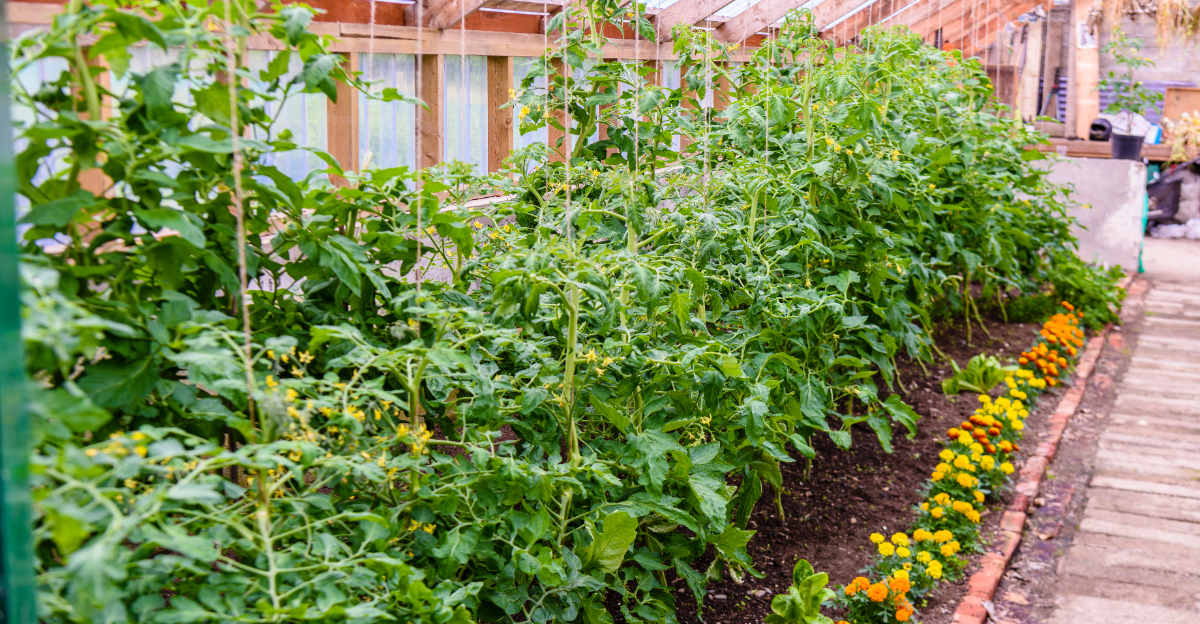
Tomatoes get most of the attention in an Ohio veggie patch, but the plants growing underneath them can pull more weight than people realize. That is where marigolds come in.
They are not just there to add a splash of color or make the bed look prettier. Tucked under tomatoes, they can earn their spot in more ways than one.
A lot of Ohio gardeners like the idea of companion planting, but some pairings sound better than they work. Marigolds have stuck around in this conversation for good reason.
They help fill bare space, brighten up the patch, and can make the whole planting look more finished while tomatoes start taking off in early summer.
There is also a practical side to it. In a busy garden, anything that helps use space well and supports a healthier growing setup is worth a closer look.
Once you see what marigolds can bring to the base of tomato plants, this classic pairing starts making a lot more sense.
1. Marigolds Fill The Bare Space Beneath Tomato Plants
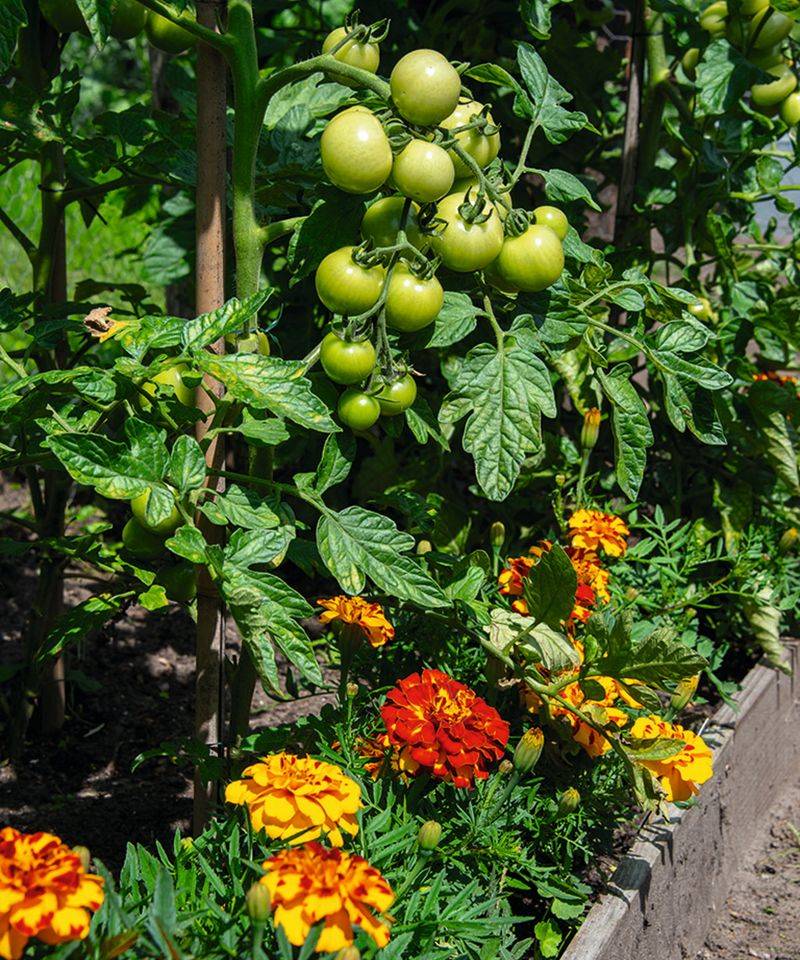
Bare soil under tomato plants is one of those things most gardeners notice but do not always know how to fix. Once tomatoes are staked and growing upward, there is often a wide open ring of exposed ground around each plant that just sits there collecting weeds.
Tucking a few compact marigolds into that space solves the problem without adding much work to your routine.
French marigolds, which typically grow between six and twelve inches tall, fit naturally into the lower zone of a tomato bed. They do not compete aggressively for light because tomatoes already claim the upper canopy.
The marigolds settle into the shaded lower layer and use the available soil space in a way that would otherwise go to waste.
Ohio State University Extension recommends thinking about vertical layering in garden beds as a way to increase productivity without expanding your footprint.
From a practical standpoint, covering bare soil also helps slow moisture loss on hot Ohio summer days. When the ground between plants stays shaded by marigold foliage, it tends to dry out a little more slowly than exposed soil would.
That means you may not need to water quite as often during the dry spells that Ohio gardens regularly face in July and August.
Weeds also have a harder time getting established when the soil is covered. Marigolds will not eliminate weeds entirely, but a well-placed row of them beneath your tomatoes can crowd out some of the opportunistic plants that would otherwise take root in open ground.
Combined with a thin layer of mulch, this underplanting approach keeps your tomato bed looking tidy and organized from late spring right through the end of the growing season.
2. Bright Blooms Bring More Beneficial Insects Into The Bed
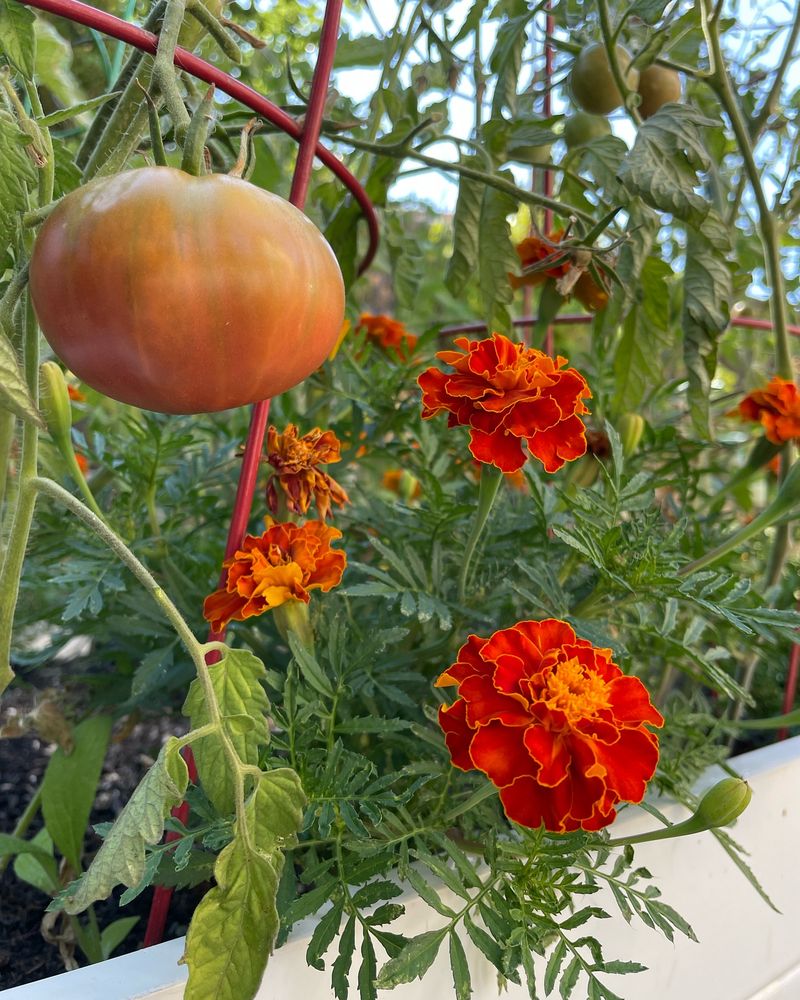
Flowers in a vegetable garden serve a purpose beyond looking pretty. When marigolds are blooming steadily through the middle of summer, they act as a landing pad for all sorts of insects that happen to be passing through your yard.
Your Ohio Garden Changes Every Week. Your Plan Should Too.
Gardening in Ohio changes quickly throughout the season. Every Friday you’ll receive a simple weekly plan showing exactly what to plant, prune, fertilize, harvest, and protect so you never miss the right timing.
Some of those insects are exactly the kind you want spending more time near your tomato plants.
Pollinators like bees and hoverflies are drawn to open, accessible blooms. Marigolds produce nectar and pollen in a form that many beneficial insects can easily reach.
When these insects visit marigold flowers close to your tomato plants, they also end up moving through the broader bed, which can support better pollination of nearby crops.
Tomatoes are self-pollinating, but physical movement from visiting insects can still improve fruit set, especially during humid Ohio summers when pollen can clump.
Beyond pollinators, some predatory insects are also attracted to flowering plants. Lacewings and parasitic wasps, for example, often feed on nectar as adults before laying eggs near pest colonies.
Having flowers nearby gives these insects a reason to stay in your garden rather than moving on. This is not a guarantee of pest control, and it would not be accurate to say marigolds will eliminate aphids or other common tomato pests on their own.
What is reasonable to say is that a garden with more flower diversity tends to support a more varied insect community overall.
Extension-based companion planting guidance from land-grant universities consistently notes that adding flowering plants to vegetable beds can help create habitat for beneficial insects.
Marigolds are a practical and affordable way to introduce that kind of flower diversity right where your tomatoes are growing, without planting a separate pollinator bed somewhere else in the yard.
3. Lower Growth Makes Tomato Rows Look Fuller And Less Sparse
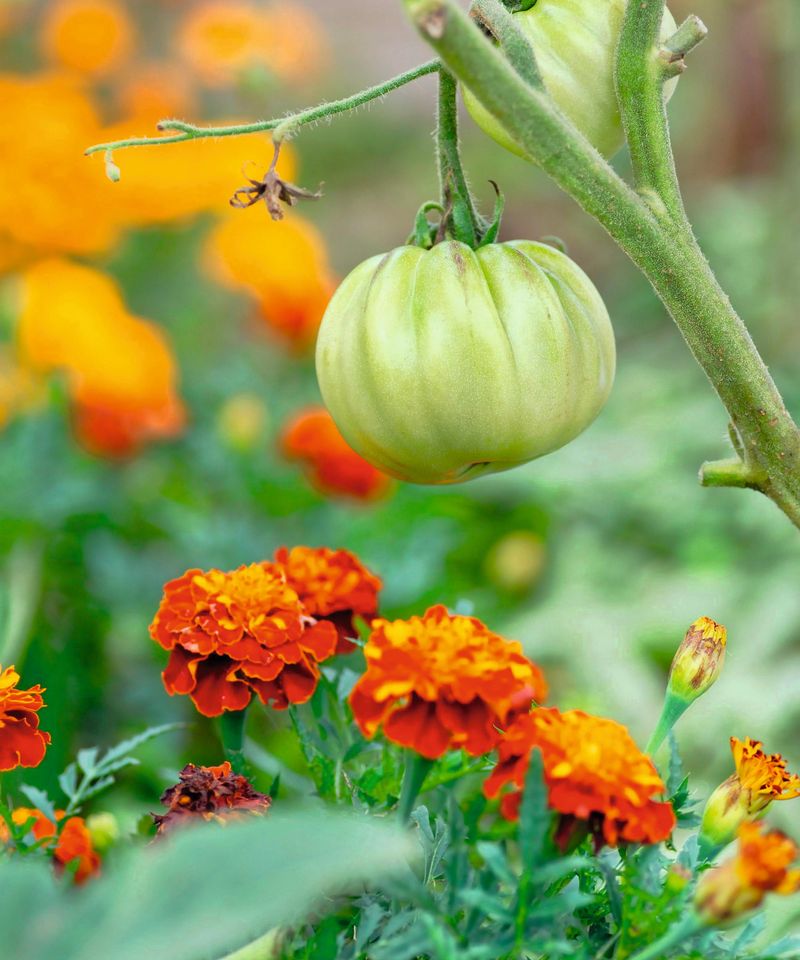
Tall tomato plants staked to a single wire or cage can look a little bare from the side, especially early in the season when the lower leaves get pruned away for airflow.
Looking down a long row of tomatoes in June, you might see a lot of exposed stem and open ground before the canopy starts.
That visual gap is where marigolds genuinely earn their spot.
Planting compact marigolds at the base of each tomato fills in that lower visual layer. The effect is layered and intentional, the kind of look you see in well-tended community gardens or demonstration plots at county extension offices.
Tall plants above, medium foliage in the middle, and low blooms at the base create a sense of fullness that a single-crop row just cannot match on its own.
For Ohio home gardeners who put real effort into their yards, this matters. A vegetable bed that looks organized and lush is more enjoyable to work in and easier to show off to neighbors or family members who wander out back during the summer.
Gardening has both a productive side and an aesthetic side, and there is no reason you have to choose between them.
French marigolds in particular stay compact enough that they do not interfere with the tomato plants visually or physically. They tend to top out well below the first set of tomato branches, leaving the fruit and foliage of the tomatoes clearly visible above.
The color contrast between the deep green tomato leaves and the bright orange or yellow marigold blooms is sharp and appealing.
It gives the whole bed a more finished, considered look without requiring any special design skills or extra investment beyond a flat of inexpensive transplants from your local garden center.
4. Extra Color Gives Vegetable Gardens A More Finished Look
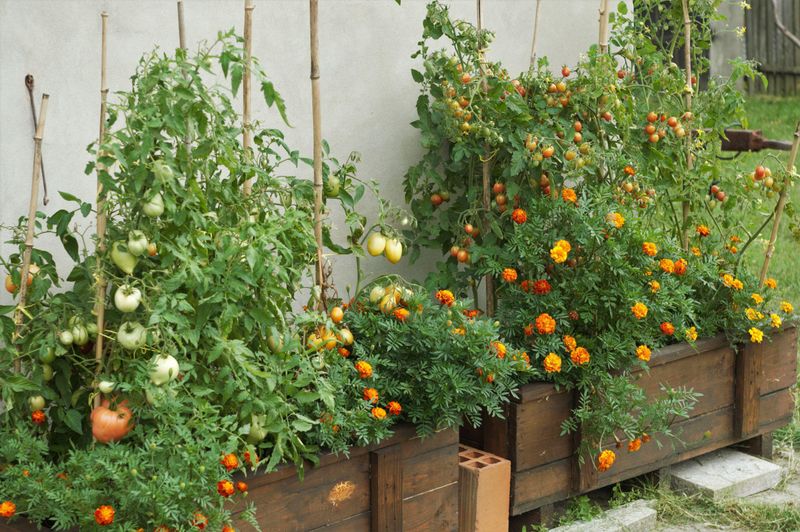
Vegetable gardens are built for productivity, but that does not mean they have to look plain. Adding a flowering plant like marigolds to a tomato bed introduces color that makes the whole space feel more intentional and welcoming.
In neighborhoods where front or side yards double as garden space, that visual polish matters more than most gardeners expect.
The warm tones of marigold blooms, ranging from pale yellow to deep burnt orange, complement the green of tomato foliage in a way that feels natural rather than forced.
Unlike some ornamental plants that look out of place in a vegetable bed, marigolds have a sturdy, unpretentious look that fits right in with the working-garden aesthetic.
They bloom reliably from late spring through the first frost, which means your tomato bed stays colorful throughout most of the Ohio growing season.
From a design standpoint, color draws the eye and creates visual rhythm along a garden row.
When marigolds are spaced evenly beneath a row of tomatoes, they create a repeating pattern of color at ground level that makes the bed look planned rather than patched together.
That kind of visual consistency is what separates a tidy garden from one that just looks like a collection of plants crammed into the ground.
Marigolds are also genuinely easy to keep looking good. Deadheading spent blooms every week or two encourages the plants to keep producing fresh flowers, which means the color stays strong all season without much effort.
For Ohio gardeners who want their beds to be both productive and visually appealing, this is a straightforward way to accomplish both goals at once.
A flat of French marigold transplants from any Ohio garden center costs very little and delivers weeks of reliable color right where you need it most.
5. Compact Flowers Help Small Ohio Gardens Do More With Less Space

Not every Ohio gardener has room to spread out. Plenty of people are working with a single raised bed, a narrow strip along the fence, or a few containers on a back patio.
When space is tight, every square foot has to count, and that is exactly where compact marigolds prove their value as an underplanting choice beneath tomatoes.
French marigolds are bred to stay small, often reaching only six to ten inches in height at full size. That compact habit means they can be planted close to tomato stems without crowding the root zone or blocking sunlight from reaching the main crop.
In a raised bed that is only four feet wide, you can run a row of tomatoes down the center and fill the edges with marigolds without the bed feeling overstuffed or disorganized.
Using vertical space efficiently is a strategy that small-space gardeners in Ohio have leaned on for years. Growing tall crops like tomatoes on stakes or cages frees up the ground beneath them for lower-growing companions.
Marigolds are one of the easiest companions to slot into that arrangement because they are widely available, inexpensive, and do not require any special soil preparation beyond what your tomatoes already need.
For gardeners working with community garden plots or shared growing spaces, this kind of efficient planting also shows consideration for your neighbors. A bed that uses its space well without spilling into adjacent rows is easier to manage and more pleasant to look at.
Ohio has a strong community gardening culture, particularly in cities like Cincinnati, Dayton, and Toledo, where shared plots are popular.
Pairing marigolds with tomatoes is a space-smart habit that fits naturally into that kind of intentional, organized growing approach without asking you to give up anything in return.
6. Companion Planting Adds Another Layer Of Function To Tomato Beds
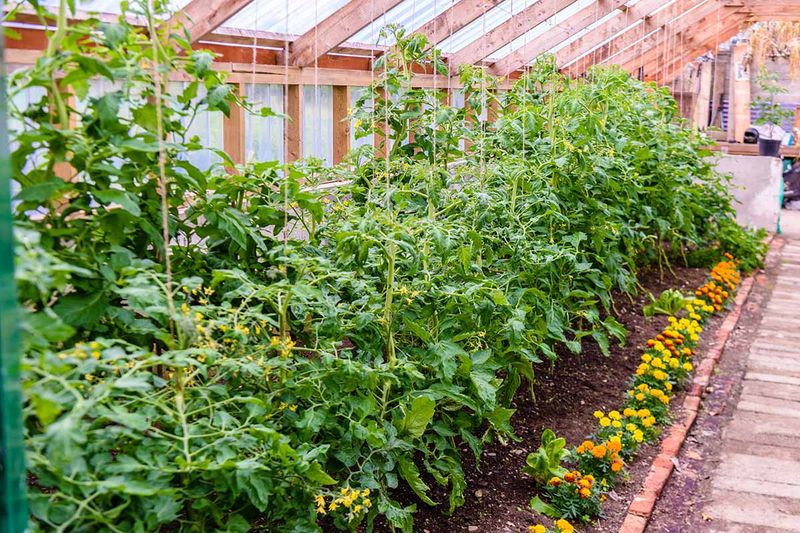
Companion planting is the practice of growing two or more plants close together because the combination offers some kind of advantage over growing each plant alone.
It is a strategy with a long history in home gardening, and while not every claimed pairing holds up under scientific scrutiny, some combinations are consistently supported by horticultural research and extension guidance.
Marigolds are among the most frequently cited companion plants for vegetable gardens, and tomatoes are one of their most common pairings. The reasoning is straightforward: marigolds add flower diversity to a bed that would otherwise be entirely foliage and fruit.
That diversity can support a broader range of insect activity, improve the overall ecological balance of the planting area, and make the bed function as more than just a single-crop production space.
Ohio State University Extension and other land-grant institutions have noted that diverse plantings tend to create more resilient garden ecosystems.
When a bed includes multiple plant types with different root depths, bloom times, and growth habits, it tends to be more stable than a monoculture planting.
Marigolds contribute to that diversity without requiring any special inputs, irrigation systems, or soil amendments beyond what your tomatoes already receive.
It is worth being clear about what companion planting can and cannot promise. Planting marigolds near tomatoes will not guarantee pest-free plants or dramatically higher yields.
The evidence for some of the more specific claims made about marigolds online is mixed at best. What is well-supported is that adding flowering companions to vegetable beds is a reasonable, low-risk strategy that costs very little and fits naturally into a thoughtful garden plan.
For Ohio gardeners who want to garden with more intention and less dependence on synthetic inputs, companion planting with marigolds is a sensible place to start building that kind of layered approach.
7. A Simple Underplanting Trick Makes The Whole Patch Work Harder
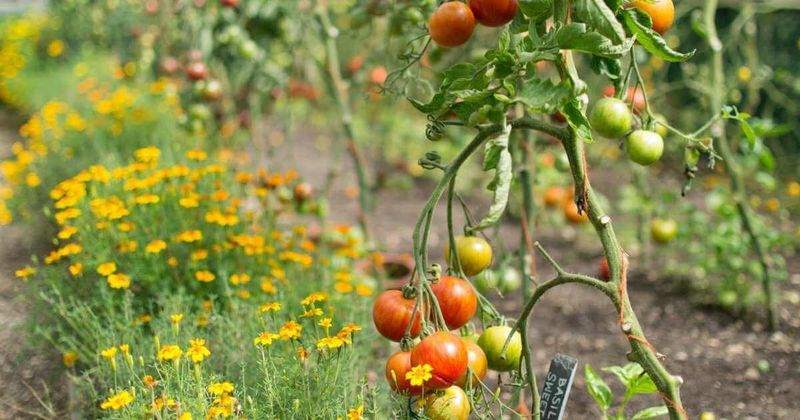
Put everything together and you start to see why this particular planting combination has stayed popular with Ohio gardeners for so long. Combining marigolds and tomatoes in one bed is not a complicated technique or a trendy gardening hack.
It is a practical, low-effort move that quietly delivers on several fronts at once without asking much of you in return.
You get better use of the soil space beneath tall tomato plants. You get reliable color from late spring through fall frost.
You get a more layered, visually satisfying bed that looks like it was planned by someone who actually knows what they are doing.
And you create a small but meaningful boost in flower diversity that can support the broader insect community in your yard throughout the growing season.
The cost of doing this is minimal. A flat of French marigold transplants from any Ohio garden center or farm market typically runs just a few dollars in May.
They need the same full sun your tomatoes already require, and they are happy with the same watering schedule. There is no special fertilizer, no unusual spacing requirement, and no complicated timing to figure out.
Plant them around the same time you set out your tomatoes, water them in, and let them do their thing.
Ohio summers can be unpredictable, with stretches of heat and humidity that stress vegetable plants and test a gardener’s patience.
Having a bed that looks full, colorful, and productive even during a rough week makes the whole gardening experience more rewarding.
Marigolds under tomatoes is the kind of simple, sensible idea that experienced Ohio gardeners pass along to beginners because it genuinely works and never seems to go out of style. Give it a try this season and see what a difference a flat of flowers can make.