The Vine That Grows Fast And Covers Fences In Georgia This Spring
Fences in Georgia can look bare longer than expected in spring, especially when the rest of the yard starts to fill in and that empty space becomes more noticeable.
A plain fence can pull attention in the wrong way, even when everything around it looks full and established.
Some plants take too long to make a difference, while others never quite create the coverage needed to soften that hard line. It can leave the space feeling unfinished even as the season moves forward.
There is a type of vine that handles this differently, spreading quickly and creating a fuller look in a much shorter time. Once it takes hold, that empty fence line begins to change and blend more naturally into the rest of the garden.
That shift can make the entire yard feel more complete without requiring a major redesign.
1. Confederate Jasmine Grows Fast And Covers Fences Over Time
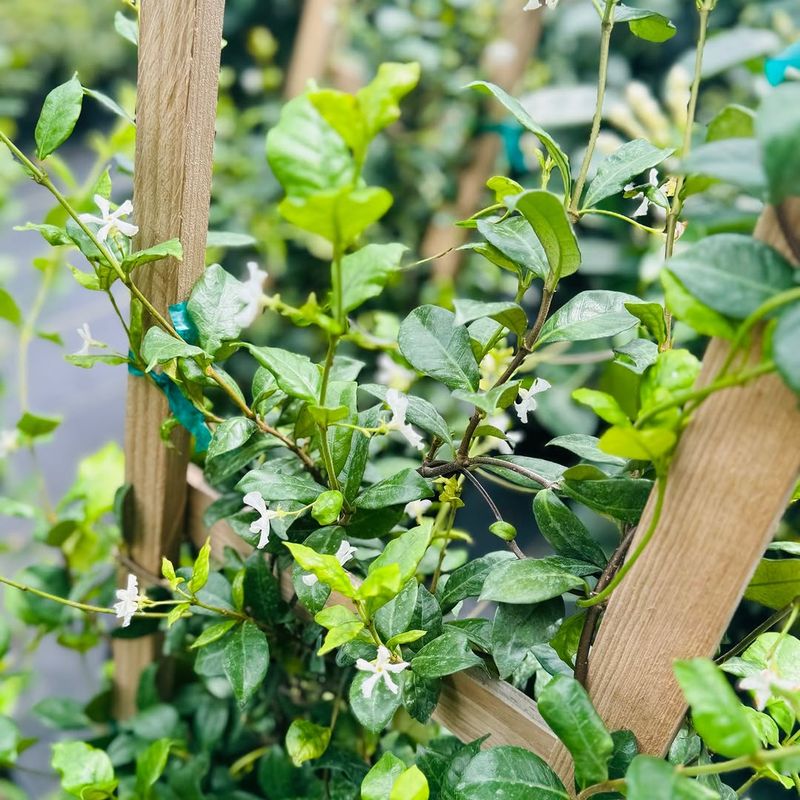
Few vines settle into a Georgia fence line quite like Confederate Jasmine does. Botanical name Trachelospermum jasminoides, it is a woody, twining vine that builds real coverage over a growing season.
It does not sprint out of the ground in week one, but by mid-spring in Georgia, the growth rate picks up noticeably as soil temperatures climb.
In the first year, expect moderate growth while the root system gets established underground. By year two, the stems push outward more aggressively, and coverage starts filling in the fence sections you have been waiting on.
Gardeners in Georgia often notice the biggest jumps in growth between April and June when warmth and moisture line up well.
Confederate Jasmine is not the fastest vine on the planet, but it is reliable. Under decent conditions, it can put out anywhere from three to six feet of new growth in a single season.
That pace is enough to cover a standard fence panel within a couple of growing seasons, sometimes sooner if the planting conditions are favorable.
2. Twining Stems Attach Easily To Fence Structures
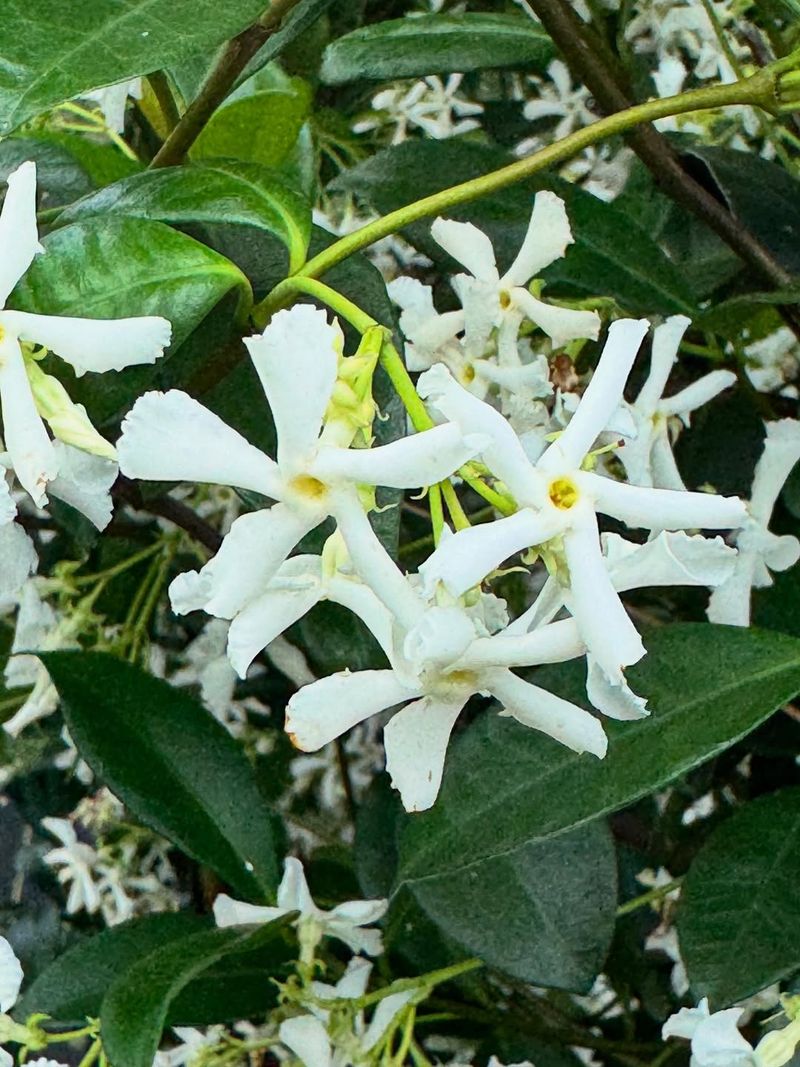
Watch a Confederate Jasmine stem for a few days and you will see it move. Not dramatically, but it slowly rotates and reaches until it finds something to grab onto.
That twining habit is what makes this vine so practical for fence coverage in Georgia without needing a lot of help from the gardener.
Unlike vines that use sticky pads or aerial roots, Confederate Jasmine wraps its stems directly around whatever support is nearby. Chain-link fences, wooden rail fences, wire trellises, and lattice panels all work well.
The stems loop around the structure and tighten as they grow, which creates a hold that gets stronger over time rather than weaker.
For new plantings, a little guidance early in the season goes a long way. Weaving the first few stems through the fence openings by hand helps point the vine in the right direction.
After that, it tends to figure the rest out on its own as spring temperatures push new growth outward.
Wooden fences do require some consideration. If the wood is older or prone to moisture damage, dense vine coverage can trap humidity against the surface.
Your Georgia Garden Changes Every Week. Your Plan Should Too.
Gardening in Georgia changes quickly throughout the season. Every Friday you’ll receive a simple weekly plan showing exactly what to plant, prune, fertilize, harvest, and protect so you never miss the right timing.
Checking the fence condition before planting saves headaches later.
3. Spring Growth Supports Steady Fence Coverage
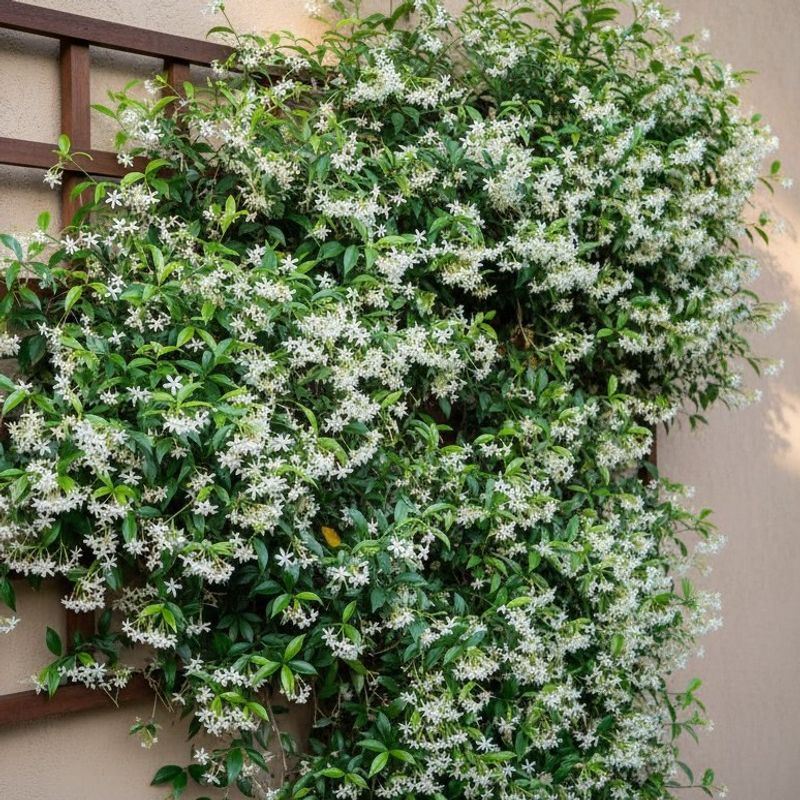
Spring in Georgia arrives with a kind of energy that plants respond to fast. Warming soil, longer days, and regular rain through March and April create conditions that push Confederate Jasmine into active growth earlier than many gardeners expect.
That spring surge is where the real fence coverage progress happens each year.
New leaves push out from existing stems first, filling in the gaps between last season’s growth. Then fresh stems begin extending outward, reaching for new sections of fence that were bare through winter.
By late April in most parts of Georgia, a well-established plant looks noticeably fuller than it did just six weeks earlier.
Feeding the vine lightly in early spring supports that growth without overdoing it. A balanced slow-release fertilizer worked into the soil around the base in late February or early March gives the roots something to draw from as temperatures climb.
Avoid heavy nitrogen applications, which tend to push leafy growth at the expense of flower development later in the season.
Watering during dry stretches in early spring helps too, especially for plants that went in the previous fall and are still building their root systems.
4. Evergreen Foliage Keeps Fences Looking Full Longer
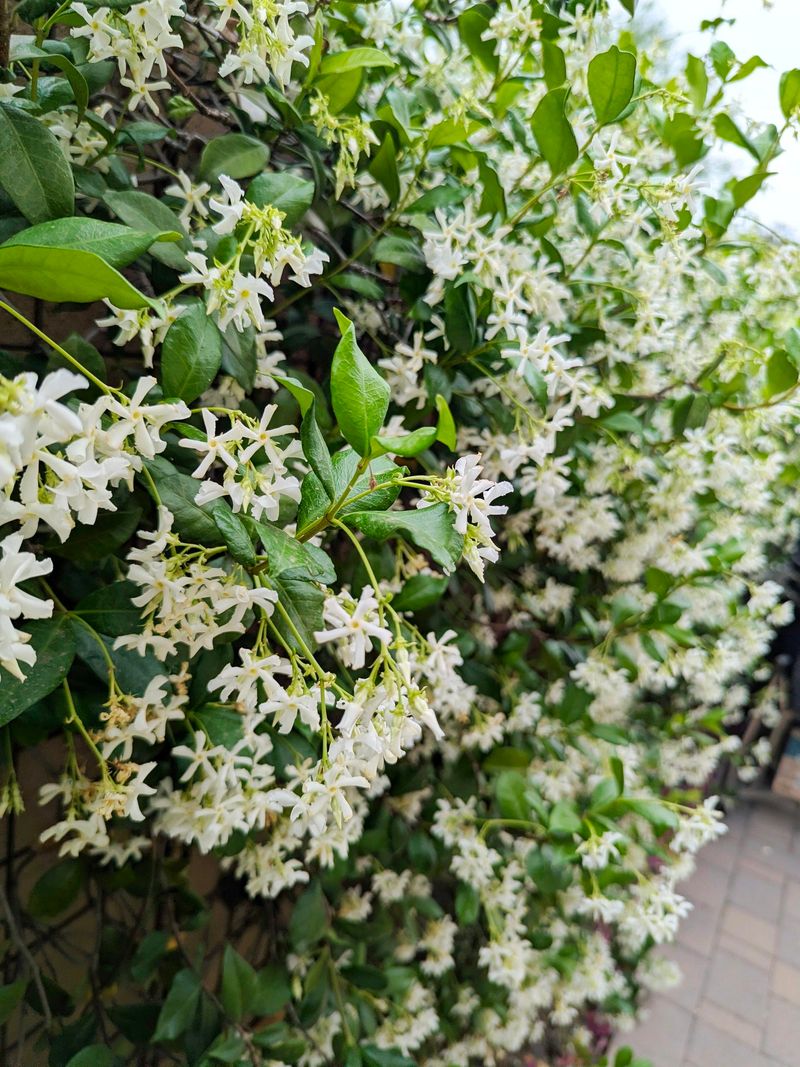
One reason Confederate Jasmine gets planted so often across Georgia is simple: it does not drop its leaves in fall and leave the fence bare all winter.
The glossy, dark green foliage holds through the cooler months, which means the privacy and coverage you built up through spring and summer does not disappear when temperatures drop.
Georgia winters are mild enough in most areas that Confederate Jasmine handles the cold without significant leaf loss.
Occasional hard freezes can cause some browning at the leaf tips or temporary wilting, but the plant generally bounces back once temperatures moderate again.
In the northern parts of the state, where harder freezes are more common, some winter damage can occur on exposed stems, though established plants recover in spring.
That evergreen quality is genuinely useful for fences along property lines or in spots where year-round screening matters. A fence covered in Confederate Jasmine in December still looks green and full rather than stripped and skeletal.
That is not something every fast-growing vine can offer.
The foliage itself has a clean, polished look that holds up well through heat, humidity, and occasional dry spells. Leaves are oval-shaped, small to medium in size, and arranged along the stems in a way that creates layered coverage rather than sparse patches.
5. Fragrant Blooms Add Extra Appeal In Spring
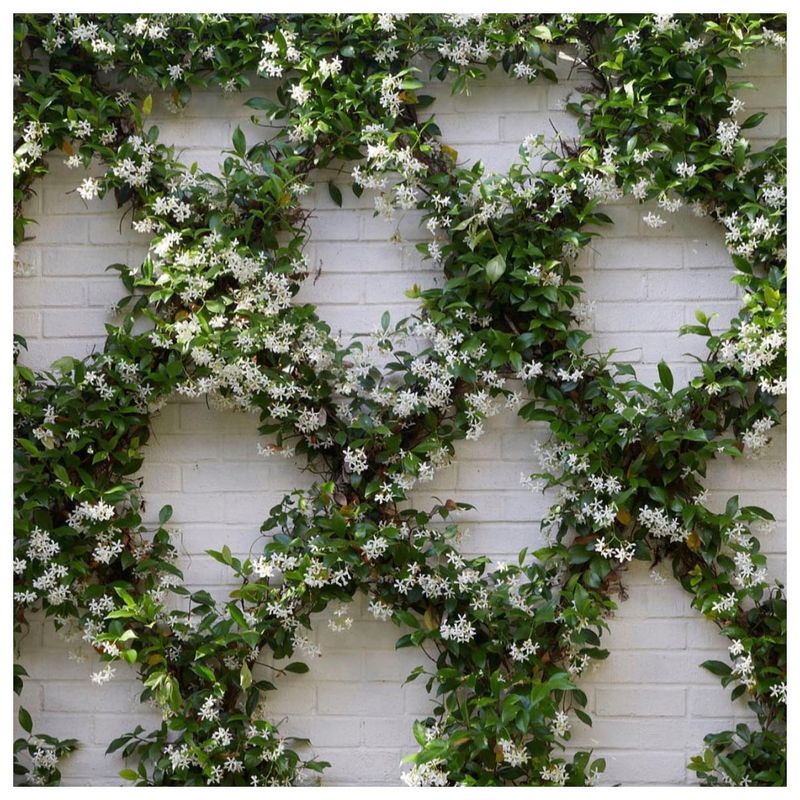
There is a moment in Georgia spring, usually somewhere between late April and May, when Confederate Jasmine opens its flowers and the scent hits you before you even see the blooms.
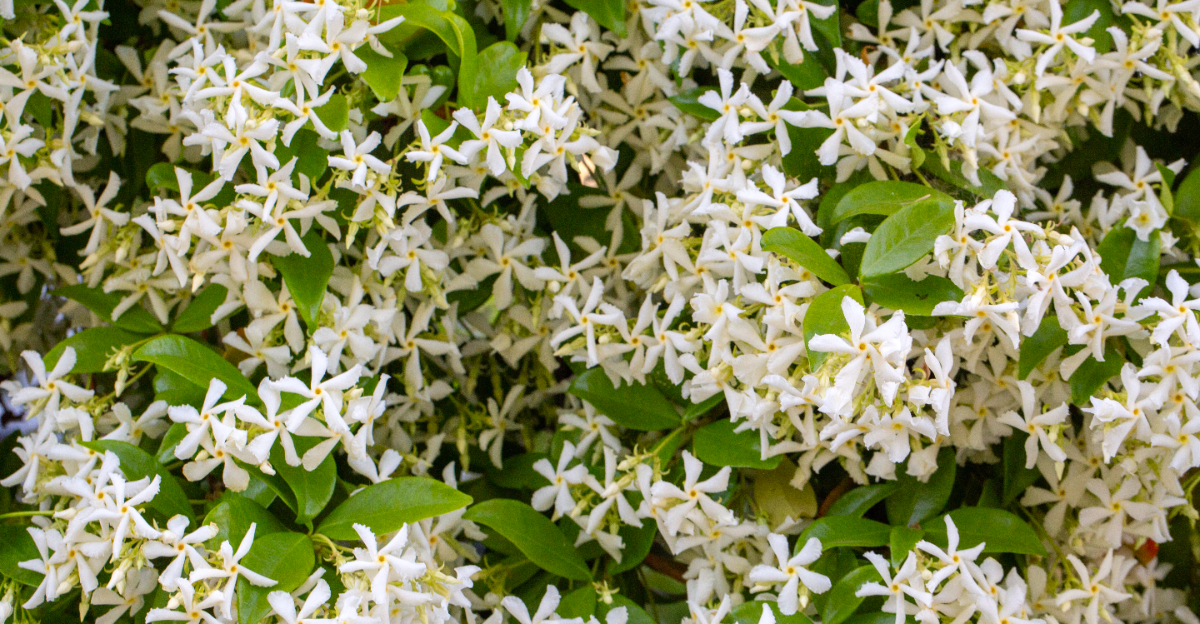
Small, white, star-shaped, and clustered along the stems, the flowers are not large, but the fragrance they produce is strong enough to carry across a yard on a mild afternoon.
That scent is one of the most talked-about features of this vine among Georgia gardeners. It is sweet without being sharp, and it tends to be strongest in the morning and early evening when temperatures are cooler and humidity is moderate.
Planting the vine near a porch, a gate, or a frequently used outdoor seating area puts that fragrance right where it can be enjoyed most.
Bloom time typically runs four to six weeks depending on the weather that particular spring. Cooler springs tend to stretch the bloom period out, while a sudden jump into summer heat can shorten it.
Either way, the flowering phase is a genuine seasonal highlight rather than a minor detail.
Pollinators notice the blooms too. Bees visit Confederate Jasmine flowers regularly during the bloom window, which makes it a useful addition to Georgia yards that support garden pollinators.
6. Handles Sun And Partial Shade Without Issues
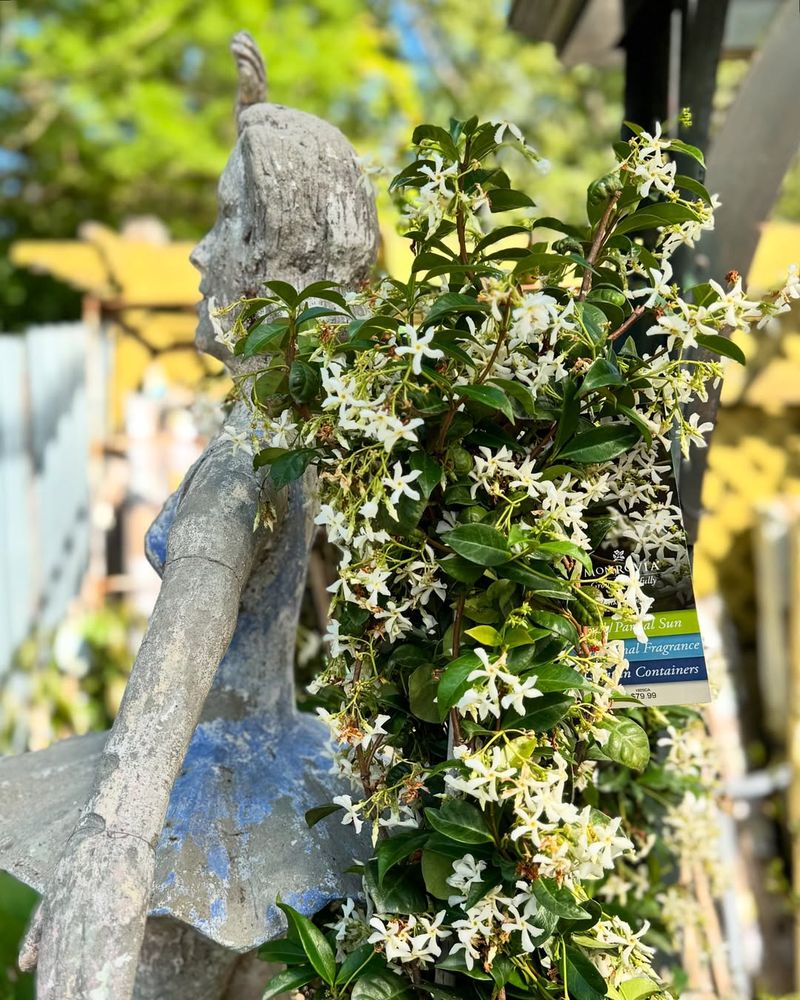
Not every fence in a Georgia yard sits in full sun all day. Trees, structures, and neighboring buildings create patches of shade that limit what you can grow in certain spots.
Confederate Jasmine handles that variation better than many climbing vines, which makes it a realistic option for fences that get mixed light throughout the day.
Full sun produces the strongest growth and the most flowers. A fence that gets six or more hours of direct sun daily will support a more vigorous plant with denser coverage.
But partial shade, meaning three to five hours of sun with shade during the hottest afternoon hours, still produces a healthy, productive vine. The growth rate slows slightly in shadier spots, and flowering can be reduced, but coverage still develops over time.
Deep shade is where Confederate Jasmine starts to struggle. Fences running along the north side of a building or under a heavy tree canopy may not give the vine enough light to perform well.
In those situations, a shade-tolerant alternative would be a better fit than pushing Confederate Jasmine into conditions it cannot handle.
Georgia’s summer heat is intense, and afternoon shade can actually benefit the plant during the hottest months of July and August. A fence position that gets morning sun and afternoon shade tends to keep the foliage looking better through the peak of summer.
7. Requires Minimal Pruning To Stay Controlled
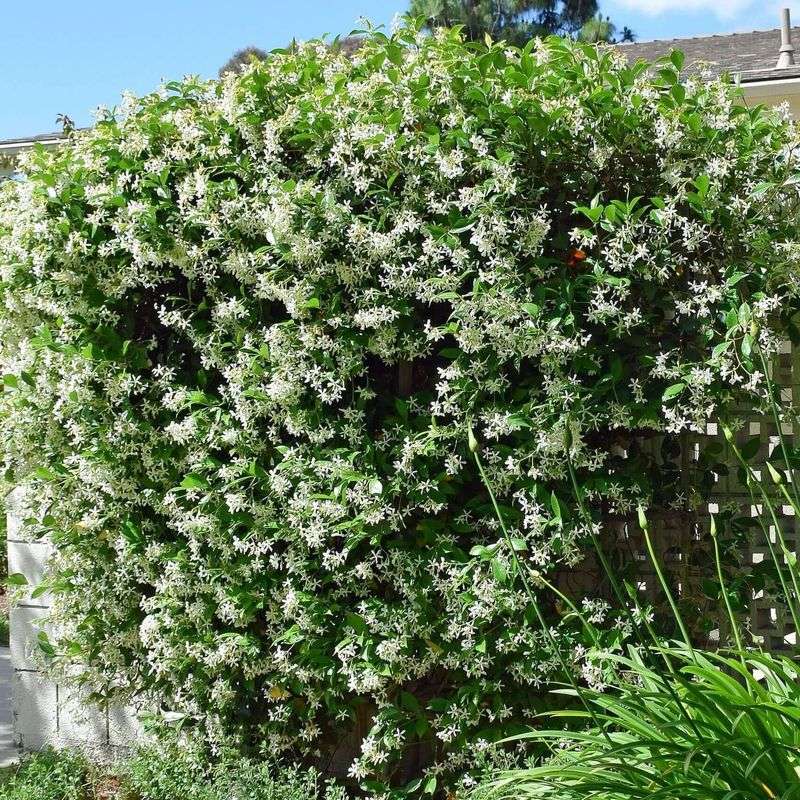
Confederate Jasmine does not demand constant attention to stay manageable, but it does benefit from occasional pruning to keep the growth tidy and the fence coverage even.
Left completely alone for several years, it can build up thick woody stems and start pushing into areas you did not intend, so a light annual trim keeps things in order without much effort.
The best time to prune in Georgia is right after the spring bloom finishes, typically in late May or early June.
Cutting back at that point removes spent flower clusters, shapes the plant, and encourages fresh stem growth through summer without interrupting the next bloom cycle.
Avoid heavy pruning in late summer or fall, which can remove the growth that supports next year’s flowers.
For fence coverage, the goal with pruning is usually to redirect rather than reduce. Stems that are growing away from the fence or heading toward a walkway can be trimmed back and redirected toward sections that still need filling in.
That approach maintains coverage while keeping the plant from spreading beyond its intended area.
Tools stay simple: a pair of clean, sharp hand pruners handles most of the work on younger growth. Older, woodier stems may need loppers for a clean cut.
Wiping the blades with rubbing alcohol between cuts is a good habit that reduces the chance of spreading any fungal issues between stems.