How To Tell Deer Damage From Winter Burn On Michigan Arborvitae
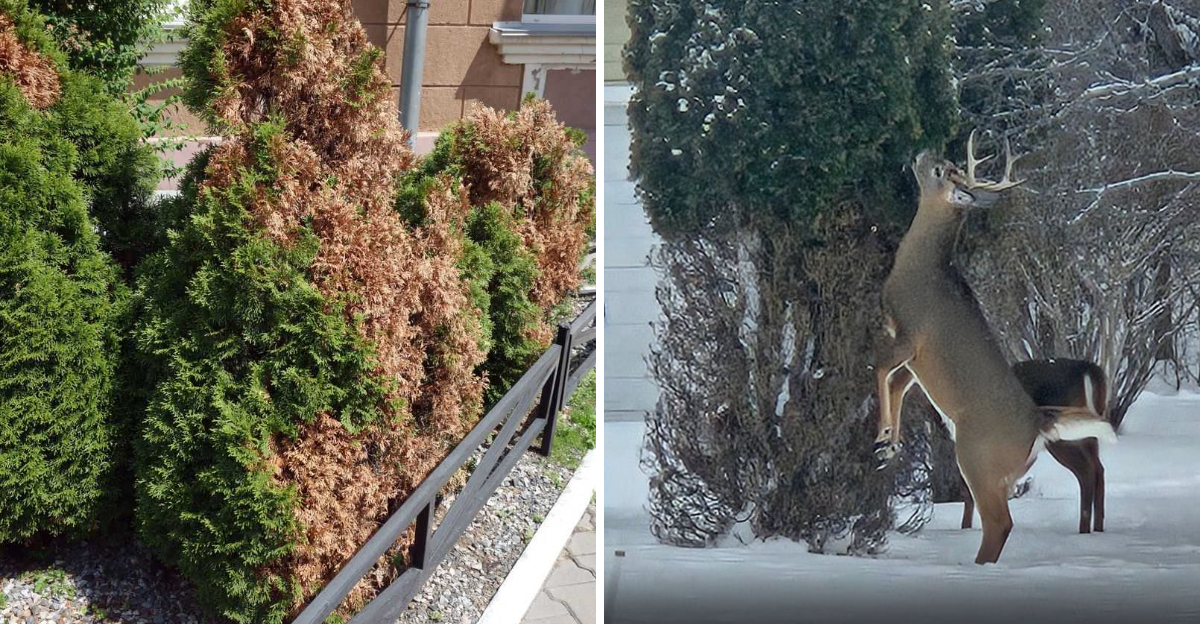
Arborvitae often take a hit during Michigan winters, but figuring out what caused the damage is not always easy. By early spring, many homeowners notice browning, thinning, or uneven patches and wonder what went wrong.
In most cases, the problem comes down to two common causes, deer feeding or winter burn. While both can leave shrubs looking rough, the signs they leave behind are very different once you know what to look for.
Deer tend to create jagged, uneven damage as they browse, while winter burn shows up as dry, discolored foliage caused by cold winds and sun exposure. Michigan’s long winters make it possible to see both issues on the same plant, which adds to the confusion.
Learning how to tell the difference can help you respond the right way and get your arborvitae back on track.
1. Check The Height Of The Damage Line
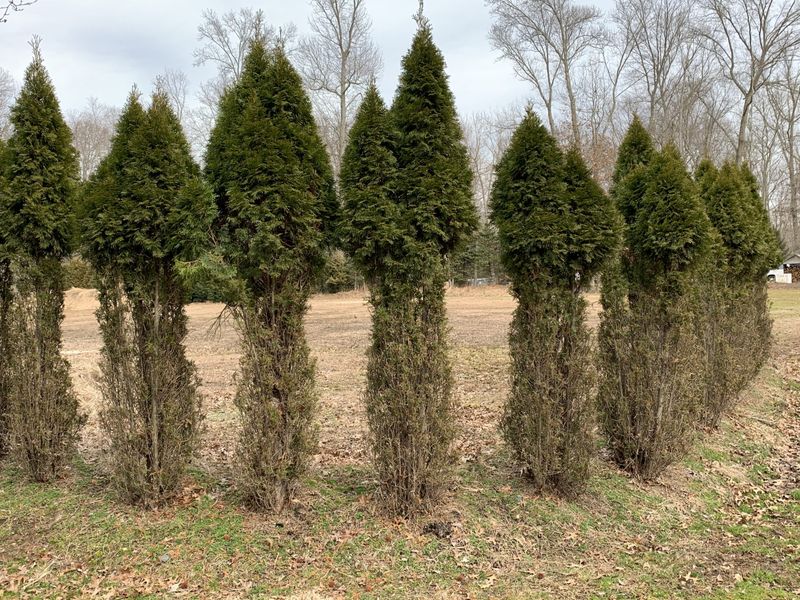
One of the fastest clues you can spot is simply where the damage stops. Deer in Michigan typically browse up to about four to six feet off the ground, which is roughly their standing reach.
When deer feed on arborvitae, they leave behind a very noticeable horizontal line where the foliage ends abruptly.
Winter burn does not follow any kind of height pattern at all. Instead, it shows up based on wind and sun exposure, not how tall a deer can stretch.
You might see browning near the top, the middle, or spread across a whole side of the plant depending on weather conditions that season.
In Michigan, deer pressure is heavy during winter months across both the Lower and Upper Peninsulas, especially in suburban neighborhoods and rural edges where food gets scarce fast.
If you step back and look at your arborvitae from a distance, a clean horizontal browse line is a strong sign that deer were the visitors.
Winter burn simply does not create that kind of neat, uniform cutoff point anywhere on the plant. Checking the damage height takes about thirty seconds and gives you a solid starting answer before you investigate further.
2. Look For Ragged Or Torn Branch Ends
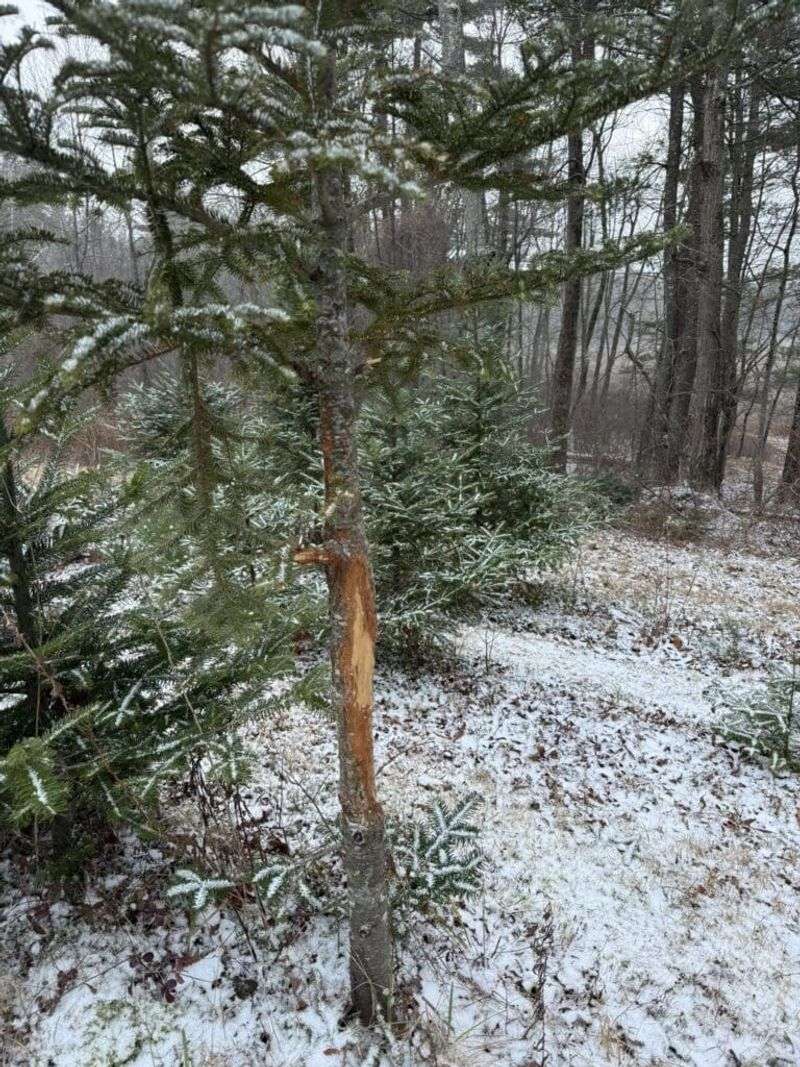
Grab a flashlight if you need to and get close to the branch tips on your arborvitae. Deer do not have upper front teeth, so when they feed they grab and yank, leaving behind jagged, frayed, and uneven ends on the branches.
Those torn tips are a very reliable sign that an animal was feeding, not the weather. Winter burn works in a completely different way.
Cold, dry air pulls moisture out of the foliage through a process called desiccation, and the needles turn brown right on the branch.
The branch structure itself stays intact, with no tearing, no missing tips, and no ragged edges anywhere along the stem.
In Michigan, winter food scarcity pushes deer into yards and landscaped areas more than most homeowners expect. A hungry deer will work through an arborvitae pretty aggressively, and those torn branch tips tell the whole story once you look closely.
Your Michigan Garden Changes Every Week. Your Plan Should Too.
Gardening in Michigan changes quickly throughout the season. Every Friday you’ll receive a simple weekly plan showing exactly what to plant, prune, fertilize, harvest, and protect so you never miss the right timing.
If the branch ends look like they were snapped or pulled rather than dried out, you can feel fairly confident that deer browsing is what you are dealing with.
Knowing this early helps you plan the right response, whether that means putting up a barrier or simply waiting for new spring growth to come in on its own.
3. Check For Missing Foliage Versus Discolored Foliage
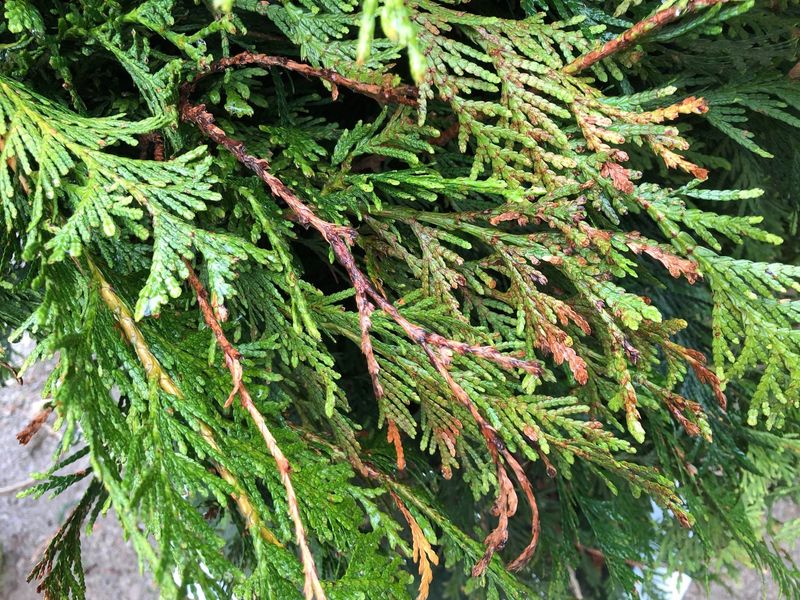
Here is a detail that makes identification much easier once you train your eye to notice it. Deer physically remove foliage when they eat, so branches that deer have fed on will look bare and stripped.
You will see the branch structure clearly because the greenery is simply gone. Winter burn tells a very different story. The foliage stays right on the plant, but the color shifts from healthy green to a dull brown or bronze shade.
Those browned needles are still attached, still sitting on the branch, just no longer alive and functioning the way they should be during the growing season.
Michigan winters are tough on arborvitae because the ground freezes solid, which cuts off the roots from absorbing water. Meanwhile, winter sun and wind keep pulling moisture out of the foliage above ground, and that imbalance is exactly what causes winter burn.
So if you see brown needles still clinging to the branches on the south or west side of your plant, winter burn is a very likely explanation. If the branches look bare and stripped with nothing left on them, deer browsing is almost certainly what happened.
Running your fingers along a few branches can confirm this quickly, because bare stems feel very different from stems covered in crispy brown needles.
4. Look For Damage Concentrated On Outer Edges
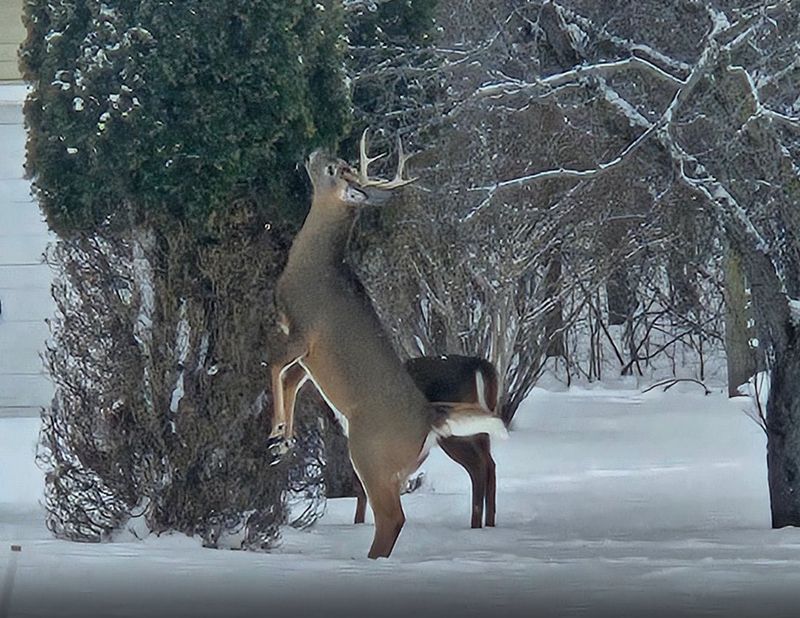
Step back and look at the overall shape of your arborvitae from a few feet away. Deer tend to feed on whatever they can reach most easily, which means the outer branches and the accessible edges of the plant take the hit first.
The result often looks like someone sheared the outside of the shrub unevenly, leaving a patchy, hollowed-out outer layer.
Winter burn behaves differently when it comes to plant shape. It tends to affect entire exposed sides of the arborvitae rather than just the outer tips.
You might see a whole panel of browning that goes from the outer edge deeper into the plant on whichever side faces the wind or afternoon sun.
Arborvitae in Michigan neighborhoods often grow close to fences, driveways, or property borders, making the outer edges very easy for deer to access during their nightly feeding rounds.
If your plant looks like it got a rough haircut on the outside but the inner structure seems relatively untouched, deer browsing is a strong possibility.
Winter burn does not typically create that sheared outer-edge look. Recognizing this shape difference can save you from treating the wrong problem and help you focus your energy on the right solution for your specific plant situation this spring.
5. Check South And West Sides For Winter Burn
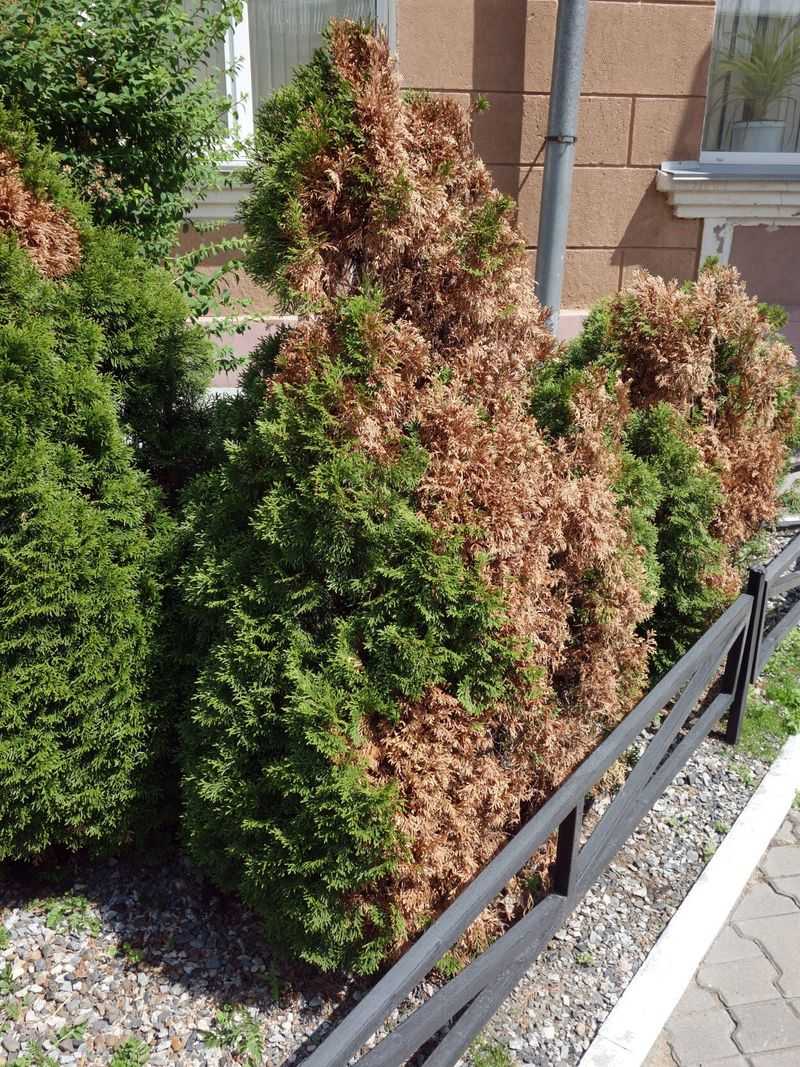
Walk around your arborvitae and pay close attention to which side of the plant looks the worst. Winter burn in Michigan most commonly shows up on the south-facing and west-facing sides of arborvitae, and that pattern is very consistent from one yard to the next.
Those sides get the most direct winter sun and the most exposure to drying winds that sweep across the state.
When the ground is frozen solid, arborvitae roots cannot pull up water to replace what the foliage loses to sun and wind. That moisture stress builds up over weeks and months, and by late winter or early spring the damage becomes very visible on those exposed sides.
The north and east sides of the same plant often look perfectly green and healthy by comparison.
Deer, on the other hand, do not care which direction your plant faces. They feed based on access and appetite, not sun angles.
So if the browning on your arborvitae is clearly concentrated on the south or west side and the rest of the plant looks fine, winter burn is the most likely explanation.
This directional pattern is one of the most reliable clues Michigan gardeners can use to tell the two problems apart without needing any special tools or expertise to figure it out.
6. Look For Uniform Browning Versus Patchy Damage
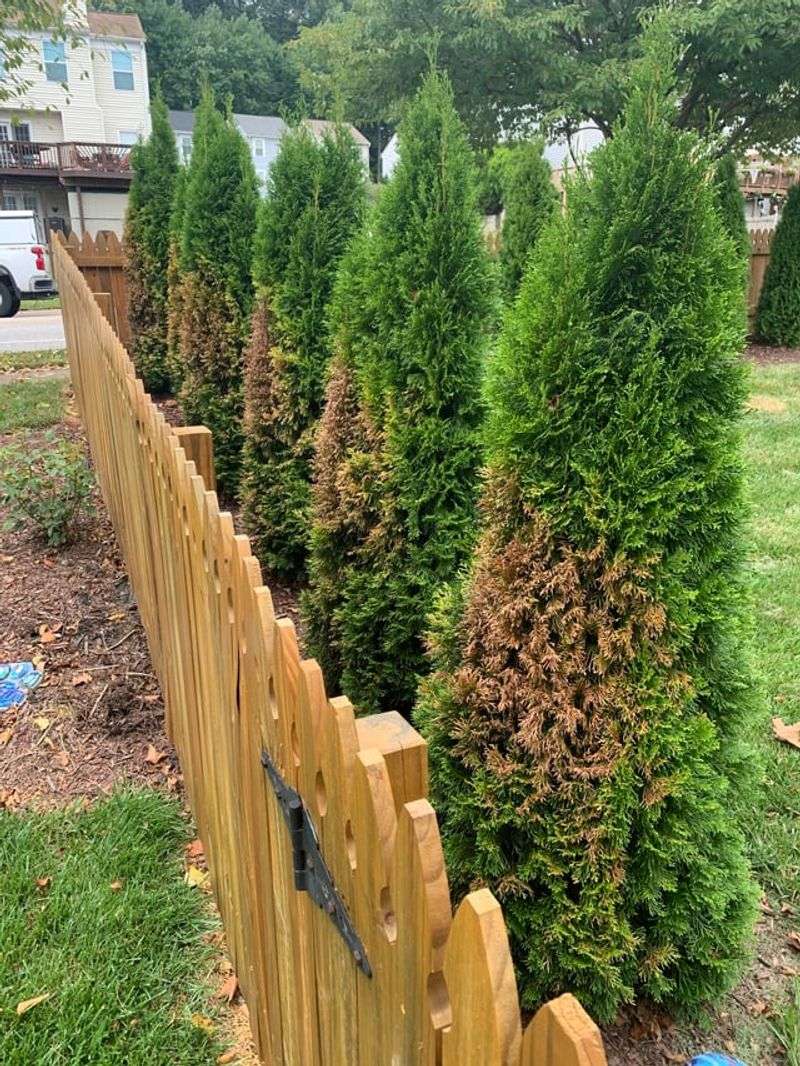
The pattern of browning or missing growth can tell you a lot about what caused the problem in the first place. Winter burn tends to create a broad, even sweep of brown or bronze coloring across an entire exposed section of the plant.
The color change looks fairly consistent because the environmental stress affects a large area all at once.
Deer damage looks totally different up close. Animals feed in irregular patterns, grabbing here and there as they move around the plant.
The result is a random, patchy look where some spots are completely stripped and others right next to them are untouched. That unevenness is a strong indicator that an animal was involved rather than weather stress.
Michigan winters can deliver both problems in the same season, which makes careful observation even more important for homeowners trying to figure out the right next step.
Look at the damaged areas and ask yourself whether the pattern looks like it was caused by a consistent environmental force or by something picking at specific spots.
Uniform, even browning on an exposed side points clearly toward winter burn. Irregular patches of missing or chewed growth scattered around the plant point just as clearly toward deer activity.
Getting this distinction right means you can respond with the most effective and targeted care plan for your arborvitae going forward.
7. Check For Deer Tracks Or Droppings Nearby
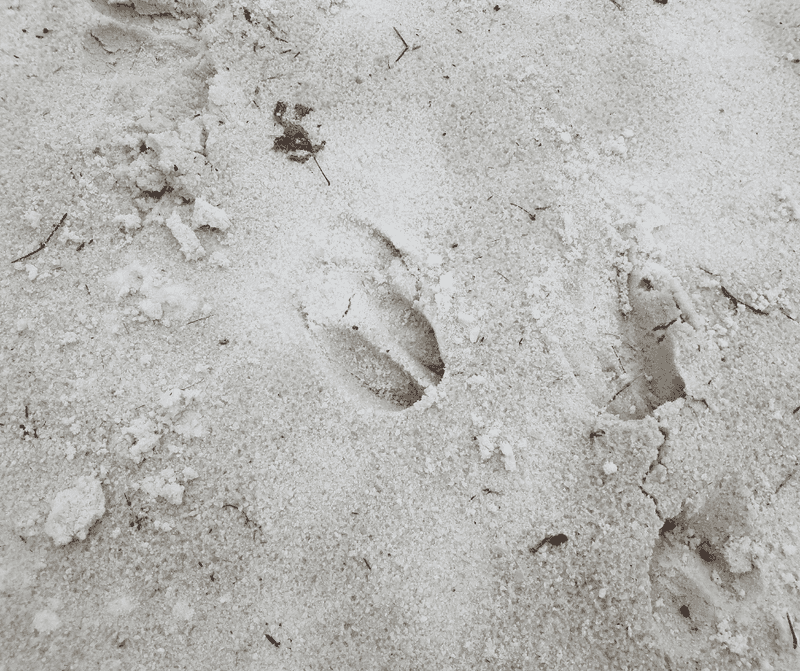
Sometimes the ground around your plant tells the story better than the plant itself does.
Deer are large animals and they leave behind clear physical evidence when they visit your yard, including hoof prints pressed into soft soil or snow and small round droppings scattered near where they were feeding.
Spotting either of these near your arborvitae is a very strong confirmation of browsing activity.
Winter burn leaves absolutely no signs on the ground. It is a weather-related condition caused by moisture loss, so there are no tracks, no droppings, and no other physical signs of animal activity anywhere around the plant.
If the ground is clean and undisturbed, that shifts the odds toward winter burn rather than deer.
Michigan deer are remarkably active in residential neighborhoods throughout the winter, especially in suburban areas near wooded edges, parks, and open fields.
They often return to the same yards night after night once they find a reliable food source, which makes checking for ground evidence a very practical first step.
After a fresh snowfall is actually the best time to look, because tracks show up clearly and are easy to read.
Finding deer prints right next to your arborvitae removes nearly all doubt about what caused the damage and helps you move straight into planning a protection strategy before more feeding occurs.
8. Look Inside The Plant For Untouched Green Growth
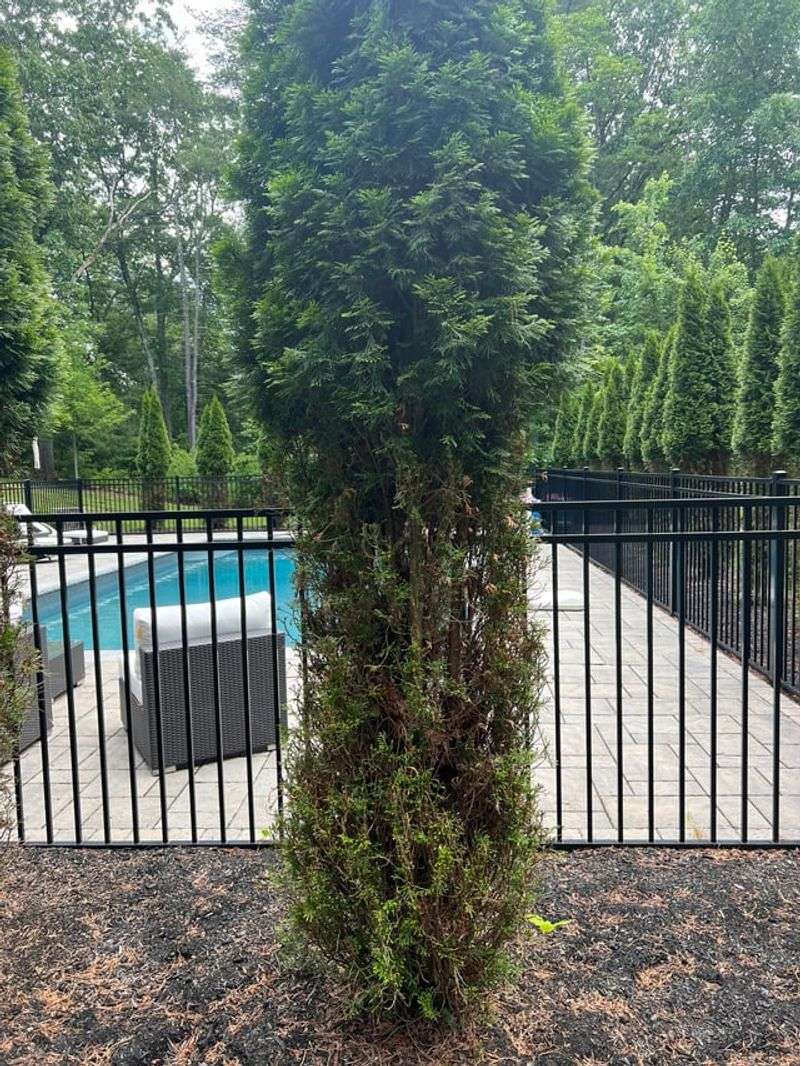
Gently push aside some of the outer branches on your arborvitae and take a look at what is happening inside the plant.
Deer can only eat what they can physically reach from the outside, so the interior foliage of a browsed arborvitae is usually still green, full, and healthy looking.
That contrast between a damaged exterior and a thriving interior is one of the most telling signs of deer activity.
Winter burn can sometimes push deeper into the plant depending on how severe the exposure was and how harsh the Michigan winter turned out to be.
However, it still tends to be most severe on the outermost foliage facing the sun and wind, and the very center of the plant often stays greener than the outside edges.
Finding bright green interior growth after a rough winter is actually a very encouraging sign regardless of what caused the outer damage.
It means the plant has living tissue to work from and a real chance of filling back in as spring temperatures rise and the soil thaws out.
Michigan arborvitae are fairly resilient when the core of the plant stays healthy through winter.
Checking the interior takes just a minute and gives you a clearer picture of the overall plant health, helping you decide whether to wait for natural recovery or step in with some hands-on care to support new growth.