Native Arizona Shrubs That Outperform Arborvitae As Privacy Screens In Tough Spots
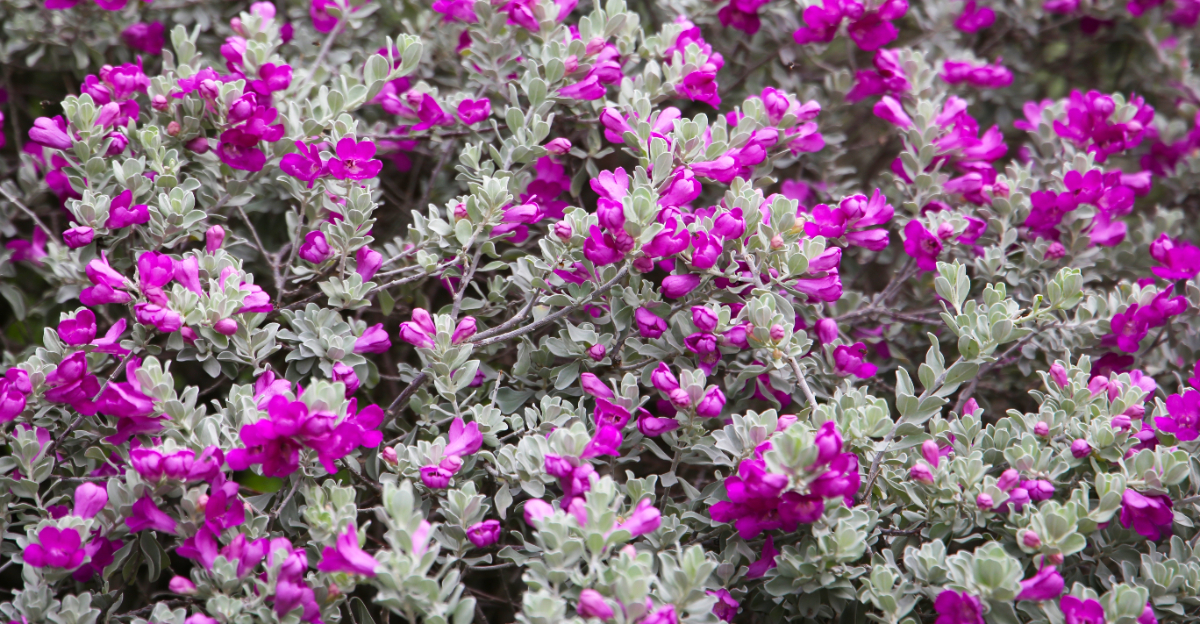
Arborvitae can seem like an easy privacy fix, yet in Arizona it often struggles in spots where conditions are not ideal. Harsh sun, dry soil, and uneven moisture can leave those plants looking thin or stressed instead of full and reliable.
You might expect a solid screen to form over time, but gaps can start to show and the look never quite comes together the way you planned. That becomes more noticeable in areas where other plants also have a hard time holding up.
Some shrubs handle those tougher conditions without falling apart, and they tend to perform better in places where common choices fail.
They grow with the climate instead of reacting against it, which makes a big difference in how the yard looks over time.
Choosing the right type of plant for those spots can change how quickly that space feels more private and complete.
1. Texas Sage Handles Heat And Drought With A Dense Screen
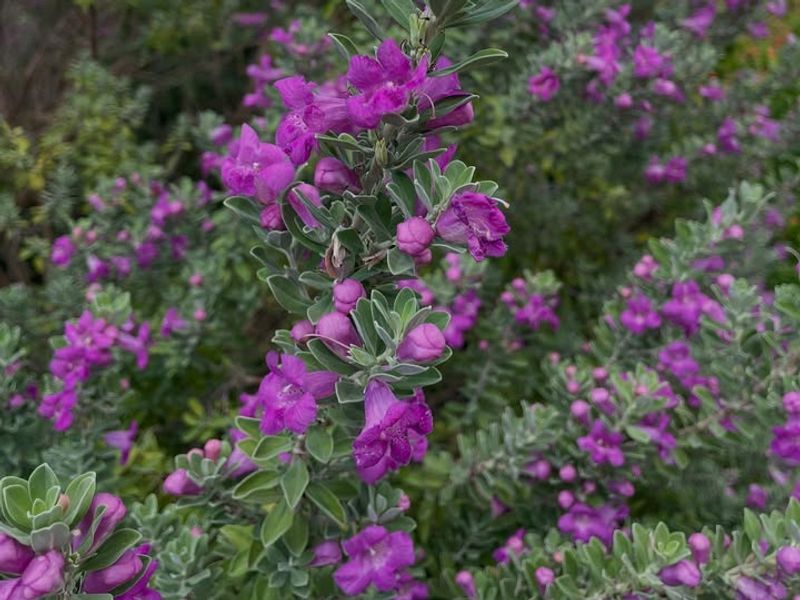
Pull up to almost any Tucson neighborhood during monsoon season and you’ll spot Texas Sage exploding with purple blooms like it just got rained on for the first time in years — because it literally has.
Known botanically as Leucophyllum frutescens, this shrub reads moisture in the air and responds fast, which is why locals call it the Barometer Bush.
In Arizona’s low desert, Texas Sage earns its spot as a privacy screen through sheer density. Branches grow tight and close, and the silvery-green foliage stays on year-round.
Mature plants typically reach five to eight feet tall without much help, which is plenty for blocking a neighbor’s view or softening a block wall.
Planted in a row about four feet apart, a Texas Sage hedge fills in reasonably well within two to three growing seasons. Full sun and fast-draining soil are non-negotiable — soggy roots cause real problems.
Avoid clay-heavy spots if you can, or amend heavily before planting. It handles reflected heat from walls and pavement better than most shrubs in Arizona, which makes it useful in tight urban spaces where arborvitae would cook within a season.
Once established, Texas Sage needs very little supplemental water and too much irrigation can actually reduce flowering and cause root issues.
2. Arizona Rosewood Makes A Reliable Evergreen Privacy Screen
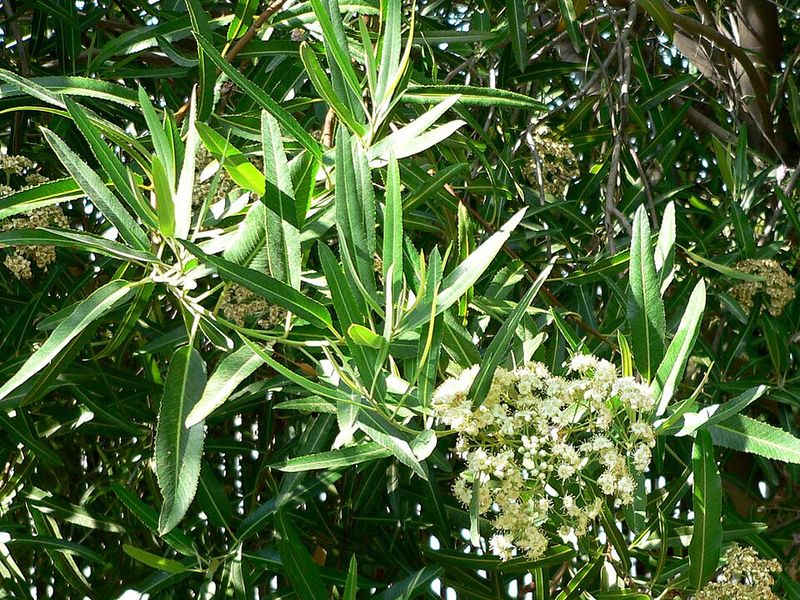
Arizona Rosewood, or Vauquelinia californica, doesn’t get nearly enough credit. Walk through the rocky canyons of central Arizona and you’ll find it growing in tight clusters on dry slopes where almost nothing else bothers to show up.
That kind of toughness translates well to a backyard privacy screen.
What separates this shrub from most options is the foliage. Leaves are dark, leathery, and serrated — they stay green through summer heat and winter cold without dropping.
That evergreen reliability is exactly what most Arizona homeowners need when they want year-round screening along a property line.
Height-wise, Arizona Rosewood can push ten to fifteen feet over several years, which is more than enough to block sightlines from a two-story neighbor. Growth is steady but not rushed, so patience is part of the deal.
Your Arizona Garden Changes Every Week. Your Plan Should Too.
Gardening in Arizona changes quickly throughout the season. Every Friday you’ll receive a simple weekly plan showing exactly what to plant, prune, fertilize, harvest, and protect so you never miss the right timing.
Spacing plants around five feet apart works well for a solid hedge line. It handles full sun comfortably and tolerates thin, rocky soil — the kind that makes arborvitae give up fast.
Small white flower clusters appear in late spring and attract pollinators, which is a nice bonus. In areas above 2,500 feet elevation across Arizona, this shrub performs especially well compared to plants bred for milder climates.
Deep watering during long dry stretches helps Arizona Rosewood stay fuller and maintain stronger growth, especially while the hedge is still filling in.
3. Quailbush Grows Fast In Poor Or Salty Soil
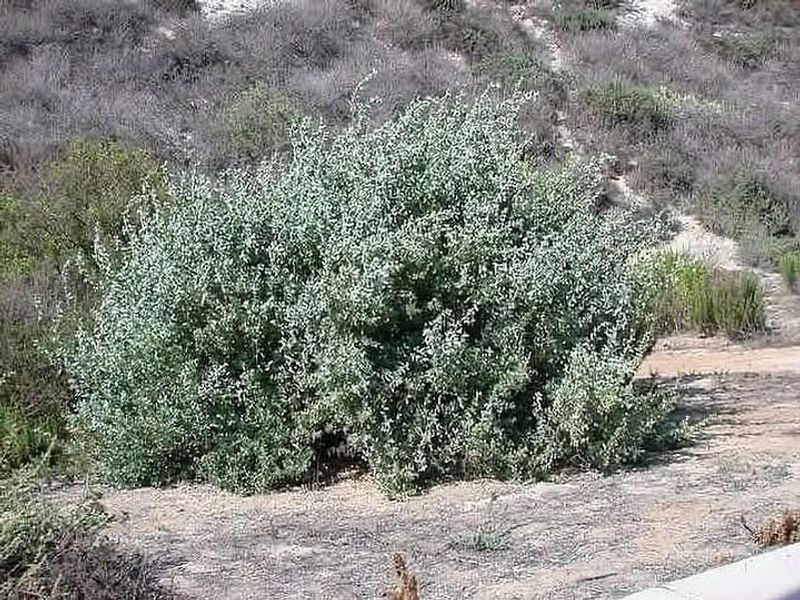
Salty, compacted, nutritionally poor soil stops most shrubs cold — but Quailbush, Atriplex lentiformis, almost seems to prefer it.
Along roadsides and alkaline flats in western Arizona, this plant spreads wide and full in conditions that would stress most landscape choices.
That adaptability is hard to replicate with imported species like arborvitae.
Quailbush grows quickly for a native desert shrub. Under decent conditions, it can reach six to ten feet tall and spread just as wide, creating a broad, informal screen that fills in faster than many alternatives.
The silvery-gray foliage reflects heat and gives the plant a distinctive look that blends naturally into the Arizona landscape.
One honest caveat: Quailbush grows as a rounded, sprawling form rather than a tight upright column. If you need a narrow hedge, it’s not the right pick.
But for covering a wide stretch of fence line or blocking a distant eyesore, it works well. Birds use it constantly for cover and nesting, which adds real ecological value.
Plant it in full sun and don’t bother with rich amended soil — that’s not where it thrives. Spacing around six feet apart lets plants eventually merge into a continuous screen over two to four years depending on rainfall and soil conditions in your part of Arizona.
Light pruning once or twice a year can help keep Quailbush from getting too loose and maintain a more uniform screen.
4. Jojoba Creates A Low Water Screen But Grows Slowly
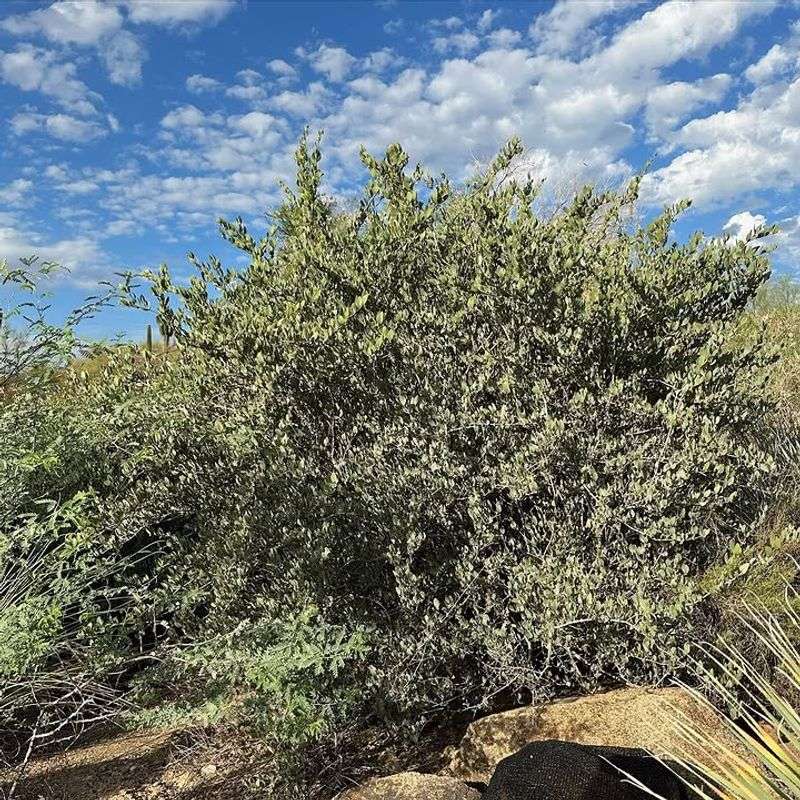
Jojoba, Simmondsia chinensis, is one of those plants that rewards patience. Growth in the first few years is slow — sometimes frustratingly slow — but what eventually develops is a dense, leathery-leafed shrub that handles Arizona’s harshest conditions without flinching.
Once it reaches full size, it’s genuinely impressive as a privacy screen.
Mature jojoba plants can hit six to ten feet tall and nearly as wide, with stiff, upright branching that holds its shape well. The leaves are thick and waxy, which helps the plant manage intense heat and dry air without losing much moisture.
That same trait makes it one of the most drought-tolerant privacy options available for low-elevation Arizona landscapes.
The slow growth rate is a real consideration. Expect three to five years before you have meaningful privacy from a jojoba hedge.
Planting nursery-grown stock rather than seeds helps cut that timeline somewhat. Space plants around four feet apart to encourage a tighter screen.
Full sun and excellent drainage are critical — jojoba handles rocky caliche soils better than most landscape shrubs. Male and female plants exist separately, so a mixed planting will produce seeds that attract wildlife.
Arborvitae planted in southern Arizona typically struggles within a few summers, while jojoba just keeps going year after year without much intervention.
Male and female plants exist separately, so if seed production matters, it would be best to include at least one male for every few female plants.
5. Wolfberry Builds A Dense Barrier But Can Thin In Stress
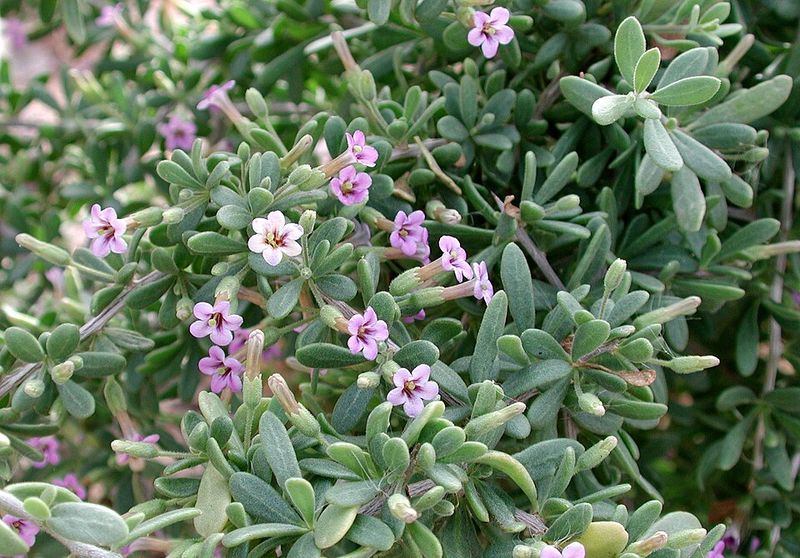
Sharp thorns and dense branching make Wolfberry, Lycium fremontii, one of the most effective natural barriers available in Arizona. Birds love the bright red berries, deer tend to avoid the thorns, and the plant itself asks for very little once it’s established in the ground.
As a security screen, it’s hard to beat.
Wolfberry typically grows four to eight feet tall depending on water availability and soil quality. In good years with decent monsoon rainfall, it fills in thick and full.
During extended dry stretches or heat stress, interior branches can drop leaves and thin out noticeably — that’s the honest trade-off with this plant. It bounces back when conditions improve, but the thinning is real and worth planning around.
Planting in full to partial sun works well. Wolfberry tolerates poor, rocky soil and doesn’t need fertilizer.
Space plants around four feet apart for a tighter hedge. The thorny stems make it a solid deterrent along property boundaries where security matters as much as visual screening.
Spring flowers are small but attract native bees, and the berries that follow draw cactus wrens, mockingbirds, and other Arizona wildlife.
If you’re okay with some seasonal variation in density, Wolfberry delivers strong privacy performance for a fraction of the water arborvitae would demand in this climate.
Occasional selective pruning helps manage shape and encourages denser growth without removing too much of the plant’s natural protective structure.
6. Brittlebush Works Best As A Filler In Screens
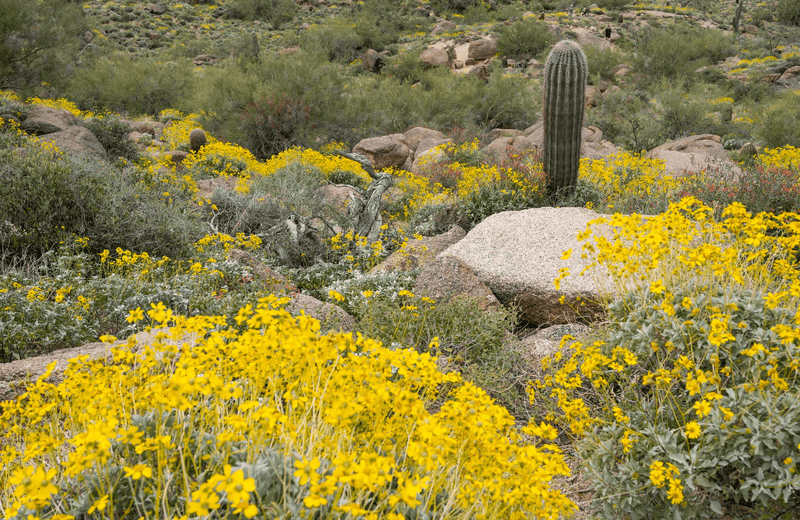
Brittlebush, Encelia farinosa, is not going to anchor your privacy screen on its own — but used as a filler between taller shrubs, it earns its place.
The silvery mounding form fills in visual gaps low to the ground, and the bright yellow flowers that appear from late winter through spring make the whole planting look intentional rather than patchy.
Typical size runs two to four feet tall and about as wide. That’s not enough height for serious privacy, but paired with taller plants like Hop Bush or Arizona Rosewood, Brittlebush closes the gaps at knee and waist level where views often sneak through.
It grows quickly from seed or transplant and tends to fill its space within one full growing season.
Summer heat causes Brittlebush to drop leaves and go semi-dormant, which is normal behavior for this Arizona native. The plant looks rough in August, but recovers well once temperatures drop and fall rains arrive.
Full sun is a must — shade causes leggy, weak growth. Soil quality barely matters; this plant grows in rubble and roadside gravel across the Sonoran Desert without complaint.
Don’t overwater it, especially in summer. As a standalone privacy shrub, it falls short.
As a supporting player in a layered mixed hedge, Brittlebush adds texture and color that makes the whole screen look more natural and finished.
7. Apache Plume Suits Higher Elevations With A Light Screen
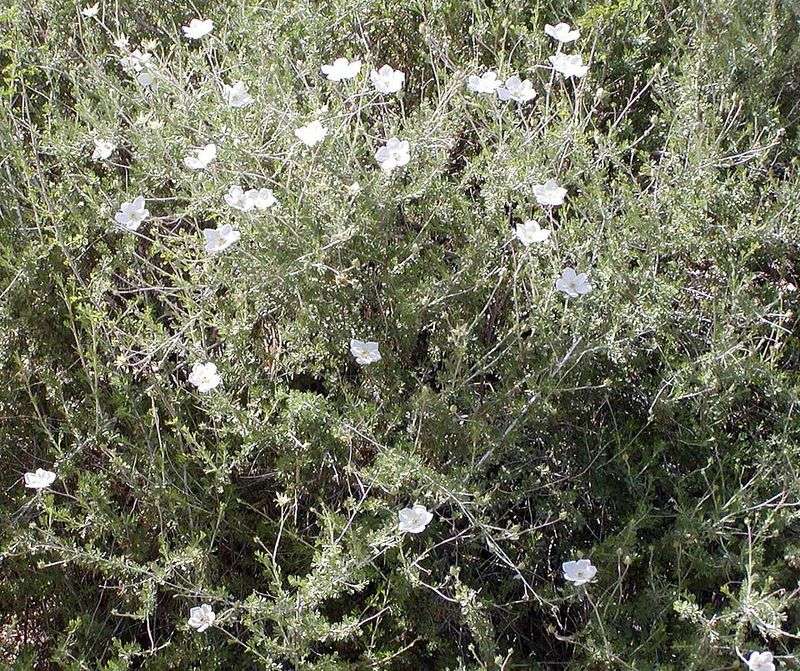
Up above 4,500 feet in Arizona, the plant palette shifts considerably, and Apache Plume, Fallugia paradoxa, steps into a role that few other natives can fill at that elevation.
White rose-like flowers appear in spring, followed by feathery pink seed plumes that catch the light and drift in the breeze — it’s genuinely one of the more striking native shrubs in the state.
Privacy screening is more on the informal side with Apache Plume. Plants reach three to six feet tall and spread in an open, airy form rather than a solid wall.
You won’t get the tight visual block that a Hop Bush hedge provides, but for softening a view, creating a natural-looking boundary, or breaking up a fence line, it works well in high-country Arizona settings like the White Mountains or Prescott area.
Rocky, well-drained soil suits it best. Apache Plume handles cold winters at elevation far better than most low-desert shrubs, and it tolerates dry conditions once roots are settled in.
Overwatering is a more common problem than underwatering with this plant. Space plants around three to four feet apart for a fuller effect.
Arborvitae can survive at higher elevations in Arizona, but Apache Plume fits the native ecosystem, supports local wildlife, and requires far less supplemental water over the long term.
8. Desert Hackberry Handles Harsh Conditions As A Tough Screen
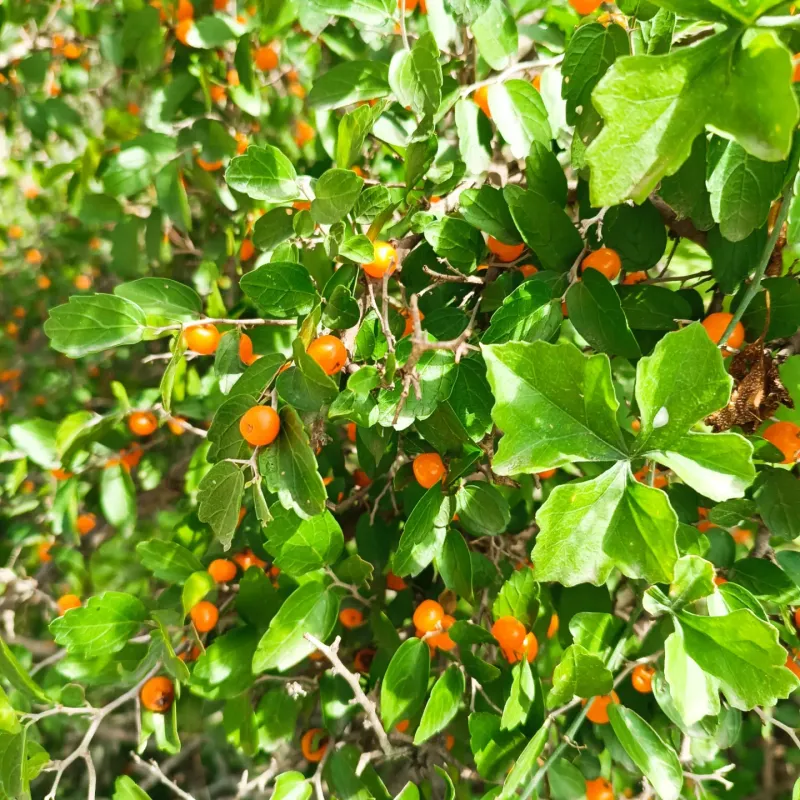
Desert Hackberry, Celtis pallida, is the kind of plant that thrives in spots where you’ve already given up on finding something that works.
Rocky washes, caliche hardpan, full blasting sun, and minimal rainfall — this shrub takes all of that and still produces a dense, thorny mass of branches that wildlife and privacy screens both benefit from.
Height ranges from four to eight feet depending on conditions, with a naturally tangled, spreading form. The small orange-red berries that ripen in fall attract a long list of Arizona birds including thrashers, quail, and mockingbirds.
The thorny stems discourage foot traffic and create a barrier that’s genuinely hard to push through, which adds a practical security benefit beyond just visual screening.
Full sun works best, and soil quality barely matters — Desert Hackberry grows in some of the most inhospitable ground in the Sonoran Desert.
Supplemental water during the first summer helps roots get settled, but after that, natural rainfall often carries it through in most parts of Arizona below 4,000 feet.
The deciduous nature means some leaf drop in late fall, so screening thins out a bit in winter. That’s worth knowing before you plant.
Still, as a tough, wildlife-friendly, low-input screen in difficult spots where arborvitae simply can’t survive, Desert Hackberry is a strong and practical choice.