When To Prune Winter Damaged Arborvitae In Michigan
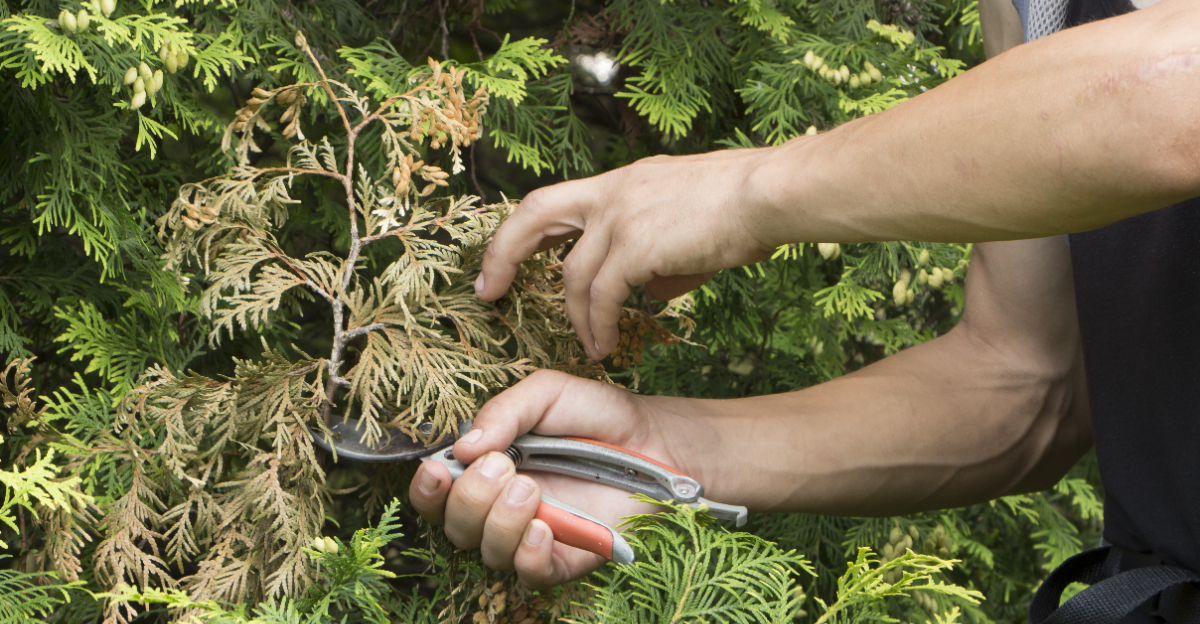
Arborvitae often come through Michigan winters looking a bit worn, with browned tips or uneven patches that make homeowners reach for pruners right away. It’s tempting to cut back the damage as soon as you see it, but timing matters more than many people realize.
Pruning too early, especially while cold weather is still possible, can expose tender growth and lead to more stress for the plant. In Michigan, where spring temperatures can shift quickly, waiting for the right moment helps arborvitae recover more naturally.
As the weather warms, you’ll start to see which areas are truly damaged and which ones may still bounce back. Knowing when to prune can make the difference between helping your shrub recover or setting it back even further.
With a little patience, you can guide your arborvitae toward fuller, healthier growth for the season ahead.
1. Wait Until Early To Mid Spring Before Pruning
Patience truly pays off when it comes to pruning winter-damaged arborvitae in Michigan. Many homeowners feel the urge to grab their shears the moment snow melts, but rushing in too early is one of the most common mistakes made each spring.
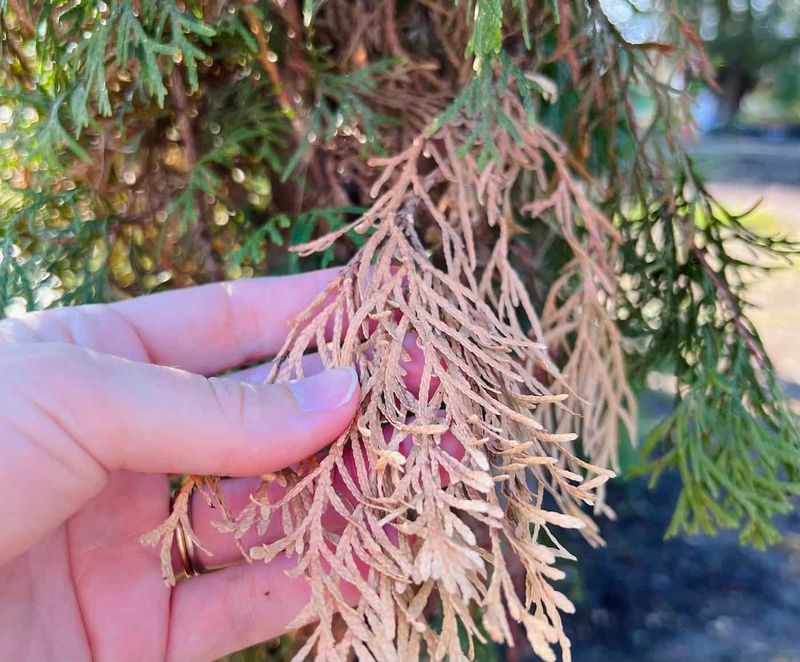
The cold months in Michigan can make foliage look worse than it actually is, and some branches that appear brown may still bounce back on their own.
April or early May is typically the sweet spot for pruning in Michigan. By that point, temperatures have stabilized enough to reduce stress on the plant, and you can clearly see which areas are struggling and which ones are already pushing out new life.
Waiting even a few extra weeks can give you a much clearer picture of what truly needs to go.
Arborvitae are surprisingly resilient when given the right conditions and enough time to show their recovery potential. Rushing the process often leads to removing branches that would have greened up beautifully on their own.
Think of early to mid spring as your window of clarity, where nature shows you exactly what needs attention and what should simply be left alone to recover at its own pace throughout the growing season.
2. Look For New Green Growth Before Making Any Cuts
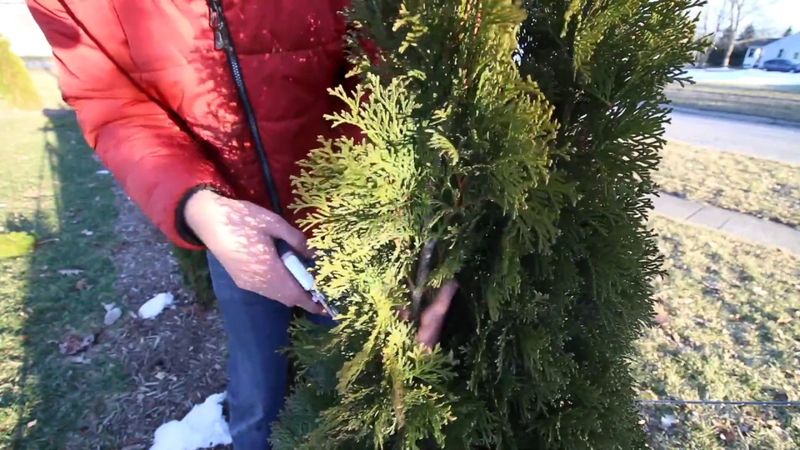
Fresh green tips are your best signal that a branch still has life in it. Before you even pick up your pruning shears, take a slow walk around your arborvitae and look closely at the tips of each branch.
In Michigan, new growth typically starts pushing through in April, and those tiny bursts of bright green are your green light to start assessing damage more accurately.
Scratching the bark lightly with your fingernail is another quick trick gardeners swear by. If the layer underneath looks green or cream-colored, the branch is still very much alive and working.
If it looks dry, tan, or crumbly all the way through, that branch has likely run its course and can be removed without worry.
Waiting for visible new growth before pruning gives you a major advantage because you stop guessing and start making informed decisions.
Your Michigan Garden Changes Every Week. Your Plan Should Too.
Gardening in Michigan changes quickly throughout the season. Every Friday you’ll receive a simple weekly plan showing exactly what to plant, prune, fertilize, harvest, and protect so you never miss the right timing.
Michigan winters vary a lot from year to year, and some seasons bring heavier ice and snow loads that cause more widespread browning than others.
A branch that looks completely brown on the outside might surprise you with a cluster of green buds pushing through by early May. Give your arborvitae that chance before assuming the worst, and you will likely save branches you would have otherwise removed too soon.
3. Only Remove Fully Brown And Brittle Branch Tips
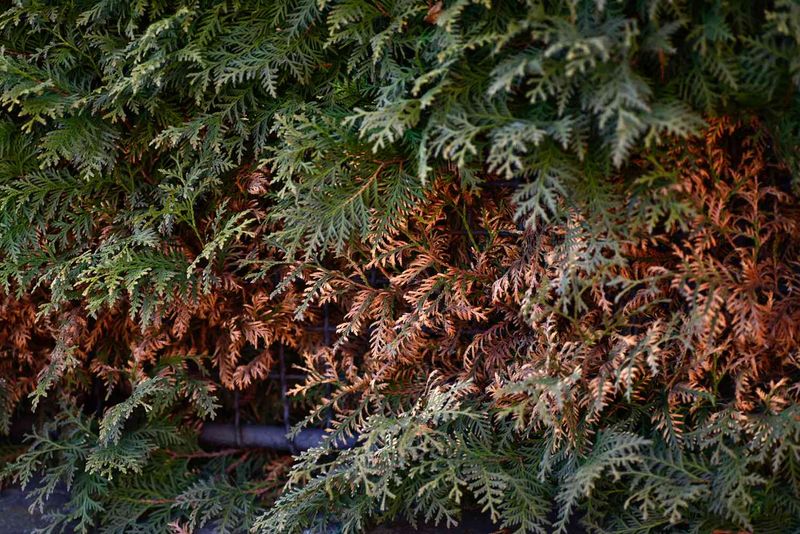
Not every brown spot on your arborvitae needs to come off, and that distinction matters more than most people realize.
Michigan winters create a range of damage, from light surface browning caused by wind and cold temperatures to deeper damage affecting the whole branch structure.
The key is to only remove the portions that are clearly beyond recovery, meaning fully brown, brittle, and showing zero signs of green tissue anywhere along the branch.
When you pinch a damaged tip and it crumbles or snaps without any flexibility, that is a reliable sign it needs to go. Healthy or recovering branches will have some give to them, bending slightly rather than breaking.
Use clean, sharp pruning shears to make smooth cuts just above a point where you can still see green foliage or growth.
Selective removal like this keeps the plant looking as natural as possible while still cleaning up the winter damage effectively. Arborvitae have a layered, textured look that fills in well when pruned thoughtfully rather than aggressively.
Michigan gardeners who take this careful approach tend to see much faster recovery throughout the spring and summer growing season.
Removing only what is truly gone encourages the surrounding healthy growth to spread outward and fill gaps without the plant expending extra energy trying to recover from over-cutting.
4. Avoid Cutting Into Old Bare Wood On The Branches
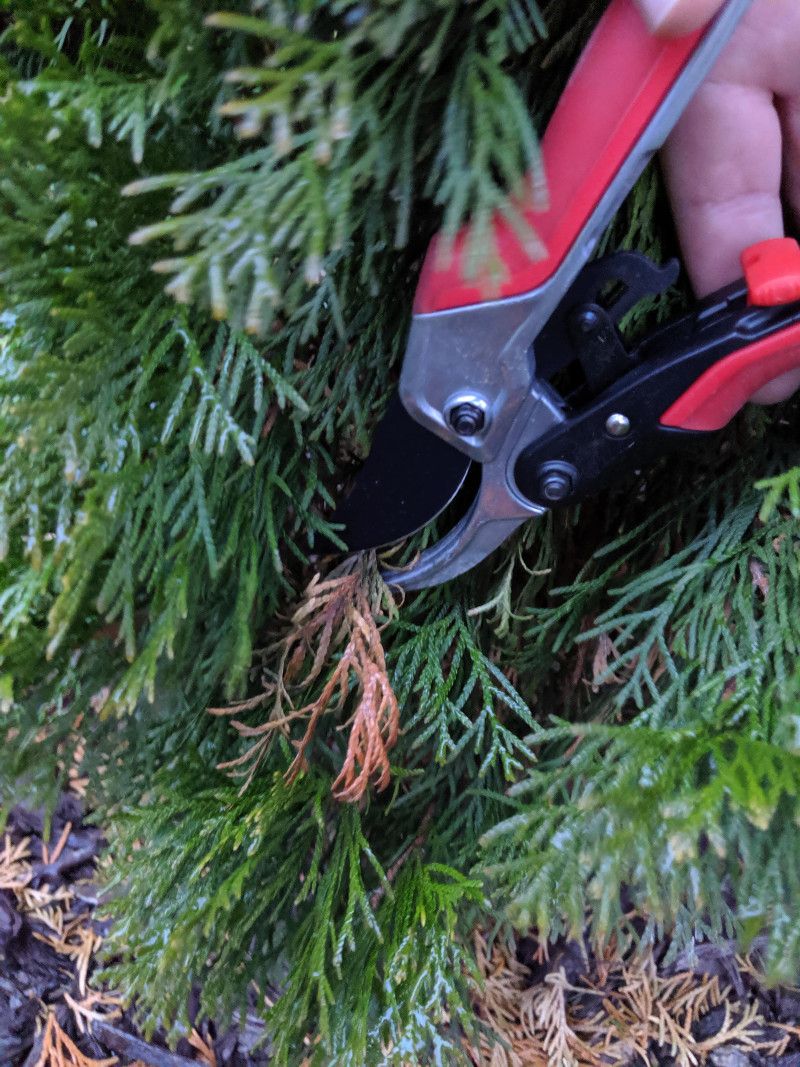
One of the most important rules about arborvitae is that they simply do not regenerate foliage from old bare wood. Unlike many other shrubs and trees, arborvitae lack the ability to push new growth from woody stems that no longer carry any green needles.
This biological limitation makes it critical to never cut so far back that you are left with bare, leafless branches sticking out from your plant.
Michigan gardeners sometimes make this mistake after heavy snow or ice damage when large sections of the plant look brown and stripped. The instinct is to cut back hard and start fresh, but that approach usually leaves permanent bare spots that never fill back in.
Always make sure your cut lands in an area where green foliage is still present, even if it is minimal.
Think of it as a boundary you should never cross. The green foliage zone is where the plant stores energy and produces new growth, so keeping cuts within that zone protects the plant’s ability to recover.
If an entire branch from base to tip has no green remaining, it is safer to remove it entirely at the base rather than leaving a bare stub.
Bare stubs on arborvitae in Michigan can also become entry points for disease and pests, making full removal the cleaner and smarter option overall.
5. Do Not Prune During Cold Snaps Or Frost Risk Periods
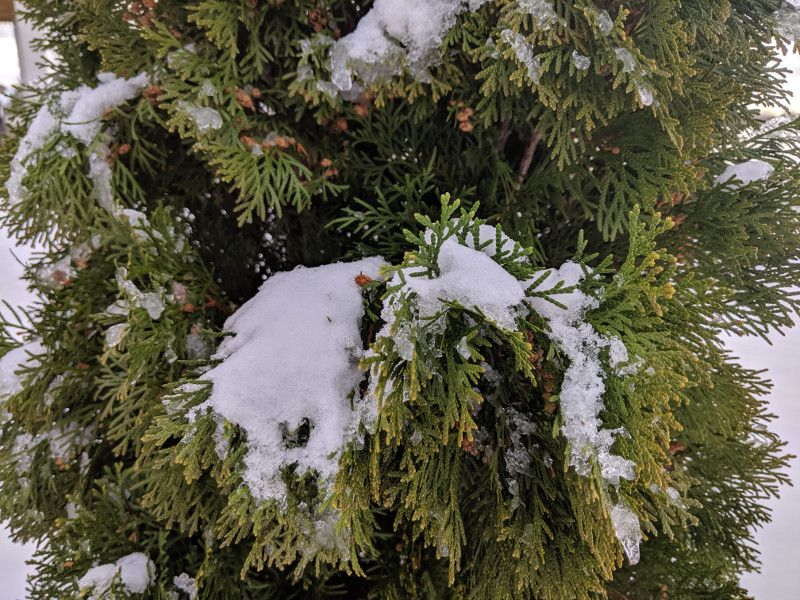
Michigan spring weather has a way of keeping gardeners on their toes, and that unpredictability plays a big role in how and when you should prune arborvitae. A stretch of warm days in early spring can make it feel like the season has fully arrived, but it is not uncommon for temperatures to dip again unexpectedly.
When arborvitae are pruned too early, the freshly cut areas and newly exposed tissue become more sensitive to those sudden changes. These vulnerable spots can experience additional stress if a freeze follows soon after pruning.
Instead of helping the plant recover, poorly timed cuts can slow its progress and affect overall appearance. This is why patience is so important when planning any pruning work in spring.
A simple but effective habit is checking the extended forecast before getting started. Many experienced gardeners wait until the risk of frost has clearly passed in their region.
In Michigan, that timing can vary quite a bit depending on location, with northern areas warming up later than southern ones. Waiting for more stable conditions allows the plant to respond properly and continue growing without unnecessary setbacks.
6. Light Shaping Is Fine, Heavy Pruning Is Not
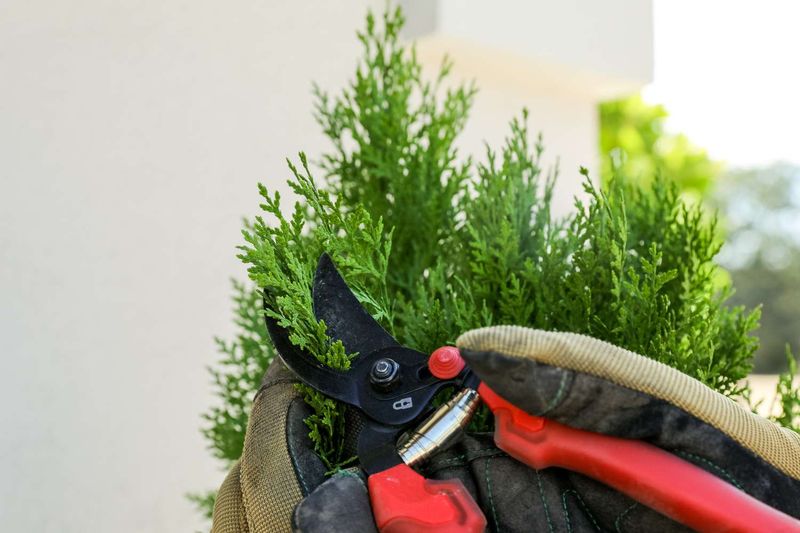
After a long Michigan winter, arborvitae may look a bit uneven, with some tips showing wear from cold, wind, or snow. It is completely understandable to want to reshape the plant and restore a clean, uniform look.
However, going too far with pruning at this stage can do more harm than good. What the plant really needs is a gentle approach that supports recovery rather than forcing it to overcompensate.
Arborvitae rely on their existing foliage to produce energy, especially after months of winter stress. Removing too much at once can reduce their ability to bounce back effectively.
Instead of cutting deeply into the plant, focus on light shaping. Trim only the damaged tips and remove any branches that are clearly not coming back.
Keeping the plant’s natural form intact is key. Small, careful cuts allow it to direct energy into healthy new growth without added strain.
This approach leads to a fuller, more balanced appearance over time. With a bit of restraint and attention to detail, your arborvitae will recover steadily and look even better as the season progresses.
7. Late Spring Is The Cutoff For Major Cleanup
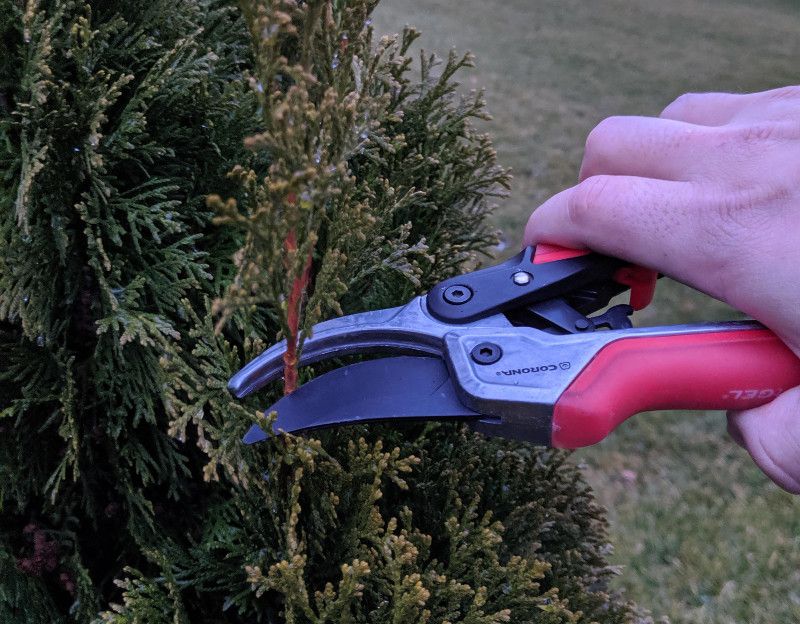
As spring moves along in Michigan, arborvitae begin to shift from recovery into active growth. By late May, most plants are producing fresh, vibrant foliage and gaining momentum for the season.
This is the point where timing becomes especially important, because pruning too late can interfere with that natural progress. Major cleanup should be completed before this surge of growth is fully underway.
Once the plant is actively developing new shoots, it is best to step back and let it continue without interruption. Cutting into fresh growth can redirect energy and slow overall development, which may affect how full and healthy the plant looks later in the season.
Late spring serves as a practical deadline for most pruning tasks. Finishing your work before this period allows the plant to move forward without disruption.
After that, the focus should shift to simple observation and care rather than trimming. Allowing arborvitae to grow freely during this time supports a stronger structure and a more consistent appearance throughout the warmer months.