Native Oregon Plants That Feed Pollinators From Spring Into Fall Without A Gap
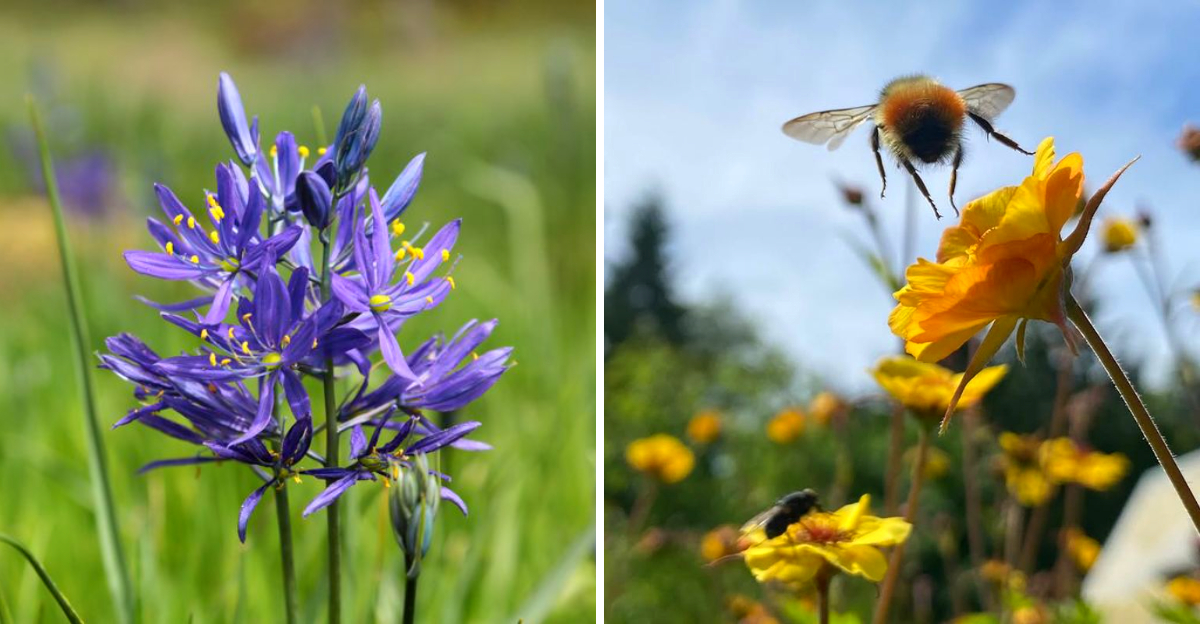
Oregon gardeners have a distinct advantage when it comes to supporting bees, butterflies, and hummingbirds, but success lies in the timing.
Because our climates vary so wildly – from the rainy western valleys to the high desert east of the Cascades – bloom times can shift by several weeks depending on your zip code.
No single native plant can support pollinators all year on its own, which is why bridging the “floral gap” is so essential.
By combining specific native species with staggered bloom times, you can ensure nectar and pollen are available from early spring through late fall.
These featured Oregon natives represent a thoughtful mix designed to keep your garden buzzing without interruption.
1. Red-Flowering Currant Offers Early Nectar On A Native Shrub
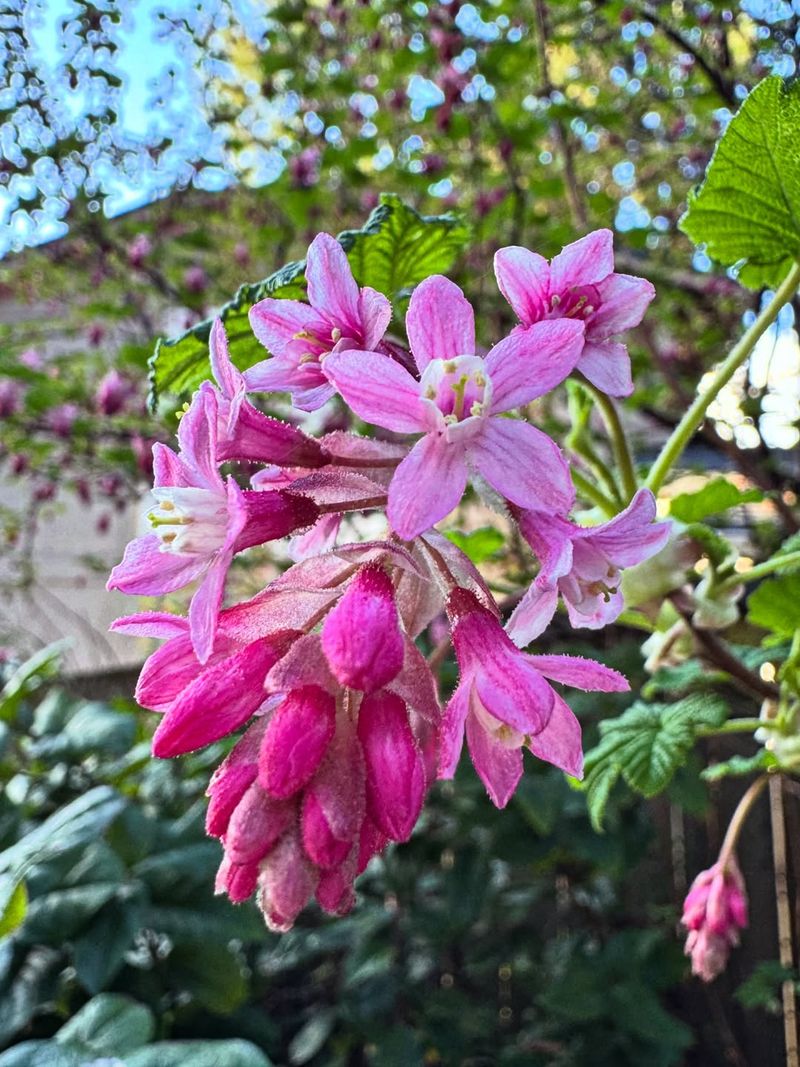
Before most Oregon gardens have woken up from winter, Red-Flowering Currant is already putting on a show.
This native deciduous shrub pushes out drooping clusters of deep pink to magenta flowers as early as February in warmer western Oregon valleys, and a bit later in cooler mountain foothills.
That early timing makes it one of the most valuable shrubs you can include if you want to support pollinators from the very start of the season.
Rufous hummingbirds returning from their winter migration often arrive just as Red-Flowering Currant hits its peak bloom, which is no coincidence.
Native bumblebee queens, newly emerged and searching for food to build their colonies, also visit the flowers eagerly.
Few other native plants offer that kind of reliable early resource at a time when little else is blooming.
In Oregon landscapes, this shrub adapts well to partial shade or full sun and tolerates the heavy clay soils common in the Willamette Valley. It grows naturally along forest edges and stream banks, so it handles some seasonal moisture without complaint.
Once established, it needs little supplemental water through Oregon’s dry summers. Plants typically reach six to ten feet tall and work beautifully as a flowering hedge or woodland border plant.
The blue-black berries that follow the blooms also attract birds later in the season.
2. Common Camas Brings Spring Color And Early Pollen
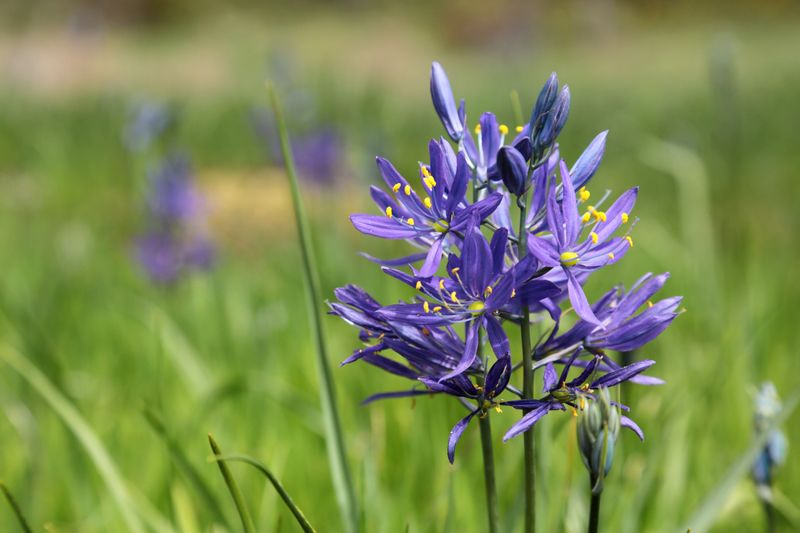
Walking past a wet Oregon meadow in April or May and spotting a sweep of blue-purple flowers stretching across the ground is one of those moments that stops you in your tracks. Common Camas has that effect.
This native bulb produces tall flower spikes packed with star-shaped blooms in shades ranging from pale lavender to rich violet-blue, and it typically reaches peak bloom right as spring warms into a comfortable rhythm across much of Oregon.
The pollen-rich flowers attract native bees in impressive numbers, including sweat bees, mining bees, and bumblebees that are actively foraging to build their early-season colonies.
Camas meadows once covered large portions of the Willamette Valley before most of that habitat was converted to agriculture, making every garden planting a small but meaningful contribution to the region’s native plant heritage.
Common Camas grows best in spots that stay moist through spring but dry out somewhat in summer, which mirrors its natural habitat in Oregon’s seasonal wetlands and wet prairies. It thrives in heavy soils and full to partial sun.
Your Oregon Garden Changes Every Week. Your Plan Should Too.
Gardening in Oregon changes quickly throughout the season. Every Friday you’ll receive a simple weekly plan showing exactly what to plant, prune, fertilize, harvest, and protect so you never miss the right timing.
Plant bulbs in fall for spring blooms, and consider grouping them in clusters of a dozen or more to create the kind of visual impact that draws both pollinators and admiring neighbors.
After blooming, the foliage fades back naturally as summer begins, making room for other plants to take over the season.
3. California Poppy Keeps Bright Blooms Going For Months
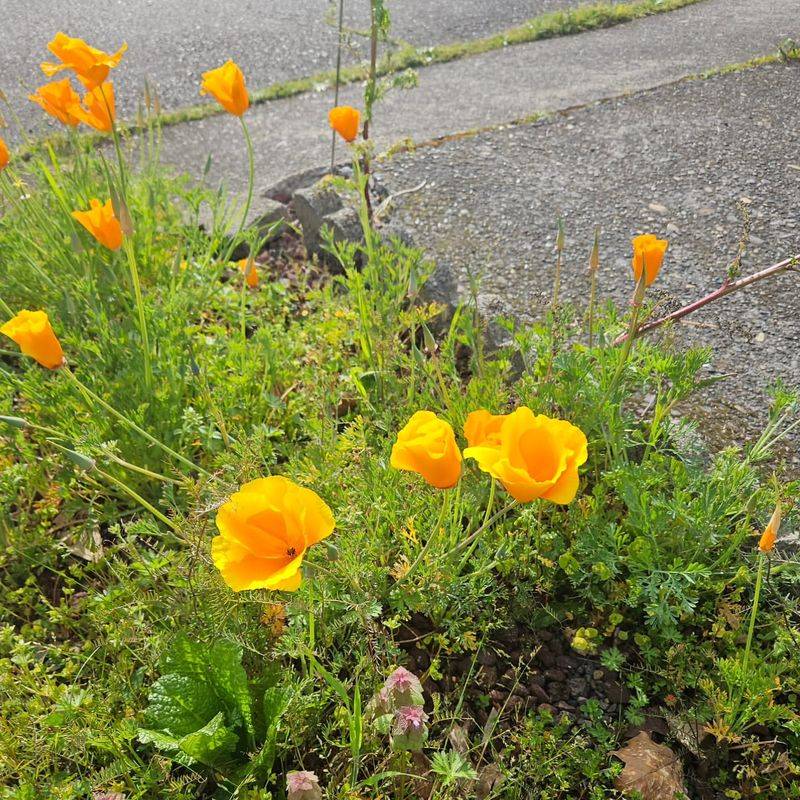
California Poppy has a cheerful stubbornness that gardeners tend to appreciate.
Once it settles into a sunny spot with well-drained soil, it blooms generously from late spring through summer and often into early fall, reseeding itself year after year without much encouragement.
Despite its name, this species is native across much of the Pacific Coast and grows readily throughout Oregon, particularly in sunny, open areas with lean or sandy soils.
The vivid orange, cup-shaped flowers open wide on sunny days to expose a generous supply of pollen, which native bees collect enthusiastically.
Sweat bees and small native bees are especially frequent visitors, often seen rolling around inside the flower as they gather pollen.
Because individual plants bloom for such an extended stretch, California Poppy helps bridge the gap between the flushes of spring wildflowers and the heat-loving plants that peak later in summer.
In Oregon gardens, this poppy thrives with almost no supplemental irrigation once established, which makes it especially useful in the droughty months of July and August when western Oregon goes weeks without measurable rainfall.
It self-sows reliably, so a small initial planting tends to expand on its own over time.
Avoid rich or heavily amended soils, since too much fertility pushes the plant toward leafy growth at the expense of flowers. A gravel mulch around plants actually helps mimic the rocky, open conditions where this species truly thrives.
4. Oregon Sunshine Adds Yellow Flowers Pollinators Love
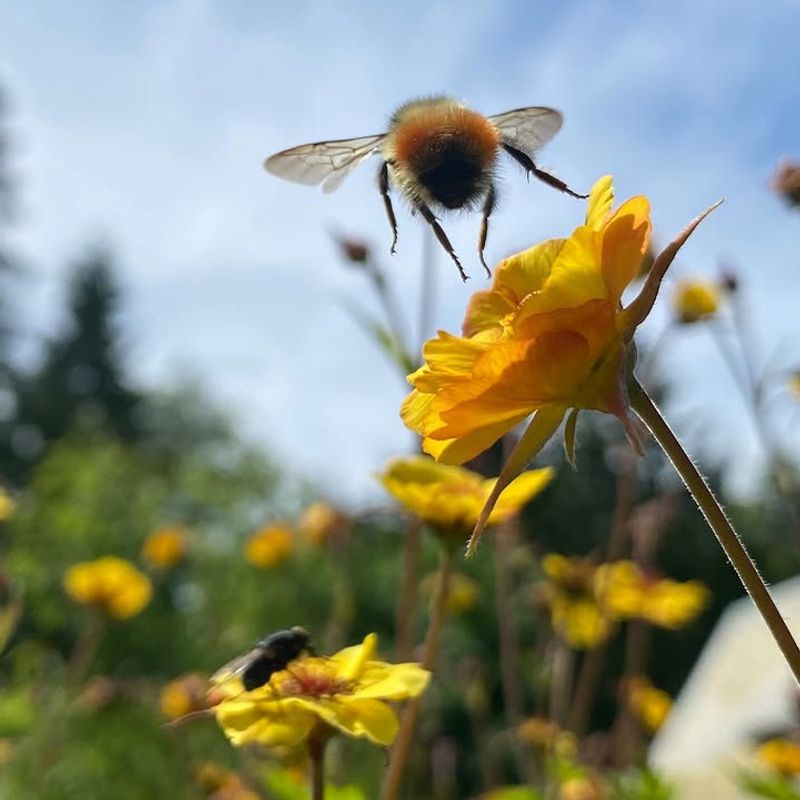
Few native plants deliver the kind of cheerful, sustained color that Oregon Sunshine brings to a dry summer garden.
Known botanically as Eriophyllum lanatum, this low-growing perennial native covers itself in bright yellow, daisy-like flowers from late spring into midsummer, with some plants continuing to bloom well past the summer solstice depending on site conditions and Oregon’s variable weather patterns.
Bees are strongly attracted to the open, accessible flower heads, which make pollen and nectar easy to reach for a wide range of species, including smaller native bees that sometimes struggle with more complex flower structures.
Butterflies also stop by regularly, and the plant’s dense, silvery-gray foliage provides a striking visual contrast to the golden blooms, making it attractive in the garden even when not in peak flower.
Oregon Sunshine earns its name by thriving in the driest, sunniest spots an Oregon garden can offer.
It grows naturally on rocky outcrops, dry slopes, and open meadows from the coast to the eastern high desert, showing impressive adaptability across the state’s diverse regions.
Sandy or gravelly, well-drained soil suits it best, and established plants handle Oregon’s summer drought with minimal fuss. Avoid overwatering or planting in heavy, wet soils, as root problems can develop under those conditions.
Use it along dry garden borders, rock gardens, or hillside plantings where it can spread naturally and fill in gaps with golden color through the warmest months.
5. Farewell-To-Spring Fills Beds With Late Spring Color
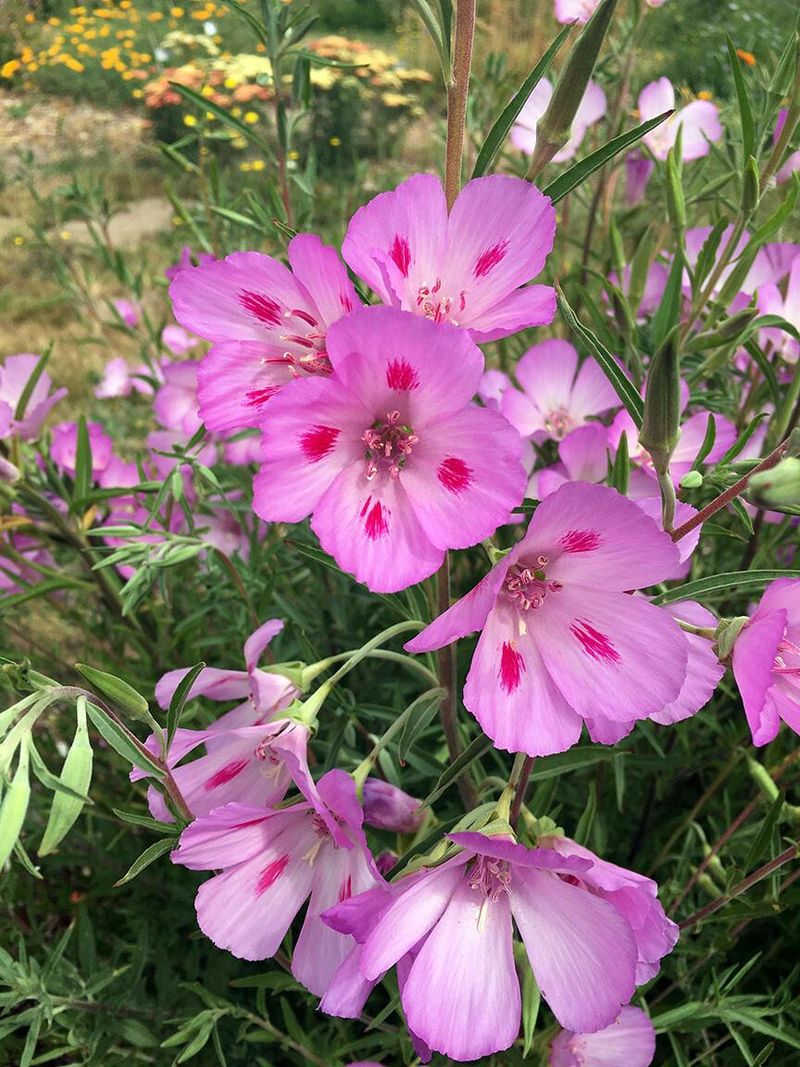
Clarkia amoena, commonly called Farewell-to-Spring, has a name that tells you exactly when to expect it.
This annual native blooms in late spring to early summer, often taking over right as the earliest spring wildflowers begin to fade, creating a seamless transition that pollinators rely on as temperatures climb toward summer highs.
Its cup-shaped flowers in shades of pink, lavender, and salmon are eye-catching and appear in generous clusters along upright stems.
Native bumblebees and mining bees visit the flowers frequently for both pollen and nectar.
The timing of Farewell-to-Spring’s bloom period is particularly useful in Oregon gardens because it occupies a window that can sometimes feel thin on flowering natives, especially in drier inland areas where early spring species finish quickly and summer bloomers haven’t fully started yet.
Growing Farewell-to-Spring from seed is straightforward. Direct sow in fall or early spring into a sunny spot with well-drained soil, and the plants handle Oregon’s cool, wet springs without complaint.
They prefer lean soils and tend to produce fewer flowers in heavily amended garden beds. Thin seedlings to about six inches apart so each plant has room to branch and bloom fully.
Once established, the plants reseed reliably from year to year, gradually spreading to fill a bed with color at exactly the right seasonal moment.
In warmer parts of Oregon, bloom can begin as early as May, while coastal gardens may see flowers stretching into July.
6. Varileaf Phacelia Extends Summer Bloom With Lavender Flowers
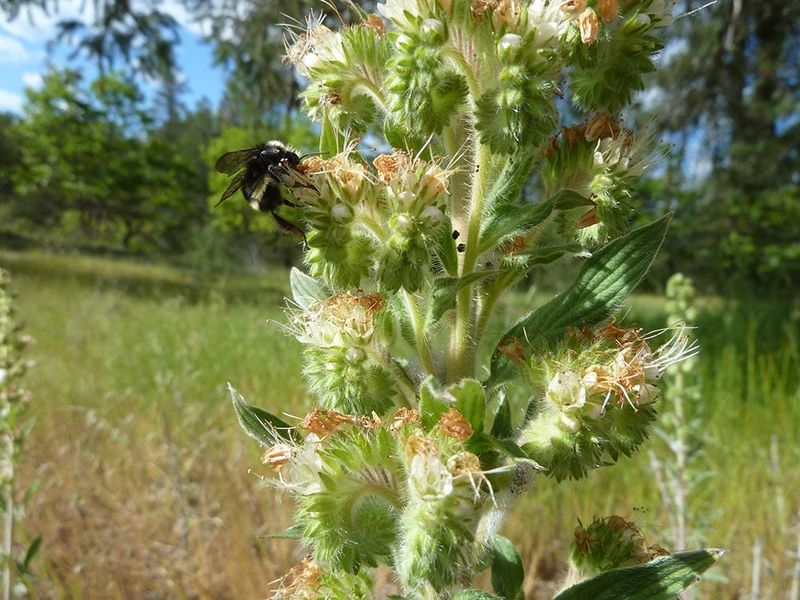
Phacelia heterophylla, known as Varileaf Phacelia, is the kind of plant that rewards gardeners who look past the flashier showstoppers.
Its coiled clusters of small lavender to whitish flowers may not win any beauty contests, but native bees absolutely love them.
Bumblebees, sweat bees, and specialist native bees visit the blooms with real enthusiasm, making this plant one of the more ecologically productive natives you can include in a summer pollinator planting.
Varileaf Phacelia blooms from late spring into summer in Oregon, with flowering stretching well into the warmer months depending on site conditions and moisture availability.
That mid-season timing slots it neatly between the earlier spring bloomers and the late-summer plants, helping to maintain a steady stream of forage for pollinators during a stretch of the season when many conventional garden plants slow down in the heat.
This native annual or biennial grows across a wide range of Oregon habitats, from open shrublands and disturbed roadsides to dry rocky slopes, and it adapts readily to garden conditions as long as it gets full sun and reasonably well-drained soil.
Direct sow seeds in fall or early spring, and expect the plants to establish themselves with minimal intervention.
The hairy stems and leaves give the plant a slightly rough texture that can deter some browsing animals, and the foliage itself adds interesting structure even before the flowers open. Letting plants reseed naturally keeps the colony going from year to year.
7. Goldenrod Provides Late-Season Food As Other Blooms Fade
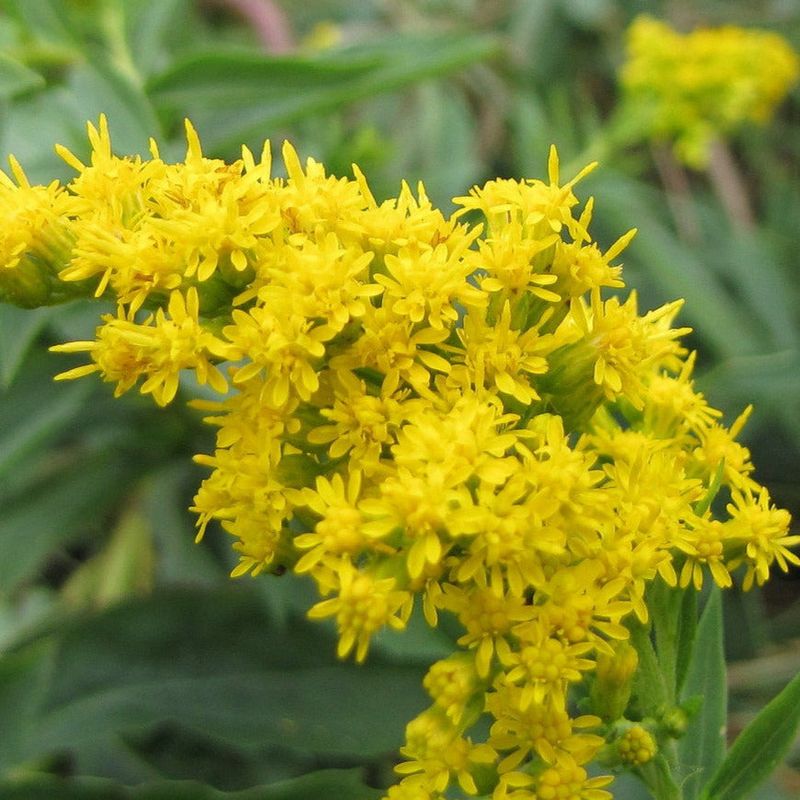
By August, a lot of the flashy spring and early summer flowers have wrapped up in Oregon gardens, and pollinators can start to feel the shortage.
Native Goldenrod steps in at exactly this point, sending up tall, arching plumes of tiny golden-yellow flowers that buzz with activity from bees, wasps, beetles, and butterflies all eager to stock up before the season turns.
Oregon has several native Goldenrod species, including Solidago elongata , that fit well into garden settings without the aggressive spreading habit sometimes associated with eastern species.
The late bloom timing of Goldenrod is arguably its greatest contribution to a season-long pollinator planting.
Many bee species, including native bumblebees, need to gather substantial pollen stores in late summer and early fall to raise the next generation of queens, and Goldenrod provides dense, accessible pollen in generous amounts.
Monarch butterflies passing through Oregon on migration also stop to feed on Goldenrod nectar, adding another layer of ecological value to this underappreciated native.
In Oregon gardens, Goldenrod grows well in full sun to light shade and tolerates a range of soil types, including the somewhat dry summer conditions typical of the Willamette Valley.
It spreads gradually by rhizome, so giving it a defined space or planting it in a naturalistic area works better than tucking it into a tightly managed border.
Cut plants back after blooming to tidy the garden and encourage strong growth the following season.
8. Rabbitbrush Carries Pollinator Color Well Into Fall
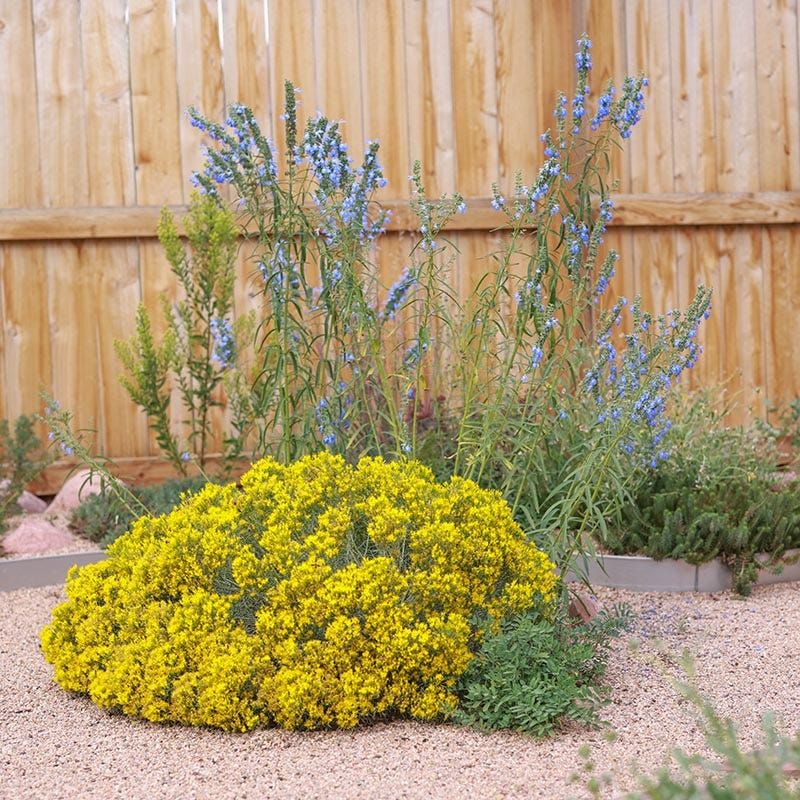
When September arrives and most Oregon gardens are winding down, Rabbitbrush is just getting started.
This tough native shrub, known botanically as Ericameria nauseosa, explodes into masses of golden-yellow, feathery flower clusters in late summer and fall, often continuing to bloom into October in warmer parts of Oregon’s high desert and interior valleys.
Few native plants carry color and pollinator value this deep into the season.
The flowers attract an impressive mix of late-season visitors, including native bees, monarch butterflies on their southward migration, painted ladies, and various bee flies.
For bumblebee colonies working to raise new queens before the cold arrives, Rabbitbrush can be a critically important late food source that helps determine whether the colony successfully overwinters.
That kind of ecological timing is hard to replicate with non-native ornamentals.
Rabbitbrush grows naturally across Oregon’s drier regions, including the Columbia Plateau and the high desert east of the Cascades, but it also adapts reasonably well to dry, sunny spots in western Oregon gardens as long as drainage is sharp and summer irrigation is kept minimal.
It can reach four to six feet tall and wide, forming a rounded, silver-stemmed shrub that looks attractive even when not in bloom.
The silvery foliage provides soft texture through spring and summer before the fall flower show begins. Pair it with Goldenrod and late-blooming asters for a fall pollinator combination that extends the season as far as Oregon weather allows.