North Carolina Plants That Bring Hummingbirds To Your Yard Starting In April
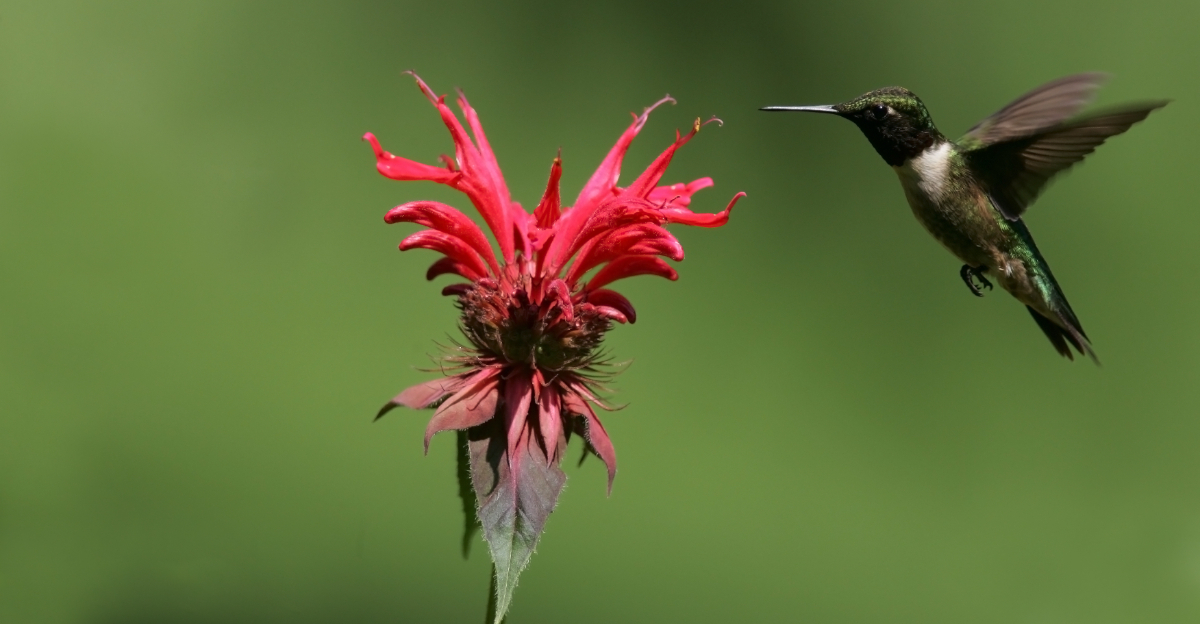
April is when hummingbirds begin returning to North Carolina, and the right plants can turn your yard into one of their favorite stops.
As these tiny birds search for nectar, they are drawn to bright colors, especially reds, pinks, and oranges, along with flowers that offer an easy source of food.
Planting with them in mind can bring constant movement and energy to your outdoor space just as spring gets going.
Native plants often work best because they bloom at the right time and fit naturally into the local environment.
With the mix of mild weather and longer days, April is the perfect window to get these plants established.
A thoughtful selection can keep hummingbirds visiting not just for a few weeks, but throughout the season.
If you want to see more of these fast, colorful visitors, the right plants can make all the difference.
1. Wild Columbine (Aquilegia canadensis)
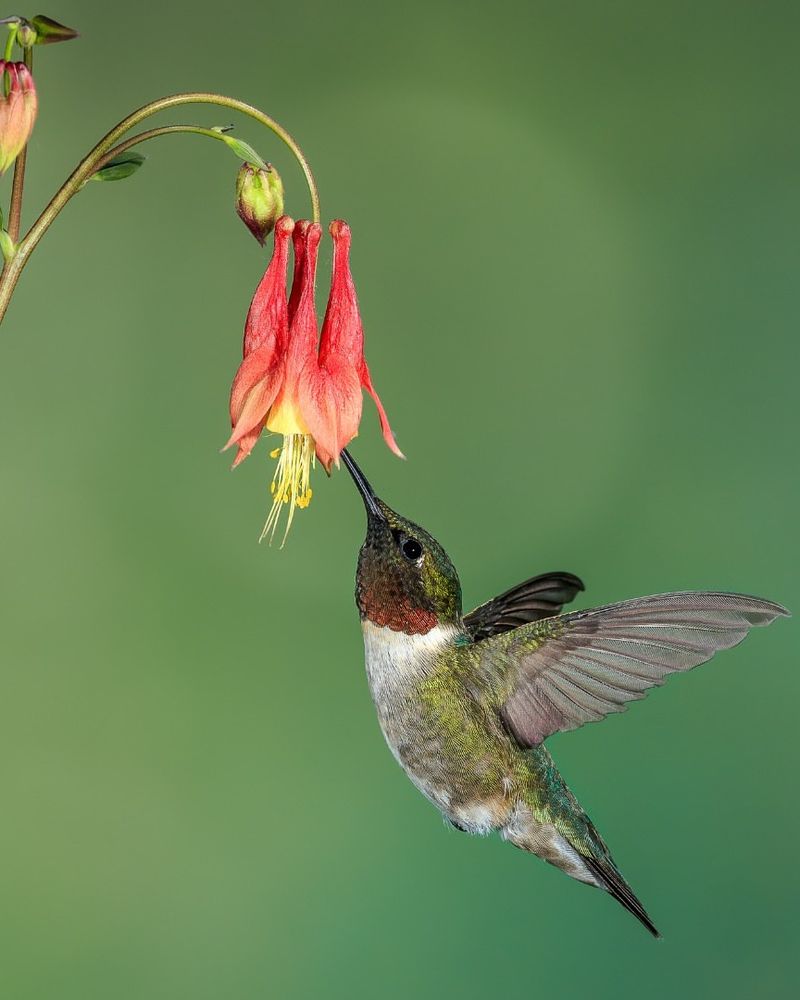
Picture dozens of tiny red and yellow lanterns swaying gently in the April breeze, and you have a pretty good idea of what wild columbine looks like in a North Carolina garden.
This native wildflower is one of the earliest and most reliable hummingbird magnets you can plant, and it starts blooming right when ruby-throated hummingbirds arrive back in the state.
The long, spurred petals are shaped perfectly for a hummingbird’s slender bill, making feeding easy and efficient.
Wild columbine thrives in partial shade, which makes it a fantastic choice for woodland gardens or spots under trees where other flowers struggle.
It grows naturally along rocky slopes and forest edges across North Carolina, so it is already adapted to the local climate.
Plant it in well-drained soil and give it a little room to spread, because it readily self-seeds and can form beautiful natural clusters over time.
Beyond its appeal to hummingbirds, wild columbine also attracts native bees and butterflies, making it a powerhouse for your whole garden ecosystem.
It grows about one to three feet tall and pairs beautifully with ferns and native woodland groundcovers.
If you want one plant that truly earns its keep from the moment spring arrives in North Carolina, wild columbine is an outstanding place to start your hummingbird garden journey.
2. Carolina Jessamine (Gelsemium sempervirens)
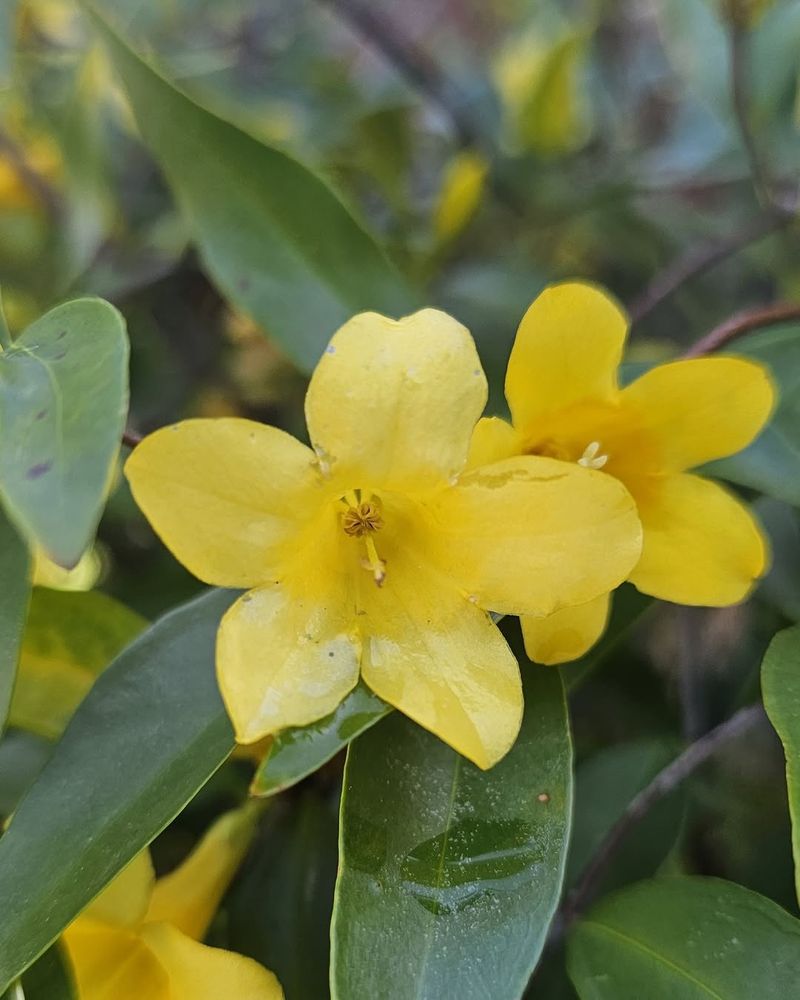
Few sights in a North Carolina yard say “spring has arrived” quite like Carolina jessamine exploding into bright yellow blooms along a fence or trellis.
This evergreen native vine starts flowering as early as late February and carries its blooms right through April, giving early-arriving hummingbirds a welcome source of nectar before many other plants wake up.
The cheerful yellow flowers release a sweet fragrance that fills the whole yard on warm mornings.
Carolina jessamine is incredibly easy to grow across North Carolina, handling both sun and partial shade without complaint. It clings naturally to fences, arbors, and trellises, growing vigorously once established.
Plant it in well-drained soil and give it something sturdy to climb, and it will reward you with lush green coverage for twelve months a year, not just during bloom season.
Your North Carolina Garden Changes Every Week. Your Plan Should Too.
Gardening in North Carolina changes quickly throughout the season. Every Friday you’ll receive a simple weekly plan showing exactly what to plant, prune, fertilize, harvest, and protect so you never miss the right timing.
Hummingbirds visit the flowers regularly in early spring when nectar options are still limited, making this vine especially valuable in your April garden plan.
It also attracts native bees and other early pollinators, adding even more life to your outdoor space.
Carolina jessamine is the official state wildflower of South Carolina and grows abundantly throughout the Carolinas.
Planting it means you are working with nature rather than against it, and that always pays off in a garden full of energy, color, and wildlife from the very first warm days of the year.
3. Red Buckeye (Aesculus pavia)
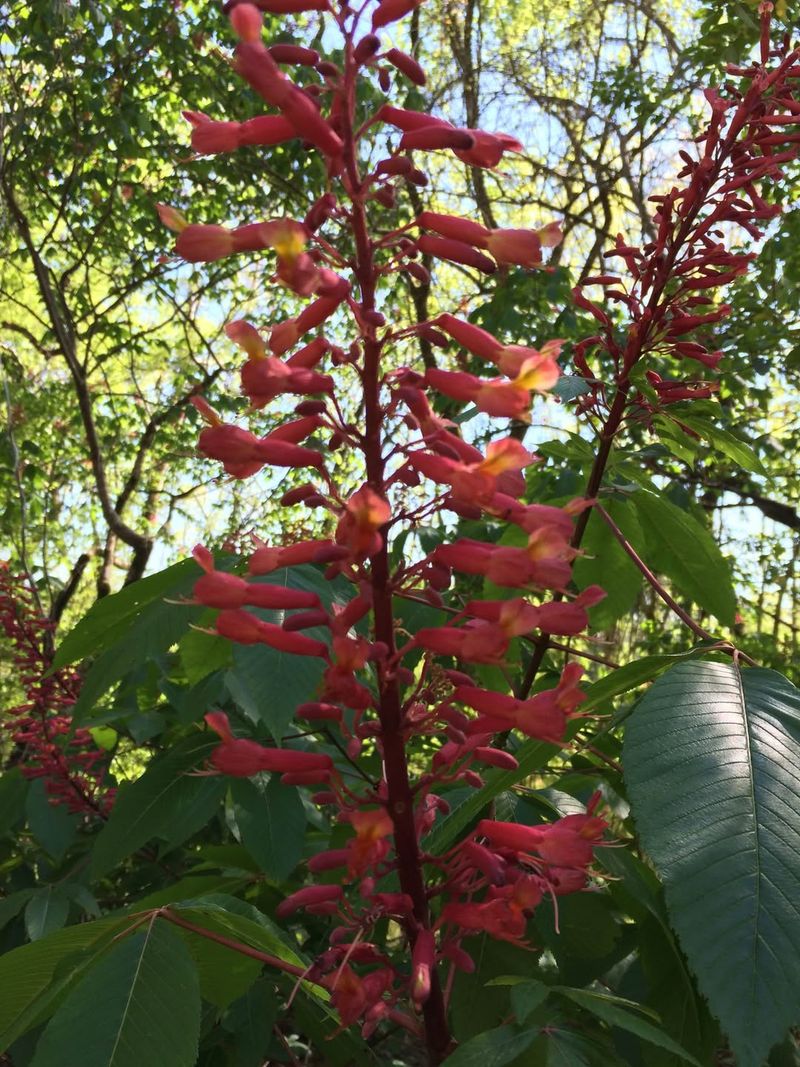
There is something almost theatrical about a red buckeye tree bursting into bloom in April, its tall spikes of deep red tubular flowers standing straight up like tiny torches against the spring sky.
This small native tree is one of the most powerful hummingbird attractors in all of North Carolina, and its timing is almost perfectly synchronized with the arrival of ruby-throated hummingbirds in the region.
The flowers produce generous amounts of nectar, and hummingbirds find them nearly irresistible.
Red buckeye grows naturally in the piedmont and coastal plain regions of North Carolina, thriving in moist, well-drained soils with partial to full shade.
It typically reaches ten to twenty feet tall, making it a great mid-sized option for yards where a full-sized tree would be too large.
The bold, tropical-looking leaves add texture and interest to the landscape even after the flowers fade in late spring.
Because red buckeye blooms so early and so reliably, it serves as an anchor plant for your April hummingbird garden.
Pair it with wild columbine and trumpet honeysuckle for a layered planting that offers hummingbirds food from the ground level all the way up through the canopy.
Gardeners across North Carolina who have added red buckeye to their yards consistently report seeing hummingbirds return to the same tree year after year, which makes planting one feel like an investment in years of wildlife joy ahead.
4. Eastern Redbud (Cercis canadensis)
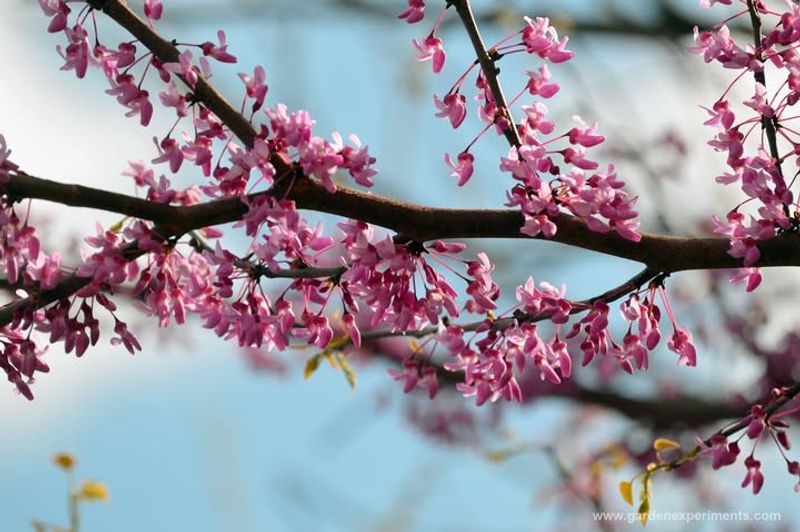
Walk through almost any North Carolina neighborhood in early April and you will spot eastern redbud trees glowing with clouds of rosy pink-purple blossoms clinging directly to their bare branches.
It is one of the most eye-catching spring shows in the entire state, and hummingbirds take notice too.
While the flowers are not deeply tubular, they produce accessible nectar that early-arriving hummingbirds eagerly tap as they scout out their spring territories.
Eastern redbud is a native tree that grows naturally throughout North Carolina from the mountains to the coast, adapting easily to a wide range of soil types and light conditions.
It typically grows twenty to thirty feet tall with a graceful, spreading canopy that provides light summer shade after the blooms finish.
The heart-shaped leaves that follow the flowers are charming in their own right, turning golden yellow in autumn for a second season of visual interest.
Planting an eastern redbud in your North Carolina yard means you gain a multi-season tree that works hard for wildlife all year long. Native bees absolutely love the flowers, and the seeds attract small birds through fall and winter.
For hummingbirds specifically, redbud provides an important early-season nectar bridge while other plants are still warming up.
Placing it near other hummingbird favorites like red buckeye or trumpet honeysuckle creates a natural feeding corridor that keeps hummingbirds coming back to explore your yard throughout the whole season.
5. Trumpet Honeysuckle (Lonicera sempervirens)
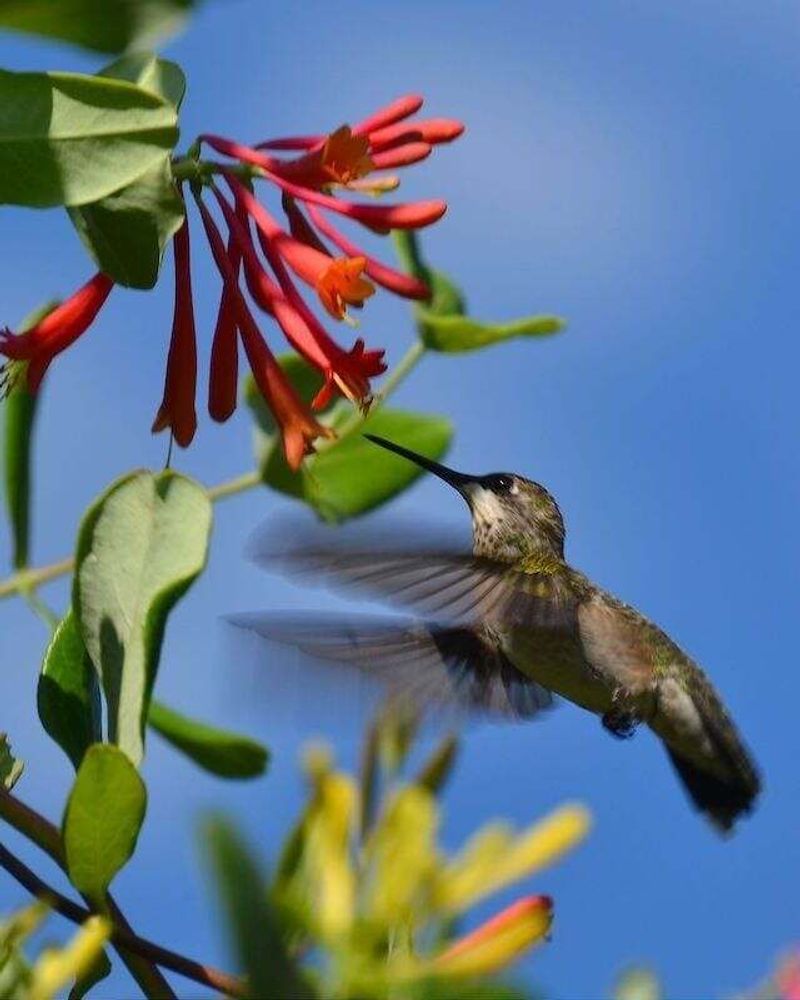
Ask any North Carolina gardener what their single best hummingbird plant is, and trumpet honeysuckle will come up again and again.
This native vine produces clusters of brilliant red tubular flowers starting in spring and keeps blooming well into summer, giving hummingbirds a reliable food source for months at a stretch.
Unlike the invasive Japanese honeysuckle that crowds roadsides, trumpet honeysuckle is a true native that plays nicely with the rest of your garden.
Trumpet honeysuckle climbs happily over fences, trellises, arbors, and even old tree stumps, growing vigorously in full sun to partial shade across all regions of North Carolina.
It is remarkably tough once established, tolerating heat, humidity, and occasional drought without losing its charm.
The glossy green foliage stays attractive all season, and in fall it produces small red berries that songbirds eagerly snap up.
The long, narrow flower tubes are almost custom-built for a hummingbird’s bill, and the birds seem to know it.
Watch a patch of trumpet honeysuckle on a warm April morning in North Carolina and you will likely see multiple hummingbirds hovering, darting, and occasionally squabbling over the best flowers.
Planting it along a sunny fence or pergola not only creates a stunning visual display but also gives hummingbirds a reason to visit your yard every single day.
Few plants deliver this kind of consistent, long-season wildlife value with so little effort required from the gardener.
6. Crossvine (Bignonia capreolata)
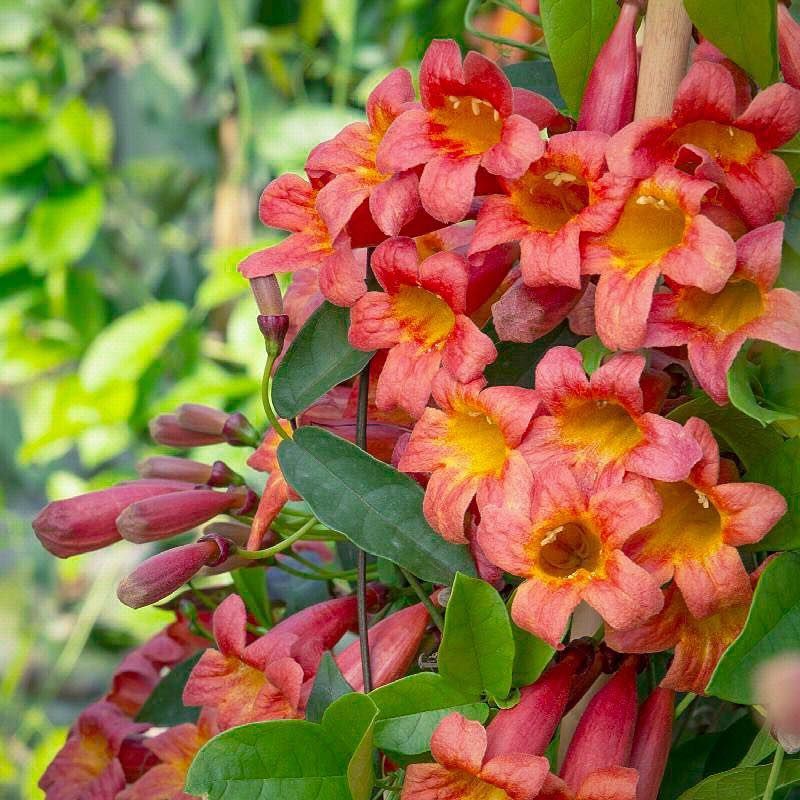
Crossvine earns its spot on any North Carolina hummingbird plant list by doing something few other vines can match: covering a large structure with hundreds of orange-red trumpet flowers right when hummingbirds are hungriest in April.
The blooms are bold, showy, and deeply tubular, practically designed for a hummingbird to hover in front of and sip from.
When a mature crossvine is in full bloom, it is one of the most dramatic sights in a spring garden anywhere in the state.
This native vine is a semi-evergreen climber that uses tendrils to grip fences, trellises, walls, and trees, sometimes reaching up to fifty feet in ideal conditions.
It grows naturally throughout North Carolina and handles a wide range of soil types, from moist bottomlands to drier upland sites.
Full sun brings out the most flowers, but crossvine blooms reliably in partial shade too, making it flexible enough for many different yard situations.
One fun fact about crossvine: if you cut through the stem, the cross-section shows a distinctive four-part pattern that inspired its common name.
Beyond that quirky detail, gardeners love it because it is genuinely low-maintenance once established.
Pair crossvine with trumpet honeysuckle for a vine combination that keeps hummingbirds fed from April all the way through summer.
North Carolina yards with mature crossvines often become neighborhood favorites for hummingbird watching, especially on sunny spring mornings when the birds are most active and energetic.
7. Fire Pink (Silene virginica)
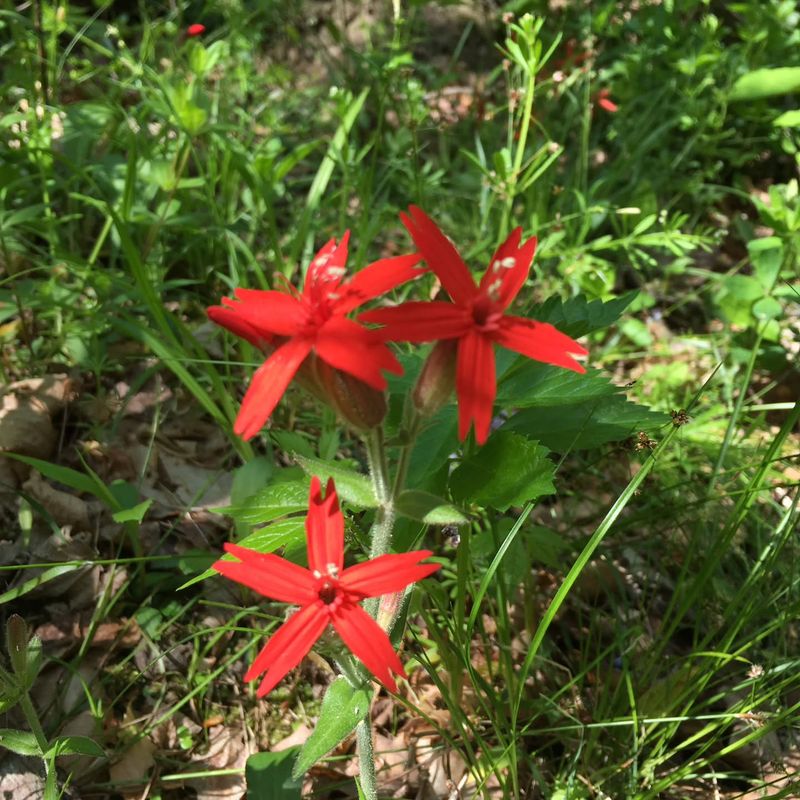
The name says it all. Fire pink blazes through the spring garden with some of the most intensely red flowers you will ever see on a native North Carolina wildflower, and hummingbirds are drawn to that color like a magnet.
Each flower has five deeply notched petals forming a star shape on slender, sticky stems, and the whole plant hums with energy when it is in full bloom from April into May. It is a wildflower that stops people in their tracks.
Fire pink grows naturally in rocky woodlands and along forest edges throughout the mountains and piedmont of North Carolina, preferring well-drained, somewhat dry soils with partial shade.
It reaches about one to two feet tall and works beautifully as a groundcover or front-of-border plant beneath taller native shrubs and trees.
Because it thrives in shady spots, fire pink fills a niche that many other hummingbird plants cannot, making it especially useful in wooded yards.
Planting fire pink alongside wild columbine creates a stunning red-themed spring display that hummingbirds will visit constantly.
Both plants share similar habitat preferences and bloom at roughly the same time, so they make natural garden companions across North Carolina landscapes.
Fire pink also self-seeds modestly, slowly expanding into attractive natural drifts without becoming aggressive.
For gardeners who want a wildflower that is both beautiful and genuinely functional for wildlife, fire pink is one of the most rewarding choices available in the entire state.
8. Beardtongue (Penstemon digitalis)
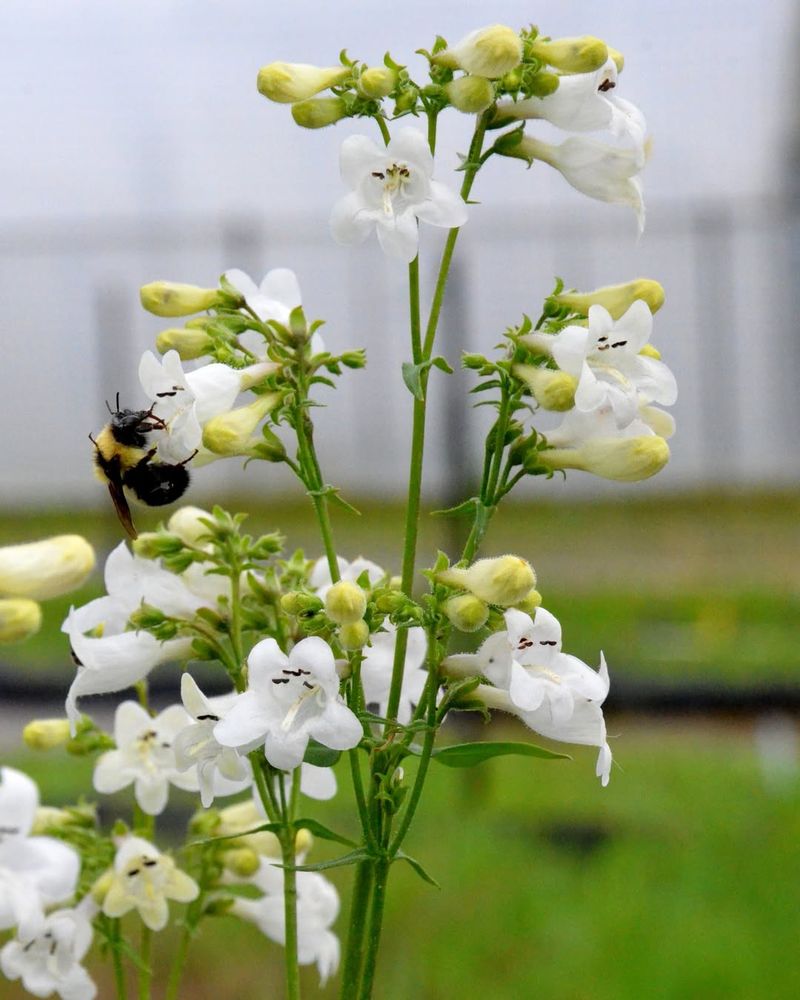
Beardtongue might have an unusual name, but its tubular white flowers are serious hummingbird business in North Carolina gardens.
Penstemon digitalis is one of the most reliable native perennials for attracting hummingbirds as they settle into their spring territories, offering clusters of elegant white blooms on tall, upright stems that wave gently in the breeze.
The flowers bloom in late spring, bridging the gap between early April bloomers and the summer nectar season.
This native perennial grows vigorously across North Carolina in full sun to light shade, tolerating a wide range of soil conditions including clay, which makes it genuinely useful for real-world gardens rather than just ideal ones.
Plants typically reach two to four feet tall, creating a strong vertical accent that looks great in mixed borders alongside shorter wildflowers and ornamental grasses.
Once established, beardtongue is remarkably drought-tolerant and requires very little maintenance to perform well season after season.
Beyond hummingbirds, beardtongue attracts bumblebees and other native bees in impressive numbers, turning any planting into a buzzing, hovering wildlife scene on warm afternoons.
The seed heads that follow the flowers are also attractive and provide winter food for small birds.
Gardeners across North Carolina who want a plant that works hard for pollinators from spring through fall will find beardtongue to be one of the most underrated native perennials available, delivering consistent beauty and wildlife value with minimal effort from the gardener year after year.
9. Azalea (Rhododendron spp.)
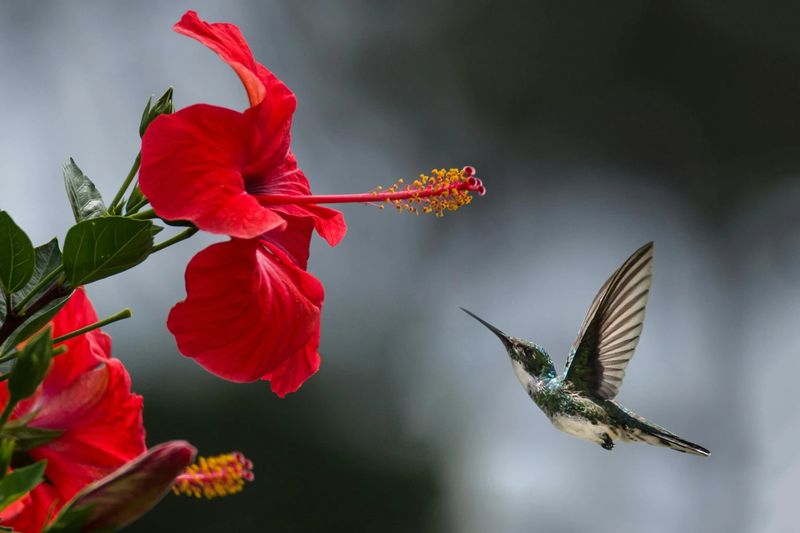
Spring in North Carolina is practically synonymous with azaleas, and the good news for hummingbird enthusiasts is that these beloved flowering shrubs are genuinely useful for attracting the birds, not just beautiful to look at.
Native azalea species like flame azalea and pinxter azalea produce tubular flowers in shades of pink, red, orange, and white that bloom in April and May, offering hummingbirds a substantial nectar source right when they need it most after their long migration north.
Native azaleas differ meaningfully from the common evergreen cultivars seen in most suburban yards.
They tend to be deciduous, more open in form, and deeply connected to the natural ecology of North Carolina, growing wild in forests and along streams from the mountains to the coast.
Planting native species or straight species selections rather than heavily hybridized cultivars gives hummingbirds better access to nectar and supports a wider range of native insects as well.
Azaleas grow best in acidic, well-drained soil with partial shade, conditions that are easy to find in many North Carolina yards, especially under pine trees or in woodland garden settings.
They pair naturally with wild columbine, fire pink, and beardtongue for a layered native planting that supports hummingbirds across multiple weeks of spring.
A well-established native azalea in full bloom is one of the most stunning and wildlife-friendly shrubs you can grow anywhere in North Carolina, period.
10. Bee Balm (Monarda didyma)
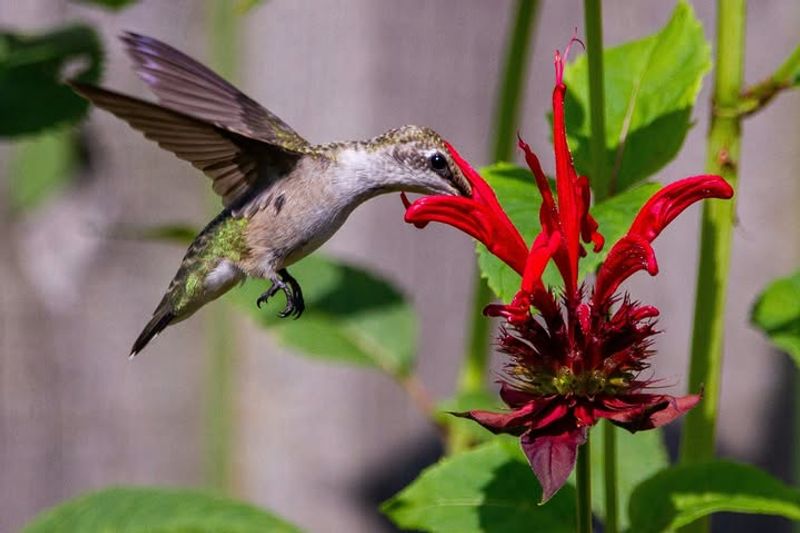
Bee balm is the kind of plant that makes a garden feel fully alive. Its shaggy, tufted blooms in bold shades of red, pink, and purple sit atop tall stems like fireworks frozen in place, and hummingbirds simply cannot resist them.
While bee balm typically hits its stride in summer, it begins blooming in late spring in North Carolina, extending the nectar season seamlessly from April bloomers like wild columbine and red buckeye right into the warmer months ahead.
This native perennial grows naturally in moist meadows and woodland edges throughout North Carolina, and it thrives in full sun to partial shade with consistently moist soil.
It spreads gradually by underground rhizomes, forming attractive clumps over time that can be divided every few years to share with neighbors or expand your own planting.
Red-flowered varieties like Jacob Cline are especially attractive to hummingbirds and grow vigorously in the North Carolina climate.
Beyond hummingbirds, bee balm is a magnet for bumblebees, butterflies, and clearwing moths, making any planting feel like a wildlife garden in the best possible way.
The aromatic foliage has a pleasant minty-citrus scent that makes weeding around it a surprisingly enjoyable task.
Planting bee balm as the final piece of your North Carolina hummingbird garden means you have created a season-long buffet that welcomes these incredible birds from their April arrival all the way through the warmth of late summer, keeping them returning to your yard again and again.