What April Frost Really Does To Redbud Trees In Michigan
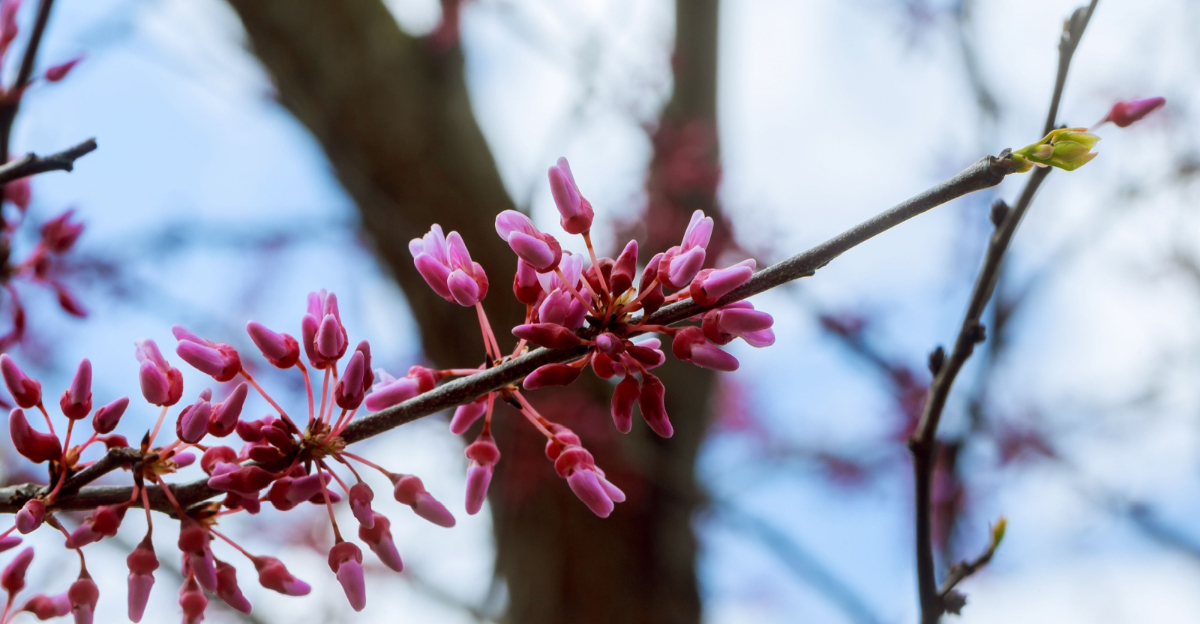
A few warm days can make redbuds across Michigan look like spring has fully arrived, then one cold night changes the picture. It’s a familiar moment for many gardeners.
Those bright pink and purple blooms show up just in time to lift the landscape, only to look a little different after an April frost. If you’ve stepped outside on a chilly morning and wondered what happened, you’re not alone.
Michigan’s shifting spring weather often puts early blooms to the test. Understanding how that sudden drop in temperature affects redbuds can help you make sense of what you’re seeing and what to expect next.
1. Open Redbud Flowers Are More Sensitive To Frost Than Buds
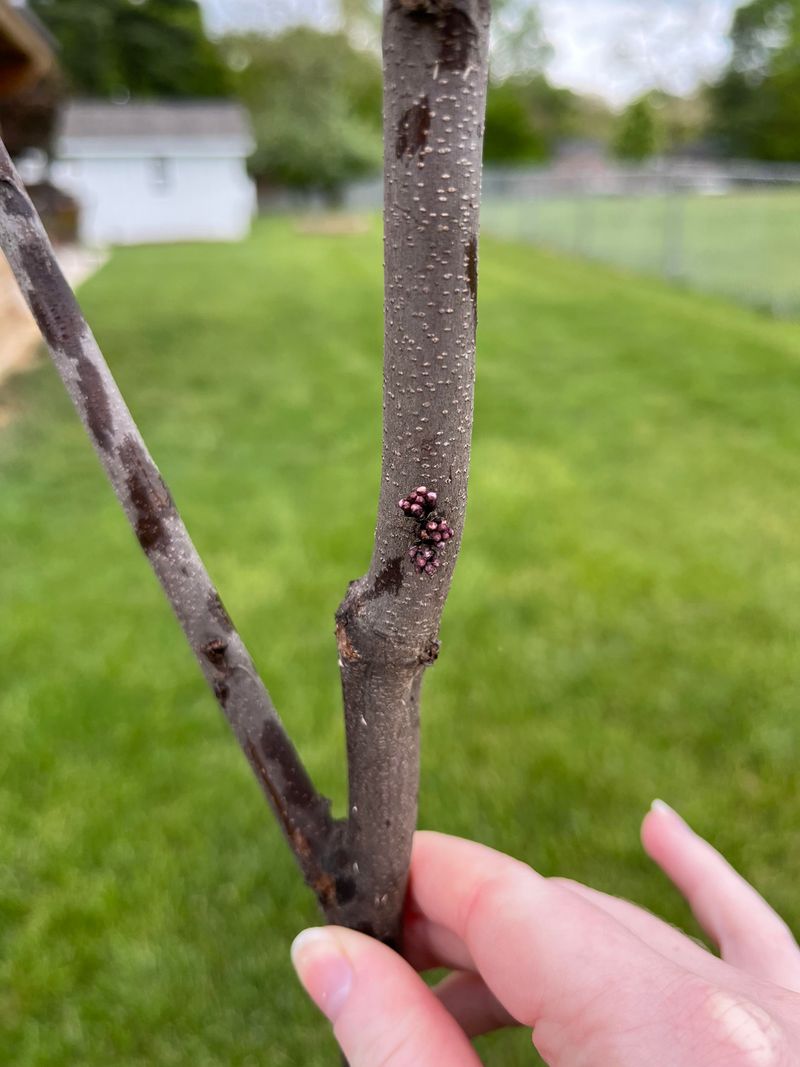
Most Michigan gardeners are surprised to learn just how much the bloom stage matters when a late frost rolls through. A redbud flower that has fully opened is far more vulnerable to cold than one that is still tightly sealed as a bud.
Once those small, vivid pink blossoms unfurl, they expose delicate tissue that simply cannot handle temperatures that dip below freezing.
When frost hits open flowers, the water inside the cells can freeze and expand, causing the cell walls to break down. You will often notice the blossoms turning a dull brownish color within a day or two after the cold event.
The petals may feel soft and mushy when touched, and they tend to drop from the branches much sooner than they naturally would.
Tight, unopened buds have a bit more natural insulation protecting them. The outer layers of the bud act like a small shield, keeping the most sensitive tissue inside slightly warmer.
This means that if a frost arrives before a redbud reaches full bloom, some of those buds may survive and open later.
Watching your redbud closely in the days after a frost can help you get a clearer sense of how much of the bloom was affected and what, if anything, might still open up as temperatures recover.
2. Cold Nights Can Cause Blossoms To Wilt Or Drop Early
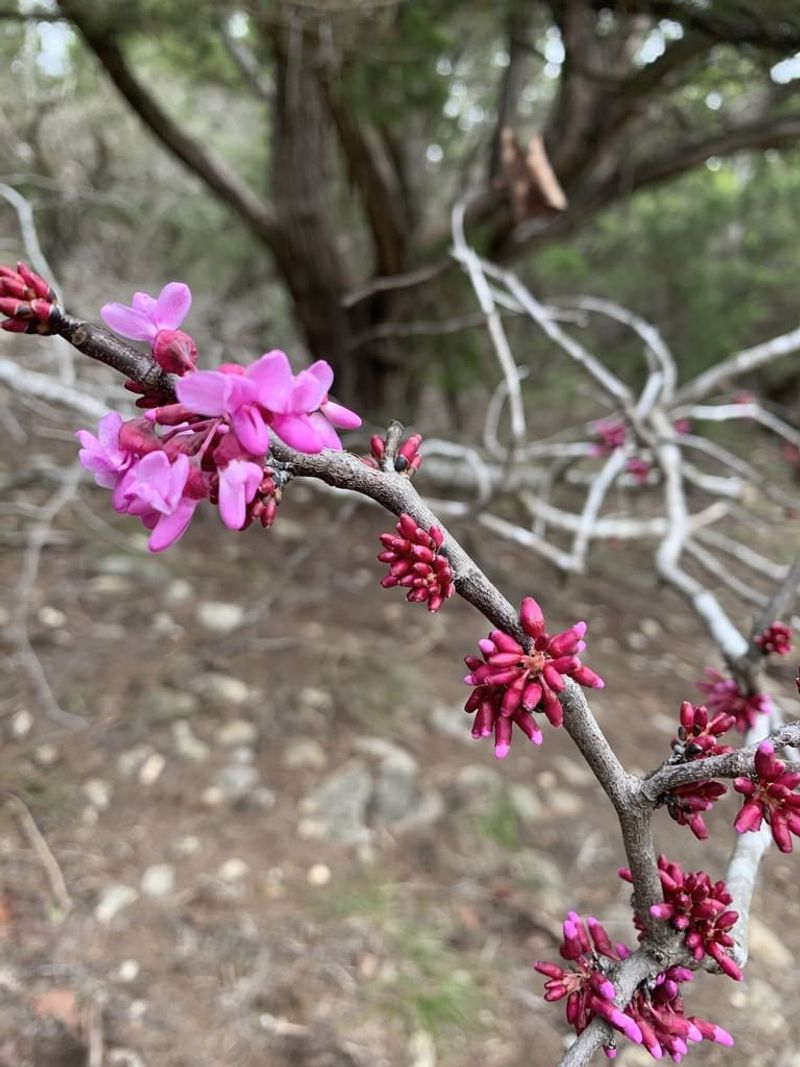
After a cold night in late April, walking out to check on a redbud can feel a little disheartening. Blossoms that were full of color just the evening before may appear limp, faded, or already falling to the ground.
This early petal drop is one of the most visible signs that frost has moved through and affected the tree.
The reason blossoms wilt and drop comes down to how frost disrupts normal cell function. Freezing temperatures cause ice crystals to form within the soft tissue of the petals.
When those crystals melt as morning temperatures rise, the damaged cells can no longer hold their structure. The blossom essentially collapses from within, leading to that characteristic wilted look.
For Michigan gardeners, this can mean a noticeably shorter bloom season in years when late frosts arrive after the tree has already opened. In some cases, the entire display may be reduced to just a week or less instead of the two to three weeks a redbud typically shows color.
Your Michigan Garden Changes Every Week. Your Plan Should Too.
Gardening in Michigan changes quickly throughout the season. Every Friday you’ll receive a simple weekly plan showing exactly what to plant, prune, fertilize, harvest, and protect so you never miss the right timing.
While this is disappointing, it does not necessarily mean the tree has been seriously harmed overall.
The energy stored in the roots and branches remains intact, and the tree will continue to push out leaves and grow through the rest of the season as conditions warm up and stabilize.
3. Frost Damage May Reduce The Intensity Of Spring Color
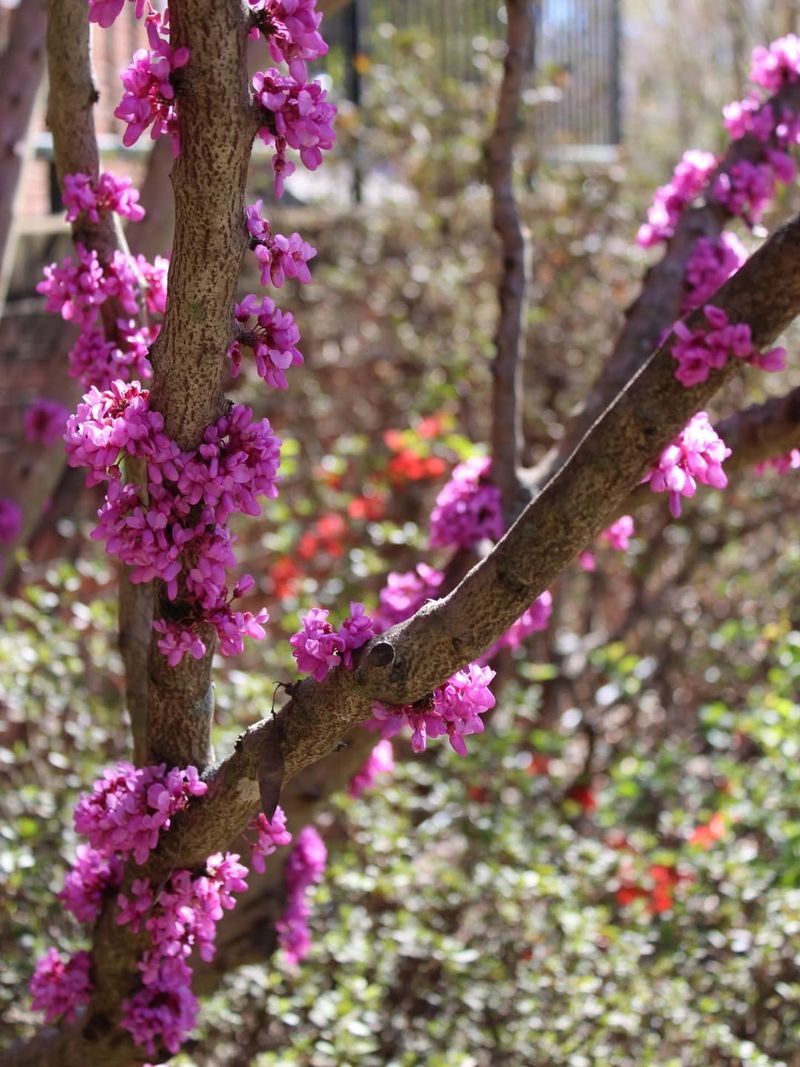
One of the things Michigan gardeners prize most about redbuds is that intense flush of pink and purple color that lights up the yard before most other trees have even started to leaf out.
A late April frost can take some of that brilliance away, leaving behind a display that looks patchy, muted, or uneven compared to what the tree might show in a frost-free year.
When only a portion of the open blossoms are affected, the tree ends up with a mix of healthy flowers and frost-damaged ones. The damaged blossoms turn brown while the unaffected ones remain vivid.
From a distance, the tree can look like it is only partially in bloom, or as though the color is fading faster than expected. Up close, the contrast between healthy and damaged flowers becomes even more obvious.
The overall impact on color intensity depends largely on how far along the bloom was when the frost hit and how cold temperatures actually got.
A light frost just brushing the freezing mark may only brown the most exposed outer blossoms, while a harder freeze can affect a much larger portion of the display.
Michigan springs are known for this kind of unpredictability, and redbud bloom quality can vary noticeably from one year to the next depending on how late cold temperatures linger into the season.
4. Not All Redbud Trees Respond The Same To Late Frost
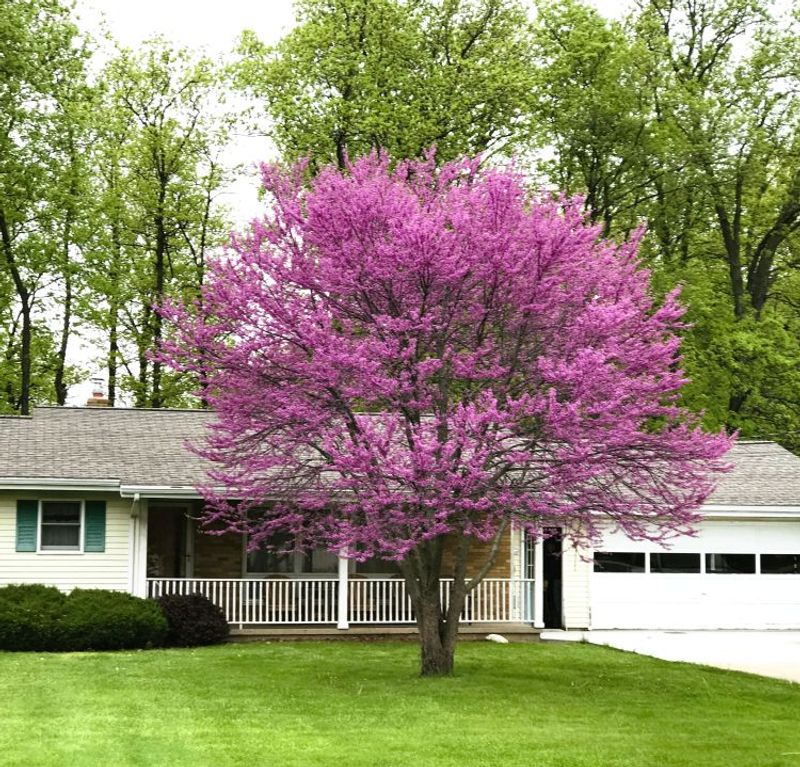
Spend any time comparing notes with Michigan neighbors after a late frost, and you will quickly notice that not every redbud comes away looking the same.
One tree on the block might show heavy browning and petal drop, while another just down the street looks almost untouched.
Several factors contribute to this variation, and it is not simply a matter of luck.
Genetics play a role. Some individual trees and cultivated varieties show slightly more cold tolerance than others, particularly in how their flowers respond to brief temperature drops near freezing.
Trees that bloomed a bit later may have had fewer open flowers at the time of the frost, naturally limiting how much damage occurred.
Age and overall health also factor in, as a well-established, vigorous tree often handles stress more effectively than a younger or recently transplanted one.
Soil conditions, sun exposure, and how much moisture was available in the days leading up to the frost can all influence how a tree responds.
Trees growing in full sun locations may warm up faster during the day, which can reduce the duration of freezing conditions at the flower level.
Michigan gardeners who have multiple redbuds on their property sometimes notice clear differences between trees just a short distance apart, which points to just how much local growing conditions shape the outcome of a frost event.
5. Timing Of Bloom Plays A Big Role In Frost Impact
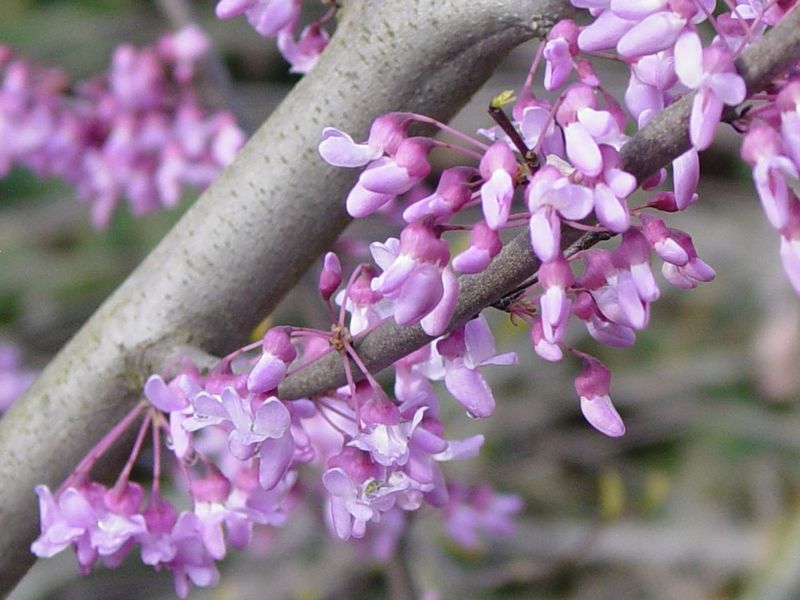
In Michigan, the timing of a redbud’s bloom relative to the last frost of the season can make all the difference between a stunning spring display and a disappointing one.
Redbuds are considered early bloomers, typically pushing out their flowers in late April to early May in most parts of the state.
That timing puts them right in the window when late-season cold snaps are still a real possibility.
A tree that blooms on the earlier end of that range takes on more risk. If warm temperatures arrive in mid-April and encourage the redbud to open fully, even a brief return to below-freezing nights can affect a large portion of the display.
A tree that holds off a bit longer before opening may miss the worst of the late frost events entirely, emerging into more stable spring conditions.
This is one reason why gardeners sometimes notice that the same tree performs differently from year to year. In a year with an early warm spell followed by a hard frost, the bloom may be cut short or look ragged.
In a year where temperatures warm gradually and steadily, the same tree might put on a spectacular show.
Paying attention to the extended forecast in late April can help Michigan gardeners anticipate whether their redbuds are likely to face frost exposure before the bloom finishes.
6. Leaf Emergence Is Usually Less Affected Than Flowers
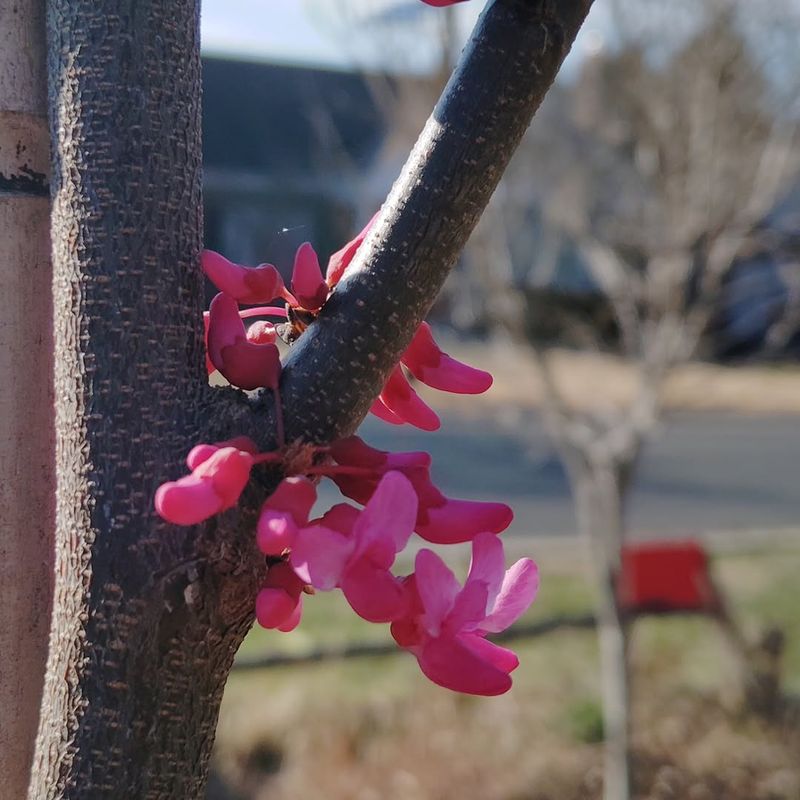
After a late April frost damages the flowers on a redbud, one of the more reassuring things Michigan gardeners tend to notice is that the leaves come in looking mostly fine.
Leaf emergence in redbuds typically follows flowering, which means the foliage is often still developing or just beginning to unfurl when a frost event occurs. That slight delay offers some natural protection.
Newly emerged leaves can be somewhat tender, and a very hard frost arriving right as they push out can cause some browning at the leaf margins or tips.
However, this kind of leaf damage tends to be less severe and less widespread than what happens to open flowers under the same conditions.
The leaves are also backed by more of the tree’s stored energy, which helps them recover more quickly.
For most Michigan redbud owners, the leaves will continue to develop normally even after a frost has affected the blossoms.
The heart-shaped foliage that follows the flowers is part of what makes redbuds attractive through the summer months, and a frost that cuts the bloom short does not typically interfere with healthy leaf development.
Watching for any unusual yellowing or curling of new leaves in the weeks after a frost is a reasonable way to check that the tree is moving forward without any lasting stress from the cold event.
7. Established Trees Often Recover From Light Frost Damage
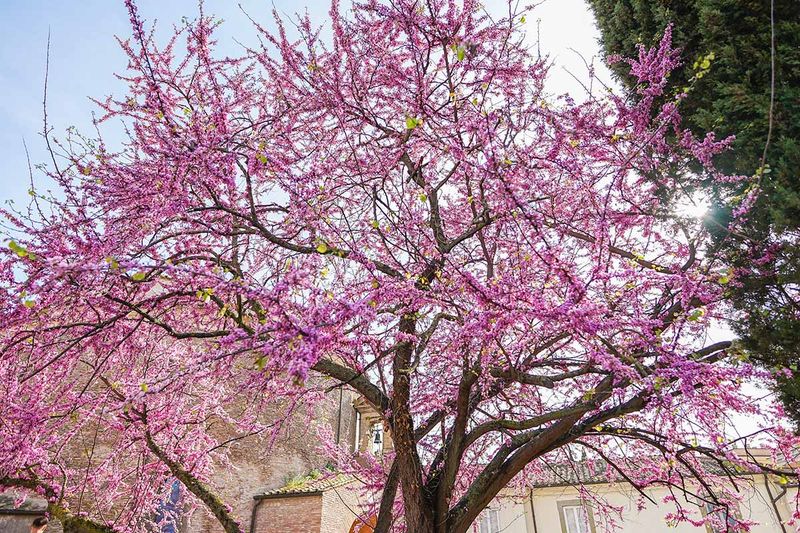
Seeing brown, wilted blossoms on a redbud after a cold night can feel alarming, but a mature, well-rooted tree has considerably more resilience than its drooping flowers might suggest.
Redbuds that have been in the ground for several years have developed strong root systems and good energy reserves, which allow them to handle the stress of a frost event without lasting harm to the tree as a whole.
Light frost damage, meaning temperatures that dipped just below freezing for a short period, typically affects the most exposed outer blossoms while leaving the tree’s underlying structure unaffected.
Once temperatures stabilize and warmer spring conditions return, the tree shifts its energy toward leaf development and normal seasonal growth.
Most Michigan gardeners find that by late May, a frost-affected redbud looks healthy and full, with no obvious signs of what happened during that cold April night.
Younger or recently planted redbuds may take a bit longer to bounce back, since they have had less time to build up root depth and stored resources.
Giving a young tree a bit of extra attention after a frost event, such as checking soil moisture and avoiding unnecessary stress, can support a smoother recovery.
Removing any brown, dried flower clusters that linger on the branches is optional but can improve the tree’s appearance as new foliage fills in through May and June.
8. Microclimates Can Influence Frost Exposure In Michigan Yards
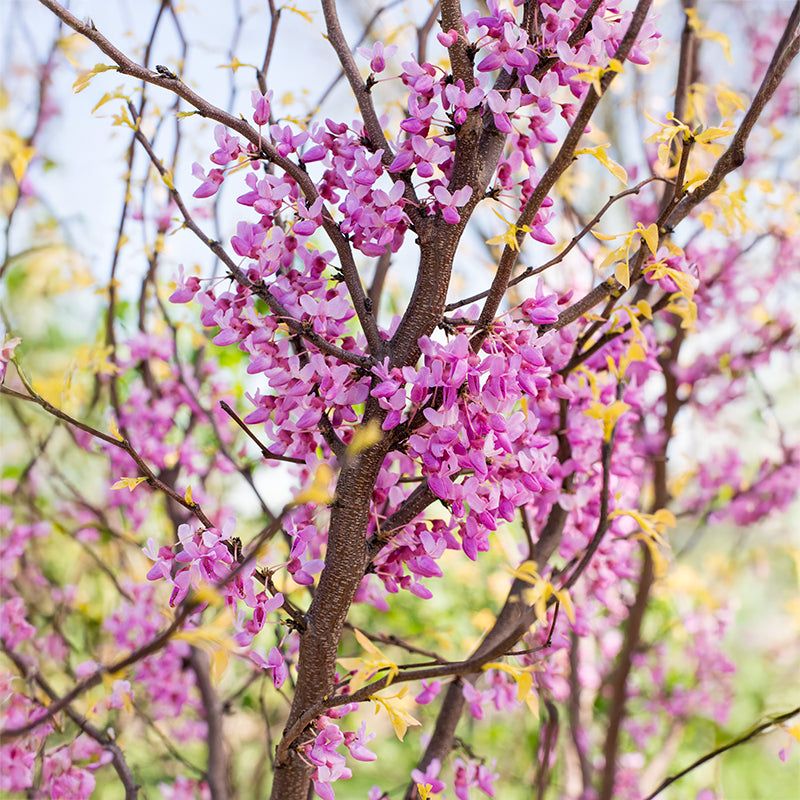
Michigan yards are not all created equal when it comes to frost exposure, and where a redbud sits in the landscape can have a meaningful effect on how it fares during a late April cold snap.
Microclimates, those small pockets of slightly warmer or cooler air that develop based on surrounding structures, slopes, and vegetation, can shift temperatures by several degrees within just a short distance.
Low-lying areas of a yard tend to collect cold air as it settles overnight, making them more prone to frost. A redbud planted at the bottom of a slope or in a low depression may experience colder temperatures than one planted on higher ground just a short distance away.
Similarly, trees growing near south-facing walls or fences often benefit from radiant heat that those surfaces release overnight, keeping the immediate area a bit warmer than open ground.
Dense tree canopies overhead can also trap warmth and reduce the rate at which temperatures drop around plants beneath them, offering a small but meaningful buffer during light frost events.
Michigan gardeners who have experienced repeated frost damage on a particular redbud might consider whether the planting location is contributing to the problem.
Choosing a spot with good air drainage, some wind protection, and proximity to heat-retaining structures can help reduce the frequency and severity of frost exposure in future spring seasons.