The Easiest Flowers To Plant Around Trees In A Michigan Garden
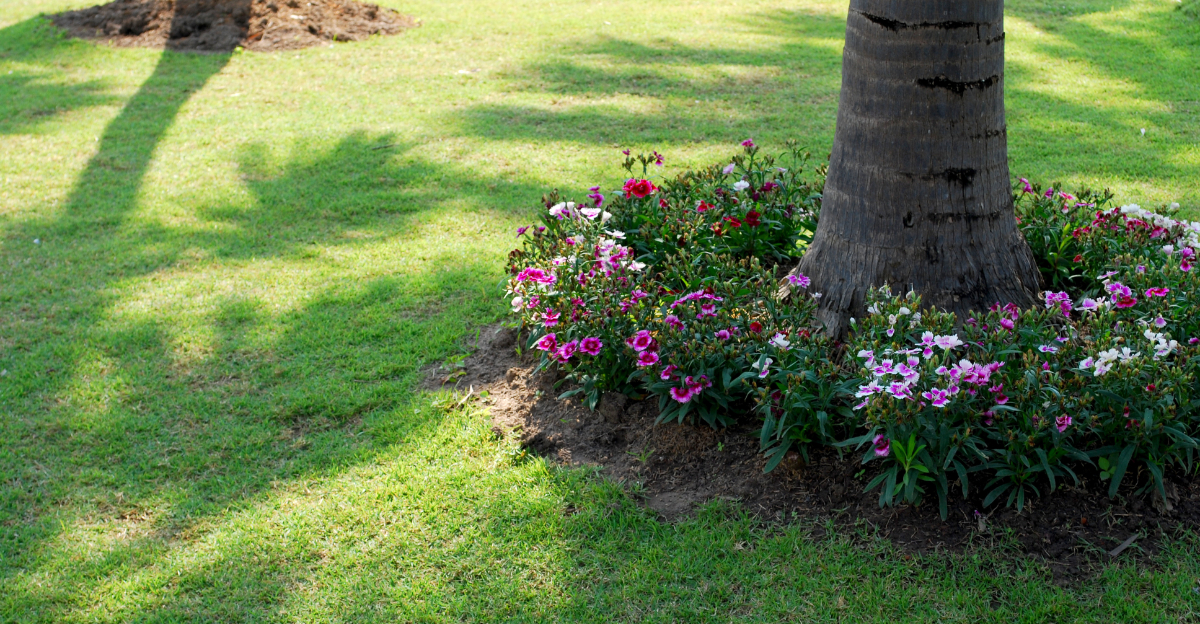
That bare patch of ground circling the trees in your yard has a lot more potential than it might seem. Planting flowers around trees can completely transform the look of your outdoor space, but it is not as simple as picking whatever looks pretty at the garden center.
Tree roots compete for water and nutrients, the shade can be heavy, and the soil underneath is often dry and compacted.
Michigan gardeners deal with all of that plus a climate that swings from brutal winters to humid summers, which means plant choices really matter.
The right flowers will not just survive under a tree, they will actually fill in beautifully and come back stronger each year.
Whether your yard has towering oaks, maple canopies, or younger ornamental trees, there are some seriously easy options that thrive in exactly those conditions. These are the flowers that do the work without making you do all of it.
1. Wild Columbine Thrives Where Other Flowers Give Up
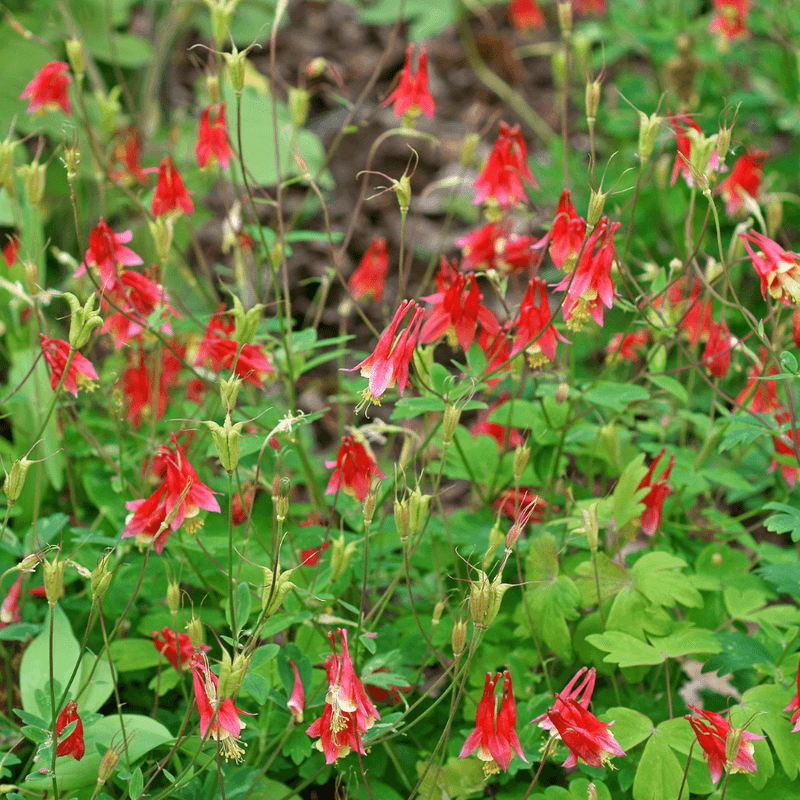
Few plants earn their spot in a Michigan garden the way wild columbine does. Aquilegia canadensis is a true Michigan native, and it has been growing happily at woodland edges and beneath tree canopies for centuries without any help from gardeners.
Those bold red and yellow blooms showing up in May and June feel like a reward for doing almost nothing at all.
What makes wild columbine so impressive is how well it handles the tough zone right under established trees. The soil there is usually dry, packed with roots, and low on nutrients, but columbine treats that environment like home.
It actually prefers the dappled light and leaner conditions that most flowering plants cannot tolerate for long.
Planting it in Michigan is straightforward. Choose a spot with some filtered light and loosen the soil slightly before dropping in a transplant or scattering seeds in fall.
Once it takes hold, wild columbine self-seeds reliably, meaning it will spread naturally and return each spring with zero effort from you. Hummingbirds absolutely love the tubular flowers, so you get wildlife activity as a bonus.
Over time, a small planting can fill a wide area under your trees with cheerful color every single spring season.
2. Creeping Phlox Covers The Ground And Asks For Almost Nothing
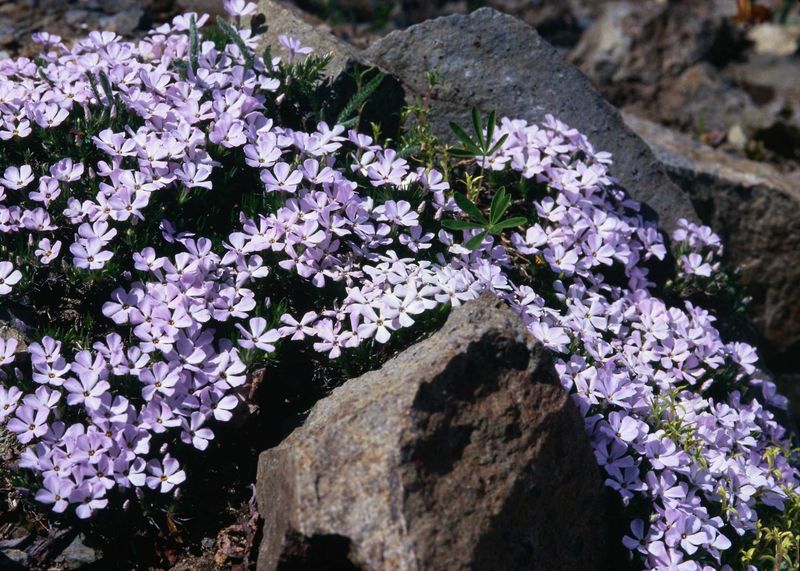
Imagine a plant that carpets the ground in a wave of pink, white, or lavender every May and then quietly keeps the weeds away for the rest of the year.
That is exactly what creeping phlox delivers in a Michigan yard, especially around the base of large established trees where the soil tends to be shallow and dry.
Phlox subulata grows in a dense, low mat that hugs the ground tightly. That growth habit makes it perfect for sloped tree rings where rain tends to wash loose soil away.
Once the roots get established in Michigan’s climate, this plant shrugs off drought and handles cold winters without any extra protection or mulching from you.
Getting it started takes very little effort. Plant divisions or nursery transplants in spring or early fall, water them in well, and step back.
Your Michigan Garden Changes Every Week. Your Plan Should Too.
Gardening in Michigan changes quickly throughout the season. Every Friday you’ll receive a simple weekly plan showing exactly what to plant, prune, fertilize, harvest, and protect so you never miss the right timing.
Creeping phlox spreads at a steady pace, filling gaps between tree roots with a soft, colorful layer that looks intentional and polished. After blooming, the dark green needle-like foliage stays tidy all season.
A light trim after the flowers fade keeps the mat dense and compact. For Michigan gardeners who want real visual impact in a difficult spot without ongoing maintenance, creeping phlox is one of the smartest choices available in any local garden center.
3. Wild Ginger Quietly Carpets The Darkest Spots Under Your Trees
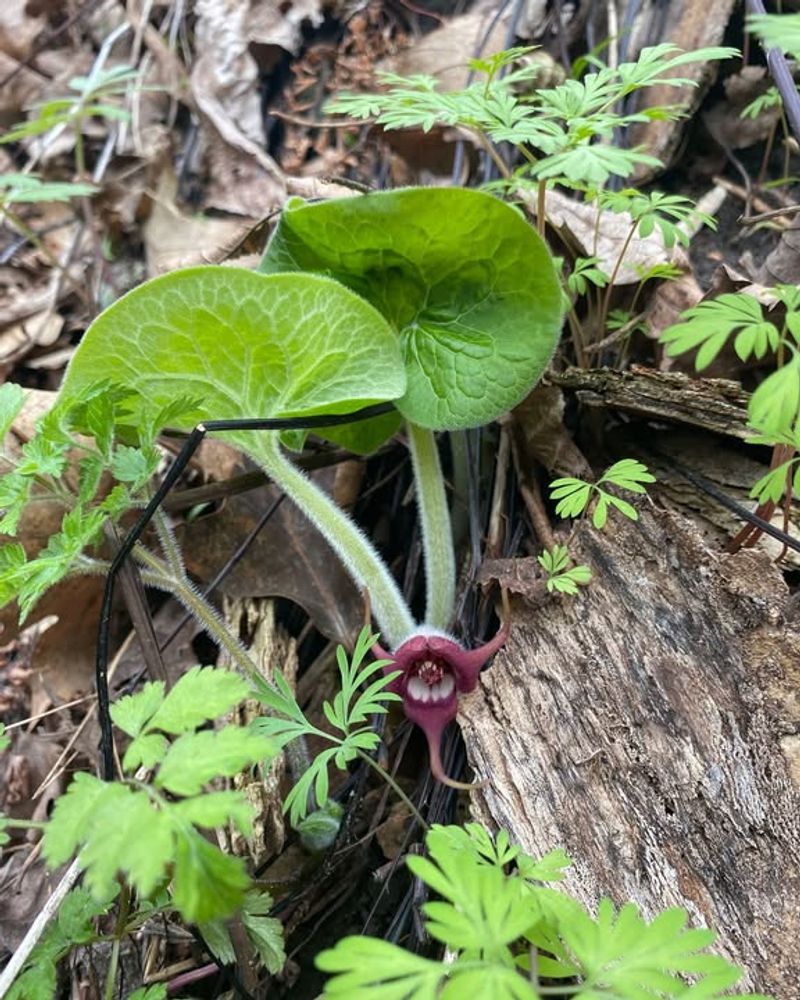
Some spots under big trees in Michigan barely get any light at all, and that is exactly where wild ginger feels most at home.
Asarum canadense is a Michigan native groundcover that thrives in the kind of deep, dry shade where most gardeners have simply given up trying to grow anything attractive.
Its wide, heart-shaped leaves form a rich green carpet that looks lush even in tough conditions.
Wild ginger spreads by underground rhizomes at a slow, steady pace. It never becomes aggressive or hard to manage, which makes it ideal for gardeners who want a low-maintenance solution under dense tree canopies.
The small flowers it produces in spring sit right at soil level, hidden under the leaves, but the plant earns its place through its dense, weed-suppressing foliage alone.
Here is a fun detail many Michigan gardeners do not know: wild ginger is not related to culinary ginger at all, but its roots do carry a spicy, ginger-like scent when crushed. That quirky trait makes it a great conversation starter in the garden.
Plant it in groups for the fastest coverage, and skip the fertilizer entirely since this plant prefers lean woodland soil.
Once settled into its spot beneath your trees, wild ginger requires almost zero attention and quietly does its job season after season with impressive reliability.
4. Lungwort Blooms Early When Almost Nothing Else Will
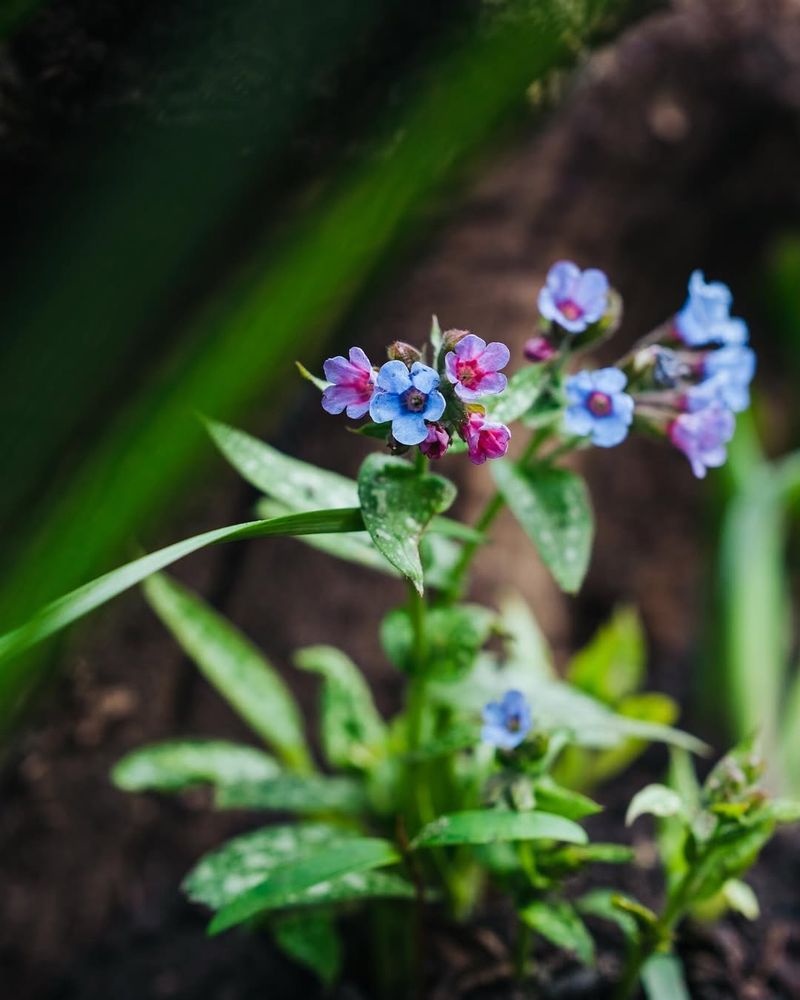
Early April in Michigan can feel like a long wait for color, but lungwort does not make you wait.
Pulmonaria blooms before most other shade plants have even pushed new growth, taking full advantage of the bright window that opens under deciduous trees before the canopy fills in and blocks the light.
Those pink buds that shift to blue-violet as they open are genuinely striking in early spring. Beyond the flowers, lungwort earns its place with some of the most interesting foliage in the shade garden.
The leaves are spotted and splashed with silver markings on a deep green background, and they stay attractive from spring all the way through fall. That means you get months of visual interest long after the blooms have faded away.
Lungwort handles dry shade under Michigan trees remarkably well once it gets established during its first season. Water it consistently in year one, and after that it rarely needs supplemental irrigation unless a serious drought hits.
Plant it in groups of three or more for the best visual effect, and pair it with wild columbine or Solomon’s seal for a layered spring display.
Gardeners in Michigan who struggle with that awkward bare zone beneath large maples or oaks will find that lungwort fills the space beautifully without demanding anything complicated in return.
5. Solomon’s Seal Looks Like It Belongs There Because It Does
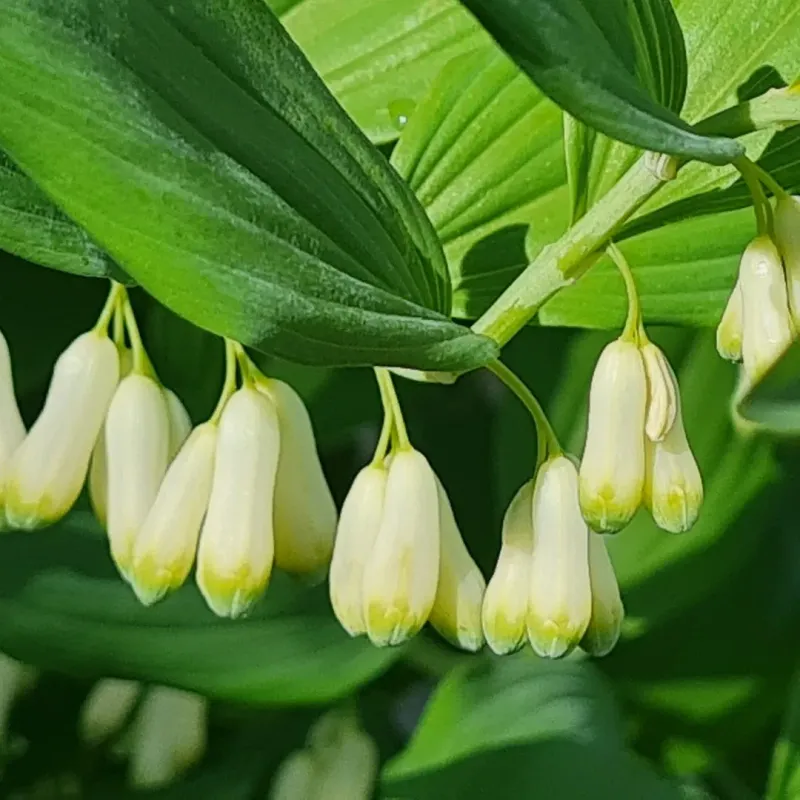
There is something almost architectural about Solomon’s seal growing beneath a tree. The long, arching stems lined with oval leaves and dangling white bell flowers in May and June look so natural under a canopy that visitors often assume it grew there on its own.
In Michigan, that assumption is not far off since Polygonatum biflorum is genuinely native to the state’s woodland floors.
What sets Solomon’s seal apart from other shade plants is that graceful, layered structure it creates.
The stems arch outward from the base in a way that fills vertical space beautifully, giving the under-tree zone a sense of depth and dimension that flat groundcovers simply cannot match.
It pairs especially well with foamflower and wild ginger for a layered, naturalistic look. Maintenance is almost nonexistent once Solomon’s seal settles in. It spreads slowly by rhizome, gradually widening its clump over several years without ever becoming a problem.
Plant it in fall or early spring, give it a good drink to establish the roots, and then leave it alone. Michigan winters do not bother it at all.
In fall, the leaves turn a warm golden yellow before the plant goes dormant, giving you one last burst of color before the season wraps up. For a low-effort, high-impact plant under your trees, Solomon’s seal is genuinely hard to beat.
6. Foamflower Spreads Steadily And Handles Michigan Shade With Ease
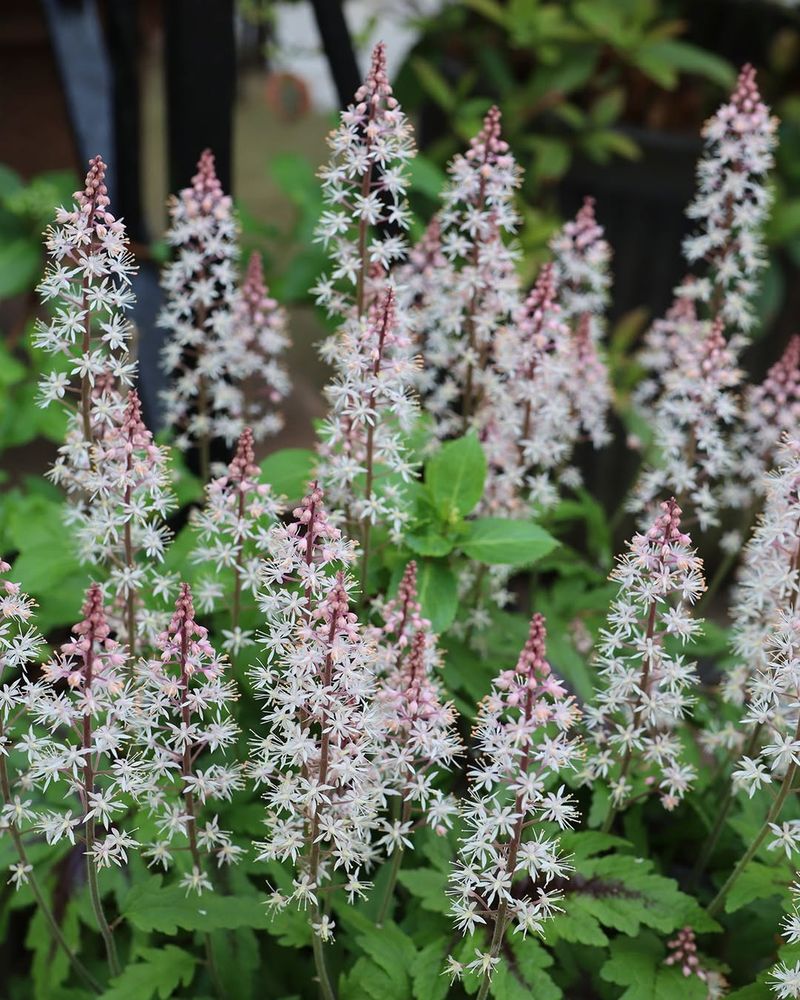
Foamflower has one of the most descriptive names in the plant world, and one look at it in bloom tells you exactly why.
The upright spikes of tiny white to pale pink flowers rise above the foliage in a frothy, cloud-like display every May, and the effect under a shaded Michigan tree is genuinely beautiful.
Tiarella cordifolia is native to eastern North America, and it performs like it knows it belongs here.
The real strength of foamflower is how it behaves after blooming. It spreads by surface-running stolons, slowly filling in the bare ground around tree roots with a dense mat of attractive lobed leaves.
That spreading habit makes it one of the most effective weed suppressors available for the shaded under-tree zone in Michigan yards. The foliage often shows interesting burgundy markings along the leaf veins, adding texture even when flowers are not present.
Foamflower asks very little in return for all of that. No fertilizer, no special soil preparation, and no supplemental watering once it gets through its first Michigan summer.
Plant it in spring or fall, water it in well, and let it do its thing. It handles the dry, root-packed soil under established trees without complaint.
For Michigan gardeners who want a flowering groundcover that genuinely improves year after year with zero fuss, foamflower is one of the best options on this entire list.
7. Fringed Bleeding Heart Delivers Drama In The Hardest Spot In The Yard
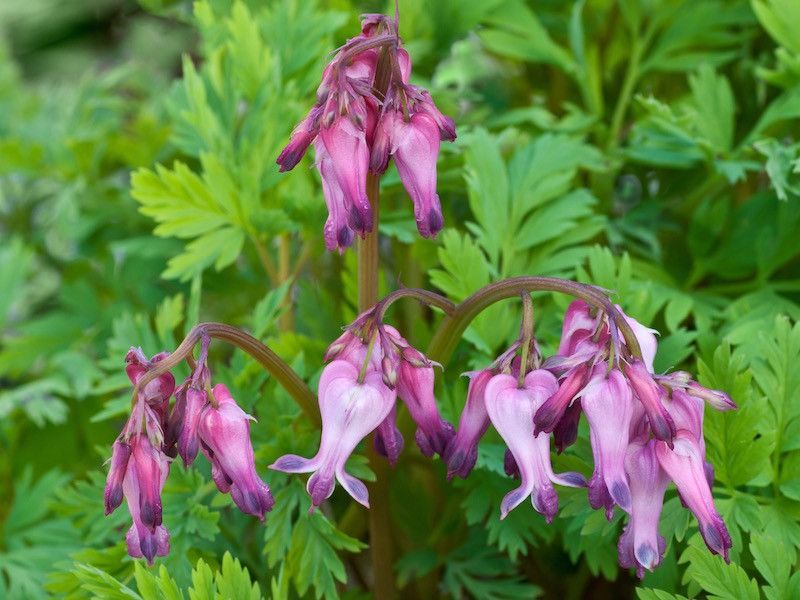
Most gardeners know the common bleeding heart, but fringed bleeding heart is the version that truly earns its place in a Michigan shade garden.
Dicentra eximia produces those same romantic, heart-shaped pink flowers on graceful arching stems, but unlike its more popular cousin, it does not go dormant when summer heat arrives.
The foliage stays soft and ferny all season long, which keeps the under-tree zone looking full and lush. Dry shade under established trees is where this plant genuinely outperforms the common garden variety.
Lamprocapnos spectabilis tends to struggle when soil dries out under dense canopies, but fringed bleeding heart handles those conditions with far more resilience.
It also reblooms sporadically through summer, so you get occasional flushes of color well past the main spring display.
Pairing fringed bleeding heart with Solomon’s seal and foamflower creates a layered planting that looks completely intentional and professionally designed.
Each plant occupies a slightly different height and texture zone, so the combination fills the under-tree space in a way that feels rich rather than sparse.
Plant fringed bleeding heart in Michigan in early spring or fall, give it decent moisture through its first season, and it will reward you with years of dependable bloom. Few flowering plants bring this much visual drama to the most challenging corner of a Michigan yard.
8. Jack In The Pulpit Stops Every Guest In Their Tracks
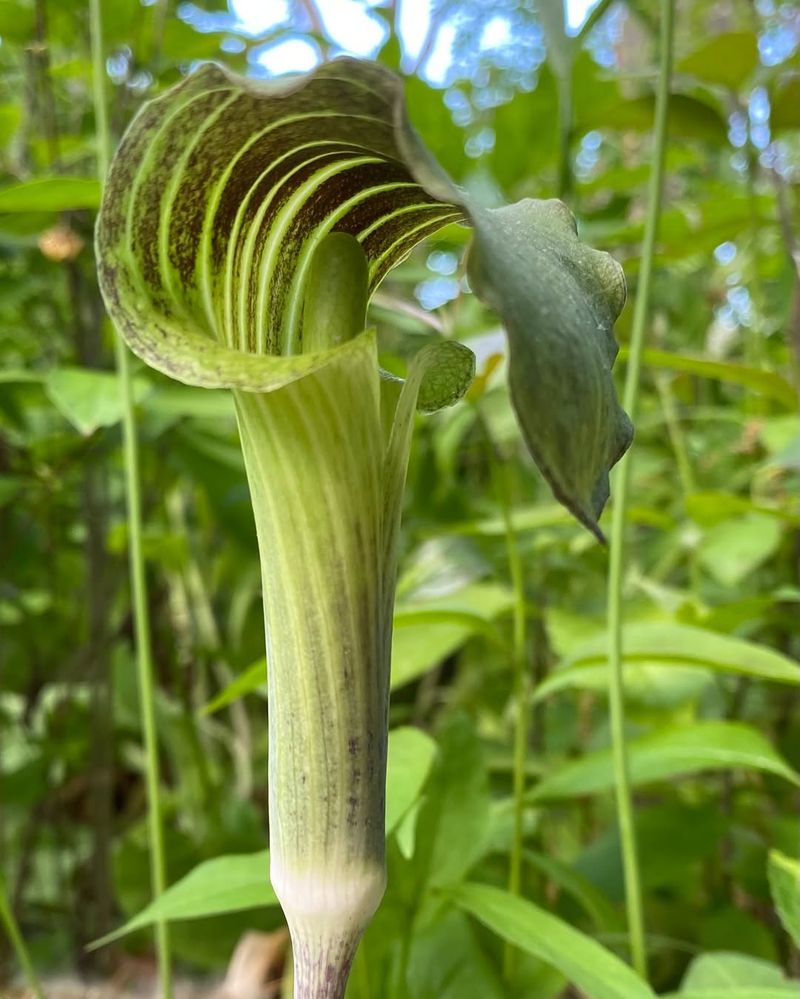
No other plant on this list gets the reaction that Jack in the pulpit does. Arisaema triphyllum produces one of the most genuinely unusual flowers you will ever see in a Michigan garden, a hooded green and brown striped spathe that curves over a central spadix like a tiny preacher standing at a pulpit.
First-time visitors always stop, point, and ask what on earth it is. This Michigan native wildflower thrives in moist, shaded spots under trees near rain gardens, low areas of the yard, or spots where water naturally collects after rain.
It is not the best choice for the driest spots under large surface-rooting trees, but give it consistent moisture and some shade and it will come back reliably every spring.
In fall, it produces clusters of bright red berries that extend the seasonal interest well past the blooming period.
Jack in the pulpit grows from a corm that slowly increases in size over the years, and larger corms can actually produce taller, more impressive plants over time. Plant the corms in fall at about two inches deep in rich, moist soil beneath your trees.
A layer of leaf mulch helps retain the moisture it prefers. Michigan gardeners who have a naturally damp low spot under their trees will find this plant transforms that awkward area into one of the most talked-about corners of the entire yard.
9. Wild Blue Phlox Fills The Spring Gap With Reliable Color
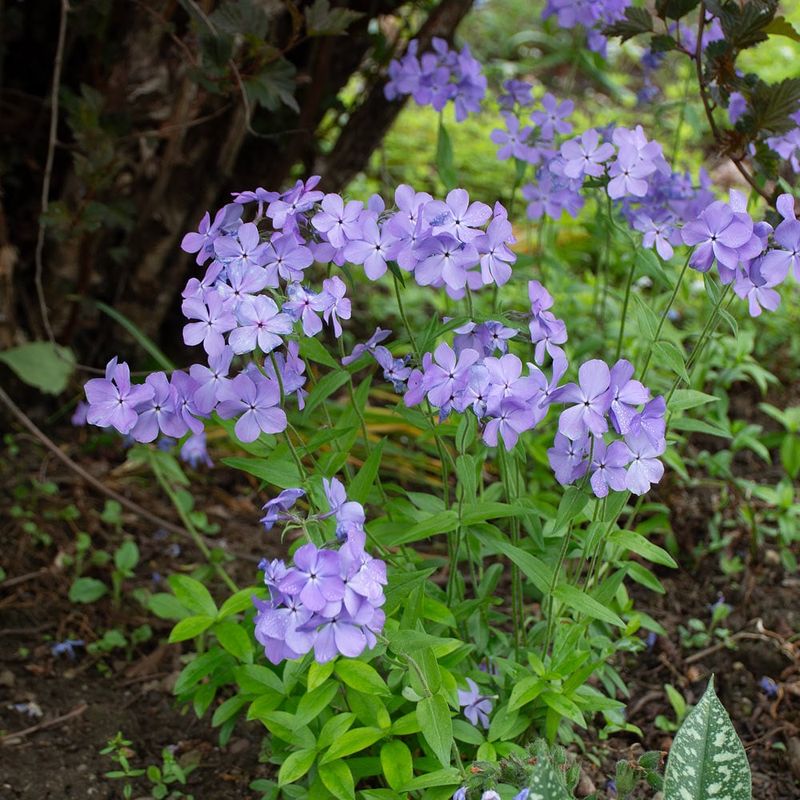
That narrow window in April and May when Michigan trees are still leafing out is prime time for wild blue phlox to shine.
Phlox divaricata covers itself in soft lavender-blue flowers right during that bright pre-canopy period, delivering a wave of color exactly when the under-tree zone needs it most. The timing feels almost perfectly designed for the shaded Michigan garden.
Wild blue phlox spreads at a moderate pace without ever becoming aggressive or hard to manage. It grows low and loose, weaving between other woodland plants in a relaxed, natural-looking way that pairs beautifully with lungwort, wild columbine, and foamflower.
The combination of blue, pink, and white flowers blooming together in May under a Michigan tree canopy is genuinely one of the prettiest sights a home garden can offer.
Once established, wild blue phlox handles the dry shade under trees without complaint. It prefers a bit of morning sun or bright filtered light, so it works best under trees with a higher canopy or on the sunnier edge of a shaded area.
Plant it in fall or early spring, water it through the first season, and then let Michigan’s climate take over. A light top-dressing of leaf compost in fall gives it a small boost without any real effort.
For early season color in the most challenging spots in a Michigan yard, wild blue phlox is a genuinely satisfying and reliable choice every single year.