The Companion Plants That Make Georgia Peaches Produce Bigger And Sweeter Fruit
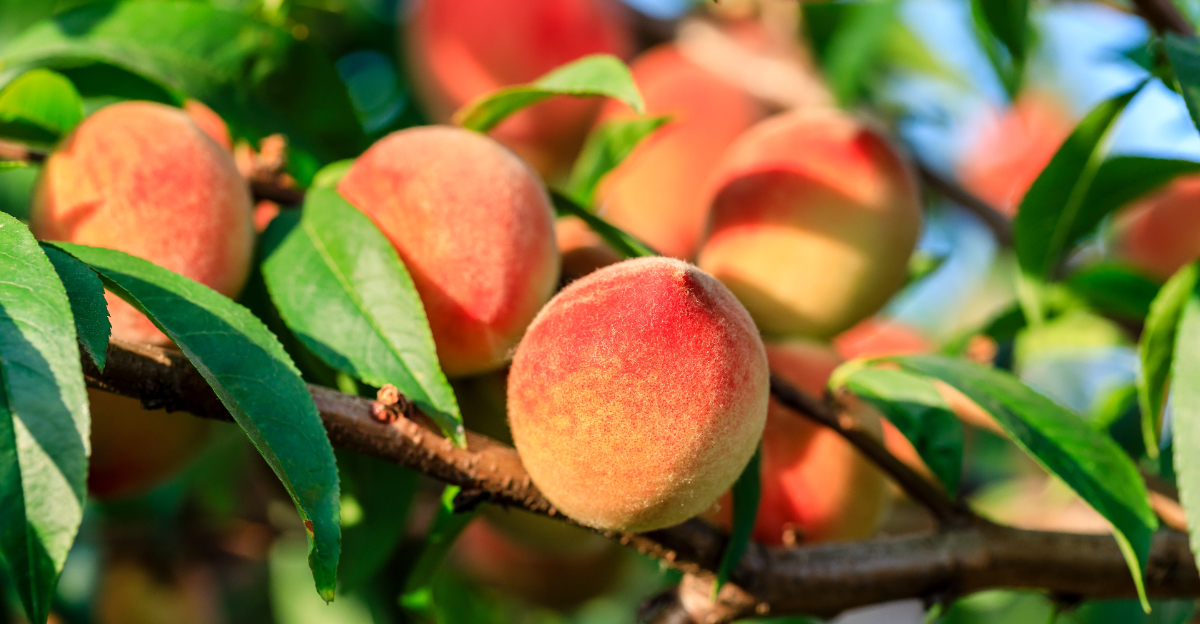
Peach trees across Georgia can look full and healthy, yet fruit quality does not always match that first impression. Size stays smaller than expected, flavor falls a bit flat, and something just feels off even when care seems right.
That usually comes down to what is happening around the tree, not just the tree itself. Nearby plants play a bigger role than most realize.
Soil conditions, pollinator visits, and even how moisture holds in the ground can all shift depending on what grows alongside peaches. Small changes in planting choices can quietly influence how fruit develops over the season.
Georgia’s climate already gives peaches a strong advantage, but the right companions can push that even further.
With a better setup around the tree, growth becomes more balanced, and fruit has a better chance to reach its full potential without extra work or complicated steps.
1. Comfrey Adds Nutrients And Supports Strong Fruit Growth
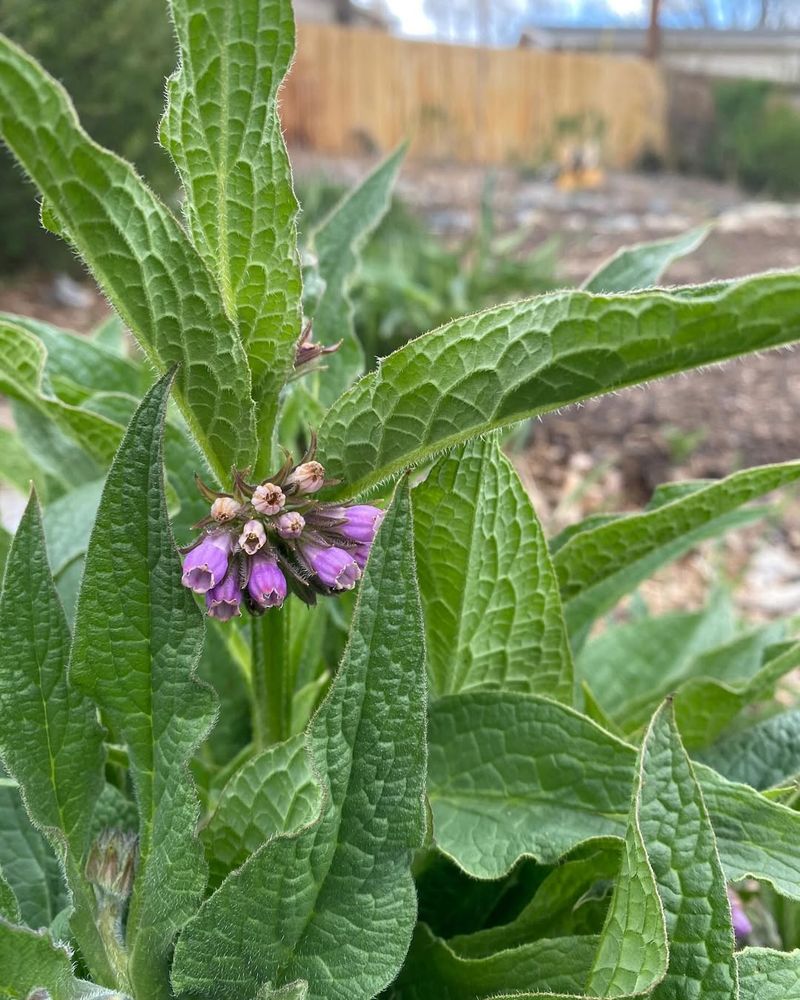
Comfrey is one of those plants that quietly does a lot of heavy lifting in the garden. Its roots reach deep into the ground, sometimes four to six feet down, pulling up minerals like potassium, phosphorus, and calcium that sit too far below the surface for most plants to reach.
When those large leaves fall or get cut back, they break down fast and release those nutrients right into the top layer of soil where your peach tree roots can grab them.
Georgia soils, especially the red clay types common across the Piedmont region, can sometimes lock up nutrients in ways that make them hard for trees to access.
Comfrey acts like a natural pump, cycling those locked-up minerals back into a form that is easier for peach trees to use.
Planting comfrey around the drip line of your trees, rather than right at the trunk, gives you the most benefit without crowding the base.
Cutting comfrey leaves and leaving them on the soil surface as mulch is a practice many Georgia gardeners swear by, especially heading into the summer growing season. The decomposing leaves feed soil microbes, which in turn support healthier root activity.
Some growers also make a liquid feed by soaking cut leaves in water for a week or two, then diluting that liquid and watering it directly onto the soil.
Results can vary depending on your existing soil quality and how consistently you manage the comfrey, but the overall support it provides to fruit development is well worth the effort.
Comfrey can spread over time, so choosing a permanent spot early helps avoid the need for relocation later.
2. Clover Improves Soil And Helps Retain Moisture
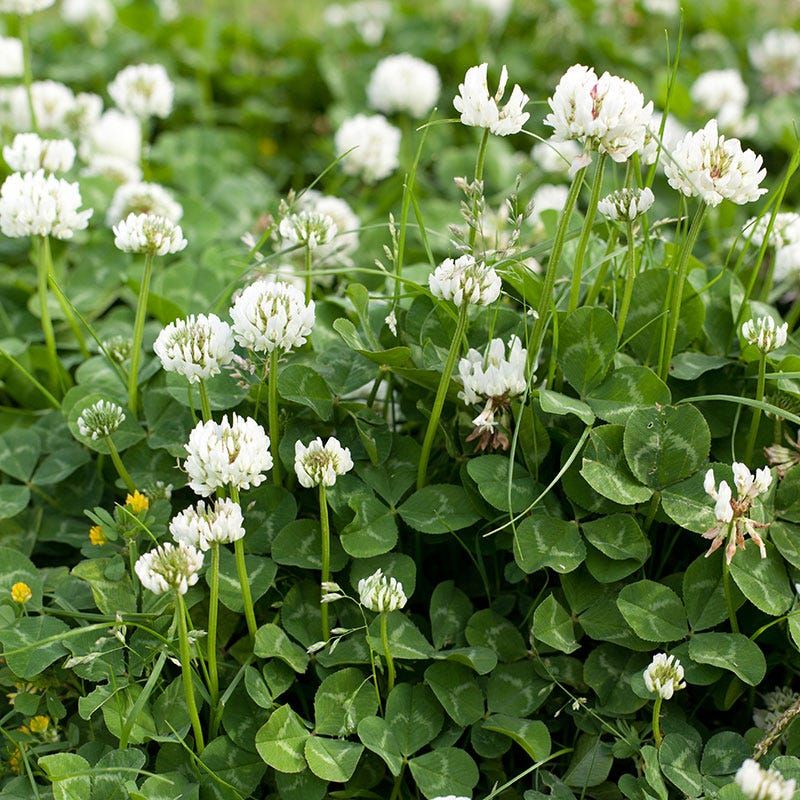
Walk through almost any healthy Georgia orchard and you might notice a carpet of low-growing clover spreading between the trees. Clover is not just a pretty ground cover.
It fixes nitrogen from the air and stores it in small nodules along its roots, which slowly release that nitrogen back into the soil. Peach trees are hungry for nitrogen, especially during the spring flush when they are pushing out new growth and setting fruit.
Your Georgia Garden Changes Every Week. Your Plan Should Too.
Gardening in Georgia changes quickly throughout the season. Every Friday you’ll receive a simple weekly plan showing exactly what to plant, prune, fertilize, harvest, and protect so you never miss the right timing.
Beyond the nitrogen benefit, clover holds moisture in the soil better than bare ground. Georgia summers get hot and dry in stretches, and that kind of heat stress can cause peaches to drop early or develop unevenly.
A thick mat of clover shades the soil surface, slowing down evaporation and keeping root zones cooler during those brutal July afternoons. Less water stress often translates to better fruit fill and sweeter flavor at harvest time.
White Dutch clover and crimson clover are both popular choices among Georgia growers. Crimson clover works especially well as a cool-season cover that you can let go to seed or mow down before summer heat sets in.
White clover tends to stay low and persist through warmer months, making it a reliable long-term ground cover under established trees.
One thing to keep in mind is that clover can compete with young trees for water during dry spells, so keeping it pulled back from the trunk area of newly planted peach trees is a smart move until they are well established.
Periodic mowing helps keep clover from getting too dense and improves airflow around the base of the trees.
3. Yarrow Attracts Beneficial Insects To The Area
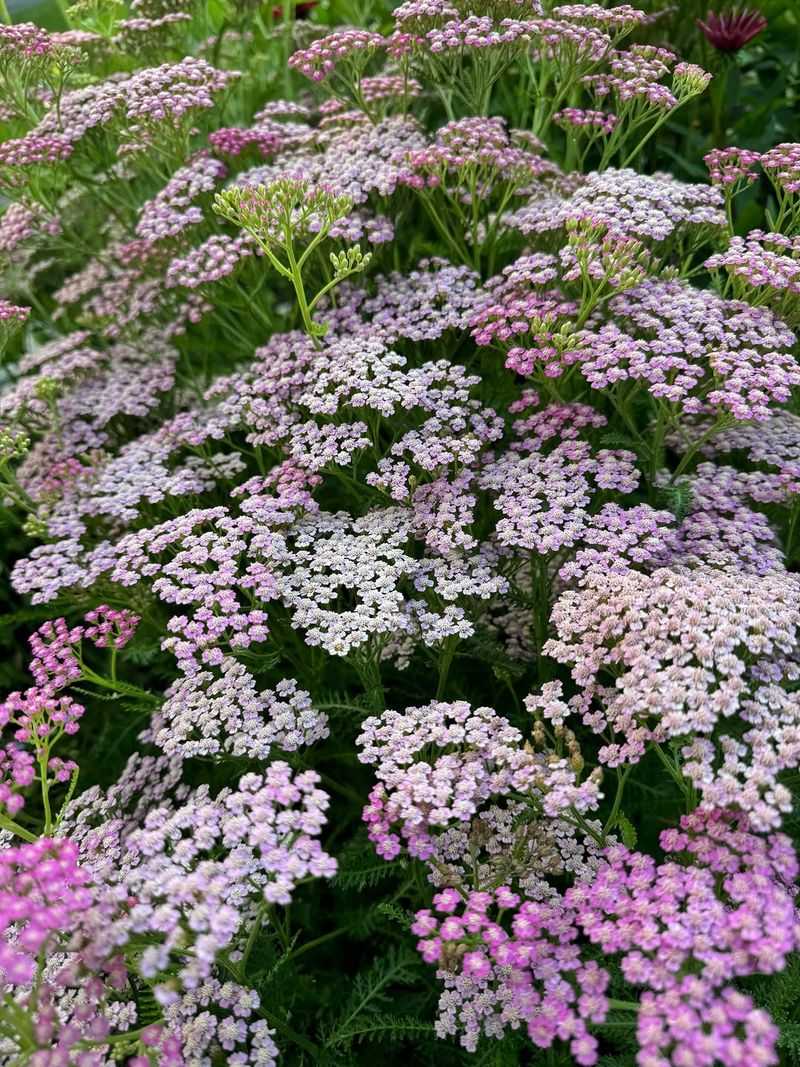
Flat-topped yarrow flowers might not look like much at first glance, but they are basically a landing pad for beneficial insects.
Lacewings, parasitic wasps, hoverflies, and ladybugs are all drawn to yarrow blooms, and these are exactly the kinds of insects you want hanging around your peach trees in Georgia.
Many of them prey on aphids, scale insects, and other soft-bodied pests that can weaken fruit trees and reduce your harvest quality.
Yarrow blooms for a long stretch through spring and into summer, which lines up well with the period when Georgia peaches are developing on the branch.
Having a steady food source for beneficial insects keeps them present in your orchard longer, rather than passing through briefly.
That extended presence means better natural pest pressure management over the whole growing season, not just during a short window.
Planting yarrow in the sunny borders around your orchard or in open patches between trees works well in Georgia’s climate. It tolerates heat, handles drought once established, and spreads on its own over time without becoming aggressive.
Yellow and white varieties tend to attract the widest range of beneficial insects, though any yarrow will help. One honest note: yarrow alone will not solve a major pest problem, and if you are dealing with serious infestations, additional management strategies will still be needed.
But as part of a broader companion planting approach, yarrow consistently earns its place in Georgia peach gardens by supporting the kind of insect balance that keeps trees healthier throughout the season.
4. Borage Supports Pollinators That Help Fruit Set
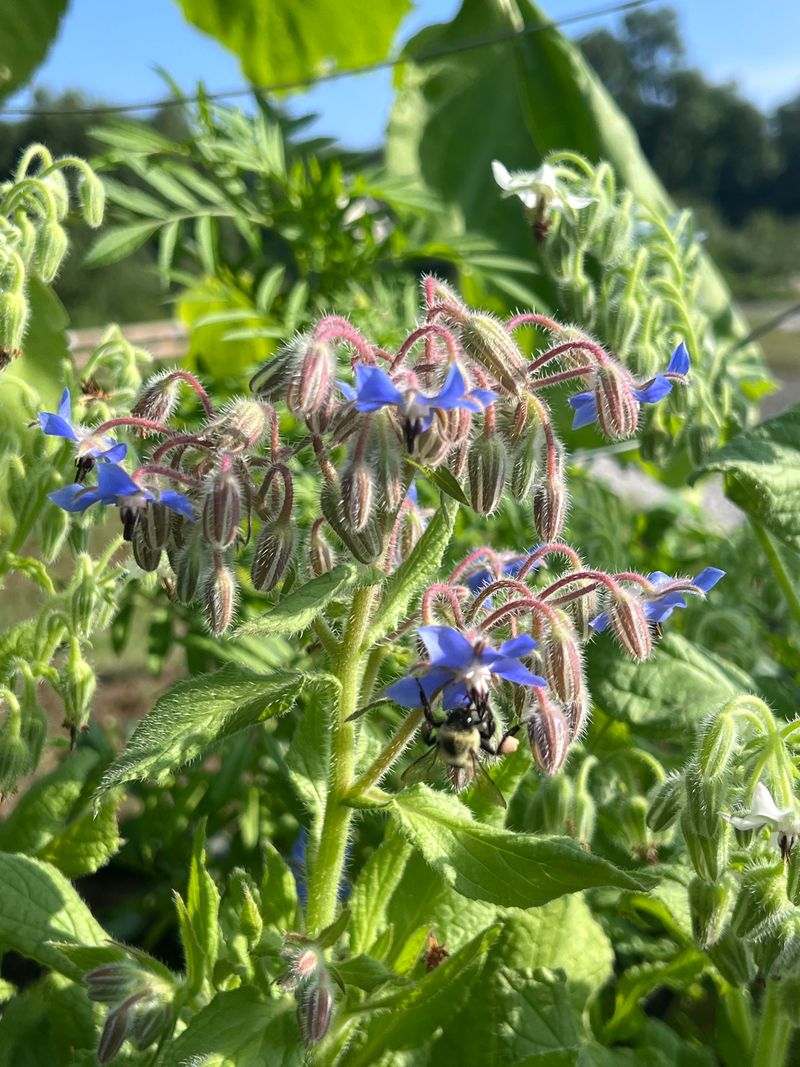
Borage has a reputation among experienced gardeners for a reason.
Those bright blue star-shaped flowers are irresistible to honeybees and bumblebees, and in Georgia, getting strong pollinator activity during peach bloom time is directly tied to how many fruits actually set on the tree.
A poorly pollinated bloom means fewer peaches, and smaller ones at that. Borage planted near your trees gives foraging bees an extra reason to stay close by.
What makes borage especially useful is that it blooms over a long period, often from late spring well into summer if conditions stay mild. Bees that visit borage for nectar tend to work nearby flowers too, including the peach blossoms that need pollinating in spring.
Georgia orchards that support strong bee populations during bloom typically see better fruit set compared to those without much flowering ground cover nearby.
Borage self-seeds readily, so once you plant it, you often get it coming back in future seasons without much effort. It prefers well-drained soil and full sun, which matches the conditions most Georgia peach trees already grow in.
Keep in mind that borage can spread a bit more than expected in fertile soil, so giving it a defined area or pulling extra seedlings as needed keeps things manageable.
It is also worth noting that borage leaves have a mild cucumber-like flavor and are edible, so some gardeners use it in the kitchen as a bonus.
As a pollinator support plant in a Georgia peach setting, it is practical, low-maintenance, and genuinely effective.
5. Garlic May Help Reduce Certain Pest Pressure
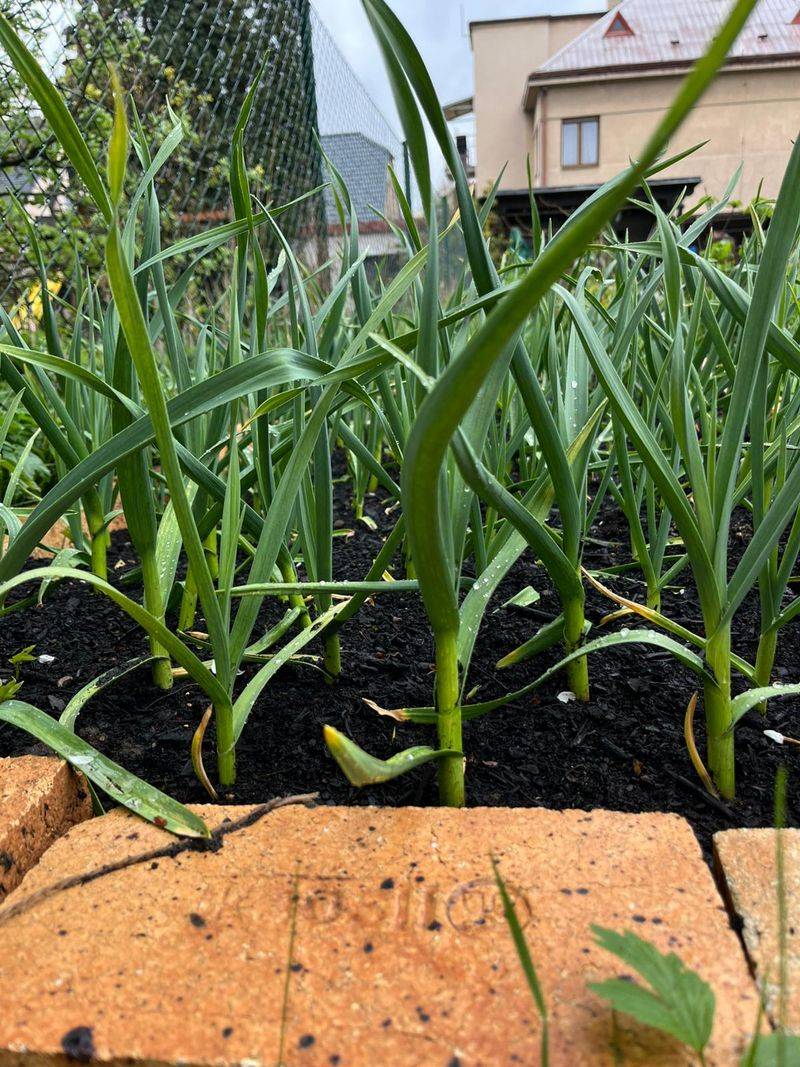
Garlic has a long history of being planted near fruit trees, and while it is not a magic solution, there is practical reasoning behind the habit.
Whether that translates directly to fewer pest problems in a Georgia peach orchard depends heavily on your specific pest pressure, soil conditions, and how densely you plant.
One realistic benefit of growing garlic near peach trees is that it may discourage borers and certain aphid species from settling in.
Georgia peach trees deal with peach tree borers as one of their most persistent challenges, and while garlic is unlikely to stop a heavy infestation on its own, some growers report that planting garlic around the base of trunks seems to make the area less attractive to egg-laying moths.
Evidence for this is mostly observational, so it is worth treating garlic as one layer of a broader pest management plan rather than a standalone fix.
Planting garlic cloves in fall around the drip line of your peach trees works well in Georgia’s mild winters. Garlic overwinters easily and matures in late spring, right as your peach trees are moving through key growth stages.
After harvest, the dry garlic tops can be left on the soil surface as a rough mulch. It is a low-effort, dual-purpose crop that earns its space without requiring much attention once it is in the ground.
That kind of simple, seasonal planting adds another layer of protection while giving something useful back at harvest time.
6. Chives Attract Pollinators And Can Deter Some Pests
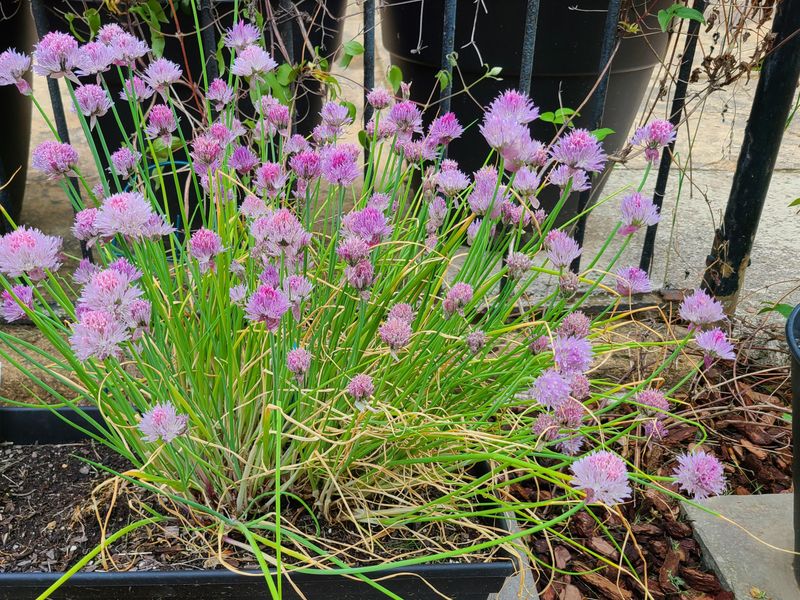
Chives punch above their weight when it comes to companion planting.
Those round purple flower heads that bloom in late spring are a magnet for bees, and in Georgia, that timing overlaps nicely with the period when fruit is still developing and pollinators are actively working the orchard.
More bee activity during that window can support better fruit size and more consistent development across the tree.
Beyond attracting pollinators, chives belong to the allium family, which means they share some of the same sulfur-based compounds found in garlic and onions.
Planting chives around the base of peach trees or in clusters between trees may help reduce activity from certain fungal pathogens and soft-bodied insects.
Chives are perennial in Georgia’s climate, meaning you plant them once and they come back reliably each year. They handle heat reasonably well, though they may go partially dormant in the hottest part of a Georgia summer.
Dividing clumps every two to three years keeps them vigorous and productive. Unlike some companion plants that can spread aggressively, chives stay fairly compact, making them easy to tuck around the base of trees without worrying about them taking over.
Snipping the leaves for kitchen use while they are growing near your peach trees is a pleasant bonus that many backyard Georgia growers genuinely appreciate.
Regular trimming keeps the clumps neat and encourages fresh, tender growth throughout the season.
That steady regrowth keeps them useful in the orchard all season while quietly supporting both tree health and everyday use in the kitchen.
7. Marigolds Help Manage Soil Pests Around Roots
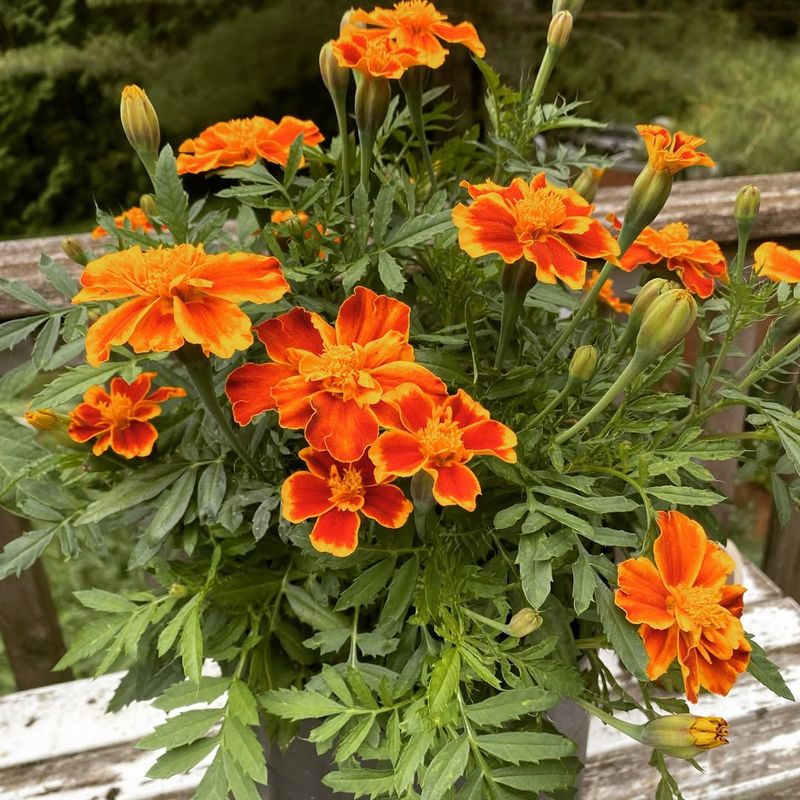
Marigolds have earned their reputation in vegetable gardens, but they belong in peach orchards too.
In Georgia, root-knot nematodes are a genuine concern for fruit trees, especially in the sandy loam soils found in parts of the state’s peach-growing regions like the area around Fort Valley.
Nematode damage to roots can reduce a tree’s ability to take up water and nutrients, which directly affects fruit size and sweetness.
Planting a dense ring of marigolds around the drip line of your peach trees each season provides ongoing root protection throughout the growing period.
To get the nematode-suppressing benefit, marigolds need to be planted densely and allowed to grow for at least one full season rather than just a few weeks.
Pulling and turning them into the soil at the end of the season can extend the effect by releasing those root compounds directly into the ground.
Marigolds also bring above-ground benefits. Their flowers attract hoverflies and other small beneficial insects that feed on common orchard pests.
Georgia summers are long enough to get multiple flushes of marigold blooms, keeping that insect support going well past the initial planting. They are affordable, easy to start from seed, and widely available at garden centers across Georgia each spring.
For a low-cost companion plant that works on multiple levels, marigolds are hard to beat in a Georgia peach setting.
It is one of those low effort choices that quietly protects your trees while helping them produce better fruit over time.
Over time, that kind of steady support adds up to stronger trees and more consistent harvests without adding extra work.