Ohio Perennials For Pots And Containers That Keep Coming Back, Year After Year
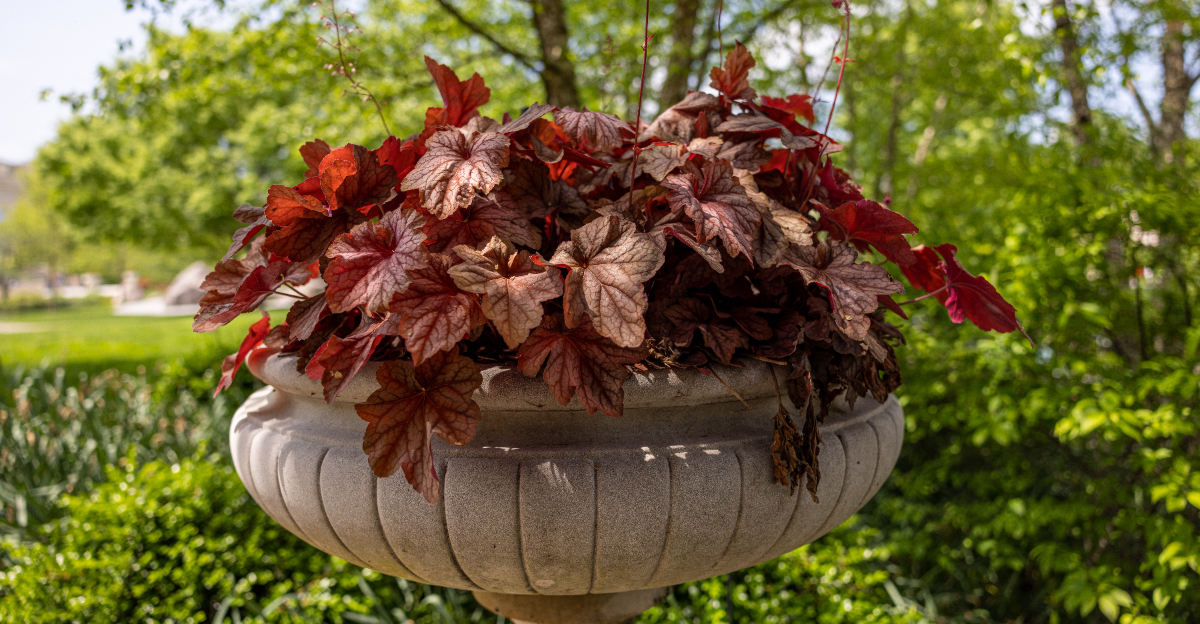
Most gardeners treat container plants like a seasonal transaction. Buy them in spring, enjoy them for a few months, toss them in fall, repeat.
It gets expensive fast, and after a few years it starts to feel like a lot of effort for something that never really builds on itself. Ohio has a legitimate case for doing things differently.
The winters are cold enough to make you skeptical, but plenty of perennials handle the freeze, come back in spring, and actually fill out better with each passing year. Your containers do not have to start from scratch every season.
Not every perennial survives when its roots are exposed to an Ohio winter with nothing but a pot wall between them and the cold. Some do, and they are worth every bit of garden space you give them.
1. Choose Coral Bells For Color That Does Not Quit
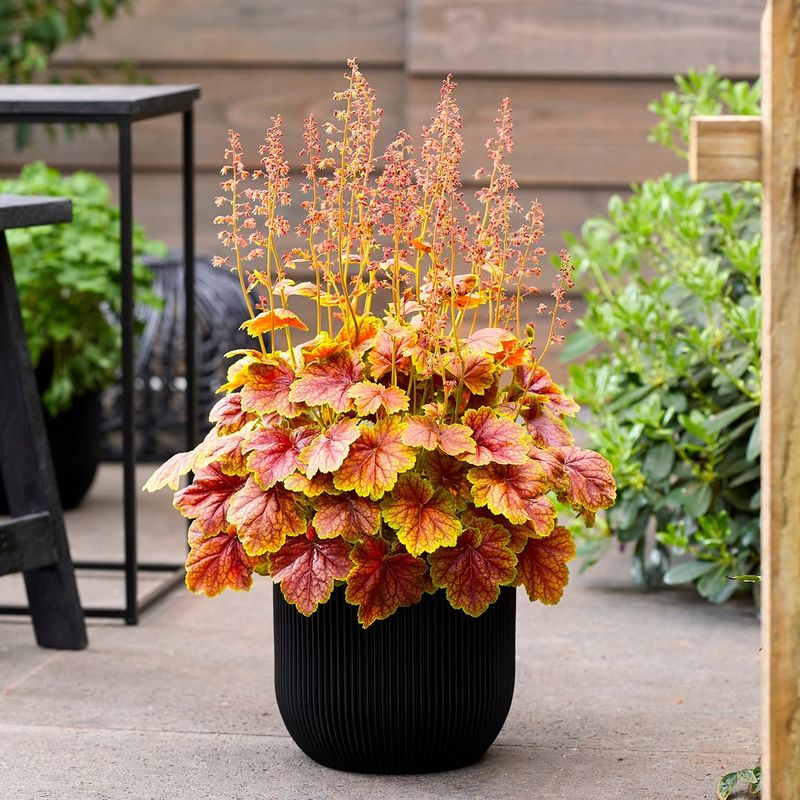
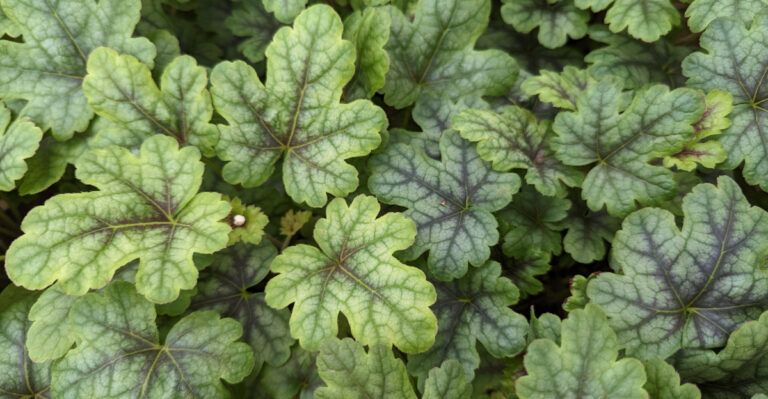
Few plants earn their spot in a container as quietly and consistently as coral bells. The foliage alone, ranging from deep burgundy and caramel to lime green, silvery purple, and bronze, gives a porch pot serious color even during weeks when nothing else is blooming.
That makes coral bells especially valuable in Ohio, where spring and fall can be cool and slow, and a pop of foliage color carries more weight than gardeners might expect.
Coral bells sold in Ohio garden centers are mostly hybrids and cultivars of Heuchera species, some of which have regional native roots in eastern North America.
They thrive in part shade to morning sun and do well near covered entries, shaded patios, and north-facing porches where other plants struggle.
Good drainage is essential for coral bells, especially in containers, because soggy winter soil can lead to root and crown problems.
Use a pot with drainage holes and a quality potting mix that holds some moisture without staying wet. Coral bells work beautifully as a filler or low spiller in a mixed container alongside ferns or sedges.
In Ohio winters, move pots to an unheated garage or sheltered spot to protect roots from repeated freezing and thawing. Divide clumps every few years to keep plants vigorous and the container looking full.
2. Plant Purple Coneflower For Patio Blooms With Staying Power
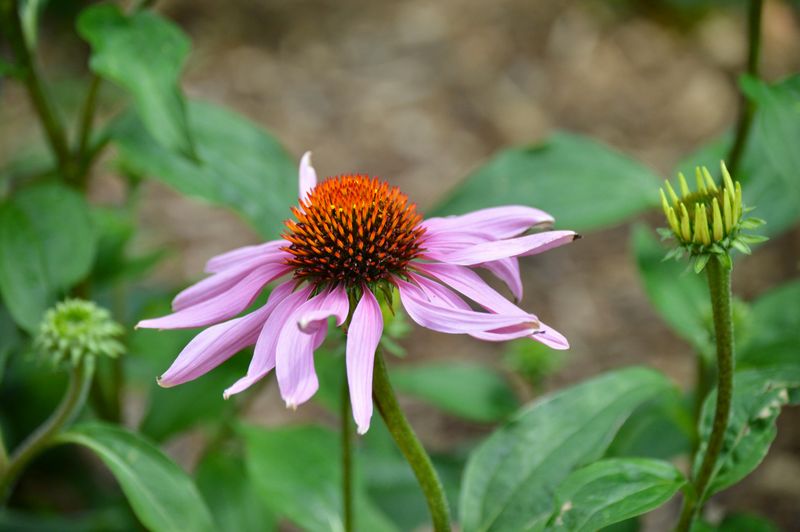
Gardeners who want a container that feels both beautiful and genuinely useful keep coming back to purple coneflower. Echinacea purpurea brings bold purple-pink flowers, strong pollinator traffic, and a look that holds up even on the hottest July afternoons.
Bees, butterflies, and goldfinches all find reasons to visit, which makes a coneflower pot feel more like a little ecosystem than just a decoration.
For containers, full sun is non-negotiable. Coneflower needs at least six hours of direct sunlight and a pot deep enough to accommodate its roots, ideally 12 inches or more.
Drainage holes are essential because soggy soil is one of the fastest ways to lose a coneflower over winter.
OSU Extension recommends choosing larger containers for perennials in Ohio because bigger pots protect roots better from freeze-thaw cycles and dry out less quickly between waterings.
Your Ohio Garden Changes Every Week. Your Plan Should Too.
Gardening in Ohio changes quickly throughout the season. Every Friday you’ll receive a simple weekly plan showing exactly what to plant, prune, fertilize, harvest, and protect so you never miss the right timing.
Deadheading spent blooms during summer keeps the plant tidy and encourages more flowers. Leaving some seed heads standing in fall gives birds a food source and adds winter texture to the pot.
Cut old stems back in late winter or early spring before new growth pushes up from the base. Coneflower may self-seed lightly, but in a container that is simple to manage by removing unwanted seedlings early.
3. Use Black Eyed Susan For Golden Flowers That Bounce Back
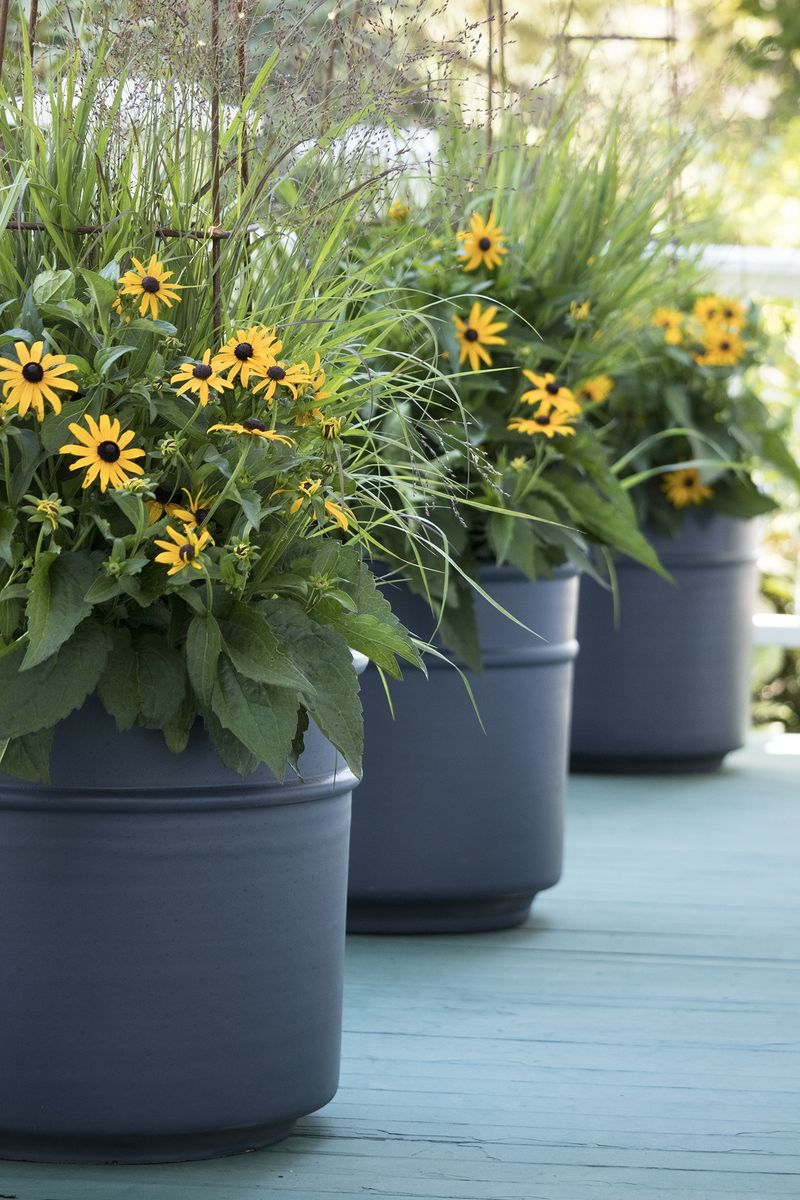
There is something reliably cheerful about a pot full of black-eyed Susans.
The golden-yellow petals and dark brown centers give any sunny Ohio patio a warm cottage-garden feel, and the plants bloom generously from midsummer into fall when many other perennials are winding down.
They pair especially well with purple coneflower, ornamental grasses, sedum, or dark-leaved coral bells for a container combination that looks intentional and lively.
Rudbeckia hirta, one of the most common black-eyed Susan types, behaves as a short-lived perennial or biennial in Ohio, meaning it may not always return from the same root.
However, it reseeds reliably enough that a well-placed container planting often keeps itself going from year to year.
Rudbeckia fulgida, sometimes called orange coneflower, is a truer perennial and a stronger bet for gardeners who want reliable returns. Both types need full sun and a roomy container with excellent drainage.
Deadheading during the bloom season keeps the pot looking neat and can extend flowering. Leaving seed heads standing in fall benefits birds and adds some winter interest before cleanup.
Cut stems back in late winter before fresh growth emerges. Because black-eyed Susans can dry out quickly in smaller pots during Ohio summers, choosing a container that holds at least two gallons of potting mix gives roots a better buffer against heat and drought.
4. Grow Wild Bergamot For A Native Pot Full Of Pollinators
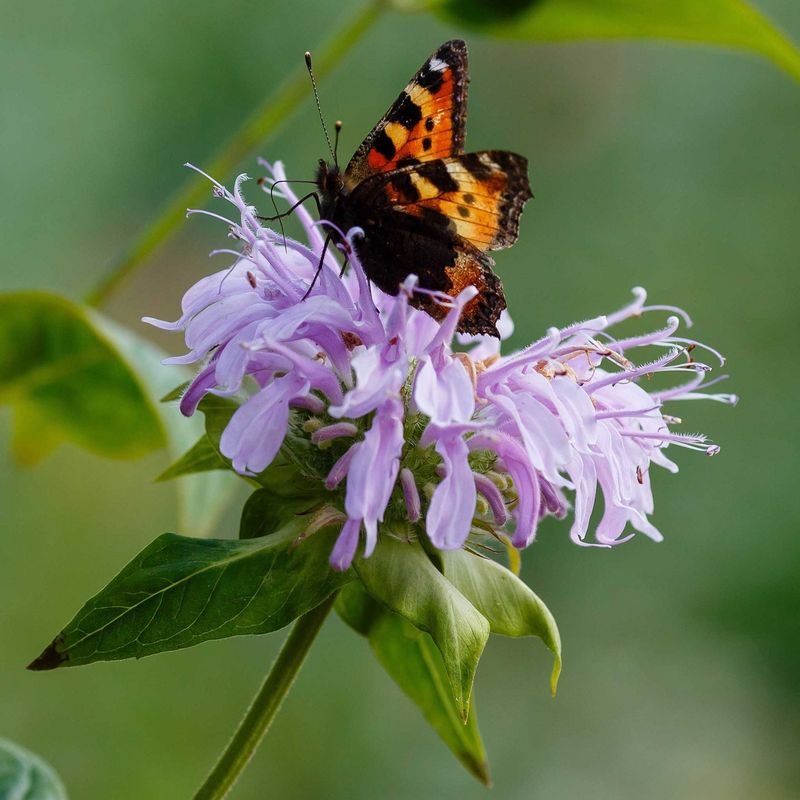
A container of wild bergamot in full bloom is practically a pollinator magnet. Monarda fistulosa is native to Ohio and produces loose clusters of lavender-purple flowers that attract bumblebees, hummingbirds, and a wide range of native bees through midsummer.
The aromatic foliage adds a pleasant herbal scent when brushed, which makes it a satisfying plant to have near a seating area or porch where people actually spend time.
Wild bergamot has a naturally looser, more relaxed growth habit than many traditional patio plants, and that quality suits cottage-style, native-inspired, or meadow-themed containers well.
One practical advantage of growing it in a pot rather than a garden bed is that container growing limits its spreading tendency, which can be aggressive in open soil.
Choose a roomy container, at least 12 to 14 inches across, to give the roots space and reduce moisture stress during dry Ohio summers.
Full sun to part sun works best, and good airflow around the plant helps reduce powdery mildew, which is a common issue for Monarda in humid Ohio summers. Water during dry spells but avoid keeping the soil constantly wet.
Cut stems back after blooming to encourage tidy regrowth and reduce mildew pressure.
If the plant fills the pot completely by late summer, divide it in early spring before new growth gets too large, and refresh the potting mix at the same time to keep the container productive.
5. Pick Butterfly Weed For Bright Color In Hot Sunny Pots
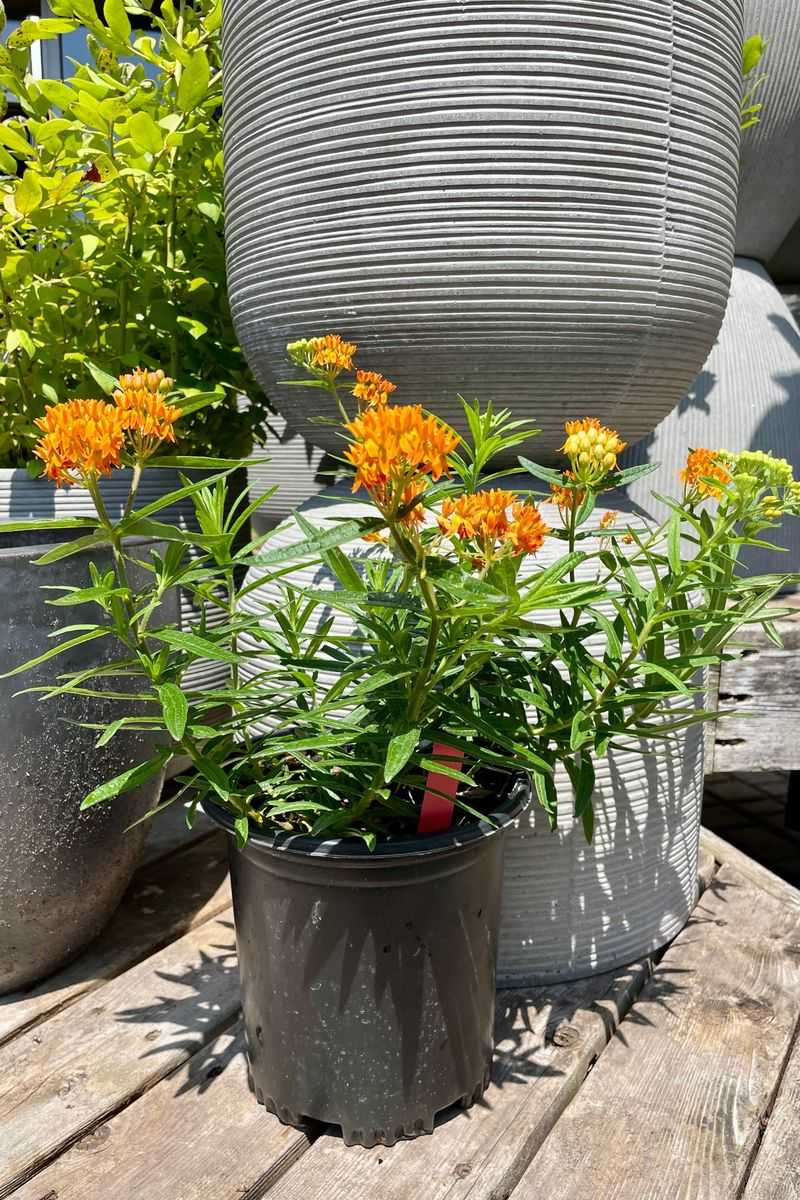
Bold orange flowers on a plant that practically thrives on neglect sounds too good to be true, but butterfly weed delivers exactly that.
Asclepias tuberosa is native to Ohio and earns serious pollinator credentials as a host plant for monarch butterflies and a nectar source for a long list of bees and beetles.
The vivid orange color is hard to match with any annual, and it looks striking in a simple container without needing much company.
The most important thing to know before planting butterfly weed in a container is that it develops a deep taproot. That root is part of why the plant is so drought-tolerant, but it also means the plant dislikes being moved or disturbed once established.
Choose a deep container from the start, at least 12 to 14 inches deep, and plan to leave the plant in that spot. Drainage is critical because butterfly weed is adapted to well-drained, even sandy soils and will struggle in soggy conditions.
Do not panic if butterfly weed is slow to emerge in spring. It is one of the last perennials to show new growth, and gardeners who assume it’s gone and replace it too early miss out on a plant that was simply waiting for consistently warm soil.
Resist the urge to overwater while waiting. Once it gets going, butterfly weed is tough, heat-tolerant, and rewarding for Ohio gardeners willing to be patient through the slow spring start.
6. Try Little Bluestem For A Container That Looks Good In Every Season
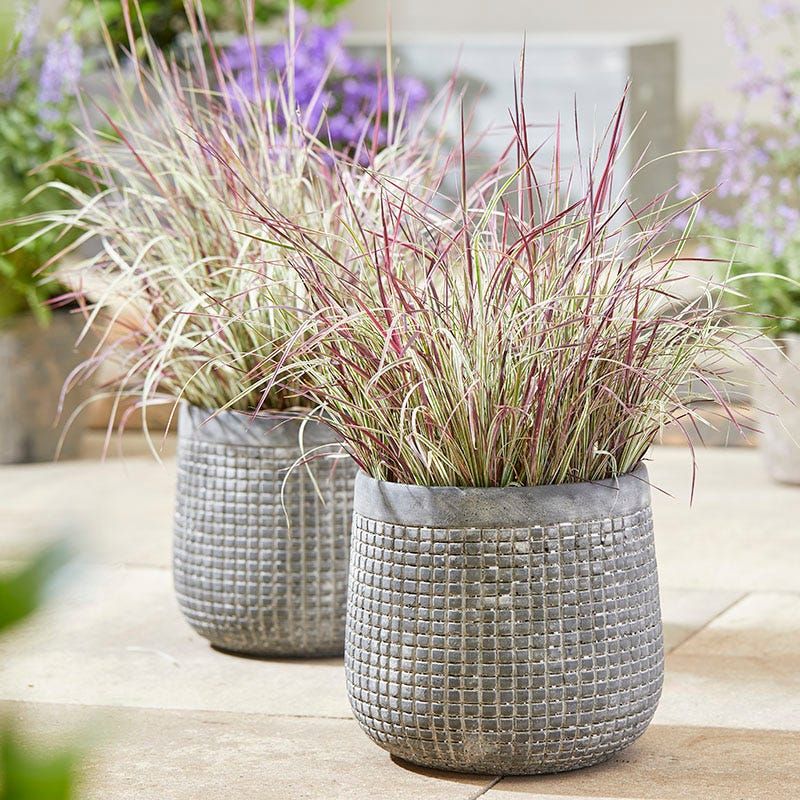
Most container plants peak in summer and look spent by October, but little bluestem keeps earning its place through every season.
This native ornamental grass starts the year with blue-green upright blades that give a container real structure and texture from early summer onward.
By fall, the foliage shifts into warm shades of orange, copper, and bronze that can outshine many flowering plants. Fluffy white seed heads catch the light and move in the breeze through winter, giving the pot life long after everything else has gone dormant.
Schizachyrium scoparium is native to Ohio and much of North America, making it a solid choice for gardeners who want a low-maintenance container that also supports native wildlife.
It fits naturally in modern minimalist designs, prairie-inspired pots, and native plant containers.
Full sun and excellent drainage are the two non-negotiable requirements. Little bluestem planted in soggy or consistently wet soil will decline quickly, especially over an Ohio winter when roots cannot dry between freezes.
Choose a sturdy, heavy container that will not tip in wind once the grass clump fills out. Little bluestem does not need deadheading the way flowering perennials do, which makes it genuinely low maintenance.
Cut old stems back to a few inches in late winter or very early spring before new growth pushes up from the base. Larger containers help insulate the roots from Ohio’s freeze-thaw cycles, which are hard on container perennials across much of the state.
7. Add Sedum For Tough Beauty When Watering Gets Forgotten
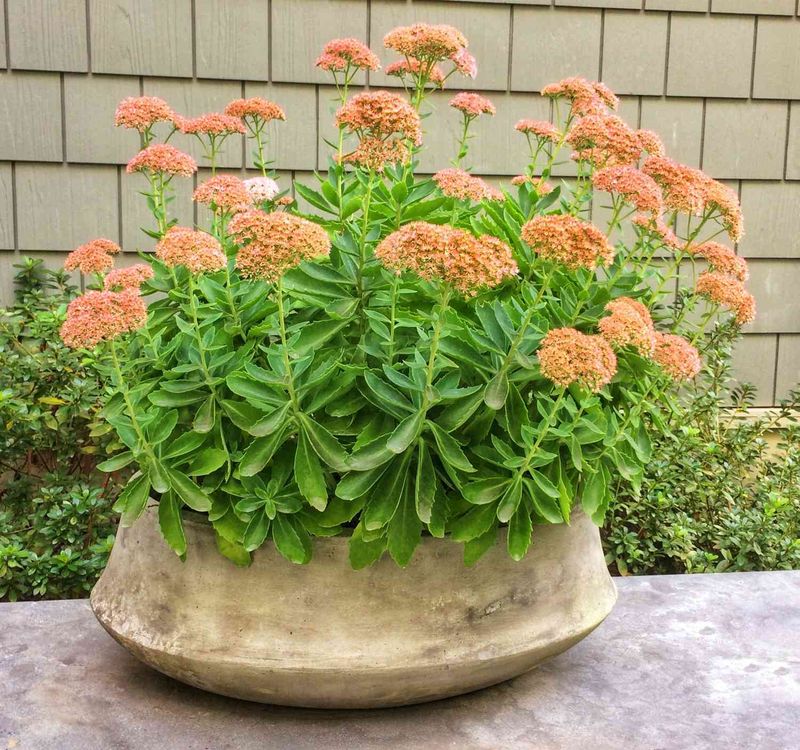
Hot patio, full sun, and a gardener who sometimes forgets to water for a week straight. That is exactly the situation where hardy sedum earns its reputation.
Stonecrop sedums store water in their thick, fleshy leaves, which makes them unusually forgiving during the dry stretches that hit Ohio patios and decks in July and August.
The foliage stays neat and attractive all season, and the flower clusters that appear in late summer and fall bring in bees and butterflies right when other container plants are winding down.
Most garden sedums sold in Ohio are not native to the state, but upright types like Sedum spectabile cultivars and their hybrids are non-invasive and well-suited to Ohio containers.
Avoid tender or tropical succulents that look similar but cannot survive Ohio winters outdoors.
Hardy stonecrop types rated for USDA zones 4 or 5, which cover most of Ohio, have the best chance of returning year after year in containers with proper care.
Drainage is the single most important factor for sedum success. Use a gritty, fast-draining potting mix rather than standard potting soil that holds too much moisture.
A container with multiple drainage holes helps prevent the root rot that destroys sedums faster than drought ever would.
In northern Ohio, where winters are colder and wetter, moving sedum containers to a sheltered spot or unheated garage after the first hard frost gives roots the best chance of surviving until spring.
8. Use Foamflower For A Shady Pot That Still Feels Special
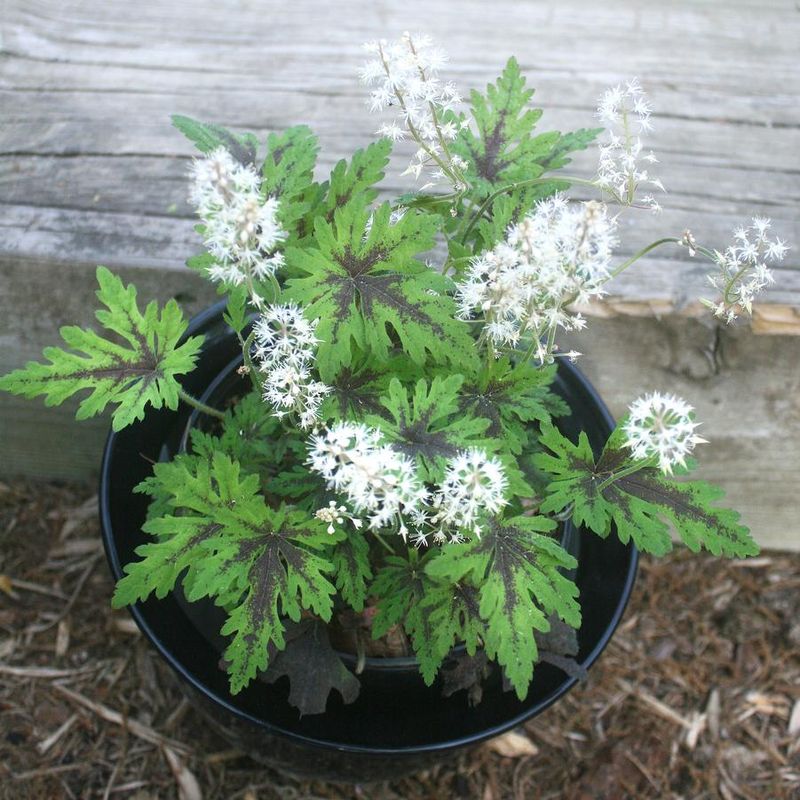
Shady spots often get the least creative container attention, usually a hanging basket or a pot of impatiens and nothing more. Foamflower changes that equation entirely.
Tiarella cordifolia is native to Ohio’s woodland areas and produces soft, feathery white to pale pink flower spikes in spring that look genuinely delicate and lovely.
After the flowers fade, the patterned foliage, often marked with burgundy veining or dark centers, keeps the container looking attractive through summer and into fall.
Foamflower solves the problem of shaded porches, north-facing entries, covered patios, and containers tucked under trees where most sun-loving perennials simply refuse to perform.
It prefers part shade to full shade and appreciates the kind of evenly moist, woodland-style conditions that come naturally in sheltered spots.
Avoid placing foamflower in hot, dry, full-sun exposure because that combination causes stress and poor performance fairly quickly.
In a container, foamflower’s natural tendency to spread and form colonies actually works in the gardener’s favor, filling out a pot more completely over time rather than leaving bare edges.
Pair it with coral bells, native ferns, or sedges for a layered shade container that has real depth and seasonal interest.
Keep the soil consistently moist but never waterlogged, and use a pot with drainage holes to prevent root problems. In Ohio winters, move shaded containers to a protected spot to shield roots from the harshest freeze-thaw swings.