7 Ways Northern Cardinals Use Shrubs In Georgia During Spring
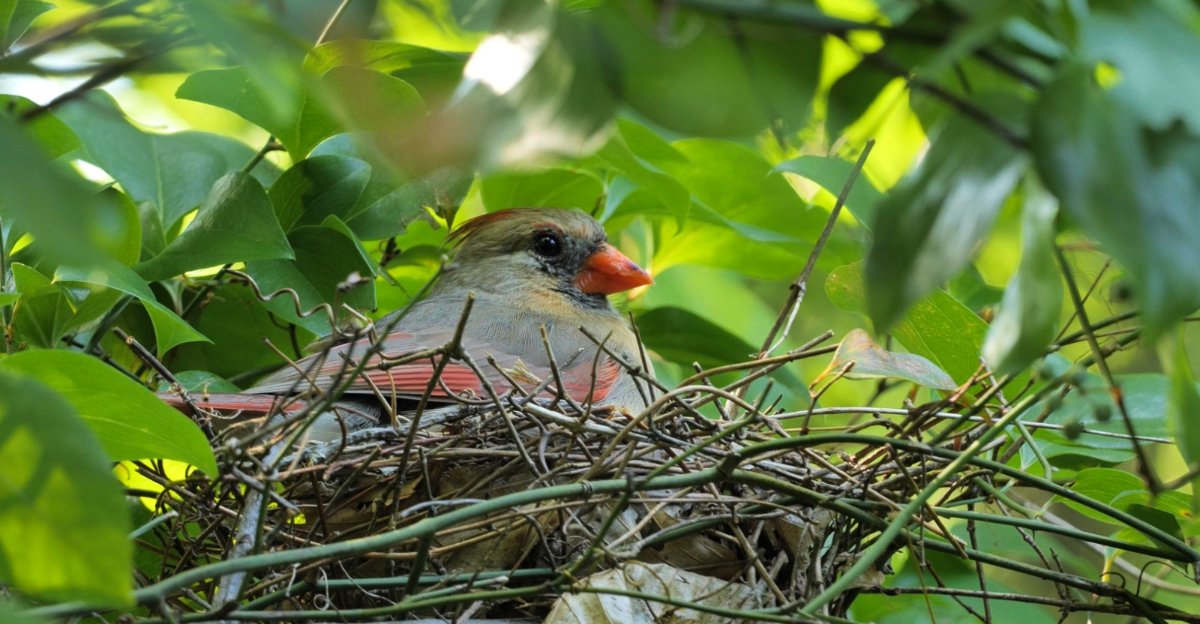
Spring in Georgia flips a switch in the backyard, and suddenly everything feels alive again. Shrubs that looked quiet all winter turn into busy little hubs, with flashes of red darting in and out all day long.
Northern Cardinals waste no time getting to work. They move through garden edges with purpose, hopping, calling, and checking every branch like they have a full schedule to keep.
It is easy to miss just how much is happening inside those shrubs. A quick glance might show a bird or two, but stick around for a few minutes and you start to see the real story unfold.
Nests tucked out of sight, soft chirps from hidden spots, and that unmistakable song drifting through the yard. Once you notice it, you cannot unsee it.
Your shrubs are doing a lot more than filling space, and the cardinals definitely know it.
1. Dense Shrubs Create Safer Nesting Spots
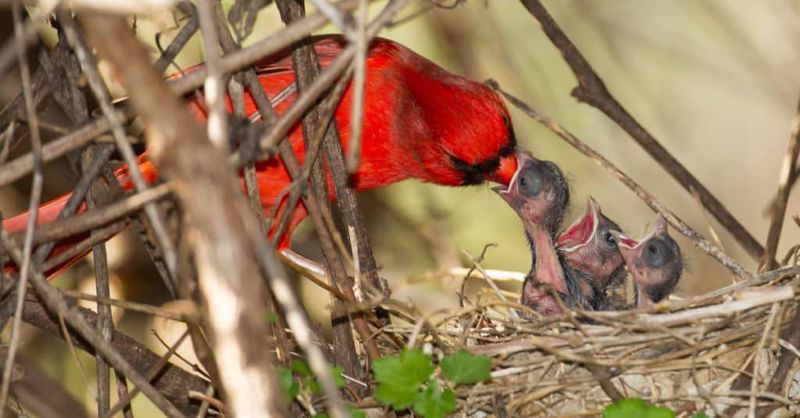
Walk past a thick azalea or viburnum in a Georgia yard during April, and you might spot a flash of red disappearing into the leaves.
Northern Cardinals tend to choose dense, branching shrubs for nesting because the layered structure makes it harder for predators to reach eggs or nestlings.
The female does most of the nest building, weaving grasses, bark strips, and plant fibers into a compact cup shape tucked inside the shrub.
In Georgia, spring nesting often begins earlier than many people expect, sometimes as soon as late February or March when temperatures start climbing.
Cardinals tend to place nests between two and ten feet off the ground, which puts many common backyard shrubs right in the ideal range.
Shrubs with a mix of woody stems and leafy cover tend to attract the most nesting activity.
Homeowners who want to support nesting cardinals can let shrubs grow a bit fuller rather than pruning them back hard in early spring. Leaving natural growth along fence lines or garden borders gives cardinals more options when they scout nesting locations.
Avoid heavy trimming between March and August to reduce the chance of disturbing an active nest.
Even a single well-placed shrub near a garden edge can become a reliable nesting spot that cardinals return to season after season in Georgia landscapes.
2. Low Shrub Branches Become Spring Singing Perches
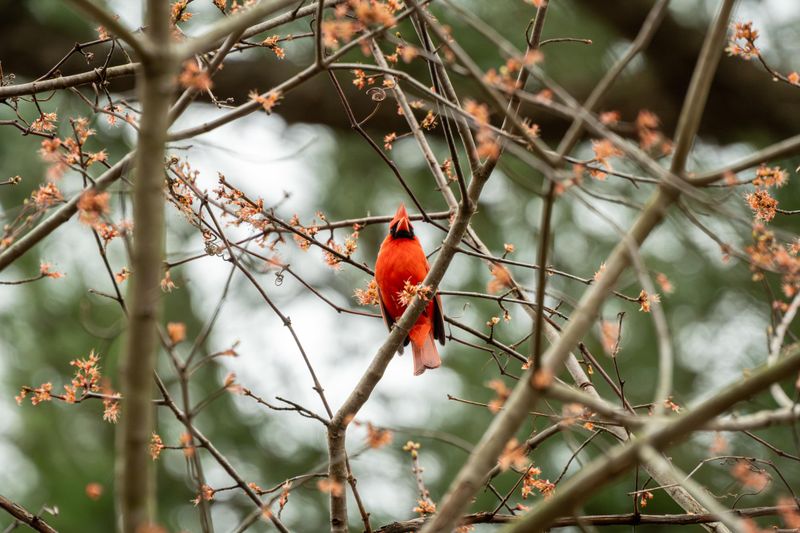
Early spring mornings in Georgia often begin with a clear, whistling song coming from somewhere near the garden edge.
More often than not, a male Northern Cardinal is the source, perched on a low shrub branch and broadcasting his presence across the yard.
Male cardinals sing regularly during spring to establish territory and attract or maintain a bond with their mate, and low shrub branches give them a visible, accessible stage for doing exactly that.
Unlike tall tree perches, low shrub branches put the male closer to ground level, which may help his song carry across smaller yard spaces and garden beds.
Georgia backyards with layered plantings, meaning shrubs beneath taller trees, tend to see more consistent cardinal singing activity near those lower levels during the nesting season.
Your Georgia Garden Changes Every Week. Your Plan Should Too.
Gardening in Georgia changes quickly throughout the season. Every Friday you’ll receive a simple weekly plan showing exactly what to plant, prune, fertilize, harvest, and protect so you never miss the right timing.
The male often rotates between several favorite perches throughout the day, returning to the same spots repeatedly.
Watching for this behavior is one of the easier ways to confirm cardinals are actively using your yard during spring. If you notice a male cardinal returning to the same shrub branch each morning, that shrub likely sits within or near his established territory.
Keeping shrubs at a moderate height rather than shearing them flat gives cardinals more usable perch points.
Planting shrubs in small clusters along borders or near feeders also increases the number of natural perches available across a Georgia garden throughout the spring season.
3. Backyard Shrubs Add Shelter Along Garden Edges
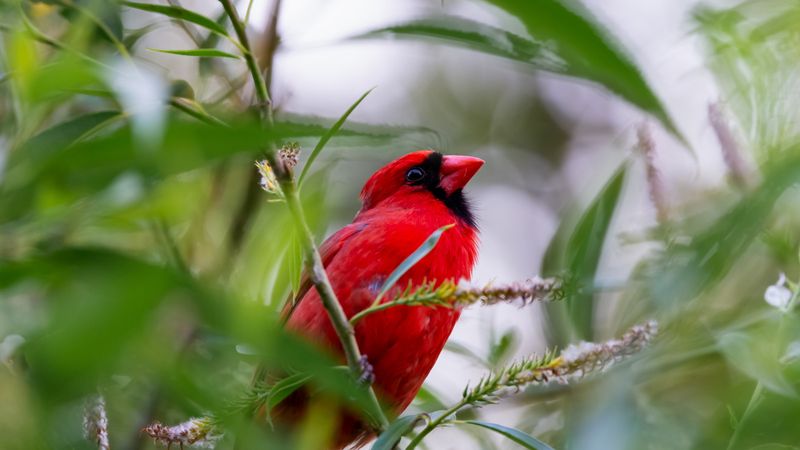
Garden edges in Georgia can become surprisingly active spaces during spring, especially when shrubs line the border between a lawn and a fence, bed, or wooded area.
Cardinals move along these edges regularly, using shrubs as quick cover when they sense movement or feel exposed.
The transition zone between open lawn and dense planting is one of the most used areas in a backyard habitat, and shrubs planted along those edges give cardinals a reliable place to pause, rest, and assess their surroundings.
Shelter along garden edges matters most during the early weeks of spring when cardinals are establishing territories and spending more time out in the open. A shrub border gives them somewhere to retreat quickly without having to fly far.
Even a modest row of shrubs along a fence line can serve this purpose well, particularly if the plants have enough leaf density to block the line of sight from above.
For Georgia gardeners, building out a shrub border does not require a large yard or a complicated planting plan. A few well-spaced shrubs along an existing fence or bed edge can dramatically increase how often cardinals use that part of the yard.
Mixing shrub heights adds even more value since it creates multiple layers of cover at different levels.
Cardinals tend to linger longer in spaces that offer both visibility and quick access to shelter, and a thoughtful garden edge planting can provide both throughout the Georgia spring season.
4. Thick Shrubs Help Young Cardinals Stay Hidden
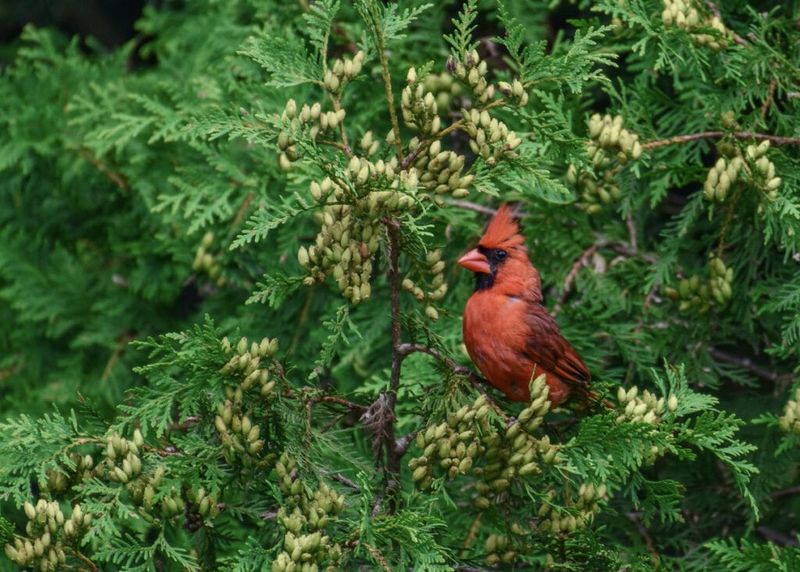
By late spring in Georgia, cardinal nests that started in March or April begin producing fledglings, and thick shrubs become one of the most critical resources for those young birds.
Fledglings leave the nest before they can fly well, spending several days hopping through low vegetation and relying on dense cover to stay out of sight.
A thick shrub with low branching structure gives young cardinals the kind of layered hiding space they need during this vulnerable stage.
Parent cardinals continue feeding fledglings for several weeks after the young birds leave the nest, and they tend to keep the family group close to shrubby cover during this time.
Georgia yards with dense plantings along borders or near feeders often host fledgling cardinals for longer stretches because the habitat supports both feeding and hiding in the same general area.
Watching for a fledgling with brownish plumage and a slightly oversized beak near a shrub border is a reliable sign that nesting was successful nearby.
Homeowners can support this stage of the nesting cycle by avoiding heavy shrub pruning during late spring and early summer.
Even leaving a small patch of unpruned shrubs along a fence or bed edge gives fledglings somewhere to shelter while they build strength.
Keeping cats indoors during this period also reduces risk for young birds moving through low vegetation. These small adjustments can make Georgia backyards more supportive of the full cardinal nesting cycle from egg to independent young bird.
5. Shrub Borders Support Ground Foraging
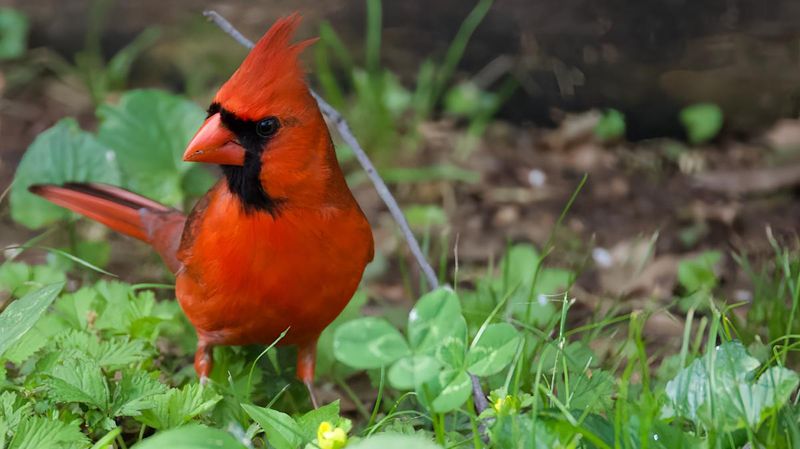
Cardinals spend a good portion of their day foraging on or near the ground, picking through leaf litter, loose soil, and fallen seeds beneath and around shrub borders.
The base of a shrub line tends to accumulate natural debris over time, and that debris creates exactly the kind of foraging environment cardinals prefer.
In Georgia during spring, this ground-level activity picks up noticeably as cardinals fuel their energy for nesting and territorial behavior.
Shrub borders that back up against a lawn or garden bed often become regular foraging routes for cardinals moving through a yard.
The transition between the open ground and the shrub base gives birds a sense of security while they feed, since they can hop back into cover quickly if needed.
Male and female cardinals both forage this way, and pairs are sometimes seen feeding near each other along the same shrub border during the early weeks of spring.
Georgia gardeners who want to encourage this behavior can leave a light layer of natural mulch or leaf material beneath shrubs rather than clearing the base completely.
This kind of low-maintenance approach actually benefits foraging birds more than a tidy, bare soil border.
Avoid applying thick layers of gravel or landscape fabric under shrubs in areas where you hope to attract cardinals, since those materials reduce the natural foraging value of the space.
A slightly wilder shrub base can quietly support more bird activity than a perfectly manicured one throughout the Georgia spring season.
6. Nearby Shrubs Add Cover Around Food Sources
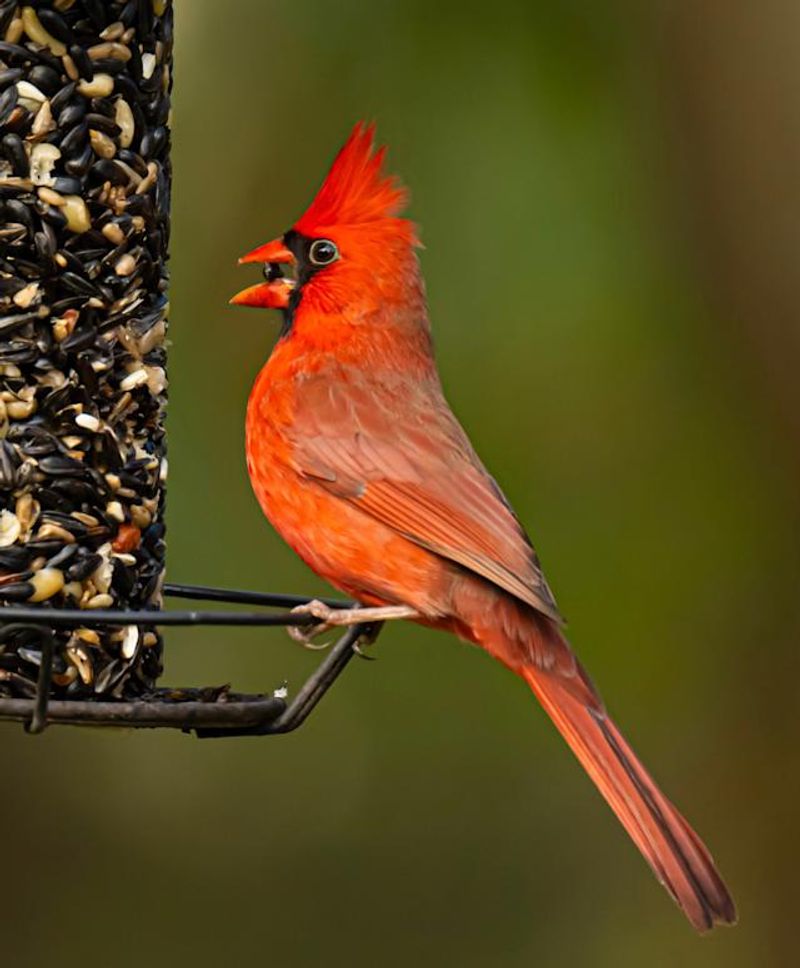
Feeders placed near shrubs tend to attract more consistent cardinal visits than feeders set out in the open, and spring is when this pattern becomes especially clear in Georgia backyards.
Cardinals are cautious birds that prefer to approach food sources with nearby cover available.
A shrub within a few feet of a feeder gives them a place to wait, watch, and retreat if something startles them during feeding.
Female cardinals, which tend to be slightly more cautious than males at feeders, are especially likely to use nearby shrubs as staging areas before flying in to feed. You might notice a female sitting quietly in a shrub close to the feeder for a minute or two before moving in.
This is completely normal behavior and reflects how cardinals naturally balance feeding with staying aware of their surroundings during the busy spring nesting period.
Positioning a feeder within ten to fifteen feet of a shrub border is a practical way to increase cardinal activity in a Georgia yard. Sunflower seeds and safflower seeds are among the most reliably attractive options for cardinals at feeders.
The combination of a well-stocked feeder and nearby shrub cover creates a setup that cardinals tend to use regularly throughout spring.
If you have an existing feeder in an open spot that gets little activity, moving it closer to a shrub line may make a noticeable difference in how frequently cardinals visit your Georgia garden.
7. Native Shrubs Bring Berries And Habitat Value
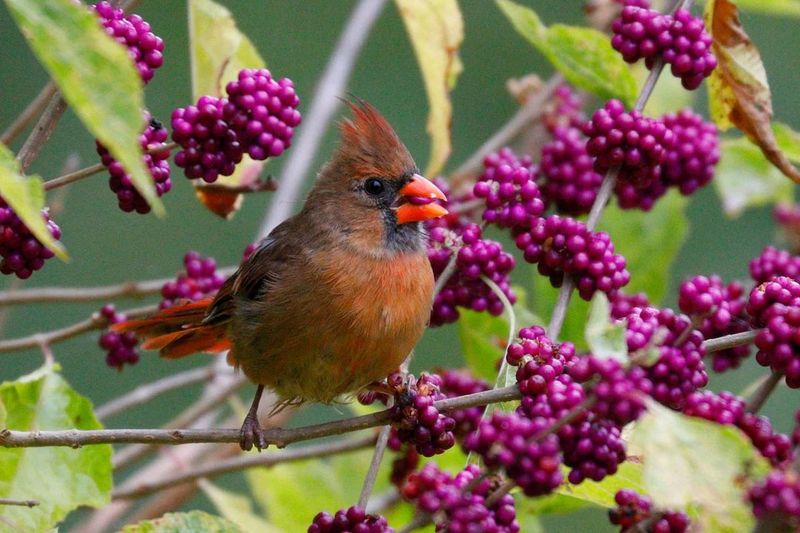
Native shrubs offer cardinals something that ornamental plants often cannot match, and that is a combination of food, cover, and nesting structure that fits naturally into the Georgia landscape.
Species like American beautyberry, native viburnums, and Carolina allspice provide berries, dense branching, and seasonal foliage that cardinals use across different parts of the spring season.
These plants evolved alongside local wildlife, which means they tend to support bird activity more reliably than many non-native alternatives.
Berries from native shrubs may not be fully ripe in early spring, but the plants still provide structural value during nesting season and begin producing fruit as the season progresses.
Cardinals have been observed feeding on beautyberry fruits and viburnum berries in Georgia yards during late spring and into summer, making these plants a multi-season resource rather than a single-use planting.
The branching structure of many native shrubs also suits cardinal nesting habits well.
Georgia gardeners interested in supporting local wildlife can start by adding one or two native shrubs to an existing bed or border rather than attempting a full landscape overhaul.
Local nurseries that specialize in native plants are often a reliable source for species suited to Georgia soils and climate conditions.
Grouping native shrubs together tends to increase their habitat value since it creates a larger block of cover and food within a smaller space.
Over a few seasons, even a modest native shrub planting can become one of the most active spots in a Georgia backyard during spring.