Why Newly Planted Trees Struggle In May In Arizona And How To Help Them
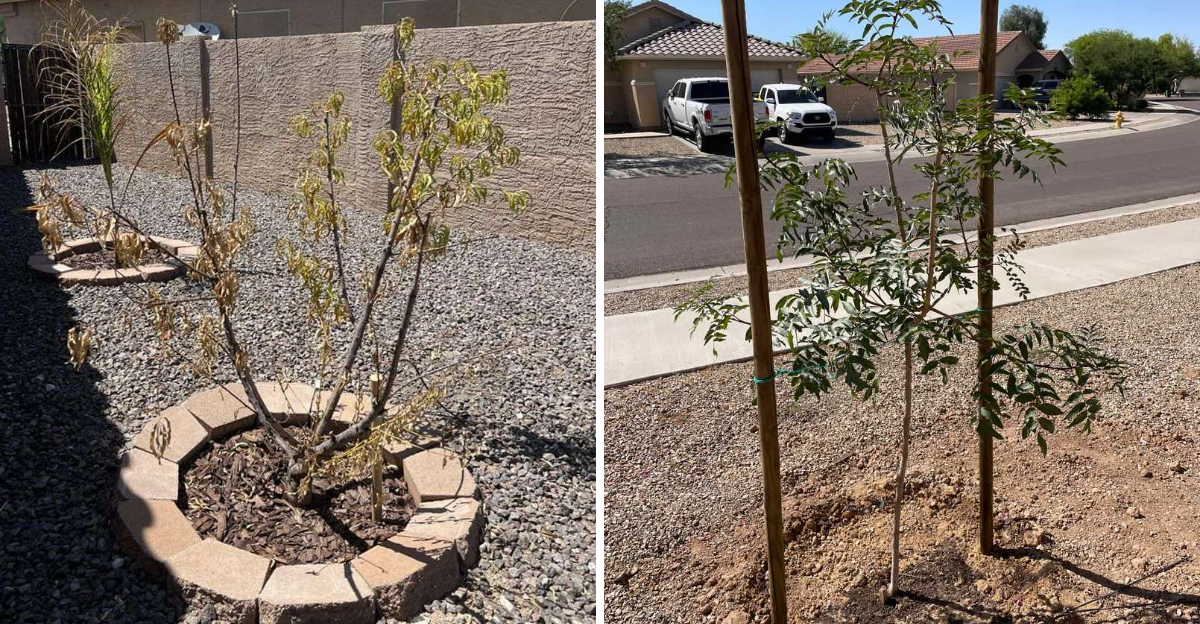
May in Arizona can feel a little unfair to newly planted trees. One week they are settling into fresh soil, and the next they are facing blazing sun, dry winds, and afternoons hot enough to make patio furniture feel dangerous to touch.
Young trees do not get much of a grace period here. The biggest challenge is happening underground.
Fresh root systems are still small, which means they cannot pull in moisture nearly as efficiently as established trees.
Add gravel landscapes, reflected heat near walls and driveways, and fast-drying soil into the mix, and suddenly that little tree has a lot going on.
The good news is that small adjustments can make a huge difference during this stressful stretch.
A deeper watering routine, better mulch placement, or a quick irrigation check can help young trees settle in much more comfortably before the real summer heat takes over Arizona gardens.
1. New Roots Struggle To Keep Up With May Heat
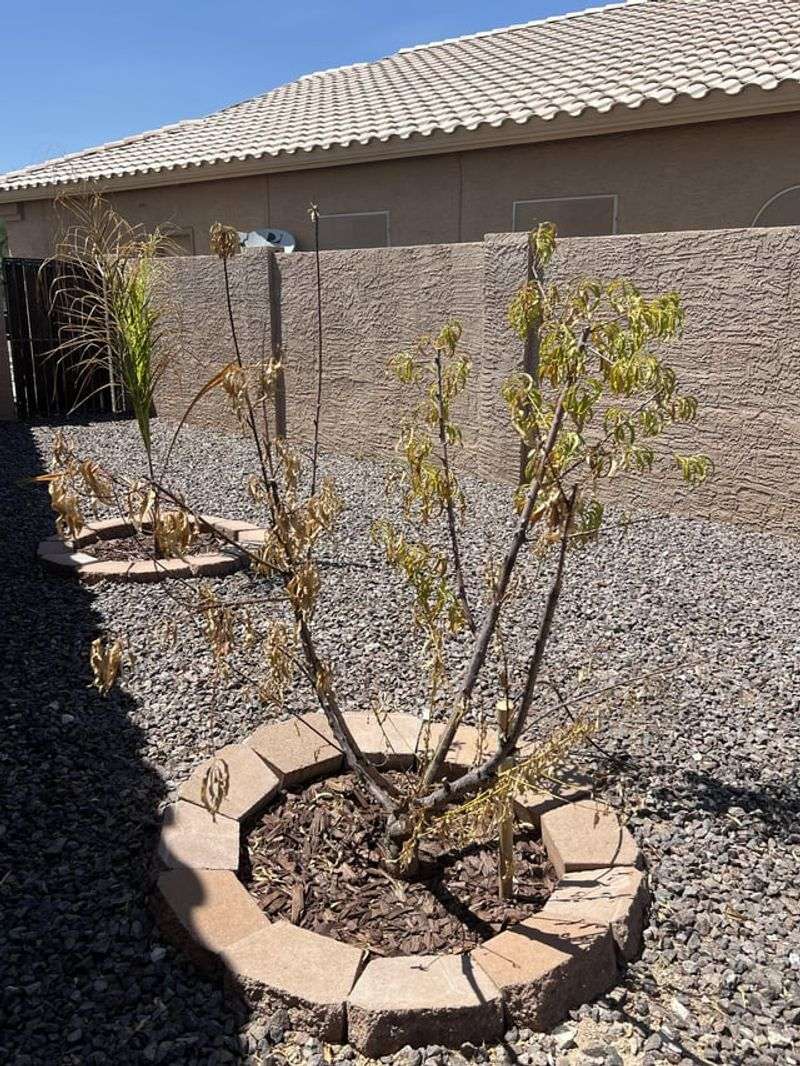
Soil temperatures in Arizona gravel yards can climb surprisingly fast once May arrives, and young trees feel that heat in ways that established trees rarely do.
A newly planted tree has a limited root system that was shaped inside a nursery container, often just a small ball of roots compared to the wide, deep network a mature tree develops over years.
That small root zone makes it much harder for the tree to absorb enough water to keep up with the rapid moisture demand that comes with rising temperatures.
When temperatures push into the upper 90s or beyond, leaves release water through a process called transpiration, and the roots need to replace that moisture quickly.
If the root zone is too small or the surrounding soil is dry, the tree may show stress signs like wilting leaves or leaf edges that look scorched.
Noticing these signs early is helpful because it means you can adjust watering before the stress becomes more serious.
Newly planted trees in Arizona generally need more frequent watering than established trees during May.
Checking soil moisture a few inches below the surface near the root ball, rather than just at the surface, gives a much more accurate picture of whether the tree is getting enough water to stay healthy through the heat.
2. Hot Dry Winds Increase Water Loss Fast
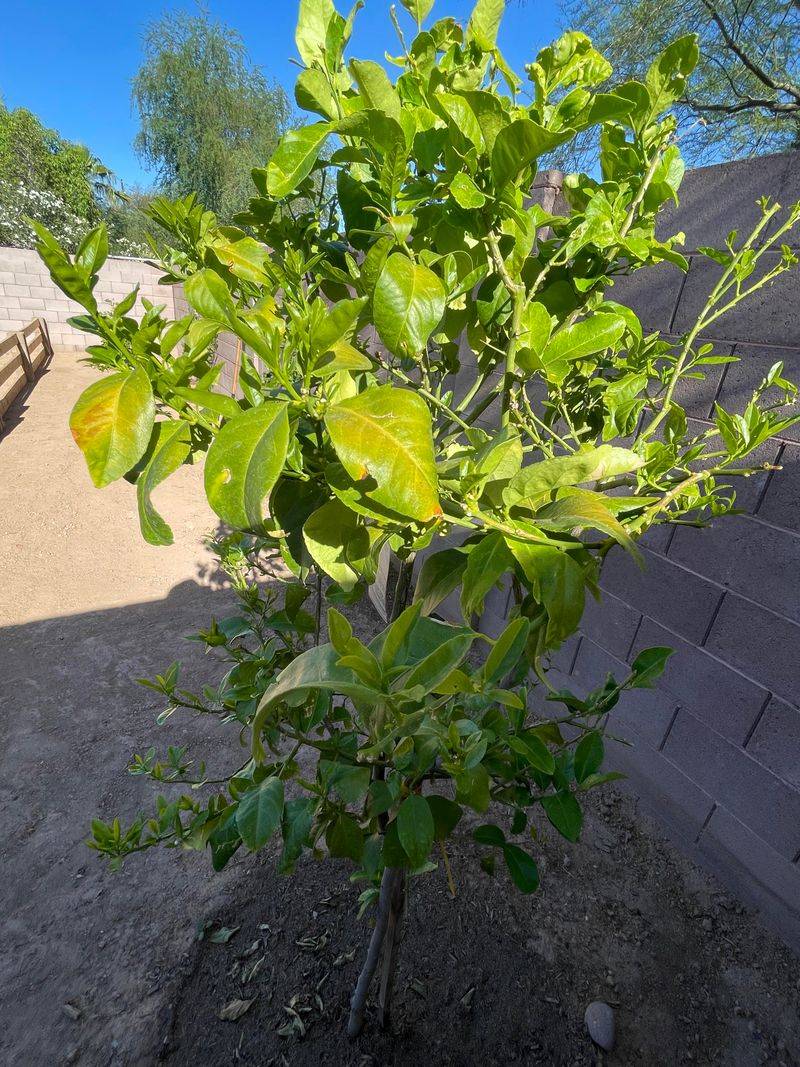
Blowing dust across an Arizona yard on a May afternoon is a familiar sight, but those same winds can quietly pull moisture from a young tree faster than most homeowners expect.
Hot, dry winds increase the rate at which leaves release water, a process that happens naturally but accelerates dramatically when wind speeds pick up and humidity drops.
In a state where May humidity can hover in the single digits on some afternoons, even a light breeze can have a real drying effect on young foliage.
Established trees with deep, wide root systems can usually compensate by drawing moisture from a large area of soil. A newly planted tree does not have that advantage yet.
Its roots are still working within a relatively small zone, and if winds are pulling water out of the leaves faster than the roots can supply it, the tree begins to show stress quickly.
Your Arizona Garden Changes Every Week. Your Plan Should Too.
Gardening in Arizona changes quickly throughout the season. Every Friday you’ll receive a simple weekly plan showing exactly what to plant, prune, fertilize, harvest, and protect so you never miss the right timing.
Leaf curl, drooping branches, and a dull grayish color to the foliage are all signs that a tree is losing more water than it is taking in.
Positioning a young tree near a wall, fence, or existing mature shrub can help reduce direct wind exposure during the most intense afternoon gusts.
Even partial wind protection can meaningfully reduce moisture loss during Arizona’s dry and breezy May afternoons.
3. Small Root Balls Dry Out Before Surrounding Soil
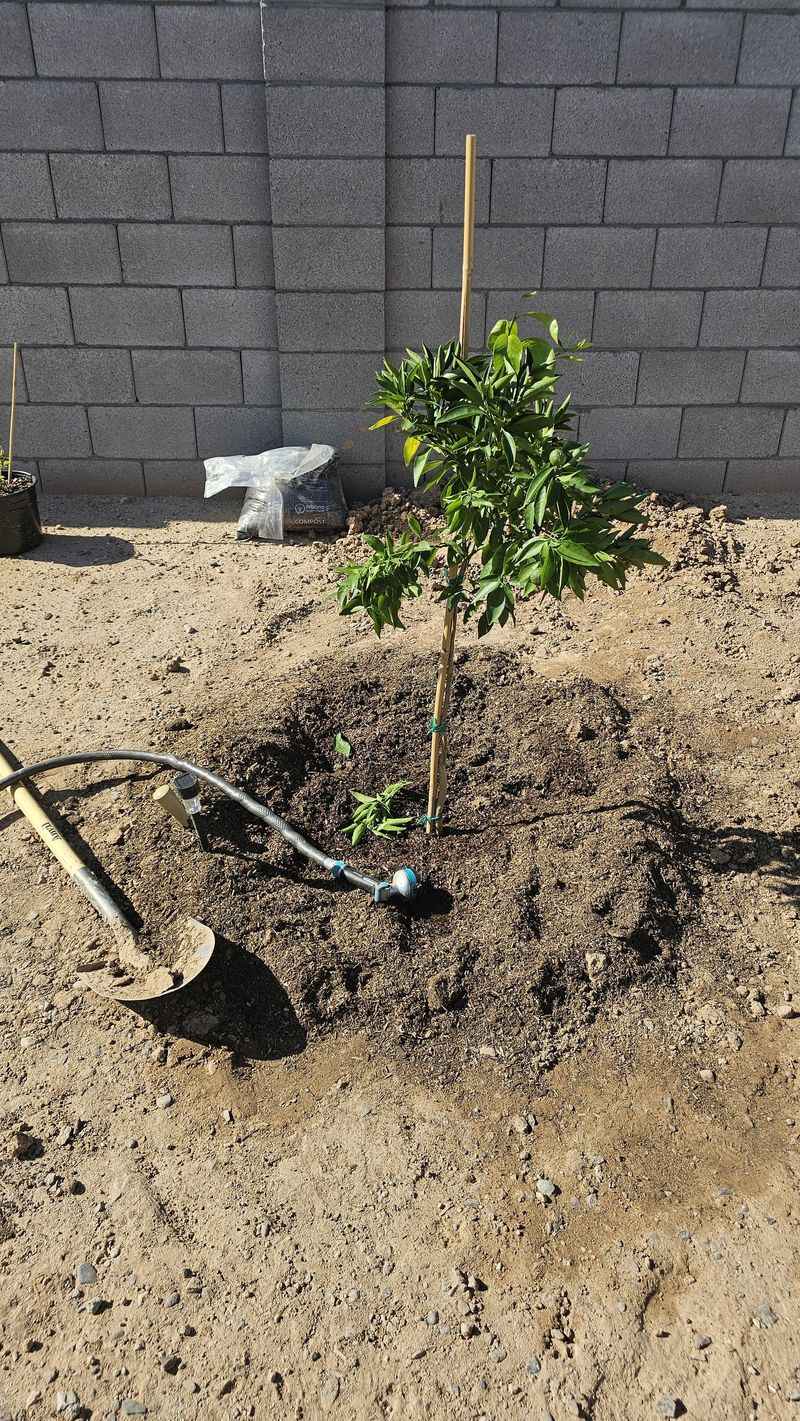
One of the more surprising things about watering a newly planted tree in Arizona is that the root ball itself can dry out even when the surrounding soil still feels slightly moist.
This happens because nursery container soil often has a different texture and composition than the native desert soil around it.
Water tends to move through each type of soil at its own rate, and the boundary between the two can sometimes slow moisture from moving into the root ball where the tree actually needs it.
Gravel yards and sandy desert soils drain quickly, which means water moves down and away from the root zone fast.
If a drip emitter is placed too far from the trunk, or if watering runs are too short, the root ball may not be receiving the deep, consistent moisture it needs.
Running a finger or a thin stick into the soil about four to six inches deep, right at the edge of the root ball, is a simple way to check whether water is actually reaching the right spot.
Adjusting emitter placement and watering duration to focus moisture directly on and just beyond the root ball can make a noticeable difference.
As roots expand outward over the coming months, emitter placement can be gradually moved outward to encourage the root system to spread into the surrounding soil.
4. Deep Watering Helps Roots Move Outward
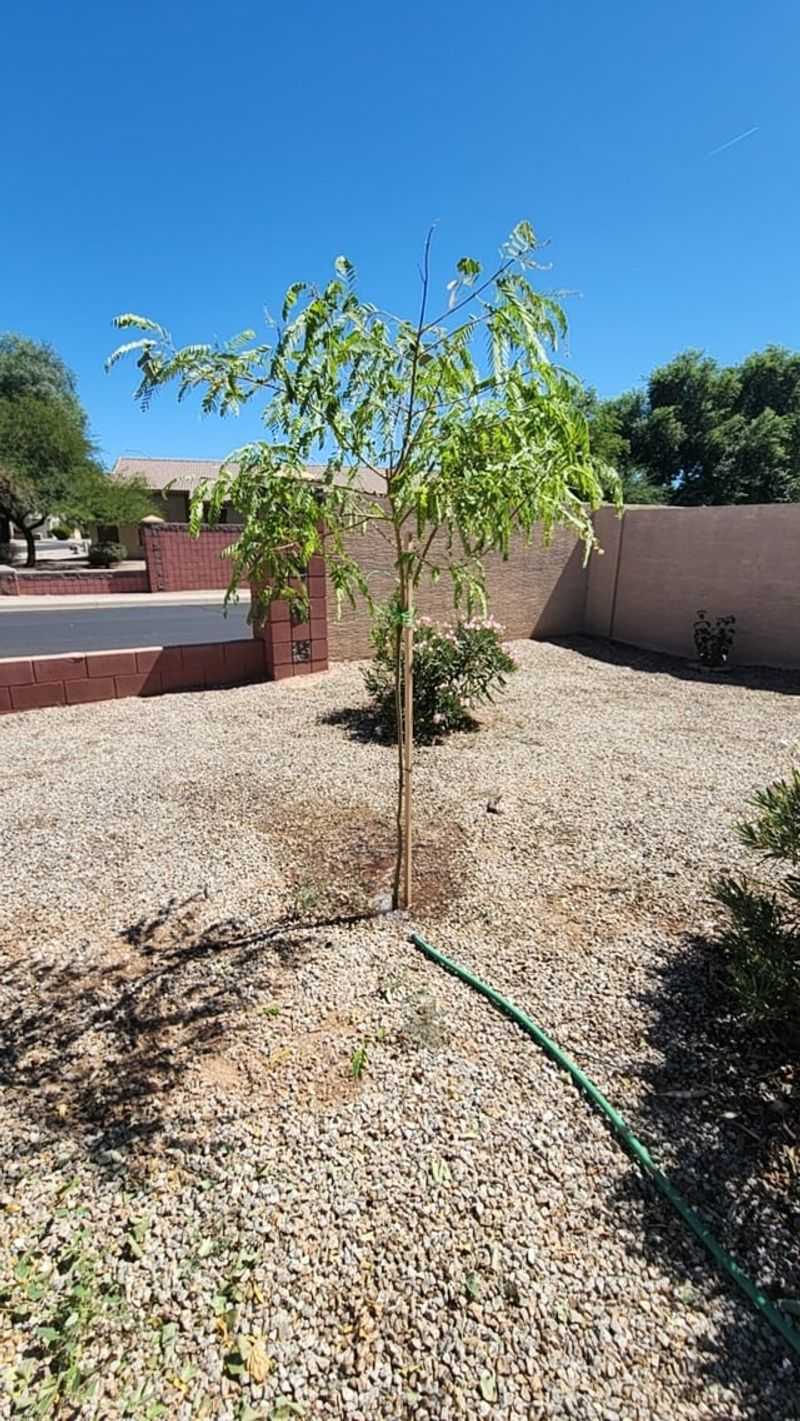
Watering a young tree deeply and less frequently tends to encourage roots to grow downward and outward, which is exactly what a newly planted tree in Arizona needs before summer heat intensifies.
Shallow, frequent watering can train roots to stay near the surface, where soil temperatures are highest and moisture evaporates the fastest.
Deep watering sends moisture further into the soil profile, pulling roots in that direction and helping the tree build a more resilient foundation over time.
For newly planted trees in Arizona, deep watering during May might mean running drip emitters long enough for water to penetrate at least 18 to 24 inches into the soil.
The actual time needed depends on soil type, emitter flow rate, and whether the ground is compacted or loose.
Sandy soils drain faster and may need longer, slower watering runs to push moisture deep enough before it disperses sideways and downward.
Creating a shallow watering basin around the base of the tree, just inside the drip line of the canopy, can help direct water into the root zone rather than allowing it to run off across gravel or compacted soil.
Filling that basin slowly and allowing it to soak in completely before refilling gives water time to move deep into the soil rather than pooling at the surface.
5. Mulch Helps Keep Young Tree Roots Cooler
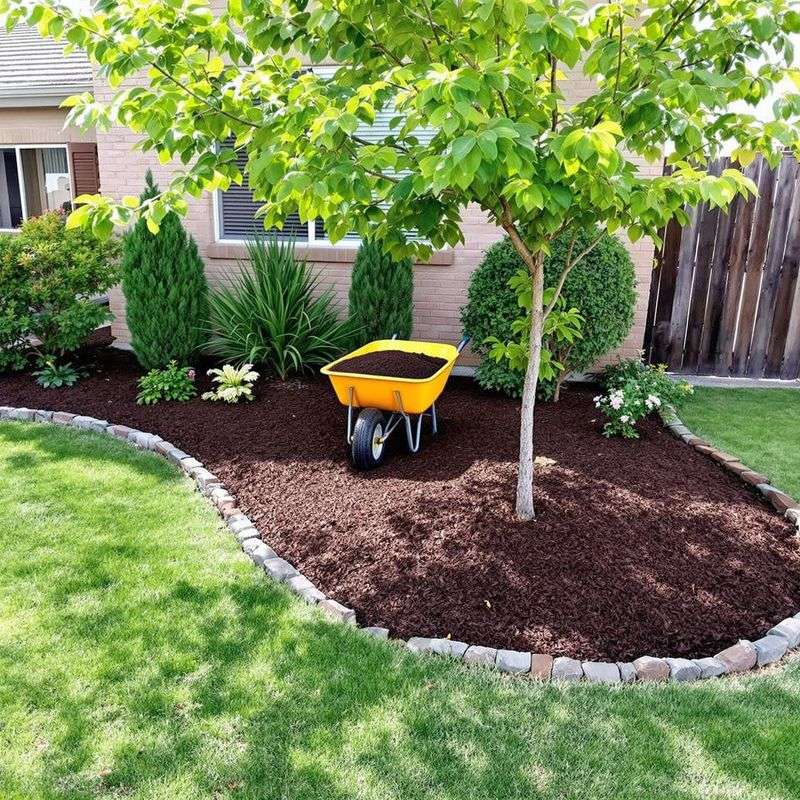
Gravel yards are common across Arizona neighborhoods, and while gravel has practical benefits in a desert landscape, it absorbs and radiates heat in ways that can make conditions tough for young tree roots growing near the surface.
Placing a layer of organic mulch over the root zone of a newly planted tree creates a buffer between the hot surface and the soil below, helping to moderate soil temperature and slow moisture evaporation at the same time.
Wood chip mulch applied about three to four inches deep in a wide ring around the base of the tree, without piling it directly against the trunk, can noticeably reduce soil temperature and help the root zone retain moisture between watering cycles.
In Arizona’s dry May heat, that moisture retention can be the difference between a tree that pushes through the heat and one that struggles week after week.
Keeping mulch pulled a few inches away from the actual trunk prevents moisture from sitting against the bark, which can cause other issues over time.
Organic mulch also breaks down slowly and adds a small amount of organic matter to the soil over time, which benefits desert soils that are naturally low in organic content.
Refreshing the mulch layer once or twice a year helps maintain its insulating and moisture-retaining benefits as Arizona temperatures build toward summer.
6. Shade Cloth Can Help During Extreme Heat
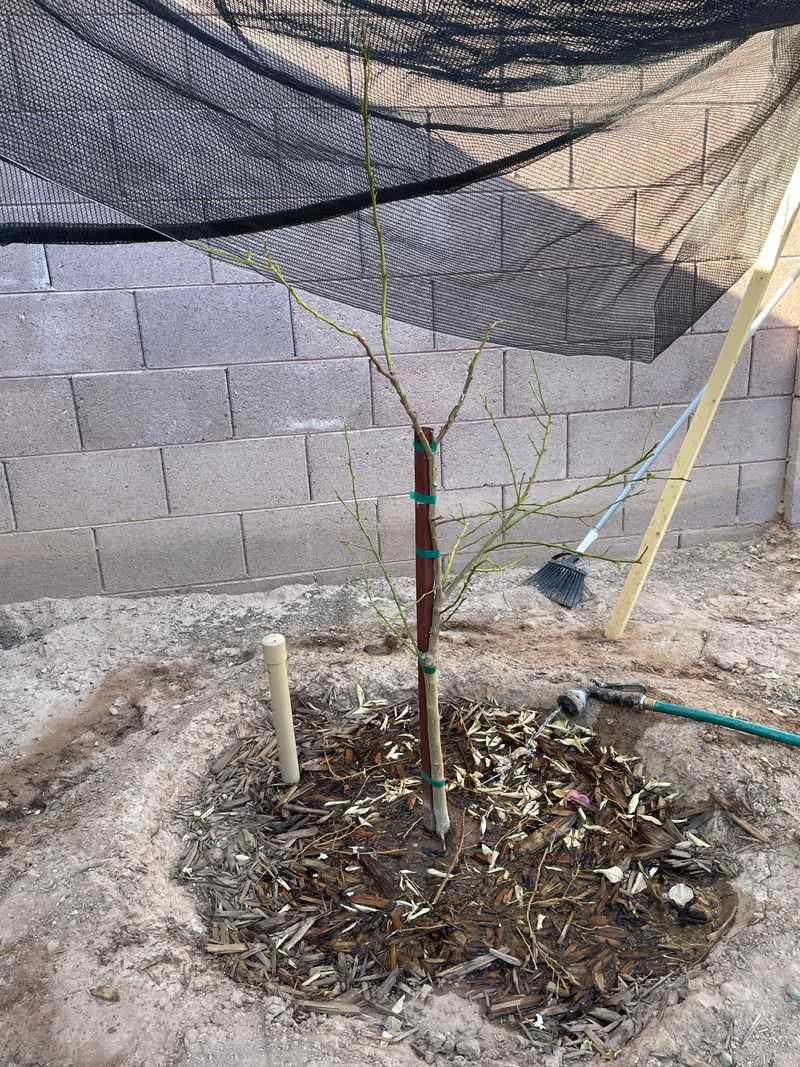
Even desert-adapted trees can find the combination of intense May sun and transplant stress more than they can easily manage right after planting.
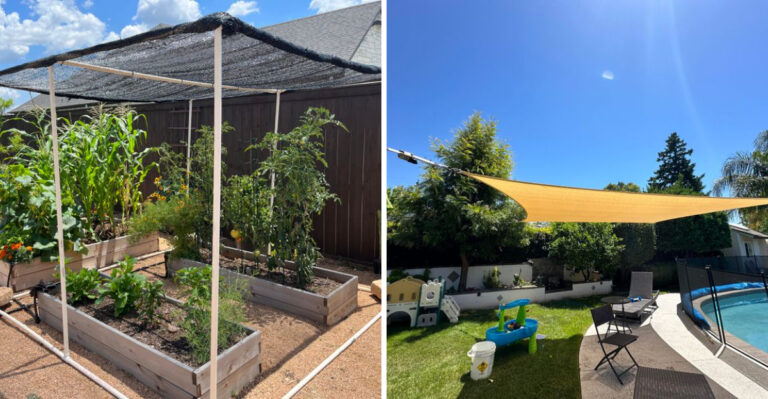
Shade cloth is a practical and affordable tool that Arizona homeowners sometimes use to give young trees temporary relief from direct afternoon sun while roots are still getting established.
A 30 to 40 percent shade cloth placed on the west or southwest side of a newly planted tree can reduce the intensity of afternoon sun without blocking the light the tree needs for healthy growth.
The goal is not to eliminate sun exposure entirely but to take the edge off the harshest afternoon hours when temperatures and solar intensity peak.
Most shade cloth products are lightweight and can be draped over simple wooden stakes or a basic frame placed around the tree.
It is worth checking on the cloth regularly to make sure it is not trapping heat or resting directly on the foliage, which could cause its own set of problems.
As the tree becomes more established and its root system expands over the following months, shade cloth can be gradually removed to allow the tree to adapt to full sun conditions.
Many Arizona homeowners find that just a few weeks of shade cloth protection during the most intense stretch of late spring heat helps young trees settle in with noticeably less visible stress.
7. Drip Irrigation Needs Careful May Adjustments
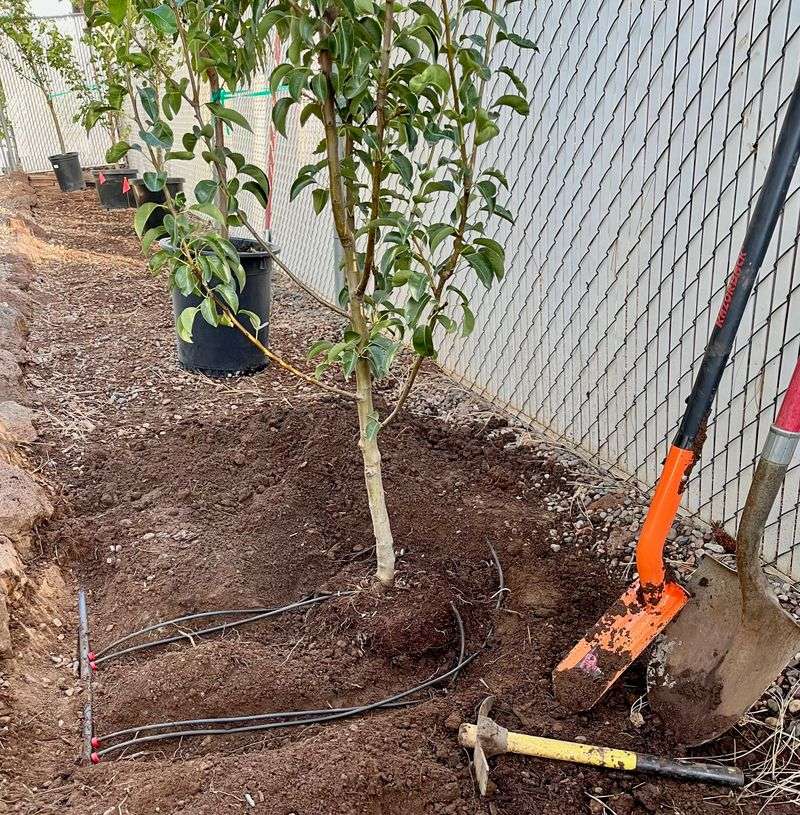
Drip irrigation systems are a standard feature in many Arizona yards, and they work well for established trees and shrubs that have been in the ground long enough to develop wider root systems.
For a newly planted tree, the standard drip schedule that works for the rest of the yard may not deliver enough water to keep up with May heat.
Newly planted trees generally need more frequent and longer watering cycles than established plants, at least until the root system expands and the tree adjusts to its new location.
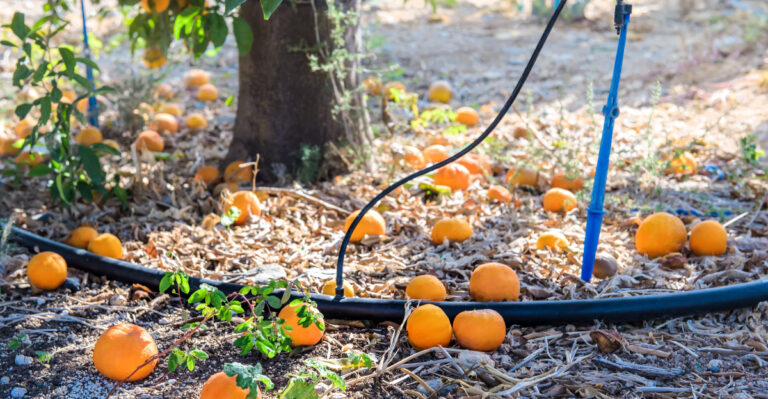
Checking the output of drip emitters near a newly planted tree is a worthwhile step in May. Emitters can clog, shift out of position, or simply have a flow rate that made sense for an established plant but falls short for a young tree with a compact root ball.
Running the system and then physically checking whether water is reaching the root zone at adequate depth, rather than just assuming the timer is handling it, can prevent a lot of preventable stress.
Many Arizona homeowners find it helpful to temporarily add an extra emitter near the root ball of a newly planted tree, or to extend the run time on that zone during May and early June.
As the tree establishes, watering frequency can be gradually reduced while run time is increased to encourage deeper rooting and long-term drought tolerance.
8. Poor Planting Depth Can Slow Establishment
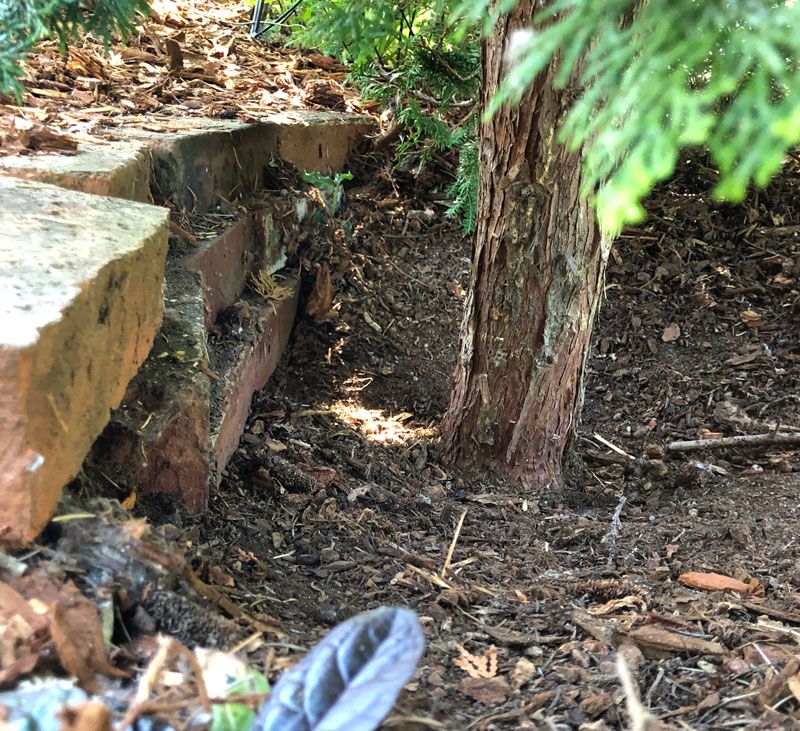
Walking through an Arizona neighborhood in May, it is not unusual to spot newly planted trees that were set a little too deep in the ground, with the base of the trunk disappearing below soil level rather than flaring outward at or just above the surface.
Planting depth matters more than many people realize, and getting it wrong can slow establishment significantly, even when watering and mulching are done well.
When a tree is planted too deep, the trunk is exposed to soil moisture and reduced airflow, which can affect the tree’s ability to move water and nutrients effectively.
The trunk flare, which is the widened area where the trunk meets the root system, should be visible at or slightly above the soil surface after planting.
If the flare is buried, the tree may respond with slower growth, yellowing leaves, or general signs of stress that can be easy to confuse with watering problems.
In Arizona’s heavy clay or compacted soils, planting too deep is a common issue because the soil does not settle the same way softer loam soils might elsewhere.
If a newly planted tree shows persistent stress despite consistent watering, it may be worth gently pulling back some soil to check whether the trunk flare is properly exposed.
Correcting the planting depth early, before summer heat peaks, gives the tree a much better chance of recovering and establishing well.
9. Heavy Fertilizer Can Stress Newly Planted Trees
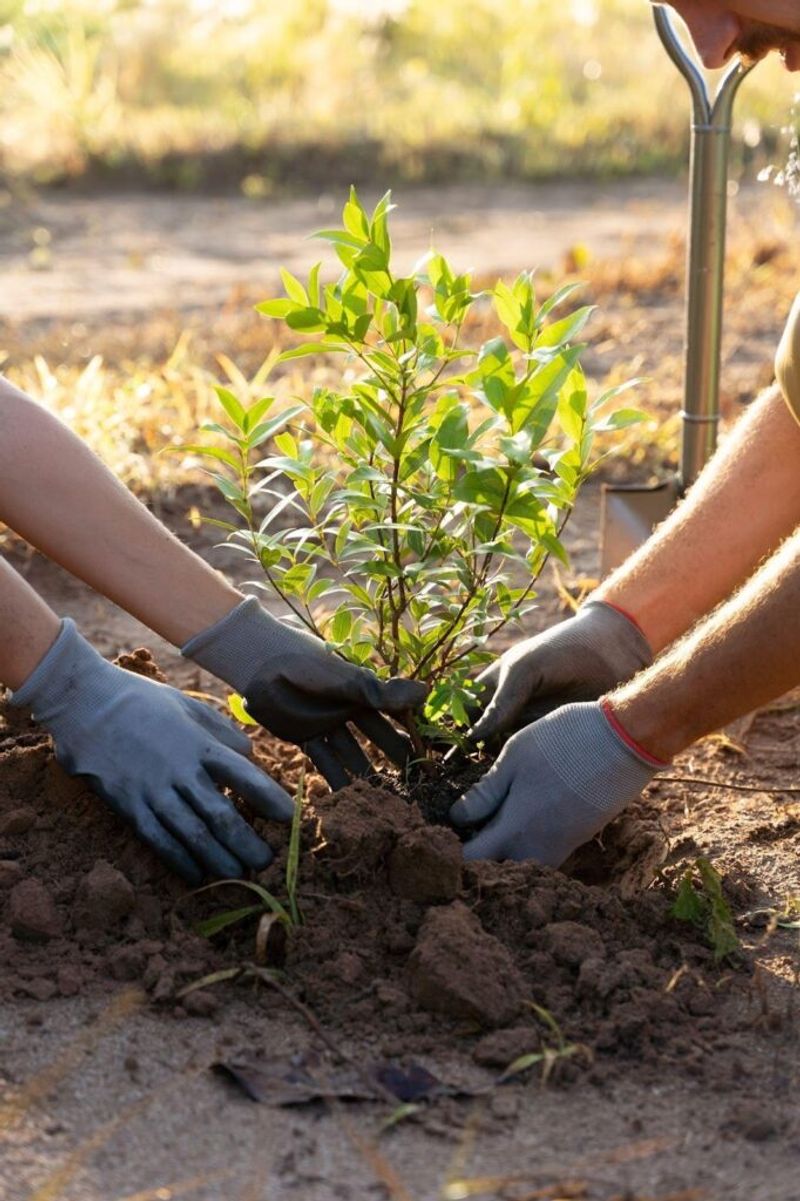
Reaching for fertilizer right after planting a new tree feels like a logical way to give it a boost, but in Arizona’s May heat, heavy fertilizer applications can actually increase stress on a young tree rather than help it.
Fertilizers, especially fast-release nitrogen products, push trees toward rapid new growth, which requires the root system to supply more water and nutrients at a time when the roots are still getting established.
Pushing a tree to grow quickly when its root system is not yet ready to support that growth can leave the tree more vulnerable to heat stress, not less.
Newly planted trees generally benefit more from focused attention on root establishment during their first season than from fertilizer-driven top growth.
Roots need time and consistent moisture to spread into surrounding soil, and that process is supported more by proper watering and mulching than by nutrient applications.
If the native soil is particularly poor, a light application of a slow-release fertilizer formulated for desert trees can be used carefully and according to label directions.
Waiting until a tree shows signs of healthy new growth and has had at least one full season to establish before applying fertilizer is a reasonable approach for most Arizona landscapes.
Checking with a local nursery familiar with regional conditions can help homeowners choose the right product and timing for their specific tree species.
10. Staking Should Support Without Restricting Growth
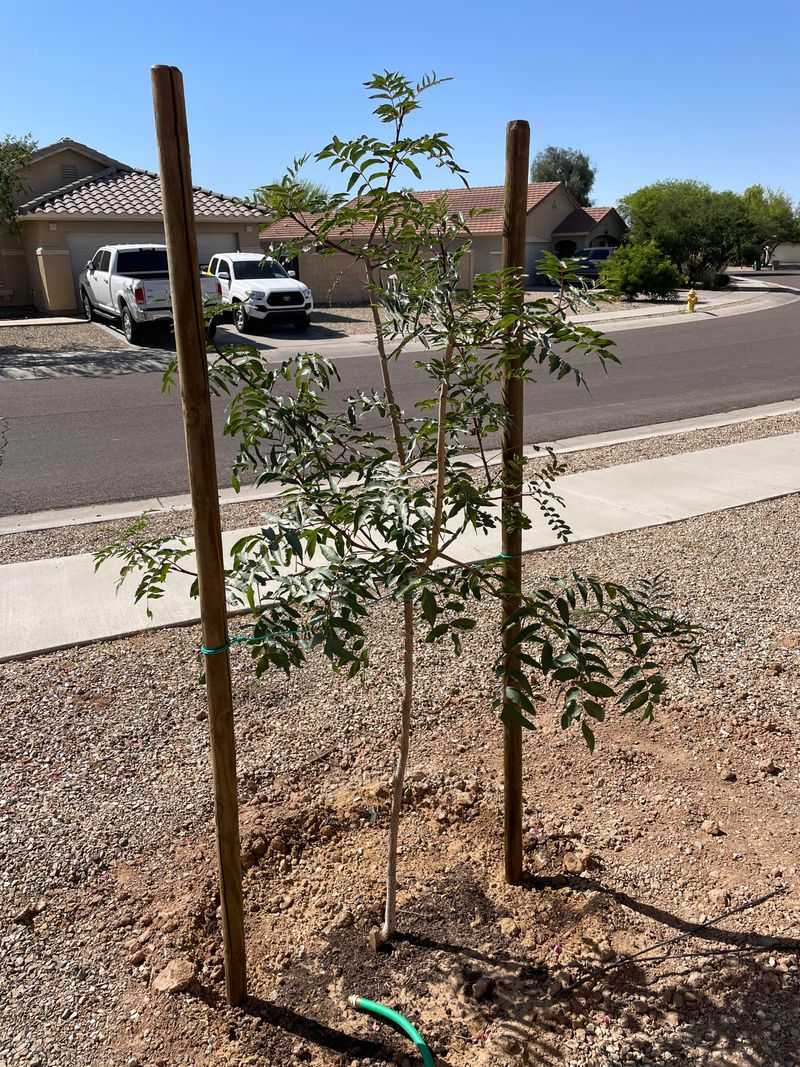
Stakes driven into the ground beside a newly planted tree serve a real purpose in Arizona, where afternoon winds can rock a young tree enough to disrupt root contact with the soil and slow establishment.
However, staking that is too tight or left in place too long can create its own set of problems, including restricted trunk movement that prevents the tree from developing the natural strength it needs to stand on its own over time.
A small amount of movement in the trunk is actually beneficial, as it encourages the tree to build thicker, stronger wood in response to wind stress.
The general approach for staking in Arizona is to use two stakes placed on opposite sides of the tree, with flexible ties that allow the trunk to move slightly while still preventing the root ball from shifting in the ground.
The ties should be checked regularly to make sure they are not cutting into the bark as the trunk grows, which can happen faster than expected during a warm Arizona spring and early summer.
Removing stakes after the first growing season, once the root system has had time to anchor the tree in the soil, helps the tree transition to standing independently.
Leaving stakes in place for multiple years can weaken trunk development and make the tree more dependent on artificial support rather than its own root system for stability.