Nevada Yard Plants That Use Far Less Water Than Grass (But Look Better Too)
Let’s be honest, keeping a grass lawn alive in Nevada is basically a high-maintenance relationship that takes everything and gives very little back. Water bills that creep up, weekends spent mowing, fertilizer costs that quietly add up.
You put in all that effort only to end up with a lawn that still struggles through a Nevada summer. Here’s the thing: thousands of homeowners across the state have already figured out there’s a smarter way to have a gorgeous yard.
They swapped out their thirsty lawns for drought-tolerant plants that actually belong here. Plants that look stunning in July without begging for daily water or a second mortgage.
Whether you’re in Las Vegas, Reno, or somewhere in between, these desert-tough beauties are low-effort, low-cost, and they make traditional grass look like the bad deal it always was.
1. Red Yucca
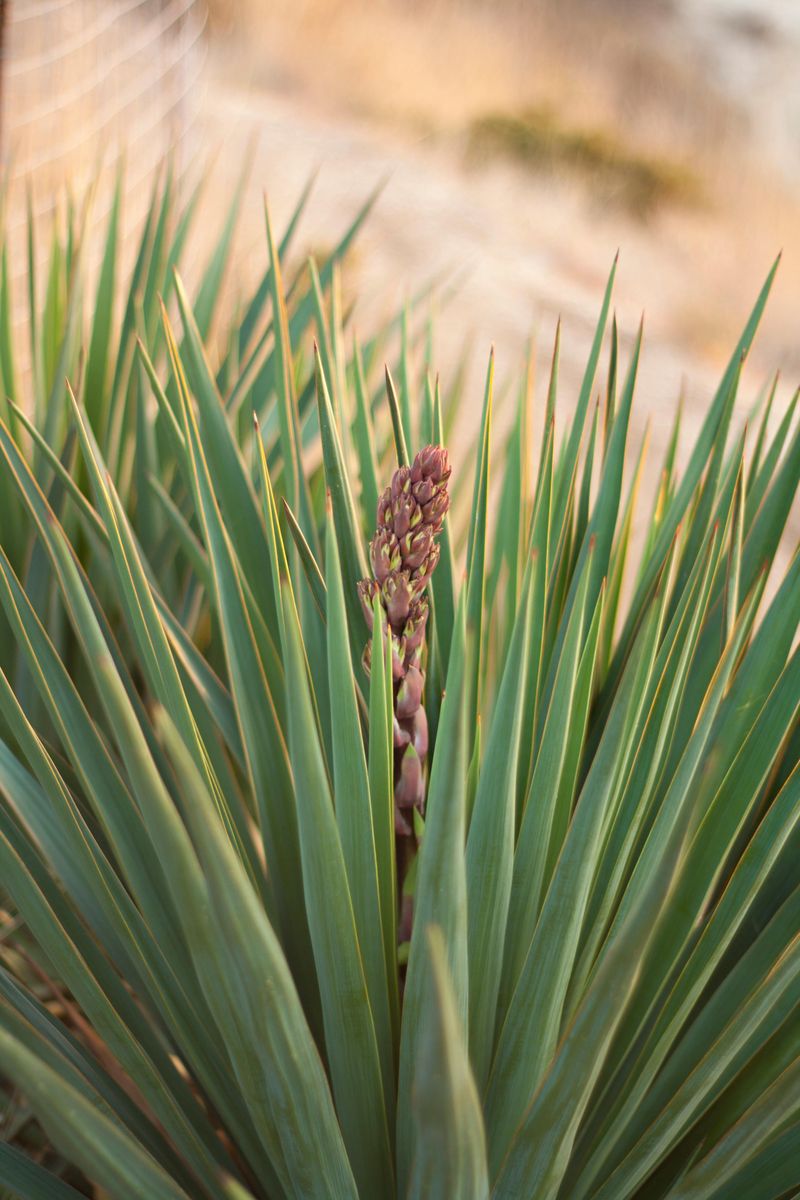
Walk through any water-smart Nevada neighborhood and you will likely spot Red Yucca stealing the show with its dramatic coral-red flower spikes. This plant is not actually a true yucca, but it looks like one and performs even better in tough desert conditions.
Hummingbirds absolutely love it, so your yard becomes a little wildlife hotspot without any extra effort on your part.
Red Yucca thrives in full sun and well-drained soil, making it practically perfect for the desert climate. Once it gets established, it needs almost no watering at all, which is a huge win for your monthly water bill.
It stays green year-round and sends up those gorgeous flower stalks every spring and summer, giving you color without the fuss.
Planting Red Yucca is straightforward even for beginners. You can find it at most local nurseries, and it grows well in containers or directly in the ground.
Pair it with decorative gravel or river rock for a polished desert look that neighbors will actually stop and admire. At around three to five feet tall, it adds real visual interest without taking over your entire yard.
2. Agave
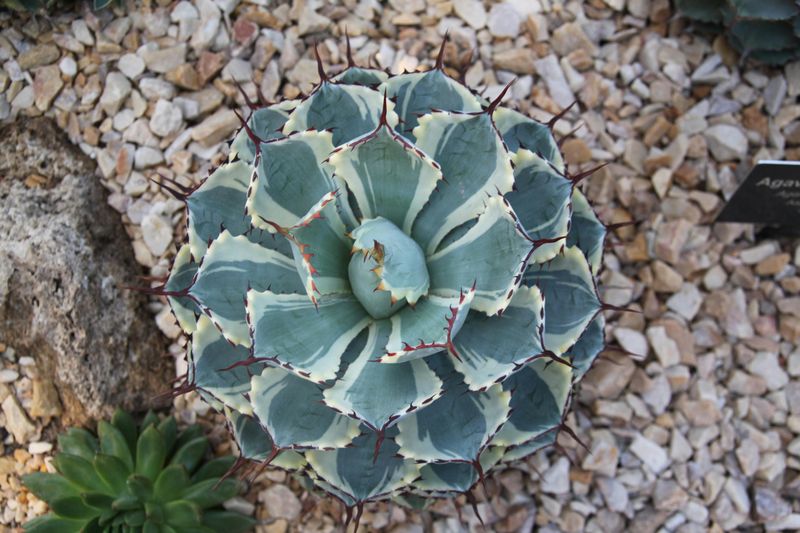
There is a reason Agave ends up in almost every professionally designed Nevada xeriscape. It looks like it was sculpted, not grown.
With its thick, sculptural leaves and bold geometric shape, Agave turns any yard into something that looks considered and intentional.
It is the kind of plant that makes people slow down their cars just to get a better look.
Agave is incredibly drought-tolerant, which means once it is in the ground and settled in, you can pretty much forget about watering it regularly.
It stores water right inside its thick leaves, so even during the most brutal summer heat, it keeps looking sharp.
Most varieties are also frost-tolerant enough to handle cold desert nights.
One thing to know is that Agave is a slow grower, so you are investing in something that will look better and better over the years.
Some varieties can get quite large, so check the mature size before you plant.
Smaller types like Agave parryi are great for tighter spaces and container gardens. Pair them with decomposed granite or crushed rock for a clean, low-maintenance look that saves you serious money on water bills.
Your Nevada Garden Changes Every Week. Your Plan Should Too.
Gardening in Nevada changes quickly throughout the season. Every Friday you’ll receive a simple weekly plan showing exactly what to plant, prune, fertilize, harvest, and protect so you never miss the right timing.
3. Texas Sage
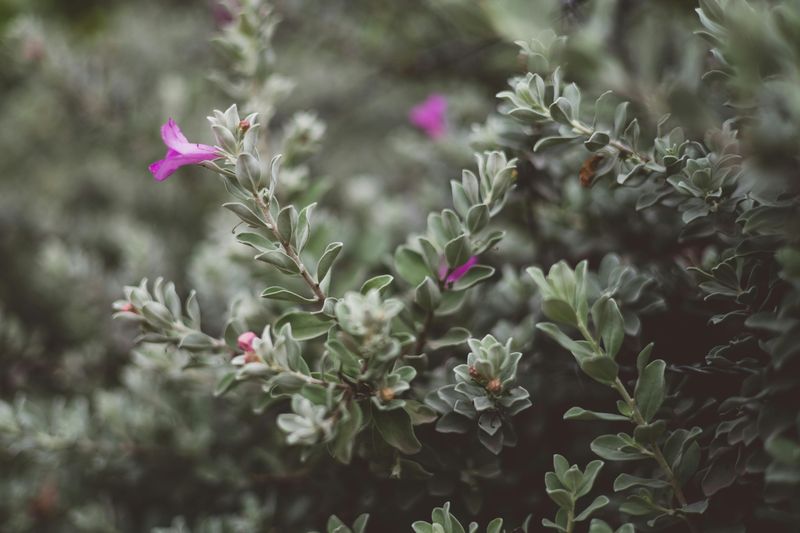
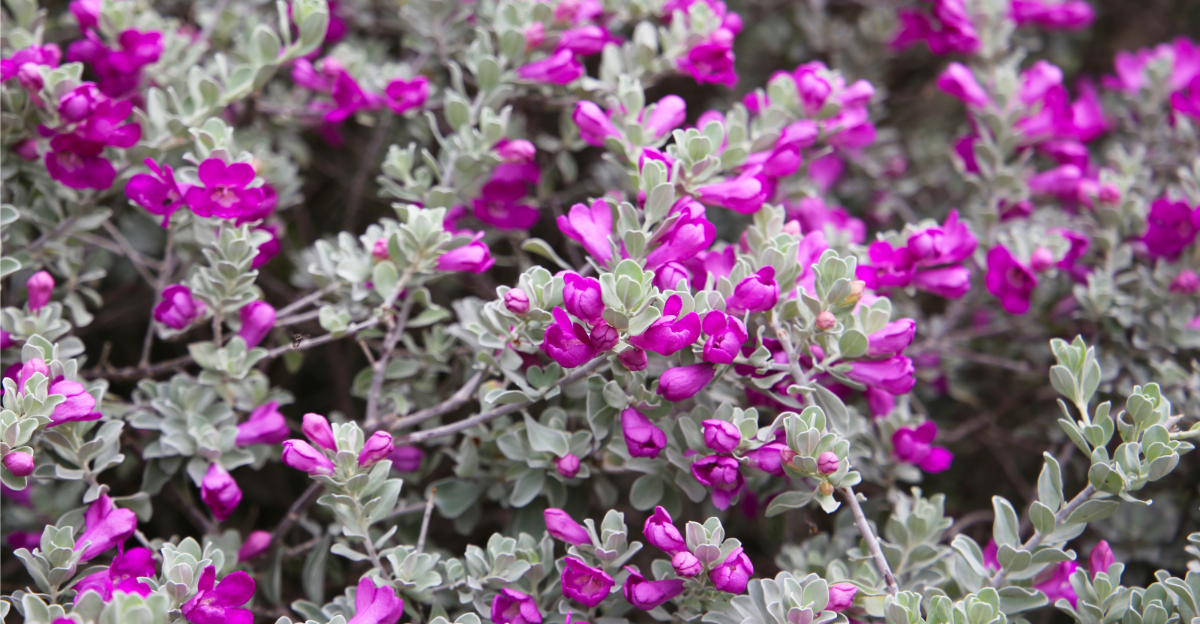
Gardeners sometimes call Texas Sage the barometer bush because it bursts into a cloud of purple blooms right after a rainstorm.
That natural response to rainfall makes it one of the most exciting plants to watch through the seasons.
Suddenly, after a good rain, your yard transforms into a purple wonderland practically overnight.
Beyond its showstopping flowers, Texas Sage is one of the toughest shrubs you can put in a Nevada landscape.
It handles extreme heat, poor soil, and long dry spells without skipping a beat.
The silvery-green leaves look attractive even when it is not in bloom, so your yard always has something going on visually.
Texas Sage grows into a neat, rounded shrub that typically reaches four to six feet tall and wide.
You can leave it natural for a loose, casual look or trim it lightly to keep it more compact.
Either way, it requires almost no irrigation once established, which is exactly what water-conscious homeowners are looking for right now.
Plant it along a fence line or use it as a natural privacy screen. Group several together for a bold sweep of color that makes your whole property look intentional and polished.
4. Desert Marigold
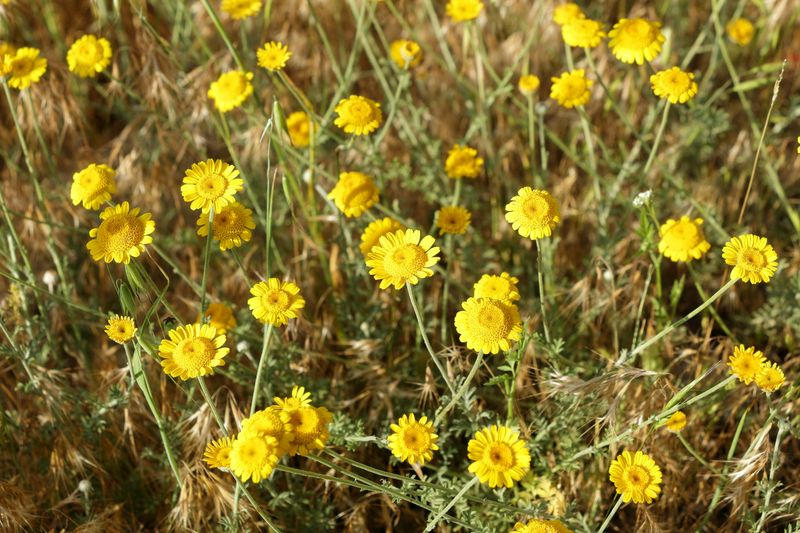
Most wildflowers need at least a little pampering. Desert Marigold actually performs worse when you fuss over it, and better when you leave it alone.
Unlike the marigolds you might find at a big box store, this native wildflower is built for harsh desert conditions and actually prefers poor, dry soil.
Give it too much water and it gets fussy, but let it do its own thing and it thrives beautifully.
Desert Marigold blooms from spring all the way through fall, which is an impressively long season for any flowering plant.
Bees and butterflies flock to the bright flowers, turning your yard into a buzzing, fluttering little ecosystem.
The plant grows to about one to two feet tall, making it ideal for borders, rock gardens, or filling in gaps between larger shrubs.
One of the best things about Desert Marigold is how it self-seeds.
In many gardens, it can self-seed and gradually fill in bare spots over time.
Desert Marigold is a smart investment for anyone who wants a colorful, low-cost yard that keeps on giving season after season.
5. Lavender
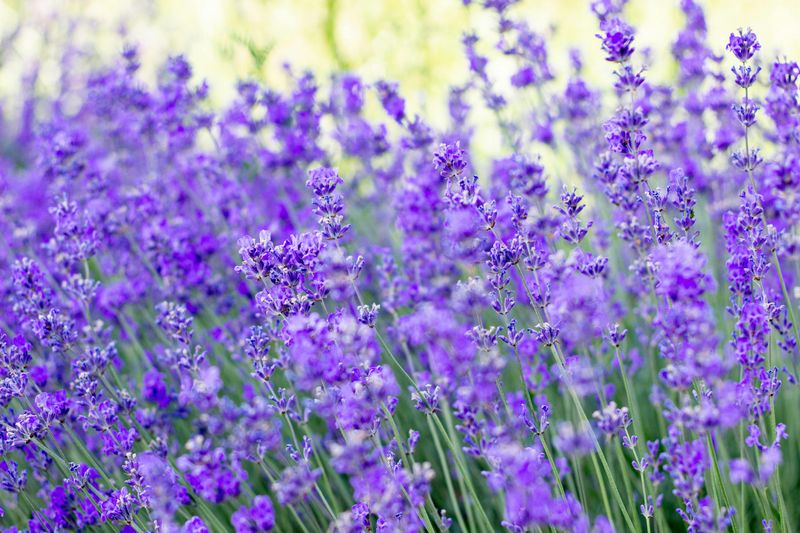
Lavender is one of those plants that makes people stop and breathe a little deeper the moment they walk by.
That calming, sweet fragrance combined with soft purple flower spikes makes it one of the most beloved plants in Nevada water-wise gardens right now.
And the best part? They thrive in hot, dry, sunny conditions with proper drainage, exactly what the desert climate has in abundance.
Spanish Lavender and Phenomenal Lavender are two varieties that do especially well in dry, hot climates.
They handle the summer heat without wilting and bounce back beautifully from the occasional cold snap.
Once established, lavender needs very little water, which puts real money back in your pocket compared to keeping a thirsty grass lawn alive.
Lavender works in so many ways in a landscape design.
Use it as a low border along a walkway, plant it in clusters for a bold visual statement, or tuck it into containers on a patio.
Pollinators like bees love it, which helps your whole garden perform better if you grow any vegetables or fruit nearby.
You can even cut the flower stalks and bring them inside to dry. It fills your home with that signature scent, no air fresheners or candles needed.
6. Penstemon
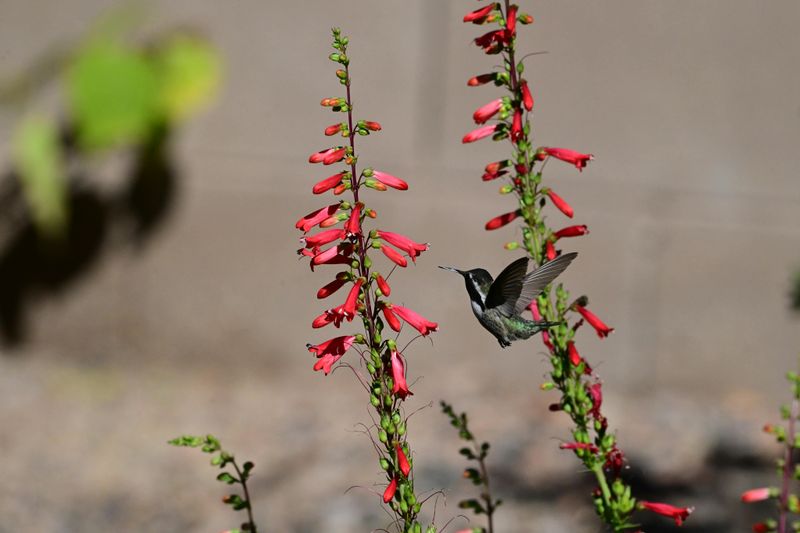
If you want a plant that hummingbirds will fight over, Penstemon is your answer.
These tall, elegant plants produce tubular flowers in shades of red, pink, purple, and white that are practically irresistible to pollinators.
In Nevada, where water is always a concern, Penstemon stands out as a plant that delivers serious beauty for very little resource input.
There are many varieties of Penstemon, and several are native to the Great Basin region, meaning they are already perfectly adapted to the local soil and climate.
Palmer’s Penstemon, for example, grows tall and bold with fragrant flowers that bloom in late spring.
Firecracker Penstemon offers brilliant red blooms that really pop against desert rock and gravel mulch.
Penstemon plants are not fussy about soil quality, which is great news if your yard has that typical sandy, rocky, desert-style ground.
They establish fairly quickly and start putting on a show within their first growing season.
Keep in mind that they prefer good drainage, so avoid low spots where water tends to collect after rain.
Group several varieties together for a long season of color that shifts from spring through summer. The result is a dynamic, ever-changing yard that a plain grass lawn could never match.
7. Desert Willow
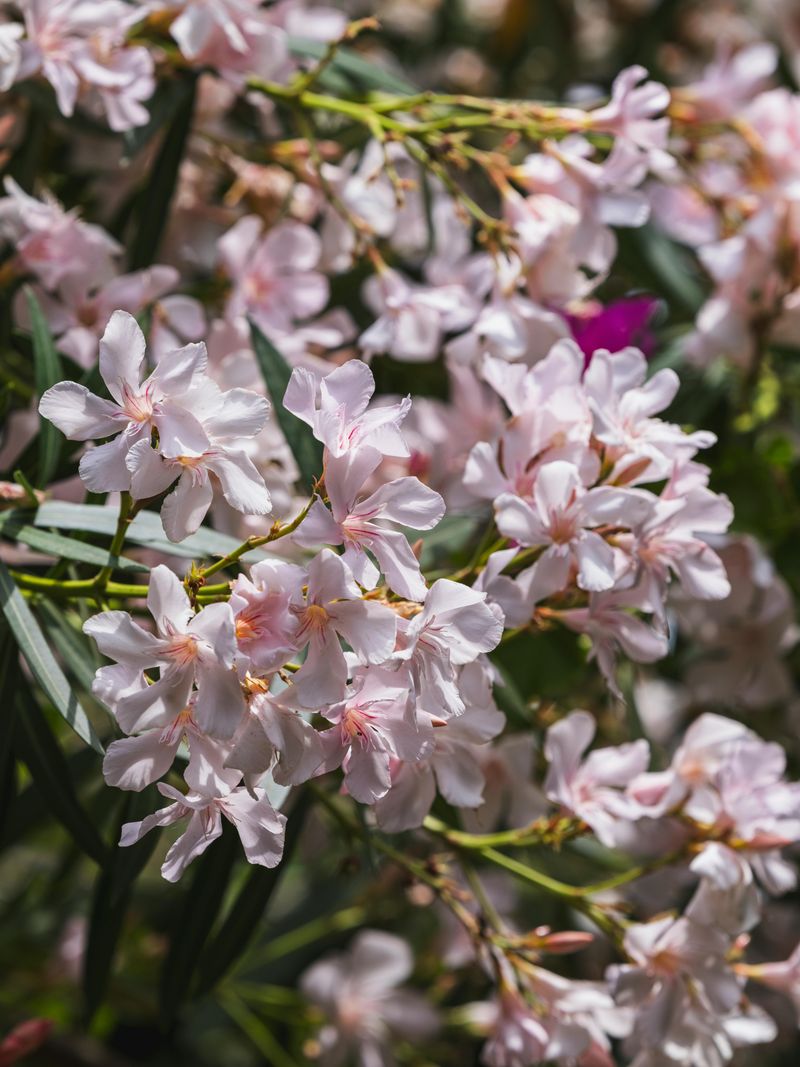
Most people walk past Desert Willow at the nursery without a second glance, and then spend the rest of summer envying their neighbor’s yard.
Native to the Chihuahuan Desert and the American Southwest, this small tree is perfectly suited for Nevada landscapes where homeowners want height, shade, and flowers without a huge water bill.
The blooms are absolutely stunning, looking like little orchids in shades of pink, lavender, and white.
Desert Willow typically grows fifteen to twenty-five feet tall, making it a great choice for creating natural shade over a patio or driveway.
Planted near a patio or south-facing wall, it can help reduce heat exposure and make outdoor spaces more comfortable during blazing summers. Most people do not even think about that bonus when they plant it.
The long, narrow leaves give it a graceful, airy look that feels surprisingly lush for a desert plant.
Birds and bees are big fans of Desert Willow flowers, so you get the added benefit of a yard that feels alive and active.
It is deciduous, meaning it drops its leaves in winter, but the interesting branch structure still looks attractive in the cooler months.
For anyone wanting a real focal point tree that costs almost nothing to maintain once established, Desert Willow is a standout choice worth every bit of planting effort.
8. Lantana
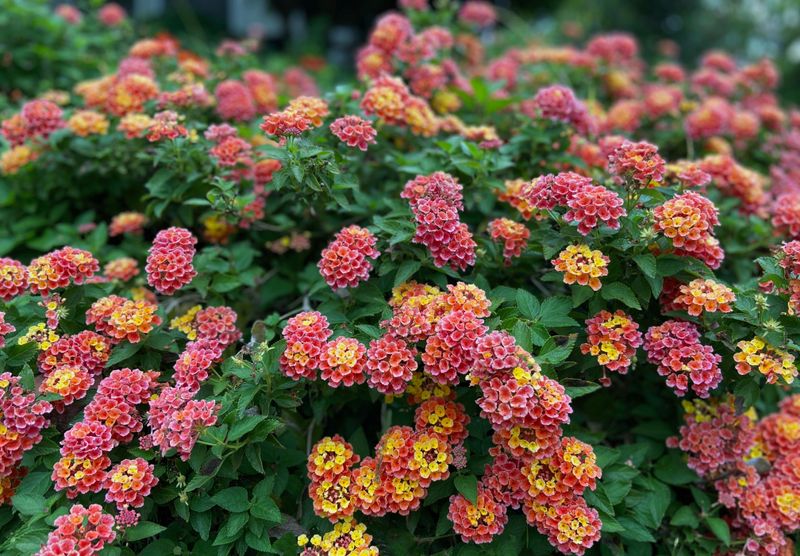
If your yard runs hot and sunny all day, Lantana is basically living its best life, and it will show you by blooming nonstop from spring to frost.
In many popular varieties, the flower clusters shift colors as they age, displaying yellow, orange, pink, and red blooms on the same plant at the same time.
Butterflies absolutely swarm it.
What really makes Lantana stand out is how well it handles heat.
The hotter and sunnier it gets, the happier Lantana seems to be.
It is not a fan of cold winters, so in northern Nevada it is often treated as an annual, but in the Las Vegas area it can come back year after year as a perennial shrub.
Lantana spreads nicely along slopes and banks, making it useful for controlling erosion in areas where grass would never survive without constant irrigation.
Trailing varieties work beautifully in hanging baskets or spilling over retaining walls.
Upright varieties fill garden beds with color all season long.
For the water savings alone, switching even a portion of your lawn to Lantana groundcover could noticeably reduce your monthly bills. And it will turn your yard into something genuinely eye-catching in the process.
9. Rosemary
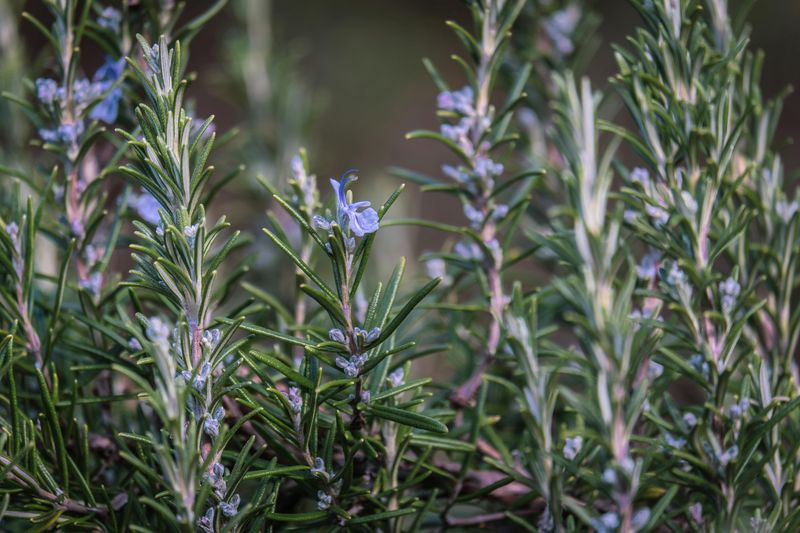
Most plants ask something of you. Rosemary just quietly handles itself, and occasionally flavors your dinner.
You get a tough, drought-tolerant shrub that looks beautiful year-round, small blue flowers that pollinators love, and a fresh herb that you can clip and use in your cooking anytime you want.
For anyone trying to get more value out of every square foot of their yard, Rosemary is a genuinely practical choice.
In Nevada’s climate, Rosemary thrives in full sun and fast-draining soil, both of which are easy to come by across the state.
Once established, it needs very little water, making it one of the most cost-effective plants you can put in the ground.
Prostratus varieties trail and spread low to the ground, perfect for slopes or draping over walls, while upright varieties grow into attractive hedges or borders.
Rosemary is also naturally deer-resistant, which is a real bonus for homeowners who live near open desert areas where wildlife wanders into yards.
The strong fragrance actually deters many pests, reducing the need for chemical sprays.
Rosemary needs almost no fertilizing and only the occasional light trim to stay in shape. It is a handsome, fragrant, fully functional landscape plant that practically takes care of itself all year long.
10. California Fuchsia
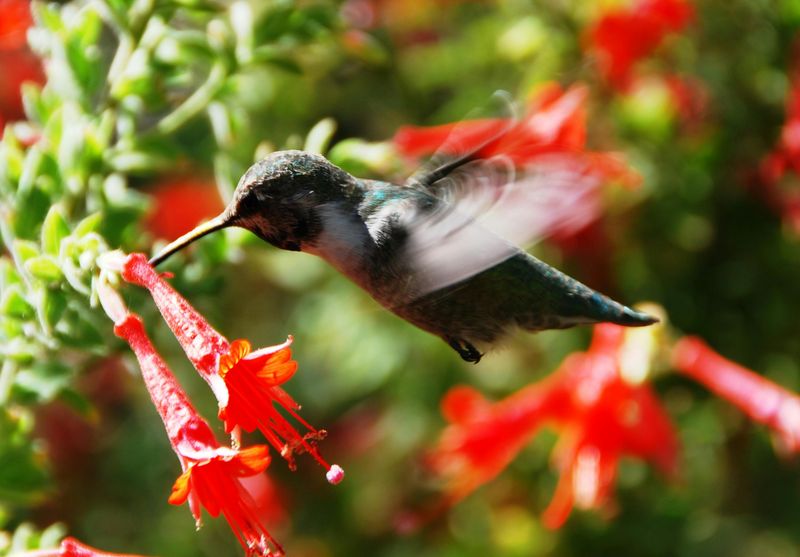
Blazing red and absolutely irresistible to hummingbirds, California Fuchsia is the kind of plant that makes you feel like a gardening genius the moment it starts blooming.
Native to the western United States, it is perfectly adapted to the hot, dry conditions that Nevada homeowners deal with every summer.
The flowers are tubular and brilliant, vivid scarlet in select varieties like Catalina, and they appear from late summer into fall when many other plants have already finished their season.
California Fuchsia grows as a low, spreading groundcover, usually reaching one to two feet tall and spreading two to three feet wide. That makes it a smart choice for filling in bare areas, covering slopes, or creating a colorful carpet under taller desert shrubs.
The silvery-green foliage looks attractive even when the plant is not in bloom, so your yard always has visual interest going on.
Water needs are minimal once California Fuchsia gets established, fitting perfectly into any water conservation effort.
It actually performs better when you hold back on irrigation, rewarding a hands-off approach with more vigorous growth and better blooms.
For anyone looking for a showstopper that costs almost nothing to maintain, California Fuchsia checks every single box. It is one of the smartest lawn replacements available today.