California Groundcovers That Smother Weeds And Look Better Than Mulch
Mulch does a decent job. It suppresses weeds, holds moisture, and keeps bare soil from looking neglected.
But it also needs topping up, it breaks down, and after a few seasons it starts to look tired and patchy in ways that no amount of raking quite fixes.
There is a living alternative that does everything mulch does and then keeps going, filling in, blooming, attracting pollinators, and looking genuinely beautiful year after year without being restocked from a bag.
Groundcovers are one of the most underused tools in California gardening. The right ones spread confidently enough to crowd out weeds before they establish, root deeply enough to hold soil on slopes, and stay attractive through the heat and drought that would leave bare ground looking barren.
They work while you’re not watching, which is exactly the kind of garden help most people are looking for.
A yard covered in the right groundcover looks cared for even when you haven’t touched it in weeks.
1. Bee’s Bliss Sage
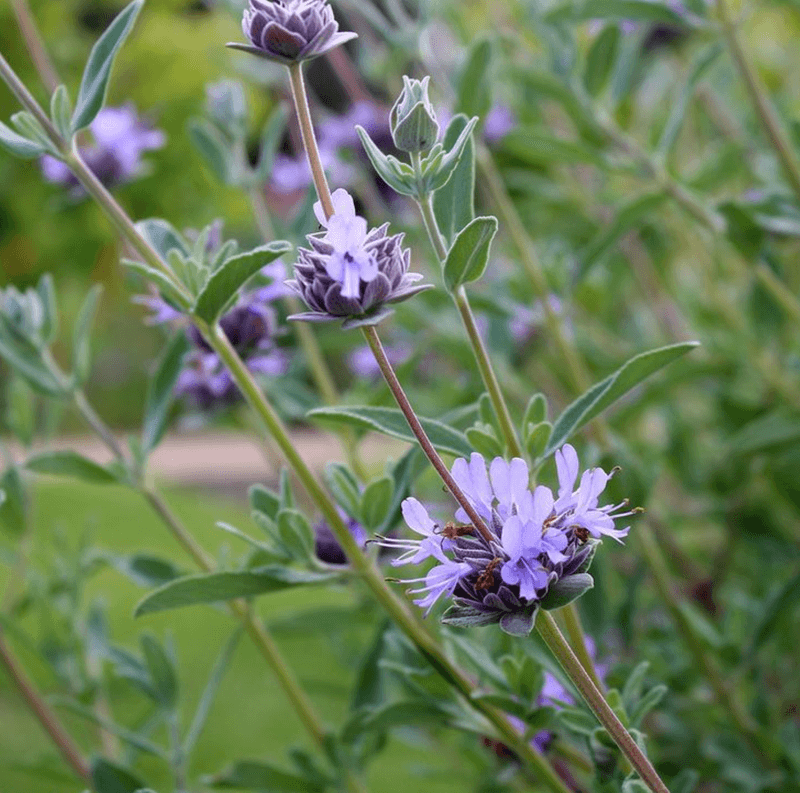
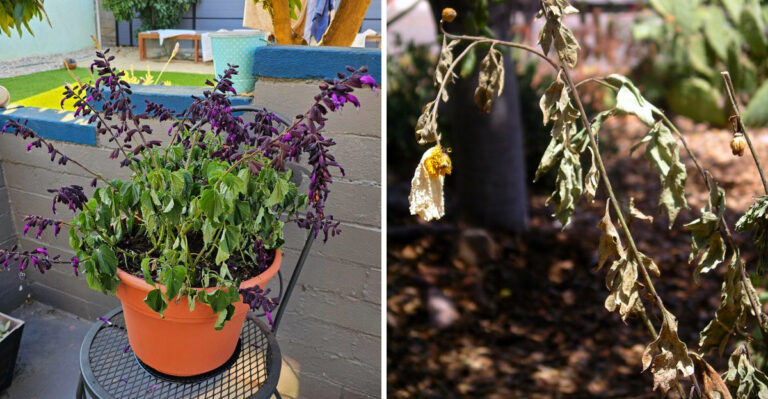
Few plants earn their name quite like Bee’s Bliss Sage. Walk past this plant on a warm California afternoon and you will hear it before you see it, buzzing with pollinators drawn to those long, lavender-purple flower spikes.
This sage is a hybrid of two California natives, and it grows into a wide, low mound that can spread up to eight feet across. That spreading habit is exactly what makes it such a powerhouse for weed control.
Once it gets going, it creates a dense canopy of silvery-green leaves that blocks sunlight from reaching the soil below.
Weed seeds need light to sprout, and Bee’s Bliss Sage simply takes that light away. Plant it in full sun and give it good drainage.
It handles California’s dry summers with ease and asks for very little supplemental water once it is established. It grows well in coastal and inland areas alike.
Trim it back lightly after the blooms fade to keep it tidy and encourage fresh growth. Gardeners across California love this plant because it looks intentional and polished, nothing like a patch of mulch ever could.
It is truly one of the best low-water groundcovers you can grow.
2. Pigeon Point Coyote Brush
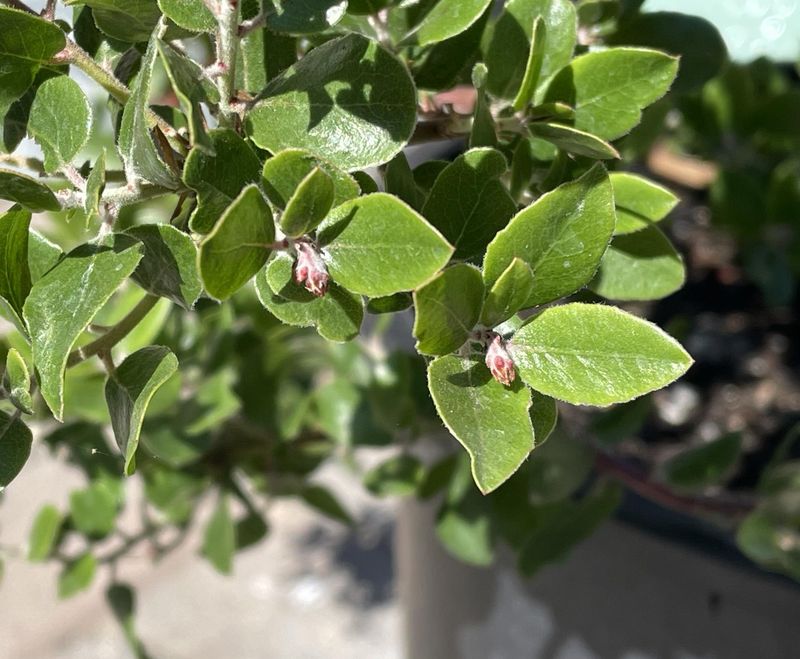
Named after a stretch of the stunning California coast near Santa Cruz, Pigeon Point Coyote Brush is one of the toughest and most reliable groundcovers you can plant in the state. It is a low-growing form of the native coyote brush, staying under two feet tall while spreading outward up to six feet or more.
What really sets this plant apart is its incredible toughness. It handles poor soil, drought, coastal wind, and neglect without missing a beat.
Gardeners who have struggled with erosion on slopes or bare patches under trees often find that Pigeon Point is the plant that finally solves the problem.
The dense, bright green foliage covers soil so completely that weeds simply cannot find room to grow. In fall, small white fluffy seed heads appear and give the plant a soft, airy look that adds texture to the garden.
Your California Garden Changes Every Week. Your Plan Should Too.
Gardening in California changes quickly throughout the season. Every Friday you’ll receive a simple weekly plan showing exactly what to plant, prune, fertilize, harvest, and protect so you never miss the right timing.
It works beautifully as a slope stabilizer, a border filler, or a mass planting along driveways and paths throughout California.
It thrives in full sun and needs almost no irrigation once established. Minimal pruning keeps it looking neat.
For a tough, low-maintenance weed fighter, this coastal native is hard to beat anywhere in California.
3. Creeping Sage
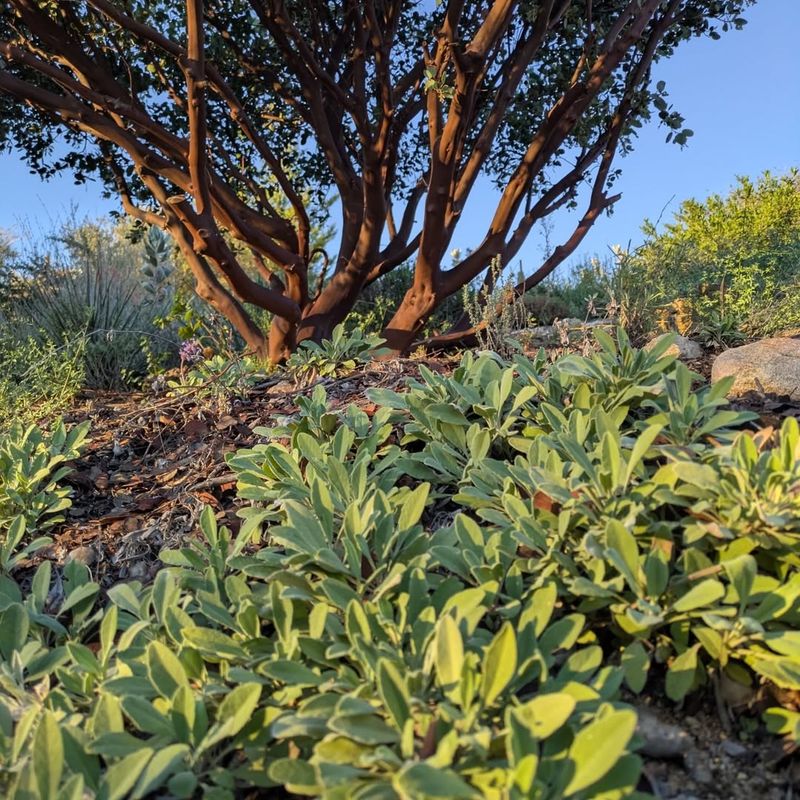
Creeping Sage has a way of making a garden look like it has been there forever. This low-growing native from California’s chaparral and woodland regions spreads slowly but steadily into a soft, fragrant mat that sits close to the ground.
The leaves are small, rounded, and covered in a fine fuzz that gives them a gray-green color. Crush one between your fingers and you get that classic sage scent that so many California gardeners know and love.
In spring, tiny blue to purple flowers appear along the stems and attract bees and other pollinators.
Creeping Sage works really well under larger shrubs or along pathways where you want something that stays low and tidy. It fills gaps between stepping stones beautifully and tolerates light foot traffic better than most groundcovers.
The thick mat of foliage shades the soil and stops weeds from getting a foothold.
Plant it in full sun to part shade and give it well-drained soil. It is highly drought-tolerant and well-suited to California’s hot, dry summers.
Once established, it needs very little care. It is a great choice for gardeners who want a natural, low-effort look without relying on wood mulch to get there.
4. Carmel Sur Manzanita
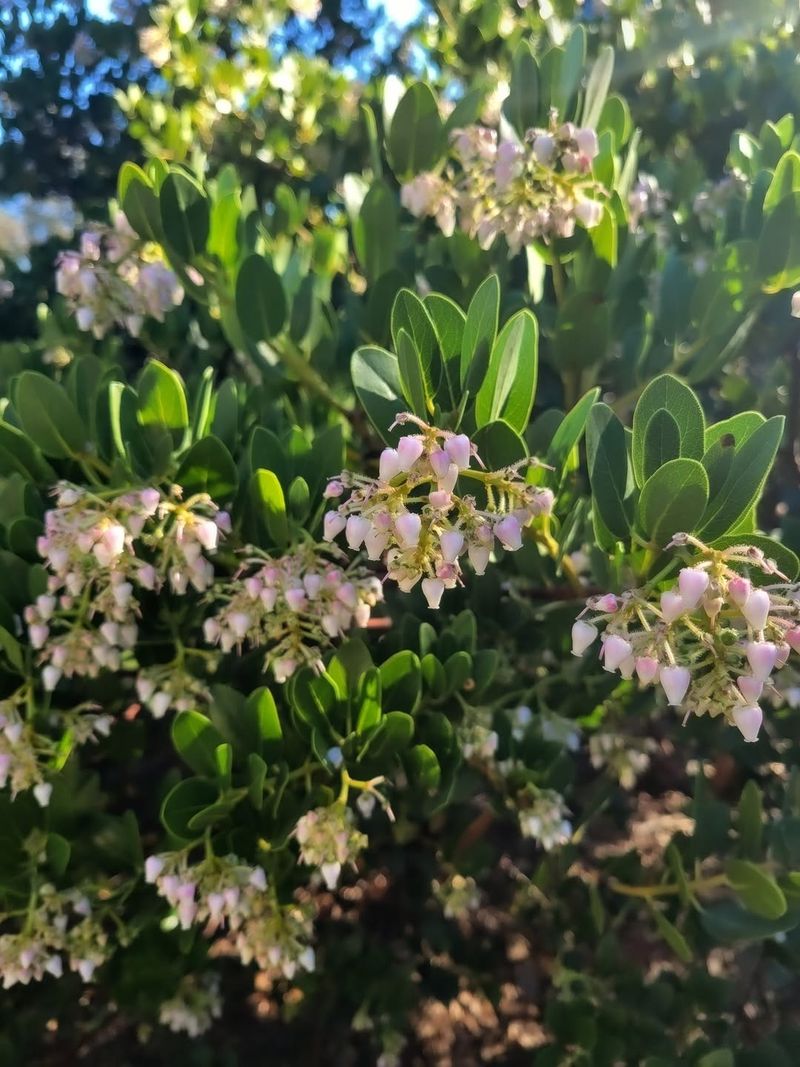
There is something almost sculptural about Carmel Sur Manzanita. The glossy, deep green leaves catch the light in a way that makes the plant look polished and intentional, even when it is just doing its job of covering bare ground along the California coast.
This is a prostrate form of manzanita, meaning it grows flat and wide rather than tall. It typically stays under one foot in height but spreads several feet in all directions.
That low, spreading habit makes it an excellent weed blocker because it covers a large area of soil and leaves almost no room for unwanted plants to sneak in.
In late winter and early spring, clusters of small pink urn-shaped flowers appear and attract hummingbirds and native bees. After the flowers fade, small red berries develop and add another layer of visual interest while feeding local wildlife.
It is a plant that gives back to the California ecosystem in more ways than one.
Carmel Sur Manzanita performs best in well-drained, sandy or rocky soil and full sun. It is extremely drought-tolerant once established and prefers to be left alone rather than watered frequently.
Avoid planting it in clay or areas with standing water. For coastal California gardens, it is a standout choice that looks far better than any bag of mulch.
5. Point Reyes Bearberry
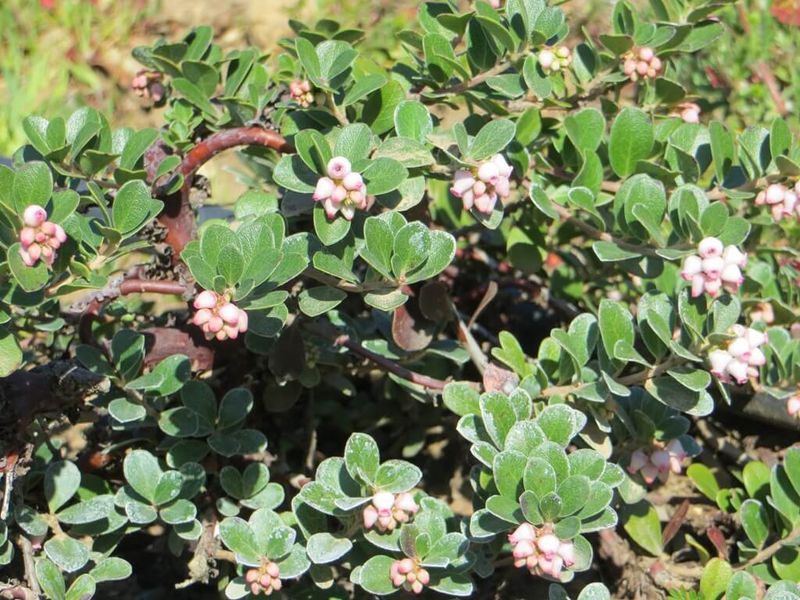
Point Reyes Bearberry is one of those plants that garden visitors always ask about. The small, shiny leaves turn beautiful shades of red and bronze in fall, and the bright red berries that appear in late summer look almost too cheerful to be real.
It comes from the wild coastal headlands of Point Reyes, right here in California.
This low-growing evergreen spreads into a dense, tight mat that hugs the ground closely. It rarely grows taller than six inches, but it can spread several feet wide over time.
That tight, low profile is what makes it such an effective weed suppressor. There is simply no gap for weeds to squeeze through once this plant gets established.
It performs especially well in sandy or rocky soils with good drainage and full sun. It is highly tolerant of coastal conditions including salt spray and wind, making it a go-to choice for gardens near the California coast.
Inland gardeners with well-drained soil can also have great success with this plant.
Water it occasionally during the first season to help it get established, then step back and let it do its thing. Bearberry is one of those rare plants that genuinely improves with age, spreading wider and looking better every year without much help from you.
6. Island Alum Root
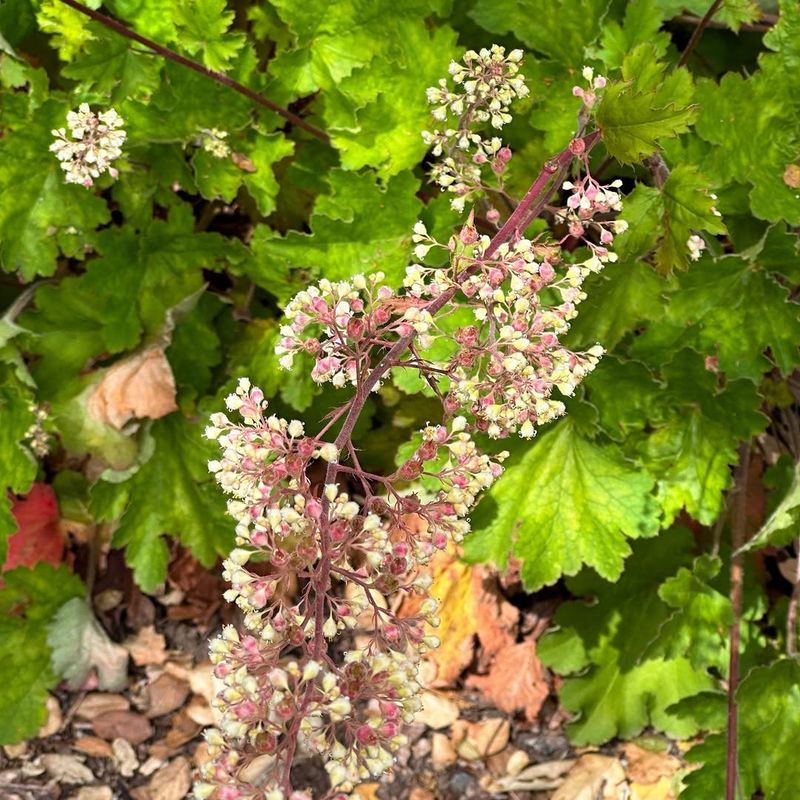
Most weed-smothering groundcovers love full sun, which can leave shady garden spots feeling left out. Island Alum Root is the answer for those tricky shaded areas that are hard to fill with anything interesting.
Native to the Channel Islands off the coast of California, this plant thrives in part to full shade.
The broad, rounded leaves with scalloped edges are the main attraction. They come in shades of deep green and burgundy depending on the light and season, and they create a lush, layered look that feels more like a woodland garden than a yard in need of mulch.
In spring, tall, delicate flower stalks rise above the foliage and carry tiny white or pink flowers that pollinators appreciate.
Island Alum Root spreads slowly through underground rhizomes, gradually filling in gaps and pushing out weeds as it goes. It is not an aggressive spreader, so it stays where you put it without taking over neighboring plants.
That makes it easy to manage and pair with other shade-loving natives.
Give it regular water during dry spells, especially in hotter parts of California. It appreciates rich, well-draining soil and protection from harsh afternoon sun.
This plant is a real gem for shaded beds, and it brings a sophistication to the garden that a layer of bark chips simply cannot match.
7. Canyon Gray Sagebrush
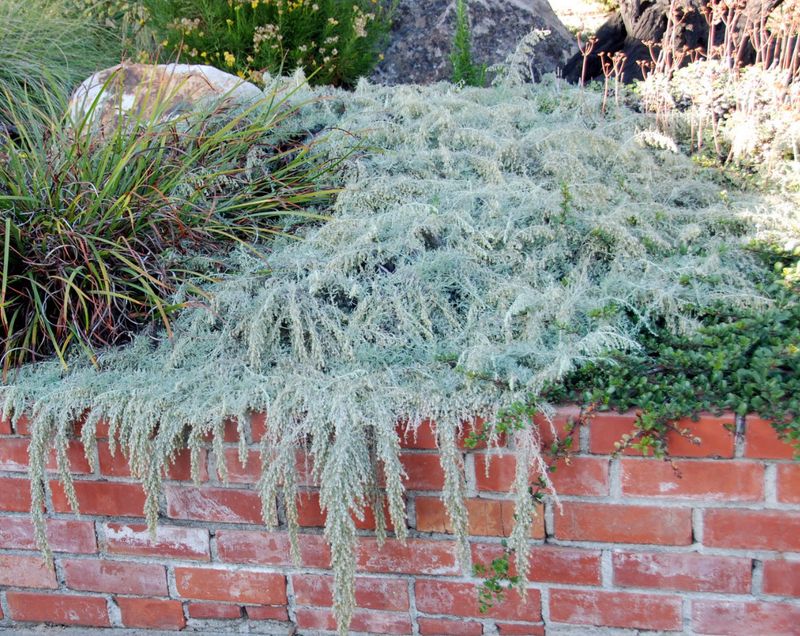
If you have ever driven through the California foothills and caught that sharp, silvery scent drifting through the car window, there is a good chance Canyon Gray Sagebrush was nearby. This low-growing cultivar of California sagebrush brings that same wild, aromatic character right into your garden.
It grows as a flat, spreading mat of soft, silver-gray foliage that stays under one foot tall and spreads up to six feet wide. The color alone makes it stand out in the landscape.
Paired with darker green plants, the silver tones create a striking contrast that looks intentional and designed.
Beyond its looks, Canyon Gray is a serious weed fighter. The dense foliage shades the soil and the plant releases natural compounds that can actually inhibit the germination of some weed seeds nearby.
It is not magic, but it gives you an extra edge in the battle against weeds across California gardens.
Plant it in full sun with excellent drainage. It is one of the most drought-tolerant groundcovers on this list and absolutely thrives during California’s dry summers.
Cut it back by about one-third in late summer or fall to keep it compact and encourage fresh silvery growth. It is low-fuss, beautiful, and genuinely useful in any dry California landscape.
8. Western Wild Ginger
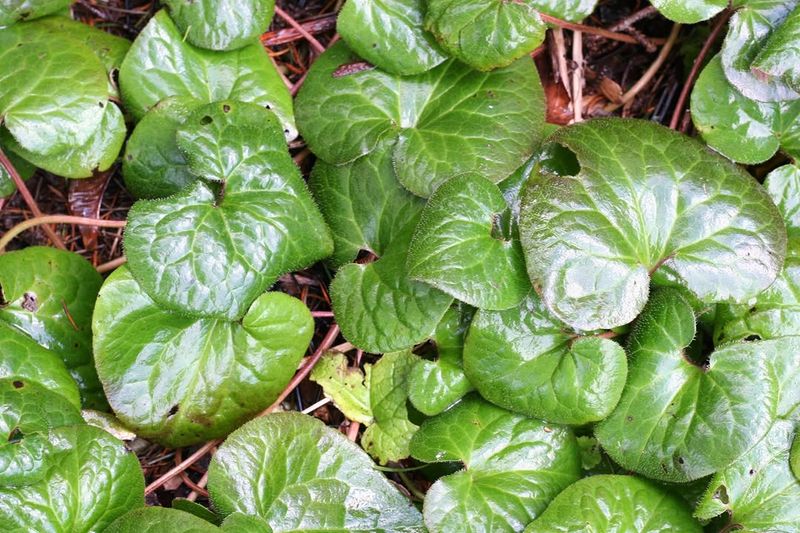
Tucked beneath the canopy of California oaks and redwoods, Western Wild Ginger creates one of the most beautiful groundcover carpets you will ever see. The large, heart-shaped leaves are a deep, glossy green, and they overlap each other to form a thick mat that completely covers the soil below.
This plant is made for shade. It grows naturally on the forest floor across coastal and mountain regions of California, and it brings that same lush, woodland feel to shaded garden beds.
It is a slow spreader, but once it gets established, it forms a dense enough layer to crowd out most weeds effectively.
In spring, hidden beneath the leaves close to the ground, small brownish-purple flowers appear. They are easy to miss, but if you peek under the foliage, they are a fun little surprise.
The plant gets its name from the ginger-like scent of its roots and leaves when crushed.
Western Wild Ginger needs consistent moisture and cannot handle prolonged drought or harsh sun. It is best suited to shaded spots in California gardens where the soil stays relatively cool and damp.
Plant it near a drip line or where it gets occasional irrigation. For shaded areas where nothing else seems to work, this native plant is a wonderful and reliable solution.
9. California Field Sedge
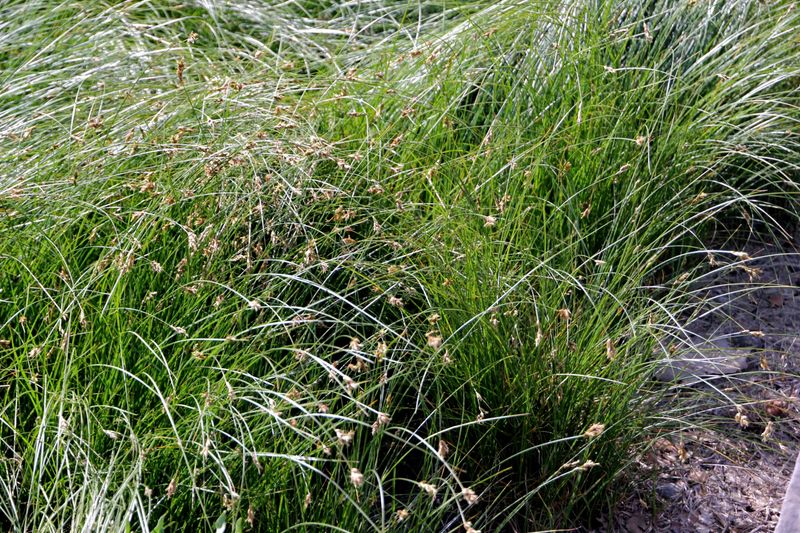
Not every gardener wants a flowering groundcover. Sometimes you just want something clean, green, and grass-like that stays low and keeps the weeds out without drawing too much attention to itself.
California Field Sedge is exactly that kind of plant, and it does its job remarkably well.
Carex praegracilis, as it is formally known, is a native sedge that grows naturally in meadows and along streams across California. In the garden, it forms a fine-textured, arching turf of green blades that stays between six and twelve inches tall.
It spreads gradually through underground runners, slowly filling in bare areas and leaving no room for weeds to establish.
One of the best things about this plant is its flexibility. It tolerates full sun, part shade, and even moderate foot traffic, which makes it a practical alternative to traditional lawn grass in low-traffic areas.
It also handles both dry conditions and occasional wet spells, which is unusual for a groundcover.
Mow or cut it back once a year in late winter to refresh the growth and keep it looking tidy. It works beautifully along paths, under trees, and in areas of the California garden where grass struggles but you still want that lawn-like feel.
It is a quiet workhorse of the native plant world.
10. Seaside Daisy
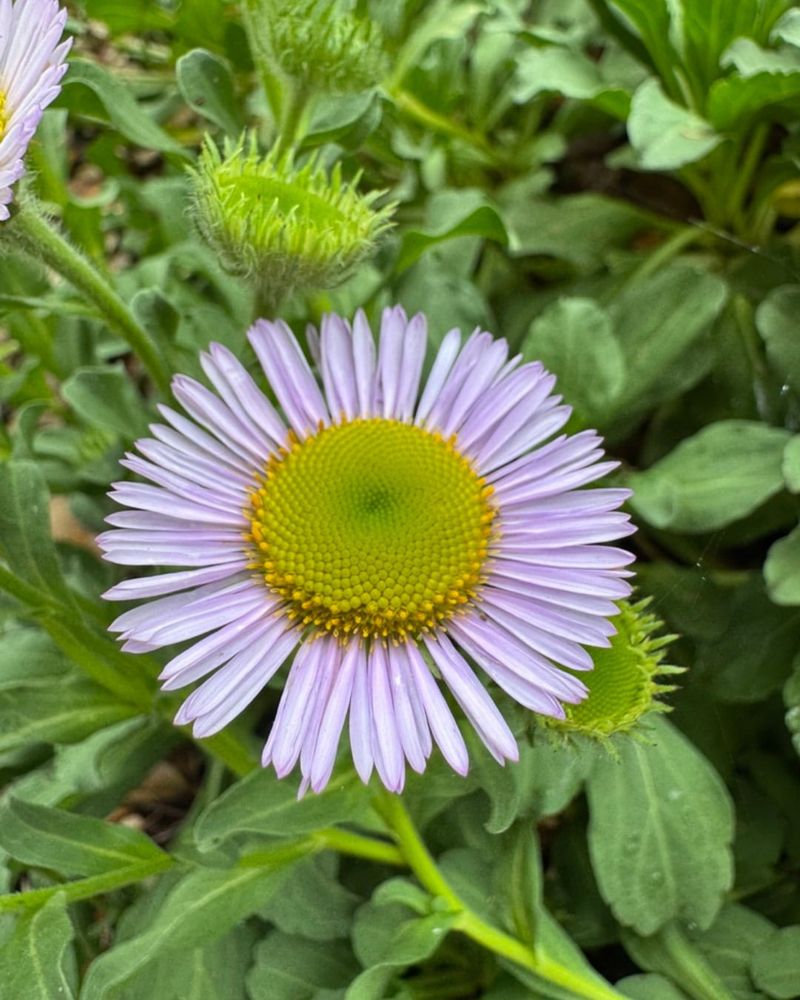
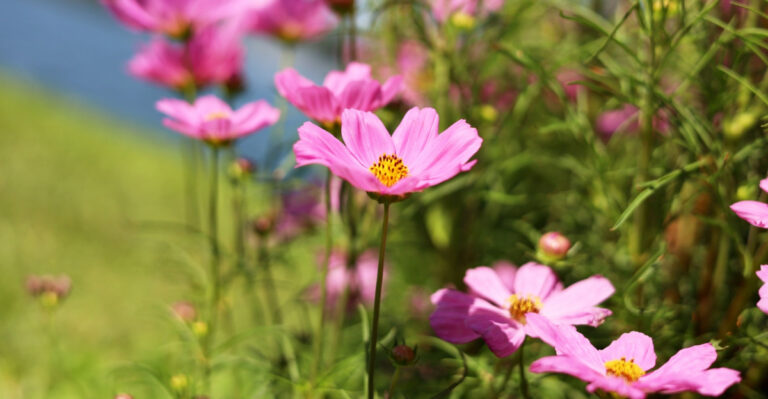
Cheerful, tough, and almost always in bloom, Seaside Daisy is the kind of plant that makes people smile when they walk past it. Native to the California coast, Erigeron glaucus produces a near-constant display of small lavender and yellow daisy flowers from spring through fall, and sometimes even into winter in mild coastal areas.
The plant grows into a low, spreading mound of bright green foliage that reaches about six to twelve inches tall and spreads up to two feet wide. It fills garden borders, edges pathways, and tumbles over low walls with an effortless, cottage-garden charm.
Planted close together, a group of Seaside Daisies can cover a large area and keep weeds shaded out effectively.
Pollinators love it. Bees and butterflies visit the flowers regularly, which makes this groundcover a great choice for gardeners who want to support local wildlife while keeping their beds looking colorful and full.
It is also deer-resistant, which is a real bonus in many parts of California.
Give it full sun to light shade and well-drained soil. It handles drought well once established but appreciates occasional deep watering during hot California summers.
Deadhead spent blooms to encourage continuous flowering, or let it go natural for a more relaxed look. Either way, it always looks better than a bed of plain brown mulch.