Spotted Lanternfly In Ohio: What Gardeners Should Check Before Moving Patio Furniture And Firewood
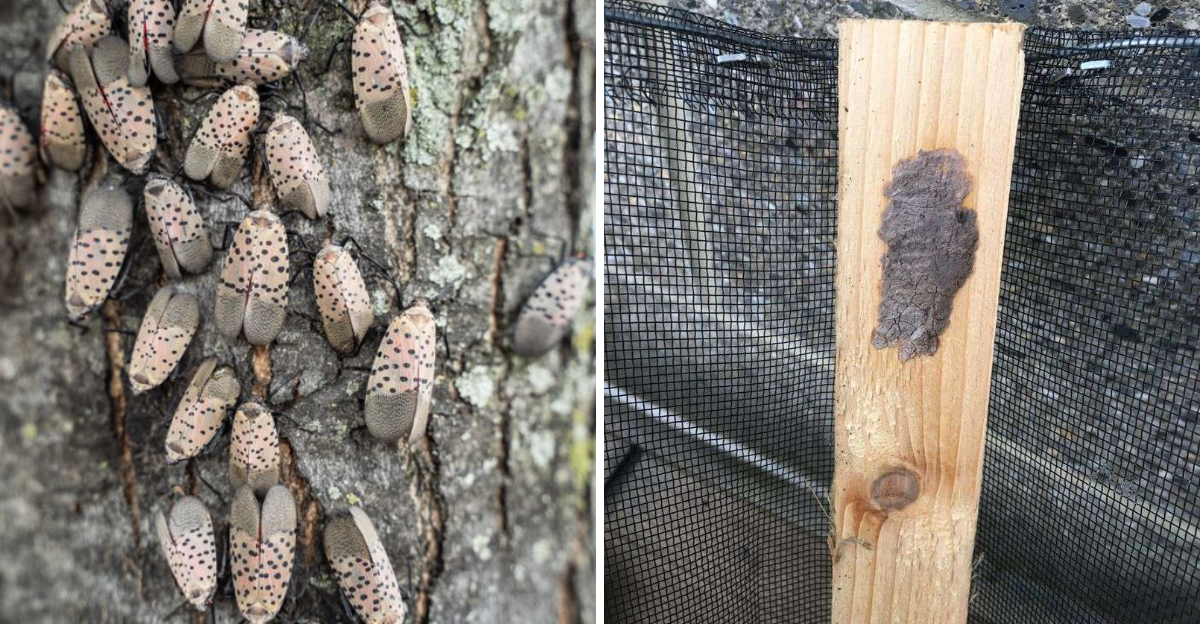
If you have outdoor furniture, a woodpile, or a garden in Ohio, spotted lanternfly is now your concern too.
This invasive insect from Asia has established itself across the state, and Ohio issued a statewide quarantine on February 17, 2026, making it official that no county is off the hook.
Spotted lanternfly spreads in a sneaky way: not just by flying, but by hitching a ride on the things people move every day, like patio chairs, firewood, trailers, and garden tools.
Before you haul that stack of logs to the campsite or drag the patio set out of storage, a quick inspection could make a real difference in slowing the spread of this pest across Ohio.
1. Know Why Spotted Lanternfly Spreads So Easily
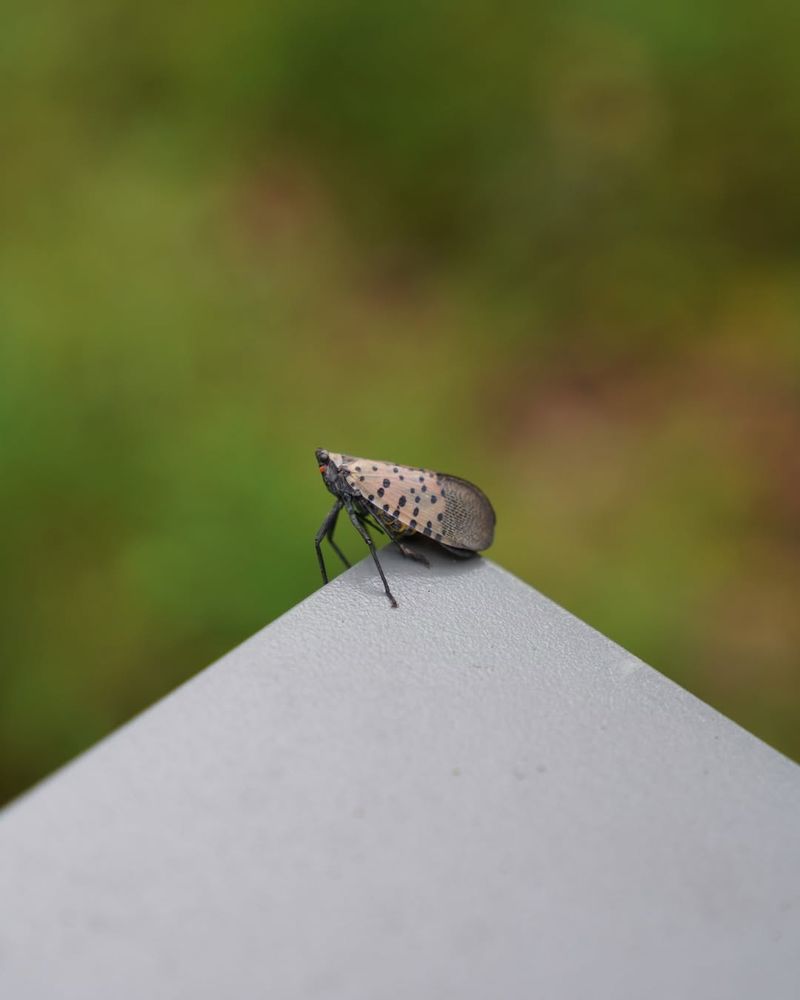
Most invasive insects spread by flying or crawling, but spotted lanternfly has a bonus trick up its sleeve. Egg masses can be laid on almost any hard surface, including wood, metal, stone, plastic, and even smooth bark.
That means outdoor items sitting in your yard for a few weeks during late summer or fall can become unintentional egg carriers without you ever noticing.
Once those items are loaded into a truck or trailer and driven across the state, the eggs go along for the ride. Nymphs and adults can also cling to vehicles, equipment, and gear, especially when parked near trees or vines where the insects are feeding.
Spotted lanternfly does not need a forest to survive a road trip; it just needs a surface to cling to.
Statewide quarantine, which took effect February 17, 2026, exists specifically because this hitchhiking behavior makes spotted lanternfly so hard to contain.
Slowing the spread depends largely on people taking a few minutes to check outdoor items before moving them.
No single inspection will solve the problem statewide, but each careful check helps reduce the number of egg masses that reach new areas of Ohio or cross state lines.
2. Check Patio Furniture For Egg Masses Before Moving It
Patio furniture sits outside for months at a time, often tucked under decks, stacked in corners, or pushed against fences where insects have plenty of privacy to lay eggs.
Before you move any outdoor furniture, whether across town or just into storage, flip it over and look carefully at the undersides, legs, frames, seams, and any sheltered spots that face downward or inward.
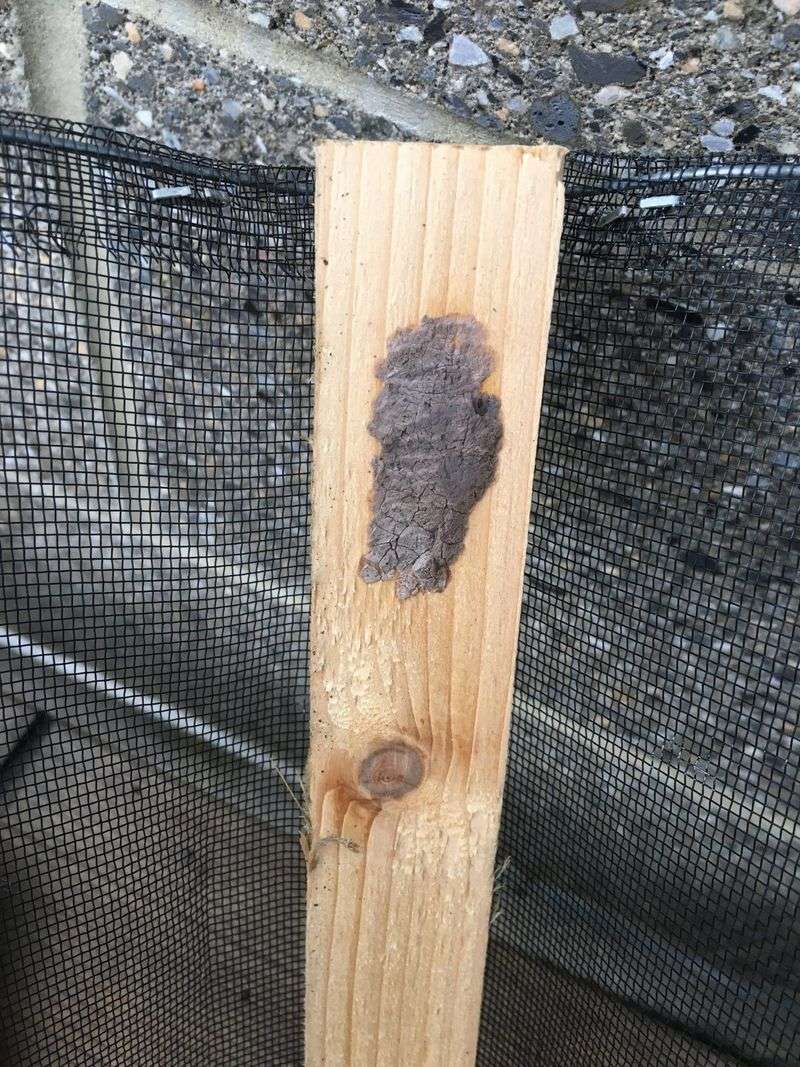
Egg masses can appear as grayish or tan smeared patches roughly an inch long. Fresh ones may look waxy or slightly shiny, while older ones often dry out and develop a cracked, mud-like texture that blends in surprisingly well with weathered plastic, painted metal, or wood.
Check chair backs, table legs, umbrella poles, planter bases, grill legs, storage bins, and outdoor cushion frames.
Grills are easy to overlook because people focus on the cooking surface rather than the base and wheels. Decorative items like ceramic pots, metal lanterns, and outdoor sculptures can also carry egg masses on their undersides.
A flashlight helps when checking dark corners. Taking an extra five minutes before loading furniture into a truck can prevent egg masses from moving to a new neighborhood, a vacation property, or another state.
Your Ohio Garden Changes Every Week. Your Plan Should Too.
Gardening in Ohio changes quickly throughout the season. Every Friday you’ll receive a simple weekly plan showing exactly what to plant, prune, fertilize, harvest, and protect so you never miss the right timing.
3. Inspect Firewood Before Hauling It Across Ohio
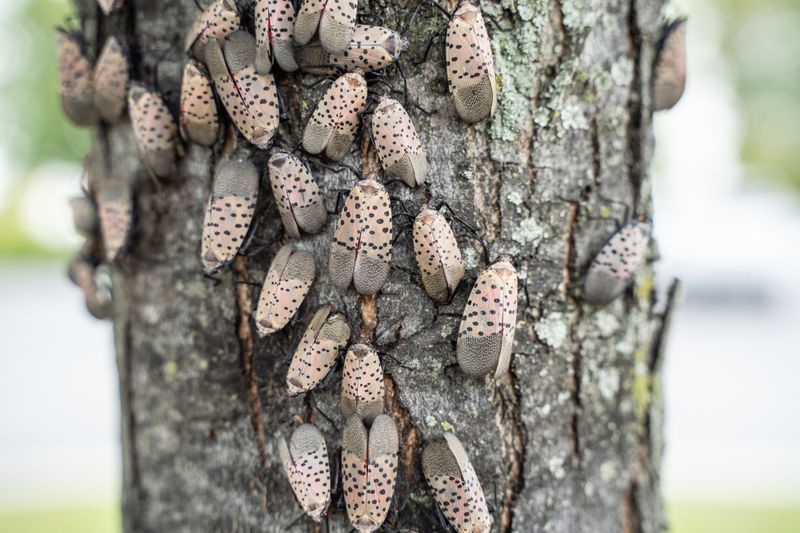
Firewood has a long history of moving invasive pests from one place to another.
Emerald ash borer and other wood-associated pests spread through firewood movement, and spotted lanternfly egg masses can hitchhike on the outside of firewood and other outdoor items.
Logs, bark, pallets, and stacked wood provide plenty of rough, sheltered surfaces where egg masses can go unnoticed for months.
Before hauling firewood to a campsite, a friend’s property, or a vacation home, check each log carefully. Look at the bark, the cut ends, and the spaces between stacked pieces.
Egg masses tend to blend into rough bark textures, so take your time and use a flashlight if the light is poor. Brush off any suspicious grayish patches and destroy them rather than just knocking them to the ground.
Buying or using firewood locally is one of the most reliable ways to avoid accidentally spreading invasive pests, including spotted lanternfly. Many Ohio campgrounds and state parks recommend purchasing firewood on-site rather than bringing it from home.
Even short hauls carry some risk if the wood came from an area with high spotted lanternfly activity. The general rule from invasive pest experts is simple: buy it where you burn it, and inspect what you cannot avoid moving.
4. Look Over Vehicles, Trailers, And Garden Gear

A pickup truck parked under a tree of heaven for a weekend, or a trailer left beside a fence row all summer, can easily pick up spotted lanternfly egg masses without the owner ever realizing it.
Wheel wells, trailer sides, tailgates, and undercarriages are prime spots because they are sheltered and often ignored during routine cleaning.
Garden equipment deserves the same attention.
Wheelbarrows, mowers, leaf blowers, hand carts, tool handles, tarps, and storage bins can all carry egg masses if they have been sitting near trees or vines during egg-laying season, which typically runs from late summer through early winter.
Camping gear stored in a garage or shed after a trip to an infested area can also be a vector.
Before moving any equipment to a new property, a job site, or another county, take a few minutes to inspect the surfaces that face downward or are sheltered from rain. A stiff brush or plastic scraper can help dislodge anything suspicious.
Nursery carts and plant transport equipment used near wooded edges or vineyards deserve especially careful attention.
Quarantine applies to equipment and vehicles as regulated items, so following ODA guidance before moving them is not just smart, it is required for regulated businesses and transporters.
5. Learn What Egg Masses, Nymphs, And Adults Look Like
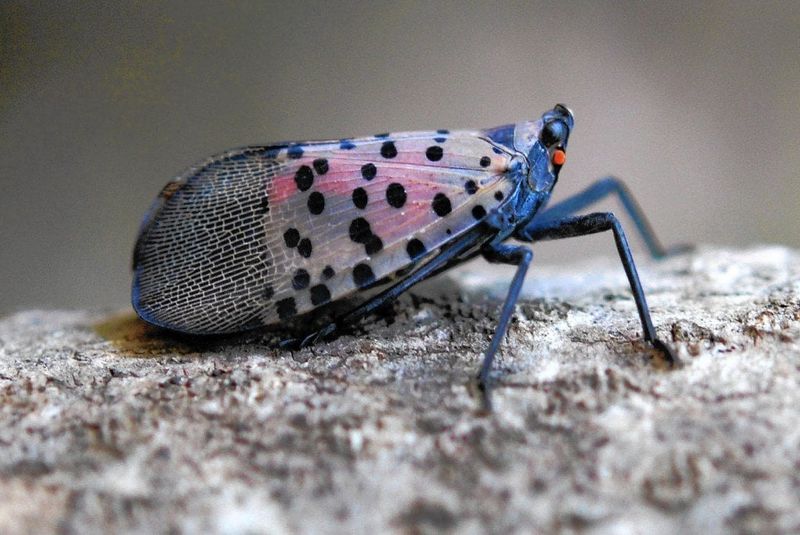
Knowing what you are looking for makes any inspection far more useful. Spotted lanternfly has four life stages that look quite different from each other, and mixing one up with a harmless insect is easy if you have never seen them before.
Getting familiar with each stage helps you act with more confidence when you find something unusual outdoors.
Egg masses are often described as looking like a smear of dried mud or grayish putty, roughly one inch long. They may look waxy when fresh and cracked or flaky as they age.
Young nymphs, which emerge in spring, are small and dark with white spots. Later-stage nymphs develop patches of red along with the white spots, making them easier to recognize.
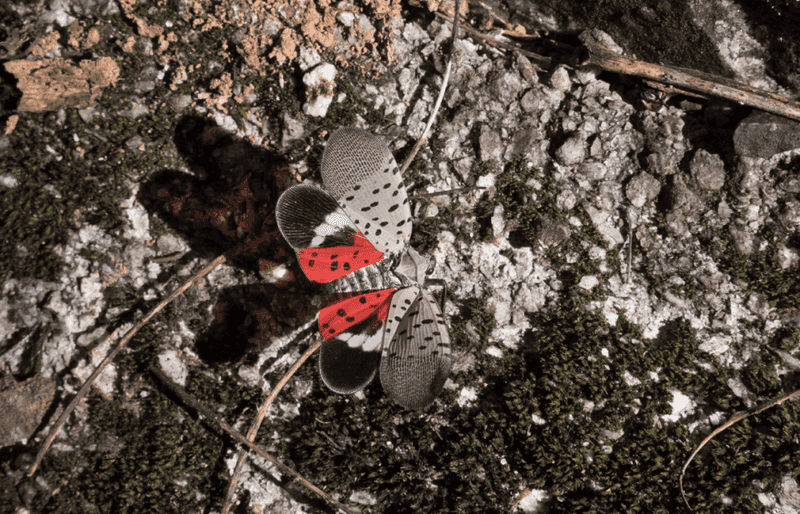
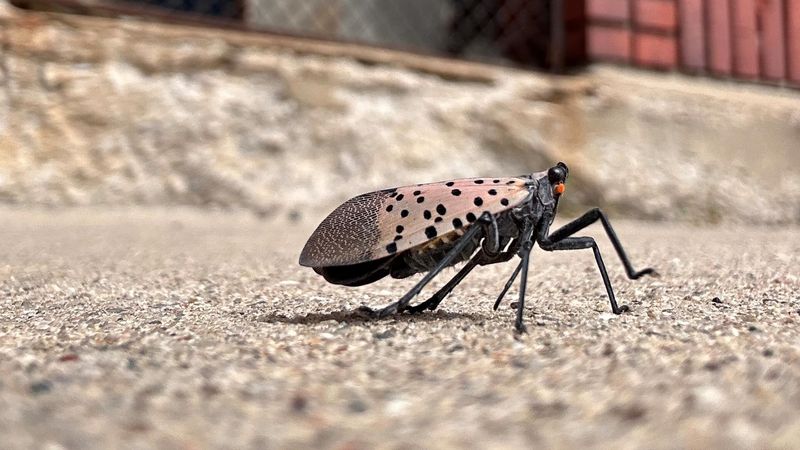
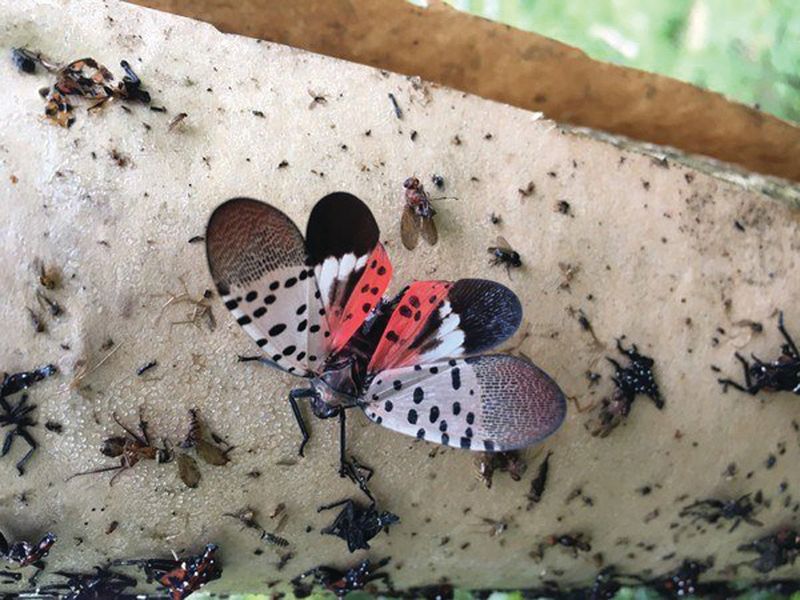
Adults, which appear in late summer, have tan or brown wings with black spots, and when the wings open, bright red hindwings become visible.
Identification guides from the Ohio Department of Agriculture, USDA, and Ohio State University Extension include clear photos that make comparison straightforward.
If you find something and are not sure what it is, checking against one of those guides before taking action is a good idea.
Misidentifying a native insect as spotted lanternfly is a common mistake, especially with egg masses, so having a reference on hand is genuinely useful.
6. Scrape Egg Masses Into Soapy Water Or Rubbing Alcohol
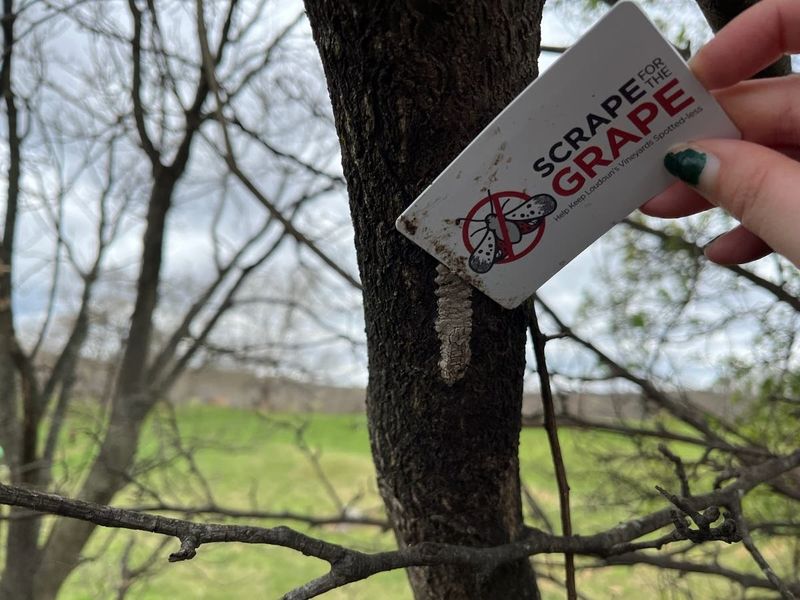
Finding an egg mass on your patio furniture or fence post is not a reason to panic, but it is a reason to act carefully.
The recommended approach from pest management and Extension sources is to scrape the egg mass into a container of soapy water or rubbing alcohol, which prevents the eggs from hatching and developing further.
Just knocking an egg mass to the ground is not enough because the eggs may still hatch.
A plastic card, an old credit card, a putty knife, or a stiff spatula works well for scraping. Hold the container underneath as you scrape so the egg mass falls directly into the liquid rather than onto the ground or nearby plants.
Seal the container and dispose of it in the trash. Wearing gloves is a reasonable precaution, though spotted lanternfly does not pose a direct health risk to people.
One egg mass can contain 30 to 50 eggs, so removing even a single mass before it hatches can make a noticeable difference in local populations.
Checking outdoor items regularly during fall and winter, when adults have already laid their eggs and moved on, gives you a chance to find and remove masses before spring arrival of nymphs.
Ohio State University Extension and ODA both describe this scraping method as a practical option for homeowners.
7. Check Tree Of Heaven And Grapevines Nearby

Tree of heaven, known scientifically as Ailanthus altissima, is spotted lanternfly’s preferred host plant in North America.
Populations of the insect tend to be heaviest where tree of heaven is present, which is a problem in Ohio because tree of heaven grows widely across the state along roadsides, rail corridors, fence rows, and disturbed areas.
If you have tree of heaven near your property, spotted lanternfly activity nearby is a real possibility.
Grapevines are a separate but serious concern. Spotted lanternfly feeds on grapevines in large numbers and can stress plants significantly, which matters for wine grape growers, hop producers, and anyone with backyard grapes.
If you grow grapes at home, inspecting the vines, trellises, posts, and nearby structures for egg masses and insects is worth doing regularly through the season.
Before removing or treating tree of heaven, get a confident identification first. Tree of heaven can be confused with native sumac and black walnut, especially when young.
Ohio State University Extension and county Extension offices can help with identification.
Removing tree of heaven without a plan can sometimes cause it to resprout aggressively, so contacting a qualified professional or Extension service for management advice before taking action is a reasonable step for most homeowners.
8. Check Current Ohio Guidance Before Reporting A Sighting
Reporting rules for spotted lanternfly have shifted as the pest has become more established. When spotted lanternfly was first detected in Ohio, reporting every sighting was encouraged because officials needed data to map the spread.
That situation has changed significantly since the statewide quarantine took effect in February 2026.
As of the 2026 statewide quarantine announcement, the Ohio Department of Agriculture is no longer encouraging community members to report every spotted lanternfly sighting.
The pest is now considered established statewide, which changes how ODA prioritizes incoming reports.
Flooding the reporting system with routine sightings can make it harder for officials to focus on situations that actually require a response.
That said, there are still reasons to reach out to ODA or your local Extension office. If you are unsure whether what you found is actually spotted lanternfly, getting a confirmed identification is worthwhile.
If you are a business, landscaper, nursery, or transporter dealing with regulated materials, contacting ODA for compliance guidance is a practical step. Local Extension offices can also help with identification questions and management options.
Checking the Ohio Department of Agriculture website directly for current reporting guidance is the most reliable way to know what is being asked of residents at any given time.
9. Follow Ohio’s Statewide Quarantine Rules Before Moving Outdoor Items
Spotted lanternfly quarantine became statewide on February 17, 2026, replacing the earlier county-by-county approach. Under the statewide quarantine, the entire state is subject to the same movement restrictions for regulated articles.
That includes nursery stock, live plants, cut trees, logs, lumber, firewood, packing materials, outdoor household articles, and any other items that could move egg masses or insects.
For most homeowners doing routine yard work or moving patio furniture within their own property, the quarantine’s biggest practical message is to inspect items before moving them, especially before leaving the state.
For businesses, the requirements are more specific.
Nurseries, landscapers, firewood sellers, growers, shippers, and anyone transporting regulated goods commercially are expected to follow ODA compliance requirements, which may include permits, inspections, or other documentation depending on the situation.
Checking the Ohio Department of Agriculture’s current spotted lanternfly quarantine page before moving regulated materials is the safest approach, especially if you are unsure whether your activity falls under the quarantine rules.
The rules exist to slow the spread into areas of Ohio or other states where spotted lanternfly populations are lower, and compliance by businesses and individuals alike is part of what makes the quarantine effective.
Ignoring the quarantine is not just risky for agriculture; it can carry legal consequences for regulated parties.
10. Clean Everything Before Leaving An Infested Area
Before leaving any property where spotted lanternfly activity is known or suspected, a walkthrough inspection of everything you plan to move is one of the most practical things you can do.
That means patio furniture, firewood, vehicles, trailers, camping gear, garden tools, potted plants, outdoor storage bins, and any decorative items that have been sitting outside through the season.
Start with the items most likely to carry egg masses: anything with rough surfaces, sheltered undersides, or areas that stay shaded and dry. Flip chairs and tables over.
Check the undersides of planters and bins. Look at wheel wells, trailer frames, and tool handles.
Use a flashlight for dark corners and a stiff brush or scraper for anything suspicious. Scrape any egg masses into soapy water and dispose of them in a sealed bag.
Potted plants deserve special attention because soil and root balls can also be regulated under quarantine rules. If you are moving nursery plants or large potted specimens across county or state lines, check current ODA guidance to understand what is allowed.
Washing down hard surfaces with water before travel can remove insects clinging to vehicles or equipment.
No single step guarantees a clean move, but combining inspection, scraping, and washing gives you the best realistic chance of not becoming an accidental carrier of spotted lanternfly.