Don’t Let These Invasive Vines Take Over Your Oregon Yard This Summer
Vines can make an Oregon yard look lush in spring, but some of them get way too comfortable by summer.
They climb fences, creep through shrubs, and cover open ground faster than many homeowners expect.
At first, the growth may seem helpful because it fills bare spots and adds green color. Then it starts smothering plants you actually wanted.
Invasive vines are especially tricky because small pieces can root again, and tangled stems can hide the full size of the problem. Oregon’s mild weather gives many of these plants a long season to spread.
By the time summer heat arrives, they may already have a strong grip on the yard. Catching them early makes removal much easier and keeps nearby plants safer.
A pretty vine is not always a friendly one. Some need to be stopped before they turn the garden into their personal jungle.
1. English Ivy Climbs Fast And Smothers Trees
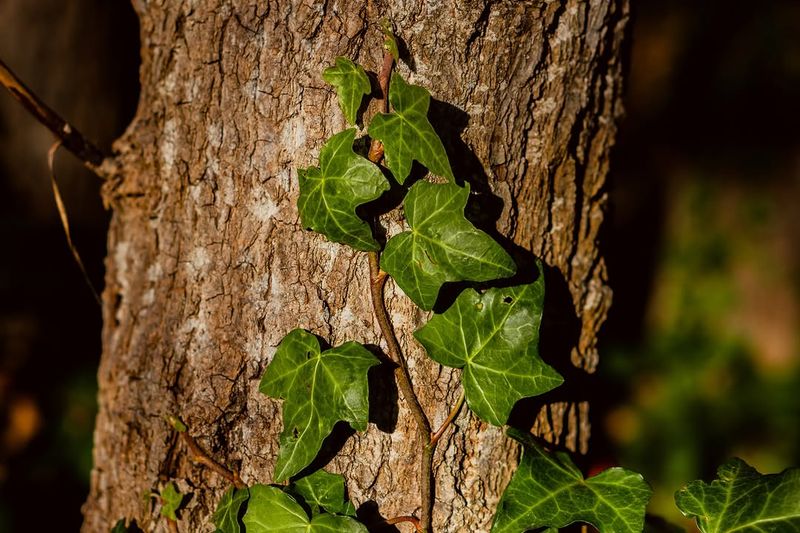
Few plants cause as much quiet damage as English ivy. It looks tidy and green at first, which is part of why so many people planted it as ground cover decades ago. But once it starts climbing a tree trunk, it rarely stops.
As ivy moves up a tree, it adds extra weight to branches and blocks sunlight from reaching the tree’s own leaves.
Over several years, even a healthy, mature tree can weaken under that kind of pressure. The ivy also creates what experts call an “ivy desert” on the ground below, where almost nothing else can grow.
Removing it takes patience, but it is very doable. Start by cutting the vines at the base of each tree and pulling them away from the trunk.
Do not yank ivy off the bark while it is still alive, since that can damage the tree. Let the cut vines dry out on the tree first, then remove them carefully.
Wear gloves every time you handle English ivy. Its sap can cause skin irritation, especially in warm weather.
After clearing the area, watch for new sprouts every few weeks throughout the summer. Young ivy is much easier to pull than established plants.
Staying consistent through the season is the best way to get ahead of this fast-spreading vine before it reclaims your yard.
2. Old Man’s Beard Can Blanket Fences And Shrubs
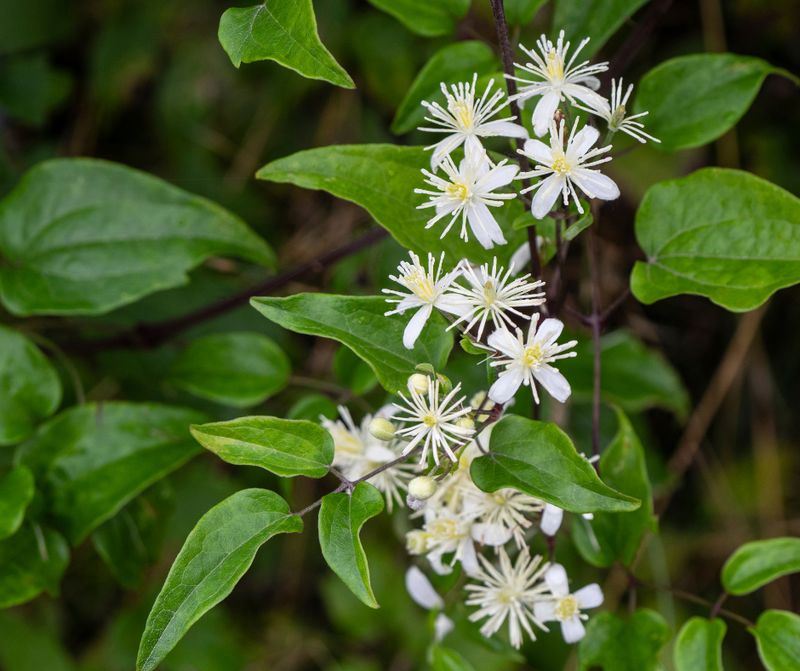
There is something almost magical about the way Old Man’s Beard looks in late summer, with its silky white seed heads floating in the breeze. However, that beauty comes at a serious cost to your yard and nearby wild areas.
Scientifically known as Clematis vitalba, this vine spreads aggressively along fences, over shrubs, and through hedgerows.
Its stems can grow several feet in a single season, layering on top of themselves until the plants underneath are completely blocked from sunlight. Shrubs and small trees can be overwhelmed surprisingly fast.
Each fluffy seed cluster holds dozens of seeds, and the wind carries them far and wide. That is how one vine in your yard can become dozens across your neighborhood within just a few seasons.
Your Oregon Garden Changes Every Week. Your Plan Should Too.
Gardening in Oregon changes quickly throughout the season. Every Friday you’ll receive a simple weekly plan showing exactly what to plant, prune, fertilize, harvest, and protect so you never miss the right timing.
Birds and water can spread seeds even further into natural areas where removal becomes much harder.
Getting control of Old Man’s Beard means acting before those seed heads form. Cut vines back in late spring and early summer, and bag all plant material before it dries out.
Do not compost it, since seeds can still spread from the pile. Pulling young vines by hand works well when the soil is moist.
Roots can be stubborn, so check back every few weeks and pull any new growth you spot. Staying on top of it through the warm months makes a big difference by fall.
3. Periwinkle Creeps Through Shady Beds
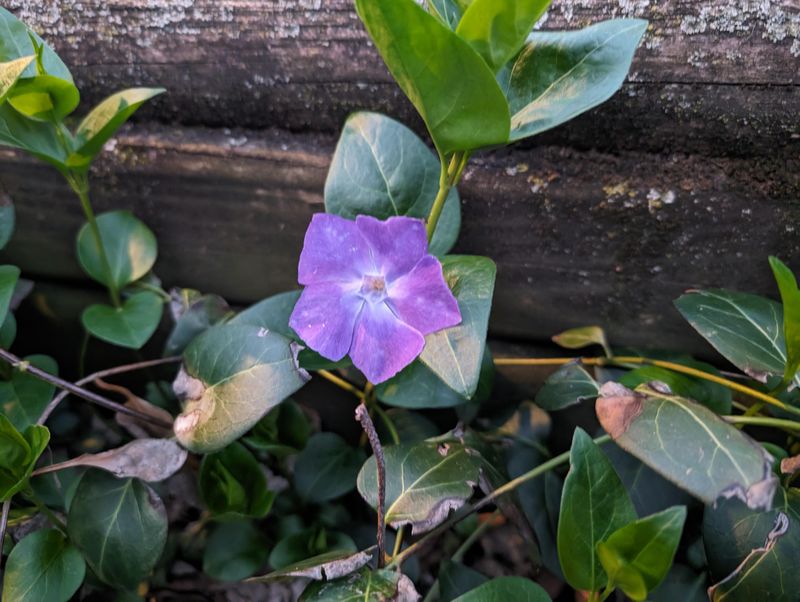
Walk past almost any older garden in the Pacific Northwest and you will likely spot periwinkle. Its small purple flowers and glossy leaves look charming in the spring.
But beneath that cheerful surface, periwinkle is quietly taking over.
Vinca minor and its larger relative Vinca major spread by sending out long stems that root wherever they touch the ground.
Once established, they form a thick mat that smothers native wildflowers and prevents new seedlings from sprouting.
Shaded areas under trees are especially vulnerable, since periwinkle thrives in low light where other plants struggle to compete.
Many native plants that support local wildlife depend on open forest floors and shaded garden beds.
When periwinkle moves in, those plants lose their foothold. The impact on native insects and ground-nesting birds can be significant over time.
Removing periwinkle is hard work but very possible. Pull plants by hand during moist weather, making sure to get the roots out along with the stems.
Left behind, even small root fragments can regrow. Work in sections so the job feels manageable, and plan to revisit each area several times throughout the summer.
Covering cleared spots with mulch can help slow new growth while you work on other sections.
Replanting cleared areas with native ground covers like wild ginger or sword fern helps prevent periwinkle from moving back in.
4. Bittersweet Nightshade Sneaks Through Damp Edges
Edges matter a lot in any yard. The spots along fences, stream banks, and garden borders are often where the most interesting plants grow, but they are also where bittersweet nightshade loves to move in.
This vine is sneaky, growing slowly at first and blending in with other plants until it has a solid foothold.
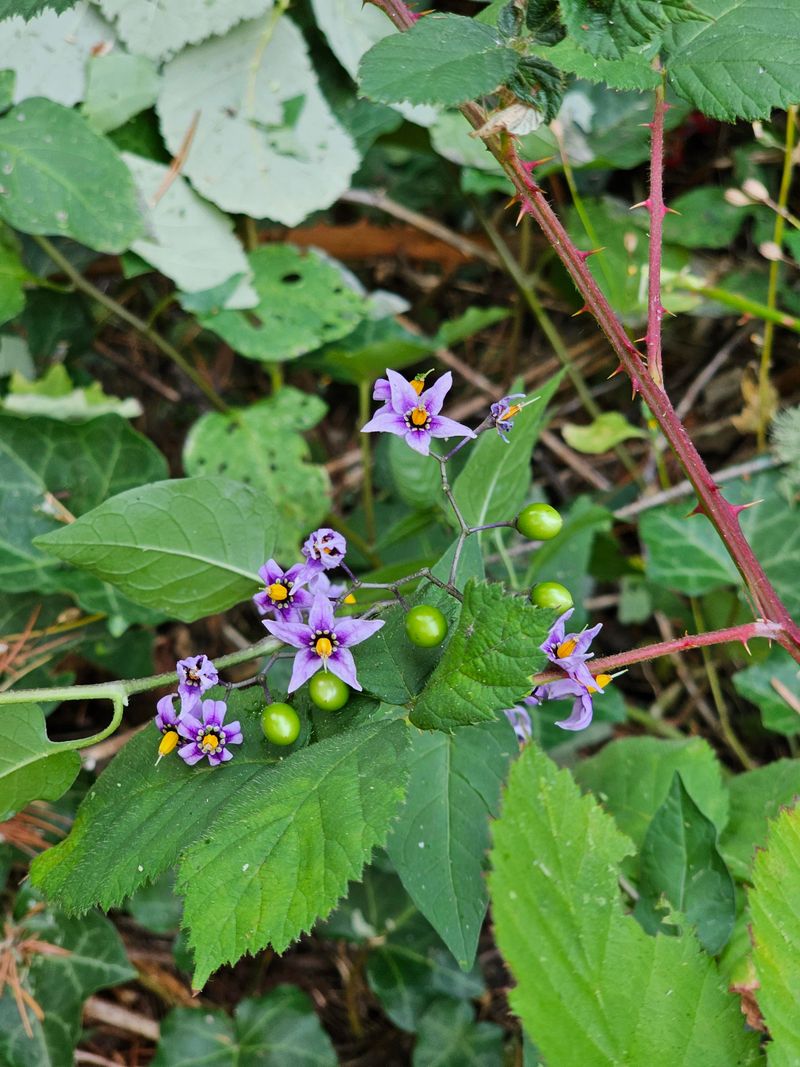
Bittersweet nightshade, known scientifically as Solanum dulcamara, produces pretty purple flowers that look a bit like tiny tomato blossoms. After flowering, it forms clusters of berries that shift from green to yellow to bright red as they ripen.
Those berries are toxic to people and pets, which makes this vine especially worth removing from family yards. Birds eat the berries without any harm and spread seeds widely through their droppings.
That is how bittersweet nightshade keeps showing up along wet ditches, stream edges, and shaded fence lines across the region. Damp soil gives it the perfect conditions to establish quickly.
Pulling plants while they are young and before berries form is the most effective approach. Use gloves and long sleeves since the plant’s sap can irritate skin.
Bag removed plants rather than composting them to avoid spreading seeds. Check damp areas in your yard regularly through the summer, since new seedlings can pop up fast after rain.
Consistent removal over two or three seasons can clear most infestations without needing any chemical treatments.
5. Japanese Honeysuckle Twines Around Better Plants
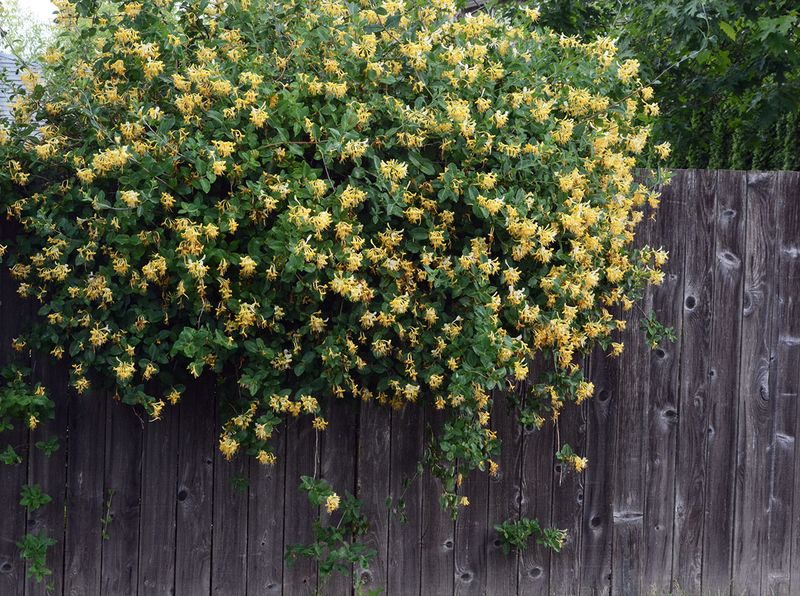
The sweet smell of honeysuckle on a warm evening can feel like pure summer. However, not all honeysuckle belongs in a Pacific Northwest yard.
Japanese honeysuckle is a non-native species that causes real problems for native plants and the wildlife that depends on them.
Unlike native honeysuckle varieties, Lonicera japonica wraps tightly around the stems of other plants as it climbs.
Over time, that twining action can cut off the flow of water and nutrients through a plant’s stem, essentially strangling shrubs and small trees.
It grows quickly, sometimes reaching dozens of feet in a single season under the right conditions.
One reason it spreads so successfully is that birds love its small black berries and scatter seeds far from the original plant.
Seeds can also stay dormant in the soil for several years, sprouting long after you thought the plant was gone. That makes follow-up checks really important.
Hand-pulling works well for young vines, especially when the soil is soft. For older, thicker vines, cut them at the base and remove as much of the root system as you can.
Repeated cutting through the summer weakens the plant significantly over time. Mulching cleared areas helps reduce new seedlings.
Native vine alternatives like western clematis or trumpet honeysuckle can fill the same garden role beautifully while supporting local birds and pollinators instead of competing with them.
6. Field Bindweed Wraps Around Everything Nearby
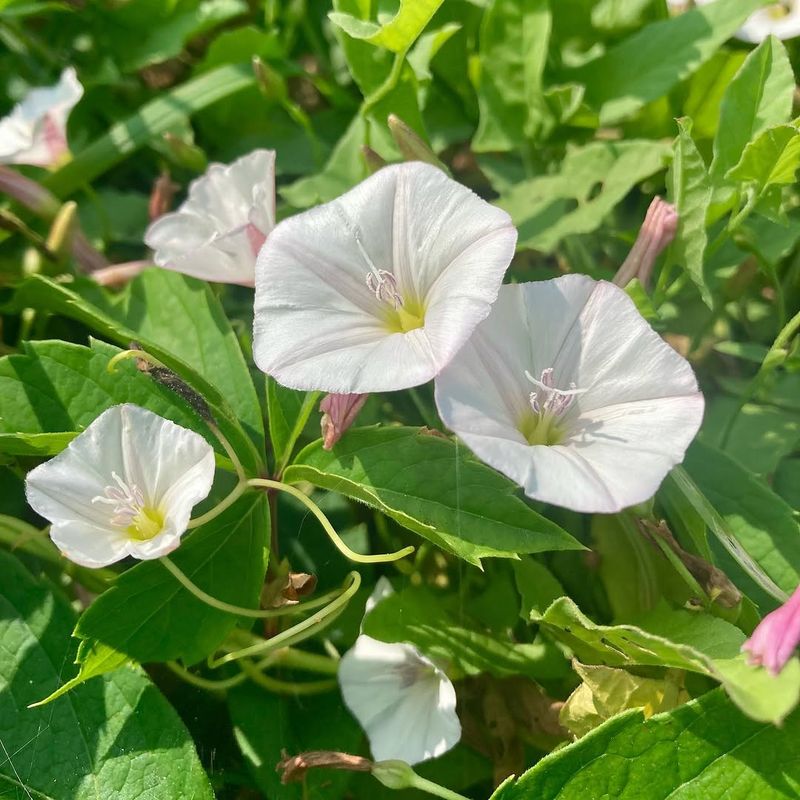
Gardeners across the country have a complicated relationship with field bindweed. Its small white or pink funnel-shaped flowers are actually quite pretty, and on a sunny morning they catch the light beautifully.
The problem is that those flowers come attached to one of the most persistent weedy vines around.
Convolvulus arvensis sends roots deep into the soil, sometimes reaching several feet down. That root system is what makes it so hard to fully clear.
Even if you remove everything above the surface, the plant can resprout from root fragments left behind underground.
It wraps around vegetable plants, flowers, and small shrubs, reducing their access to sunlight and competing for water and nutrients.
Field bindweed thrives in sunny, disturbed spots like garden beds, vegetable patches, and lawn edges.
Hot, dry summers like the ones increasingly common in this region do not slow it down much. It has a remarkable ability to survive conditions that stress other plants.
Consistent removal is the key to managing it. Pull or cut plants as soon as you spot them, and do this repeatedly throughout the season.
The goal is to exhaust the root system over time by not letting the plant photosynthesize and rebuild its energy. Covering affected areas with cardboard and thick mulch can help.
Patience is genuinely required here. Most gardeners see real improvement after two to three full seasons of steady effort rather than one intense removal session.
7. Hedge Bindweed Takes Over Fence Lines Fast
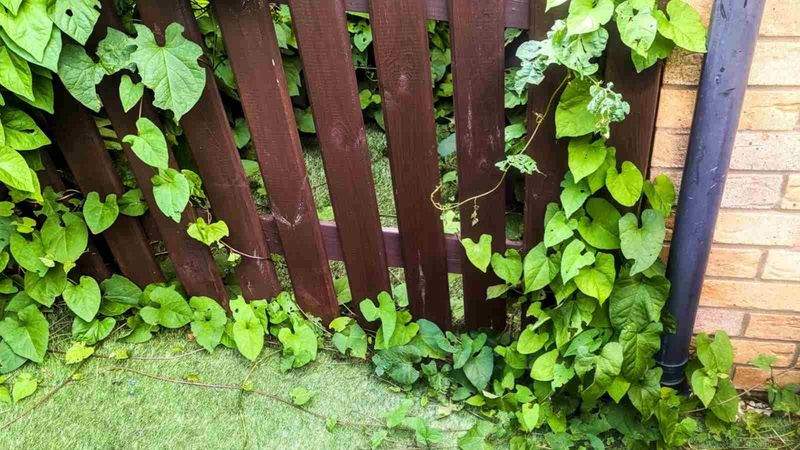
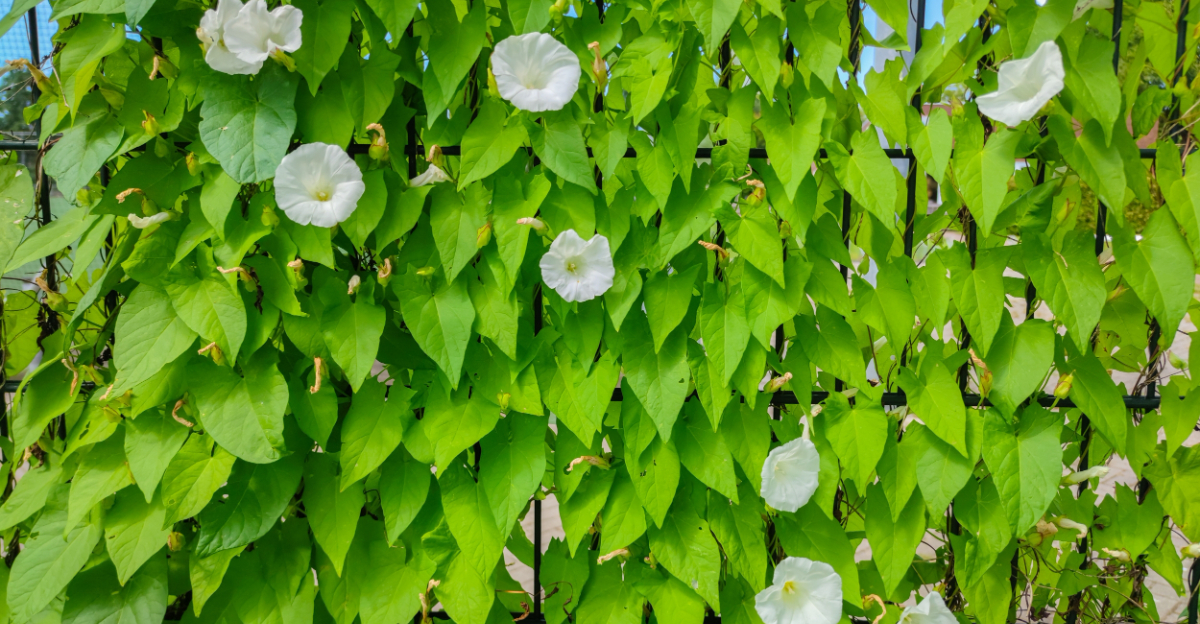
If you have ever looked out at your back fence and found it completely swallowed by a leafy vine with big white trumpet flowers, hedge bindweed is likely the culprit.
It is the larger, bolder cousin of field bindweed, and it moves fast along fence lines, trellises, and hedgerows.
Calystegia sepium can grow several inches in a single day during peak summer growing conditions. Its large, arrow-shaped leaves overlap densely, creating a curtain of green that blocks sunlight from plants growing on the other side of the fence.
Shrubs and ornamental plants along fence lines are especially vulnerable because they cannot outgrow the vine.
The root system runs both deep and wide, spreading underground and sending up new shoots several feet from the original plant.
That horizontal root spread is what makes hedge bindweed such a stubborn opponent. You may clear one section only to see new growth emerge nearby a week later.
Tackling it early in the season, before stems become long and tangled, makes removal much more manageable. Cut stems at the soil line regularly and pull up as much of the root as the soil allows.
After rain, when the ground is soft, roots come out more completely. Avoid letting any part of the plant reach the flowering stage, since seeds add another layer of spread to the problem.
Replanting cleared fence lines with vigorous native shrubs can also help crowd out returning growth over time.
8. Morning Glory Can Become A Summer Tangle
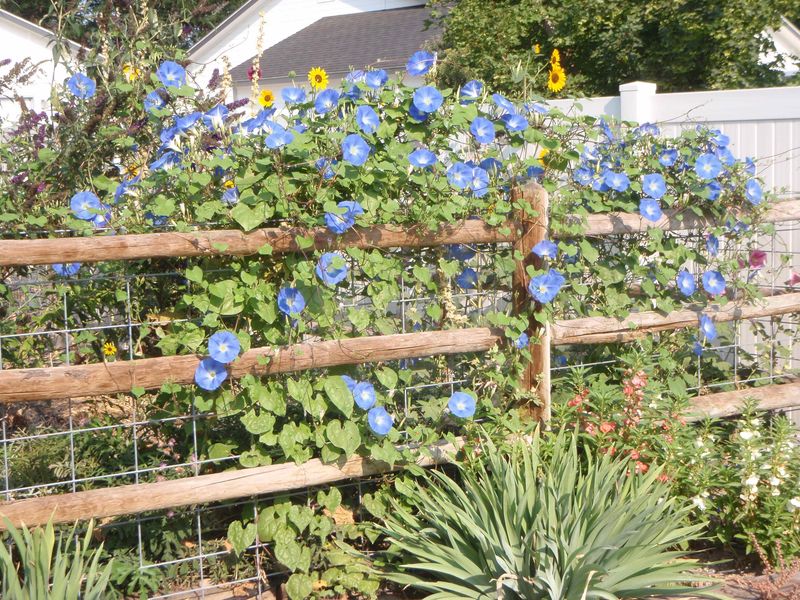
Morning glory is one of those plants that tricks a lot of people. The flowers are genuinely stunning, spinning open in shades of purple, pink, and blue each morning.
Many gardeners plant it on purpose, not realizing that some species can become serious problems in the Pacific Northwest climate.
Wild or escaped morning glory species, particularly Ipomoea purpurea and related varieties, spread readily by seed and can twine over low-growing plants, smother garden beds, and climb fences with surprising speed.
In warmer parts of the state, plants can reseed themselves year after year, building up a larger presence each summer without any help from the gardener.
The tricky part is that many people genuinely enjoy the flowers and hesitate to remove the plant.
But once morning glory gets into a garden bed with native plants or vegetables, it competes hard for light and space. Removing it becomes more work the longer it is left in place.
Snipping off flower heads before they form seeds is one of the easiest ways to reduce the spread without removing the entire plant immediately. For full removal, pull vines at the base and dig out the root crown.
Work through the bed carefully, since stems tangle around other plants and pulling too hard can damage them. Check back every week or two since seeds in the soil can sprout all summer long.
Consistent effort through the warm months keeps this vine from turning into a full-scale takeover by fall.