These Are The Edible Plants Oregon Homeowners Are Growing Along Their Fence Lines
Your fence is doing the bare minimum right now, and honestly, it could be doing so much more. That stretch of vertical space running along your property line?
It’s basically untapped growing potential just sitting there looking decorative. Oregon gardeners are quietly turning their fence lines into some of the most productive spots in the entire yard, and the results are pretty spectacular.
Climbing fruit, espaliered trees, and berry canes absolutely love a sunny fence, and in Oregon’s generally mild climate, the options are better than you might think.
Whether you’re working with a long backyard boundary or just a narrow side yard strip, there is almost certainly something delicious that would thrive right there against that fence.
Time to put it to work.
1. Table Grapes Turn Fence Lines Into Productive Space
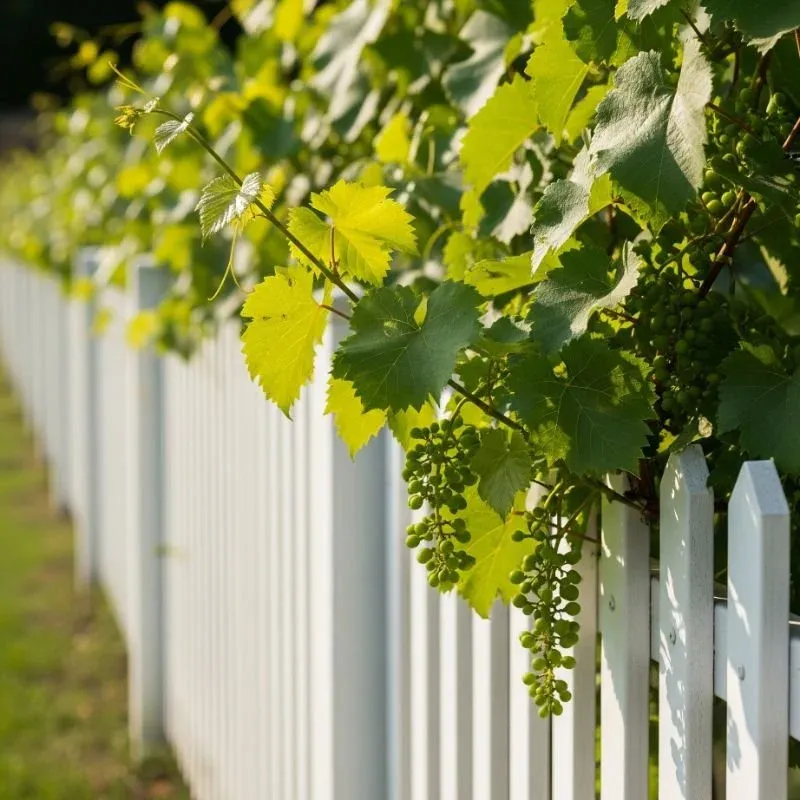
Sunny fence lines and grapevines are a natural match, and many homeowners have figured that out.
Table grapes are vigorous climbers that attach readily to wire or wooden fence structures, and once established, they can fill a long stretch of fence with dense, attractive foliage and heavy clusters of fruit.
In Oregon’s Willamette Valley and warmer southern valleys, conditions are well suited to growing table grapes with good results.
Training grapes along a fence works best with a simple trellis system using horizontal wires spaced about a foot apart. The main trunk is trained upward, and lateral canes are spread along the wires in each direction.
Pruning is done in late winter before buds break, and it takes a year or two before the vine really settles into its structure.
Varieties like Canadice, Reliance, and Himrod tend to perform well in Oregon home gardens, offering seedless fruit that ripens in late summer or early fall.
Grapes need full sun and good air circulation to reduce the risk of powdery mildew, which can be a concern in humid coastal and valley climates.
A fence with southern or western exposure is a solid starting point.
Homeowners with limited yard space will appreciate how grapes use vertical room efficiently, leaving the ground below open for low-growing herbs or ground covers while the canopy above produces real, edible fruit every season.
2. Kiwifruit Climbs Fences And Earns Its Keep
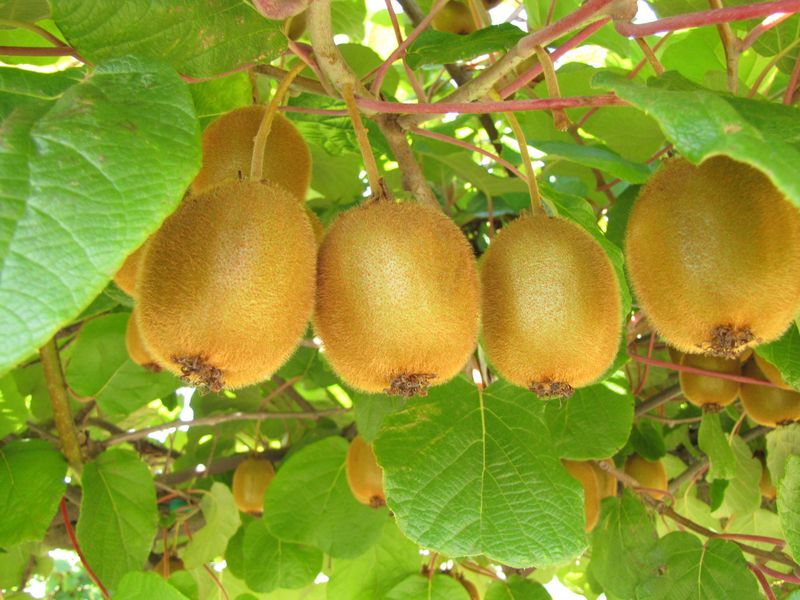
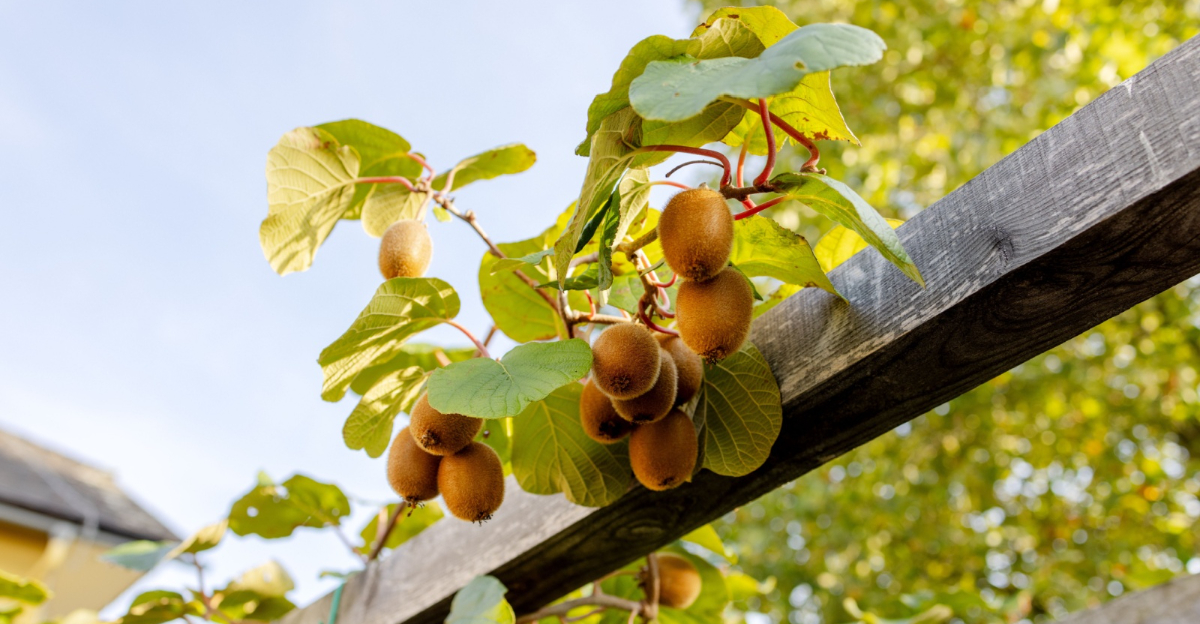
Few fence-line plants make as bold a statement as kiwifruit, and the good news for homeowners is that hardy kiwi varieties grow surprisingly well in much of the state.
Unlike the large fuzzy kiwis sold in grocery stores, hardy kiwi varieties such as Actinidia arguta produce small, smooth-skinned fruits about the size of a large grape.
They are sweet, edible skin and all, and the vines are capable of producing impressive amounts of fruit once they reach maturity.
Hardy kiwi vines are strong climbers that need a sturdy support structure. A fence reinforced with heavy-gauge wire works well, but the posts and rails need to be solid because mature vines can become quite heavy over time.
Most varieties require both a male and a female plant to produce fruit, so homeowners need to plan for at least two plants, keeping the male close enough to pollinate the female.
Your Oregon Garden Changes Every Week. Your Plan Should Too.
Gardening in Oregon changes quickly throughout the season. Every Friday you’ll receive a simple weekly plan showing exactly what to plant, prune, fertilize, harvest, and protect so you never miss the right timing.
In western Oregon, hardy kiwi vines generally handle the mild wet winters without much trouble. Eastern Oregon gardeners may need to select cold-hardier selections and consider site protection from late frosts, which can affect early growth.
These vines take several years to begin fruiting, so patience is part of the process.
Once productive, though, a well-established kiwi vine along a fence line can yield a generous late-summer harvest and provide thick, lush coverage that adds real visual appeal to the yard throughout the growing season.
3. Espaliered Apples Make Fence Lines Work Harder
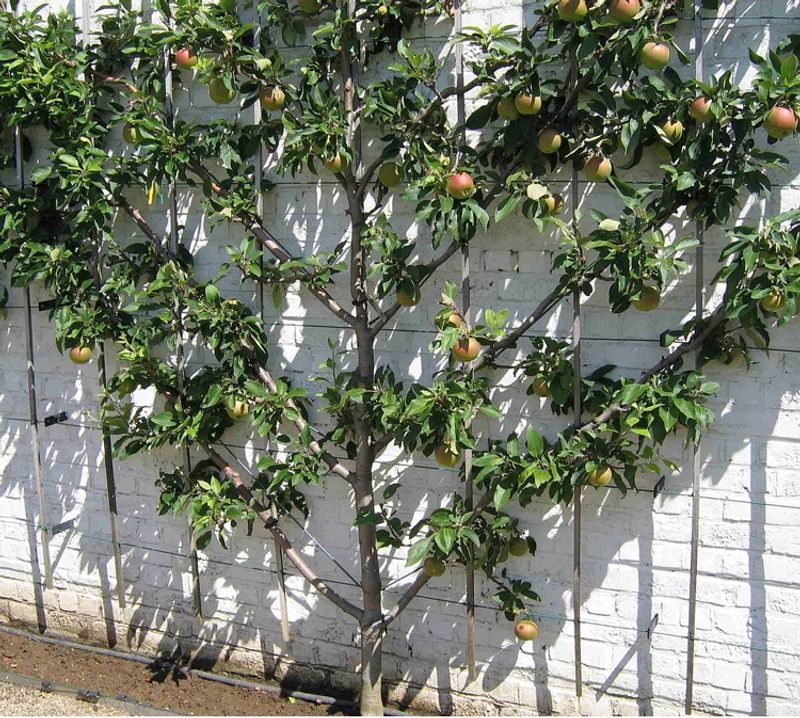
Training an apple tree flat against a fence is one of the most space-efficient things an homeowner can do with a narrow planting strip. Espalier is the technique of pruning and training a tree so its branches grow in a flat, two-dimensional pattern along a wall or fence.
It sounds complicated, but with a little patience and the right variety, it is very manageable for a home gardener willing to learn basic pruning skills.
Semi-dwarf apple varieties on dwarfing rootstocks tend to work best for espalier in home gardens. The tree is planted close to the fence, and horizontal branches are tied to wires strung between posts at roughly 18-inch intervals.
Over several seasons, the tree is pruned to maintain its flat shape and encouraged to develop fruiting spurs along those horizontal branches.
Varieties like Honeycrisp, Fuji, and Gala are popular choices, though local nurseries can suggest options suited to specific Oregon regions.
One practical benefit of espaliering along a fence is that the structure itself can act as a windbreak and a heat sink, warming the fruit slightly and helping it ripen more evenly.
Oregon’s varied microclimates mean that some yards get more sun and heat than others, so fence orientation matters.
A south or west-facing fence gives the best results. Homeowners in the rainy western valleys should also plan for good airflow to reduce fungal pressure, which can affect apple foliage and fruit in humid conditions.
4. Raspberries Fill Fence Rows With Summer Fruit
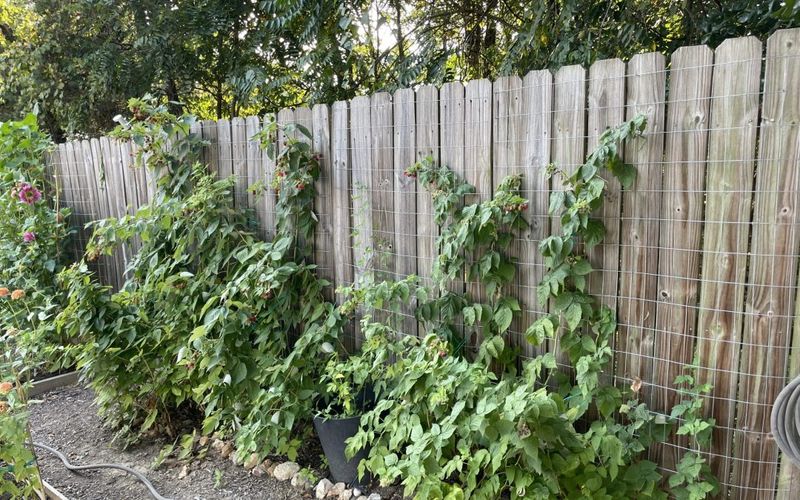
Walk past a well-tended raspberry row in an Oregon backyard and it is hard not to stop and look.
Raspberries are among the most rewarding edible plants a homeowner can grow along a fence line, offering reliable summer harvests and a tidy, upright growth habit that fits naturally into a narrow border.
Oregon’s cool, moist springs and mild summers create conditions that raspberries genuinely enjoy, particularly in the Willamette Valley and coastal areas.
Growing raspberries along a fence works well because the canes naturally want vertical support. Stringing two or three horizontal wires along the fence gives the canes something to lean against and keeps the row manageable.
Summer-bearing varieties produce one large crop in June and July, while ever-bearing types offer a second flush of fruit in late summer and fall.
Both types work well in Oregon, and the choice often comes down to how a homeowner wants to spread out the harvest.
Planting in well-drained soil is important because raspberry roots are sensitive to standing water. Raised beds or slightly mounded rows along a fence can help in spots where drainage is not ideal.
Spacing canes about 18 to 24 inches apart gives each plant enough room to develop without crowding. After the first couple of seasons, the row fills in nicely and starts producing generous quantities of fruit.
Picking fresh raspberries straight from a backyard fence row on a warm morning is one of those simple pleasures that makes home gardening genuinely worthwhile.
5. Blackberries Thrive Along A Well-Planned Fence Line
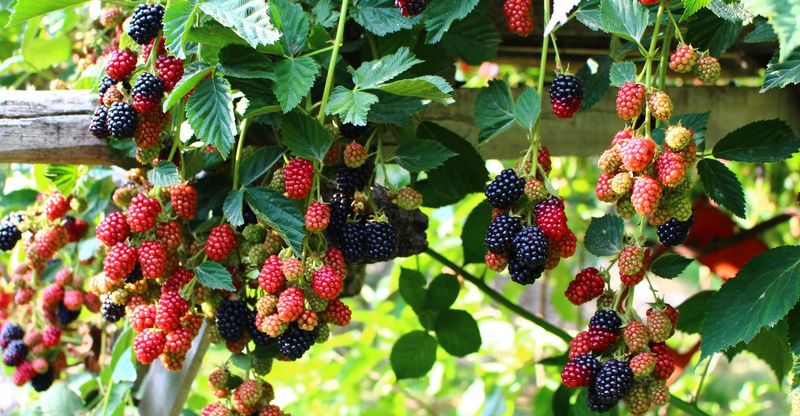
Anyone who has spent time in Oregon knows that wild blackberries have a way of taking over wherever they find an opening. Cultivated blackberries are a different story.
Tamed varieties like Triple Crown, Chester, and Black Satin offer the same rich, juicy fruit as their wild cousins but grow in a much more manageable way, making them a smart choice for a planned fence-line planting rather than an accidental thicket.
Thornless cultivated varieties are especially popular with homeowners because they make harvesting and pruning far more comfortable.
These varieties produce long, arching canes that are trained along horizontal fence wires, typically spaced about a foot apart from the ground up to about five feet.
The canes that grew the previous year bear fruit in summer, and after harvest, those canes are removed to make room for the new growth that will fruit the following year.
Blackberries tend to appreciate full sun and well-drained soil, though they are more tolerant of heavier soils than some other cane fruits. In western Oregon, the long mild growing season gives blackberry canes plenty of time to develop before fruiting.
Eastern Oregon gardeners may want to choose hardier selections and consider some winter protection for younger plants.
A strong fence with well-anchored posts is worth the investment before planting because a productive blackberry row puts real weight on the support structure.
Plan the spacing and the wire system before the canes go in and the whole project stays manageable.
6. Currants Turn Fence Edges Into Fruitful Space
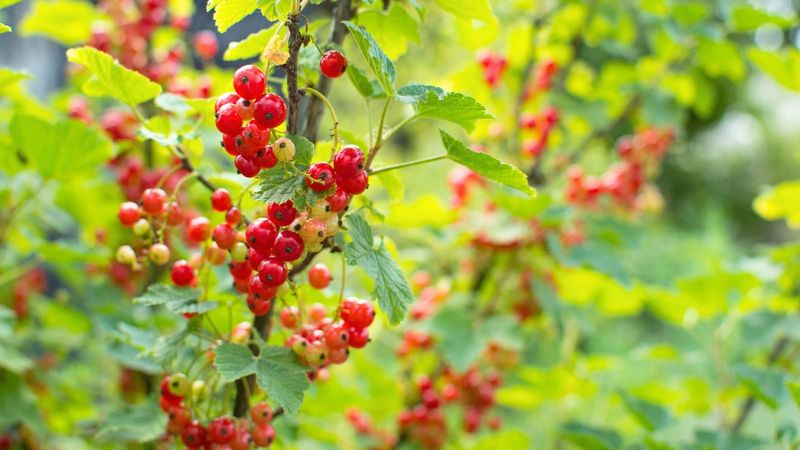
Currants are one of the most underused edible shrubs in home gardens, and that is a bit of a shame because they are genuinely well suited to fence-line planting.
Red, black, and white currants grow into tidy, upright shrubs that reach about four to five feet tall, making them a natural fit for planting in a row along a fence without taking over the space or demanding constant attention.
One of the things that sets currants apart from other fence-line fruit options is their tolerance for partial shade.
While they produce more fruit in full sun, currants can handle a few hours of shade each day, which makes them useful along fences that do not get all-day sun.
In Oregon’s maritime climate, they also handle the wet winters well and rarely need supplemental irrigation once established in a decent soil.
Black currants have a strong, distinctive flavor that many people use for jams, juices, and baked goods. Red and white currants tend to be milder and can be eaten fresh or cooked.
Planting currants about three to four feet apart along a fence creates a productive hedge-like row that fills in over a few seasons. Pruning is straightforward, focusing on removing older wood to encourage fresh, productive growth each year.
Homeowners who want a low-fuss edible plant that delivers real harvests without demanding much in return will find that currants check a lot of the right boxes for a fence-line planting.
7. Gooseberries Fit Neatly Along Tight Fence Lines
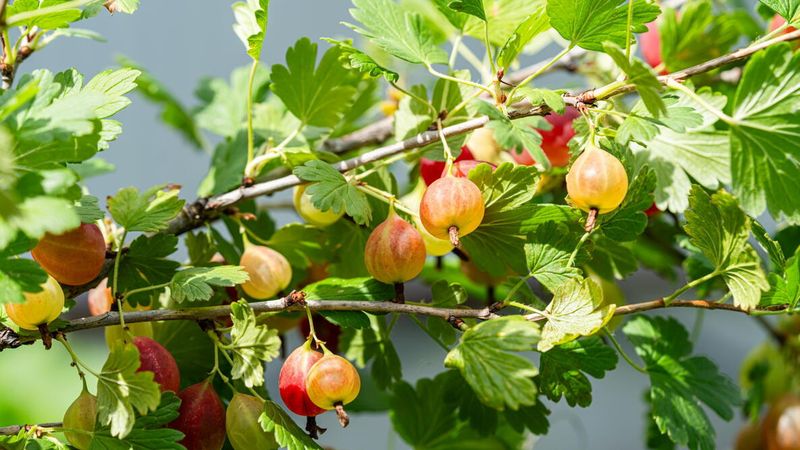
Compact, productive, and surprisingly cold-hardy, gooseberries are a fence-line fruit that deserves more attention in Oregon yards.
These shrubs stay relatively contained, typically reaching three to five feet in height and width, which makes them easy to work with in narrower planting strips where larger plants would quickly run out of room.
Their arching branches look attractive along a fence line, especially when loaded with fruit in early to midsummer.
Gooseberries are close relatives of currants and share many of the same growing preferences. They tolerate partial shade reasonably well, handle wet winters without complaint, and do not require a lot of fussing once they are established.
Like currants, they benefit from annual pruning that removes older canes and encourages vigorous new growth, which tends to carry the heaviest fruit loads.
European gooseberry varieties tend to produce larger, sweeter fruit but can be more susceptible to powdery mildew in Oregon’s humid western valleys.
American varieties and hybrids between the two are often more mildew-resistant and may be a smarter choice for gardens west of the Cascades.
Spacing plants about four feet apart along a fence gives each shrub room to develop its natural shape without crowding its neighbors. The berries ripen in June and July and can be used in pies, jams, and sauces or eaten fresh when fully ripe.
For homeowners looking for a tidy, productive shrub that fits into a tight fence-line border, gooseberries are a genuinely practical option worth considering.