Why Shade Cloth Placement Matters In Arizona Summer Gardens
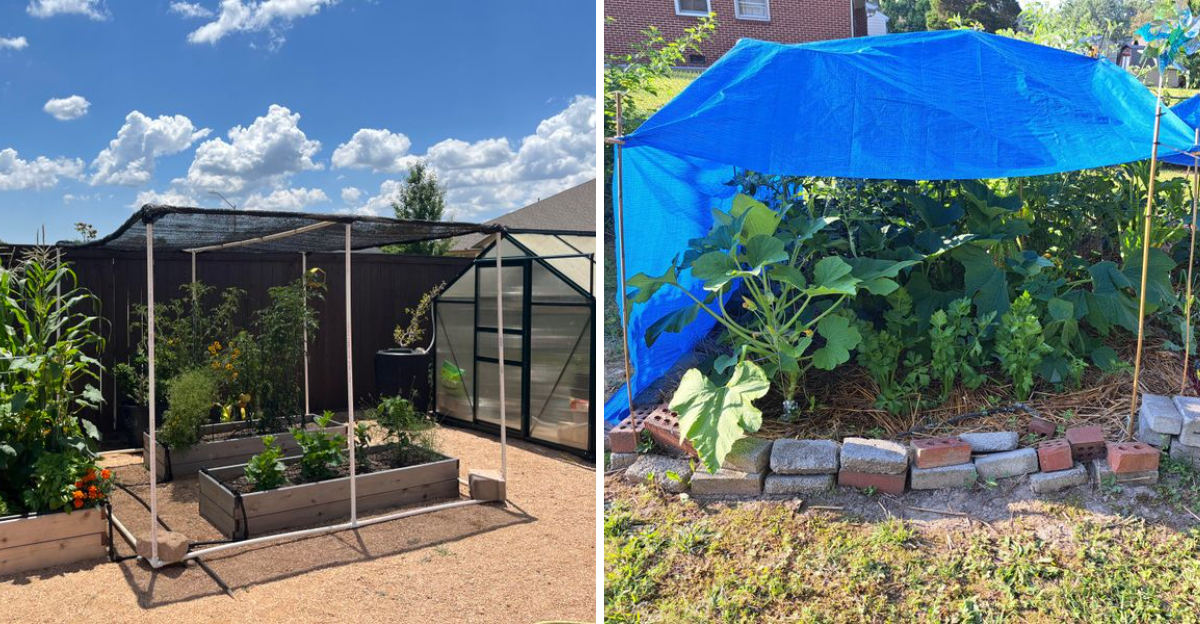
Shade cloth is supposed to be the easy part of Arizona summer gardening. You put it up, the plants stay cool, problem solved.
Except it does not work that way, and almost every gardener who has lost tomatoes in July despite having shade cloth installed knows exactly what that frustration feels like.
The cloth was there. The plants still struggled. Something about the placement was off, and the plants paid for it.
Shade cloth placement in Arizona is genuinely more complicated than it looks, and getting it wrong can actually make heat stress worse rather than better. The angle matters. The height matters. The direction matters.
Even the time of season changes what good placement looks like.
Eight specific placement decisions separate a garden that survives Arizona summer from one that thrives through it. Do you know which ones you are getting right?
1. Afternoon Sun Is Why Western Protection Comes First
Many gardeners assume all sun is created equal. In Arizona, that assumption gets expensive fast. Morning light is gentle and manageable.
The afternoon sun arriving from the west is an entirely different situation. Between 1 p.m. and sunset, that western exposure delivers intense, relentless heat that pushes leaf surface temperatures well above air temperature and does it for hours without relief.
Solar radiation intensity peaks in the afternoon, and plants that have already been managing heat since morning have very little capacity left to absorb that final wave.
Fruiting crops like tomatoes and peppers are especially vulnerable during this window. Blossom drop, sunscald on fruit, and wilting leaves are the visible signs that afternoon sun has won the day.
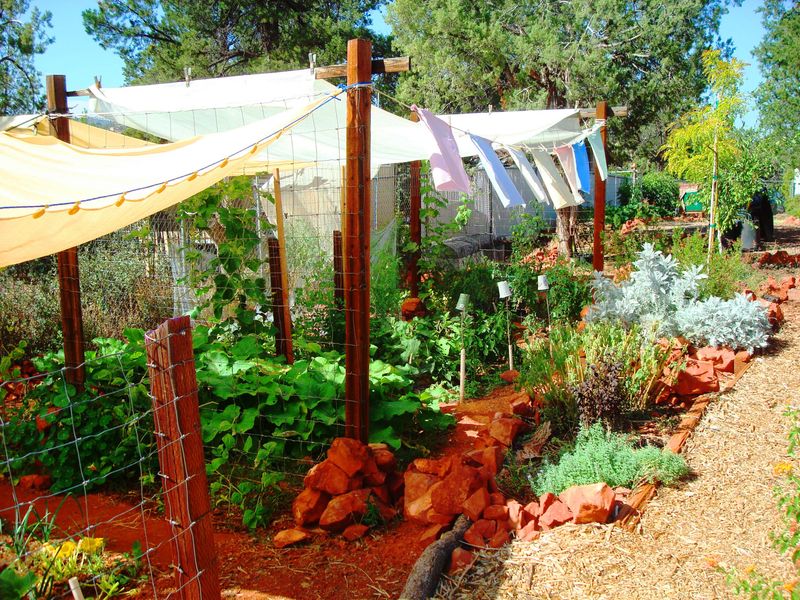
Shade cloth placed on the western side of the garden acts as a direct shield during those critical hours. A 30 to 40 percent cloth angled to intercept late-day sun makes a meaningful difference without cutting out too much of the productive morning light.
Plants benefit from that gentler eastern sun early in the day and receive protection exactly when the heat becomes genuinely threatening.
Check which direction your garden faces before installing anything. Western protection belongs at the top of the priority list for any Arizona summer garden setup.
That single directional decision reduces afternoon stress more than any other placement adjustment available.
The sun has a schedule, and your shade cloth should work around it rather than ignoring it entirely. One well-placed panel on the western edge consistently outperforms a full overhead cover that ignores where the heat is actually coming from.
2. Low Cloth Is Why Heat Gets Trapped Instead Of Blocked
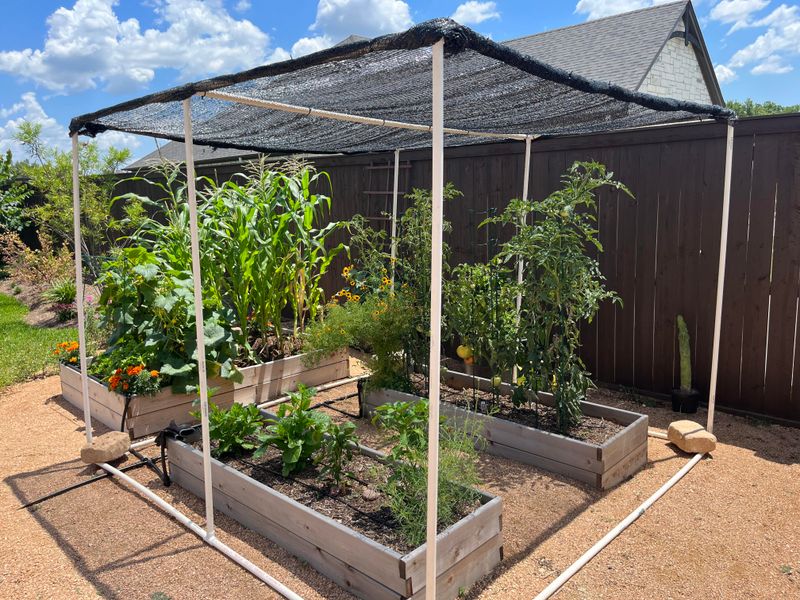
Here is something that surprises most first-time shade cloth users. Hanging the cloth too close to the plants does not protect them from heat.
It concentrates heat right where the plants are trying to breathe, creating conditions that are measurably worse than no shade cloth at all.
Hot air rises, but it needs somewhere to go. A cloth positioned just inches above tomatoes or squash creates a small enclosed zone where that rising heat has nowhere to escape.
Your Arizona Garden Changes Every Week. Your Plan Should Too.
Gardening in Arizona changes quickly throughout the season. Every Friday you’ll receive a simple weekly plan showing exactly what to plant, prune, fertilize, harvest, and protect so you never miss the right timing.
The temperature directly around the plant climbs higher than the surrounding air temperature outside the covered area.
The shade cloth that was supposed to help has essentially become a lid on a pot that is already simmering.
Maintaining at least 12 to 18 inches of clearance above the tallest plant in the bed allows natural convection to function properly.
Warm air rises through that gap, escapes from the sides of the structure, and cooler air moves in from below. That circulation is what actually reduces temperature around the plants rather than just blocking visible sunlight from above.
Stagnant air under a low cloth also raises localized humidity enough to invite fungal issues that Arizona gardeners rarely encounter otherwise.
The structure needs to function like a raised porch roof, not a tent. A porch stays comfortable because air moves freely underneath it. A tent gets suffocating within minutes.
Raise the support poles, use sturdy hoops or a simple frame, and give plants the vertical space they need to actually experience the cooling benefit the cloth is supposed to provide.
3. Too Much Shade Is Why Fruiting Slows Down Mid-Season
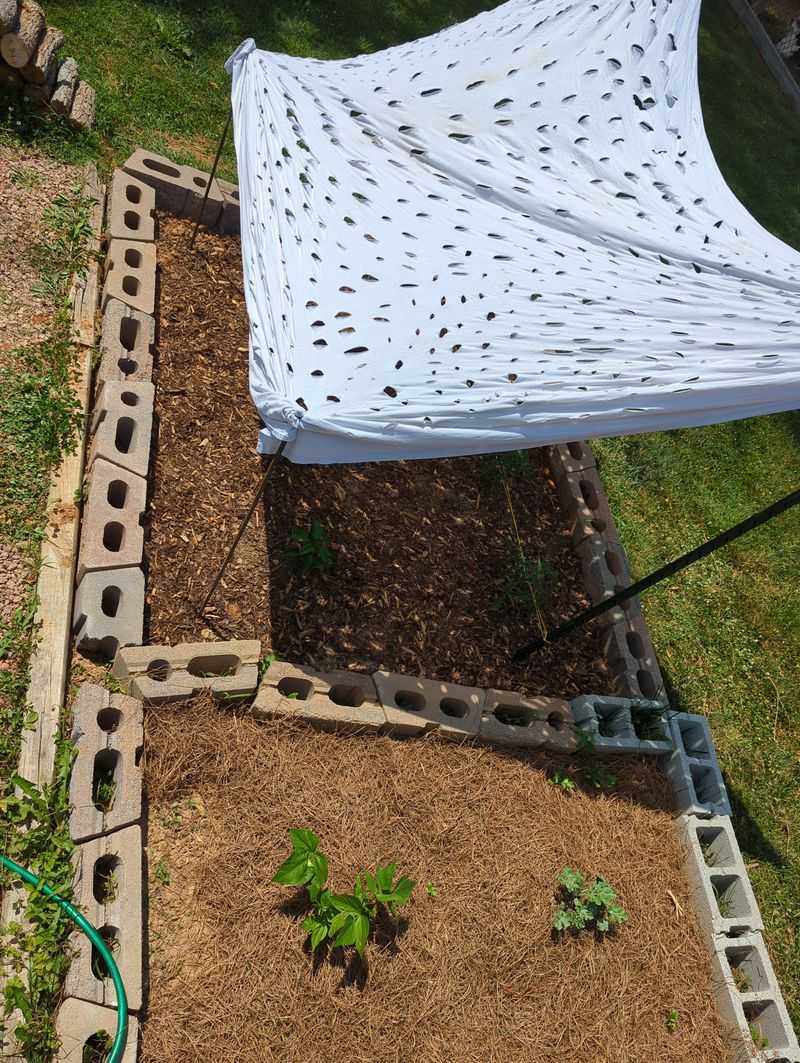
Shade cloth is not a situation where more automatically means better. Vegetables like tomatoes, peppers, eggplant, and squash are fundamentally sun-dependent crops.
They need sufficient light to fuel photosynthesis, which drives flower production and fruit development.
Block too much light consistently and the plant receives a signal to slow its reproductive effort because the light cues it depends on are no longer registering at the right intensity.
Thirty to 40 percent shade cloth suits most fruiting vegetables during Arizona summers. Cloth rated at 50 percent or higher works better for leafy greens and herbs that genuinely prefer lower light conditions.
Heavy cloth over tomatoes protects against sunscald but simultaneously tells the plant that conditions are not favorable for aggressive fruiting.
Fewer blooms, smaller fruit, and noticeably slower overall growth are the visible consequences of that miscalculation.
The balance is genuinely tricky in desert conditions. Enough shade prevents heat stress. Enough light keeps plants productive.
Placement helps resolve this tension more effectively than shade rating alone.
Positioning shade on the west and south sides while leaving the east side more open to morning light gives plants the light they need during the morning hours and the protection they need during the afternoon hours.
A 30 percent cloth overhead combined with a 40 percent panel on the western exposure creates layered protection without tipping the balance too far toward darkness.
Check plants weekly for yellow leaves, poor fruit set, or leggy growth. Any of those signs suggest the shade setup has crossed the line from helpful to limiting. Adjust the coverage, and the garden responds quickly.
4. Airflow Needs Room To Move
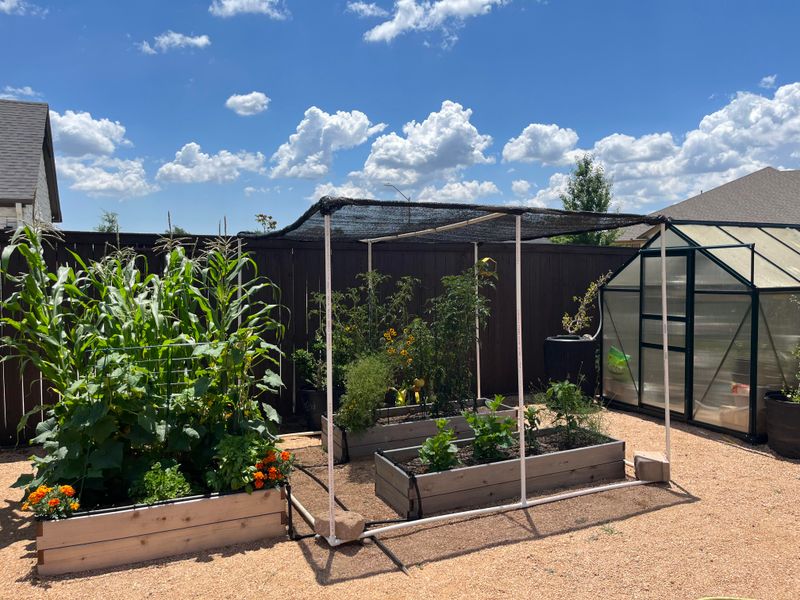
Air movement is one of the most underrated tools in a desert garden, and it is the one most likely to be accidentally eliminated by a poorly designed shade structure.
When air stagnates under a closed shade cloth setup, temperatures underneath can climb higher than the open air temperature outside the covered area.
The shade cloth is present. The plants are still overheating. Airflow is the missing variable.
Plants manage their own temperature through transpiration. Water moves from roots up through the plant and evaporates from leaf surfaces, creating a cooling effect.
When air stops moving around leaves, humidity near the surface rises and transpiration slows significantly. The plant loses its primary self-cooling mechanism and heat stress accelerates regardless of how much shade is overhead.
Leaving the north and east sides of the shade structure open allows prevailing breezes to pass through freely.
That cross-ventilation maintains the airflow plants depend on while the overhead cloth still intercepts direct radiation from above.
Closing all four sides with solid cloth converts the garden bed into a greenhouse on an already hot day, which is a genuinely counterproductive outcome.
A raised shade structure with open sides can drop the temperature around plants by 10 to 15 degrees compared to unshaded ground when airflow is maintained.
That temperature reduction is the entire point of the exercise. Keep the air moving through the structure and the shade cloth performs the way it was intended to perform.
Block the airflow and the cloth becomes part of the problem rather than the solution.
5. Western Edges Need Extra Protection
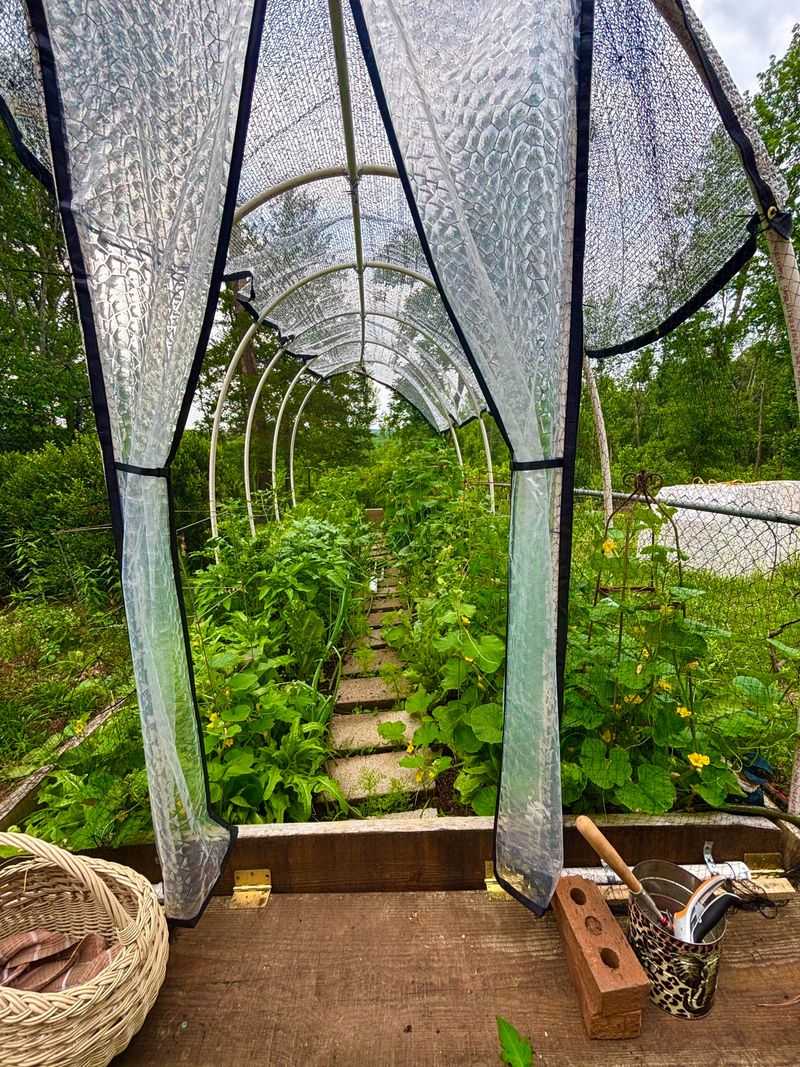
Walk out to an Arizona garden around 4 p.m. on a July afternoon and notice exactly which direction the heat is hitting hardest. It is almost always coming from the west.
The western edge of any garden bed is the most vulnerable spot during the hours when heat stress reaches its daily peak, and it is consistently the edge that receives the least attention when shade structures are being set up.
Late-day sun travels at a lower angle through the atmosphere compared to midday sun. That lower angle means less atmospheric filtering and a more direct impact on plant surfaces.
Combined with the accumulated heat load from a full day of exposure, the western edge takes the most punishing final hours of every summer day.
Sunscald on tomatoes and peppers appears predominantly on the western-facing side of the fruit for exactly this reason.
A vertical shade panel on the western side of the garden, separate from the overhead cloth, creates a two-layer protection system that addresses this specific vulnerability.
A simple frame with 40 percent shade cloth facing west intercepts that low incoming sun before it reaches plant surfaces during the most damaging hours of the afternoon.
T-posts, PVC pipe, or a basic wooden stake frame all handle this job adequately.
The goal is simply to place a physical barrier between the late western sun and the plants that have already been managing heat since morning.
This single addition regularly extends the productive summer harvest by several weeks by protecting the garden edge that absorbs the hardest daily punishment.
6. Young Plants Need Temporary Relief
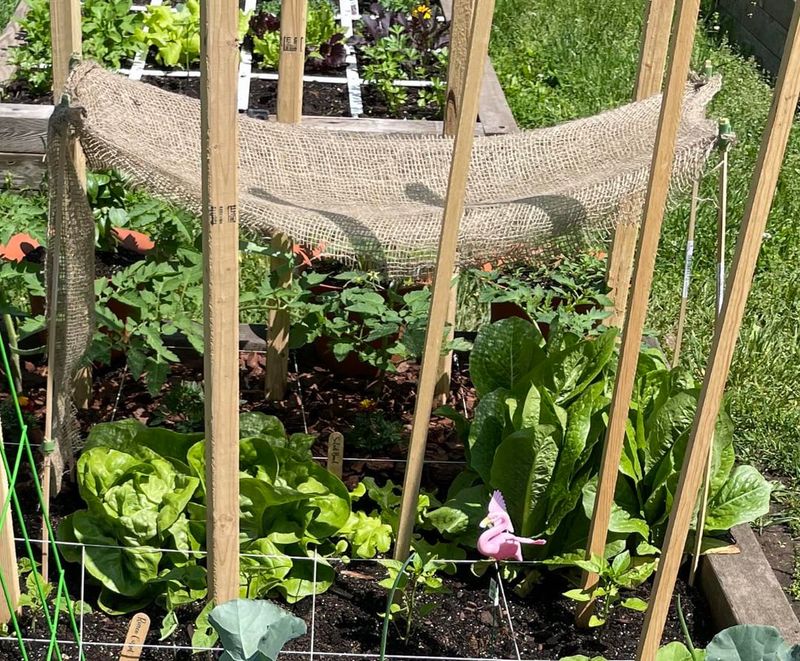
Putting seedlings into an Arizona summer garden requires some courage and a lot of preparation.
Young plants have not yet developed the root systems or leaf mass needed to manage extreme heat independently.
Even heat-tolerant varieties can struggle badly during the first two to three weeks after transplanting when daytime temperatures are already pushing past 100 degrees and the roots have not yet established meaningful contact with deeper soil moisture.
Temporary shade cloth over new transplants creates a protected microclimate that gives roots time to spread and anchor before the plants face full desert exposure.
A lightweight 30 to 40 percent cloth set up on simple wire hoops reduces the immediate heat load enough to prevent transplant shock from becoming a setback that the plant never fully recovers from.
The critical word in that approach is temporary.
Once plants show strong new growth and the roots are clearly established, usually within two to three weeks, gradually reducing or repositioning the shade allows the plants to transition toward normal growing conditions.
Leaving heavy shade on established plants beyond that point limits productivity in the ways covered earlier in this guide.
Having a portable shade setup ready to deploy during unexpected heat spikes is equally valuable for established plants.
A sudden stretch of days above 110 degrees can stress plants that were performing well before the spike arrived.
Rolling out temporary cover during the worst of it and pulling it back when temperatures moderate helps plants recover faster than leaving them fully exposed through an extreme weather event.
Flexibility in shade management consistently outperforms any fixed, permanent setup.
7. Shade Must Shift With The Season
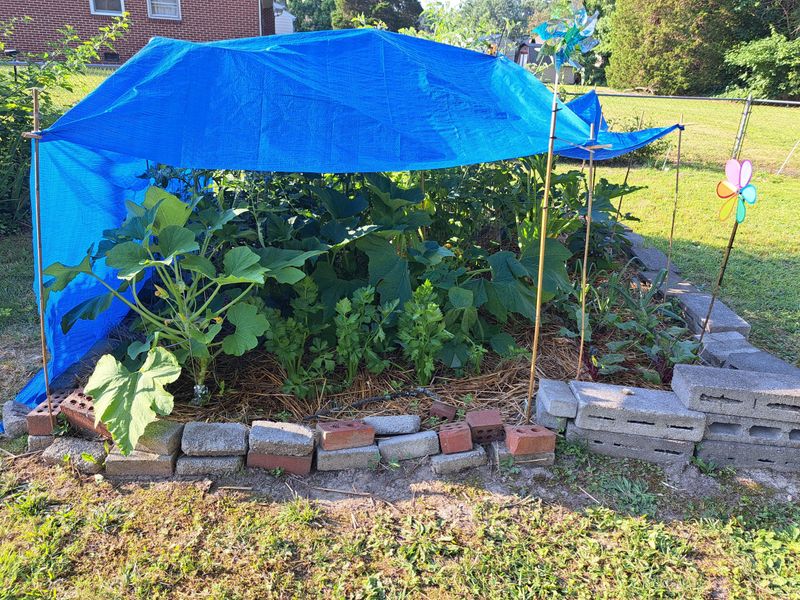
The sun does not maintain the same position throughout an Arizona summer.
A shade cloth setup that worked perfectly in June may be leaving plants exposed by August without the gardener realizing why performance has dropped.
This is one of the most consistently overlooked aspects of shade management across the full summer season.
At the summer solstice in late June, the sun sits nearly directly overhead at midday, which makes overhead shade cloth maximally effective for blocking the most intense radiation.
By August and September, the sun angle drops noticeably lower in the sky. That same overhead cloth no longer intercepts the radiation at the same angle, and western and southern exposures become critically vulnerable again as sunlight begins arriving more horizontally.
Checking the shade structure every three to four weeks through the summer takes very little time and catches these alignment problems before plants start showing stress symptoms.
Walking around the garden at different times of day reveals exactly where direct sun is still reaching plant surfaces despite the installed shade cloth.
Adjusting cloth position, adding a side panel, or shifting the angle of the overhead cover to match the current sun path keeps protection calibrated to actual conditions rather than the conditions that existed when the structure was first installed.
Arizona summers run long and the sun angle changes more than most people notice day to day. A shade setup treated as a permanent installation from June through September is working at reduced effectiveness for at least half of the summer.
Seasonal adjustment is not extra effort. It is the difference between a shade structure that works and one that used to work.