The Tiny Moth Destroying California Citrus Trees That Most Gardeners Miss
Something is messing with citrus trees all across California, and the culprit is so small that most gardeners never actually see it.
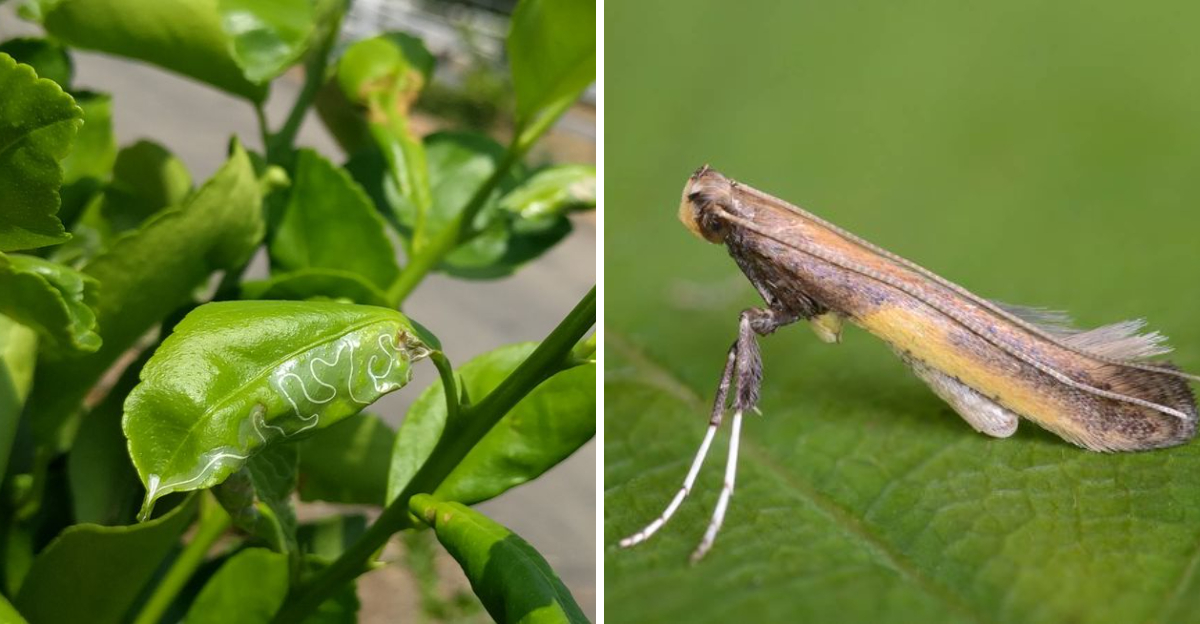
New leaves curling, twisting sideways, pale winding trails etched right into the leaf surface like tiny graffiti, it looks alarming and it looks like a big problem.
The reality is a little more interesting than that. Citrus leafminer is one of those pests that causes damage far more dramatic-looking than it usually is in practice, especially on established backyard lemons, oranges, and mandarins.
The adult moth responsible is barely the size of a fingernail, almost never spotted, and yet somehow leaves behind a signature that stops California gardeners in their tracks every single summer.
Before you reach for the pruning shears or start spraying, it is genuinely worth understanding what is actually going on here.
The answer might surprise you.
1. Citrus Leafminer Hides In New Growth
Fresh citrus flush is where citrus leafminer quietly does its work, tucked inside the tender new leaves before most gardeners ever notice anything is wrong.
The adult female moth lays her eggs on very young, newly emerged leaves, and the tiny larvae hatch and burrow directly into the leaf tissue.
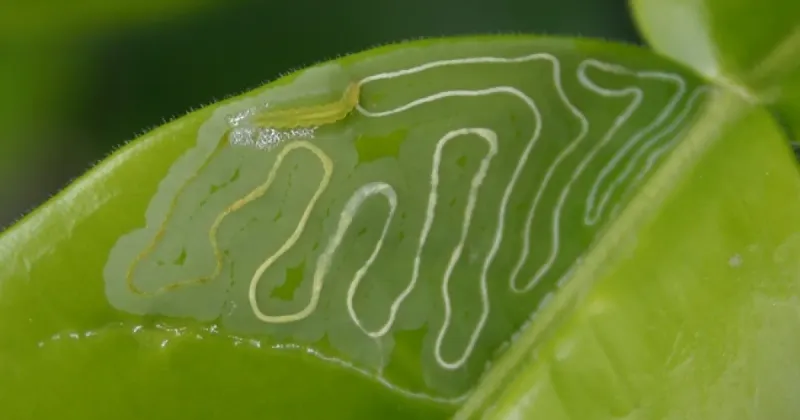
Once inside, they feed between the upper and lower surfaces of the leaf, creating winding tunnels that are invisible from the outside at first.
As the larvae continue feeding, those tunnels become visible as pale, silvery, or whitish trails that snake across the leaf in irregular patterns.
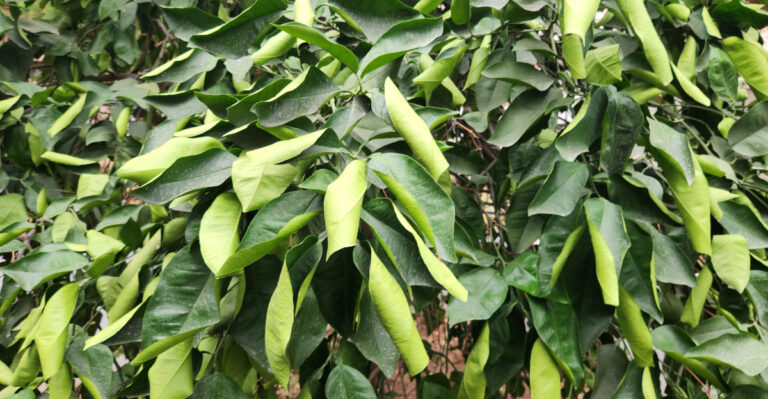
The leaf itself may start to curl or pucker as the damage progresses, which is often when a California gardener finally takes a closer look.
By that point, the larvae are already well established inside the leaf and protected from most surface sprays.
Because citrus leafminer targets only soft new growth, trees that are not actively flushing are generally not at risk at that moment.
The pest cannot feed on older, toughened leaves, which means monitoring tender new growth during active flush periods is the most useful thing a home gardener can do.
In California’s warm inland valleys and even along milder coastal areas, citrus trees can produce several flushes each year, giving leafminer multiple opportunities to move in and start feeding on the freshest, most vulnerable leaves of the season.
2. Tiny Moths Are Easy To Miss
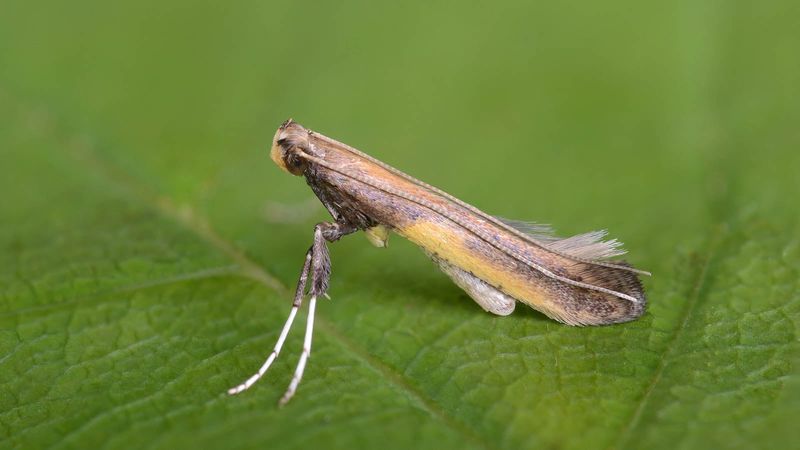
Most California homeowners who grow lemons, oranges, or mandarins in their backyards have probably never actually seen a citrus leafminer adult moth, even if their trees have been dealing with the pest for years.
The adult is genuinely tiny, with a wingspan of roughly four to five millimeters, and its pale silvery wings blend in easily with bright sunlight, leaf surfaces, and general garden backgrounds.
It is primarily active at dawn and dusk, which are times when most gardeners are not out inspecting their trees.
Even experienced gardeners who know to look for the moth often spot the leaf damage long before they ever catch a glimpse of the insect itself.
Your California Garden Changes Every Week. Your Plan Should Too.
Gardening in California changes quickly throughout the season. Every Friday you’ll receive a simple weekly plan showing exactly what to plant, prune, fertilize, harvest, and protect so you never miss the right timing.
The moth does not make noise, does not cluster in obvious groups, and does not leave behind the kind of visible frass or webbing that some other citrus pests produce.
It moves quietly and quickly, making it one of the more elusive pests in a California home garden.
Rather than trying to spot the adult moth directly, most gardeners and home orchard enthusiasts find it more practical to monitor for the signs it leaves behind.
Checking new growth regularly during warm months, especially on young citrus trees and container citrus on patios, gives a much clearer picture of whether leafminer activity is occurring.
Learning to recognize the pale trails and curling leaves is far more reliable than trying to catch a glimpse of the moth itself during its brief active periods.
3. Silvery Trails Reveal The Larvae
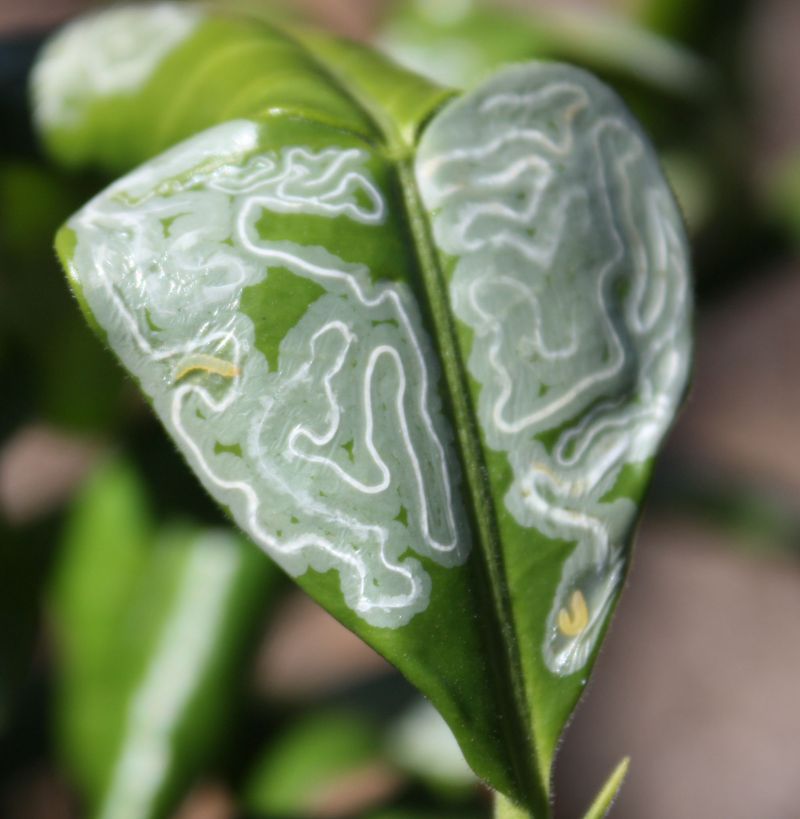
Pale, winding trails etched across new citrus leaves are usually the clearest sign that citrus leafminer larvae are present and actively feeding.
These trails, often called mines, have a distinctive silvery or whitish appearance and follow an irregular, meandering path across the leaf surface.
If you hold an affected leaf up to the light, you can sometimes see a thin dark line running through the center of the mine, which is the frass, or waste, left behind by the feeding larva.
Each mine is created by a single larva working its way through the leaf tissue, and the trail typically widens as the larva grows and consumes more leaf material. On a heavily affected leaf, multiple overlapping mines can make the entire surface look distorted and discolored.
Young leaves with this kind of damage often curl inward along the edges as the tissue tightens and loses its natural flexibility.
Seeing these silvery mines on a California backyard citrus tree during summer is a strong confirmation that citrus leafminer is active. The trails are distinct enough that once a gardener learns to recognize them, they become easy to spot during routine checks.
On young trees, where every leaf matters for building a healthy canopy, the mines can cause noticeable setbacks.
On established trees with plenty of mature foliage, the overall impact is usually much less severe, though the distorted new leaves can still look quite alarming when the infestation is heavy during a flush period.
4. Curled Leaves Show Feeding Damage
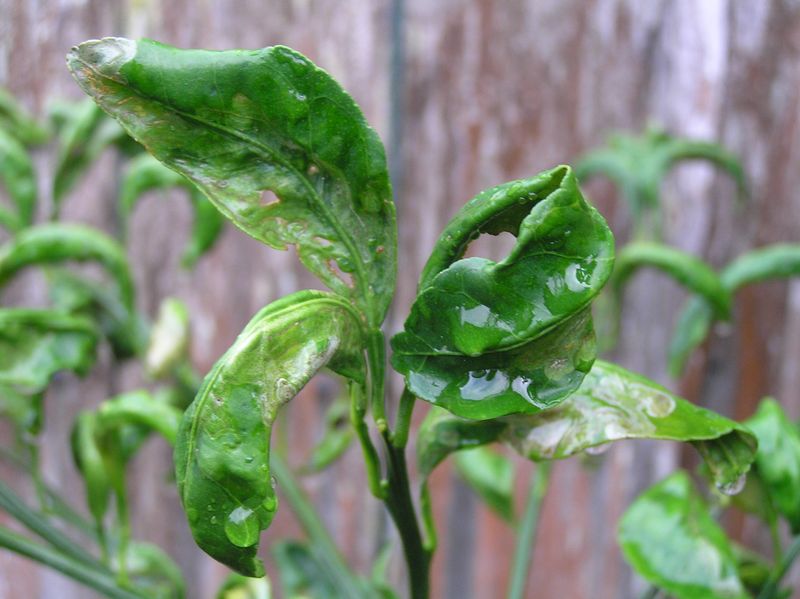
Curled, twisted citrus leaves are one of the most common reasons California gardeners start searching for answers online in late spring and summer.
The curling happens because the larva feeding inside the leaf disrupts the normal development of the leaf tissue on one side, causing the leaf to pucker, roll, or cup as it matures.
In some cases the edges curl tightly inward, and in others the whole leaf takes on a wavy, irregular shape that looks nothing like healthy citrus foliage.
What makes this symptom easy to confuse with other problems is that curled leaves can also be caused by water stress, aphid feeding, or certain nutrient issues. A closer look at the leaf surface usually clears things up quickly.
Citrus leafminer damage shows those characteristic silvery mines running through the curled tissue, which sets it apart from simple drought stress or other common causes of leaf distortion in California home gardens.
Once a leaf has curled due to leafminer feeding, it will not uncurl or return to a flat, healthy shape even after the larva finishes feeding or is no longer present.
The damage to the leaf tissue is permanent, and those affected leaves will stay distorted for their entire life on the tree.
However, the tree itself continues producing new growth, and in most cases a mature California citrus tree will push out fresh, healthy leaves in the next flush cycle, gradually filling the canopy back in with undamaged foliage over time.
5. Young Citrus Trees Are Most Vulnerable
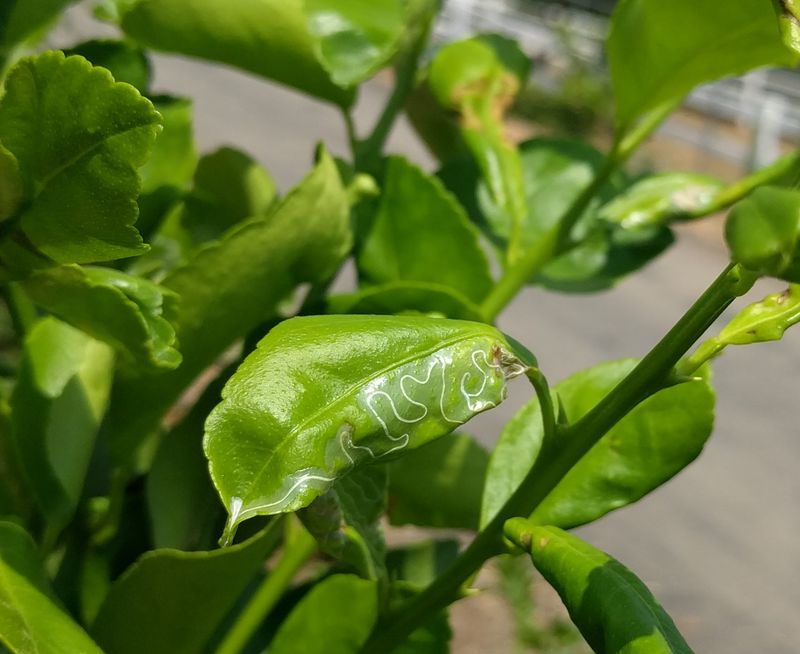
A young citrus tree in its first few years of growth is working hard to build the canopy and root system it needs to become a productive, established tree.
Every flush of new leaves matters for that process, and when citrus leafminer moves in and distorts a significant portion of that new growth, the setback can be more noticeable than it would be on a mature tree with an already well-developed canopy.
Container citrus on California patios and decks, small nursery-grown trees recently planted in garden beds, and young trees in warm inland areas where multiple flushes occur each season are especially worth monitoring closely.
On a young tree, repeated heavy infestations during several consecutive flush periods can slow growth and reduce the tree’s ability to develop strong branching structure.
The damage is rarely catastrophic on its own, but combined with other stressors like inconsistent watering or poor soil conditions, it can put extra pressure on a tree that is still establishing itself.
Protecting new growth on young trees during peak leafminer periods is worth the effort for California home gardeners.
Avoiding practices that trigger excessive new flush during the most vulnerable times, maintaining consistent irrigation, and keeping the tree as healthy and stress-free as possible all contribute to better resistance over time.
A well-cared-for young citrus tree in California can handle leafminer pressure more effectively than one that is already dealing with drought stress, poor drainage, or nutrient imbalances throughout the growing season.
6. Mature Trees Usually Recover Well
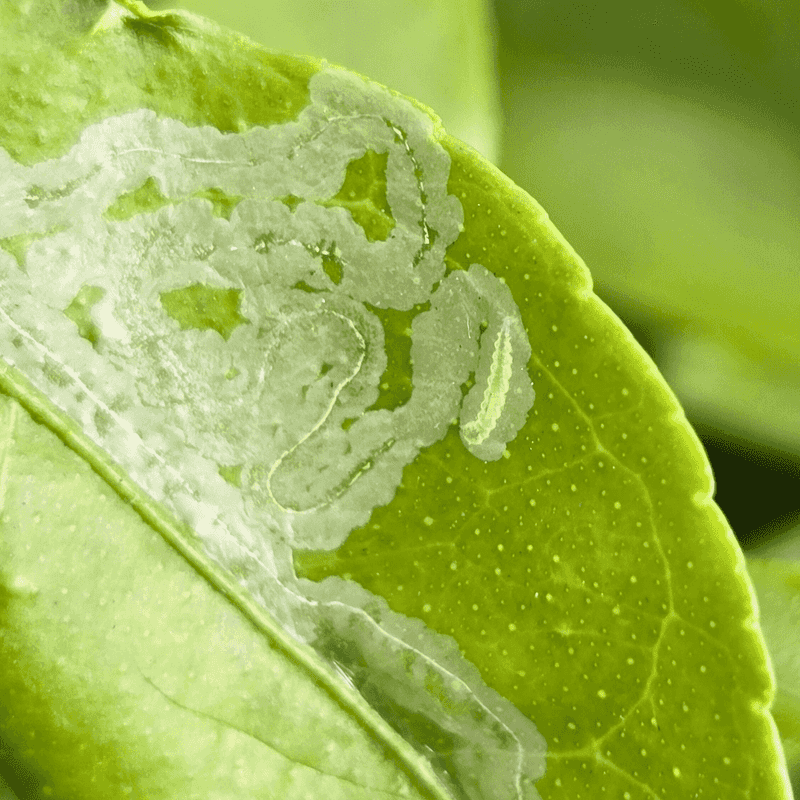
Walking up to a mature backyard lemon tree and noticing a cluster of curled, mined leaves can feel alarming, but established citrus trees in California generally handle citrus leafminer pressure without significant long-term consequences.
A mature tree with a full canopy of older, toughened leaves continues photosynthesizing and producing energy even when some of its newest growth is affected.
The proportion of damaged leaves relative to the total leaf area on a large, established tree is usually quite small.
Mature citrus trees in California backyards, including older navel oranges, established mandarins, and large Meyer lemon trees, have the root systems and stored energy reserves to push through periods of leafminer activity without lasting consequences.
Healthy new growth in subsequent flushes is a realistic outcome for well-maintained trees that are otherwise getting the water, nutrients, and sunlight they need.
The affected leaves may look unsightly for a season, but they do not indicate that the tree is in serious danger or declining in overall health.
Most experienced California citrus growers consider leafminer damage on mature trees to be primarily a cosmetic issue rather than a serious threat.
The best approach for a mature tree showing leafminer signs is to keep it well-watered, appropriately fertilized, and otherwise healthy so it can continue flushing and replacing damaged leaves naturally.
Overreacting with heavy pruning or aggressive chemical treatments on an established tree is usually not necessary and can sometimes cause more disruption than the pest itself.
Patience, observation, and consistent basic care tend to produce the best results for mature California backyard citrus trees dealing with leafminer activity.
7. Summer Flushes Attract More Leafminers
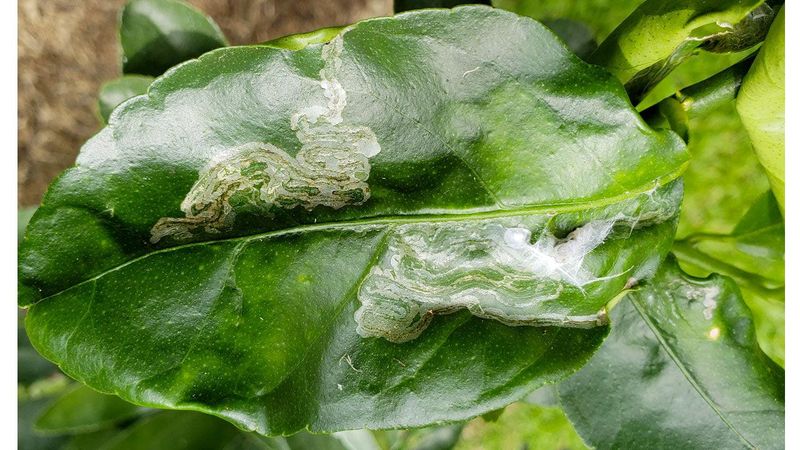
Summer is when citrus leafminer populations tend to build up most noticeably in California, and the reason comes down to timing.
Warm temperatures accelerate the leafminer life cycle, allowing generations to complete more quickly, and summer also coincides with one of the most active flush periods for citrus trees across much of the state.
More tender new growth means more opportunity for adult moths to find suitable egg-laying sites, and the cycle feeds itself through the warmest months.
In California’s warmer inland regions, where summer temperatures regularly climb high, citrus trees may produce several flushes between spring and early fall.
Each new flush brings a fresh wave of soft, young leaves that leafminer moths find highly attractive for egg laying.
Coastal California gardens, where temperatures stay milder and more consistent, may see somewhat different timing and intensity, but leafminer activity during warm months is common across much of the state wherever citrus is grown.
Keeping an eye on new flush development during summer is one of the most practical monitoring strategies a California home gardener can use.
When you notice new leaf buds opening and tender growth emerging from branch tips, that is the moment to start checking for the early signs of leafminer activity.
Catching the first signs of mining on young leaves early in a flush period helps gardeners make more informed decisions about any intervention that may be warranted.
Discovering the damage only after the larvae have finished feeding and the leaves have already curled and hardened leaves very few practical options at that point.
8. Pruning Can Make The Problem Worse
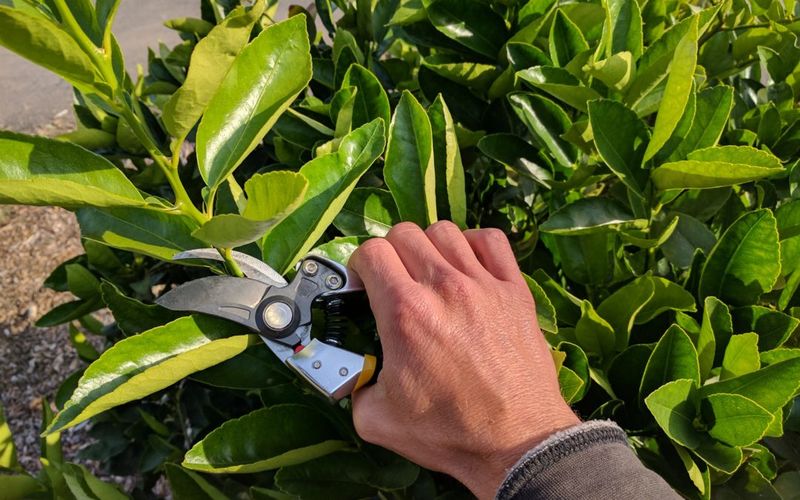
Reaching for pruning shears is a natural reaction when you spot a cluster of curled, distorted leaves on a California citrus tree. The damage looks bad, and removing it feels like the right response.
However, pruning off affected growth during an active flush period can actually backfire by stimulating the tree to push out more new growth right away, and that fresh flush becomes a new target for adult citrus leafminer moths looking for egg-laying sites.
Repeated pruning cycles that keep triggering new tender growth can end up extending the period of vulnerability rather than reducing it.
On young trees especially, this kind of back-and-forth between pruning and re-flushing can keep the tree stuck in a cycle of producing soft new leaves that leafminer continues to find and use.
The tree spends energy on regrowth that might otherwise go toward root development and overall establishment during a critical early period.
A more measured approach works better in most California home garden situations. Allowing the current flush to mature and harden off naturally reduces the attractiveness of the foliage to egg-laying moths, since leafminer cannot use older, toughened leaves.
If pruning is genuinely needed for shaping or structural reasons, timing it for periods when the tree is not actively flushing can help reduce the risk of triggering a vulnerable new flush at the wrong time.
Thoughtful pruning decisions, rather than reactive ones, tend to serve California citrus trees much better over the long run.