Why Hawks Keep Returning To Colorado Homes And What They Are Looking For
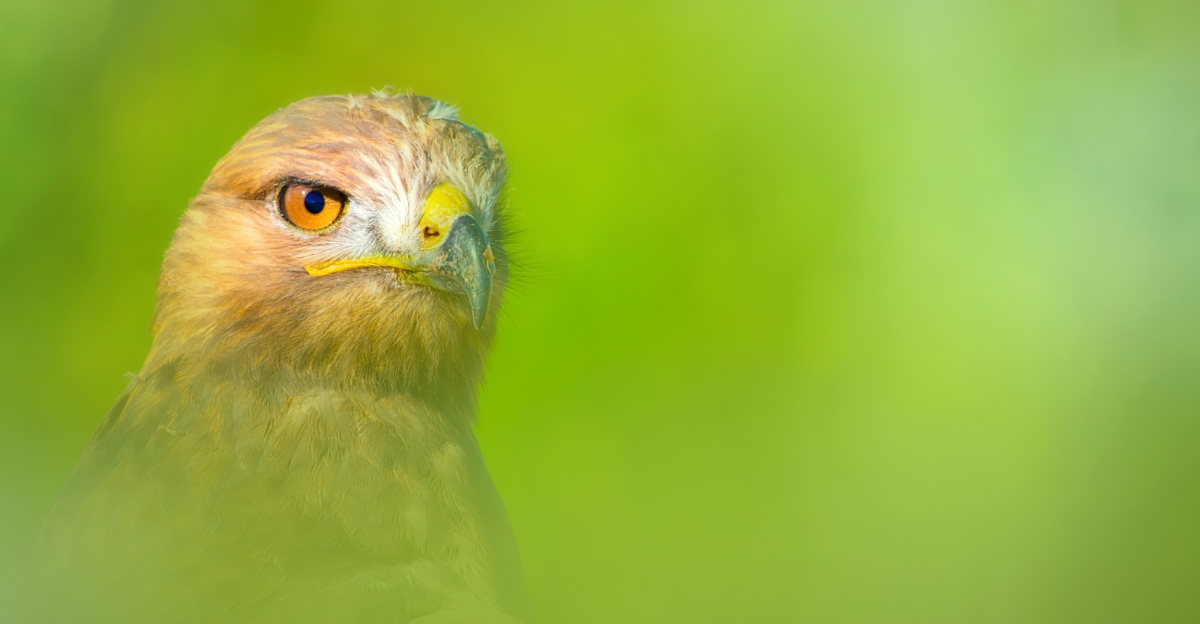
You notice it before the rest of the neighborhood wakes up. Something large and still, posted up on the corner of your fence like a security guard clocking in for a shift.
A hawk, watching and waiting. Colorado backyards sit inside some of North America’s richest raptor territory, and these birds did not end up in your yard by accident.
Every return visit has a reason behind it. Your grass hides voles, your feeders pull in sparrows, and that tall oak makes the perfect launch pad.
Hawks are precision hunters who read a landscape the way a chess player reads a board, and once your yard checked enough boxes, it got added to the route.
Understanding why they keep showing up is the first step toward knowing what to do about it. That might mean protecting your small pets, adjusting your feeders, or simply coexisting more thoughtfully.
Or it might mean stepping back and watching one of Colorado’s most striking predators do exactly what it was built to do.
Warm Thermals Rising From Sun-Heated Rooftops Aid Effortless Gliding
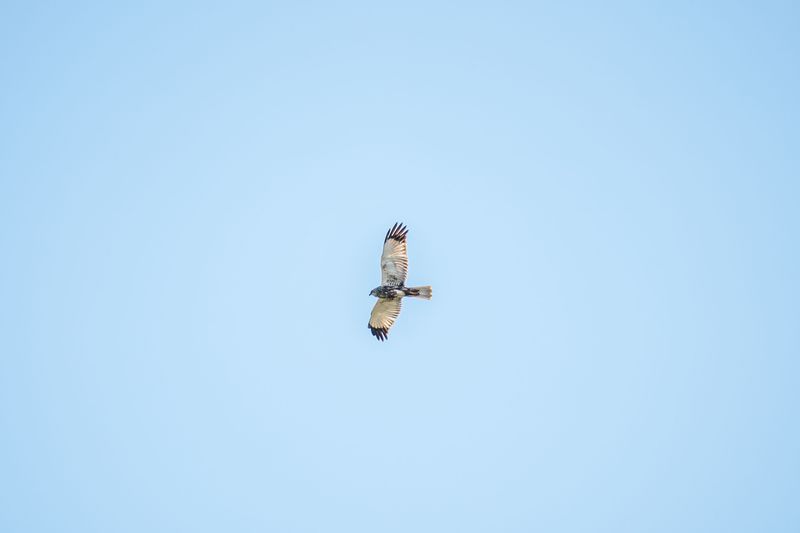
Picture a hawk spreading its wings without flapping once, climbing higher and higher above your neighborhood. That is the magic of thermals, and your roof is helping create them.
Rooftops absorb massive amounts of solar energy throughout the day. When that heat radiates upward, it creates invisible columns of rising warm air called thermals.
Hawks are expert thermal riders. They circle lazily over neighborhoods not because they are confused, but because they are conserving energy in the smartest way possible.
Colorado’s intense sunshine makes rooftops especially powerful thermal generators. Dark shingles, flat surfaces, and sun-facing slopes push heat upward faster than open fields do.
A hawk riding thermals above your home is essentially getting a free elevator ride. It costs almost no energy to climb hundreds of feet into the sky.
Once high enough, hawks can glide long distances while scanning the ground below. Your house becomes a launch pad for their entire hunting territory.
Neighborhoods with clustered rooftops create stacked thermal zones that hawks learn to navigate over time. They return again and again because the lift is predictable and reliable.
If you notice hawks circling your block on warm afternoons, you are watching a masterclass in aerodynamic efficiency. They have figured out exactly where the best lift is, and your home is on that map.
Scanning Below For Any Prey Movement
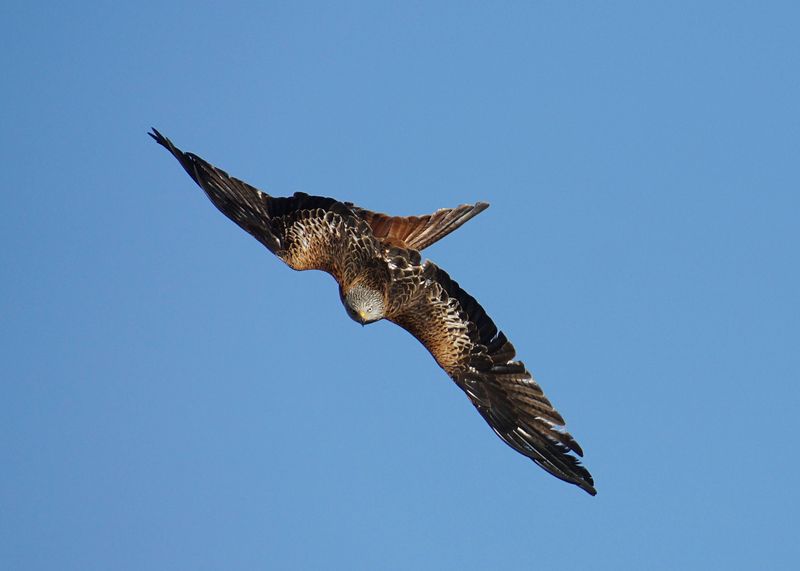
Hawks have vision that far exceeds human eyesight in both range and detail. They can spot a mouse from over 100 feet in the air without even trying hard.
When a hawk circles above your yard, it is running a full visual sweep of everything below. Grass blades shifting, a vole darting under a leaf, a sparrow hopping along the ground.
Nothing escapes their gaze. Their eyes contain more photoreceptor cells than human eyes do. This means they detect motion at speeds and distances that would be completely invisible to us.
Your Colorado Garden Changes Every Week. Your Plan Should Too.
Gardening in Colorado changes quickly throughout the season. Every Friday you’ll receive a simple weekly plan showing exactly what to plant, prune, fertilize, harvest, and protect so you never miss the right timing.
Hawks also see in ultraviolet light, which helps them track rodent urine trails across lawns. Your tidy green grass might actually be lit up with scent highways only hawks can see.
Why hawks keep returning to Colorado homes often comes down to one simple thing: the yard keeps moving. Busy yards with birds, squirrels, and garden critters are basically a live buffet from above.
Hawks patrol the same visual routes repeatedly because memory plays a huge role in their hunting. If prey appeared near your bird feeder last Tuesday, they will check that spot again this week.
They hover, circle, and tilt their heads to get better angles on suspicious movement. That intense stare you sometimes catch from a perched hawk is not aggression. It is focus.
Once you realize how thoroughly they are scanning your space, you will never look at your backyard the same way again.
Open Suburban Landscapes Offer Clear Hunting Sightlines
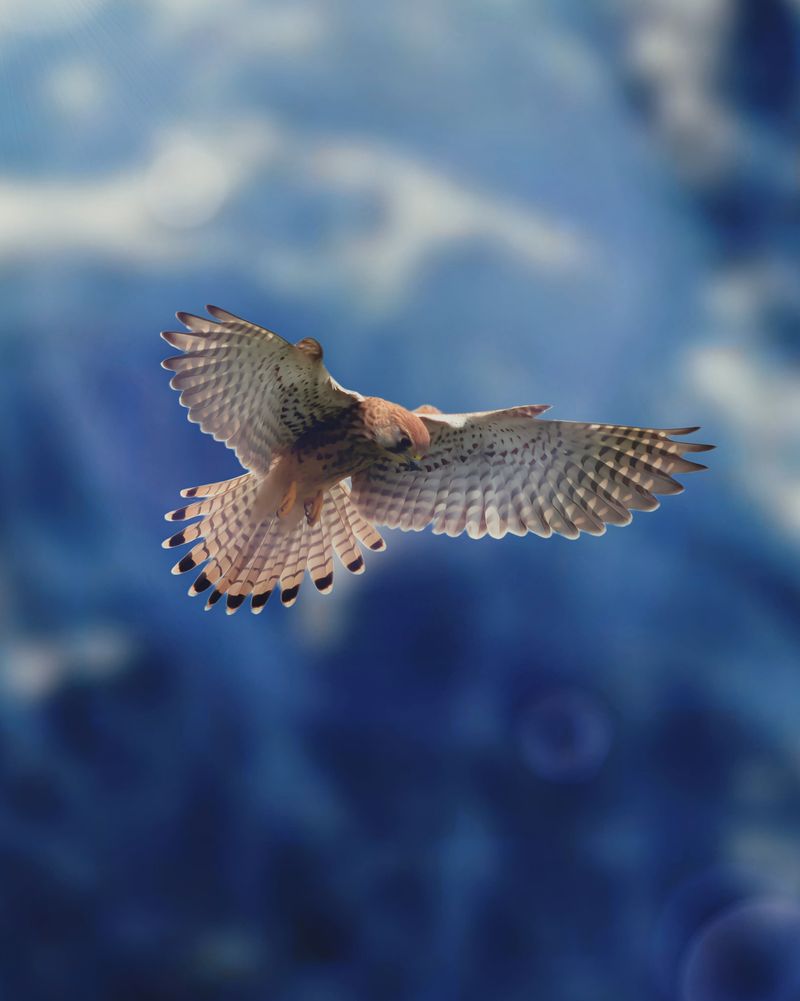
Hawks are not fans of thick forest interiors. They need open space to hunt effectively, and suburban Colorado gives them exactly that.
Mowed lawns, wide driveways, and trimmed hedges create the kind of unobstructed sight corridors that hawks absolutely love. There are few surprises and plenty of visibility.
In dense forests, prey can vanish under brush in an instant. But in a typical suburban yard, a fleeing mouse has nowhere to hide before a hawk closes the gap.
Colorado’s Front Range neighborhoods are especially appealing because they blend open grassland edges with residential development. That mix creates ideal hunting terrain for multiple hawk species.
Cooper’s hawks and sharp-shinned hawks prefer navigating between trees and open patches. They use fences, eaves, and power lines as perch points between quick pursuit flights.
Red-tailed hawks prefer wider open zones and often patrol from above, dropping steeply onto prey spotted from altitude. Your open backyard is a perfect drop zone for them.
Suburban landscapes also tend to have consistent prey populations. Rodents, birds, and rabbits thrive where humans leave food scraps, birdseed, and garden vegetation behind.
Hawks have adapted remarkably well to human-modified landscapes over the past few decades. They figured out that neighborhoods are easier hunting grounds than untouched wilderness in many cases.
Your open lawn is not just a yard. To a hawk, it is an open, well-stocked hunting ground that checks every box.
Patrolling Their Established Territorial Boundaries
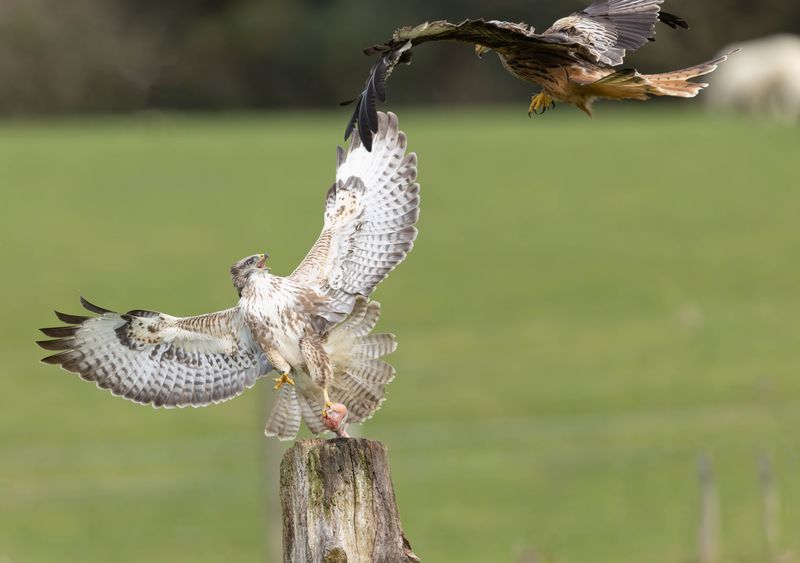
Hawks are creatures of habit, and your neighborhood might fall squarely inside one hawk’s claimed territory. Once claimed, that territory gets defended and revisited constantly.
A single red-tailed hawk can maintain a territory ranging from a few blocks to several square miles. They learn every corner of that space with remarkable precision.
Territorial patrols are not random. Hawks follow established flight paths and perch at specific spots to announce their presence to rival birds. Your rooftop or tall tree might be a regular checkpoint.
When you see the same hawk returning day after day, you are likely watching a territorial patrol in action. That bird has mentally mapped your property as part of its home range.
Mated pairs often patrol together during nesting season. If two hawks circle your yard, you may be right beneath an active nesting territory being defended with serious dedication.
Hawks will chase off other raptors, crows, and even larger birds that cross into their zone. That dramatic aerial chase you witnessed above your driveway was a boundary enforcement moment.
Why hawks keep returning to Colorado homes is partly because territory means survival. A well-maintained territory ensures consistent food access and safe nesting space.
Losing even a small section of territory can mean losing reliable prey access. So hawks patrol repeatedly, reinforcing their claim through presence and persistence.
Your home might be a landmark in a hawk’s mental map. To them, it is not your yard. It is their patrol route.
Mice And Voles Hiding In Garden Mulch
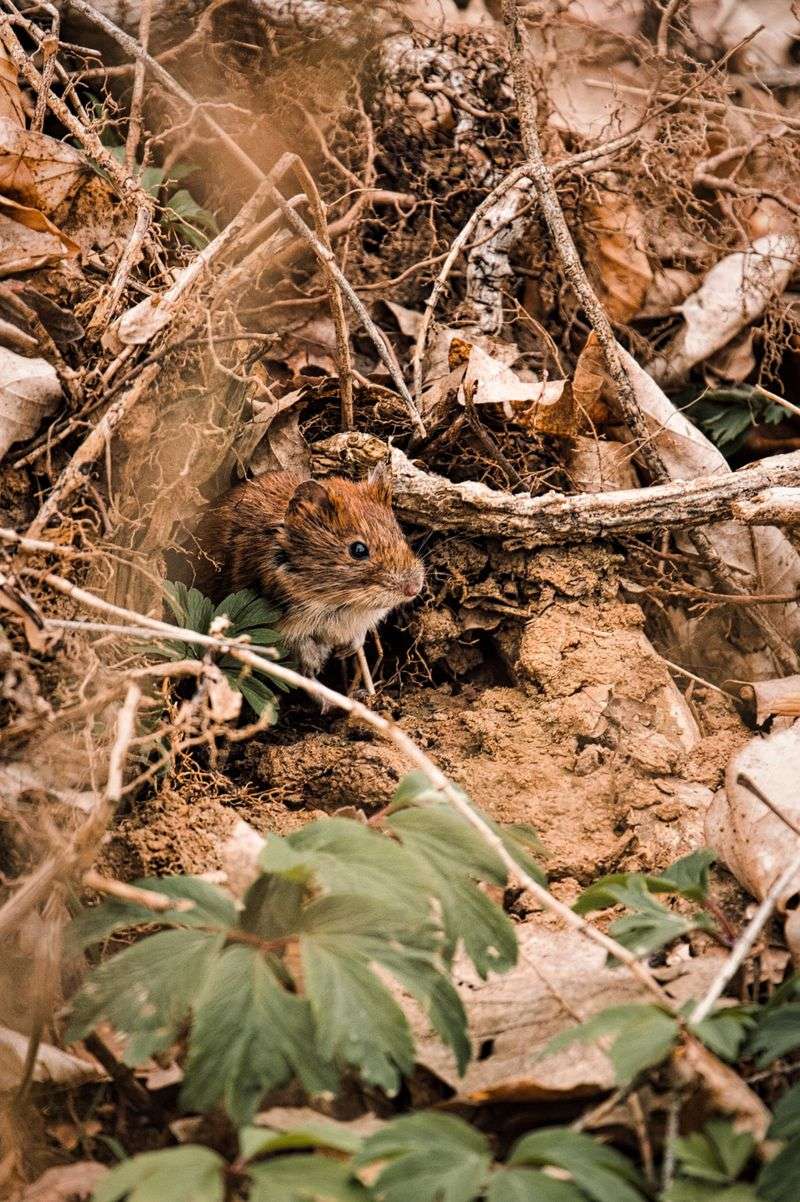
That thick layer of wood chip mulch in your garden bed looks beautiful to you. To a hawk, it looks like a reliable food source with prey concealed just beneath the surface.
Mice and voles absolutely love mulch. It keeps them warm, hidden, and close to plant roots they feed on.
A well-mulched garden can shelter a surprising number of small rodents without any obvious signs.
Hawks know this. They have learned to associate mulched garden beds with high rodent activity.
Once a hawk scores a meal from your garden, it will return regularly to check the same spot.
Voles in particular create runway systems just beneath mulch layers. These tunnel networks connect feeding spots and shelter zones across your entire garden bed.
A hawk perching near your garden is not being random. It is staking out a known hunting location based on past success or observed movement patterns from above.
Colorado’s cool evenings push rodents to stay active under the insulating warmth of mulch. This makes garden beds productive hunting spots even in shoulder seasons like fall and early spring.
Reducing mulch depth or switching to gravel in certain areas can make your garden less rodent-friendly. Fewer rodents mean fewer hawk visits if that is your goal.
But honestly, watching a hawk make a precise strike on a vole in your garden bed is one of the more remarkable things your backyard has to offer. Some homeowners choose to enjoy the show rather than stop it.
Songbirds Gathered Around Backyard Feeders
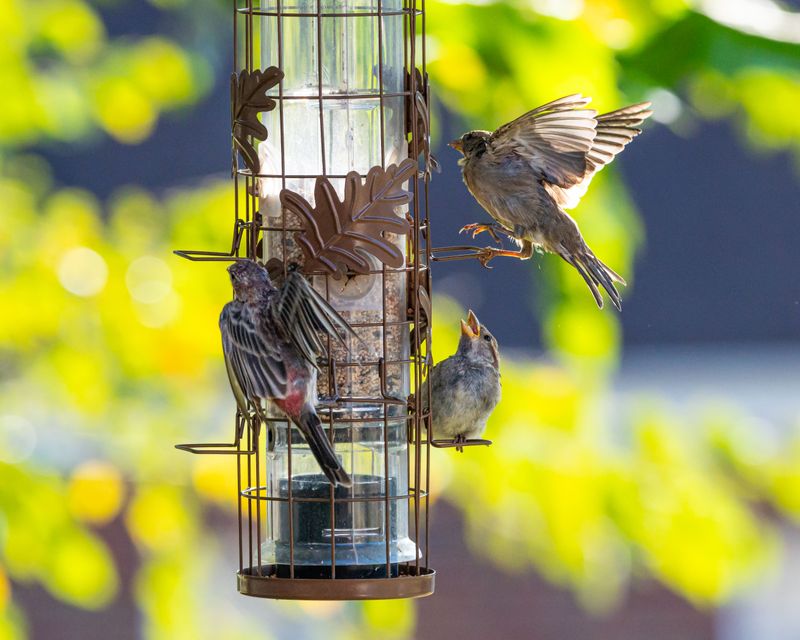
Bird feeders are meant to attract beautiful songbirds. But they also attract hawks, and that is a trade-off every feeder owner eventually has to think about.
When you hang a feeder, you are essentially ringing a dinner bell for two groups. Small birds come for the seed. Hawks come for the small birds.
Sharp-shinned hawks and Cooper’s hawks are the main culprits at feeders. They specialize in catching small birds mid-flight with sudden bursts of speed and precise aerial agility.
A hawk will often perch quietly nearby for several minutes before striking. It watches the feeder activity, identifies a target, and then launches with remarkable speed from cover.
Feeder strikes happen so fast that most homeowners only notice after hearing the thud of impact or finding a pile of feathers nearby. Hawks are that efficient.
The presence of dense shrubs or trees near your feeder gives hawks ideal ambush cover. Moving feeders away from heavy cover can give songbirds a few extra seconds to escape.
You can also temporarily take feeders down for a week or two if a hawk has established a regular hunting pattern around them.
Hawks will often move on when the prey disperses, though persistent individuals may take longer to redirect elsewhere.
Feeders are a joy to maintain, and hawk visits are a natural part of that ecosystem. Accepting that reality makes backyard birding a richer, more honest experience overall.
Rabbits Sheltering Near Fences And Shrubs
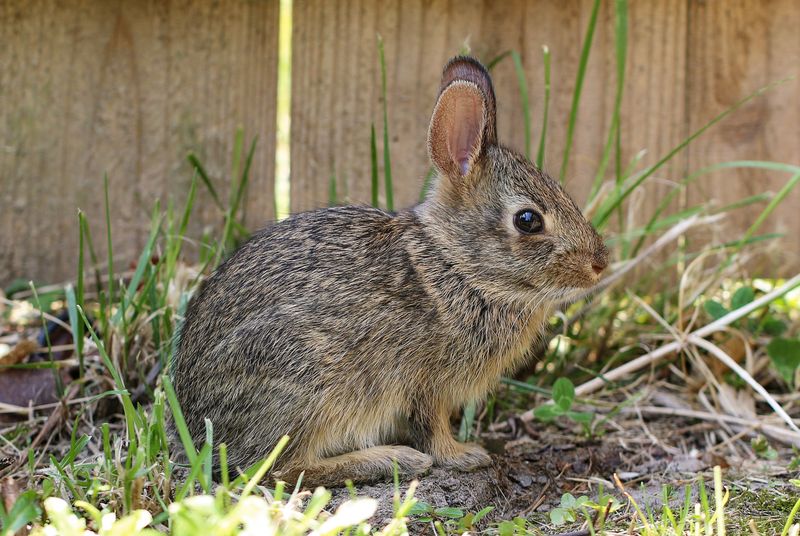
Cottontail rabbits are everywhere in Colorado neighborhoods, and hawks know exactly where to find them. Fence lines and dense shrubs are their favorite hiding spots.
Rabbits instinctively press themselves against solid structures when they feel threatened. Fences, garden walls, and thick hedge bases all serve as perceived safety zones for them.
Hawks, however, have figured out this behavior pattern. They often approach fence lines at low angles, using the fence itself as a guide rail toward a crouching rabbit below.
Larger hawks like red-tails and ferruginous hawks are the ones most likely to target adult rabbits. Smaller hawks tend to focus on juvenile rabbits or birds instead.
Rabbits are most vulnerable at dawn and dusk when they come out to feed on lawn grass and garden plants. These low-light periods also coincide with peak hawk hunting activity.
If you have noticed a hawk spending time near your fence line repeatedly, there is a good chance rabbits have been spotted or caught there before. Hawks are excellent at remembering productive locations.
Dense ornamental shrubs like junipers and arborvitae create rabbit refuges that hawks circle but cannot easily penetrate. Rabbits know this and use these plants as emergency escape routes.
Watching a hawk attempt a fence-line approach on a rabbit is one of the more unexpected scenes your backyard can deliver.
The rabbit usually wins when it has enough warning, darting into a shrub just before impact. Nature plays out in your yard every day, and the hawk always returns hoping today is its lucky day.
Squirrels Darting Across Open Lawns
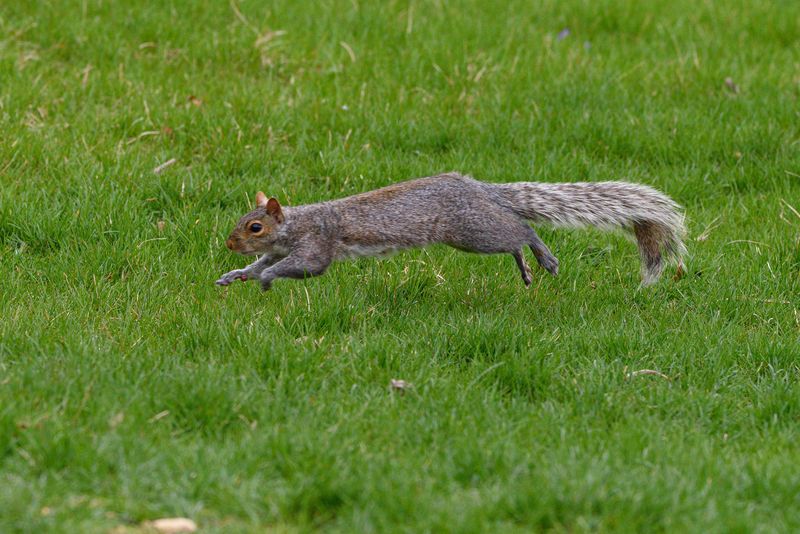
Squirrels are bold, fast, and unpredictable. They are also one of the most common prey items hawks encounter in suburban Colorado neighborhoods.
When a squirrel bolts across an open lawn, it triggers an instinctive response in any nearby hawk. Movement across open ground is a hard signal to ignore for a bird built to hunt.
Red-tailed hawks are the most likely candidates for squirrel hunting in open yards. Their size and power make them capable of taking on adult squirrels without much trouble.
Squirrels are not easy prey, though. They are agile, loud, and surprisingly aware of aerial threats.
They often freeze, scan the sky, and then sprint in unpredictable zigzag patterns to avoid capture.
Hawks that specialize in squirrel hunting tend to approach from behind trees or structures to cut off the squirrel’s escape route. Patience and positioning matter more than raw speed in these chases.
Open lawns give hawks a significant advantage. A squirrel caught in the middle of a wide yard has fewer escape options than one near dense cover.
This is why hawks spend time perched at the edges of your yard rather than the center. They are positioning themselves for the best angle on any squirrel that ventures too far from tree cover.
Understanding why hawks keep returning to Colorado homes often starts with noticing your squirrel population. More squirrels almost always means more hawk visits following close behind.