The Pennsylvania Garden Watering Mistakes That Make Drought Stress Significantly Worse
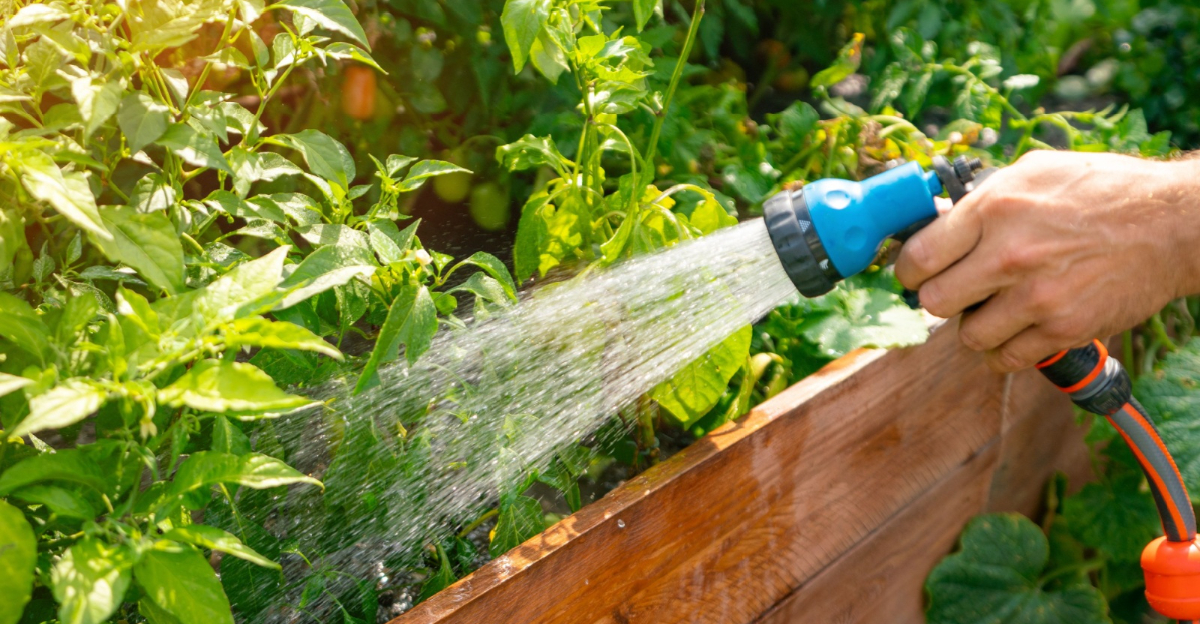
Watering the garden sounds straightforward until you realize that doing it the wrong way can leave your plants thirstier than if you had not bothered at all.
That is a genuinely uncomfortable truth for a lot of Pennsylvania gardeners, especially during the dry stretches that summer tends to deliver without much warning.
The problem is rarely a lack of effort. Most gardeners are out there with the hose regularly, sometimes more than they need to be.
The real issue is the how. Shallow watering, midday spraying, fixed schedules that ignore actual soil conditions, bare soil baking in the sun, containers getting missed in the rush.
These habits add up quietly, encouraging roots to stay near the surface and leaving the root zone dry even when the top of the soil looks perfectly damp. Small adjustments here can make a surprisingly big difference.
1. Watering Too Shallowly
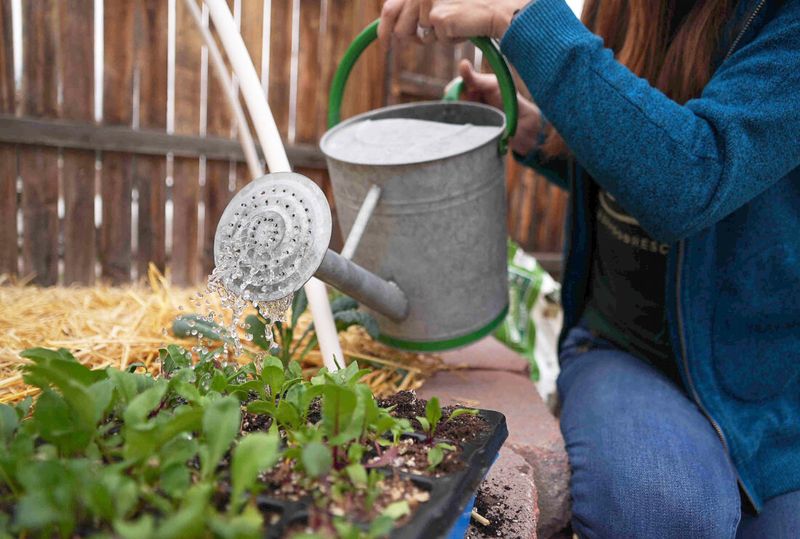
Dry mulch sitting over soil that barely got damp below the surface is one of the most common signs of shallow watering in Pennsylvania gardens.
A quick pass with the hose might wet the top inch or two, but plant roots often grow several inches deeper, especially in established beds and borders.
When only the surface gets wet, roots have little reason to grow downward, and the shallow root zone dries out quickly between waterings.
During dry spells, this pattern can keep plants in a cycle of mild stress even when you water regularly. The soil surface may look moist right after watering, but check a few inches down and it can feel completely dry.
A simple way to check is to push a finger or a screwdriver into the soil after watering to see how far the moisture actually reached.
Slower, longer watering sessions tend to push moisture deeper into the soil profile, giving roots a better chance to access it.
In Pennsylvania clay soils, water moves more slowly, so giving it extra time to soak in rather than rushing through the bed can make a noticeable difference.
Watering deeply a few times a week is often more useful than light watering every day during hot, dry stretches.
2. Watering In The Heat Of The Day
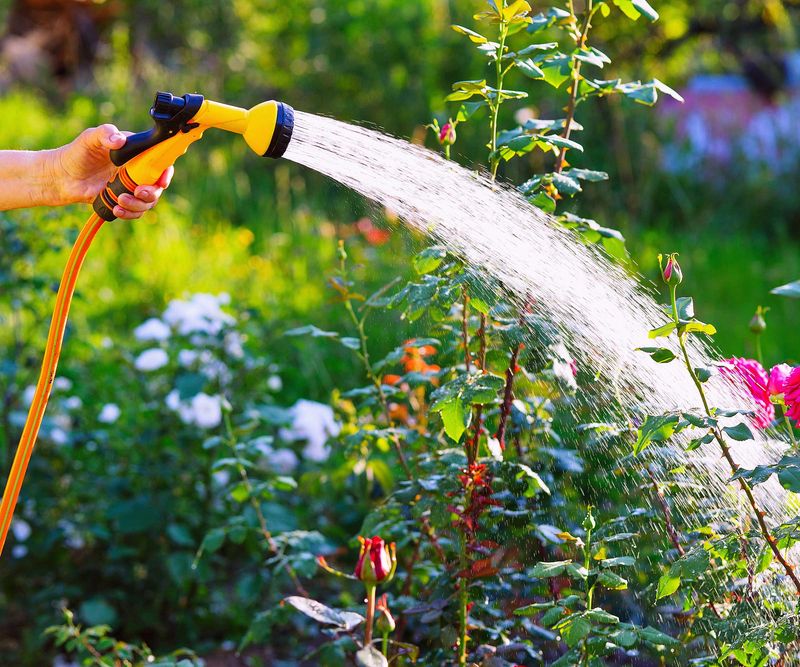
Hot afternoon sun beating down on a Pennsylvania garden while the sprinkler runs might seem productive, but a good portion of that water never reaches the root zone.
During the hottest and brightest parts of a summer day, water on the soil surface can evaporate before it soaks in, and water on leaves dries off quickly without doing much good for the plant at all.
Watering during a hot, windy afternoon also means the water is more likely to drift away or evaporate off hard surfaces before plants can use it.
This does not mean one midday watering will cause a crisis, but making it a regular habit during Pennsylvania dry spells can mean the root zone stays drier than it should between sessions.
Morning watering is widely recommended because temperatures are cooler, winds tend to be calmer, and soil has more time to absorb moisture before the heat of the day kicks in.
Your Pennsylvania Garden Changes Every Week. Your Plan Should Too.
Gardening in Pennsylvania changes quickly throughout the season. Every Friday you’ll receive a simple weekly plan showing exactly what to plant, prune, fertilize, harvest, and protect so you never miss the right timing.
Watering in the early morning also gives any water that lands on leaves time to dry before evening, which can reduce the chance of fungal issues settling in.
If morning watering is not possible, late afternoon or early evening is generally a better option than the peak heat window between late morning and mid-afternoon in Pennsylvania summers.
3. Spraying Leaves Instead Of Soaking The Soil
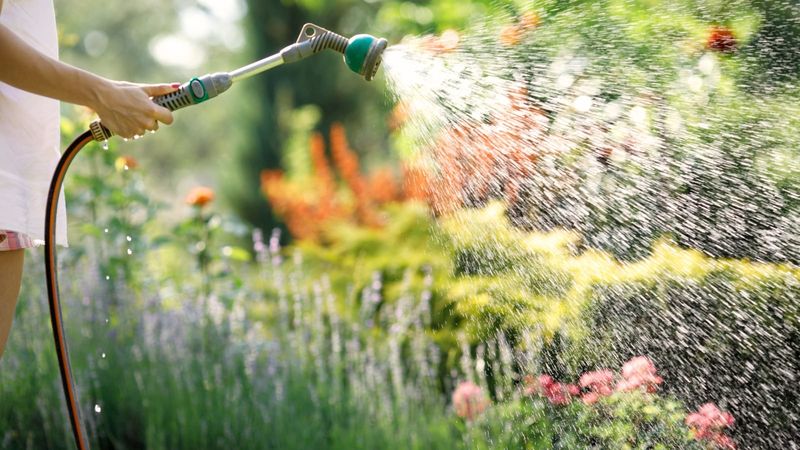
Vegetable leaves after a quick spray can look refreshed for a few minutes, but the plants themselves may not be getting what they actually need.
Water that lands on foliage rather than soaking into the soil around the root zone does very little to help plants during a dry spell.
Leaves absorb moisture through their roots, not their surfaces, so spraying the canopy of a tomato or pepper plant is mostly surface theater.
Overhead spraying can also create conditions where fungal diseases find a foothold, particularly on vegetables like tomatoes, squash, and cucumbers that are already prone to leaf problems in Pennsylvania’s humid summers.
Wet leaves sitting in warm, still air after an evening spray are especially vulnerable.
Focusing water at the base of the plant rather than overhead helps keep foliage drier and gets moisture closer to where it needs to go.
Soaker hoses and drip irrigation are popular solutions for vegetable beds and perennial borders because they deliver water directly to the soil near the root zone.
Even a regular hose with a gentle nozzle setting, aimed low and held near the base of plants, works better than a broad overhead spray during dry periods.
Checking that water is actually soaking into the soil rather than running off or sitting on mulch is a useful habit to build throughout Pennsylvania’s dry summer months.
4. Watering On A Fixed Schedule Without Checking Soil
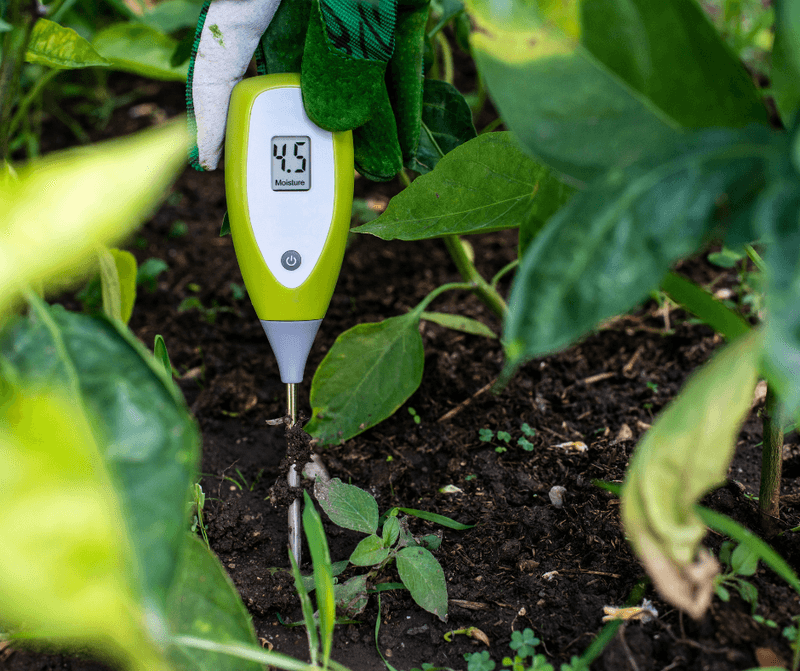
Relying on a fixed watering calendar without ever checking the soil is one of those habits that seems organized but can leave plants either overwatered or underwatered depending on what the weather has been doing.
Pennsylvania weather is unpredictable, and a week with two or three good rainstorms changes soil moisture needs completely compared to a week of dry, sunny, breezy days. A schedule set in spring may not reflect what the garden actually needs by mid-July.
Soil type plays a big role here too.
Clay-heavy beds common in many Pennsylvania yards hold moisture longer than sandy or loamy soils, so a garden that needed watering every two days in early summer might only need it every four or five days once the soil is well-established and mulched.
Container gardens are the opposite, often drying out faster than in-ground beds, especially small pots sitting in full sun on a patio or deck.
A quick soil check before turning on the hose takes less than a minute and gives a much more accurate picture of what the garden actually needs. Push a finger two to three inches into the soil near the root zone of a representative plant.
If it feels moist, hold off. If it feels dry and crumbly, that is a clearer signal than any calendar date.
Adjusting to conditions rather than the clock tends to result in more efficient watering overall.
5. Skipping Mulch Around Beds And Shrubs
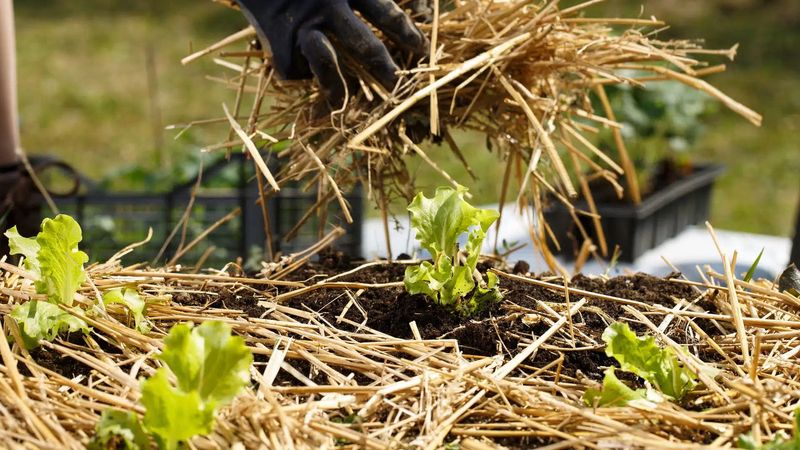
Bare soil baking in the Pennsylvania summer sun loses moisture far faster than soil covered with a layer of mulch.
Without any insulation between the surface and the air, the sun and wind pull moisture out of the top few inches of soil quickly, leaving roots in the dry zone between waterings.
Mulch acts as a buffer, slowing that moisture loss and helping the soil stay more consistently damp where roots can reach it.
A two-to-three inch layer of organic mulch, such as wood chips, shredded bark, or straw, around vegetable beds, perennial borders, and foundation shrubs can make a noticeable difference during Pennsylvania dry stretches.
It also moderates soil temperature, which tends to keep roots more comfortable during extreme heat.
Over time, organic mulch breaks down and adds organic matter to the soil, which can improve its ability to hold moisture from season to season.
One thing worth watching is mulch that has become compacted or dried into a crust on top, which can actually shed water rather than letting it pass through to the soil.
Fluffing compacted mulch and checking that water is penetrating through to the soil beneath it is a good step before deciding to add more.
Keeping mulch a few inches away from the base of shrub stems and tree trunks is also a sensible practice to avoid creating overly moist conditions right against the woody tissue.
6. Letting Containers Dry Out Between Quick Waterings
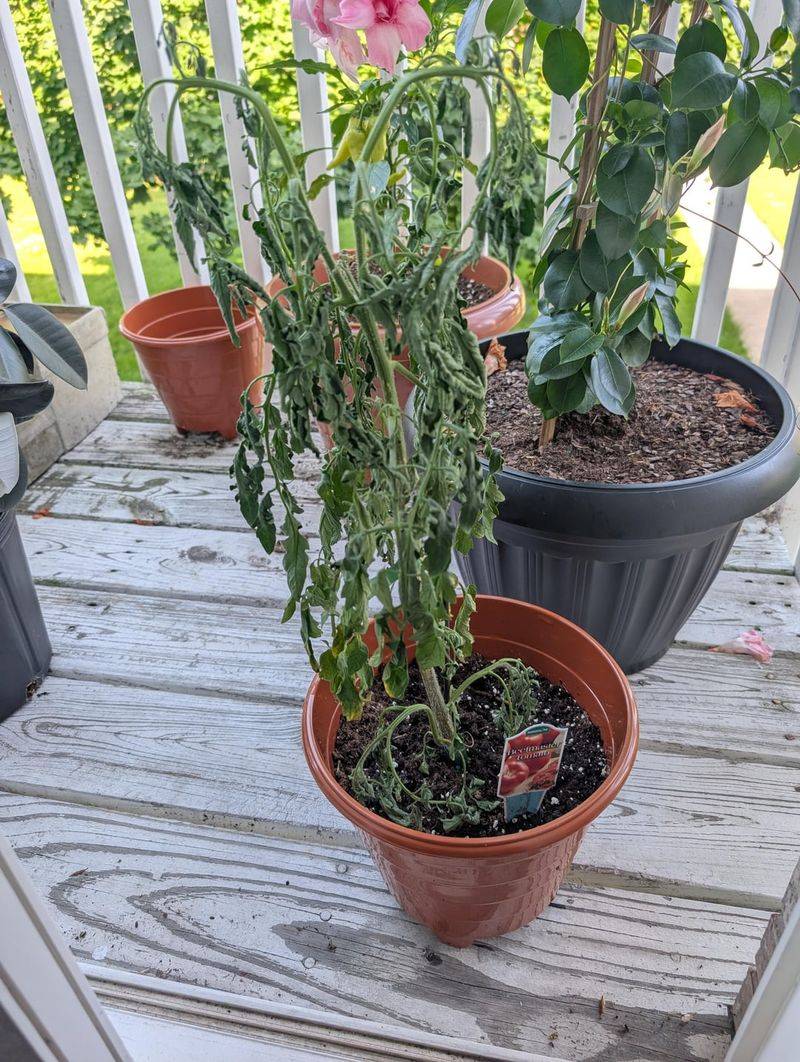
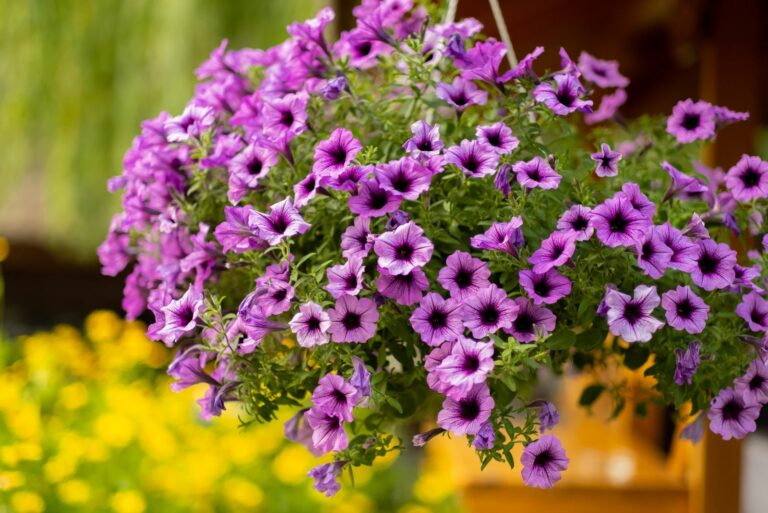
Wilted patio containers with soil pulling away from the edges of the pot are a familiar sight on Pennsylvania decks and porches during a hot summer stretch.
Once container soil dries out completely, it can shrink and pull away from the pot walls, creating channels where water runs straight down the sides and out the drainage holes without ever soaking into the root zone.
The plant may look watered after a quick pour, but the soil in the middle stays bone dry.
Containers dry out faster than in-ground beds for several reasons. They have less soil volume to hold moisture, their walls are exposed to sun and wind on all sides, and they often sit on hot surfaces like concrete or composite decking that radiate heat upward.
Small containers in full sun during a Pennsylvania heat wave can need watering more than once a day in some situations, which surprises many gardeners used to watering on a once-daily schedule.
When container soil has dried out and begun to shrink, setting the pot in a shallow tray of water for fifteen to thirty minutes can help the soil rehydrate from the bottom up.
Watering slowly from the top until water drains steadily from the bottom is another way to confirm the whole soil volume is getting wet rather than just the surface layer.
Grouping containers together can also reduce drying slightly by creating a bit of shared humidity around the plants.
7. Watering Too Fast On Clay Or Sloped Soil
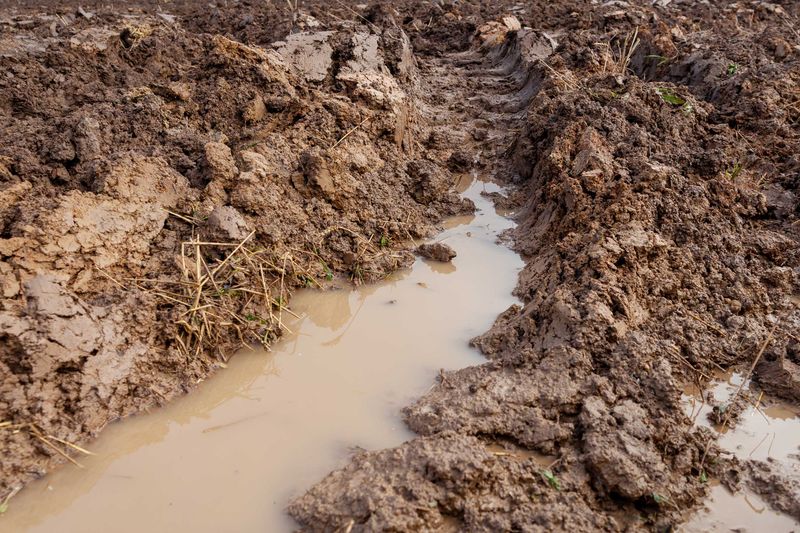
Clay beds after a summer storm often look well-watered on the surface while the root zone underneath stays surprisingly dry.
Clay soil absorbs water more slowly than sandy or loamy soil, so when water is applied faster than the soil can take it in, it runs across the surface rather than soaking down to the roots.
Sloped beds make this even more pronounced, since gravity pulls runoff water away from the planting area before it has a chance to penetrate.
Many Pennsylvania yards have clay-heavy soil, especially in suburban neighborhoods where topsoil was removed or compacted during construction.
Running a sprinkler on high pressure or watering quickly with a full-blast hose on these soils often results in more runoff than absorption, particularly when the soil is already compacted or dry.
Slowing the application rate gives clay soil time to accept the water gradually.
Watering in cycles, sometimes called pulse watering, can help with both clay and sloped conditions. Apply water for a short period, pause to let it soak in, then repeat.
This approach takes more time but tends to result in better soil penetration than a single long, fast session.
Aerating compacted clay beds in spring or fall and adding organic matter over time can gradually improve drainage and water absorption, making each watering session more effective during Pennsylvania’s dry summer periods.
8. Ignoring New Trees, Shrubs, And Recent Plantings
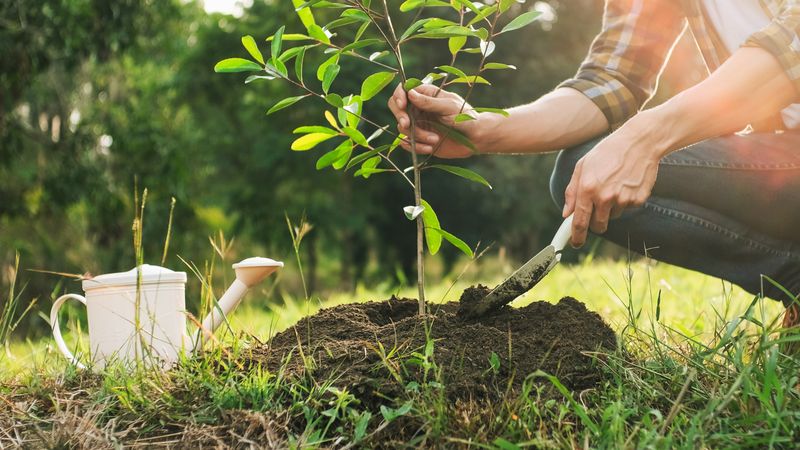
New shrubs near a Pennsylvania foundation and recently planted trees in the backyard have something important in common: their root systems are still small and confined to the original root ball.
Unlike established plants that can reach moisture from a wide surrounding soil area, newly planted trees and shrubs depend almost entirely on what is available right at the root zone.
During dry spells, this limited root zone can dry out quickly even when the rest of the garden seems fine.
Established trees and shrubs have had years to spread their roots outward and downward into a larger volume of soil.
A plant put in the ground this spring or last fall has not had that time yet, and it is relying almost entirely on the moisture available in a fairly small area around where it was planted.
If that zone dries out, the plant experiences stress that can slow its establishment significantly.
Checking the root ball area directly rather than just the surrounding soil is a useful habit with new plantings, because the original nursery growing mix can dry out faster than the native soil around it.
Watering slowly at the base of new trees and shrubs, rather than broadly across the bed, helps target moisture where it is most needed.
Keeping a mulch ring around new trees and shrubs also helps slow moisture loss from that critical root zone during Pennsylvania’s warmer, drier months while the plant gets established.