What It Really Means When Hornets Swarm Around Your North Carolina Trees In July
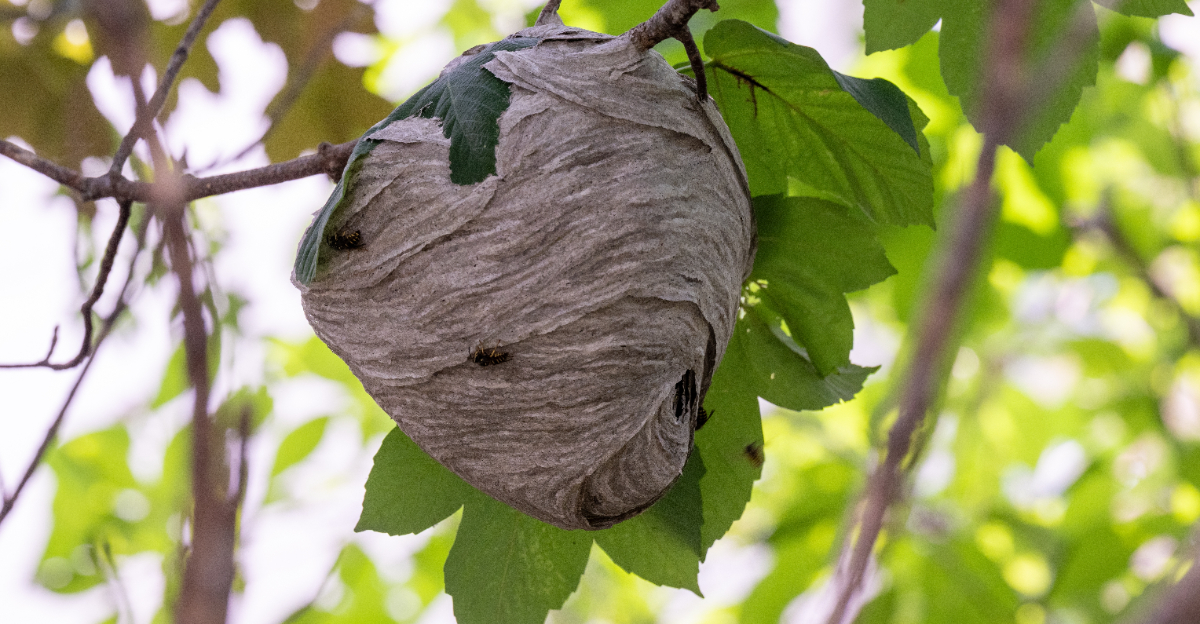
Hornets moving through a yard in ones and twos is normal July activity in North Carolina. Hornets swarming repeatedly around the same tree is something else entirely, and it is worth paying attention to before the situation escalates.
This behavior has a specific cause almost every time it occurs, and that cause is rooted in what the tree itself is producing or hosting at that particular moment in the season.
North Carolina’s July heat accelerates the conditions that trigger this kind of concentrated activity significantly.
Understanding what is actually drawing hornets to that specific tree changes how you respond and whether any response is even necessary in the first place.
1. It Usually Means A Nest Is Nearby
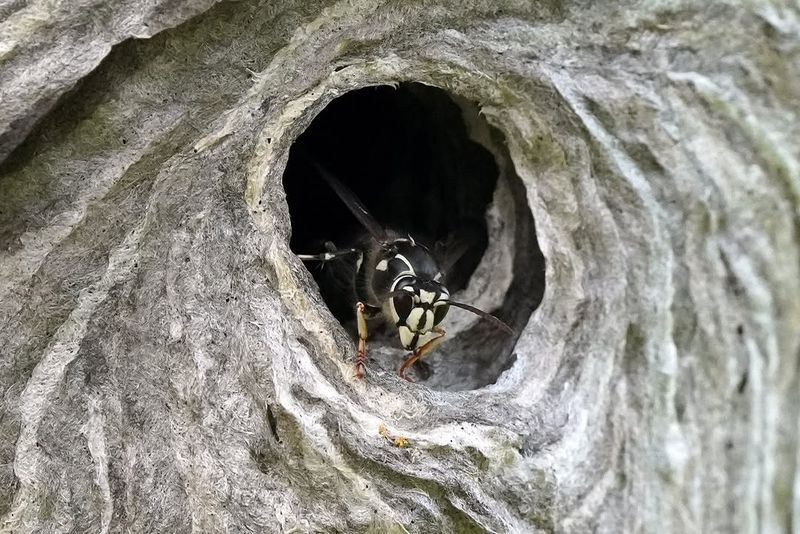
When you notice hornets swarming around one of your trees, the most common reason is simple: a nest is close by. Bald-faced hornets are well known for building large, gray, paper-like nests in trees and shrubs across North Carolina.
These nests can grow to the size of a football or larger by mid-summer, and July is right when activity peaks.
Yellowjackets take a different approach and often build their nests near the base of trees or even underground at the roots. Both species stay busy flying in and out of the nest entrance throughout the day.
That steady back-and-forth flight pattern is usually one of the clearest signs a nest is somewhere nearby.
The smartest move is to observe from a safe distance rather than walking directly toward the activity. Grab a pair of binoculars if you have them.
Rushing up to investigate can startle the colony and trigger a defensive response, which is the last thing anyone wants during a relaxed July afternoon in the garden. Take your time, watch patiently, and let the flight paths guide your eyes toward the source.
2. It May Be A Bald-Faced Hornet Nest In The Canopy
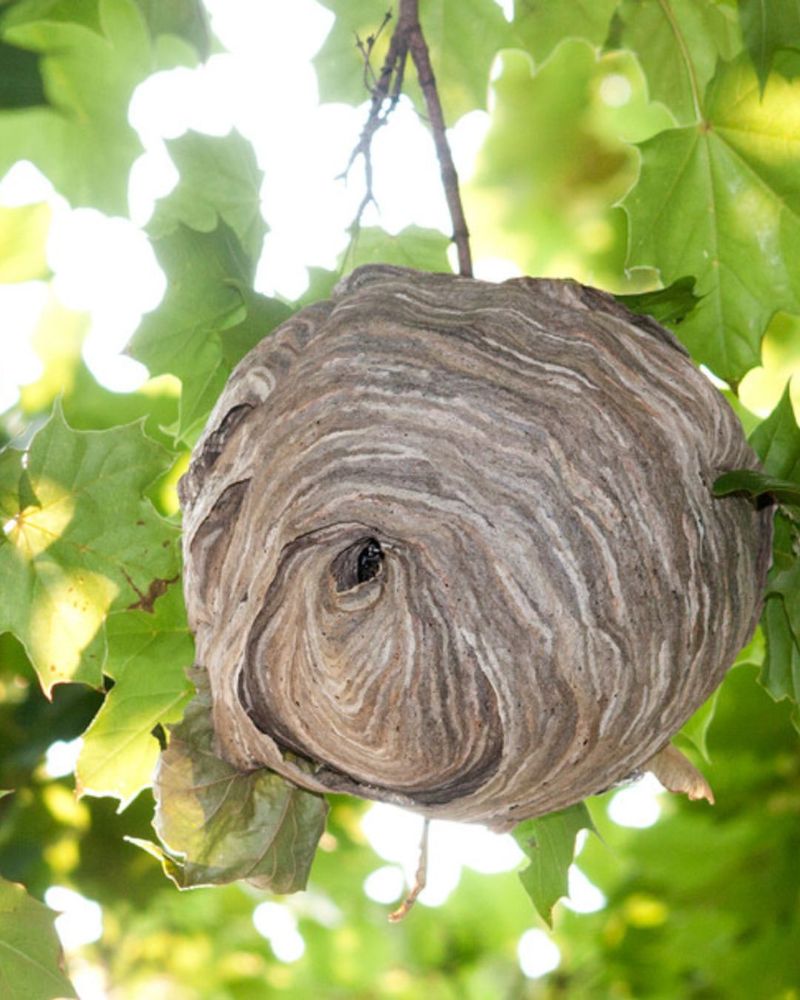
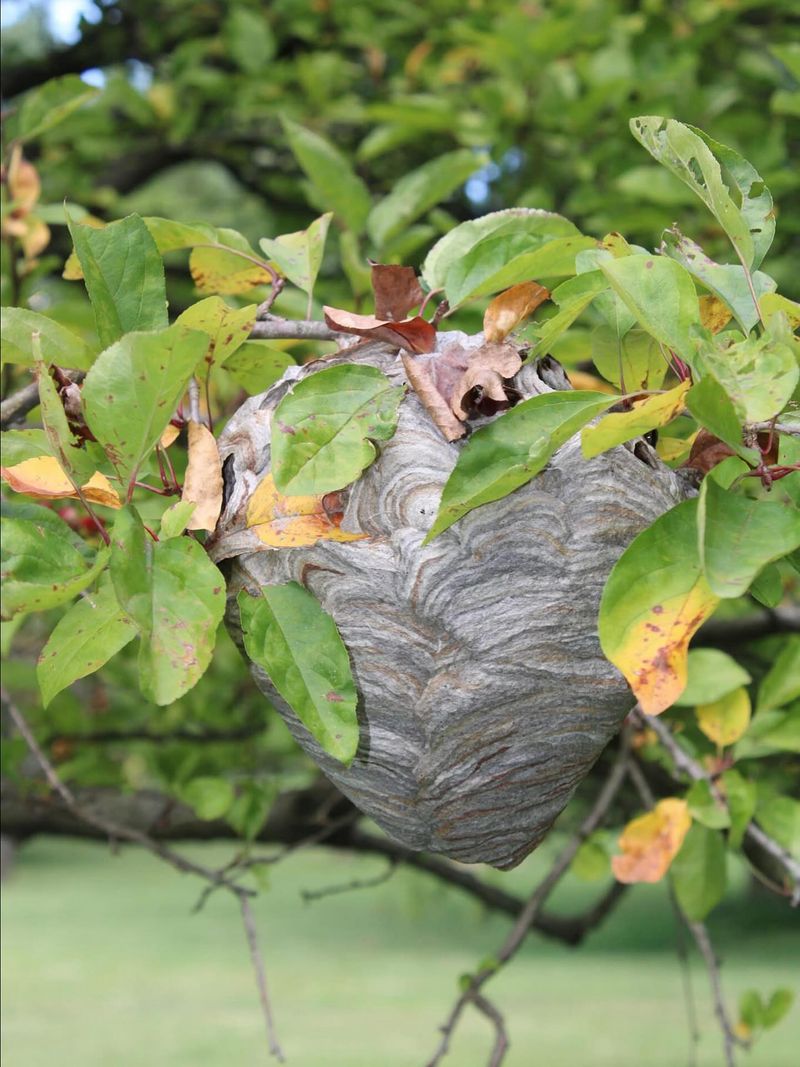
A busy cloud of insects moving steadily in and out of one spot high in a tree is a strong clue that a bald-faced hornet nest is tucked inside the canopy. These nests are gray, rounded, and made of chewed wood fiber that gives them a papery texture.
Summer leaves can hide them completely, making the insect activity the only obvious sign something is up there.
Bald-faced hornets are actually a type of aerial yellowjacket, and they prefer elevated spots in trees, shrubs, and even under roof overhangs.
By July, the colony has been growing since spring, and the nest population can hold several hundred workers.
That means the flight traffic around the nest becomes noticeably heavy during warm afternoon hours.
If the nest is near a patio, front door, play area, or garden path, the situation deserves closer attention. A nest high in a tree far from foot traffic may not need immediate action.
However, one positioned near spaces where people move regularly calls for a calm, measured plan. Never shake branches or throw objects near the area.
Give the colony plenty of space and decide on next steps based on how close the nest sits to your daily activity zones.
Your North Carolina Garden Changes Every Week. Your Plan Should Too.
Gardening in North Carolina changes quickly throughout the season. Every Friday you’ll receive a simple weekly plan showing exactly what to plant, prune, fertilize, harvest, and protect so you never miss the right timing.
3. It May Be European Hornets Visiting Sap
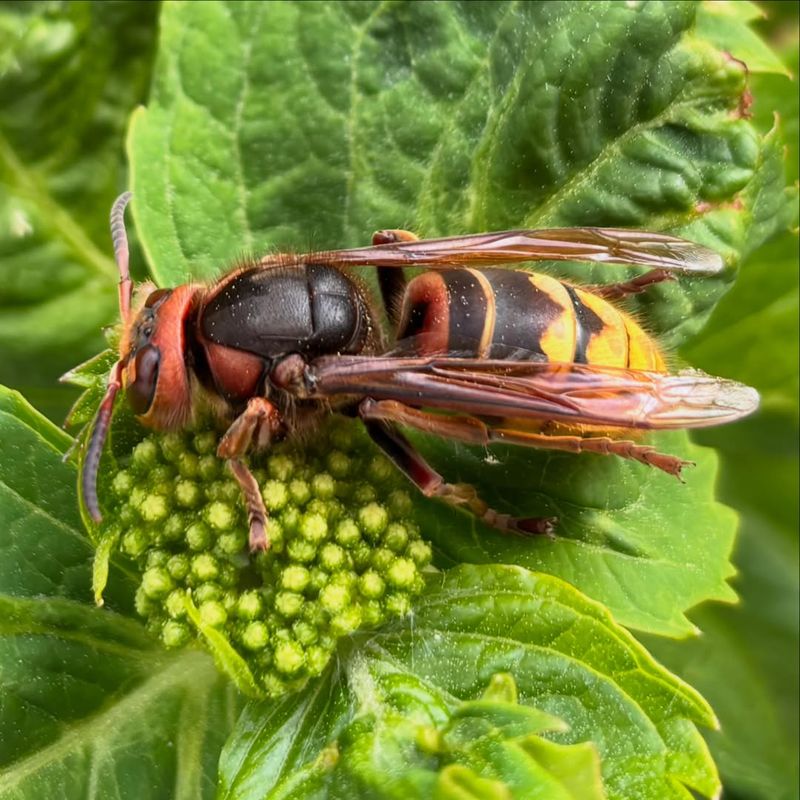
Not every hornet buzzing around a tree trunk is building a nest nearby. Sometimes the attraction is much simpler: sweet, sticky tree sap.
European hornets are the largest social wasps found in North Carolina, and NC State University notes that workers are sometimes observed collecting sap from trees as a food source.
Sap becomes especially accessible when bark is cracked, a branch has been damaged, or a tree has been stressed by summer heat or recent pruning.
That oozing sap acts almost like a magnet for European hornets, drawing them in repeatedly throughout the day.
You might notice them hovering at a specific spot on the trunk or returning to the same cracked branch again and again.
European hornets are large, reaching about an inch long, with yellow and brown banding that sets them apart from smaller yellowjackets. Seeing them at sap sites does not automatically mean the tree is in trouble or that a nest is right there.
The sap flow itself is the main draw. Still, repeated visits to the same wound on a tree can be worth monitoring, since ongoing bark damage may invite other issues over time.
Watching from a comfortable distance will help you figure out whether the activity stays focused on one sap spot or spreads across more of the tree.
4. It Can Mean They Are Stripping Bark Or Twigs
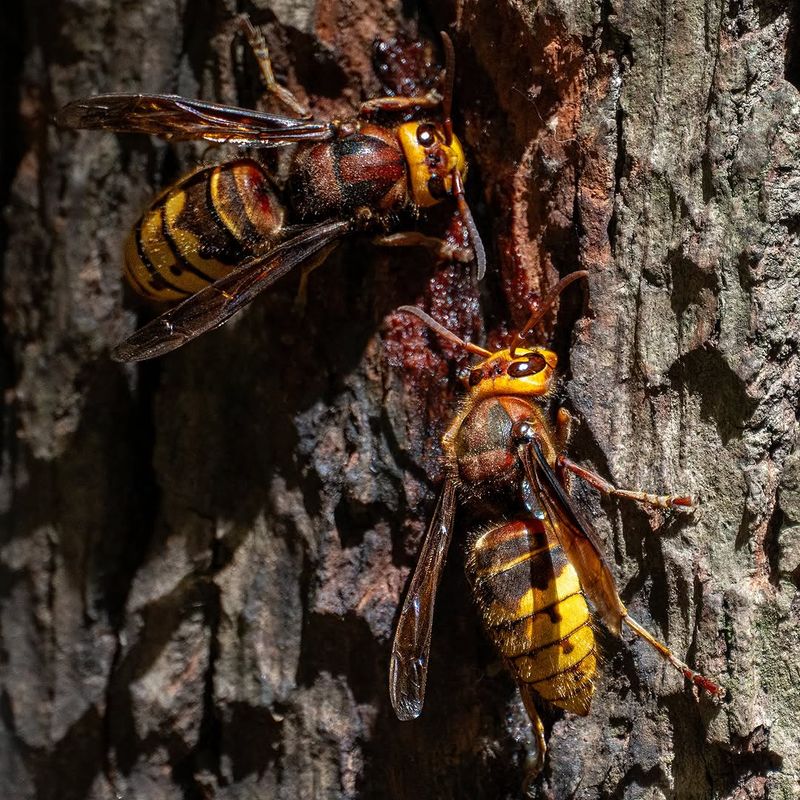
Hornets on thin branches or young bark are not always just passing through. European hornets have a documented habit of girdling twigs, which means they chew through the bark in a ring pattern to reach the sap underneath.
NC State has reported this behavior on trees including dogwood, birch, rhododendron, and various fruit trees.
Girdling cuts off the flow of water and nutrients through that section of the branch. Over time, the affected twig or small limb may wilt and decline.
In most cases, a healthy mature tree handles a few girdled twigs without major setback, but repeated or widespread activity on young trees or new growth is worth paying attention to.
Walk the perimeter of your tree and look for small branches where the bark has been chewed away in a clean ring.
Checking early in the season gives you the best chance to catch the issue before it spreads across multiple branches. If the girdling seems limited to just a couple of twigs, the tree is likely fine.
If you notice the damage spreading or affecting the same tree repeatedly over several weeks in July, that is a good time to reach out to a local arborist or your county cooperative extension office for a second opinion and practical next steps.
5. It May Mean The Tree Is Hosting Garden Insects
Sometimes hornets are not interested in the tree itself at all. The real attraction is the buffet of insects living in the canopy.
Bald-faced hornets and other social wasps are active predators, and they regularly hunt caterpillars, flies, beetles, and even other bees to bring back to the nest as protein for their larvae.
A tree full of leaf-munching caterpillars or sap-sucking insects becomes an easy hunting ground for foraging hornets. You may notice them hovering through the branches, pausing briefly, then flying off with prey.
This kind of activity looks different from nest-related swarming because the insects tend to spread across the canopy rather than funneling in and out of one concentrated spot.
Here is something worth considering: hornets are genuinely useful members of the summer food web. They help keep caterpillar populations in check and reduce the number of pest insects on your plants.
That does not mean a nest directly over your patio is something to celebrate, but hornets hunting through a tree at the back of the yard are quietly doing garden work on your behalf.
Understanding the difference between hunting behavior and nest defense helps you figure out whether the activity around your tree is something to monitor or simply something to appreciate from a distance.
6. It Does Not Always Mean The Tree Is Sick
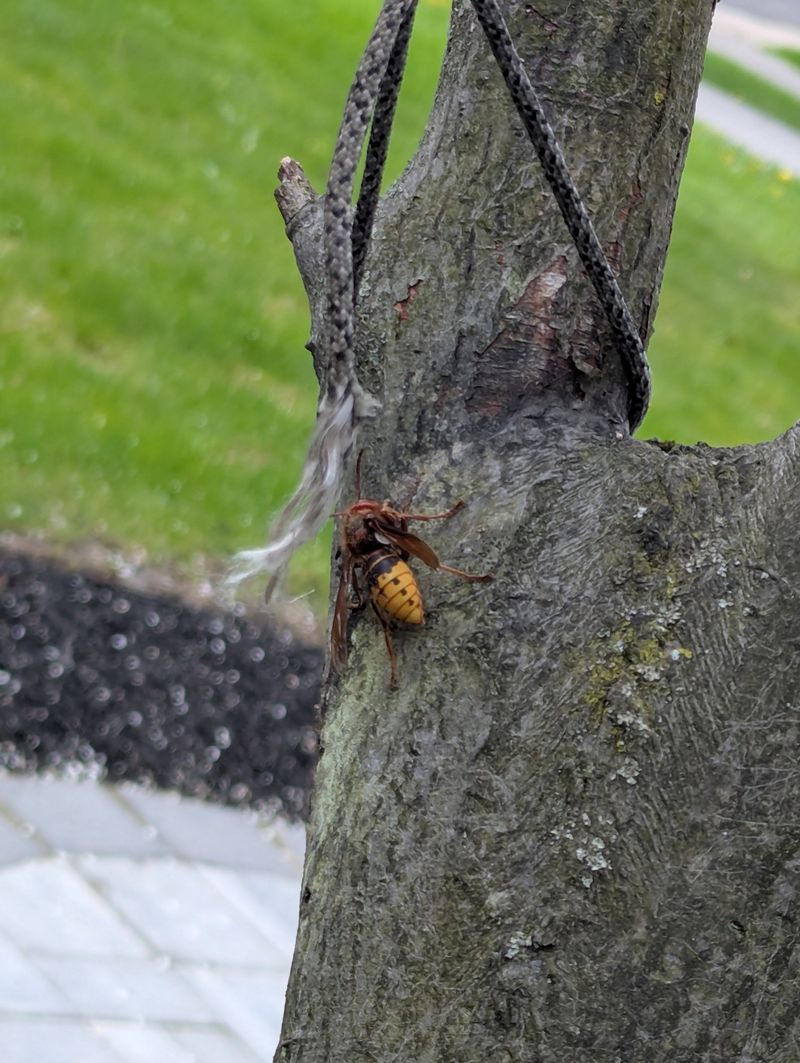
Seeing hornets around a tree can send gardeners straight to worst-case thinking, but the presence of hornets does not automatically mean the tree has a serious problem.
Hornets visit trees for many different reasons: hunting insects, gathering wood fiber for nest building, feeding on sap, or simply traveling back and forth from a nearby nest.
None of those behaviors require the tree to be sick or struggling. Real tree trouble looks different.
Watch for major bark injuries that expose raw wood, wilting or drooping branches that do not perk back up after watering, fungal growth appearing at the base or along the trunk, or sap oozing from multiple spots rather than just one area.
Those are the kinds of symptoms that suggest something is actually wrong with the tree itself.
Blaming the hornets before checking the tree carefully can send you in the wrong direction. Spend a few minutes doing a slow visual inspection from a comfortable distance.
Look at the leaves, the branch tips, the bark, and the base of the trunk. If the tree looks healthy and the hornets seem to be moving through rather than concentrated on one damaged spot, chances are good the tree is just fine.
The insects are simply using it as a convenient resource during a busy July.
7. Night Activity May Point To European Hornets
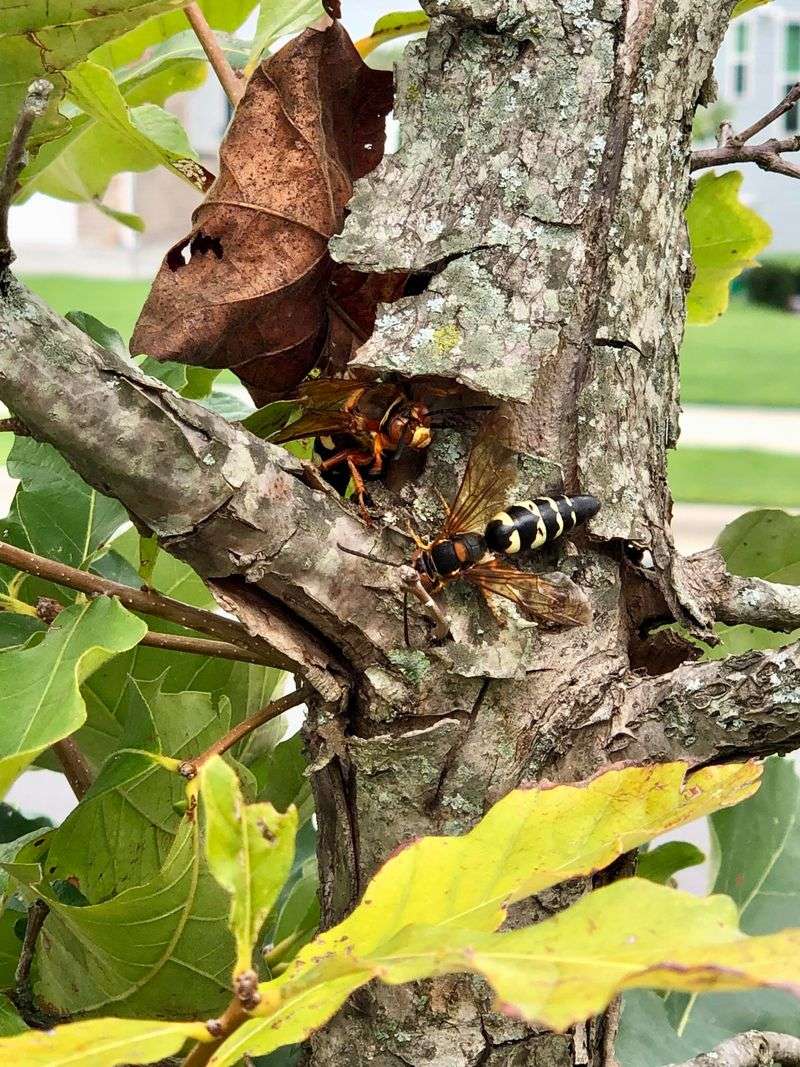
Most wasps and hornets are strictly daytime insects, so spotting large hornets buzzing around your porch lights or windows after dark is genuinely unusual and worth noting.
European hornets are one of the few social wasps in North Carolina that fly regularly at night.
NC State University confirms this behavior, noting that European hornets are attracted to bright exterior lights after sunset.
If you have noticed large, loud insects bumping into your outdoor lights or hovering near illuminated windows on warm July evenings, European hornets are the most likely explanation.
They can be startling at night simply because of their size, reaching close to an inch and a half in length, and their low buzzing sound is hard to miss.
One practical step that can reduce nighttime activity near your patio or seating area is switching to yellow or amber outdoor bulbs, which are far less attractive to flying insects than standard white or cool-toned lights.
Motion-activated lights that stay off unless triggered can also help.
If the nighttime activity is making outdoor evenings uncomfortable, reducing unnecessary lighting near the tree or porch is a low-effort adjustment that often makes a noticeable difference without requiring any direct contact with the hornets or their nest.
8. A Tree Nest High Above Low-Traffic Areas May Be Left Alone
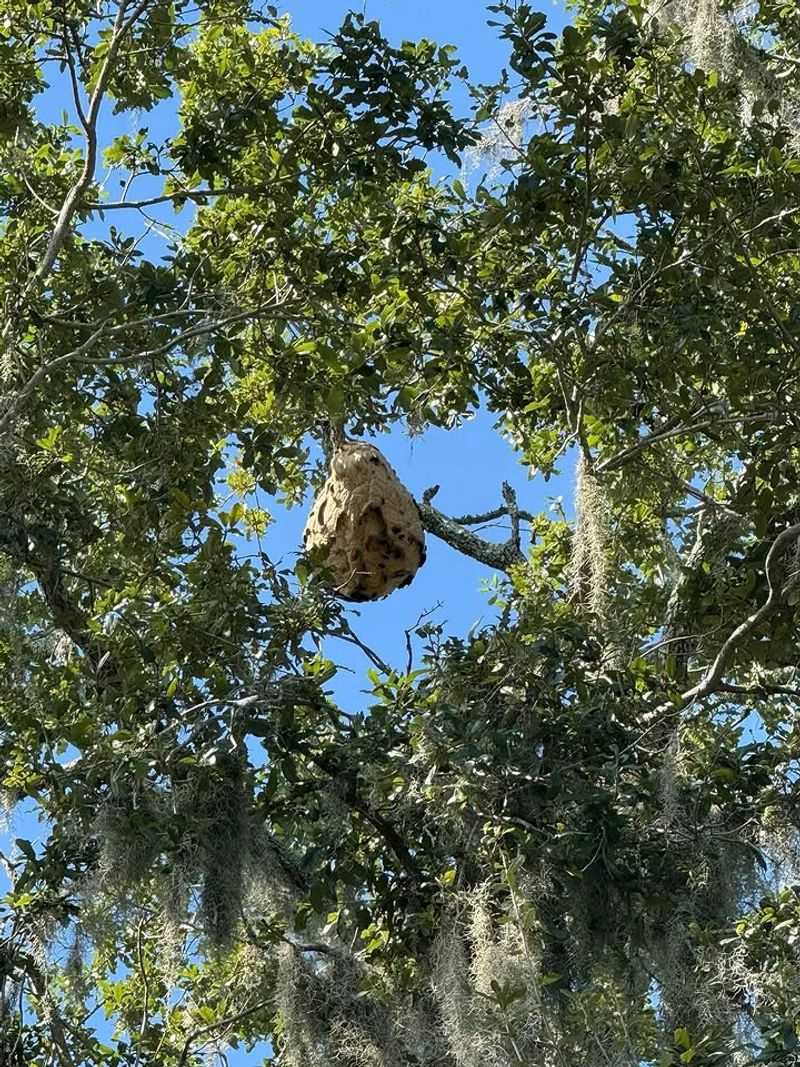
Not every hornet nest in a tree needs to be removed. That might sound surprising, but NC State University points out that hornets and yellowjackets provide real value in the garden by preying on a wide range of pest insects.
A nest located high in a tree and well away from areas where people and pets move regularly can often be observed safely from a distance without requiring action.
The key factor is location. A nest at the top of a large oak at the far edge of your yard is a very different situation from one hanging at head height near your back door.
When the nest is genuinely out of the way, watching the colony from afar through the summer can actually be fascinating. The workers are constantly active, and the nest itself grows steadily through July and August.
Hornets do not reuse old nests the following year, so a nest that survives the season naturally becomes empty by late fall. That means a well-placed nest that causes no real disruption may resolve itself without any intervention at all.
Realistic advice always comes back to the same point: safety depends entirely on location. If the nest is high, away from foot traffic, and not near doors or play areas, careful observation is a perfectly reasonable choice for the summer.
9. A Nest Near People Needs More Caution
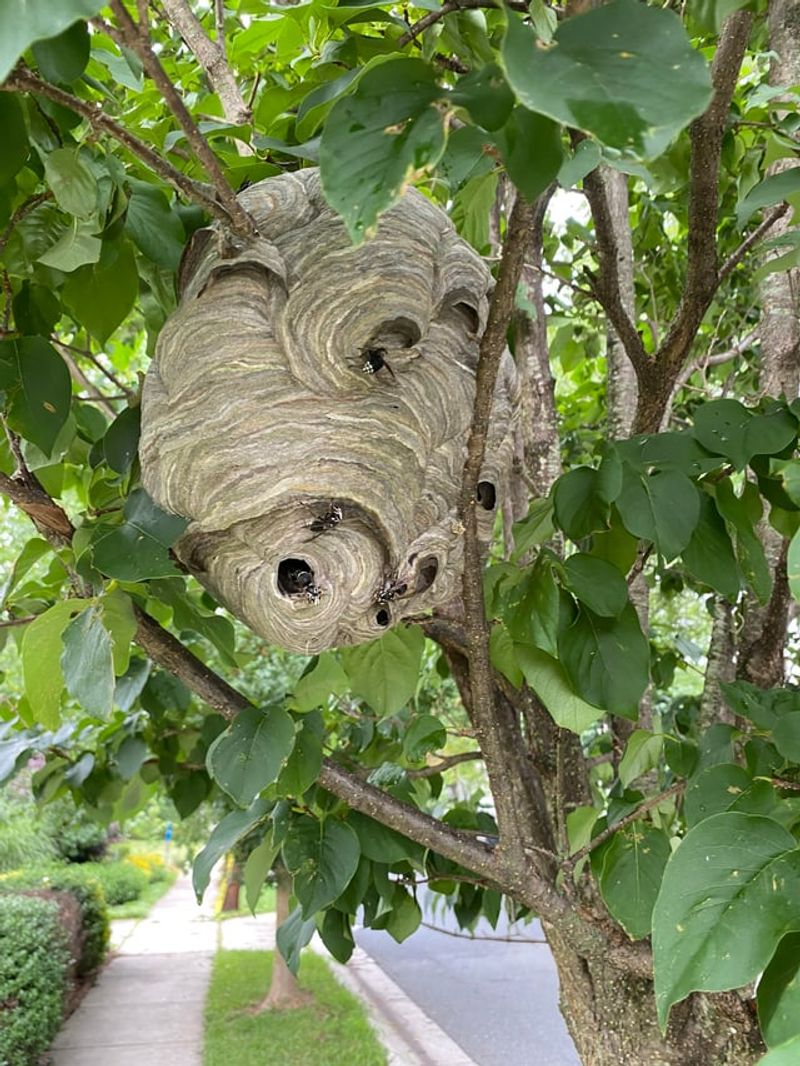
When a hornet nest is positioned near a front door, sidewalk, deck, children’s play area, or any spot where people move through regularly, the situation calls for a more careful approach.
Hornets are generally not aggressive unless they feel the colony is being threatened. The problem is that everyday activities like mowing the lawn, trimming shrubs, or even walking nearby can accidentally trigger a defensive response.
Defensive behavior from a disturbed nest can happen quickly and without much warning. The closer the nest is to regular human activity, the higher the chance of an accidental encounter that upsets the colony.
Keeping children and pets away from the area is the most immediate step you can take while you figure out a plan.
Calling a licensed pest control professional is the smartest move when a nest sits close to daily activity zones. Professionals have the right equipment and experience to handle nest removal safely, especially in tight or awkward locations.
Trying to remove a nest yourself with a can of spray and no protective gear is a gamble that rarely ends well. Even at night when hornets are less active, an active colony near a busy area is best handled by someone trained to do the job correctly.
Your safety and your family’s comfort are always worth the call.
10. Yellowjackets May Be The Real Cause Near Tree Bases
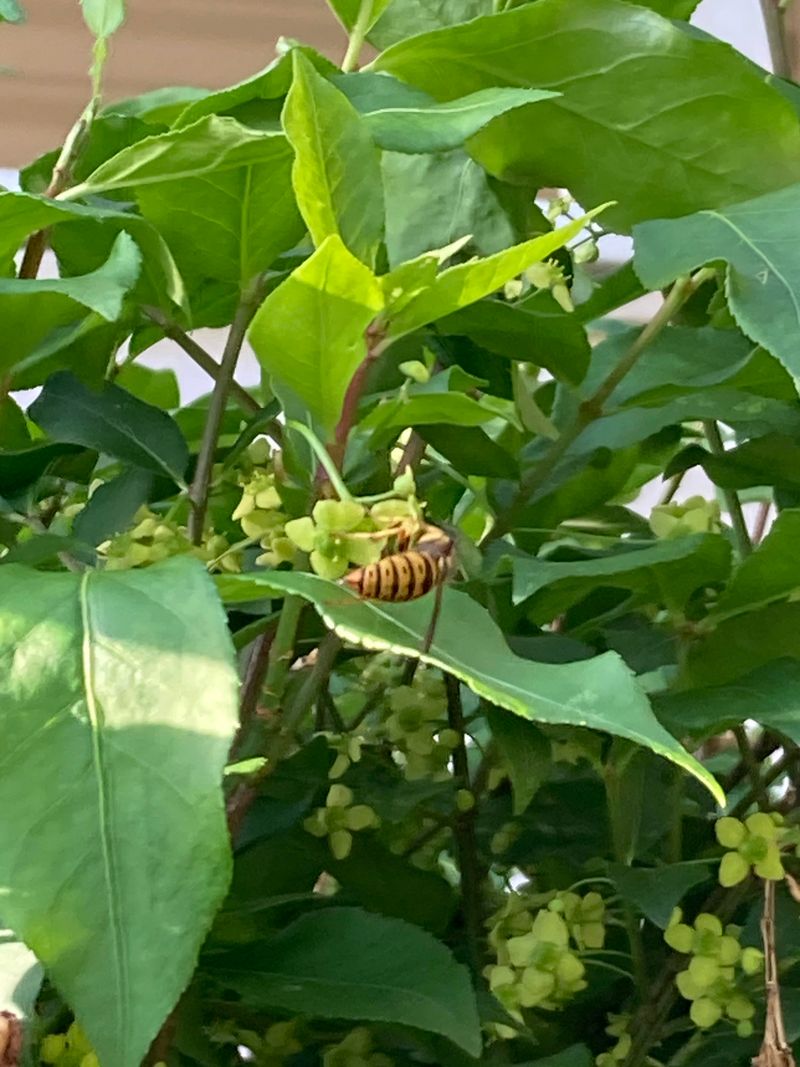
Here is something that surprises a lot of gardeners: insects swarming near the base of a tree are often not hornets at all.
Yellowjackets are frequent nesters in underground burrows, and they often choose spots near the roots of trees or in the loose soil at the edge of shrubs.
From a distance, the frantic activity around the base of a tree can look alarming, but the source is usually a ground nest just below the surface.
Yellowjackets are smaller and more slender than hornets, with bright yellow and black banding and fast, darting flight patterns.
They guard their underground entrances actively, especially when the nest is bumped or vibrated by a lawnmower or foot traffic passing too close. That is when the situation can escalate quickly.
Watching the flight path from a safe distance is one of the best ways to figure out whether you are dealing with a ground nest.
If the insects are flying low to the ground and disappearing into a hole or gap near the tree roots, a yellowjacket colony underground is the likely explanation.
Avoid mowing over that area until you have a plan, and keep pets and children well away from the spot. Ground nests are easy to step near by mistake, so marking the area clearly while you decide on next steps is a smart precaution.
11. Unusual Hornets Should Be Photographed And Reported
North Carolina gardeners have a genuinely important role to play right now when it comes to watching for unusual hornets.
The yellow-legged hornet, an invasive species first confirmed in the United States in Georgia in 2023, is a serious concern for bee populations and agricultural communities.
The North Carolina Department of Agriculture is actively monitoring for its possible spread and asks residents to report any suspected sightings.
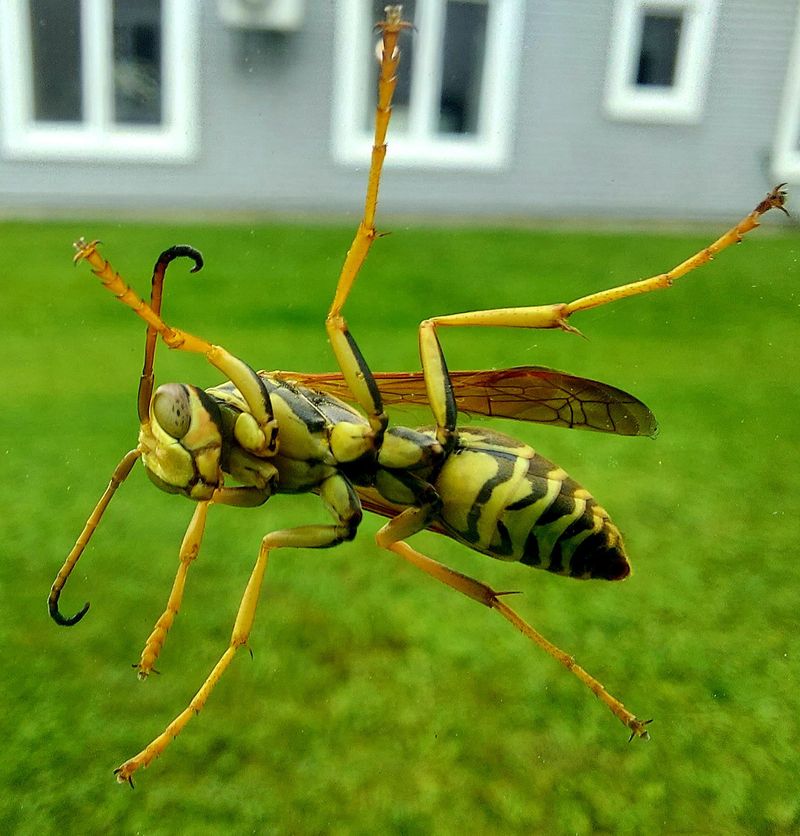
The yellow-legged hornet is medium-sized with a mostly dark body and distinctively yellow lower legs, which set it apart from most native wasps. However, many common look-alike species get mistaken for it regularly.
Bald-faced hornets, European hornets, and even large yellowjackets can look similar to an untrained eye, especially in a quick glance. That is why a clear photograph is so valuable before making any report.
If you spot an unfamiliar hornet near your trees or notice heavy activity around honey bee hives in your yard, take a photo from a safe distance using your phone.
Include your location and the date, and submit the image through the NCDA reporting channels.
You do not need to capture the insect or get close. A clear photo from a few feet away is enough.
Early reporting helps officials track potential spread and respond quickly, making every photo submission genuinely useful for the broader community.
12. The Best First Step Is Careful Observation
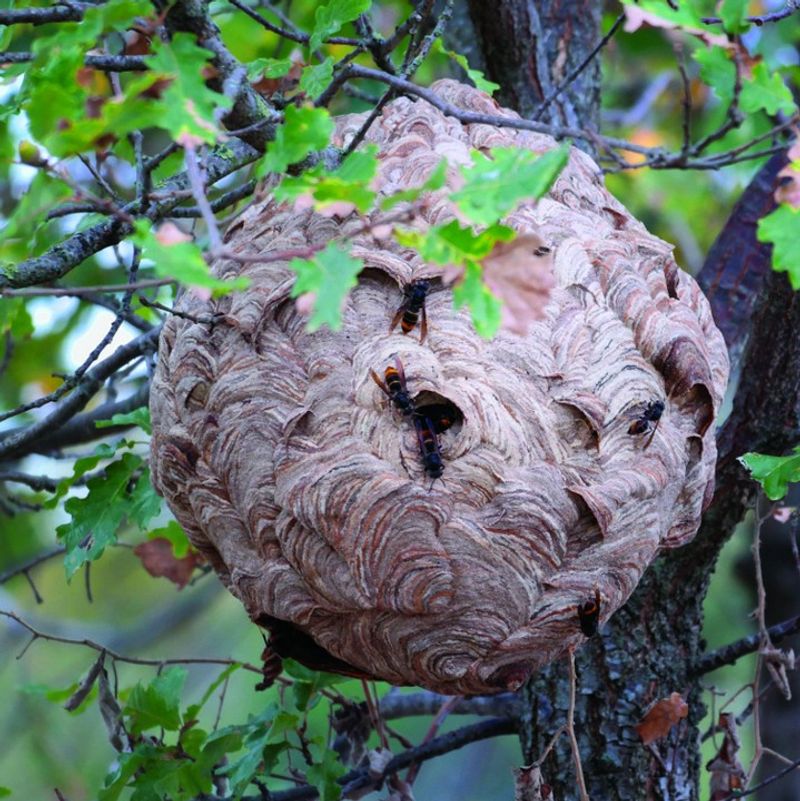
When hornets start swarming around your trees in July, the single most useful thing you can do first is simply watch. Careful observation from a safe distance gives you real information without putting yourself at risk.
Look for where the insects are concentrating: is the activity centered in the canopy, along the trunk, near a sap wound, or at the base of the tree near the ground?
Noticing the flight pattern tells you a lot. Hornets funneling in and out of one specific spot suggest a nest entrance.
Hornets spread across branches and moving through the canopy suggest hunting behavior. Hornets clustered at a cracked section of bark may be after sap. Each pattern points toward a different explanation and a different response.
While you observe, avoid shaking branches, spraying randomly, or making loud sounds near the activity. Those actions can trigger a defensive reaction even from a colony that would otherwise ignore you entirely.
Give yourself ten or fifteen minutes of quiet watching before drawing any conclusions. A nest located far from daily foot traffic may be manageable with simple awareness and some distance.
A nest near a door, play area, or heavily used garden path is a situation where calling a licensed pest control professional is the most practical and sensible choice. Starting with calm observation puts you in the best position to make a smart decision.