7 Invasive Weeds That Started On Oregon’s Coast Are Now Showing Up Deep Inland
Weeds that got their start along the foggy, windswept Pacific Coast are quietly hitching rides on boots, tires, waterways, and birds, pushing farther inland every single year.
Most people have no idea it is happening, which is exactly how these plants prefer it.
A patch of dense, unfamiliar shrubs taking over a roadside or a creek bank near your town might not look like much of a problem. It might look like ordinary overgrowth. It could be one of seven aggressive invaders that Oregon land managers are watching with serious concern.
These plants are tough, fast-spreading, and remarkably good at making themselves at home in places where they do not belong.
Once they settle in, removing them takes real effort, time, and often a coordinated community response that goes well beyond what any single property owner can manage alone.
The good news is that knowing what to look for puts you way ahead of the problem.
Here are seven plants worth learning to recognize before one of them shows up in your neighborhood and makes itself permanently at home.
1. Gorse Pushes Beyond Coastal Roadsides
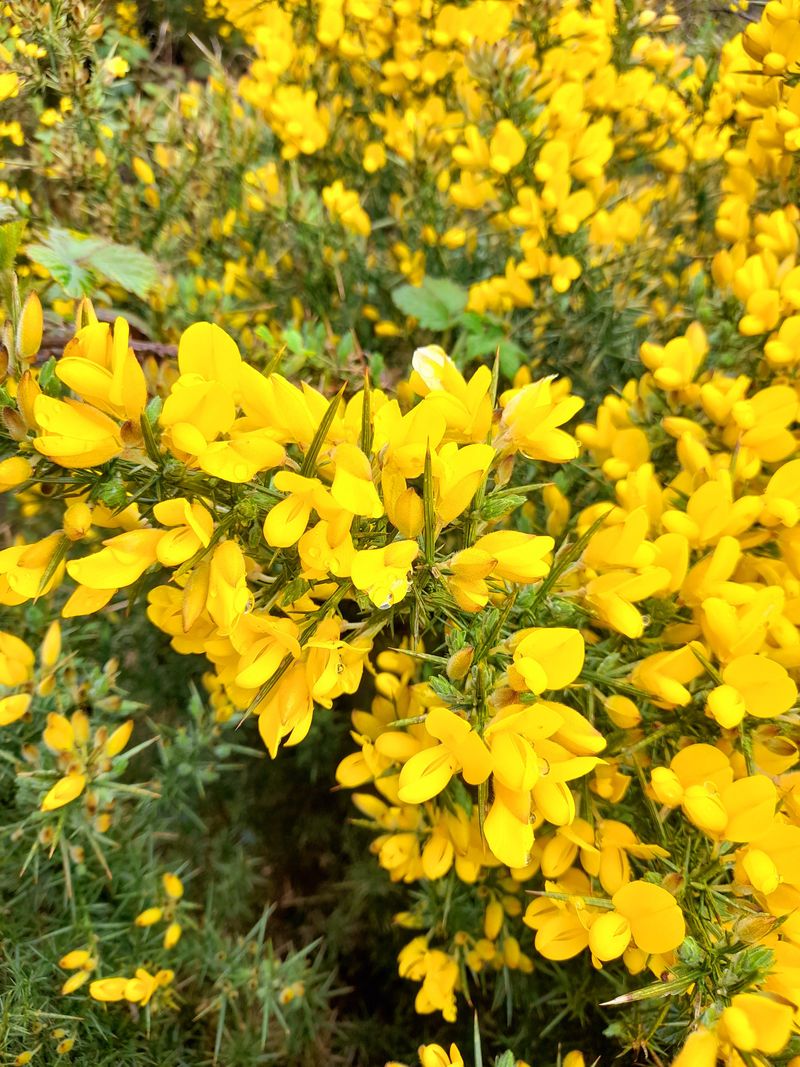
Walk along any stretch of the Oregon Coast Highway and you will spot it almost immediately.
Gorse is a spiky, bright-yellow-flowering shrub that looks almost cheerful from a distance. Up close, those thorns mean serious business. This plant is not here to make friends.
Originally from Western Europe, gorse arrived in Oregon during the 1800s and quickly claimed coastal headlands, roadsides, and disturbed slopes as its own.
It thrives in the sandy, windswept conditions near the ocean, where few other plants can compete. The shrub forms impenetrable thickets that crowd out native vegetation and create serious fire hazards because its branches contain flammable oils.
The real alarm is that gorse does not plan to stay on the coast.
Seeds travel on vehicle tires, muddy boots, and in soil moved during road construction projects. As inland roadsides get disturbed by development and maintenance, gorse finds fresh ground to colonize.
Counties east of the Coast Range are already reporting new sightings along highway corridors.
A single plant can produce thousands of seeds, and those seeds stay viable in the soil for up to thirty years.
Pulling young plants before they flower is one of the most effective ways to slow the spread. Report any inland sightings to your county weed board right away, because early action makes an enormous difference with this particular plant.
2. Scotch Broom Follows Disturbed Ground
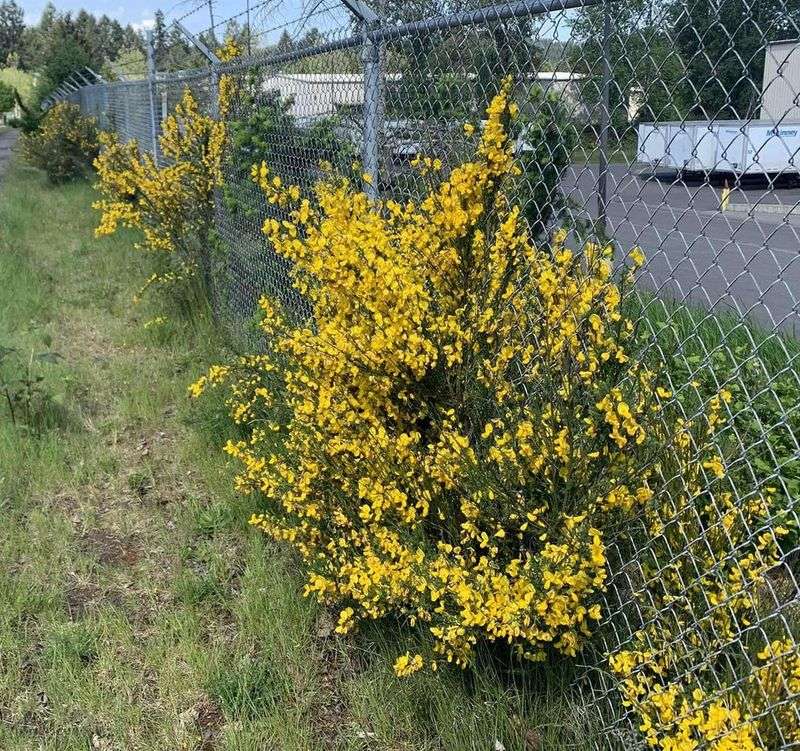
Few invasive plants are as recognizable as Scotch broom, with its explosion of cheerful yellow flowers every spring.
Do not let that beauty fool you. Underneath those blooms is a plant with a relentless drive to take over any sunny, disturbed patch of soil it can find.
Scotch broom was brought to Oregon in the mid-1800s, originally used for erosion control and sometimes planted as an ornamental.
It found the Oregon Coast absolutely perfect. Mild winters, sandy soils, and plenty of disturbed ground along roadsides gave it everything it needed to spread rapidly across coastal counties.
Your Oregon Garden Changes Every Week. Your Plan Should Too.
Gardening in Oregon changes quickly throughout the season. Every Friday you’ll receive a simple weekly plan showing exactly what to plant, prune, fertilize, harvest, and protect so you never miss the right timing.
The plant is a seed machine.
One mature Scotch broom can produce up to 12,000 seeds per year, and those seeds can stay dormant in the soil for more than thirty years.
When soil gets disturbed by road grading, logging, or construction, dormant seeds wake up and sprout enthusiastically. This is exactly how Scotch broom follows development corridors deep into the Willamette Valley and beyond.
Broom sweeps clean in all the wrong ways, pushing out native grasses and wildflowers that local wildlife depend on.
Young plants are easier to remove by hand-pulling before they set seed. Cutting mature plants at the base during dry conditions can reduce their energy reserves over time.
Coordinated removal efforts by neighbors and community groups have proven effective in slowing new inland patches before they turn into full-blown infestations.
3. English Ivy Climbs Into Inland Shade
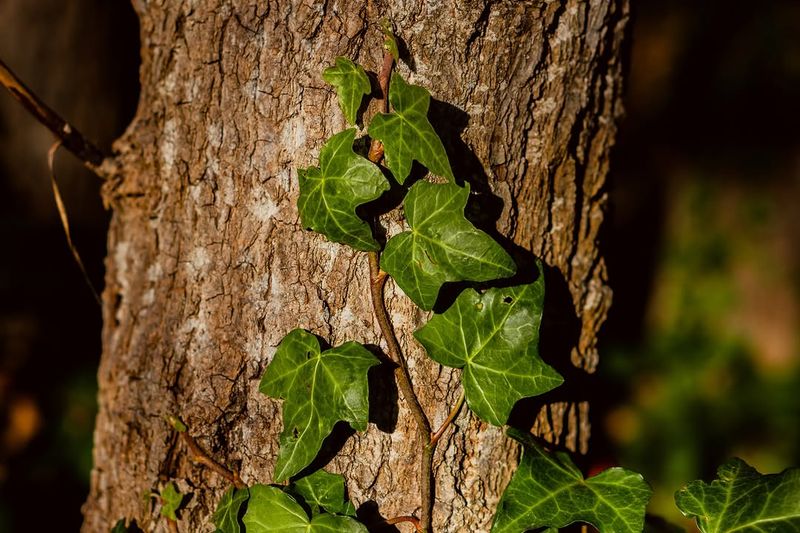
Step into almost any older neighborhood in Portland, Eugene, or even smaller inland towns, and English ivy is probably somewhere nearby.
It drapes fences, climbs telephone poles, and blankets the ground under trees with a thick green mat that looks tidy until you understand what it is actually doing.
English ivy started its Oregon invasion along the coast, where mild, moist conditions suit it perfectly.
From there it moved inland through two reliable pathways: landscaping and bird droppings. Birds eat the berries and deposit seeds in parks, woodlands, and vacant lots far from where any gardener ever planted the original vine.
Those seeds germinate readily in shaded spots that most other invasive plants cannot easily access.
In forests, ivy climbs trees and forms what land managers call ivy deserts on the ground below.
Nothing native can grow through a solid ivy mat. Trees covered in ivy carry extra weight, making them more vulnerable to windstorms and branch failures. The vine also blocks sunlight from reaching the tree bark, stressing the host over time.
Ivy is a real overachiever in the worst possible way.
Removal starts by cutting a ring around the base of any ivy-covered tree and pulling the vine away from the trunk. Ground ivy can be rolled back like a carpet and piled for removal.
Community ivy pulls happen regularly in many Oregon cities, and joining one is a practical way to protect local woodland edges from further invasion.
4. Himalayan Blackberry Takes Dry Edges
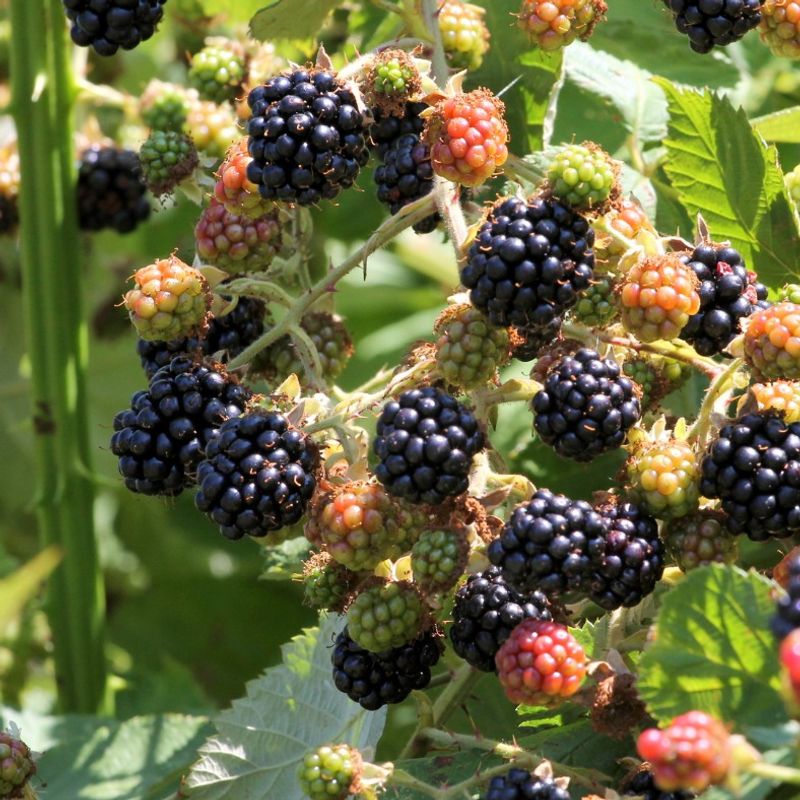
Nearly everyone in Oregon has picked a handful of blackberries along a sunny roadside without giving the plant a second thought.
Himalayan blackberry is so common that it almost feels native, but it absolutely is not, and land managers have spent decades trying to keep it from consuming every dry margin in the state.
This plant arrived from Europe in the late 1800s and spread aggressively along the Oregon Coast before pushing inland through river valleys and roadsides.
Its strategy is simple and brutally effective. Thick, arching canes root wherever they touch the ground, forming impenetrable thickets that can stretch for acres.
Birds love the berries and scatter seeds widely, planting new patches far from the parent plant.
Himalayan blackberry thrives on dry, disturbed edges, which puts it in direct competition with native shrubs like red-osier dogwood and Pacific ninebark along inland creek banks and roadsides.
Once a thicket establishes, it shades out nearly everything underneath and provides poor habitat quality compared to native shrub communities.
Repeated cutting during the growing season can weaken established thickets over time.
Cutting canes back to the ground several times per season prevents photosynthesis and slowly exhausts the root system.
Removing small new patches quickly before they spread is far more manageable than tackling a mature thicket. Reporting new inland sightings to your local county weed board helps track the spread effectively.
5. Japanese Knotweed Rides Riparian Corridors
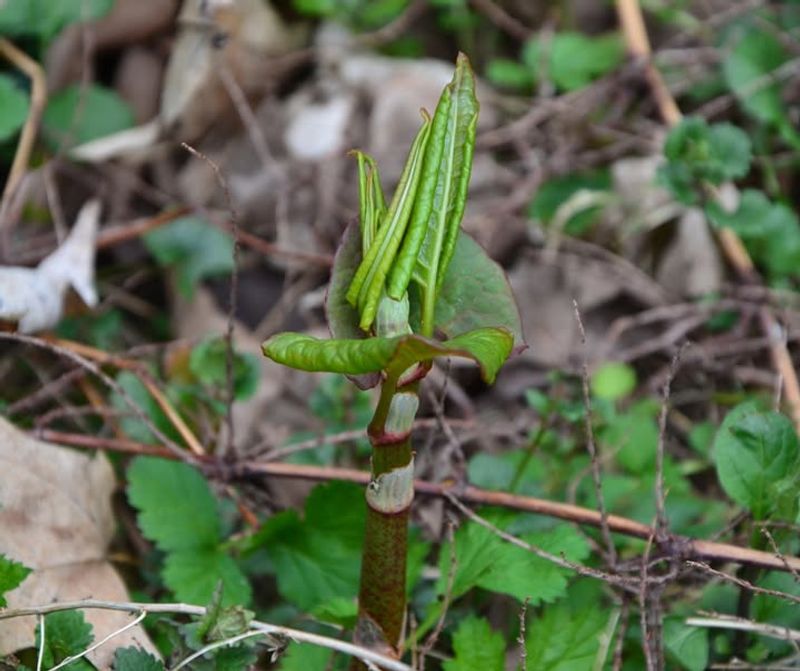
Along creek banks and river margins across Oregon, Japanese knotweed has earned a reputation as one of the most stubborn invasive plants land managers face.
It looks almost tropical, with broad leaves and hollow stems that resemble bamboo, and it grows with startling speed during the warm months.
Japanese knotweed arrived in North America as an ornamental plant in the late 1800s.
It established first in coastal areas of Oregon, where moist conditions and disturbed streambanks suited it well. From there, flooding did much of the spreading work.
When stems or root fragments break off during high water events, they float downstream and establish new colonies wherever they wash ashore.
A single fragment as small as a few centimeters can sprout an entirely new plant.
This makes flood events particularly dangerous for spreading knotweed into new inland territories.
The plant forms dense stands that crowd out native streambank vegetation, reduce habitat for fish and wildlife, and increase erosion because its root system does not anchor soil as effectively as native plants do.
Knotweed is the plant equivalent of a houseguest who never leaves and slowly takes over every room.
Management requires patience and persistence. Cutting stems repeatedly throughout the growing season depletes root energy over multiple years.
Never move soil or plant material from a knotweed site without proper containment, and always coordinate management with neighbors along the same waterway.
6. Jubata Grass Moves From Bluffs To Lots
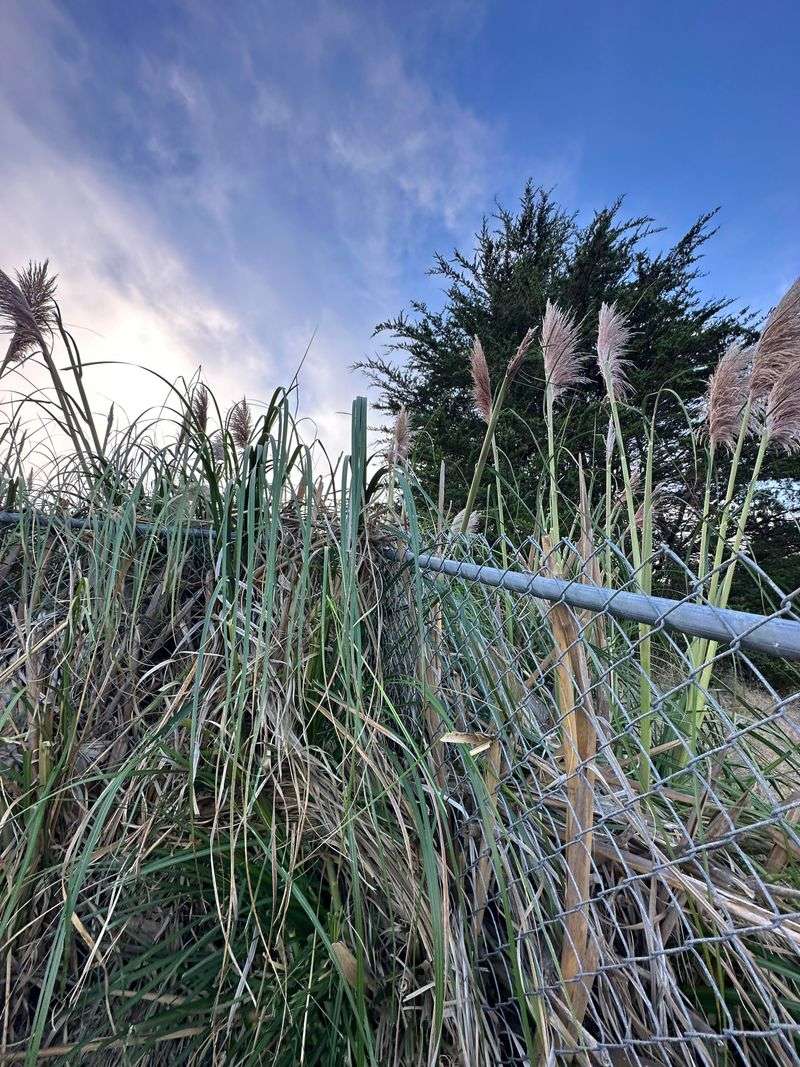
From a distance, jubata grass looks like something from a California dream, with its tall feathery plumes swaying in the breeze above coastal bluffs and dunes.
It has that ornamental quality that made it popular in landscaping for years. That popularity turned out to be a serious mistake for Oregon ecosystems.
Jubata grass, also called purple pampas grass, arrived on the Oregon Coast through the ornamental plant trade.
It escaped cultivation easily because each plant produces millions of tiny, wind-carried seeds. Those seeds travel extraordinary distances, landing on bare soil in vacant lots, roadsides, disturbed hillsides, and open fields far from any coast.
Inland counties are now reporting established populations in areas that were clean just a decade ago.
The plant grows in dense clumps that can reach twelve feet tall, shading out native grasses and wildflowers beneath them.
It establishes quickly on disturbed ground, which makes any construction site, graded lot, or logged hillside a potential new home. Inland sites with slightly drier conditions are still well within jubata grass tolerance ranges.
Removing plants before they produce plumes is the most effective control method.
Mature plumes should be bagged immediately to prevent seed release during removal. Never compost jubata grass material, as seeds can survive the process.
Checking your property after windy fall days for new seedlings can help catch new arrivals before they get established.
7. s Follows Wetland Edges
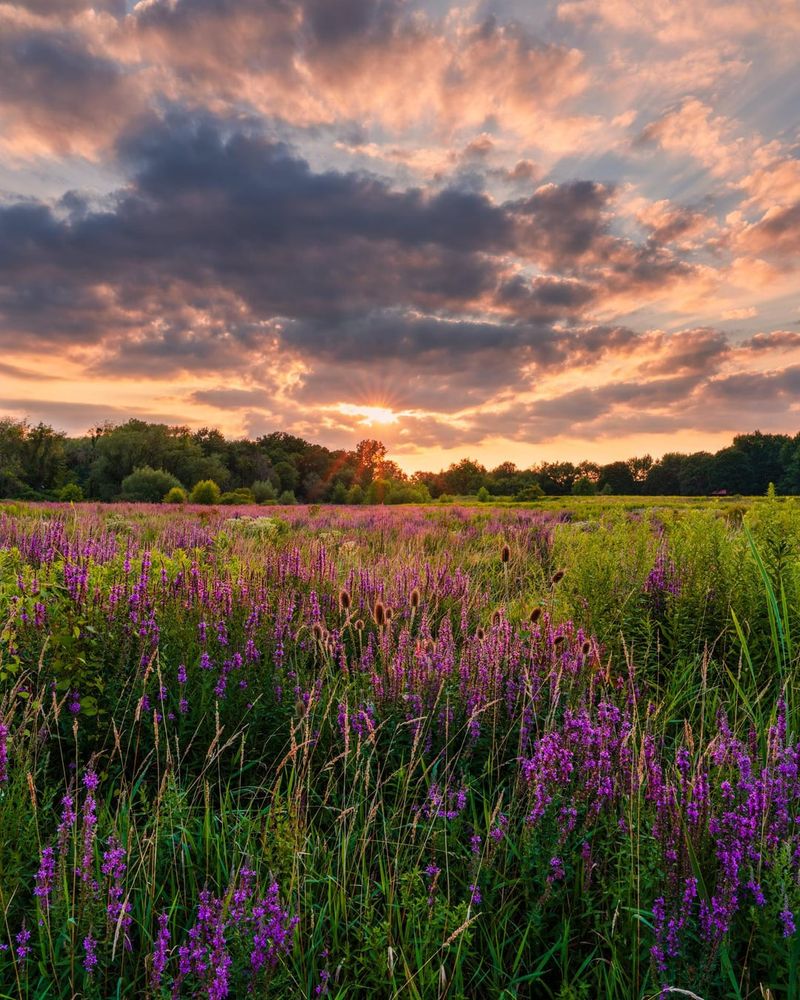
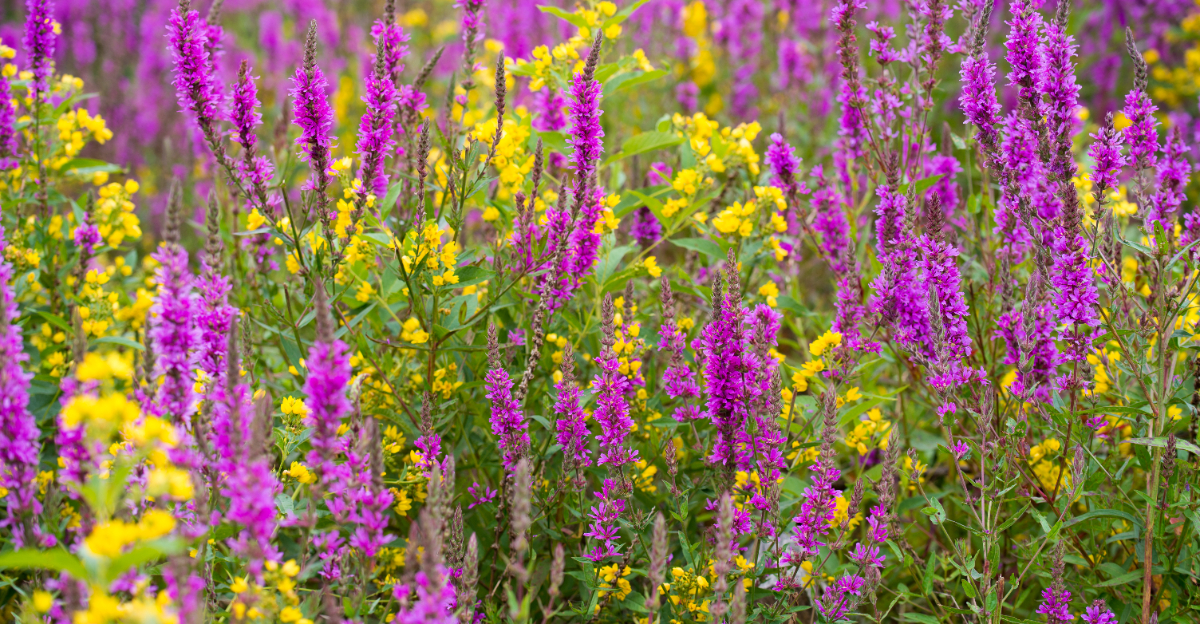
Bright magenta flower spikes rising above a marsh look stunning in late summer, and that is precisely why purple loosestrife went unquestioned for so long.
By the time Oregon land managers understood what it was doing to wetland ecosystems, it had already spread widely along coastal marshes and estuaries.
Purple loosestrife arrived in North America in the early 1800s, likely in ship ballast and through the ornamental plant trade.
Oregon coastal wetlands provided ideal habitat, with shallow standing water, rich soils, and plenty of sunlight.
From coastal marshes it moved inland along irrigation canals, roadside ditches, and the edges of ponds and slow-moving streams throughout the Willamette Valley and Columbia Basin.
A single mature plant can produce up to two million seeds per year.
Seeds float easily and travel with water flow, making any connected wetland system a potential new colony site.
Once established, purple loosestrife forms dense single-species stands that displace native cattails, bulrushes, and sedges, dramatically reducing habitat value for waterfowl, amphibians, and other wetland-dependent wildlife.
Early identification is the real game-changer with this plant.
Small patches are far easier to manage than established stands. Hand-pulling young plants when the soil is wet works well for small infestations.
Biological control using specific beetles that feed only on loosestrife has shown promising results in larger wetland areas across Oregon.
Reporting new patches to the Oregon Department of Agriculture gives managers the head start they need to act before a small problem becomes a very large one.