Pennsylvania Gardeners Should Watch For These Brown Rot Signs On Peach Trees
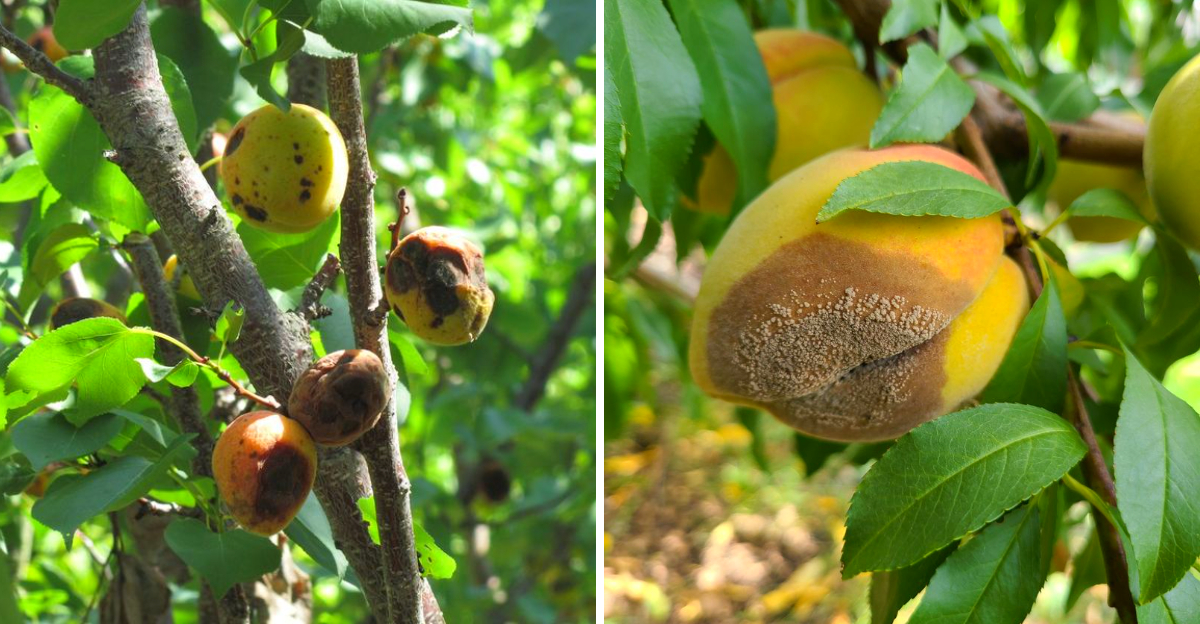
Peach trees have a way of making a Pennsylvania backyard feel like something special, right up until brown rot shows up and reminds you that fruit growing comes with real challenges.
This fungal disease is one of the more frustrating things a home orchardist can deal with, partly because it moves quickly and partly because it can affect blossoms, twigs, and fruit at different points through the season in ways that are easy to misread or miss entirely.
Pennsylvania’s wet springs and humid summers create genuinely favorable conditions for brown rot development, which means backyard peach growers across the state are dealing with this more often than they might expect.
The encouraging part is that early recognition makes a real difference.
Knowing what to look for at each stage gives you a much better chance of staying ahead of it.
1. Blossoms Wilt, Turn Brown, And Stay Attached
Spring bloom on a backyard peach tree is one of the most hopeful sights in a Pennsylvania garden, so noticing that some blossoms have wilted and turned brown can be unsettling.
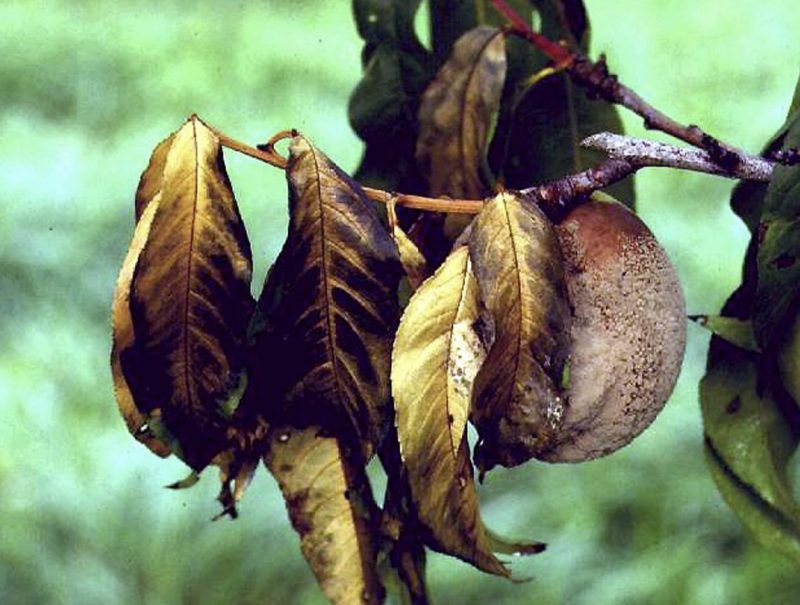
When brown rot affects peach blossoms, the flowers do not simply fall away as they normally would after pollination.
Instead, they shrivel up and cling to the branch, sometimes for weeks, looking almost like dried paper wrapped around the stem.
This symptom, often called blossom blight, tends to show up after periods of wet, rainy weather during the bloom window in Pennsylvania.
The fungus responsible for brown rot can infect open blossoms through moisture, and warm, damp conditions can make that process happen fairly quickly.
Not every wilted blossom signals brown rot, since late frosts and other issues can cause similar browning, but when multiple blossoms on the same branch wilt and cling without dropping, it is worth taking a closer look.
Gardeners watching their trees during or shortly after a rainy stretch in spring are in the best position to catch this early.
Paying attention to whether the browning is limited to one branch or spread across several areas of the tree can also help you understand the situation better.
Catching blossom blight early gives you useful information about what might be happening elsewhere on the tree as the season moves forward.
2. Small Cankers Form On Twigs
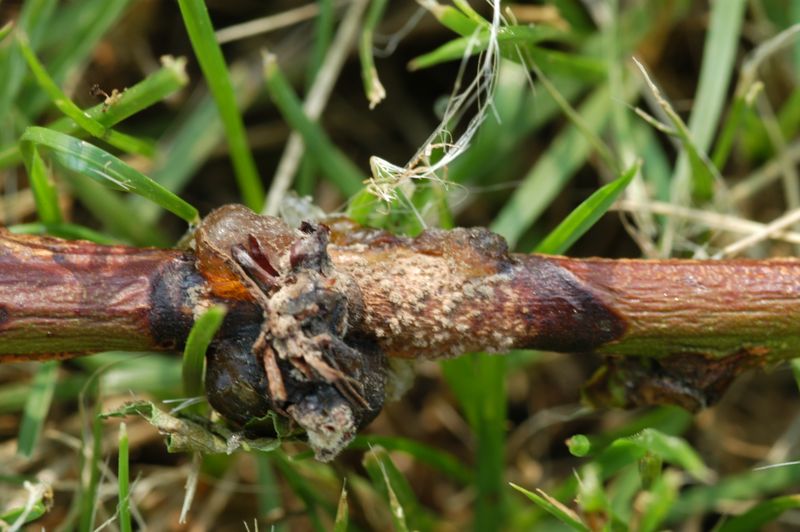
Small twigs on backyard peach trees sometimes show something that looks like a sunken, discolored patch of bark, and that is exactly the kind of detail worth pausing to examine.
These patches, called cankers, can form when the brown rot fungus moves from infected blossoms down into the twig tissue below.
They often appear as slightly darkened, sunken areas on young wood, and they may have a border that looks slightly different from the surrounding healthy bark.
Twig cankers connected to brown rot tend to develop in spring, following blossom infections during wet weather.
In Pennsylvania, where spring rainfall can be unpredictable and sometimes heavy, this transition from blossom to twig is something home orchardists should keep in mind.
Your Pennsylvania Garden Changes Every Week. Your Plan Should Too.
Gardening in Pennsylvania changes quickly throughout the season. Every Friday you’ll receive a simple weekly plan showing exactly what to plant, prune, fertilize, harvest, and protect so you never miss the right timing.
The canker itself may be small at first, making it easy to overlook during a quick glance at the tree.
Checking twigs carefully, especially on branches where blossoms already showed browning, can help you spot cankers before they develop further. Look for areas where the bark appears slightly sunken, cracked, or differently colored compared to the wood nearby.
Cankers on twigs matter because they can serve as a source of fungal spores that may spread to other parts of the tree later in the season.
Recognizing them as part of a larger pattern, rather than random bark damage, helps Pennsylvania gardeners understand what their tree may be dealing with overall.
3. Gum Oozes From Infected Twigs
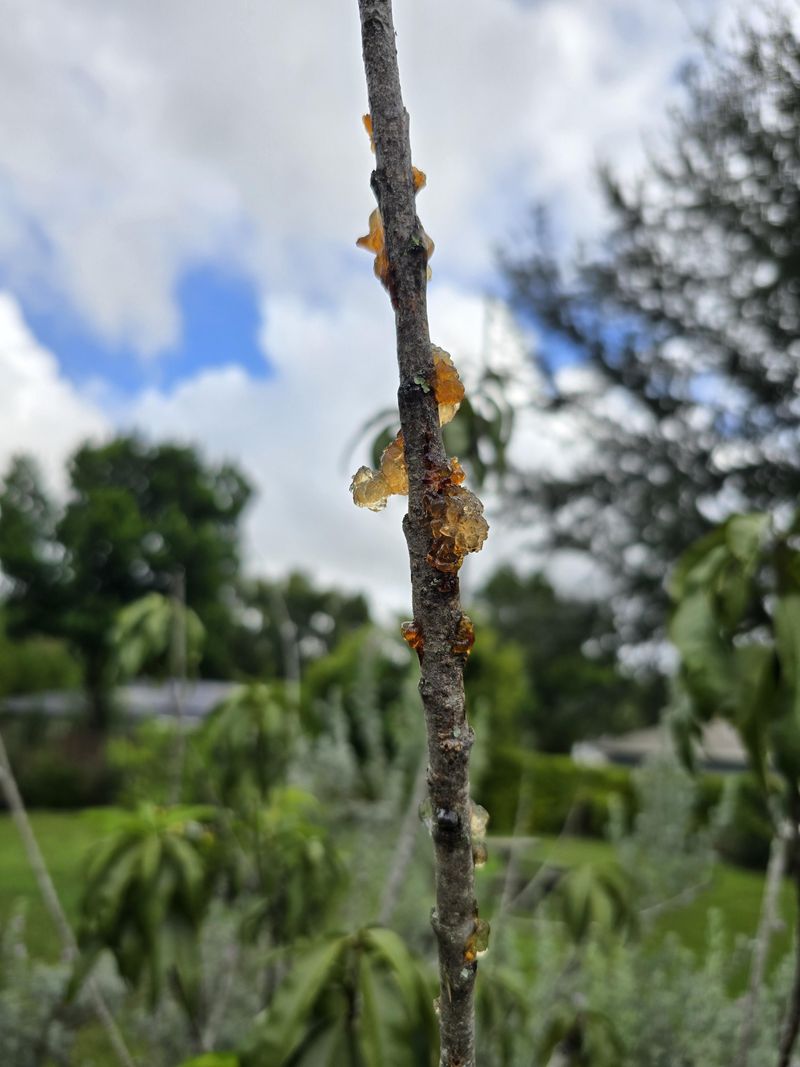
Sticky, amber-colored gum seeping out of a peach tree twig is not something most gardeners expect to find, but it is a sign worth understanding.
Peach trees can produce this kind of gum, sometimes called gummosis, in response to various types of stress or injury, including fungal infections like brown rot.
When gum appears near a canker or a recently infected area on a twig, it may suggest that the tree is responding to something more than just minor mechanical damage.
The gum itself can look glossy and wet when fresh, then harden and become amber-colored or darker as it dries on the branch.
Finding gum alongside other potential brown rot symptoms, such as nearby wilted blossoms or a sunken canker patch, makes the observation more meaningful.
On its own, gum oozing from a peach twig does not confirm a brown rot infection, since other issues including other fungal diseases, bacterial problems, or borer activity can also trigger gummosis in Pennsylvania peach trees.
Still, gum appearing on twigs during or after a period of wet spring weather is a useful prompt to examine the surrounding wood more carefully. Look at the area around the gum for any discoloration, sunken bark, or other changes in the twig.
Noting where the gum is located, which branches are affected, and whether blossoms on those branches showed earlier symptoms can help build a clearer picture of what your tree might be experiencing.
4. Small Brown Spots Appear On Ripening Peaches
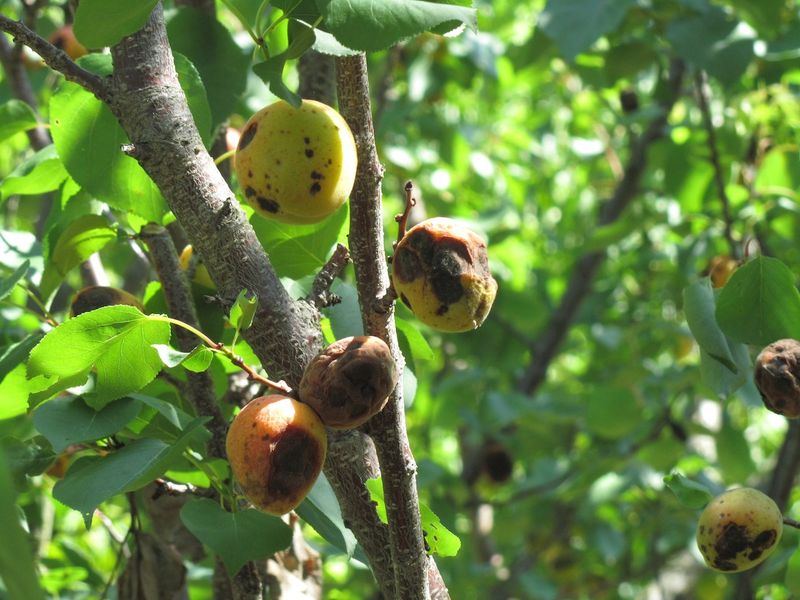
Fruit beginning to soften and color up near harvest is an exciting stage for any Pennsylvania gardener who has been tending a peach tree through the season.
But small brown spots appearing on the skin of ripening peaches are worth paying close attention to, especially during warm, humid stretches of summer weather.
These spots can be an early sign that brown rot is starting to take hold on the fruit.
Early brown rot spots on peaches often start as small, circular, light brown discolorations on the skin. They may look minor at first, almost like a bruise or a small blemish, which makes them easy to dismiss.
However, brown rot spots tend to have a slightly soft or sunken quality compared to surface marks caused by insects or physical damage, and that texture difference can be a helpful clue when examining fruit closely.
Spotting these early marks matters because brown rot on ripening peaches can progress more quickly than many gardeners expect, particularly when temperatures are warm and humidity is high, which is common in Pennsylvania during summer.
Catching the first small spots while they are still limited in size gives you more time to assess the situation and decide how to respond.
Checking fruit regularly as harvest approaches, rather than waiting until picking day, is one of the most practical habits a home orchardist in Pennsylvania can develop during the ripening window.
5. Brown Areas Expand Fast On Ripe Fruit
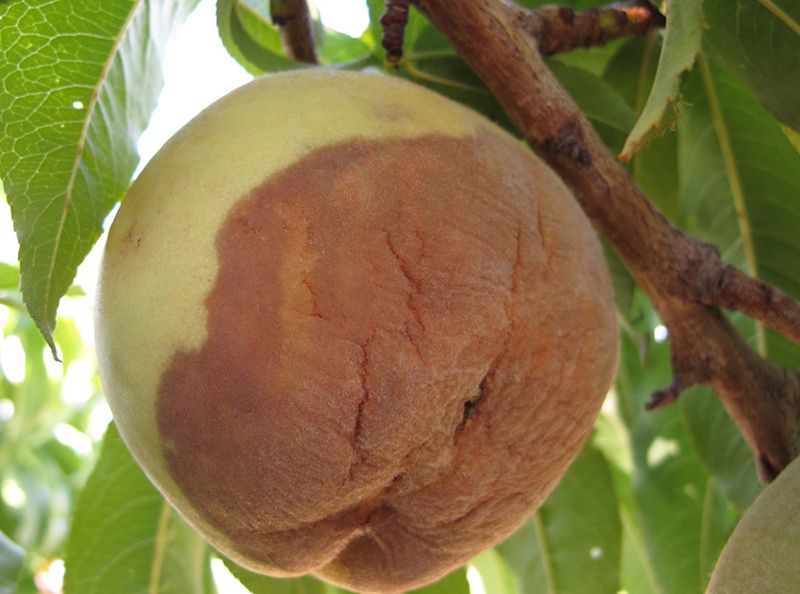
Peaches nearing harvest have a way of making everything feel urgent, and brown rot has a knack for matching that urgency in the worst possible way.
Once the fungus establishes itself on a ripe peach, the brown areas can spread across the fruit surface surprisingly fast, sometimes expanding visibly within a day or two under warm, moist conditions.
What starts as a small spot can grow into a large, soft, brown patch that covers much of the fruit.
Ripe peaches are especially vulnerable because the skin softens as the fruit matures, making it easier for the fungus to penetrate.
In Pennsylvania, the weeks leading up to harvest often bring warm temperatures and occasional summer rain, which can create conditions favorable for rapid disease spread on fruit.
A peach that looked fine in the morning might show noticeably more browning by evening during a particularly warm and damp stretch.
Watching fruit carefully during the final weeks before harvest is genuinely useful because catching expanding brown areas early allows you to remove affected fruit before it can potentially contribute to further spread on nearby peaches.
It also helps you plan your harvest timing more thoughtfully, prioritizing fruit that is ripening normally and showing no signs of trouble.
For Pennsylvania home gardeners, understanding that ripe fruit is the most vulnerable stage helps frame the entire season of care in a more practical and realistic way.
6. Tan Or Gray Spore Masses Cover Rotting Areas
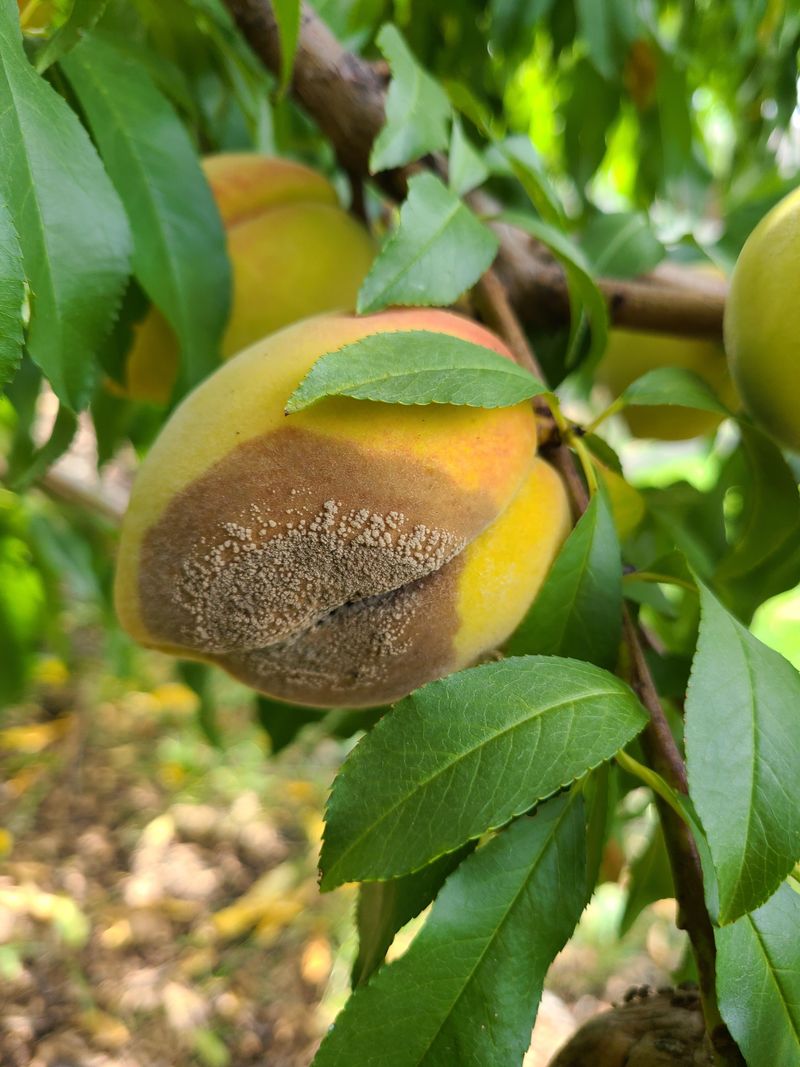
Grayish or tan powdery patches appearing on the surface of a rotting peach are one of the more visually striking signs that brown rot has advanced significantly on that piece of fruit.
These fuzzy or powdery-looking patches are actually masses of fungal spores, and they tend to form in small, circular tufts that can spread across the rotting surface as the infection progresses.
Seeing them on fruit in a Pennsylvania backyard orchard means the disease has moved well past its early stages on that particular peach.
The spore masses can appear in concentric rings or scattered clusters across the brown, softened areas of the fruit.
They are typically tan, grayish, or sometimes slightly olive in color, and they have a dusty or powdery texture that distinguishes them from the simply discolored flesh underneath.
These spores are part of how the brown rot fungus can potentially spread to nearby fruit or plant material, particularly when wind or rain moves them from one location to another.
For Pennsylvania gardeners, recognizing spore masses as a sign of advanced infection is helpful because it signals that the fruit in question is well beyond recovery and should be removed from the tree carefully.
Handling sporulating fruit gently and disposing of it away from the garden area is generally a sensible approach.
Spotting this stage also serves as a reminder to check surrounding fruit and nearby branches for earlier-stage symptoms that may have gone unnoticed until now.
7. Shriveled Fruit Stays Hanging On The Tree
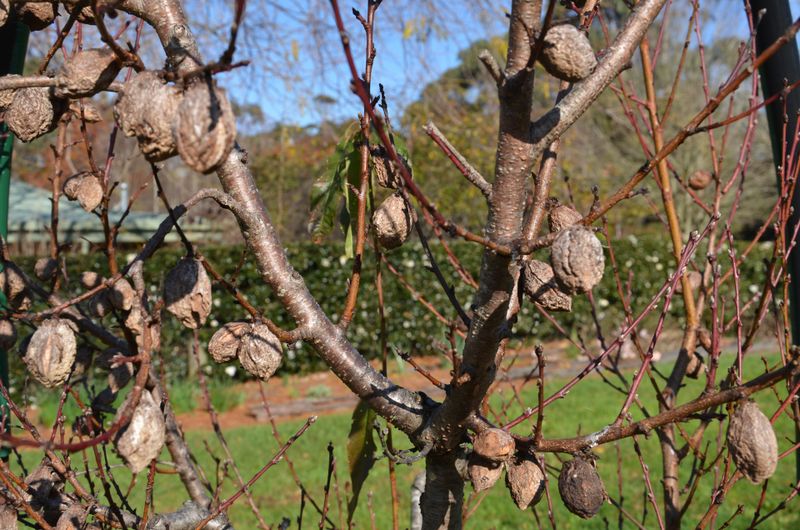
Walking past a peach tree after the main harvest season and noticing small, shriveled pieces of fruit still clinging to the branches is a sign that something interfered with those peaches before they could fully ripen and fall naturally.
Fruit that has been affected by brown rot can shrivel and dry out while remaining attached to the branch rather than dropping to the ground.
This shriveled, dried fruit is often called a mummy, and its presence on the tree is worth noting.
Mummification happens when the fungus causes the fruit to lose moisture rapidly while the infection progresses, resulting in a hard, shrunken piece that clings to the spur or branch.
In Pennsylvania home orchards, shriveled fruit hanging in the canopy after the growing season can be easy to overlook, especially once leaves have fallen and attention shifts away from the garden.
But these mummies are more than just a cosmetic issue.
Shriveled fruit remaining on the tree through fall and winter can harbor the brown rot fungus, potentially serving as a source of infection the following spring when conditions become favorable again.
For Pennsylvania gardeners thinking about next season, removing dried, shriveled fruit from the tree before winter is a practical step that many home orchard guides recommend as part of general sanitation.
It will not guarantee a disease-free season, but it reduces one potential source of the fungus that could otherwise be sitting in the canopy through the cold months.
8. Old Fruit Mummies Remain From Last Season
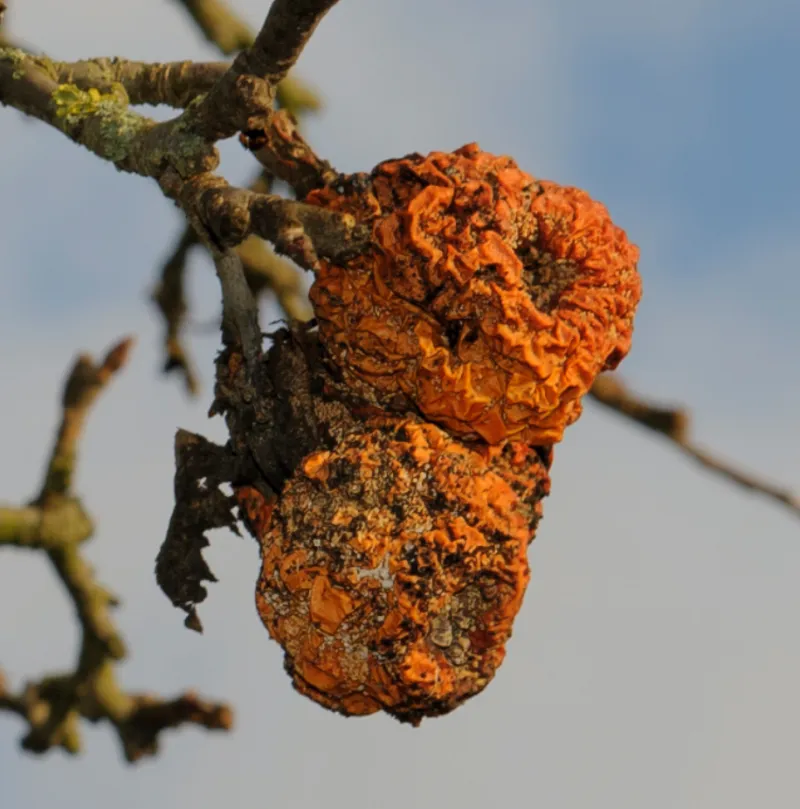
Old fruit left from the previous season, still hanging on peach tree branches or resting in the crotches of limbs, is something Pennsylvania gardeners may notice when they step outside to check their trees in late winter or early spring before new growth begins.
These dried, darkened remnants are sometimes called fruit mummies, and they are considered a potential carryover source of the brown rot fungus from one season to the next.
Over winter, these mummies can remain on the tree through freezing temperatures and snow without necessarily losing the ability to harbor fungal material.
When spring arrives and temperatures warm up, especially during wet periods that coincide with bloom time in Pennsylvania, old mummies may contribute to the presence of spores near blossoms and developing twigs.
This connection between last season’s leftover fruit and the start of a new infection cycle is one reason why sanitation is often discussed in home orchard care guides.
Spotting old mummies on your Pennsylvania peach tree in late winter is actually a helpful early-season observation. It gives you a chance to remove them before bloom begins, which reduces one potential source of fungal pressure heading into spring.
Removing mummies by hand or with a gentle rake, and disposing of them away from the garden rather than leaving them on the ground beneath the tree, is a straightforward step that fits naturally into early-spring garden preparation for backyard fruit growers.