The Ohio Native Shrub That Turns One Yard Into A Bird Feeding Station
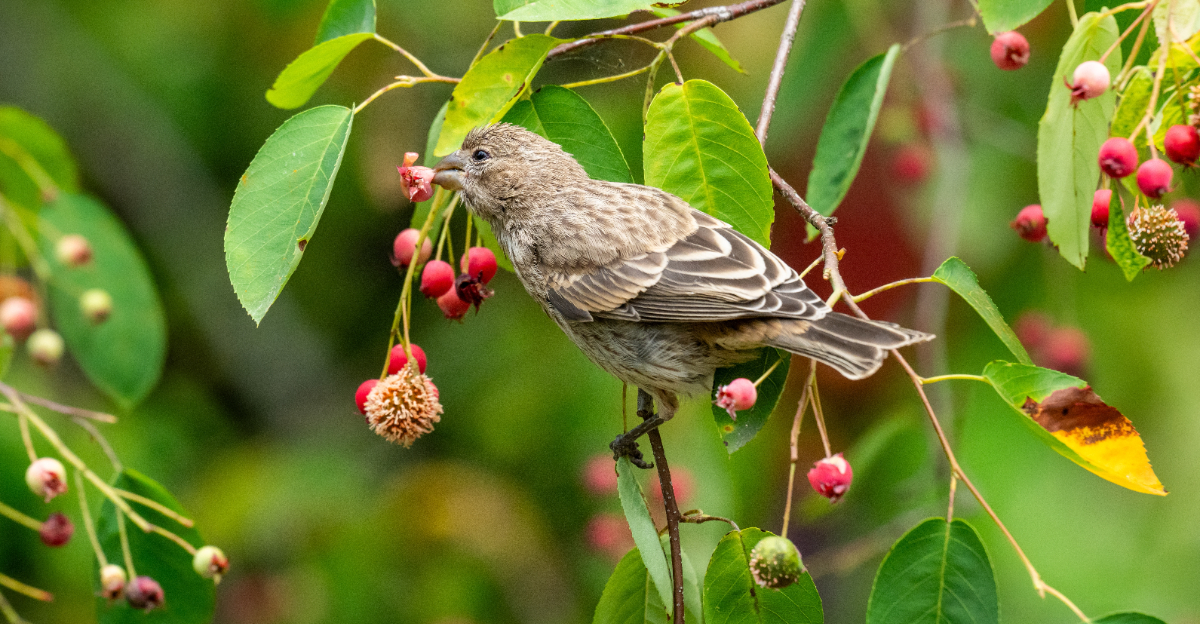
Bird feeders attract birds. Everyone knows that.
What most Ohio homeowners have not figured out is something simpler. One native shrub in the right spot outperforms any feeder, any seed mix, or any birdbath ever could.
This is not a subtle difference. When this shrub fruits in early summer, it pulls in species that a feeder never sees.
Warblers, thrushes, orioles, birds that are passing through Ohio and making real decisions about where to stop based on what the landscape is offering. A yard with this shrub becomes a destination during migration.
That is something most Ohio bird enthusiasts spend years trying to achieve through equipment and feed rather than plants. One shrub.
The right timing. A yard that suddenly has more bird activity than the neighbors combined.
Ohio native plants have a way of overdelivering when you give them the right role.
1. Choose Serviceberry For A Yard Birds Notice Fast
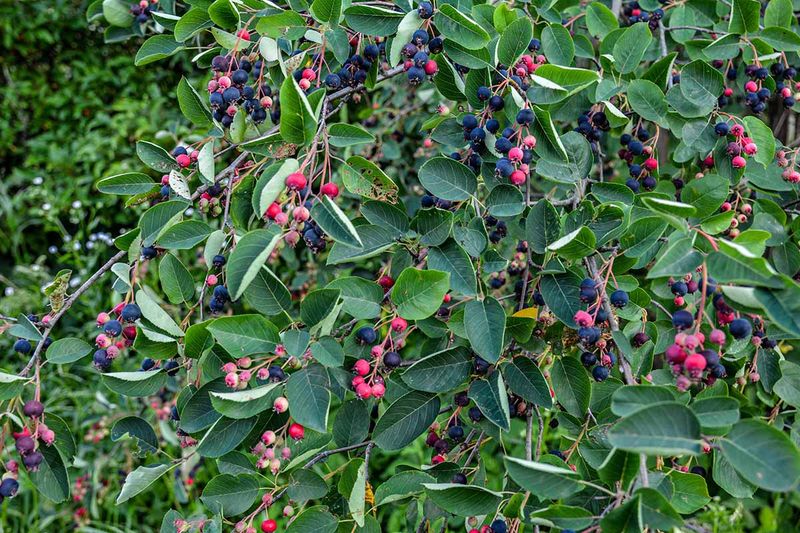
A robin landing on a low branch, tilting its head toward a cluster of ripening berries, is often the first sign that serviceberry is doing its job.
Serviceberry belongs to the Amelanchier genus, a group of native shrubs and small trees that grow naturally across Ohio and much of eastern North America.
Two species frequently recommended for local yards are Allegheny serviceberry, Amelanchier laevis, and downy serviceberry, Amelanchier arborea. Both are recognized as native by Ohio Department of Natural Resources plant guidance.
Depending on species, cultivar, pruning history, and growing conditions, serviceberry can reach anywhere from eight to twenty-five feet tall. Some grow as graceful multi-stemmed shrubs while others develop a more tree-like form over time.
Checking the mature height and spread before buying prevents crowding problems later.
Native plant guidance from OSU Extension advises purchasing serviceberry from reputable native plant nurseries rather than big-box stores. Big-box stores sometimes carry non-native or hybrid cultivars that may not offer the same ecological value.
Ask specifically for species native to Ohio when possible. Serviceberry earns its place in a bird-friendly yard not because it attracts the most species of any shrub.
It earns it because it combines early fruit, spring flowers, and woody structure into one well-timed, well-placed plant.
2. Feed Songbirds With Early Summer Berries
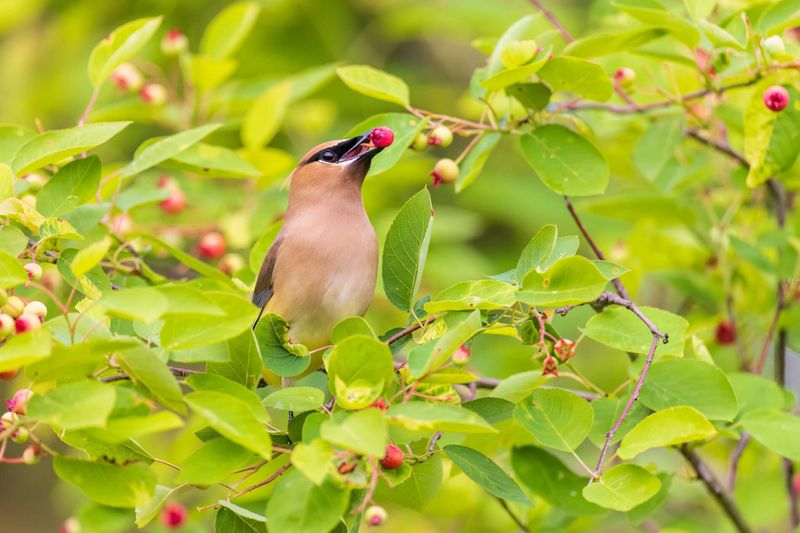
Watch a serviceberry in late May or early June and you may catch cedar waxwings, American robins, or gray catbirds working through the branches with surprising speed.
Serviceberry produces small, berry-like pome fruits that typically ripen in late spring to early summer.
That makes them one of the earliest native fruit sources available in the season. Audubon plant guidance and ODNR native plant lists both note that serviceberry fruit is used by a variety of native bird species during this early window.
The berries do not always last long. In some yards, birds can strip a shrub clean within days of peak ripeness.
Fruiting can also vary from year to year depending on weather during bloom, pollination success, plant age, and local conditions. Planting more than one shrub, or choosing a spot with another serviceberry nearby, can improve fruit set through cross-pollination.
Your Ohio Garden Changes Every Week. Your Plan Should Too.
Gardening in Ohio changes quickly throughout the season. Every Friday you’ll receive a simple weekly plan showing exactly what to plant, prune, fertilize, harvest, and protect so you never miss the right timing.
Avoid applying pesticides to or near serviceberry while it is flowering or fruiting unless the product label specifically allows it and there is a genuine pest problem. Position the plant where fallen fruit will not stain a patio or walkway, since berries drop as they overripen.
Birds handle most of the cleanup, but planting away from high-traffic surfaces keeps things tidy.
3. Plant It Where Birds Can Perch And Browse
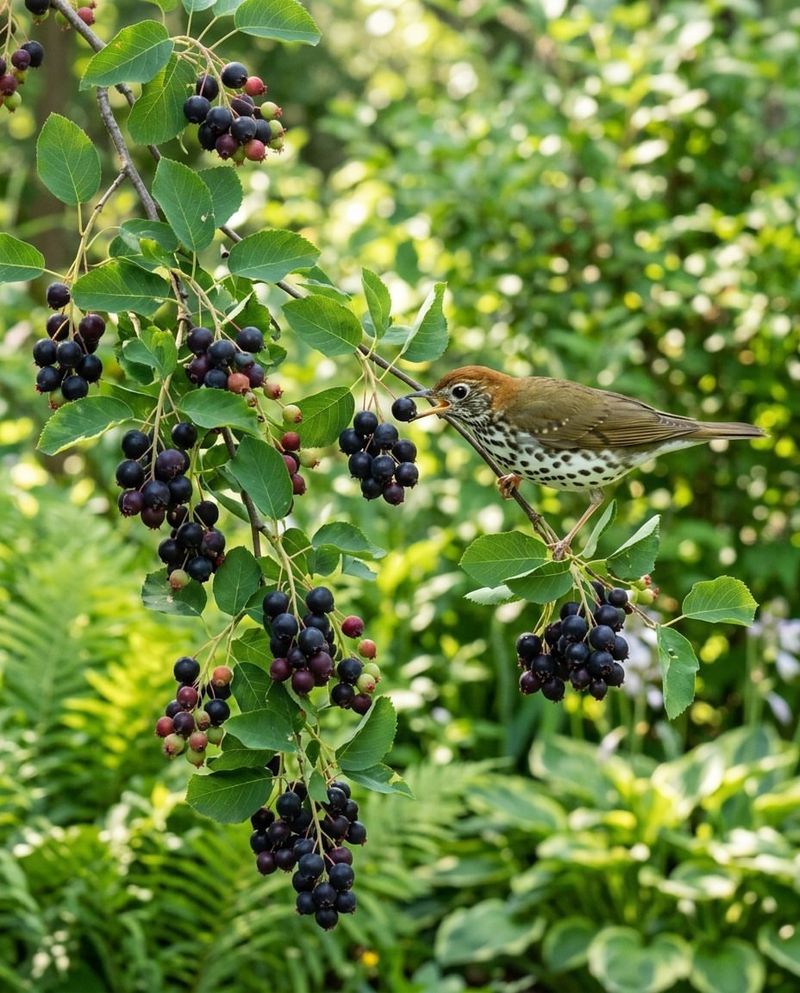
Birds are cautious feeders. They scan for predators before landing, prefer clear sightlines, and feel safer when cover is close.
Placing serviceberry thoughtfully in the yard can make the difference between a plant birds use regularly and one they visit only occasionally.
University extension sources explain that fruiting shrubs near Ohio woodland edges, mixed native borders, or open lawn edges tend to attract more bird activity. Isolated plants in the middle of a bare lawn usually draw less use.
A serviceberry near a hedgerow, a grouping of native shrubs, or even a fence line gives birds a quick escape route and a natural approach path. Birds use the branches not just to eat fruit but also to rest, preen, and watch for danger.
Sun exposure matters too. Serviceberry generally performs best in full sun to partial shade, and a sunnier location usually produces more fruit.
Avoid planting too close to building foundations, narrow side yards, or under utility lines. The mature size of the chosen species could cause problems in ten to fifteen years.
Give the plant enough room to develop its natural branching structure. That open, layered form is part of what makes it useful to birds as both a feeding station and a perching spot.
4. Let Spring Flowers Support The First Pollinators
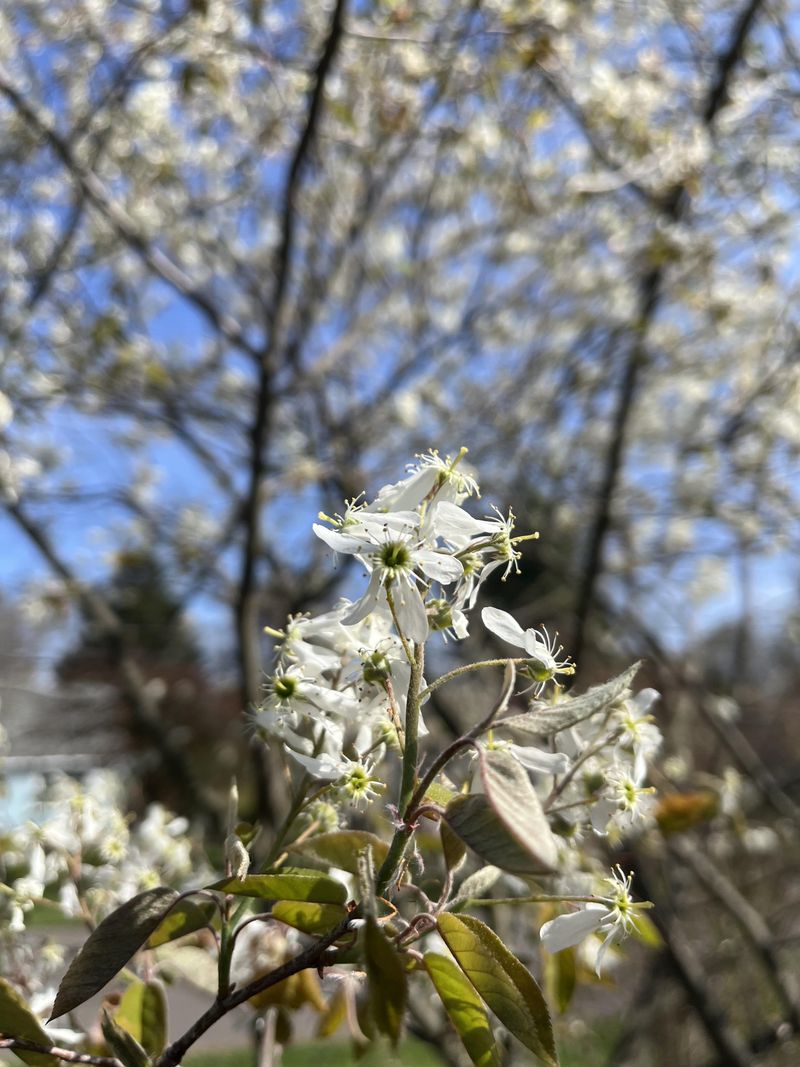
Before most other flowering shrubs have opened a single bud, serviceberry is already covered in clusters of small white flowers. Bloom typically occurs in early to mid-spring, often while nights are still cool and many native insects are just becoming active.
OSU Extension and native plant guidance describe serviceberry as one of the earlier-blooming woody plants in the native landscape. That gives it particular value during a period when few other flower sources are available.
Native bees, early butterflies, and other beneficial insects can visit serviceberry flowers when conditions allow. That insect activity matters to birds in ways that go beyond the berries.
Many songbirds, including warblers and vireos, depend heavily on insects to feed their nestlings during spring and early summer. A yard that supports early-season insects through native flowering plants becomes more attractive to nesting birds as well.
Letting flowers develop naturally into fruit means resisting the urge to trim or prune at the wrong time. Avoid any spray applications while the plant is in bloom to protect visiting pollinators.
Planting serviceberry in a mixed native border alongside other early-blooming plants creates a layered sequence of resources. That benefits both insects and the birds that follow them.
The flowers are also genuinely beautiful, adding visual interest before spring foliage fully fills in.
5. Give The Shrub Room To Become A Small Tree
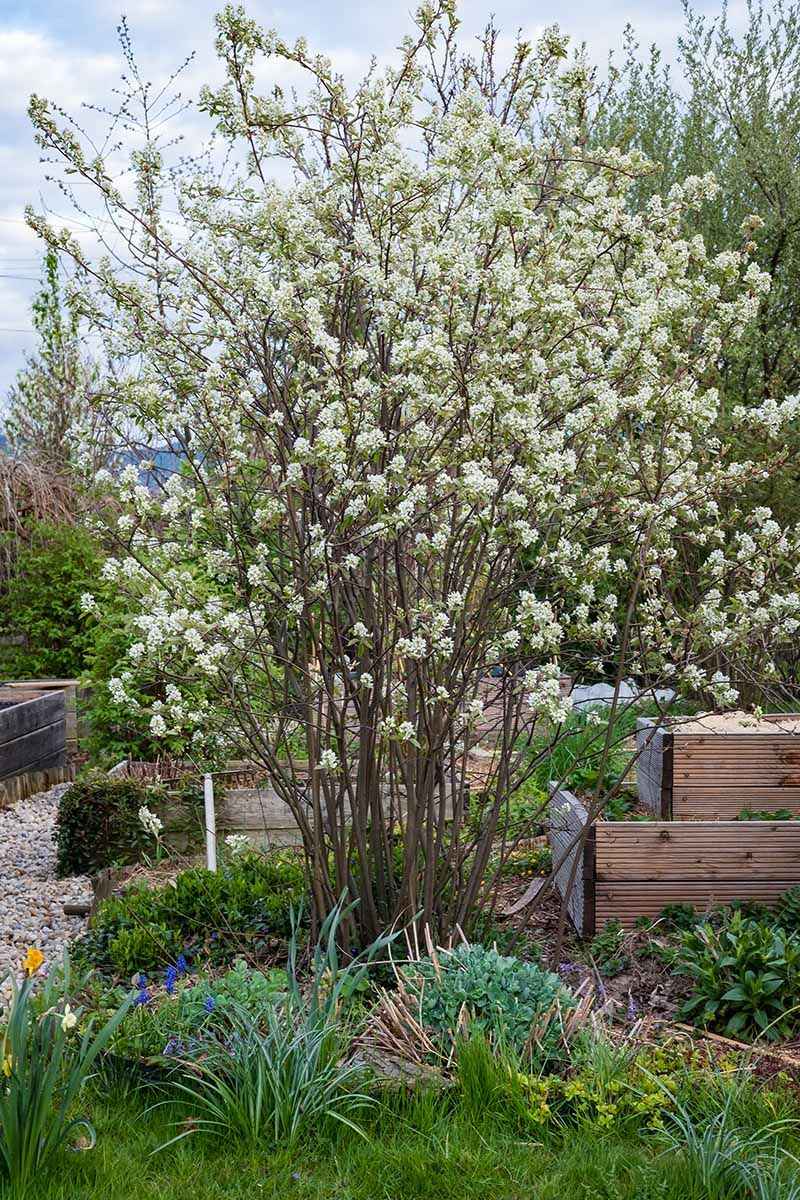
Serviceberry has a natural elegance that shows best when it has room to grow. Depending on the species, a mature plant can develop into a graceful multi-stemmed shrub or a small tree with smooth gray bark and a gently arching canopy.
Cramping it against a foundation wall or squeezing it between large evergreens prevents it from reaching that form and can reduce both flowering and fruit production.
Ohio native plant guidance from botanical garden sources recommends checking the expected mature height and spread of the specific species or cultivar before planting.
Downy serviceberry, Amelanchier arborea, can reach fifteen to twenty-five feet in favorable conditions.
Allegheny serviceberry tends to be somewhat similar in scale. Smaller cultivars are available if space is limited, but verifying their native status and fruiting potential is worth the extra step.
Light pruning can help maintain good structure over time. Removing withered, damaged, crossing, or crowded stems during the dormant season keeps the plant healthy and open.
Avoid heavy shearing or cutting back hard, since serviceberry blooms on wood from the previous year. Over-pruning at the wrong time can reduce the following season’s flowers and fruit.
The goal is a plant with enough open branching to let birds move through it freely, not a tightly clipped form that limits access.
6. Pair It With Native Shrubs For A Longer Buffet
Serviceberry fruit ripens fast and birds often find it quickly. Once the berries are gone, a yard with only serviceberry offers less reason for birds to linger.
Pairing it with other native shrubs that fruit at different times extends the seasonal value of the yard significantly.
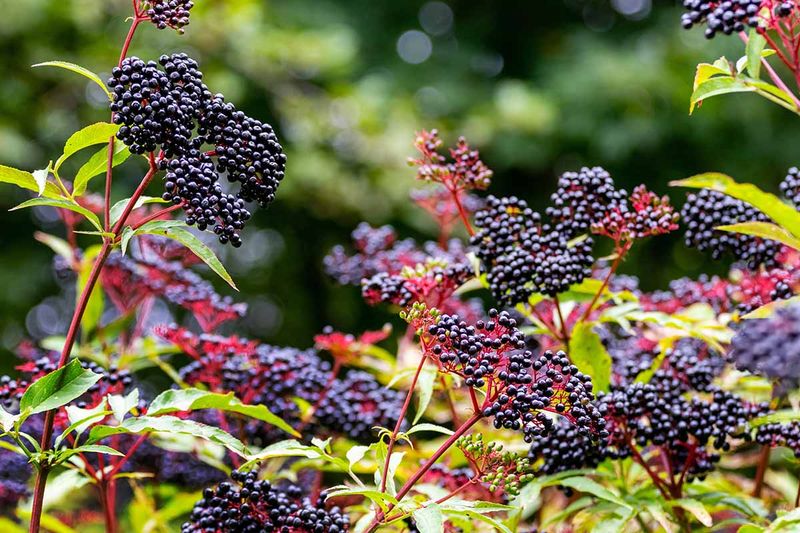
ODNR native plant lists and OSU Extension guidance include several excellent companions. Elderberry, Sambucus canadensis, produces fruit in midsummer and draws many of the same species that visit serviceberry.
Viburnums offer late-summer and fall fruit that persists into cooler months. Spicebush, Lindera benzoin, is a shade-tolerant native shrub with fall berries that certain migrating birds favor.
Winterberry holly, Ilex verticillata, holds its bright red berries through winter, providing color and food when little else is available. Chokeberry and native dogwoods round out the mix with their own fruiting windows.
Matching companions to site conditions is important. Some of these plants prefer moist soils, others tolerate drier spots, and sun requirements vary.
A mixed border that sequences bloom and fruit from spring through fall creates what some native plant guides describe as a living buffet. It keeps birds returning through multiple seasons.
Serviceberry anchors the early end of that sequence, making it a natural starting point for a more complete native planting.
7. Protect The Fruit Without Taking It All
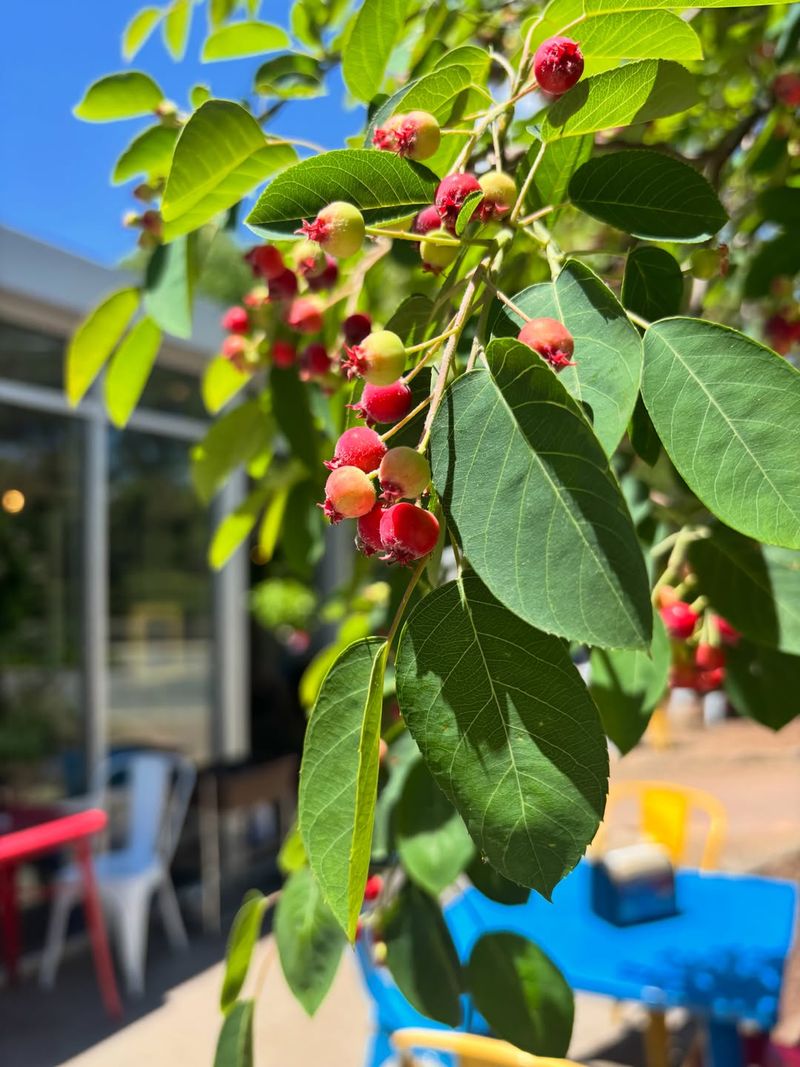
Serviceberries are edible and have a mild, sweet flavor that some people compare to blueberries. The same qualities that make the fruit appealing to people also make it attractive to birds.
In many yards, the berries disappear before there is much chance to harvest them. Deciding early whether the plant is primarily for wildlife or partly for personal harvest helps set realistic expectations.
If harvesting lightly, pick only a small portion of the fruit and leave the rest for birds. Avoid clearing an entire shrub before birds have had a chance to feed.
Fruiting can vary from year to year based on late frost events during bloom, rainfall, plant age, and pollination, so some seasons will produce more than others. Do not count on a reliable personal harvest every year.
Some gardeners consider netting to protect fruit, but bird netting can entangle wildlife including small birds and beneficial insects if not used carefully. If netting is used, choose a mesh size that prevents entanglement, monitor it daily, and remove it promptly once harvest is done.
Audubon guidance cautions against leaving loose netting unattended around fruiting plants. Sharing the crop freely with birds is the simplest approach, and it keeps the yard functioning as the wildlife stop the title describes.
8. Turn One Serviceberry Into A Seasonal Bird Stop
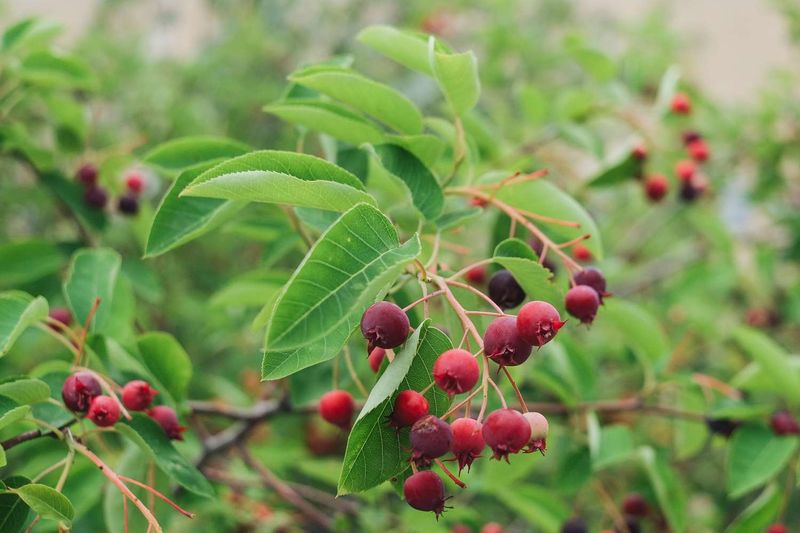
A single well-placed serviceberry can become a reliable stop on a local bird’s seasonal route when it is supported by the right conditions around it.
The plant works best as part of a yard that also offers water, some ground cover or leaf litter in low-traffic areas, nearby shrub cover, and reduced pesticide use.
Birds are more likely to return to a yard that feels safe and offers more than one reason to land.
During the first two years after planting, water serviceberry regularly during dry spells to help it establish a deep root system. Mulching with two to three inches of wood chips or shredded leaves keeps moisture in and reduces competition from grass.
Keep mulch a few inches away from the base of the stems to prevent rot. Once established, serviceberry is relatively low-maintenance and tolerant of the variable conditions common in local yards.
Results will vary by neighborhood, nearby habitat, and the mix of bird species active in the area. Some yards may see heavy bird use within the first fruiting season.
Others may take a few years as local birds discover the plant and work it into their patterns. What makes serviceberry worth planting is its combination of spring flowers, early summer fruit, graceful structure, and year-round perching value.
Together, those qualities give birds a real reason to notice one yard and keep coming back.