This Is The Invasive Insect Destroying Pennsylvania Rhododendrons Before They Ever Get To Bloom
Rhododendrons are one of Pennsylvania’s most cherished garden plants. That spectacular spring bloom, the glossy evergreen foliage year round, the way a mature rhododendron anchors a shaded garden bed like nothing else can.
But across the state, gardeners are watching their rhododendrons decline in a way that’s both confusing and deeply frustrating. The blooms never come. Or they start and stop. The foliage looks increasingly stressed.
And the cause is something most people never think to look for. An invasive insect has been quietly working through Pennsylvania rhododendron populations, doing its damage in ways that are easy to miss until the plant is already significantly weakened.
By the time most gardeners investigate, the infestation is well established and the plant has been struggling for longer than they realized.
Experts are seeing more cases across the state, and awareness among home gardeners remains surprisingly low for a pest that is causing this level of damage.
Here’s what this invasive insect is, how to identify it, and what to do if your rhododendrons are showing the signs.
The Invasive Insect Destroying Pennsylvania Rhododendrons
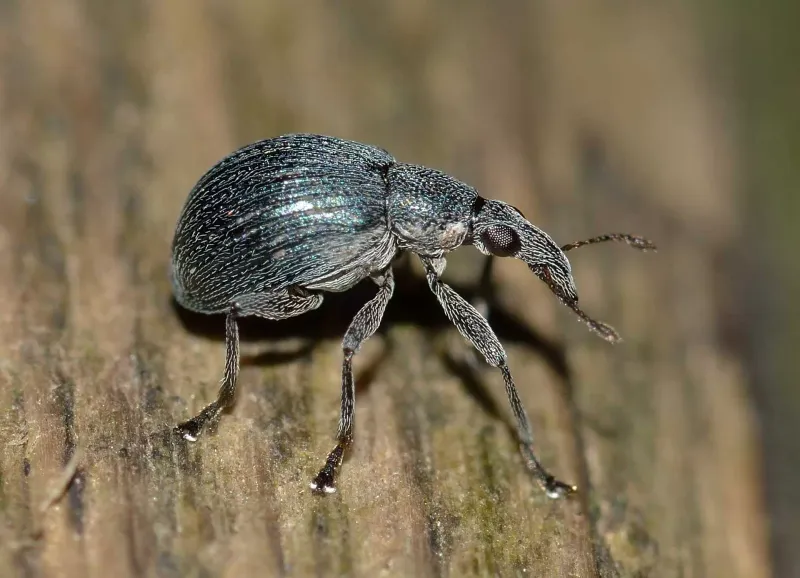
Most gardeners never suspect a tiny beetle-like insect could be the reason their rhododendrons look so sad year after year. The black vine weevil is one of the most destructive pests in Pennsylvania gardens, and it targets rhododendrons with surprising effectiveness.
Adults are small, dark, and wingless, making them easy to overlook during routine garden checks.
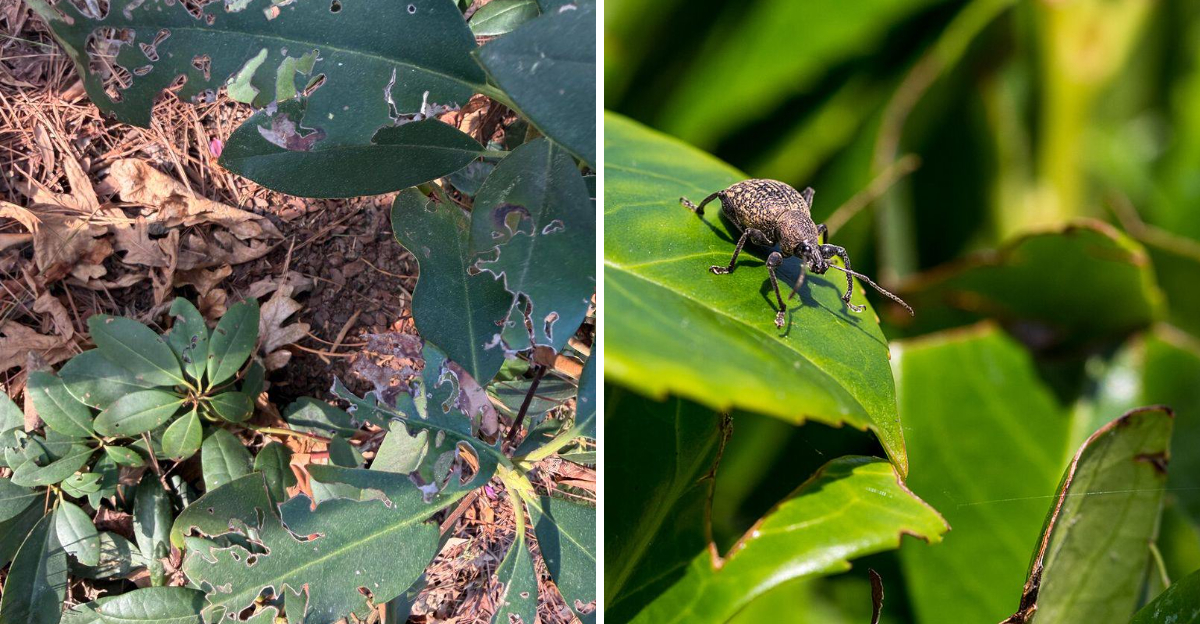
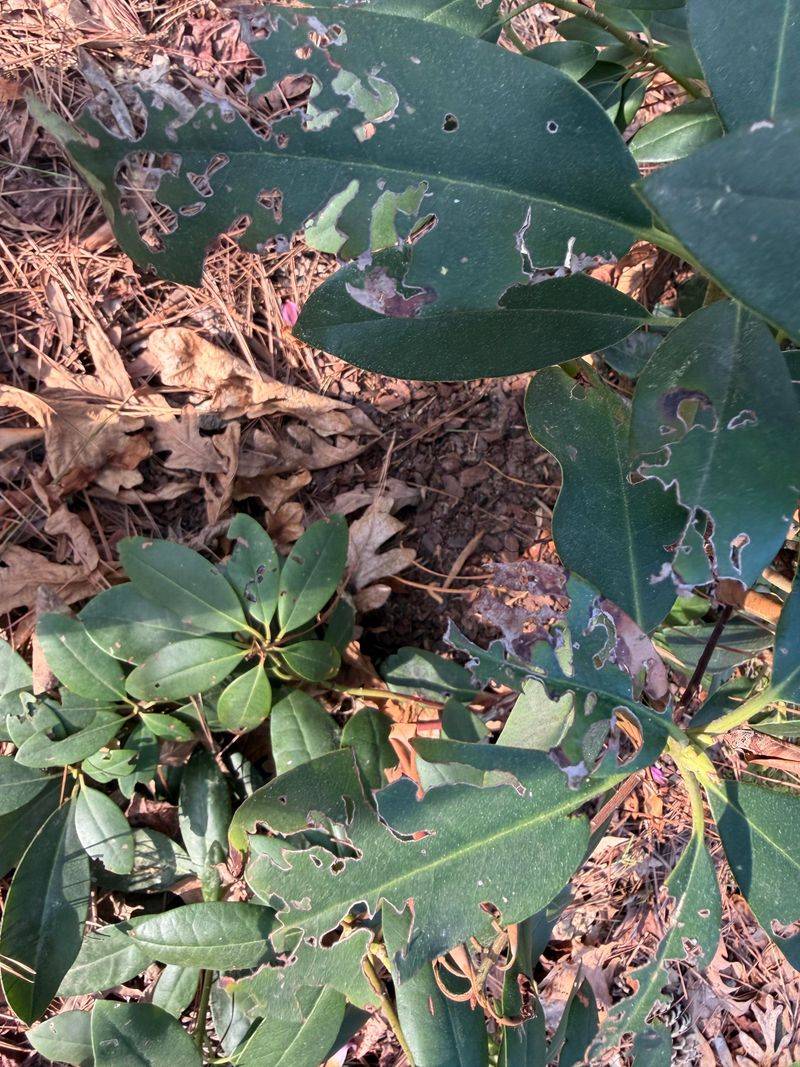
What makes this pest especially tricky is that the damage happens in two very different places. Adult weevils chew along the edges of leaves at night, leaving behind curved notches that look almost decorative at first glance.
Many gardeners notice these notches but do not realize they signal a much bigger problem happening just beneath the surface.
Underground, the larvae are the real troublemakers. After eggs hatch in the soil, young larvae begin feeding on the plant’s roots throughout fall and winter.
By the time spring arrives and bloom season should be starting, the roots may already be seriously weakened.
Black vine weevils were introduced to North America from Europe and have spread steadily across the northeastern United States.
Pennsylvania’s cool, moist climate is perfectly suited for their life cycle. They thrive in mulched garden beds where rhododendrons are commonly planted.
The frustrating part is that plants often look fine on the surface until root damage becomes severe. Gardeners may water more, fertilize more, and still see no improvement.
Knowing that the black vine weevil exists and recognizing its signs early can save your rhododendrons before things get out of hand.
Why Rhododendrons Are So Vulnerable To This Pest
Rhododendrons have a reputation for being tough, long-lived shrubs, but there is one structural weakness that makes them especially easy targets for the black vine weevil.
Their root systems are shallow and fibrous, sitting close to the soil surface rather than reaching deep underground.
That placement puts them right in the feeding zone of weevil larvae during the most vulnerable months of the year.
Your Pennsylvania Garden Changes Every Week. Your Plan Should Too.
Gardening in Pennsylvania changes quickly throughout the season. Every Friday you’ll receive a simple weekly plan showing exactly what to plant, prune, fertilize, harvest, and protect so you never miss the right timing.
When larvae begin chewing on those shallow roots, the plant loses its ability to pull water and nutrients from the soil efficiently.
You might notice your rhododendron looking stressed even when rainfall has been normal and your care routine has not changed at all. Leaves may look dull, growth may slow down, and flower buds may fail to develop properly.
Another reason rhododendrons struggle more than other shrubs is their sensitivity to root disturbance. Even minor root loss can throw off the plant’s balance.
A healthy rhododendron pushes a lot of energy into producing blooms, and when the root system cannot keep up, flowering is often the first thing to suffer.
Gardeners sometimes blame themselves when their rhododendrons underperform. They try different fertilizers, adjust watering schedules, or move plants to sunnier spots.
But if weevil larvae are feeding below the surface, none of those changes will make a real difference until the pest problem is addressed directly.
Paying close attention to how your rhododendrons look throughout the season is key. Unexplained wilting, sparse foliage, or a plant that just never seems to thrive despite good care are all signs worth investigating further before the next bloom season arrives.
The First Sign Most Gardeners Notice
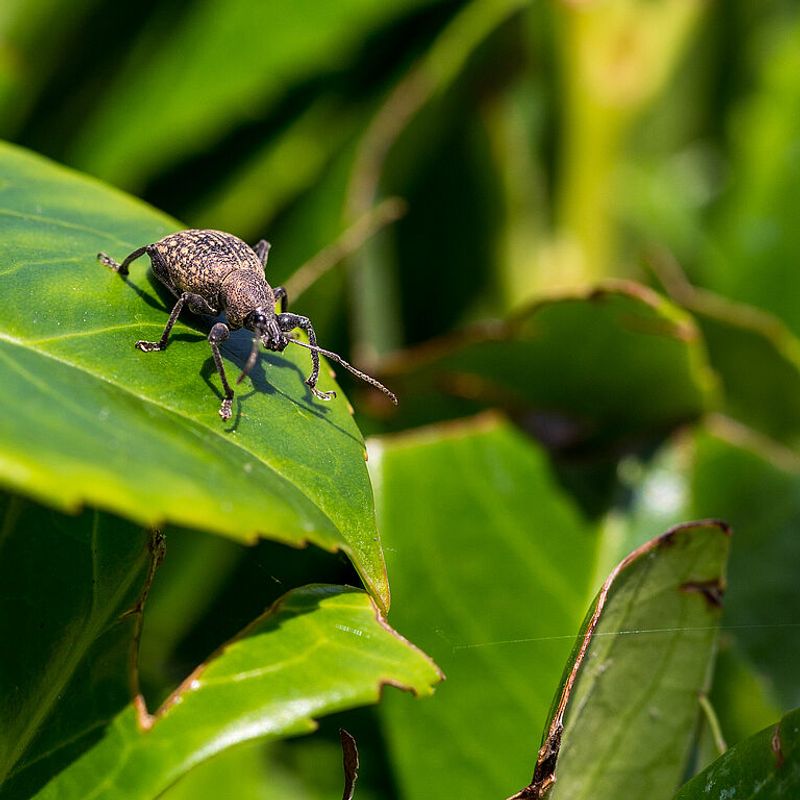
Picture walking through your garden one morning and spotting neat, curved bites along the edges of your rhododendron leaves.
Those crescent-shaped notches are the calling card of adult black vine weevils, and they are usually the very first visible clue that your plant has a problem.
The damage looks almost deliberate, like someone took a tiny hole punch to the leaf margins overnight.
Adult weevils feed strictly at night, which is why so many gardeners never actually see them in action. During the day, they hide in mulch, leaf litter, or the dark spaces near the base of the plant.
By the time the sun comes up, they have retreated and left only the leaf damage behind as evidence.
While the notching itself does not seriously harm the plant, it is a warning flag that should not be ignored.
Where there are adults feeding on leaves, there are almost certainly eggs being laid in the soil nearby. Those eggs will hatch into larvae that begin feeding on roots as the season progresses.
Some gardeners mistake this leaf damage for slug feeding or other common garden pests. The key difference is the shape and placement of the notches.
Weevil damage appears specifically along leaf edges in smooth, curved cuts, while slug damage tends to be more irregular and often appears across the entire leaf surface. Catching the adult feeding stage early gives you a real advantage.
Spotting the notches in late spring or early summer means larvae may not yet be active in large numbers, and acting quickly at this stage can prevent much more serious underground damage later in the season.
What The Larvae Do Underground
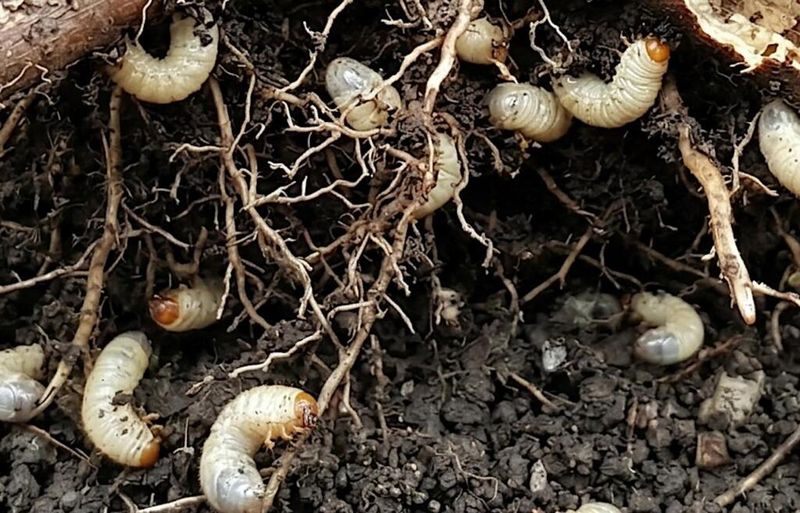
Out of sight does not mean out of harm’s way. While the adult weevil gets attention for its leaf notching, the larvae are the ones causing the most serious long-term damage to rhododendrons.
Eggs are laid in the soil during summer, and by late summer into fall, small white, C-shaped larvae begin feeding on the plant’s root system just below the surface.
As the larvae grow, they work their way toward the root crown, which is the critical zone where the stem meets the roots. Feeding in this area can disrupt the flow of water and nutrients moving up into the plant.
A rhododendron dealing with this kind of damage may suddenly look wilted, drop leaves, or fail to push out new growth even when conditions seem favorable.
One of the most alarming patterns gardeners describe is a plant that looks reasonably healthy one season and then collapses seemingly without warning the next.
That sudden decline is often tied to larval feeding that went undetected through the previous fall and winter. By spring, the root system may be too compromised to support healthy bloom production.
Larvae remain active in the soil through fall and can survive mild winters in Pennsylvania, resuming feeding again as soil temperatures rise in early spring.
This means the damage window is long and overlaps directly with the period when rhododendrons need strong root function to fuel their bloom cycle.
Understanding what is happening underground helps explain why surface-level care alone is not enough. Protecting the roots is just as important as managing the adults feeding on the leaves above ground.
How To Check Rhododendrons Before Damage Gets Worse
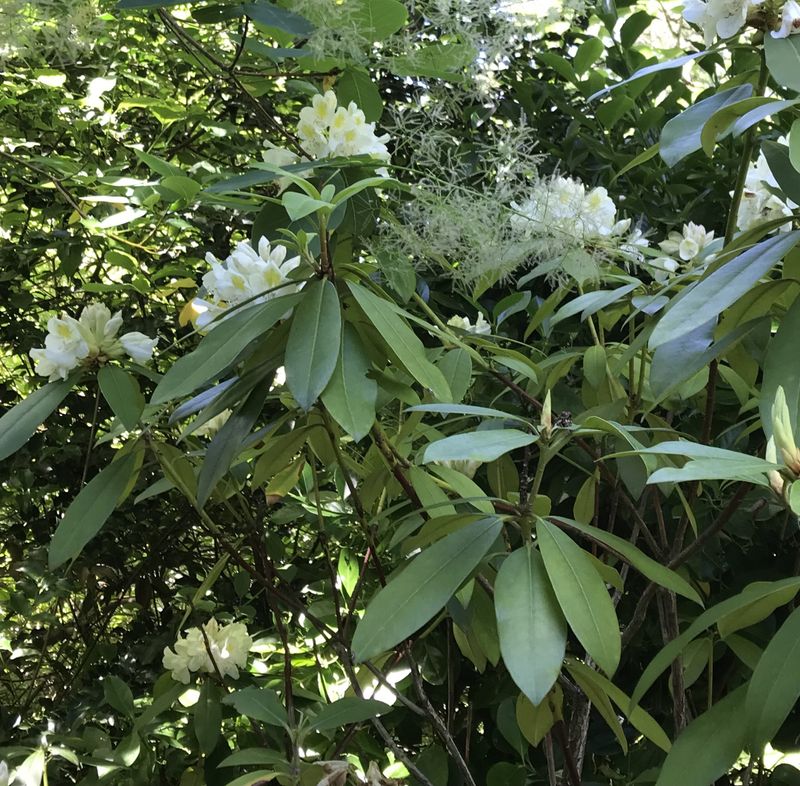
Catching a pest problem early makes a huge difference, and with black vine weevils, a little detective work goes a long way. Start by looking closely at the leaves of your rhododendrons, especially along the outer edges.
If you see smooth, crescent-shaped notches, adult weevils have been feeding on the plant and it is time to take the situation seriously.
Next, check the overall health of the shrub. A plant that looks stressed, has yellowing leaves, sparse foliage, or seems to be declining without an obvious reason may have larval activity happening in the root zone.
Gently scraping away a small amount of mulch or soil near the base of the plant and looking for small, white, C-shaped grubs can confirm whether larvae are present.
Night inspections are one of the most reliable ways to catch adult weevils in the act. Head out to your garden after dark with a flashlight and check the leaves and stems of your rhododendrons.
Adult weevils are slow-moving and tend to drop off the plant when disturbed, so placing a light-colored cloth beneath the shrub before you start can help you spot and collect any that fall.
Check multiple plants if you have a grouping of rhododendrons, since weevils spread from plant to plant over time. A single infested shrub can become a source for spreading the pest across your entire garden bed.
Doing these checks in late spring through midsummer gives you the best chance of finding adults before egg-laying peaks. Early action at this stage can significantly reduce the larval population that will be active underground in the months ahead.
What Actually Helps Protect Rhododendrons
Good news: there are real, practical steps that can protect your rhododendrons from black vine weevil damage, and none of them require complicated equipment or expert-level knowledge.
Starting with the simplest approach, physically removing adult weevils when you find them during nighttime inspections is effective and costs nothing.
Drop them into a container of soapy water to stop them from laying eggs in your garden soil.
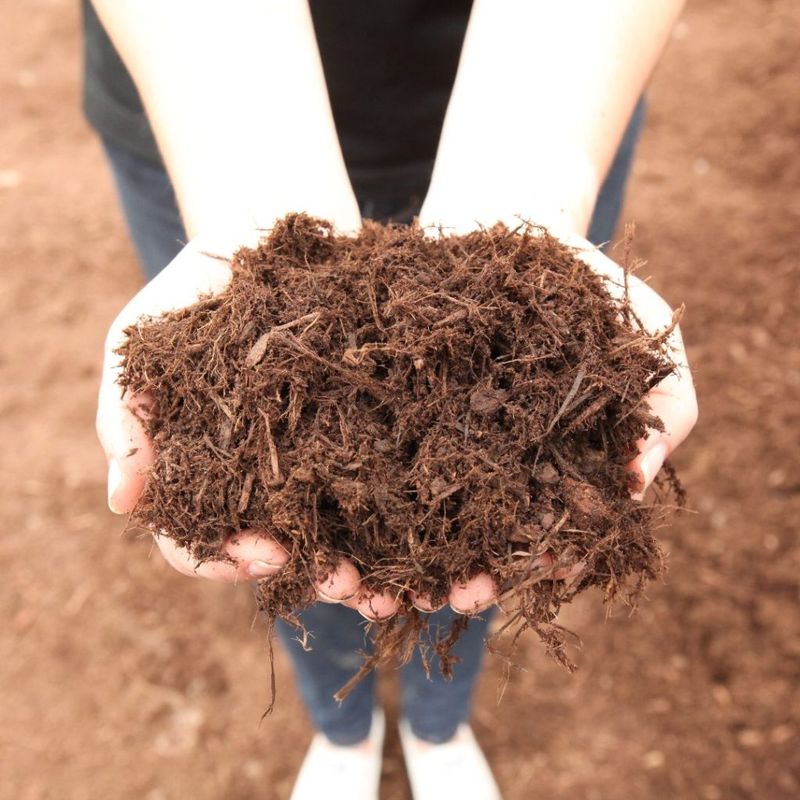
Mulch is helpful for rhododendrons in many ways, but too much mulch piled against the base of the plant creates the perfect hiding spot for adult weevils and a moist environment that benefits egg survival.
Keep mulch pulled back a few inches from the crown of the plant to reduce those favorable conditions without removing it entirely from the bed.
Improving overall plant health is another layer of protection. A rhododendron that is well-watered, properly fertilized, and growing in well-draining soil is more resilient and better able to handle minor pest pressure without serious decline.
Stressed plants are always more vulnerable. For more serious infestations, beneficial nematodes are a highly recommended option that is safe for the environment, pets, and people.
These microscopic organisms are applied to moist soil and seek out weevil larvae, reducing their numbers naturally.
Apply them in late summer or early fall when larvae are small and most active near the soil surface.
Labeled insecticides targeting adult weevils can also be used on foliage during the feeding season, but timing matters. Early detection is always the most powerful tool you have.
The worst damage from black vine weevil starts below the soil, so staying alert and acting fast keeps your rhododendrons on track for a beautiful bloom season.