The Pennsylvania Tree Pest That Gets Less Attention Than Spotted Lanternfly But Is Destroying More Trees
Spotted lanternfly gets most of the attention when it comes to tree pests in Pennsylvania. And that attention is deserved.
But while homeowners are focused on scraping egg masses and reporting lanternfly sightings, another tree pest has been quietly doing damage that in many ways is more severe and far harder to reverse. This one doesn’t make the news as often.
It doesn’t have the same visual impact as a swarm of spotted lanternflies covering a tree trunk. But the destruction it leaves behind is devastating, and the trees it targets are some of the most important and beloved in the Pennsylvania landscape.
By the time most homeowners realize something is wrong, the infestation is already deeply established.
Unlike spotted lanternfly, which weakens trees over time, this pest can kill them outright, and it does so with a speed and thoroughness that catches people completely off guard.
Pennsylvania forestry experts have been raising alarms about this pest for years. Here’s what every homeowner with trees on their property needs to know right now.
The Pennsylvania Tree Pest Destroying More Trees Than Many Homeowners Realize
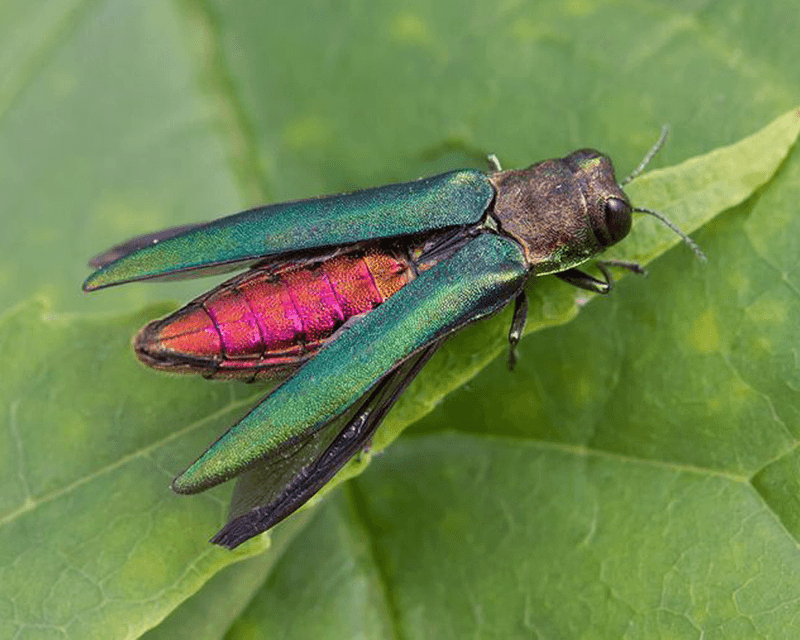
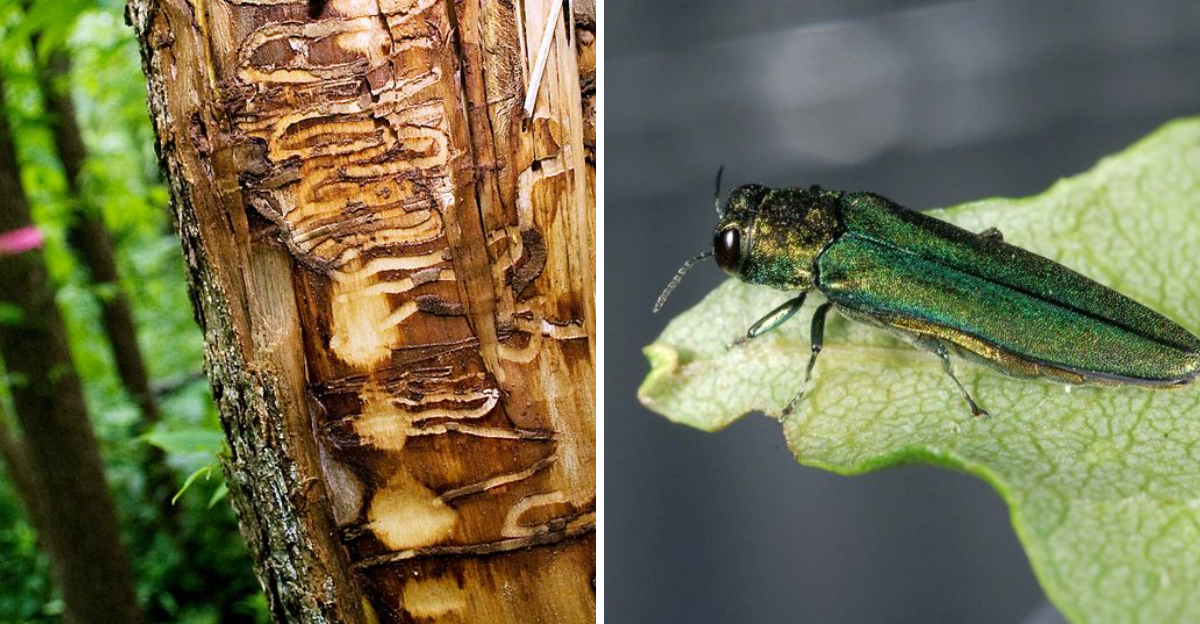
Most people have never heard of the emerald ash borer, but this tiny beetle has caused more tree loss in Pennsylvania than almost any other invasive pest in recent memory. Originally from Asia, it arrived in North America around 2002 and has been spreading ever since.
Pennsylvania confirmed its presence in 2007, and the damage has been building quietly in neighborhoods, parks, and forests across the state. Spotted lanternfly gets the headlines. It shows up on cars, fences, and social media posts.
But while people are busy stomping lanternflies, the emerald ash borer is tunneling under bark and taking out ash trees one by one.
Ash trees make up a significant portion of Pennsylvania’s urban and suburban tree canopy, which means the loss hits close to home for many residents.
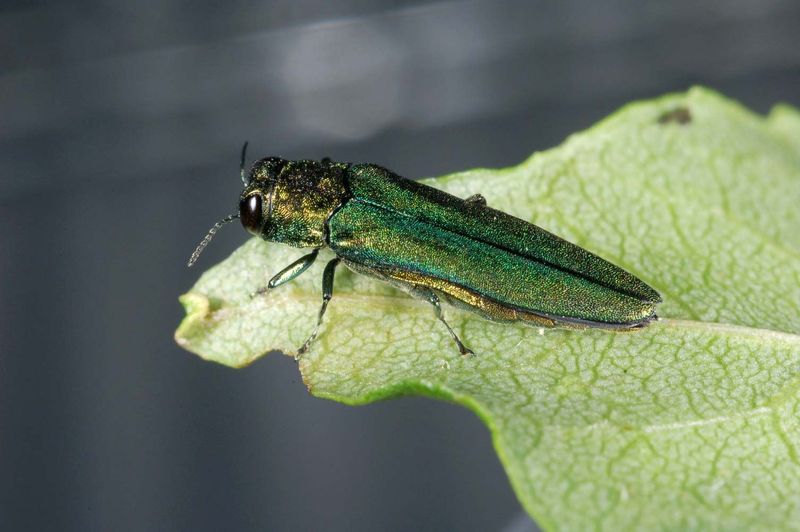
The beetle itself is surprisingly small, only about half an inch long. It has a bright, metallic green color that almost looks beautiful. But do not let the looks fool you. What it does to ash trees is far from harmless.
Adult beetles feed on ash leaves, but the real destruction comes from the larvae. They tunnel through the layer just beneath the bark, cutting off the tree’s ability to move food and water.
Millions of ash trees across the eastern United States have already been lost to this pest. In Pennsylvania alone, the numbers are staggering.
Homeowners who are not paying attention often lose their trees before they even know the pest is present. Early awareness is the first step toward protecting what you have.
Why This Pest Is So Dangerous To Ash Trees
What makes the emerald ash borer so destructive is not just that it feeds on trees. It is where it feeds.
The larvae live and feed underneath the bark, in a layer called the cambium. That layer is like the tree’s highway system.
Your Pennsylvania Garden Changes Every Week. Your Plan Should Too.
Gardening in Pennsylvania changes quickly throughout the season. Every Friday you’ll receive a simple weekly plan showing exactly what to plant, prune, fertilize, harvest, and protect so you never miss the right timing.
It carries water up from the roots and moves sugars made in the leaves back down to feed the rest of the tree. When larvae tunnel through this layer, they carve winding, S-shaped galleries that block everything.
Think of it like cutting off the blood supply to a part of your body. The tree cannot move nutrients or water where it needs them.
Branches in the upper canopy start to thin out first because they are the farthest from the roots. Over time, more and more of the tree stops functioning.
The whole process happens under the bark, hidden from plain sight, which is exactly why so many homeowners miss it until serious harm has already occurred.
Ash trees have very little natural defense against this beetle. Unlike some native pests, which trees have evolved to resist over thousands of years, the emerald ash borer is foreign to North American ash species.
The trees simply do not have the tools to fight back on their own. That is why nearly every untreated ash tree in an infested area eventually succumbs.
Research from the USDA Forest Service has shown that without intervention, ash tree loss rates in heavily infested areas approach 99 percent.
That number should wake up any homeowner with ash trees in the yard. The danger is real, it is proven, and it is already here in Pennsylvania.
The Early Signs Pennsylvania Homeowners Miss
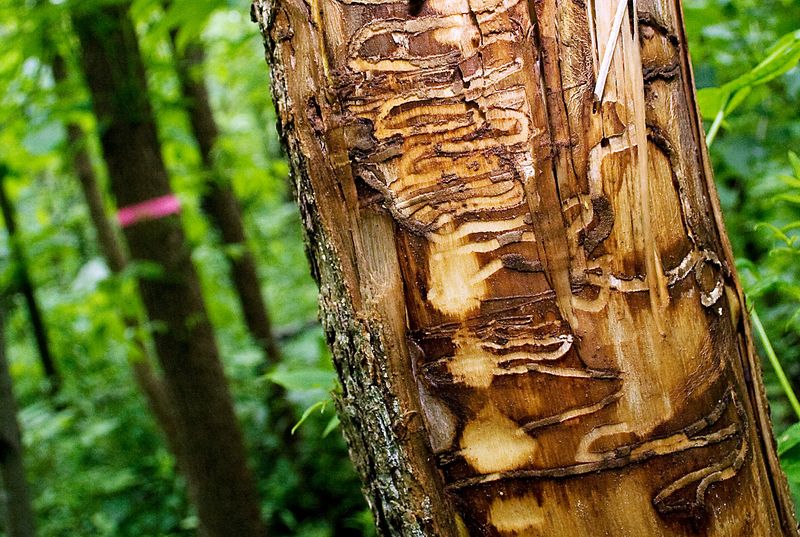
Catching an emerald ash borer infestation early gives you the best shot at saving your tree, but most homeowners do not know what to look for. The signs are there if you know where to look.
The tricky part is that the pest hides its work beneath the bark, so you have to look for clues on the outside of the tree instead.
One of the first things people notice is a thinning canopy. Leaves may seem sparse at the top of the tree, and some branches may stop leafing out entirely.
Woodpeckers are another big clue. They love to feed on emerald ash borer larvae, so if you suddenly see a lot of woodpecker activity on one of your ash trees, that is worth paying attention to.
The birds will peel back chunks of bark searching for a meal, leaving rough, scraggly patches on the trunk and branches.
Look closely at the bark and you might spot small D-shaped holes. These are exit holes left behind when adult beetles chew their way out of the tree.
They are tiny, roughly the size of a pencil tip, but they are distinctive because of their flat-sided, D-like shape. Bark splitting or cracking along the trunk is another warning sign that something is going on underneath.
Also watch for epicormic shoots, which are small sprouts growing from the base of the trunk or from lower branches. The tree produces these when it is under stress, almost like a last effort to keep growing.
Spotting even one or two of these signs is reason enough to call a professional for a closer look.
Why Damage Is Often Found Too Late
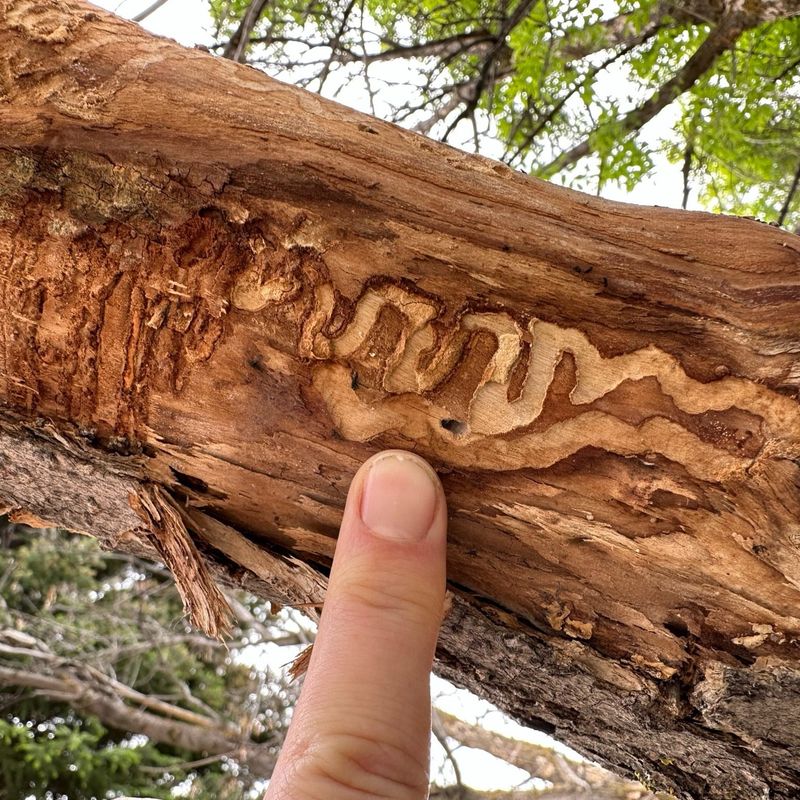
Here is the frustrating reality about emerald ash borer infestations: by the time most people notice something is wrong, the situation is already serious. Ash trees can look relatively normal on the outside while the pest is actively working beneath the bark.
The canopy may stay full and green for a season or two even as the galleries underneath are expanding. That delay gives homeowners a false sense of security.
Once the upper canopy starts showing obvious decline, with dry branches, bare limbs, and heavy leaf loss, the infestation has typically been going on for a while. At that stage, the larvae have already disrupted large portions of the tree’s vascular system.
Treatment options still exist, but their effectiveness drops significantly once a tree has lost more than half of its canopy. Many arborists use a general rule: if the tree has lost 50 percent or more of its crown, the window for saving it has likely passed.
Part of why damage goes unnoticed for so long is that people are not looking. Ash trees are common in Pennsylvania neighborhoods, but many homeowners are not even sure which of their trees are ash.
If you do not know what kind of tree you have, you cannot monitor it for the right warning signs. Another reason is that the pest works silently.
There is no visible insect crawling around, no sticky residue on cars, and no swarms to alert you. Unlike spotted lanternfly, which is impossible to miss, the emerald ash borer does its work quietly and out of sight.
That invisibility is one of its most dangerous qualities, and it is exactly why so many trees are lost before anyone steps in to help.
What To Do If You Have Ash Trees
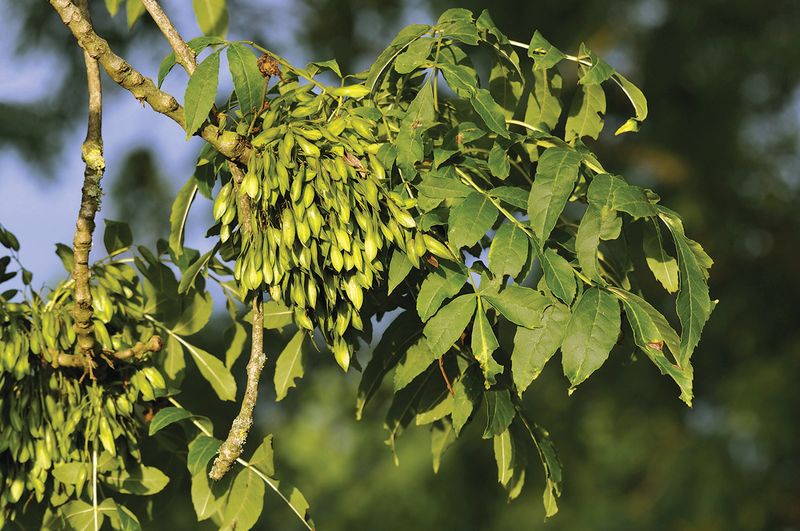
If you think you have ash trees on your property, the first step is confirming it. Ash trees have compound leaves, meaning each leaf stem holds several smaller leaflets arranged in pairs.
The bark has a distinctive diamond-shaped ridge pattern, and the tree produces paddle-shaped seeds that often hang in clusters.
If you are unsure, take a photo and use a free plant identification app, or ask your local Penn State Extension office for help identifying what you have.
Once you know you have ash trees, start inspecting them regularly each spring and summer. Look for the warning signs covered earlier: thinning canopy, woodpecker holes, D-shaped exit holes, and new sprouts near the base.
If your trees are healthy and valuable to your landscape, talk to a certified arborist sooner rather than later. Arborists can assess the tree’s condition and recommend whether preventive treatment makes sense.
Treatments like systemic insecticides, applied to the soil or injected directly into the trunk, can protect ash trees from emerald ash borer. They work best when the tree is still in good health.
Timing matters a lot here. Preventive treatment on a healthy tree is far more effective and far less expensive than trying to rescue a tree that is already in serious decline.
Not every ash tree will be worth treating. A small, poorly placed, or already declining tree may not justify the cost.
But a large, healthy shade tree that provides cooling, beauty, and property value is often absolutely worth protecting. Talk to a professional, get an honest assessment, and make an informed choice before the pest makes the decision for you.
Why This Pest Deserves More Attention Than It Gets
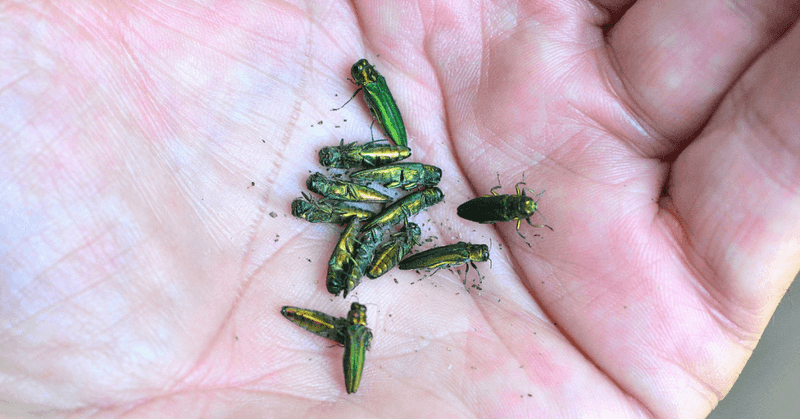
Spotted lanternfly gets campaigns, news coverage, and public awareness programs. The emerald ash borer gets almost none of that, despite doing more lasting damage to Pennsylvania’s tree canopy over a longer period of time.
That gap in public attention is a real problem, because awareness drives action, and action is what saves trees.
Ash trees are not just a forest concern. They line streets in cities and boroughs across Pennsylvania.
They shade backyards, cool neighborhoods, and anchor parks. When a large ash tree is lost, it takes decades for a replacement tree to provide the same shade and ecological value.
Neighborhoods lose canopy cover, which raises temperatures, reduces air quality, and lowers the visual appeal that makes communities feel livable.
The economic cost of removing large ash trees and grinding stumps adds up fast for both homeowners and municipalities.
Beyond the property impact, ash trees support wildlife. Their seeds feed birds and small mammals.
Their bark and structure provide habitat. When ash trees disappear from a landscape, that ripple effect touches the whole local ecosystem in ways that are hard to fully measure.
The emerald ash borer deserves the same urgency that Pennsylvanians have brought to fighting spotted lanternfly. Early action genuinely matters.
Homeowners who treat healthy ash trees proactively have been able to preserve them for many years. Those who wait until the canopy is failing almost always end up with a removal bill instead of a saved tree.
Spread the word, check your trees, and take the pest seriously before another generation of ash trees is quietly lost from Pennsylvania’s landscape.